
Your specialty might be underpaid. That does not mean you have to stay broke.
If you are in pediatrics, family medicine, psychiatry, preventive medicine, or certain IM-heavy tracks, you already know the punchline on payday. You work just as hard as your surgical colleagues, sometimes harder, but your check looks like a rounding error on an orthopedist’s statement. Waiting for “attending money” is not a strategy. You need options that work now, within your call schedule, without killing you.
This is the playbook: side gigs that actually fit call, can scale, and will not get you fired by GME.
Step 1: Set Constraints Like an Adult, Not a Fantasy
Before chasing “extra income,” you have to box in your reality. This is what I have residents list on paper before we talk about side work.
Your actual call burden
- In-house 24s? Home call? Night float?
- Average number of uninterrupted hours per week you truly control. Be honest. “I can probably study on nights” is not the same thing.
Program rules and legal landmines
- Duty hours. You cannot legally moonlight in a way that pushes you over ACGME limits. People get burned on this.
- Moonlighting policy:
- Is it allowed?
- Only after PGY-2?
- Only internal moonlighting?
- Approval required from PD?
- Malpractice coverage:
- Does institutional coverage extend to internal moonlighting?
- External moonlighting = you need your own malpractice. That matters for pay.
Energy and brain bandwidth
- You are not going to build a giant YouTube channel from scratch on a Q4 call schedule in a malignant program. Stop pretending you will.
- You need things that:
- Can pause for call.
- Have flexible deadlines.
- Do not require you to be charming on camera at 2 a.m. after a code.
Once you know these boundaries, you can choose something that does not implode three months in.
Step 2: Quick Reality Check on “Doctor Side Hustles”
Most of what you see on social media is garbage for residents:
- Real estate syndication? Needs capital and risk tolerance you do not have yet.
- Expensive online “coaching” programs? Most are pyramid schemes with a website.
- Starting a full-blown private practice as a resident? No.
You need side gigs that are:
- Asynchronous (you can do them when not on call)
- Low overhead (no big up-front cost)
- Stackable hours (work more in lighter rotations, pull back in ICU months)
- Portable (you can take them with you to fellowship/first job)
Let’s walk through the options that actually work for low-paying specialties and call-heavy lives.
Step 3: Clinical Moonlighting – Only When It Truly Makes Sense
If your specialty is low-paying long term, clinical moonlighting becomes attractive early. But the details matter.
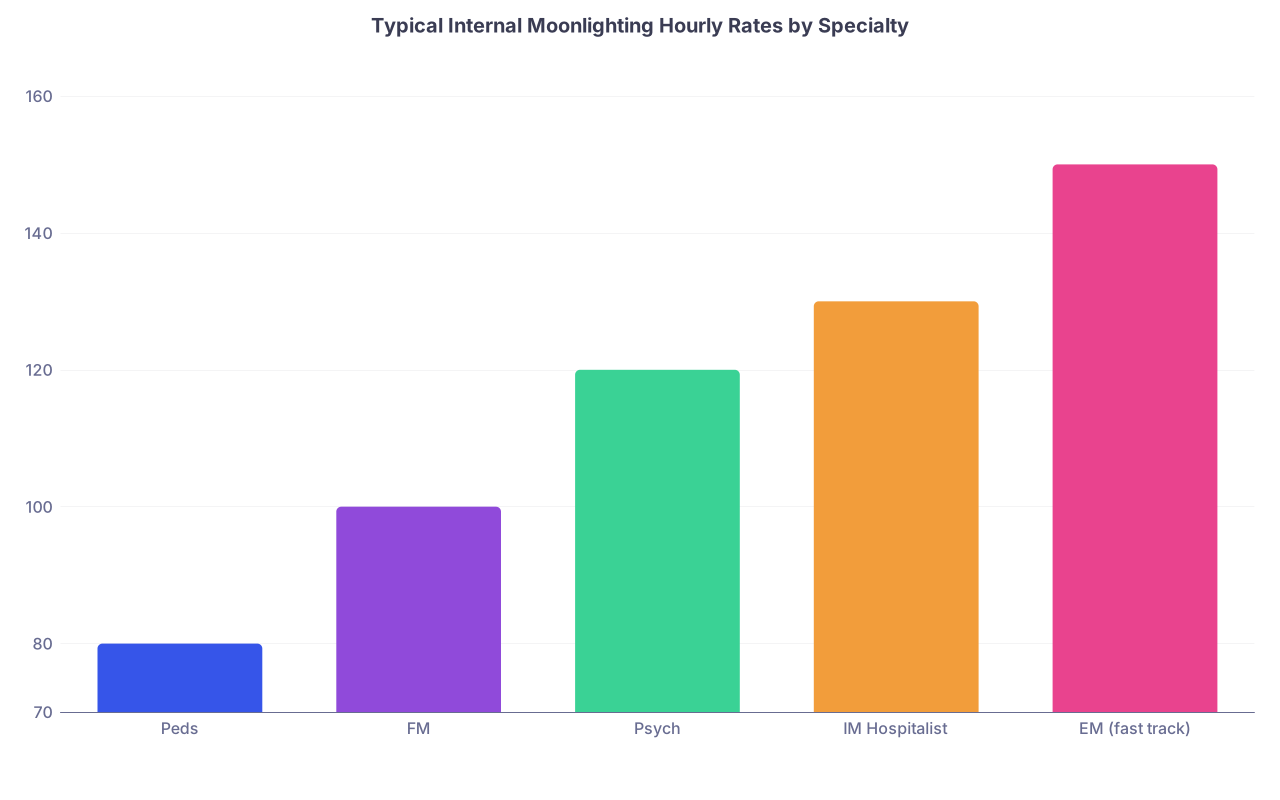
| Category | Value |
|---|---|
| Peds | 80 |
| FM | 100 |
| Psych | 120 |
| IM Hospitalist | 130 |
| EM (fast track) | 150 |
Internal Moonlighting (In-Hospital)
Best fits:
- FM, IM, psych, peds, and prelim IM years.
- Programs with community hospitals that need coverage.
Pros:
- Malpractice usually covered.
- Familiar EMR, nursing staff, consultants.
- Less paperwork to start.
- You can sometimes “stack” work with call (e.g., extra ED coverage in the same building).
Cons:
- Duty hours count. If you are already at 70–80 hours, adding more is asking for an RRC problem.
- Can worsen burnout fast.
- Sometimes underpaid compared to external shifts.
How to do it right:
Clarify policy with PD in writing
- Ask directly: “At what PGY level do you allow internal moonlighting? What documentation do you need?”
- Get a clear rule on:
- Max hours per week.
- Which services you can cover.
- Whether you need to log shifts in MedHub/New Innovations as moonlighting.
Pick low-cognitive-load shifts
- Examples:
- Admit-only shifts (no cross-cover).
- Low-acuity ED fast track.
- Night psych consult coverage with low volume.
- Avoid shifts where a bad outcome equals career risk that you, as a tired resident, should not carry alone.
- Examples:
Use “block scheduling” for sanity
- Instead of random moonlighting sprinkled through brutal months, front-load during lighter rotations.
- Example: On an outpatient psych month, do 2–3 extra shifts per week. None on ICU month.
Know your number
- If your base is $60k and you add 4 shifts/month at $120/hour for 8 hours:
- Extra: 4 × 8 × 120 = $3,840/month (~$46k/year before tax).
- That changes everything for a pediatric or FM resident instantly.
- If your base is $60k and you add 4 shifts/month at $120/hour for 8 hours:
External Moonlighting (Community EDs, Clinics, Urgent Care)
This is where people either win or get burned.
Pros:
- Pay is usually higher.
- Can sometimes choose shifts months in advance.
- Exposure to different practice environments.
Cons:
- You probably need your own malpractice.
- Credentialing can be slow (3–6 months).
- Duty hour and PD approval still apply.
- Travel time erodes your net hourly rate.
For low-paying specialties, external urgent care or low-acuity ED can be a good match if:
- You are PGY-3+ and clinically solid.
- Your PD formally signs off.
- You get malpractice coverage in writing from the group/hospital or your own policy.
Step 4: Non-Clinical Side Gigs That Actually Fit Call
This is where most low-paid specialties should focus. More leverage, less risk, and you can keep doing them as an attending.
1. Medical Content Work (Freelance Writing, Reviewing, Question-Writing)
This is the most underused money source for residents.
Types of work:
- Question writing for:
- UWorld-style companies
- Small test-prep startups
- Board review courses
- Content writing:
- Patient education articles
- Blog posts for health systems
- CME module outlines
- Medical editing or fact-checking.

Why it works well:
- Asynchronous. You do it when you are free.
- Pay is usually per piece/question, not per hour, so you can front-load on easy months.
- Zero commute, no extra malpractice.
Typical rates (realistic, not fantasy):
- Question-writing: $10–$40 per question depending on complexity and company.
- Articles: $0.20–$1.00 per word if you are good and medically trusted.
- Flat rates: $150–$500 per article or project.
How to start:
Build a tiny portfolio
- Write:
- 3–5 board-style questions in your specialty.
- 1–2 short patient-facing articles (500–800 words).
- Host them on:
- A simple Google Doc folder, or
- A basic website (not required but nice).
- Write:
Cold outreach list
- Targets:
- Small test-prep companies.
- Niche board review courses.
- Health blogs that use MD/DO reviewers.
- You send a short, direct email:
- Who you are (PGY-2 psych at X program).
- What you can create (questions, content).
- One attached sample.
- Targets:
System for working around call
- Write in 60–90 minute blocks on call-free days.
- Use templates:
- Standard structure for each question (stem, lead-in, 4–5 options, explanation).
- Standard structure for patient articles (intro, 3–4 main points, summary).
Scale intentionally
- Once a company trusts you, ask for:
- Batch assignments (e.g., 20 questions at a time).
- Rate increases after you deliver 50–100 high-quality items.
- Once a company trusts you, ask for:
You will not get rich overnight, but you can realistically add $500–$2,000 per month without leaving your couch.
2. Telehealth and Asynchronous Care (Where Allowed)
Telehealth fits psych, FM, IM, and sometimes peds. But as a resident, your options are limited and heavily regulated. This is mainly for senior residents in lax states and early attendings, but I will include it because many of you are 6–12 months from that transition.
Types:
- Synchronous video visits for:
- Low-acuity urgent care.
- Mental health follow-ups.
- Asynchronous care:
- Reviewing photos/messages.
- Protocol-based prescription refills.

| Step | Description |
|---|---|
| Step 1 | Know program rules |
| Step 2 | Check state telehealth laws |
| Step 3 | Sign with telehealth group |
| Step 4 | Set availability blocks |
| Step 5 | Work short shifts post call free days |
| Step 6 | Track hours vs duty limits |
Why it can work:
- You can schedule short shifts on lighter days.
- No commute.
- If asynchronous, you can pause between messages.
Major caveats:
- Many telehealth platforms require:
- Completed residency and board eligibility.
- Full independent license in multiple states.
- You must track duty hours. Telehealth counts.
- Need crystal-clear malpractice coverage.
If you are a senior resident and your PD green-lights it, aim for:
- 2–4 hour shifts.
- Low acuity, high-protocol environments (not crisis psych with no backup).
3. Tutoring and Exam Coaching (MCAT, USMLE/COMLEX, Shelf)
This one is painfully underutilized by low-paid specialties. You already lived this content.
Who you can tutor:
- MCAT students.
- Preclinical med students for Step 1–2.
- Shelf exams in your specialty (psych shelf, peds shelf, FM OSCE).
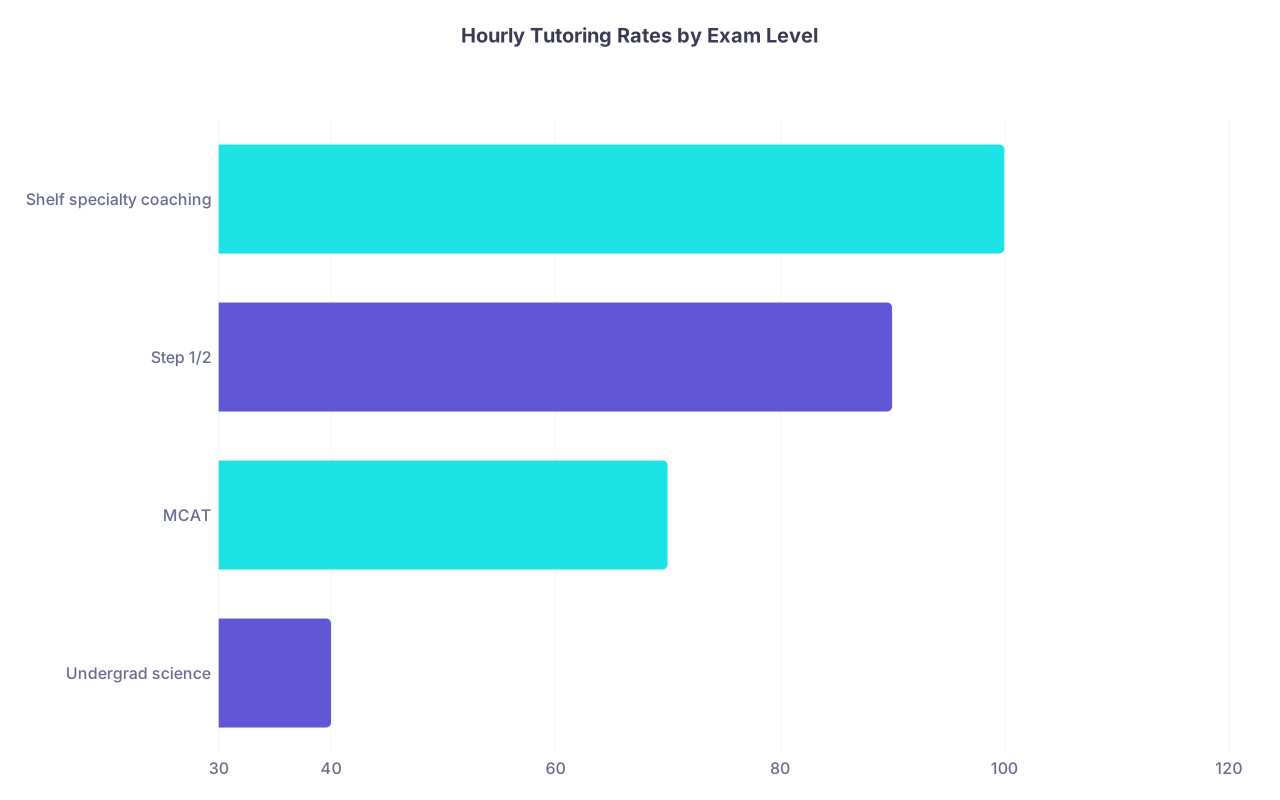
| Category | Value |
|---|---|
| Undergrad science | 40 |
| MCAT | 70 |
| Step 1/2 | 90 |
| Shelf specialty coaching | 100 |
Why it fits call:
- You schedule sessions around your calendar.
- You can cluster on golden weekends.
- Most sessions are 60–90 minutes max.
How to start:
Pick a clear niche
- Example:
- “Psych resident specializing in CARS and psych/soc for MCAT”
- “Peds resident tutoring Step 2 pediatrics and peds shelf”
- Do not market as “I tutor everything” – that screams amateur.
- Example:
Decide on platform
- High-fee but lots of clients:
- Wyzant, Varsity Tutors, big MCAT/USMLE companies.
- Lower fee but more freedom:
- Your own website, social media, or med school groups.
- Hybrid: start with a platform while you learn, then move off it.
- High-fee but lots of clients:
Set minimums and policies
- Minimum 4 sessions per student to avoid one-off chaos.
- Strict cancellation policy (residents need this).
- Use Calendly or similar to manage time zones and rescheduling.
Protect your energy
- Never schedule tutoring:
- The night before call.
- Post-call while delirious.
- Ideal slots:
- Early evenings on clinic days.
- Weekend mornings on non-call weekends.
- Never schedule tutoring:
Realistic income:
- 4 students × 1.5 hr/week × $80/hr = $1,920/month.
- Completely doable if your schedule is not malignant.
4. Niche Skill-Based Gigs That Use Your Medical Brain
Some of you have skills outside medicine. Good. Use them.
Relevant combinations that actually work for residents:
Statistical consulting / research design help
- Ideal for psych, FM, IM, preventive med residents heavily involved in research.
- Services:
- Power calculations.
- Study design review.
- Simple data analysis in R/SPSS/Stata.
- Clients:
- Non-med students.
- Small practices doing quality improvement.
- NGOs doing basic surveys.
Curriculum and OSCE design
- Help:
- Med schools or PA programs build case vignettes.
- Nursing schools design OSCE stations with checklists.
- Fits:
- Peds, FM, psych, IM – anyone used to outpatient/OSCE-style exams.
- Help:
Language-based medical gigs
- If bilingual:
- Medical translation (patient handouts, consent forms).
- Voiceover for patient education content in another language.
- If bilingual:
These are less standardized, but the basic playbook is the same:
- Define your service.
- Charge per project, not per hour.
- Set clear timelines that survive a surprise MICU call month.
Step 5: Digital Assets That Pay Later (But Do Not Kill You Now)
This is where you build leverage. Slowly. Without tanking residency.
I am not talking about becoming a full-time influencer. I am talking about building one or two small things over 1–2 years that can keep paying you after training.
1. Micro-Online Courses or Mini-Products
Examples specific to low-paying specialties:
Psych:
- Short course for med students on “How to do a 10-minute psych eval on the wards.”
- PDF scripts for suicide risk assessments (for trainees, not laypeople).
Peds:
- Video bundle for new parents on common pediatric myths.
- Checklist templates for peds clinic visits.
FM:
- Quick guide for new FM interns on how to manage chronic diseases in 15-minute visits.
- Template packs: smart phrases, order sets, patient education handouts.

Constraints:
- Keep it small:
- 60–90 minutes total content.
- One specific problem.
- Build it over 2–3 months at a slow, sustainable pace.
- Host it on:
- Gumroad, Teachable, Podia, or similar.
The goal is not immediate money. The goal is to have one asset that can earn while you are in fellowship or early attending life.
2. Highly Focused Blogs or Newsletters
Do not start “a blog about medicine.” It will die in 6 weeks. Start something surgical:
Examples:
- “Peds scripts” – a newsletter with one high-yield peds counseling script each week.
- “Psych notes for IM residents” – short posts on managing common psych issues on medicine wards.
- “FM quick hits” – practical cheatsheets (hypertension, diabetes, lipid management).
How to keep it realistic:
- Commit to one post every 2 weeks.
- Each post = 500–800 words max.
- Repurpose what you are already doing:
- That teaching talk you gave? Turn the outline into a post.
- That patient education blurb you wrote? Generalize it and publish.
Monetization happens later:
- Paid subscribers for deep-dive posts.
- Selling small PDF bundles of your best scripts.
- Eventually, sponsored posts or referrals.
You are playing a long game here. But it starts now, not “after boards.”
Step 6: Match Side Gigs to Call Schedules and Specialties
You cannot pick a side gig in isolation. You pick it based on how your life actually runs.
| Specialty | Call Type | Best-Fit Side Gigs |
|---|---|---|
| Pediatrics | In-house Q4–Q6 | Internal moonlighting, question-writing |
| Family Med | Home call / clinic-heavy | Telehealth (senior), tutoring, content work |
| Psychiatry | Home call, low volume | Telepsych (senior), writing, coaching |
| IM (non-hospitalist) | Heavy wards | Question-writing, micro-courses, research help |
| Preventive / Occ Med | Light call | Tutoring, telehealth, digital products |
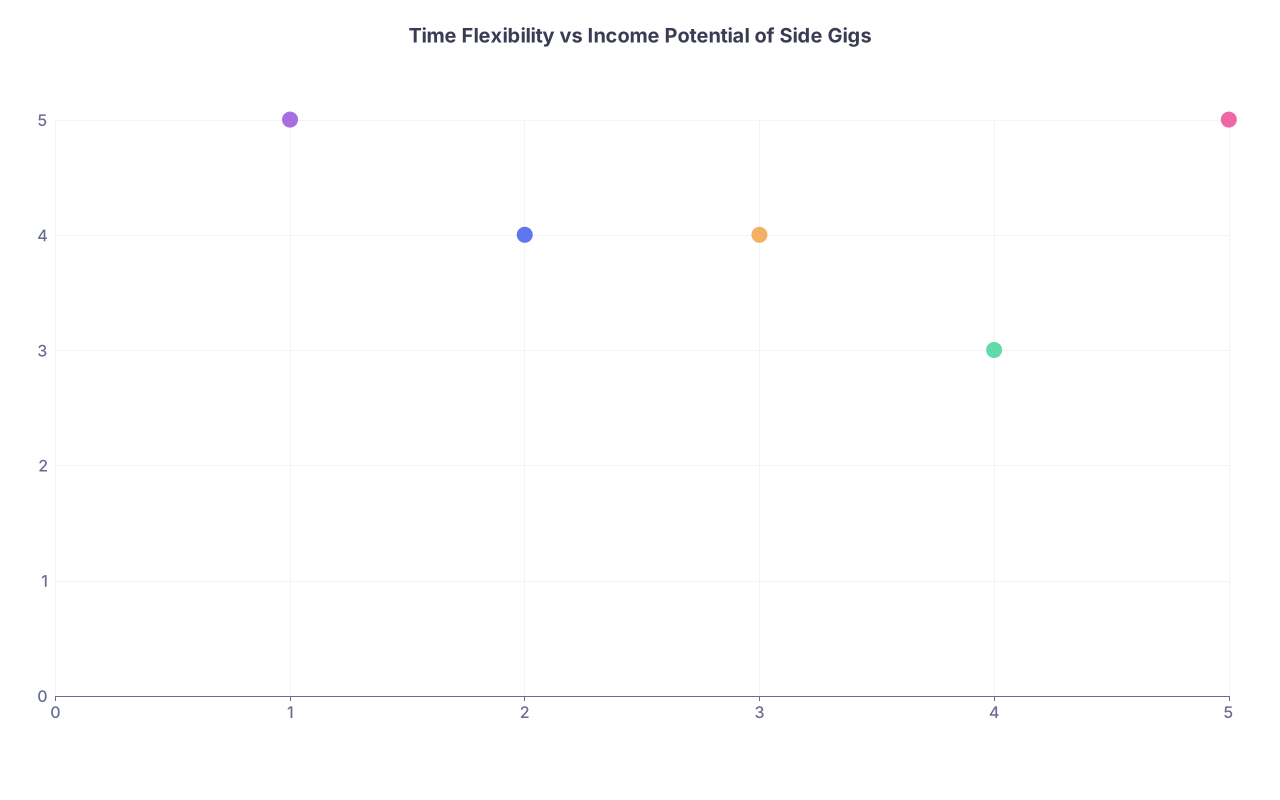
| Category | Value |
|---|---|
| Internal moonlighting | 2,4 |
| External moonlighting | 1,5 |
| Content writing | 4,3 |
| Tutoring | 3,4 |
| Digital products | 5,5 |
(Here, x-axis = flexibility (1=low, 5=high), y-axis = income potential (1=low, 5=high).)
Basic rule:
- Heavy in-house call, malignant program:
- Pick asynchronous, low-commitment: question-writing, small content work, occasional tutoring.
- Light call, strong outpatient focus:
- Consider higher-contact gigs: tutoring, telehealth, building courses.
- Senior year with elective time:
- This is when you can experiment with moonlighting and building something long term.
Step 7: Protect Yourself – Legal, Financial, and Sanity Checks
This is where many residents screw it up. Do not be that person.
Legal and Program Safety
-
- Count every moonlighting hour.
- If your logs are fiction, you are risking:
- Program citations.
- Personal discipline.
- If you have to cheat to fit the side gig, the side gig does not fit.
Malpractice clarity
- Internal moonlighting:
- Get written confirmation that your institutional policy covers the specific shifts.
- External clinical work / telehealth:
- Either the employer covers you (and names you on their policy) or you buy your own.
- Non-clinical (writing, tutoring etc.): usually no malpractice risk, but do not give medical advice to randoms online. You are educating, not treating.
- Internal moonlighting:
Employment and tax basics
- Many side gigs hire you as a 1099 contractor.
- That means:
- No benefits.
- You owe self-employment tax.
- Open a separate checking account for side-gig income. Makes taxes and tracking much easier.
Burnout and Sanity

Here is the blunt truth: if the side gig makes you hate medicine more, it is a net loss even if it pays.
- If your sleep drops below 6 hours routinely because of side work, stop.
- If your relationships are falling apart, stop.
- If your clinical performance drops even a little, stop or cut back.
I tell residents to use a simple red-flag rule:
- If 2 out of 3 are deteriorating — sleep, mood, patient care — the side gig gets reduced or paused. No negotiation.
Step 8: A Concrete 90-Day Plan (Example)
Let me give you one brutally practical path you can actually follow.
Imagine:
- You are a PGY-2 pediatrics resident.
- Q4 in-house call.
- Program allows internal moonlighting starting PGY-3, so not yet.
- You want an extra $500–$1,000/month.
Here is your 90-day plan:
Weeks 1–2
- Clarify program rules (verbal + email).
- Pick one side gig: peds question-writing.
- Write:
- 10 board-style questions for peds shelf/boards.
- 1 short patient handout (e.g., “Fever in toddlers: when to worry”).
Weeks 3–4
- Identify 10 target companies:
- Small Qbank startups.
- Peds board review courses.
- Med-ed websites.
- Send short, targeted emails with:
- Brief intro.
- 2 sample questions.
- Offer to complete a paid trial set.
Weeks 5–8
- Take on one small contract:
- Example: 20 questions at $15/question = $300.
- Track how long it takes you per question (goal: 30–45 minutes once you get a rhythm).
- Use post-call afternoons and one weekend session.
Weeks 9–12
- If the first client is good:
- Ask for more questions at same or higher rate.
- If not:
- Use the finished work as portfolio to pitch 5 more companies.
- Step into 30–40 questions/month range:
- 40 × $15 = $600/month.
- Scale up if safe; stay under burnout threshold.
By the end of 3 months, you have:
- A functioning, call-compatible income stream.
- Portfolio to leverage for other opportunities later.
- Zero compromise on duty hours or licensing.
Now repeat the same pattern later with a second stream (e.g., tutoring), if you have capacity.
Final Thoughts: What Actually Matters
You are not going to “side gig” your way out of a low-paying specialty. But you can stop feeling trapped.
Key points:
- Pick side gigs that match your call reality. Heavy in-house call means asynchronous work like writing and question-banks, not back-to-back telehealth shifts.
- Protect your license and your brain. Duty hours, malpractice, and sleep are non‑negotiable. If the side gig threatens these, drop it or shrink it.
- Build at least one thing that compounds. A content portfolio, tiny course, or focused tutoring niche will outlive residency and give you leverage when the hospital paycheck disappoints.
You cannot fix national reimbursement as a resident. You can absolutely stop living at the mercy of a single paycheck.