

The way most residents in low-paying specialties “figure it out as they go” is financially reckless. You cannot wing the first 5 years and expect to be safe.
You are stepping into a field where the ceiling is modest and the early years are brutally underpaid. That combination will hurt you if you do not impose structure.
I am going to lay out how to structure your first 5 years in a low-paying field so you stay solvent, sane, and free to practice the specialty you actually chose—without being forced into side gigs or burnout because of money.
Think psychiatry, pediatrics, family medicine, preventive medicine, child psych, geriatrics, academic primary care. The exact numbers differ, but the pattern is the same:
- Long training
- Low-ish resident pay
- Attending salaries that are fine but not “I can fix every mistake later” level
So you cannot afford big mistakes early.
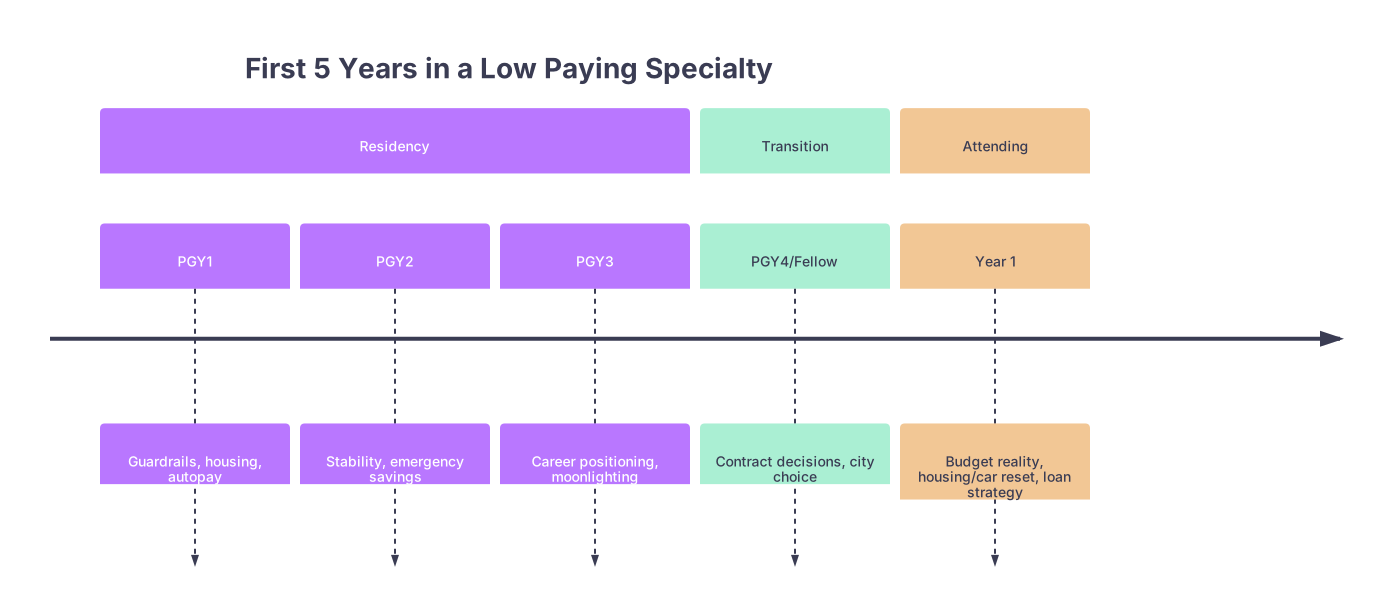
We will break this into a 5‑year operating plan: PGY1–3, Transition Year, and Early Attending Year 1. Each period has a clear financial, lifestyle, and career structure.
The Core Problem: Low Pay + High Fixed Costs
Let me be blunt.
Your biggest risk in a low-paying specialty is not that you will “never make good money.” It is that you will lock in high fixed costs early—rent, car, lifestyle, debt choices—that your future attending salary cannot comfortably support without chronic stress.
Residents in psych, peds, FM, etc. often tell themselves:
- “I’ll save once I’m an attending.”
- “I deserve a nice place; residency is hard.”
- “I’ll do some moonlighting and it will work out.”
That is how you end up 3 years out of training, making $230k, feeling broke.
So the entire strategy for the first 5 years is:
- Cap fixed costs aggressively.
- Make a few high-impact financial decisions on autopilot.
- Position your career inside your specialty so that your “low-paying field” is on the high end of its own spectrum.
| Category | Value |
|---|---|
| MS4 | 0 |
| PGY1 | 65000 |
| PGY2 | 70000 |
| PGY3 | 75000 |
| Fellow/PGY4 | 80000 |
| New Attending | 220000 |
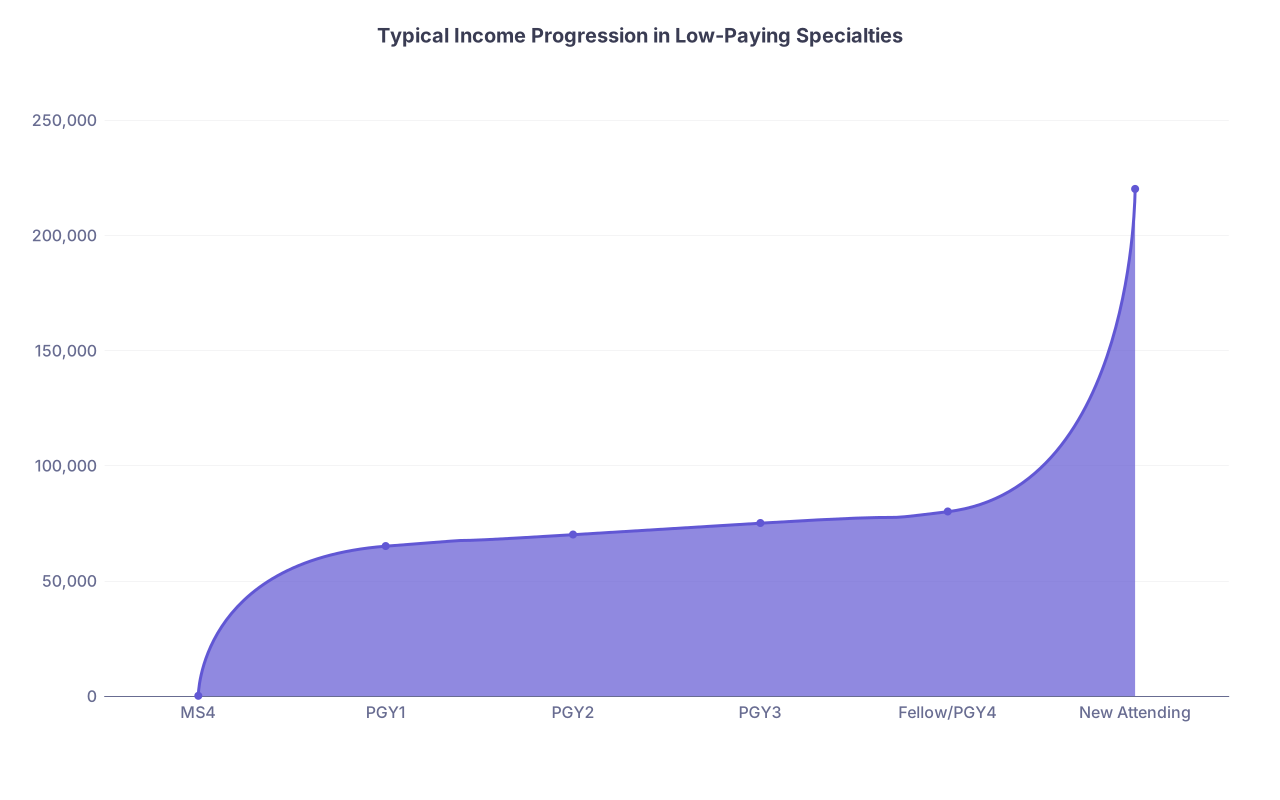
These are approximate numbers, but that jump from resident to attending is where most people lose discipline and trap themselves.
Year 1–2: Survival Mode With a System (PGY1–2)
Your first two years are about installing guardrails. Not squeezing out every dollar. Guardrails.
Step 1: Put Your Financial Autopilot in Place in Month 1
Before orientation is over, do this:
Know your take‑home pay to the dollar.
Example: $68,000 salary → after taxes, insurance, retirement, etc. you might see ~$3,600–$4,000/month.Set up automatic buckets on payday:
- 5%–10% to emergency fund (high-yield savings)
- Minimum + $50–$100 to each loan group (if not on income-driven repayment)
- $100–$200 to Roth IRA (if cash flow allows; if not, punt this to PGY3)
Decide on one loan strategy and lock it in for 2 years:
- If you are almost certainly going for PSLF (common in psych, peds, FM at academic or FQHC jobs):
Get on an income-driven repayment plan (like SAVE), certify employment annually, and stop thinking about it every week. - If you know you will work private or non-qualifying:
Pay minimums during residency, plan a structured payoff later. Do not refinance federal loans during residency unless you absolutely know there is zero chance you will need PSLF or protections.
- If you are almost certainly going for PSLF (common in psych, peds, FM at academic or FQHC jobs):
| Situation | Best Default Strategy |
|---|---|
| Academic resident, likely PSLF job | Income-driven, track PSLF |
| Community resident, uncertain | Income-driven, keep options |
| Certain private practice post-res | Standard/extended, no refi yet |
| High spouse income | CAREFUL: evaluate SAVE vs refi |
Step 2: Lock in Housing the Right Way
Residents overpay on housing constantly. Because they are tired. Because they want “something nice.” Because all their co-interns are doing it.
Do this instead:
Cap rent at 25%–30% of take‑home.
If you bring home $3,800/month, rent should be ≤ $1,000–1,100 if you have roommates or ≤ $1,200–1,300 solo max in most markets outside NYC/SF/LA/Boston. In high-cost cities, you may have to push closer to 35%, but then you must cut elsewhere.House share > studio > fancy 1‑bed.
The single most powerful financial decision for PGY1 is to share housing. I do not care that your co-resident just signed for a luxury studio. They will pay for it for the next decade.Commit to a full year.
Do not move mid-year unless the place is unsafe. Every move costs time and money and blows up your schedule.
Step 3: Institute a “No New Debt” Rule
From PGY1 start through at least PGY3:
- No new credit card debt. If you cannot pay the statement in full, the answer is no.
- No new car loans unless the car you have is literally unsafe.
- If you must buy: used, reliable, total price ideally < $15k–$18k, 5‑year term max, payment ≤ $250–$300/month.
- No furniture loans, no “0% interest” traps. IKEA, Facebook Marketplace, Craigslist exist for a reason.
You are not poor. You are restricted. Different thing.
Step 4: Build a Micro Emergency Fund
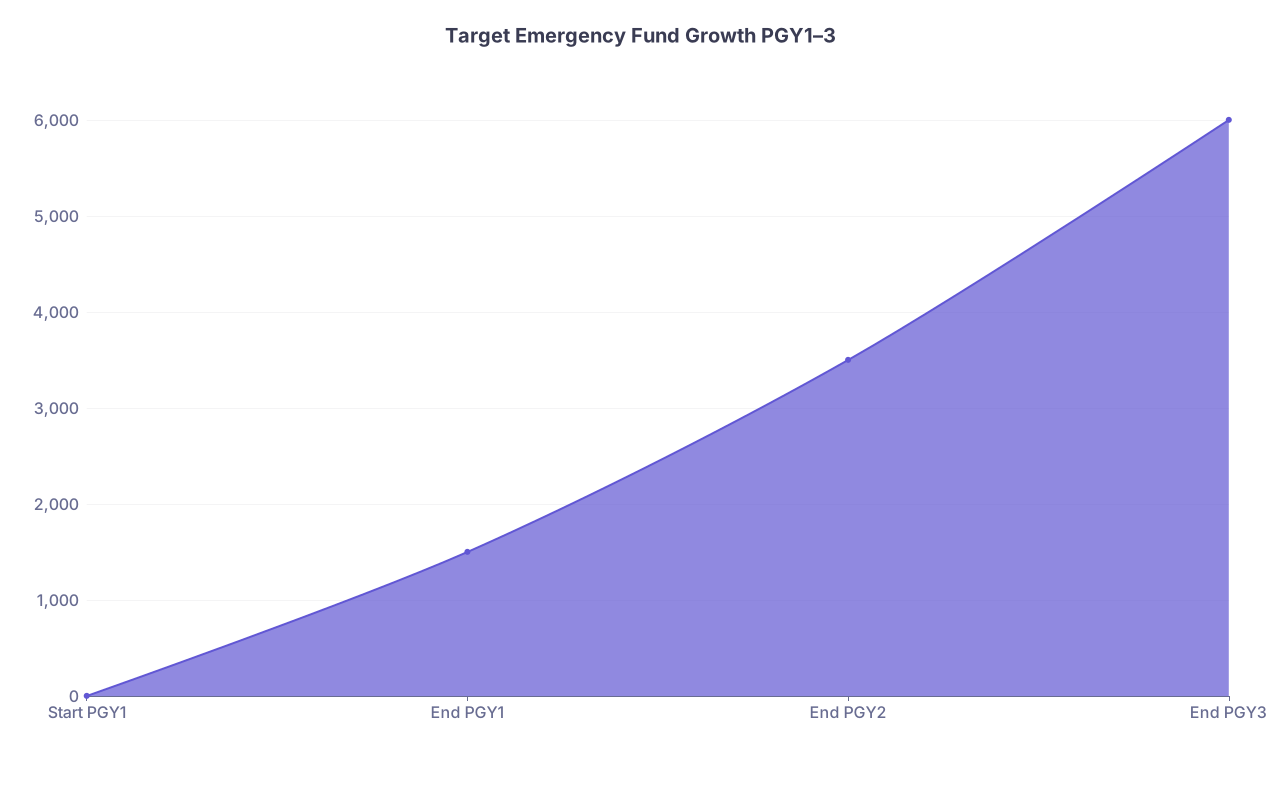
You do not need 6 months of expenses in PGY1. You need enough that an unexpected $1,500 disaster does not go on a credit card.
Concrete plan:
- Target: $3,000–$5,000 by end of PGY2.
- Method: $150–$250/month auto-transfer into high-yield savings the day after payday.
This is boring. Which is the point.
| Category | Value |
|---|---|
| Start PGY1 | 0 |
| End PGY1 | 1500 |
| End PGY2 | 3500 |
| End PGY3 | 6000 |
Step 5: Keep Lifestyle Decisions Reversible
In PGY1–2 you still do not really know:
- Which city you will end up in
- Whether you will do fellowship
- What kind of practice setting you will love
So do not:
- Buy a condo
- Buy expensive niche equipment (home gym, Peloton, etc.) unless you can swallow losing that money
- Commit to long-term contracts (expensive gyms, car leases, etc.)
Your leverage is your flexibility. Do not sell it for granite countertops.
Year 3: Positioning and Optional Income Upshift (PGY3)
By PGY3, the basics should be stable:
- You know your monthly numbers
- You are not adding new debt
- You are not drowning in minimum payments
Now the structure shifts: you start designing your post‑residency life.
Step 1: Decide on Your Path Inside the “Low-Paying” Field
Even within low-paying specialties, variance is huge.
A pediatric hospitalist at a major academic center vs a community peds doc with a blended outpatient/urgent care role vs a pediatrician doing mostly telehealth—they do not earn the same.
Same with:
- Psych: academic psych vs community psych vs telepsych vs niche (addiction, C/L) with call differentials.
- Family medicine: pure clinic vs clinic + urgent care vs rural with OB and procedures.
You are not just “a pediatrician.” You will be a very specific type of pediatrician, with a very specific income band.
| Role | Approx Income Range |
|---|---|
| Academic Pediatrics | $180k–$230k |
| Community Pediatrics | $210k–$260k |
| Academic Psychiatry | $220k–$260k |
| Telepsychiatry (full-time) | $240k–$320k |
| Academic Family Medicine | $190k–$230k |
| Rural FM with procedures | $240k–$300k |
So:
- Talk to 3–5 attendings in each path.
- Ask real numbers. “Ballpark, what does a typical full-time physician in your role make?”
- Decide what band you are aiming for and plan your life to fit under the lower end of that band.
Step 2: Controlled Moonlighting (If Safe)
PGY3 is usually when moonlighting opens up.
Rule set:
- Only if you are clinically solid and not compromising patient safety.
- Only if your program supports it and duty hours are honestly followed.
- Use a cap: e.g., max 1–2 shifts/month for 6 months; then reevaluate.
Use moonlighting money for:
- Emergency fund topping up
- One-time expenses (board fees, moving fund)
- Maybe a very small “fun” line item to stay sane
Do not:
- Bloat your recurring lifestyle based on moonlighting income.
- Use it to justify a more expensive car or apartment.

Step 3: Start a Moving + Transition Fund
You will move. That move will cost you:
- First month’s rent + security deposit (often 1.5–2x rent)
- Travel, hotel for interviews, license fees, board exams
- Moving truck or movers
Target by end of PGY3:
- $5,000–$8,000 specifically earmarked for “transition.”
If your emergency fund is already ~ $3,000–$5,000, great. Keep this as a separate bucket, even if it lives in the same savings account but is tracked separately.
Transition Year: PGY4 / Fellowship / Final Year Before Attending
This is where people blow it. They get “almost attending brain” and start spending like the money is already here.
You are not there yet.
Step 1: Lock in Your Post-Training Budget Before You Sign
You will start seeing offers and contracts. Before you sign, do this on paper or spreadsheet:
Take the lowest realistic salary you might make in your chosen role.
- Example: you are going into outpatient psych with offers ranging from $240k–$280k. Plan on $230k–$240k.
Estimate take‑home:
- Rough, but useful: after taxes, retirement contributions, and insurance, assume you see ~60%–65% of gross in your bank.
- $230k gross → maybe ~$11,500–$12,500/month net.
Build a sample budget with:
- Rent/mortgage capped at 20%–25% of take‑home.
- Student loans at realistic levels (post-residency payments will jump under both standard and some income-based plans).
- 15%–20% of gross toward retirement (employer match + your contributions) once attending.
If the math does not work at your dream academic job, you need to know before you emotionally commit to it.

| Step | Description |
|---|---|
| Step 1 | Receive Offer |
| Step 2 | Estimate Net Pay |
| Step 3 | Build Sample Budget |
| Step 4 | Negotiate or Decline |
| Step 5 | Accept Offer |
| Step 6 | Cash Flow Positive? |
| Step 7 | Meets Life Goals? |
Step 2: Decide Where You Will Live Like a Resident Again
You do not need to live like a resident forever. But for the first 12 months as an attending? You absolutely should live closer to your resident lifestyle than your colleagues will.
Concretely:
- Delay major upgrades (house, car, private school) for 12–18 months after starting your attending job.
- Let your cash position stabilize.
- Get used to your true tax situation, loan payments, retirement contributions.
If you are willing to spend just one more year with controlled lifestyle creep, you can eliminate an enormous amount of financial pressure.
Early Attending Year 1: Secure the Foundation, Then Expand
This is where your specialty’s “low pay” either becomes a constant complaint or simply a planning variable. Depends on what you do in this first real-money year.
Step 1: Rebuild the Budget With Real Numbers (First 3 Months)
In the first 90 days of attending life:
Track:
- Actual take‑home pay
- Automatic retirement contributions
- Health insurance premiums
- Actual loan payment amounts (after income recertification or plan change)
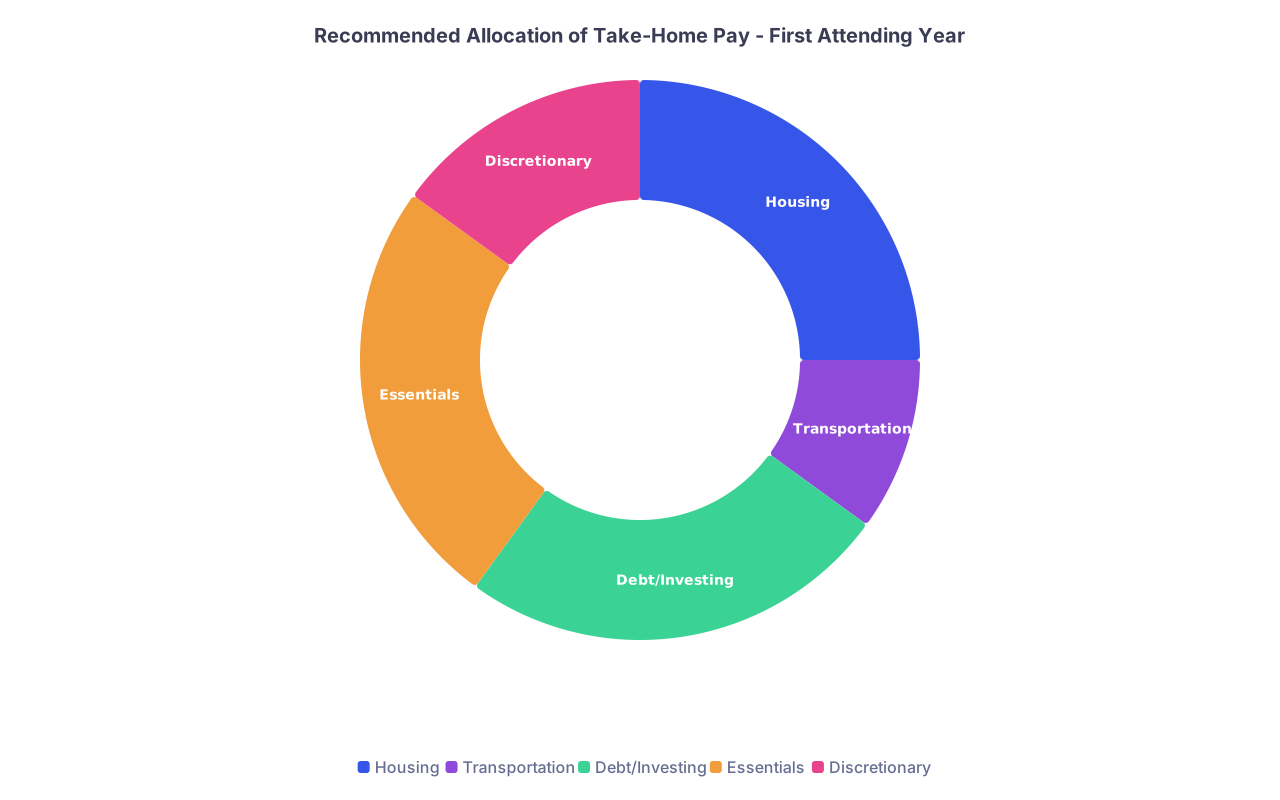
Create a simple, boring budget that:
- Has 3–5 big categories: Housing, Transportation, Food/Household, Debt/Investing, Everything Else.
- Leaves at least 15% of gross income going to retirement (403b/401k, 457b, IRA) + extra loan payments if no PSLF.
If your numbers do not fit, this is where you adjust housing plans, car expectations, and lifestyle.
| Category | Value |
|---|---|
| Housing | 25 |
| Transportation | 10 |
| Debt/Investing | 25 |
| Essentials | 25 |
| Discretionary | 15 |
Step 2: Finalize Your Loan Strategy for Real
By now you should sharply answer:
- Am I committing to PSLF?
- Am I 100% private practice / non-qualifying?
If PSLF:
- Lock in income-driven repayment.
- Certify employment annually.
- Do not accelerate payments; invest extra instead.
If no PSLF:
- Consider refinancing to a lower interest rate (once you are confident your job is stable).
- Target a payoff timeline (e.g., 8–10 years from graduation) that still leaves room for retirement contributions.
The worst place to live is indecision:
- You are not paying enough to pay them off soon.
- You are not consistent enough for PSLF.
- You just bleed cash in interest.
Pick a lane and commit.
Specialty-Specific Levers: How to Earn More Without Changing Fields
You chose a low-paying specialty. Fine. That does not mean every job inside it pays poorly.
Here is how to push your income safely upward without wrecking your life.
Psychiatry
- Telepsychiatry: Massive demand, flexible. Good for part-time additions or negotiation leverage.
- Niche skills: Addiction, C/L, interventional psych (ECT, TMS) can bump your value.
- Call structure: Some systems pay very well for weekend call coverage; others do not. Ask.
Pediatrics
- Urgent care and hospitalist work often pays better than pure outpatient.
- Rural or underserved settings come with loan repayment, bonuses, and higher base pay.
- Consider mixed roles: 0.6 FTE clinic + 0.4 FTE urgent care.
Family Medicine
- Procedural skills (joint injections, skin procedures, women’s health) increase RVUs and leverage.
- Rural and small-town jobs frequently outpay big-city academic posts by 20%–40%.
- Look for roles with in-house urgent care shifts you can optionally pick up for extra.

Point is: inside every “low-paying” specialty, there are pockets of higher compensation. Your first 5 years should include actively exploring and positioning yourself toward the better pockets that match your values.
The Safety Protocol: Red Lines You Do Not Cross
To keep this practical, here are the hard lines I would set for any resident/early attending in a low-paying field.
Red Line 1: Housing
- PGY1–3:
- Rent ≤ 30% of take‑home.
- No buying property unless your spouse’s income and your long-term city plans are rock solid.
- First attending year:
- If you buy, total monthly housing cost (mortgage, taxes, insurance, HOA) ≤ 28% of gross, definitely ≤ 30% of take‑home.
Red Line 2: Car
- Total car payments (loans, leases) ≤ 8%–10% of take‑home.
- Do not buy a new car in the 12 months before or after residency unless the old one is dying. Let yourself adjust to your new cash flow first.
Red Line 3: Debt Creep
- No new high-interest debt. Zero.
- If you carry any balance on a card for more than 1 month, you must treat that as an emergency:
- Freeze discretionary spending.
- Pick up an extra shift (if safe).
- Kill that balance in 60 days.

Red Line 4: Retirement Neglect
You are in a lower-paying field. That makes retirement savings more—not less—urgent.
Targets:
- By end of first attending year: at least 10% of gross going to retirement accounts.
- Within 3 years: ramp up to 15%–20% of gross.
If your employer offers:
- 403b/401k with match: always get the full match.
- 457b (government/non-profit): strong tool, especially if you are stable at that employer.
Pulling It Together: A 5-Year Snapshot
Instead of vague advice, look at the structure as a simple, staged plan.
| Year | Core Focus | Money Moves |
|---|---|---|
| PGY1 | Guardrails, housing, no new debt | Autopay setup, cheap rent, small EF |
| PGY2 | Stability, small savings | Grow EF, no lifestyle creep |
| PGY3 | Positioning, limited moonlighting | Path choice, transition fund |
| PGY4/Fellow | Contract and city decisions | Sample budgets, PSLF vs payoff lane |
| Attending Y1 | Foundation and future-proofing | Real budget, housing/car decisions |
Then everything after that is just consistency.
| Period | Event |
|---|---|
| Residency - PGY1 | Guardrails, housing, autopay |
| Residency - PGY2 | Stability, emergency savings |
| Residency - PGY3 | Career positioning, moonlighting |
| Transition - PGY4/Fellow | Contract decisions, city choice |
| Attending - Year 1 | Budget reality, housing/car reset, loan strategy |
Two Final Non-Negotiables
Talk about money openly.
With co-residents, with attendings you trust, with your partner. The residents who struggle most are the ones who treat finances like a shameful side topic instead of another clinical problem to solve.Accept that you cannot buy your way out of bad structure.
In a high-paying surgical field, you can make serious planning errors and still brute-force your way out with income. In low-paying fields, you must rely on structure, not heroics.
If you:
- Cap your fixed costs
- Avoid new bad debt
- Use your first attending year to solidify rather than splurge
- Aim for the higher-paying corners inside your chosen specialty
Then your “low-paying field” becomes completely safe. Predictable. Compatible with a good life, kids, a decent house, and actual time off.
The first five years are where that either becomes possible—or permanently hard.
Keep three things front and center:
- Guardrails first, growth later.
- Decide your lane (PSLF vs payoff, academic vs community) and commit.
- Use your first attending year to build stability, not status.


