

It’s July 1st, your first week as an attending in outpatient pediatrics. Residency is finally over. You’re looking at your contract again: $205k base, RVU bonus “potential,” 3 weeks of vacation, 5 days CME. People told you, “Peds is a lifestyle specialty. You’ll be fine.”
But it’s 7:45 pm. You’re still clicking through charts. You have 18 unsigned notes. Your in-basket is a disaster. You’re googling “public service loan forgiveness timeline” in between refill requests. Your phone just pinged with a MyChart message from a mom who expects an answer tonight.
This is where the lifestyle myth explodes.
Low-paying “lifestyle specialties” (peds, family med, psych, outpatient IM, some hospitalist gigs) sell a seductive story: less stress, predictable hours, more time with family. The trap isn’t that these specialties are bad. The trap is that many new attendings walk into them with wildly wrong expectations and get burned—financially, emotionally, and career-wise.
Let me walk you through the biggest myths I see new attendings fall for—and how to not be one of them.
Myth #1: “Lifestyle Specialty = Better Lifestyle Automatically”
The first and most dangerous assumption: that the specialty choice alone guarantees a better life.
Reality: A “lifestyle specialty” can destroy your lifestyle if the job structure is bad.
I’ve watched this play out:
- New outpatient pediatrician taking 24 patients a day, plus walk-ins, plus portal messages.
- Family med doc with “no call” who quietly ends up covering half the clinic’s inpatient load.
- Psych attending promised “flexible schedule,” then forced to fill last-minute double bookings to keep “access metrics” up.
The mistake is thinking the specialty label is enough. It isn’t. 90% of your lifestyle is not “I picked pediatrics.” It’s:
- How many patients per day.
- How messages, refills, results, and forms are handled.
- How call is structured (and how often people cheat the rules).
- How much admin/non-clinical work is dumped on you.
If you accept a job based only on “oh, it’s outpatient peds, the lifestyle will be fine,” you’re gambling with your sanity.
Here’s a simple comparison that most residents never force themselves to do:
| Factor | Job A (Looks Chill) | Job B (Actually Chill) |
|---|---|---|
| Daily patients | 26–28 | 16–18 |
| In-basket coverage | You handle all | Shared pool + nurse triage |
| Call | 1:4 nights/week, unpaid | 1:8, stipend + tele-only |
| Protected admin time | None | 4 hrs/week blocked |
| RVU pressure | Aggressive, monthly review | Minimal, annual review |
Both are “outpatient lifestyle specialties.” Job A will chew you up. Job B is sustainable. Specialty didn’t decide that. Structure did.
Mistake to avoid: Choosing a specialty and then assuming the lifestyle will magically appear no matter where you work. You have to interrogate the job, not just the field.
Myth #2: “I’ll Make It Up in Volume and Moonlighting”
I hear this one constantly in lower-paid fields: “Sure base is low, but I’ll work harder, pick up shifts, do some urgent care, maybe telehealth. It’ll be fine.”
That is exactly how you turn a “lifestyle specialty” into a grind specialty with bargain pay.
Here’s the trap pattern:
- You underestimate your loan burden and cost of living.
- You sign a low-paying outpatient job because “less stress.”
- Within a year, you feel behind on debt, savings, retirement.
- You start moonlighting evenings/weekends to plug the gap.
- You end up with the hours (or worse) of EM or anesthesia, but still at a lower effective rate.
Let me show you what this looks like in practice.
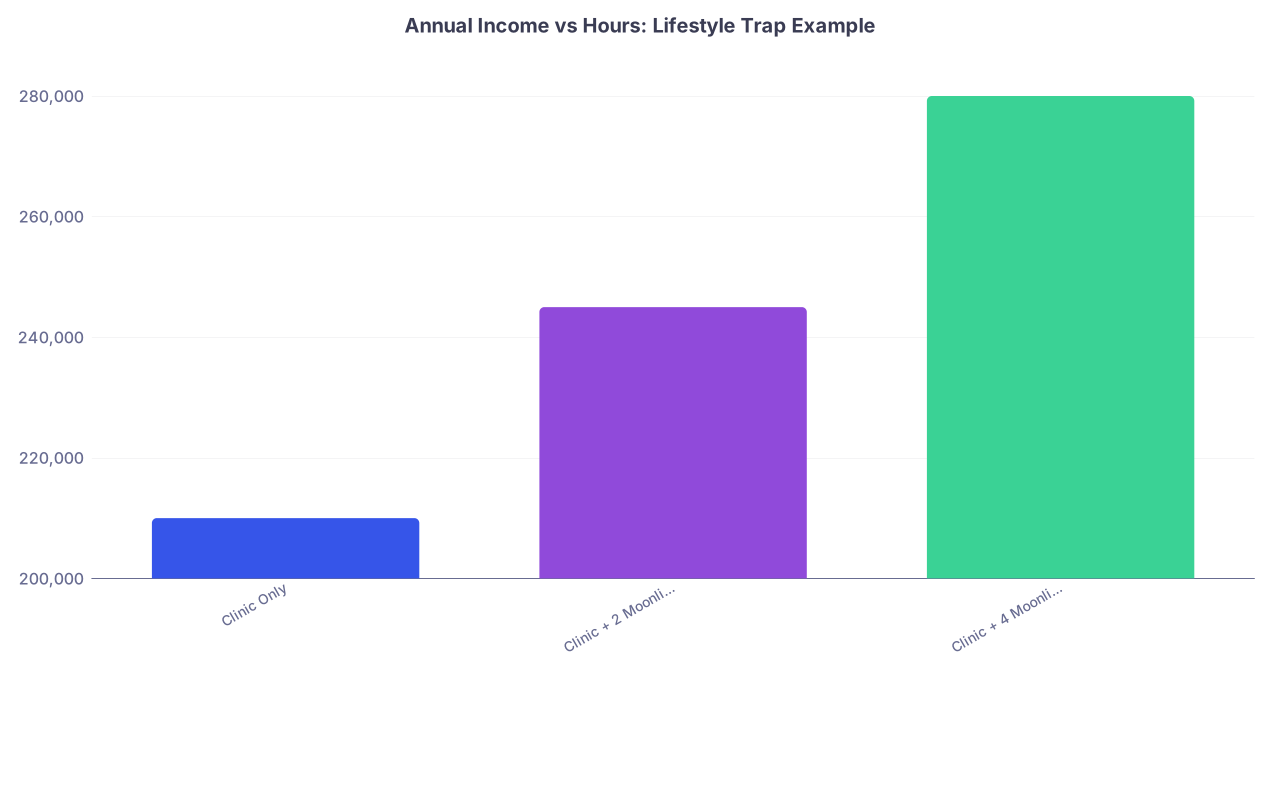
| Category | Value |
|---|---|
| Clinic Only | 210000 |
| Clinic + 2 Moonlight Shifts/mo | 245000 |
| Clinic + 4 Moonlight Shifts/mo | 280000 |
On paper, that looks great. Until you layer in hours.
Same doc, rough weekly hours (including hidden admin):
- Clinic only: 45–50 hrs/week
- +2 moonlighting shifts/month: adds ~8–12 hrs/month
- +4 moonlighting shifts/month: adds ~16–24 hrs/month, plus post-call fatigue
Very quickly, your hourly rate slides into “why did I do med school again?” territory.
The other mistake: counting on moonlighting as permanent income instead of a temporary, strategic tool (e.g., to crush high-interest loans for 2–3 years). If your baseline salary in a low-paying specialty cannot cover:
- Modest lifestyle
- Federal taxes
- Reasonable loan payments
- Retirement contributions
…then you’re signing up for long-term overwork. That isn’t lifestyle. That’s a quiet trap.
If you want to stay in a lower-paid field and not burn out, you cannot build your life assuming you will always be working “one more side gig.” That’s not a plan; that’s a leak.
Myth #3: “Lower-Paid Means Lower Stress”
Some of the most stressed, emotionally wrecked physicians I’ve seen are in the supposedly “low-stress” specialties: pediatrics, primary care, and outpatient psychiatry.
Different stress doesn’t mean less stress.
Common hidden stressors in low-paid fields:
- Volume pressure from administrators trying to squeeze margin out of low reimbursements.
- Never-ending inbox: refills, prior auths, documentation requests, school forms, FMLA.
- Emotional load: complex social situations, abuse concerns, suicidality, chronic disease non-adherence.
- Lower prestige and less leverage in the hospital system.
I’ve seen pediatrics colleagues crying in parked cars after child abuse cases, then walking into a 24-patient schedule and two meetings about “productivity metrics.”
Psychiatrists doing 20–30 minute med checks on trauma-heavy patients while admin pushes for “access” numbers. Primary care constantly blamed for “downstream metrics” they don’t control.
The quiet nightmare: you’re underpaid, overresponsible, and emotionally fried. And you start to resent the job you picked because “I wanted balance.”
Mistake to avoid: Confusing type of stress with degree of stress. Cognitive load, emotional trauma, and chronic system dysfunction will wreck you even if you never touch an OR.
When you evaluate “stress,” ask about:
- Average patient panel complexity.
- Access to social work, case managers, therapists.
- Time allowed per visit for complex patients.
- Support for debriefing hard cases (and whether it’s lip service or real).
If they brag about “seeing 25+ easy follow-ups a day,” run. There is no such thing as 25 “easy” human beings per day, five days a week, for years.
Myth #4: “I Chose This Specialty, So Money Shouldn’t Matter”
I see this especially in pediatrics, psych, and primary care. There’s this unspoken shame around caring about compensation. As if wanting to be paid fairly for highly skilled labor makes you less altruistic.
Here’s the pitfall: you tell yourself “I didn’t go into this for the money,” and use that as an excuse to:
- Not negotiate your first attending contract.
- Accept below-market salaries without researching.
- Ignore RVU structures and bonus details.
- Sign away non-competes that choke your future options.
Then five years later, you’re boxed in. You want to buy a modest house, or pay for daycare, or help aging parents. Suddenly money matters a lot. But your contract is terrible and your leverage is gone.
Let me be blunt. Low-paying specialty ≠ low value. You still have a rare, expensive skill set. Underpricing yourself because you “feel bad asking” is how systems keep low-paid specialties subsidizing everyone else.
Look at rough, illustrative numbers for new attendings in “lifestyle” fields at the same regional health system (not exact, but I’ve seen versions of this):
| Specialty | New Attending Base (approx) |
|---|---|
| Pediatrics | $195k–$220k |
| Family Med | $210k–$240k |
| Outpatient Psych | $240k–$280k |
| Hospitalist (IM) | $250k–$280k |
| General IM clinic | $210k–$240k |
Now compare that to loan burdens:
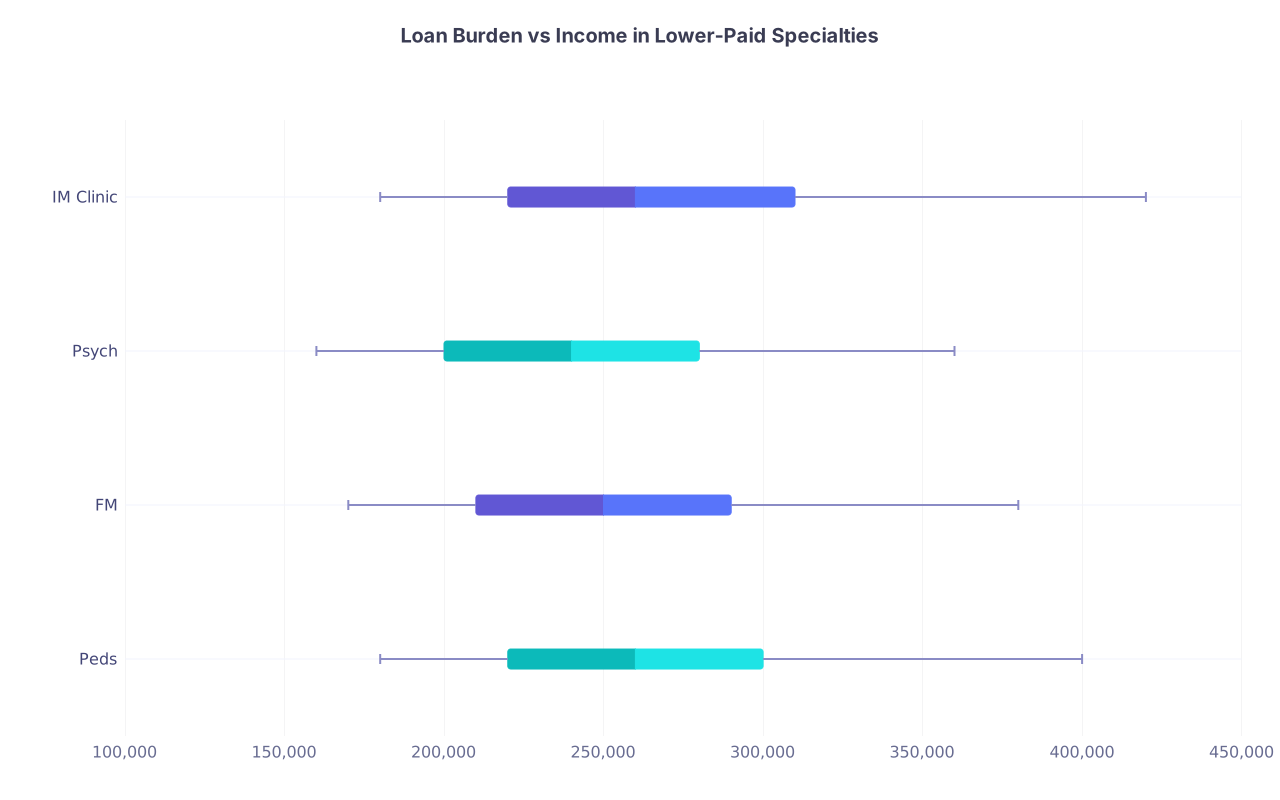
| Category | Min | Q1 | Median | Q3 | Max |
|---|---|---|---|---|---|
| Peds | 180000 | 220000 | 260000 | 300000 | 400000 |
| FM | 170000 | 210000 | 250000 | 290000 | 380000 |
| Psych | 160000 | 200000 | 240000 | 280000 | 360000 |
| IM Clinic | 180000 | 220000 | 260000 | 310000 | 420000 |
You cannot afford to “not care about money.” That mindset gets you poor contracts, delayed savings, and dependence on PSLF or forgiveness programs you barely understand.
Mistake to avoid: Moralizing money. You can care deeply about patients and still demand a fair contract, decent pay, and real benefits. Those things keep you in the field longer. That helps patients.
Myth #5: “PSLF or Loan Forgiveness Will Save Me, So I Can Ignore the Numbers”
Public Service Loan Forgiveness (PSLF) and other forgiveness pathways are powerful. They’re also one of the most misunderstood crutches new attendings lean on in lower-paying specialties.
The pattern:
- You tell yourself: “I’ll go academic or work at a non-profit. PSLF will wipe my loans in 10 years.”
- You choose a significantly lower-paying job because “it counts for PSLF.”
- You do not actually verify your employer’s status, your repayment plan, or whether your contract is sustainable.
- Five to seven years in, you realize half your payments didn’t qualify, or you’re so burned out you want to leave that job—but your entire financial house is built around staying put for PSLF.
I’ve seen people trapped in awful positions because they’re “too close to forgiveness to quit.” That is not a good place to be.
You must approach PSLF like a bonus, not a lifeline. The job still has to stand on its own:
- Fair pay for your region and specialty.
- Tolerable workload.
- Reasonable call.
- Non-toxic culture.
If the only way a job seems “okay” is if $200k of loans magically disappears in year 10, that’s not okay.
Here’s what a reasonable approach looks like (and how people mess it up):

| Step | Description |
|---|---|
| Step 1 | Graduate Residency |
| Step 2 | Compare pay vs private options |
| Step 3 | Treat PSLF as unlikely |
| Step 4 | PSLF is bonus upside |
| Step 5 | Danger - PSLF trap |
| Step 6 | Negotiate or walk |
| Step 7 | Plan loans on income alone |
| Step 8 | File PSLF forms correctly yearly |
| Step 9 | Non profit job offer? |
| Step 10 | Job sustainable without PSLF? |
Mistake to avoid: Accepting a bad job because “PSLF will fix it later.” PSLF cannot cure burnout. Or a toxic boss. Or a 1:3 call schedule. You still have to survive the 10 years.
Myth #6: “As an Attending, I’ll Finally Have Control of My Time”
Residents always tell themselves: “Once I’m an attending, I’ll control my schedule. I’ll say no. I’ll leave on time.”
A lot of them are lying to themselves.
In low-paid, high-volume specialties, new attendings are the easiest people to exploit. You’re eager, you’re grateful to be hired, and you don’t know what’s “normal” yet. Admins know this.
Here’s how “control of time” quietly evaporates:
- You’re scheduled 8–5, but first patient is at 8:00 with no pre-clinic buffer and last patient at 4:40.
- No blocked charting time. No admin half-days. Everything “non-visit” is supposed to happen magically in between.
- Portal messages aren’t counted as work RVUs, but there’s a “48-hour response expectation.”
- You’re asked to serve on committees “for career development” with no protected time.
So your day becomes:
- 8:00–5:15: Patients, calls, interruptions.
- 5:15–7:00: Notes, in-basket, follow-ups.
- Later that night: Logging in again “just to keep up.”
Attending title, resident life.
Mistake to avoid: Believing job marketing copy over schedule reality. You need to ask humiliatingly specific questions before you sign:
- What time is my first and last patient?
- How many patients per session?
- Is there blocked admin time each week? Protected, not “if it’s light.”
- Who handles portal refill requests and lab results?
- How are after-hours calls distributed and documented?
- How many hours per week do your current attendings chart from home?
If they dodge, minimize, or say, “Everyone just does what it takes,” assume the answer is bad.
Myth #7: “I Can Always Switch Later If It’s Bad”
Technically yes, people switch jobs and even specialties. But using that as your main safety net is sloppy thinking.
Switching is hardest from the lower-paid, overworked fields where you’re already burned out:
- You’re too exhausted to interview properly or study for another board.
- Your contract may have a nasty non-compete blocking nearby options.
- Your CV may show very narrow experience that doesn’t translate well.
You cannot assume infinite flexibility.
What you can do is protect your future options even if you stay in a lower-paid specialty your entire career.
That means:
- Avoiding predatory non-competes that bar huge regions or broad practice types.
- Keeping your board certification active and clean.
- Not burning bridges with faculty or colleagues who could be your references later.
- Maintaining at least one “marketable” skill (e.g., hospital peds, addiction treatment, procedures, integrated care experience).
Mistake to avoid: Signing a “lifestyle” job that gives you neither lifestyle nor leverage. If the job pays poorly and blocks your ability to leave, you’ve walked into a cage.
Myth #8: “Everyone in My Specialty Is Fine, So I Will Be Too”
You’re going to hear a lot of normalized suffering dressed up as “this is just how it is.”
Peds: “We don’t go into this for the money.”
Primary care: “We’re all behind on charts.”
Psych: “We’re used to emotionally heavy days.”
Those phrases are red flags, not reassurance.
People habituate to dysfunction. They downplay it to survive. When you’re fresh out, you actually see the crazy clearly. Don’t let group denial drag you into acceptance.
Pay attention to small tells when you meet potential colleagues:
- Do they joke about charting at 10 pm every night?
- Do they tell you “it’s busy, but you get used to it” without any specifics?
- Do they warn you more about admin hassles than clinical complexity?
- Do they perk up when describing days off or side gigs—but sound dead when describing the core job?
If the most senior people in the group seem exhausted and financially anxious, that’s your future if you sign.
Mistake to avoid: Using “everyone else is doing it” as your bar. You trained too long to aim for “equally miserable as my colleagues.”
The One Thing You Need to Do Differently
You probably noticed a pattern: the mistake isn’t choosing pediatrics or psych or family medicine. The mistake is walking into those fields with lazy assumptions.
If you want to avoid the lifestyle myth trap, here’s your next step:
Today, before you talk to another recruiter or sign anything, write down your non-negotiables for your first attending job.
Three categories, on paper:
Workload boundaries
- Max patients per day
- Required protected admin time
- Acceptable call frequency and structure
Financial floor
- Minimum base salary you will accept (based on your loans and cost of living)
- Minimum employer retirement contribution
- Deal-breakers on RVU thresholds or unpaid work
Exit and future flexibility
- Non-compete terms you will not accept
- Contract length and termination clauses you require
- What skills or settings you want to keep open for future transitions
Then, use that sheet ruthlessly. If a “lifestyle” job doesn’t hit those minimums, it is not a lifestyle job for you, no matter what specialty label is on it.
Open a blank page right now and write:
- “Max patients/day I will accept:”
- “Smallest base salary I can live with (realistically):”
- “Non-compete I will refuse:”
Fill those in. That simple act will save you from 80% of the traps that swallow new attendings in the lowest paid specialties.


