

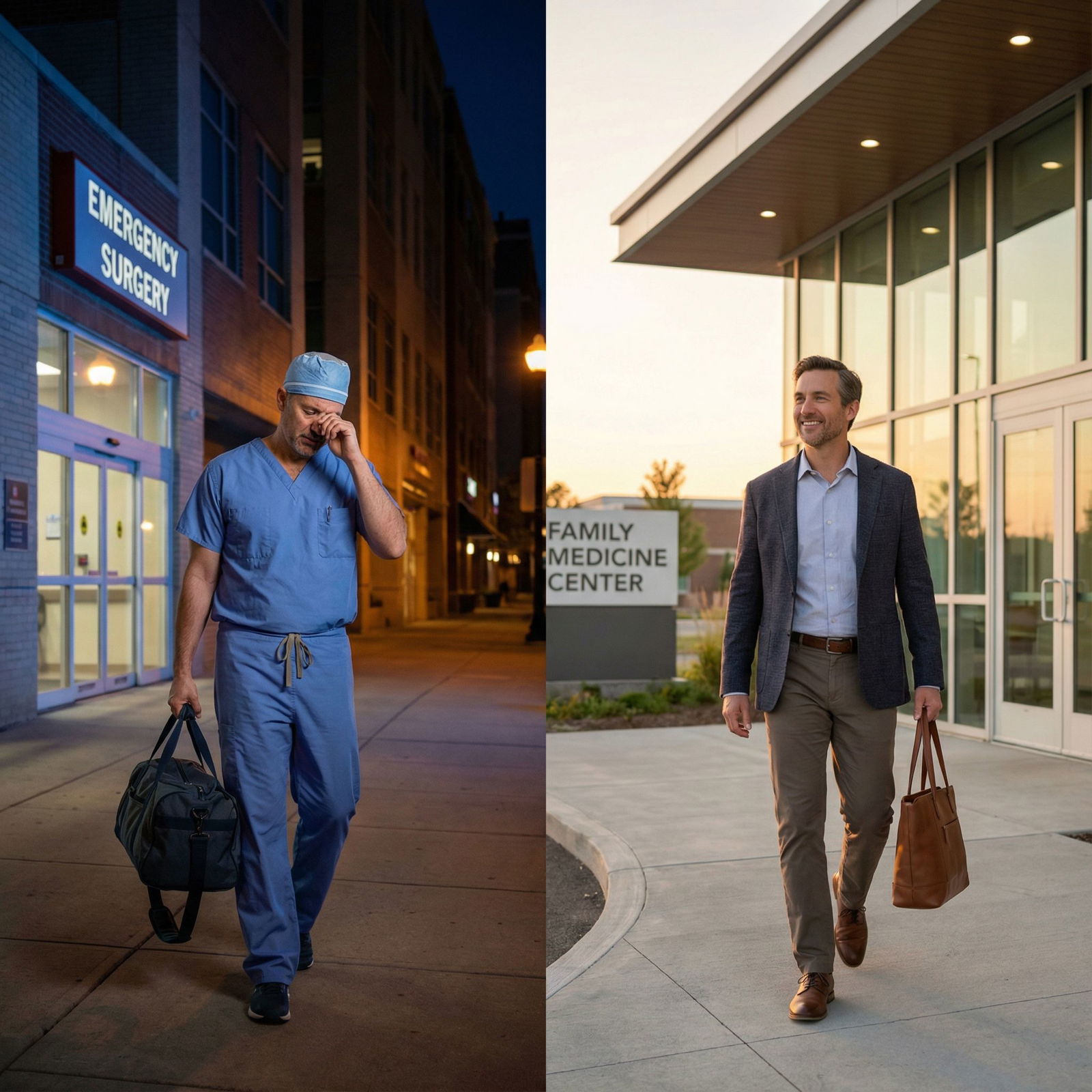
It is July 1st. You just started intern year in pediatrics / family medicine / psychiatry / geriatrics / PM&R. Your paycheck is small, your debt is not, and you are very aware that even as an attending, your salary will lag behind radiology, derm, ortho, anesthesia.
Here is the real problem: if you do nothing on purpose about optionality during residency, you will wake up 5–7 years from now stuck with a single path—RVU factory or bust. At that point, changing direction is painful and expensive.
This guide is the antidote. Year-by-year, quarter-by-quarter, what you should be doing so your “low-paying” specialty still gives you high-opportunity career options.
We will assume a 3-year residency (FM, peds, psych, IM pre-fellowship). I will flag extra steps if you are in a 4-year program (PM&R, med-psych, etc.).
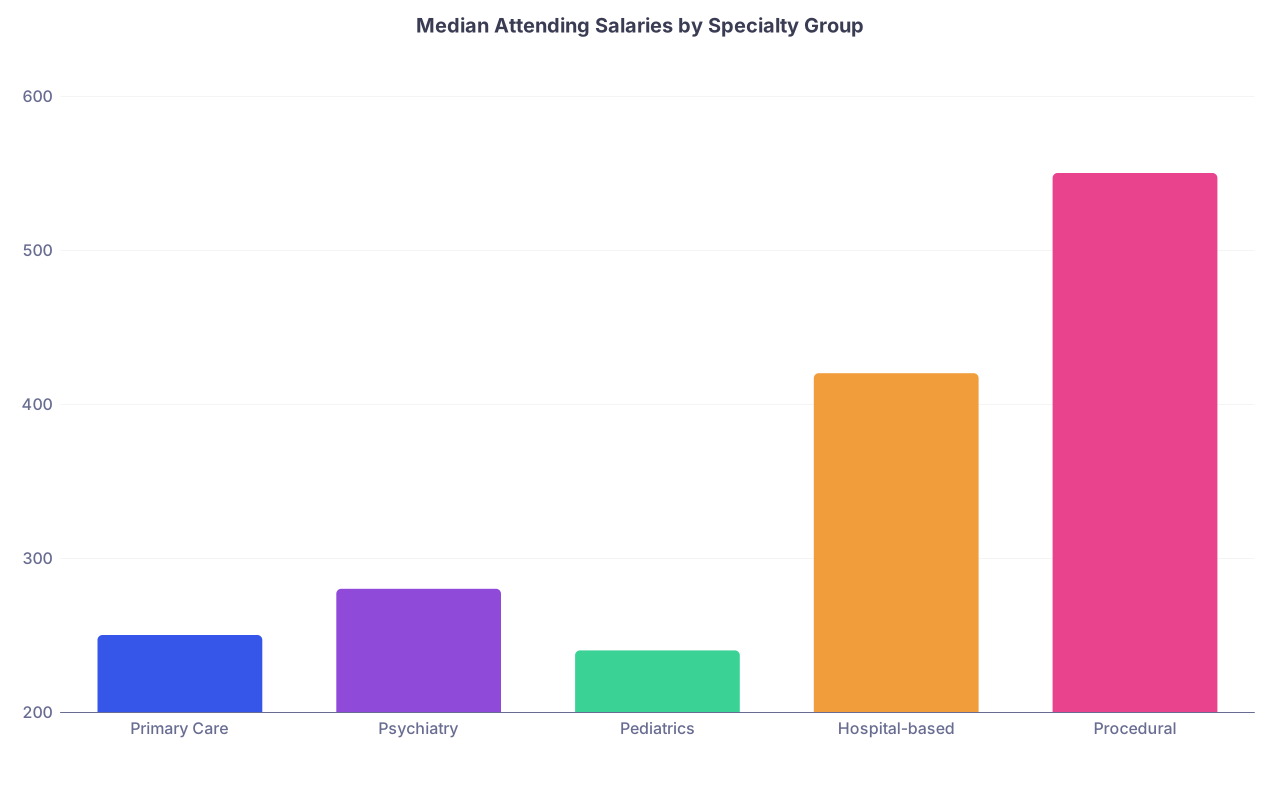
| Category | Value |
|---|---|
| Primary Care | 250 |
| Psychiatry | 280 |
| Pediatrics | 240 |
| Hospital-based | 420 |
| Procedural | 550 |
Big Picture: The Four Types of Optionality You Are Building
Before the timeline, you need the target. By the end of training you want leverage in at least two of these four categories:
Clinical leverage
- Niche expertise that commands higher pay or better schedules
- Examples: addiction psych, sports med, developmental peds, pain rehab, complex care, geriatrics, consult liaison psych
Academic / research leverage
- Enough scholarship to land a university job, grants, or leadership track
- Publications, QI projects, specific method skills (stats, qualitative work, implementation science)
Non-clinical skill leverage
- Skills that are valuable outside the exam room
- Examples: health policy, informatics, data analytics, education design, administration, entrepreneurship
Financial leverage
- You are not owned by your paycheck
- Controlled lifestyle, side income options, understanding of contracts and business models
You do not need all four. Two solid and one “developing” is very realistic. But you must choose early what you are angling toward. Wandering is how you get trapped.
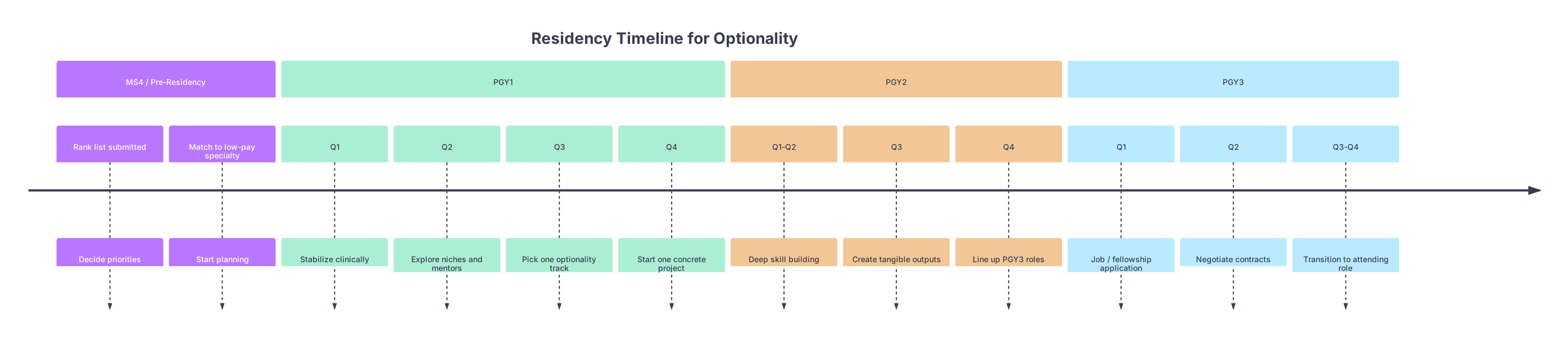
| Period | Event |
|---|---|
| MS4 / Pre-Residency - Rank list submitted | Decide priorities |
| MS4 / Pre-Residency - Match to low-pay specialty | Start planning |
| PGY1 - Q1 | Stabilize clinically |
| PGY1 - Q2 | Explore niches and mentors |
| PGY1 - Q3 | Pick one optionality track |
| PGY1 - Q4 | Start one concrete project |
| PGY2 - Q1-Q2 | Deep skill building |
| PGY2 - Q3 | Create tangible outputs |
| PGY2 - Q4 | Line up PGY3 roles |
| PGY3 - Q1 | Job / fellowship application |
| PGY3 - Q2 | Negotiate contracts |
| PGY3 - Q3-Q4 | Transition to attending role |
MS4 / Pre-Residency: Set Direction Before the Chaos
You are still a med student. You have time. Use it.
At this point you should…
Pick your top two optionality categories.
- Example combos:
- Primary care FM: Clinical niche (sports med or addiction) + financial leverage
- Psych: Clinical niche (child, addiction) + non-clinical skills (informatics, telehealth business)
- Peds: Academic / research + non-clinical (public health / policy)
- Write them down. If it is not explicit, residency will erase it.
- Example combos:
Do a brutally honest inventory. Answer for yourself:
- What do I already have?
- Previous career? Coding, finance, teaching. That matters.
- Prior publications? One small paper is more than most co-residents will have.
- What do I hate doing so much that I will never stick with it?
- If you hate writing, a pure research identity is probably dead.
- What do I already have?
Preload one or two skills before day 1.
- Take a short focused course:
- R / Python for data (Datacamp, Coursera)
- Intro to QI (IHI Open School)
- Basic personal finance book plus one physician-specific (e.g., White Coat Investor)
- Goal is not mastery. Goal is not starting from zero in October of PGY1.
- Take a short focused course:
Clarify debt and basic money plan.
- Run actual numbers for:
- REPAYE/SAVE vs refinance vs PSLF
- Estimated attending salary range for your specialty and region
- Pick a provisional path (e.g., “I am aiming for PSLF, but will reassess PGY2”).
- Run actual numbers for:
PGY1: Stabilize, Then Explore and Commit
PGY1 is survival plus reconnaissance. You are not building a brand yet. You are figuring out what is realistic.
Quarter 1 (July–September): Do not be a disaster
At this point you should:
Focus 90% on being a competent intern.
- If you are the chaos intern, no one is giving you extra opportunities.
- Show up on time, know your patients cold, close your notes.
Light-touch optionality work:
- Month 1: 1–2 hours per week on reading in your potential niches.
- FM: sports med, addiction, geriatrics, obesity medicine
- Peds: NICU grad clinic, complex care, developmental peds
- Psych: addiction, forensics, CL, sleep
- PM&R: pain, spine, TBI, sports
- Start a running list: “What kinds of cases do I find weirdly fun?”
- Month 1: 1–2 hours per week on reading in your potential niches.
Quarter 2 (October–December): Explore and meet people
At this point you should:
Identify 3 attendings across your interest areas.
- Criteria:
- They are doing something you might want (fellowship director, clinic director, entrepreneur, program leadership, informatics, advocacy role).
- People locally actually respect them.
- Ask for 20–30 minute meetings:
- “I am a PGY1 thinking about building a career in X. Can I ask you how you got there and what you would do differently?”
- Criteria:
Test-drive two tracks lightly.
- Example: You are an FM intern.
- Attend sports med clinic one half-day (even if unpaid, just shadow).
- Join a substance use disorders working group / committee.
- For psych:
- Sit in with CL rounds; shadow addiction consults or IOP.
- For peds:
- Shadow complex care clinic; join a QI project meeting.
- Example: You are an FM intern.
Pick ONE primary direction by end of December.
- Clinical niche vs research vs non-clinical vs combo.
- If you are totally torn? Choose the path that:
- Has a real mentor on-site.
- Has clear, visible jobs in your region (you can literally search them on Indeed).
Quarter 3 (January–March): Start a concrete project
Intern winter is rough, but you must get one thing off the ground.
At this point you should:
Pick a “low-lift, high-yield” project. Examples:
- QI:
- Psych: reduce 30-day readmissions for a diagnosis, implement a new safety checklist.
- Peds: improve vaccination rates, asthma action plans.
- FM: cancer screening rates, hypertension control.
- Research:
- Case series, retrospective chart review, educational project.
- Non-clinical:
- Build a draft curriculum, small tech prototype, or a basic program evaluation.
- QI:
Lock in:
- A clear deliverable (poster, local talk, manuscript draft).
- A timeline: draft by end of PGY1 or early PGY2.
Quarter 4 (April–June): Show basic trajectory
At this point you should:
Present something:
- Local hospital QI day, regional meeting, or even journal club.
- This is about signaling: “I follow through.”
Ask for your first titled role for PGY2:
- Resident rep on QI committee
- Chief of wellness, scheduling liaison, residency recruitment
- Co-leader of an elective or small teaching block for students
- No, the title will not change your life. But it builds your CV narrative.
If you are in a 4-year program, this PGY1 foundation lets you stretch and deepen instead of flailing in PGY3–4.

PGY2: Deepen Skills and Produce Tangible Outputs
PGY2 is where people either become “that resident who is everywhere” or just another name on the schedule. This is your leverage year.
Quarter 1–2 (July–December): Go from dabbling to competence
At this point you should:
- Double down on your chosen track.
Examples by specialty:
Family Medicine
- Sports: arrange recurring sports med continuity clinic, cover local games, start studying for CAQ.
- Addiction: get DATA waiver (if applicable), frequent addiction clinic, consider ASAM membership.
- Women’s health: extra colpo / LARC sessions, OB continuity if you have that track.
Psychiatry
- Addiction: extra days on dual diagnosis, medication-assisted treatment clinics, join research or QI on SUD.
- Forensics: court clinic exposure, shadow forensic evals, read classic texts.
- CL: become the “medically literate” psych resident, join transplant eval work, palliative psych projects.
Pediatrics
- Complex care: continuity clinic with tech-dependent kids, multidisciplinary team meetings.
- NICU / PICU interest: choose those electives deliberately, ask about scholarly projects.
- Developmental: early-intervention meetings, autism clinics, developmental testing.
PM&R / Rehab
- Pain: spine clinic, EMG, injections exposure, work with anesthesia pain colleagues.
- Sports: MSK ultrasound, team coverage, ortho collaboration.
- Neurorehab: TBI, stroke, chronic disability management.
Acquire one marketable hard skill.
Not “knowledge.” A skill you could charge for.Examples:
- Coding / data: basic R or Python for data analysis, enough to run regressions / survival analysis.
- Ultrasound: MSK ultrasound for FM/PM&R, POCUS for peds/FM/psych CL (less common but powerful).
- Curriculum design: actually design and deliver a recurring teaching session (not just “gave talk once”).
- Process improvement: run a structured QI project using PDSA cycles with measurable outcomes.
Schedule time like it is a second job.
- 2–4 hours protected per week, minimum.
- If your program is chaotic, tie it to something official:
- “This is my protected QI/research afternoon”
- Get your PD to endorse it.
Quarter 3 (January–March): Start turning work into products
At this point you should:
Push every project toward a concrete artifact.
- Abstract or poster to a regional or national meeting (APA, AAP, AAFP, AAPM&R, etc.).
- Manuscript draft you are sending around for edits.
- A curriculum that is piloted with students or interns and evaluated (simple pre/post survey is fine).
Document outcomes.
Especially for admin / QI / leadership track.- Baseline metric, post-intervention metric, effect size.
- You will use these numbers later in job/fellowship interviews and contract talks.
Quarter 4 (April–June): Line up PGY3 leadership and external visibility
At this point you should:
Secure a PGY3 role that fits your trajectory.
- Chief resident (if aligned with your goals, and not just misery + scheduling duty).
- QI lead, recruitment lead, DEI lead, curriculum chief.
- For non-traditional paths: “informatics liaison”, “telehealth liaison”, or “clinic operations fellow”—you can often design the title with a supportive PD.
Get on a committee or task force that extends beyond your hospital.
- State specialty society, national working group, guideline committee, residency interest group section.
- This expands your network outside your immediate PD and chair.
Start scouting jobs/fellowships now.
- Browse actual postings. Save ones you like.
- Identify what they ask for:
- Board certification plus X
- Fellowship training in Y
- “Demonstrated interest in Z”
- Reverse engineer the rest of residency to hit those checkboxes.
| Specialty | Track A (Clinical + Financial) | Track B (Academic + Non-Clinical) |
|---|---|---|
| Family Med | Sports + urgent care shifts | Chronic disease QI + informatics |
| Pediatrics | NICU follow-up + locums | Developmental peds + MPH/policy |
| Psychiatry | Addiction + tele-psych side gig | CL psych + implementation research |
| PM&R | Pain + procedures | Neurorehab + device/tech consulting |
| Geriatrics/IM | Palliative + hospice work | Population health + admin track |

PGY3: Convert Trajectory into Negotiating Power
By PGY3, you are either the resident people call for certain problems, or you are wallpaper. You want to be the former, intentionally.
Quarter 1 (July–September): Decide: fellowship, job, or hybrid?
At this point you should:
Make a real decision:
- Fellowship yes/no
- Academic vs community vs hybrid job
- Geography constraints (partner, kids, visas)
If fellowship-bound:
- Applications should be fully aligned with the work you have done:
- Addiction fellowship: show actual addiction clinic time + related QI or research.
- Sports med: team coverage, sports clinic, maybe ultrasound.
- Developmental peds: complex care continuity, early-intervention linkage, developmental eval projects.
- Applications should be fully aligned with the work you have done:
If going straight to practice:
- Start an organized job search:
- Spreadsheet of roles, salary ranges, call expectations, RVU targets.
- 10–20 applications is not crazy for leverage.
- Reach out to contacts you built:
- Faculty, committee contacts, people who saw you present.
- Start an organized job search:
Quarter 2 (October–December): Interview and signal your value clearly
At this point you should:
During interviews, frame your optionality as benefit to them:
- “I have led QI initiatives that improved X by 20%; I would like 0.1 FTE protected to continue similar work and drive metrics you care about.”
- “My addiction experience plus tele-psych skills can help you build an IOP / MAT program.”
- “I have data skills and have already co-authored Y papers; I can help your division’s productivity.”
Ask specific questions:
- How are bonuses structured?
- Is there protected time that is actually honored?
- Who else here does what I want to do, and how is their time carved out?
Optionality is not just skills. It is choice. You want offers that are different from each other, so you are not forced into the least bad option.
Quarter 3–4 (January–June): Lock contracts and set up your attending life for leverage
At this point you should:
Negotiate based on concrete assets.
- You can credibly ask for:
- 0.1–0.2 FTE protected for your niche (research, QI, program building)
- Slightly lower clinical load in exchange for defined deliverables
- Support for additional certification (CAQ, board in subspecialty, MPH/MBI support)
- You can credibly ask for:
Avoid the classic low-paying specialty traps.
- Pure RVU treadmill with no path to leadership.
- “We value QI/teaching” but zero protected time; everything is nights and weekends free labor.
- No telehealth flexibility, no part-time / schedule creativity allowed.
Deliberately keep a side door open.
- Maintain one of:
- Ongoing project with an academic mentor
- Relationship with a startup / tech / nonprofit you consulted for in residency
- Skill that remains in demand (data analytics, ultrasound, addictions, sports, complex care)
- Maintain one of:
Design your first 2 attending years as a second residency in your niche.
- Choose jobs that amplify your chosen optionality track even at slight short-term pay sacrifice.
- You are still in “training,” but now people pay you more while you finish the build.
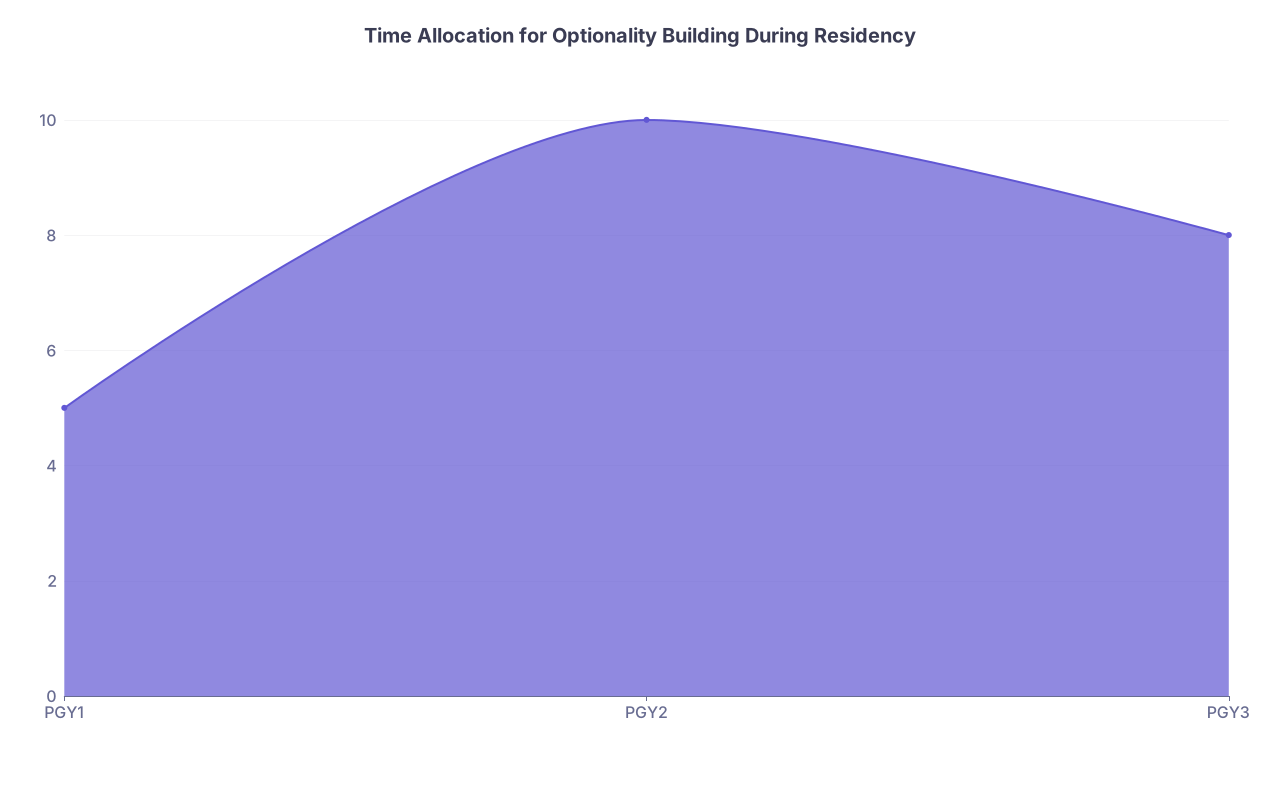
| Category | Value |
|---|---|
| PGY1 | 5 |
| PGY2 | 10 |
| PGY3 | 8 |
Common Patterns That Kill Optionality (Avoid These)
By this point, you see the pattern. But let me be blunt about what I see ruin people in low-paying fields.
Saying yes to everything PGY2.
- Multiple half-baked projects, no finished products.
- Commit to fewer things and ship them.
Living like an attending as a resident.
- Huge car loans, luxury apartments, constant travel.
- Then shock: you “need” the highest immediate salary and cannot choose jobs with better trajectory.
Treating low-paying specialties as purely altruistic.
- You can care about underserved populations and still think strategically.
- Many FQHCs, academic safety-net hospitals, and telehealth outfits negotiate badly with naive residents.
Hoping the system will “notice your passion.”
- It will not. Systems notice:
- Published work
- Measurable improvements
- Revenue-generating or cost-saving projects
- Leadership roles that solve administrative pain points
- It will not. Systems notice:
FAQ (exactly 4 questions)
1. What if my program is small and has almost no research or niche opportunities?
Then your optionality plan leans harder on non-clinical and financial tracks. You can still:
- Do remote or multicenter QI projects with external mentors.
- Join national specialty sections and workgroups (most are very friendly to residents).
- Build skills online: statistics, informatics, curriculum design.
- Use electives away from your home program aggressively—1–3 away rotations can give you mentorship and projects that your home institution cannot.
2. I am already PGY2 and have done basically nothing. Is it too late?
No, but you do not have another year to “figure it out.” Compressed plan:
- Pick one track this month. Not three. One.
- Start one focused project you can finish within 9–12 months.
- Get a titled role lined up for PGY3, even if small.
- Spend a few hours each week building a hard skill that matches your track, and aim to show obvious progress by residency graduation (certificate, course completion, portfolio).
3. How much time per week should I realistically dedicate to this without burning out?
The sustainable range I have seen work:
- PGY1: 1–3 hours per week average, mainly reading + small steps.
- PGY2: 3–6 hours per week, with some weeks higher around project deadlines.
- PGY3: 2–4 hours per week, more focused on applications, interviews, and final outputs.
If you are routinely above 8–10 extra hours a week, something is off. Either your project is too big or your clinical training is being shortchanged.
4. Does optionality always mean less clinical work and lower income early on?
Not always. Sometimes your niche allows higher hourly pay or more flexible setups:
- Sports, pain, or procedures in FM/PM&R can raise your hourly rate significantly.
- Addiction or tele-psych can open high-yield per-hour work you can scale up or down.
- Certain admin or leadership roles pay stipends that add up.
However, you might accept slightly less short-term income to gain: - Protected time
- Stronger mentors
- A role that builds a recognized, portable skill set
That short sacrifice often pays off 5–10 years later in both money and freedom.
Key takeaways:
- Decide early which 2–3 forms of optionality you are building, and make your rotations, projects, and roles serve those aims.
- Every year of residency should produce tangible outputs—skills, titles, and artifacts you can show, not just “experience.”
- By PGY3, convert your trajectory into real negotiating power so your first attending job expands your options instead of locking them down.


