

The best perks in medicine almost never show up on the compensation slide.
Let me be blunt: everyone on the interview trail will talk your ear off about “work–life balance” and “culture,” but they will not tell you the real, unadvertised benefits that make some of the lowest-paying specialties quietly superior careers. I’ve heard these conversations in program director offices, faculty lounges, and closed-door meetings. The public story and the internal reality are not the same.
This is about the underground perks in the so‑called “low-paying” specialties: pediatrics, family medicine, psychiatry, geriatrics, PM&R, even some non‑interventional fields within internal medicine and OB. The stuff that never makes it into brochures but absolutely shapes your day-to-day life and long‑term happiness.
Let’s pull the curtain back.
The Money Myth: Why “Low-Paying” Is Only Half the Story
Everyone fixates on the starting salary numbers. Residents swap MGMA tables the way other people trade sports stats. “Cards makes X, ortho makes Y, FM is trash money.” You’ve heard it.
But that comparison ignores three things program directors and senior attendings quietly factor into their own lives:
- How hard you have to work for each dollar.
- How much of your life you have to sacrifice to keep that income.
- How easily you can adjust your work when life punches you in the face.
I’ve sat in faculty meetings where a pediatrician making $210K is objectively living better than a proceduralist making $450K. Why? Because the peds doc works 0.8 FTE, sleeps at home every night, misses virtually no kid events, and has admin that will bend over backwards to keep them from quitting. The interventionalist? 1.3 FTE in disguise, weekend calls, liability anxiety, and the subtle but constant pressure to produce RVUs.
Here’s what you almost never see laid out cleanly:
| Specialty (Typical) | Median Salary | Typical Weeks Worked | Nights/Weekends Burden |
|---|---|---|---|
| Outpatient Psych | $250K | 44–46 | Minimal, rare call |
| Outpatient Peds | $210K | 44–48 | 1 weekend/month or less |
| Family Med Outpt | $230K | 44–48 | Light call, nurse triage |
| Hospitalist IM | $300K | 26 (7on/7off) | Nights built in |
| Ortho Surgery | $600K+ | 48–50 | Heavy call, cases spill |
| EM | $350K | 32–36 shifts | Nights, holidays |
Those numbers are boring. The hidden perks are not.
Underground Perk #1: Real Schedule Control (Not the Fake Kind)
Most specialties will say you can “tailor your schedule as you progress.” That’s brochure talk. Reality: in high‑pay procedural fields, you’re tied to OR time, block schedules, and a call structure that’s hard to escape without a financial haircut or political fallout.
In lower‑paying specialties, the control is much more real, much earlier.
Pediatrics
Behind closed doors, pediatric chairs are terrified of losing attendings. The pipeline is thin, burnout is high, and replacements are hard to find. That vulnerability is your leverage.
I’ve seen:
- A peds hospitalist cut to 0.6 FTE, no nights, so she could coordinate care for her own medically complex child. No drama. Leadership made it happen because losing her entirely would hurt more.
- A general pediatrician move to 4 clinic days, summers lighter, with no pay cut—just productivity-based compensation that she easily hit in fewer hours.
- A group quietly allowing “school‑year” contracts: almost full‑time during the year, lighter summers, because they know peds volumes dip and they’d rather keep their people than squeeze them.
No one writes that on the recruiting flyer. It shows up in the third or fourth conversation, when you’re already serious.
Psychiatry
Psych is the poster child for underground schedule freedom.
Academic psych departments routinely tolerate:
- 0.5 or 0.6 FTE core clinicians retaining benefits.
- Hybrid teaching/clinic/admin roles where your clinic days are two and a half days a week.
- Remote work for outpatient visits long after most other departments dragged everyone back on site.
I know a psychiatrist who lives in a different state than her primary academic appointment, flies in one week a month to supervise and teach, and does the rest by telehealth and Zoom. Her salary is not huge, but her control over her time is, frankly, obscene compared to surgical colleagues.
Family Medicine / Geriatrics
FM is often the “dumping ground” for administrative tasks and service. The flip side: FM physicians are embedded everywhere—clinics, urgent care, hospital admin, quality offices, informatics roles. They become locally indispensable.
That creates strange, quiet flexibility:
- Half‑time clinic, half‑time “Associate Medical Director for Quality.”
- Three days clinic, one day nursing home, one day “protected” teaching time.
- Pre‑negotiated non‑clinical days for leadership tracks that, on paper, pay slightly less, but in reality, save your sanity.
The money is rarely top-tier. But the ability to move your working pieces around the board is something surgeons envy more than they’ll admit.
Underground Perk #2: Psychological Safety and Lower Daily Stress
Nobody advertises this, but it dominates whether you burn out or not: How often are you in situations where a single missed decision can ruin your month—or your career?
In lower‑pay specialties, the overall hazard level of your daily work is simply lower. That changes everything.
Psychiatry: Lower Acute Catastrophe, Higher Longitudinal Reward
Is psych emotionally heavy? Yes. But legally and acutely? Much less lethal than high‑stakes ICU or surgical work.
Program directors talk about this privately:
- “My psych attendings go home mentally tired but not fear‑of‑lawsuit tired.”
- “We almost never have mortality committees. That does something to your nervous system over decades.”
You don’t have the nightly anxiety of “did I miss a dissection,” “did I clip the wrong vessel,” or “is this septic patient going to crash in the next 30 minutes.” The pace and stakes are different. You can pause, reflect, get collateral, follow up.
The underground perk here: a much longer runway before burnout. It’s not sexy. It just quietly keeps people in the profession.
Pediatrics: Lower Mortality, Higher Trust
Peds has its heartbreak cases, but if you stand in a pediatric clinic for a week, what you mostly see is this: prevention, growth charts, developmental checks, vaccine counseling, asthma refills.
Peds attendings will say this privately:
- “I rarely feel like someone’s going to die because of a decision I made that day.”
- “Parents can be demanding, but they also are grateful in ways adult subspecialties rarely see.”
This leads to a culture that’s simply less adversarial. Less “patient vs system.” More alignment. It’s not utopia, but it’s a hell of a lot gentler on your nervous system than being an internist managing six decompensating 80‑year‑olds every night.
PM&R: Function over Crisis
PM&R is one of the most under‑marketed fields in medicine. Residents stumble into it on a random rotation and walk out asking, “Why does nobody talk about this?”
Reason: your day revolves around function, rehab, incremental improvement. The stakes are real, but not constant life‑and‑death.
The perk you feel after a year or two: your job doesn’t require the same constant hypervigilance. You can think. You can talk. You can finish clinic and not feel like a truck hit you.
Underground Perk #3: Job Market Power in “Unsexy” Places
The glamorous specialties often have oversaturated markets in major metros. Cardiology in Boston or derm in LA? You are replaceable. Everyone wants that zip code.
The low‑pay specialties? Completely different dynamic.
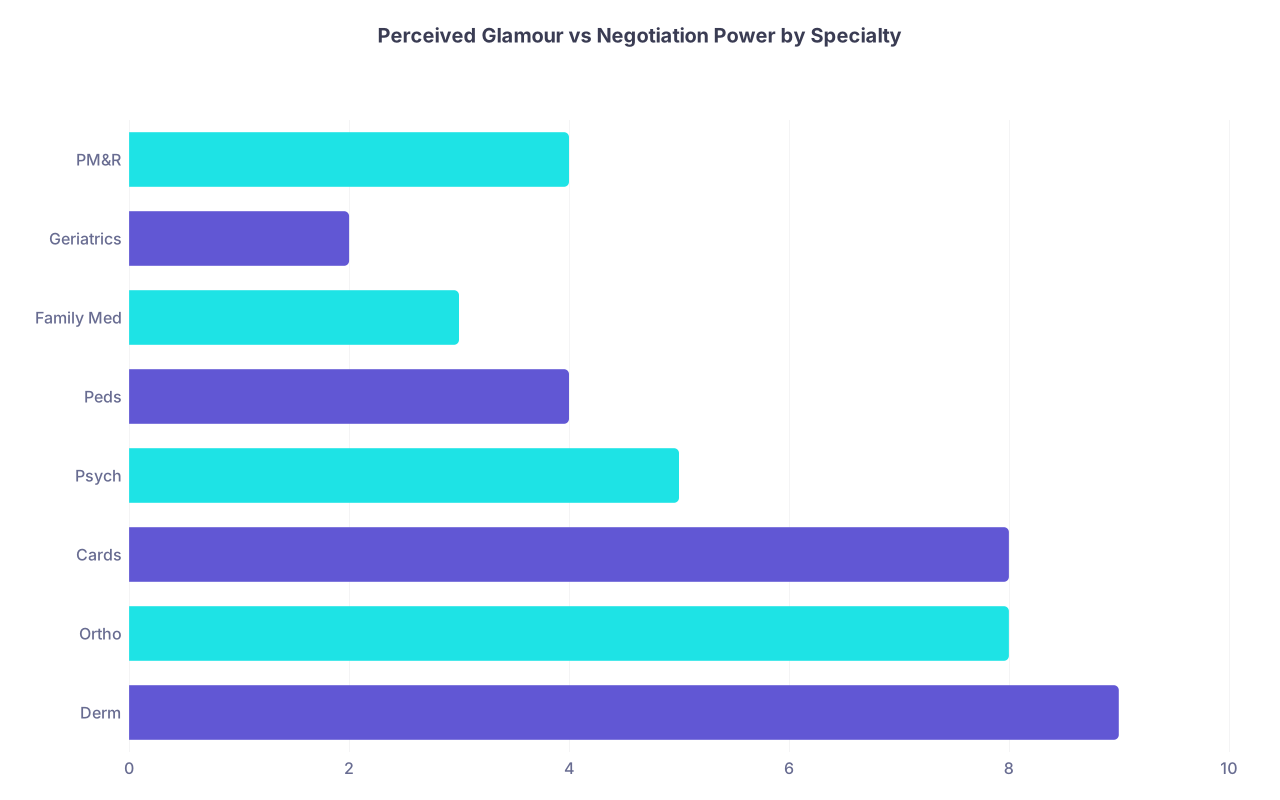
| Category | Value |
|---|---|
| Derm | 9 |
| Ortho | 8 |
| Cards | 8 |
| Psych | 5 |
| Peds | 4 |
| Family Med | 3 |
| Geriatrics | 2 |
| PM&R | 4 |
Now flip that mentally: low glamour often means high leverage once you step even slightly off the beaten path.
I’ve seen community hospitals in the Midwest and South:
- Offer psychiatrists part‑time packages at near full‑time pay just to cover call.
- Give family med docs near-total control over clinic templates and MA staffing because they’ve had three unfilled FM jobs for two years.
- Create custom “no obstetrics” or “no nights” FM contracts because they’re desperate for any primary care coverage.
This is the stuff administrators don’t list publicly because it would cause internal chaos. But if you show up as a solid, normal human being who can do the work, suddenly the rules bend.
Underground Perk #4: Exit Options and “Soft Landing” Careers
Every attending over 45 knows this: your body and your brain will not tolerate the same pace forever. The specialty you choose is not just “what I like now,” but “how many ways out I’ll have later.”
Lower‑pay specialties quietly dominate this game.
Psychiatry’s Swiss Army Knife Career
Psych gives you:
- Clinical flexibility: outpatient, inpatient, consult, addiction, forensics, CL, college mental health, child/adolescent.
- Non‑clinical tracks: pharma, digital health, policy, academic leadership, startup advisory work.
I’ve literally watched a psychiatrist cut their clinical time to 2 days/week and fill the rest with consulting, app development, and content creation—while still being financially stable.
Family Medicine / Peds: The King and Queen of Side Doors
Because FM and peds are everywhere, they end up overrepresented in:
- Medical education leadership
- Quality and safety roles
- Informatics and EMR design
- Utilization management and insurance medical director jobs
- Public health and community health center leadership
Are those roles heavily marketed to you as an MS4? No. They’re whispered about in faculty meetings when your chair says, “We really need a clinician who understands the front line for this new role.”
The underground perk: if you decide 10 years out that you’re done with full‑time clinic, you will have options other specialties don’t.
Underground Perk #5: Culture That Actually Cares (Not Performative Wellness)
There is a massive difference between a department that has a “Resilience Week” and free donuts, and a department that will actually protect you when life goes sideways.
Want the ugly truth? The higher the RVUs and OR dollars, the less tolerance there usually is for your humanity. People are nice, but your FTE is a financial asset. There’s pressure.
In low‑pay specialties, especially peds, psych, geriatrics, and FM, I’ve watched:
- Programs cover a resident’s rotation for weeks during a severe family crisis with minimal bureaucratic war.
- Departments restructure call schedules because one attending developed a new disability.
- Leadership proactively pull back clinic for a struggling junior faculty member and protect their job instead of quietly pushing them out.
They do this partly because the people drawn to these fields tend to be more relational. But also because they literally cannot replace you easily; the pipeline is thin, the applicants fewer. Your value is not just what you bill—it’s that you’re there at all.
Program directors in these fields talk about “retention” the way surgical PDs talk about “productivity.” That distinction matters more than students realize.
Underground Perk #6: Linear Career Growth Without Constant Reinvention
Here’s something people won’t tell you until they’re 10–15 years out: some specialties have brutal physical ceilings. Your back, your hands, your sleep cycles—there’s a clock ticking.
In many “low‑paying” specialties, the ceiling is much higher.
- A 68‑year‑old outpatient psychiatrist can still be fully functional and valued.
- A 64‑year‑old pediatrician seeing well‑child visits is an asset, not a liability.
- A 62‑year‑old FM physician doing half‑day clinic and half‑day admin can coast comfortably with full respect.
Contrast that with fields where procedure volume, call burden, or night work completely break people by 55. Looks impressive at 35. Not as fun when your shoulders are wrecked and you’re still paying for college.
Longevity is an underground financial perk too. An extra 5–10 happy working years, even at a lower annual salary, can beat early retirement from a “high-paying” specialty you grow to hate.
How This Shows Up in Residency (What You’ll Actually Feel)
You’re not picking just an attending life. You’re picking a residency culture too. The underground perks start early.
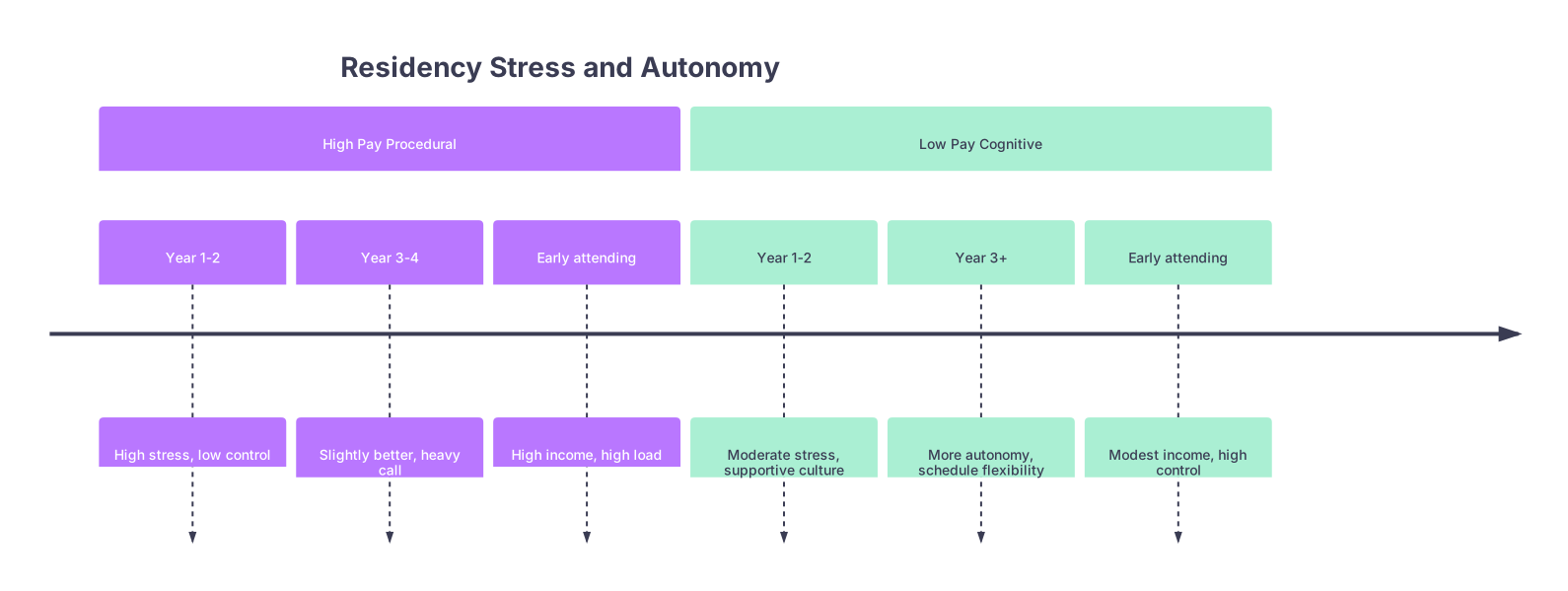
| Period | Event |
|---|---|
| High Pay Procedural - Year 1-2 | High stress, low control |
| High Pay Procedural - Year 3-4 | Slightly better, heavy call |
| High Pay Procedural - Early attending | High income, high load |
| Low Pay Cognitive - Year 1-2 | Moderate stress, supportive culture |
| Low Pay Cognitive - Year 3+ | More autonomy, schedule flexibility |
| Low Pay Cognitive - Early attending | Modest income, high control |
What I’ve consistently seen in lower‑paid specialties:
- Chiefs and faculty much more willing to move rotations around for legitimate life events.
- Less humiliation culture. You still get called out, but the tone tends to be more “teach” than “destroy.”
- More genuine attention to your interests—research, global health, education—because they’re trying to keep you in the field, not filter you out.
Psych and peds particularly have a pattern: they will work harder to customize your trajectory because they need future leaders. In some surgical programs, you are plug‑and‑play labor. In these, you are future supply.
Underground Perk #7: The Ability to Say “No” Without Nuclear Fallout
In high‑octane specialties, saying “no” is expensive. No to an extra OR block. No to weekend add‑ons. No to one more ER consult. People notice. It follows you.
In many lower‑pay specialties, there’s an unspoken reality: the system already knows it’s underpaying you relative to the hassle. So the tolerance for you setting boundaries is higher.
Family med doc declines an extra urgent care shift? They’ll ask again, but they don’t blacklist you.
Psychiatrist says no to taking on a severely disruptive high‑needs panel? Admin quietly reassigns.
Peds hospitalist negotiates out of nights after a few years? Annoying, but leadership often flexes.
No one brags about this at recruitment dinners because it becomes messy when everyone wants the same concessions. But in practice, attendings in these fields consistently carve out sane boundaries without being ostracized.
Where You’ll Pay the Price (Because There Is One)
Let me be clear: these “underground perks” come with tradeoffs. This isn’t a fantasy.
You will feel:
- Salary envy when your surgery friends start posting about their houses.
- Systemic disrespect at times—primary care and psych are still undervalued by big institutions.
- Frustration with bureaucracy, low reimbursement, and the constant push to “do more with less.”
And some days, yes, it stings to realize that despite being the backbone of population health, you’re near the bottom of the pay stack.
But here’s what I hear, over and over, behind closed doors from content attendings in these specialties:
- “I actually see my kids.”
- “I sleep.”
- “I can change my job if I hate it without blowing up my whole life.”
- “I don’t dread going to work most days.”
You will not see that on a salary graph. But your future self will care more about it than any MGMA percentile.
Practical Advice If You’re On the Fence
If you’re torn between money and these underground perks, do this:
- Rotate twice in the low‑pay field you’re considering. Once at a busy community site, once academic.
- Ask senior residents and junior attendings one pointed question:
“Off the record, do you feel like you can adjust your schedule and career if your life changes?” - On interview days, ask about part‑time/0.8 FTE policies and see how comfortable the PD is talking about it. Hesitation is telling.
Then be honest with yourself: Do you want maximum income, or maximum optionality over the next 30 years?
A lot of the smartest, quietest people I know in medicine chose optionality. And they don’t regret it.


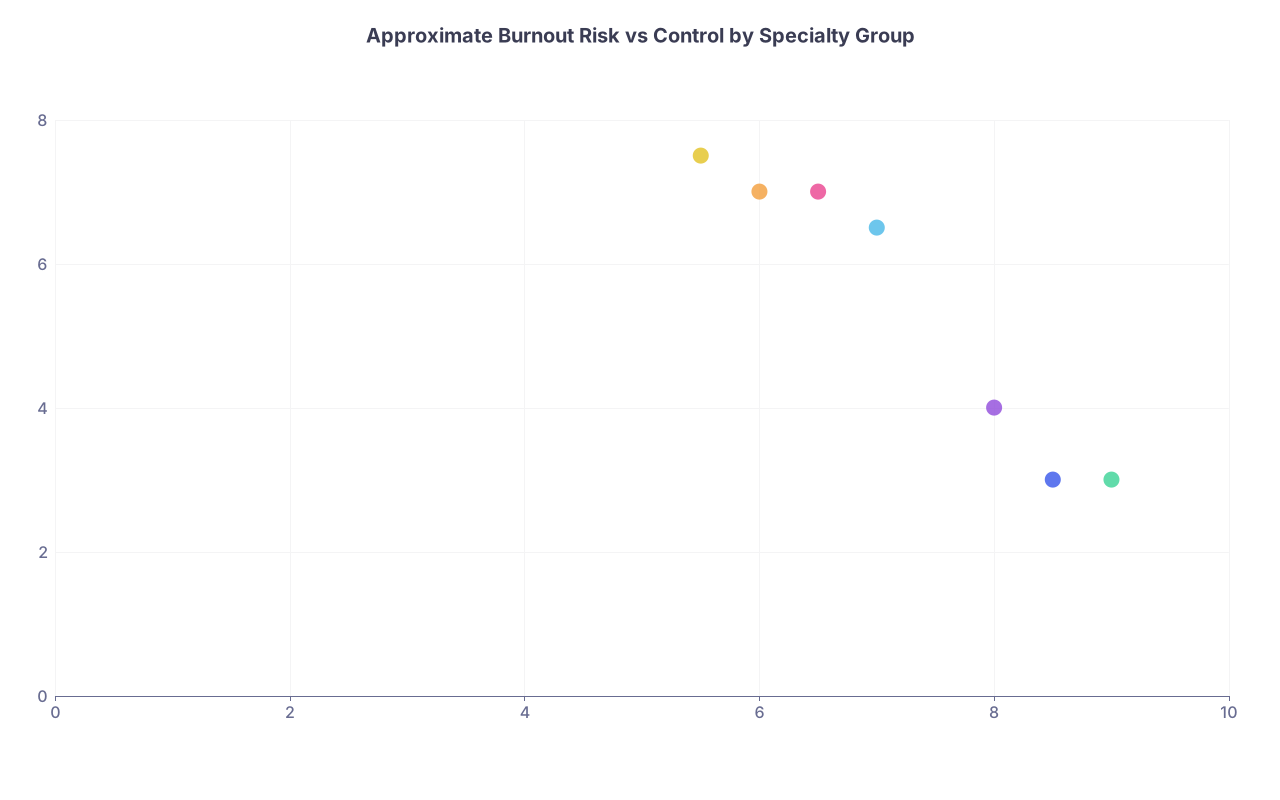
| Category | Value |
|---|---|
| Surgery | 8.5,3 |
| Cardiology | 8,4 |
| EM | 9,3 |
| Psych | 6,7 |
| Peds | 6.5,7 |
| FM | 7,6.5 |
| PM&R | 5.5,7.5 |
FAQs
1. If I choose a lower-paying specialty, can I still make “good money” eventually?
Yes, but you won’t beat orthopedics on raw dollars. What you can do is stack advantages: pick a slightly higher-paying practice model within your field (e.g., outpatient psych with some cash/concierge, FM with procedural focus, peds urgent care), work in a moderate COL area, and add modest side roles (admin, teaching, consulting). Plenty of psych, FM, and peds attendings quietly land in the $280–350K range with sane schedules. Not flashy, very livable.
2. Do program directors in these fields actually care about wellness, or is it performative?
There’s performative wellness everywhere. But proportionally, psych, peds, FM, geriatrics, and PM&R PDs are more likely to act on it—because they’re fighting recruitment and retention battles. I’ve seen these PDs personally rearrange rotation schedules, protect maternity/paternity leave, and negotiate with GME on your behalf. That’s not a yoga-class-and-pizza move; that’s real power used in your favor.
3. Will I get bored in a lower-paying, more “routine” specialty?
Some people do. If you’re addicted to constant adrenaline, outpatient peds clinic will feel like slow motion. But “boring” is often code for “predictable and sustainable.” You can always add complexity—teaching, procedures, leadership, subspecialty clinics. It’s much harder to go the other direction, from constant chaos to calm, without changing fields entirely.
4. How do I know if I’ll regret not chasing a high-paying specialty?
Watch how you feel on rotations, not how you talk about them. Do you leave the OR wired but exhausted and dreading the next 30 years, or pleasantly tired and hungry for more? Do you find yourself looking forward to the quieter clinics, or counting the minutes until you’re back in an ICU? Regret usually shows up when someone chooses status or salary over the environment where they actually feel like themselves. If you feel more “you” in the so‑called low-paying fields, don’t ignore that signal.
Key takeaways: low-paying specialties often buy you real schedule control, lower daily hazard, and far more exit doors later in your career. The salary gap is obvious; the lifestyle gap is not—and it almost always matters more in the long run.


