

The myth that you can “just wing” residency interviews because you survived med school is dangerous. As an M1 aiming for competitive programs, your weekly schedule is either building your interview skills—or quietly killing them.
I’m going to walk you through exactly how to balance classes and interview prep week by week and day by day, starting from early M1 through the lead‑up to real interviews. This is not theoretical. This is the pattern I’ve seen work for students who end up calm, polished, and not melting down mid‑block.
We’re talking routine. Not random YouTube binges labeled “prep.”
Big Picture Timeline: When Interview Prep Actually Starts
Before we go week-by-week, you need the macro view. Interview prep for an M1 is not a six‑hour cram session before residency season. It’s low‑dose, consistent.
Here’s the rough phase breakdown:
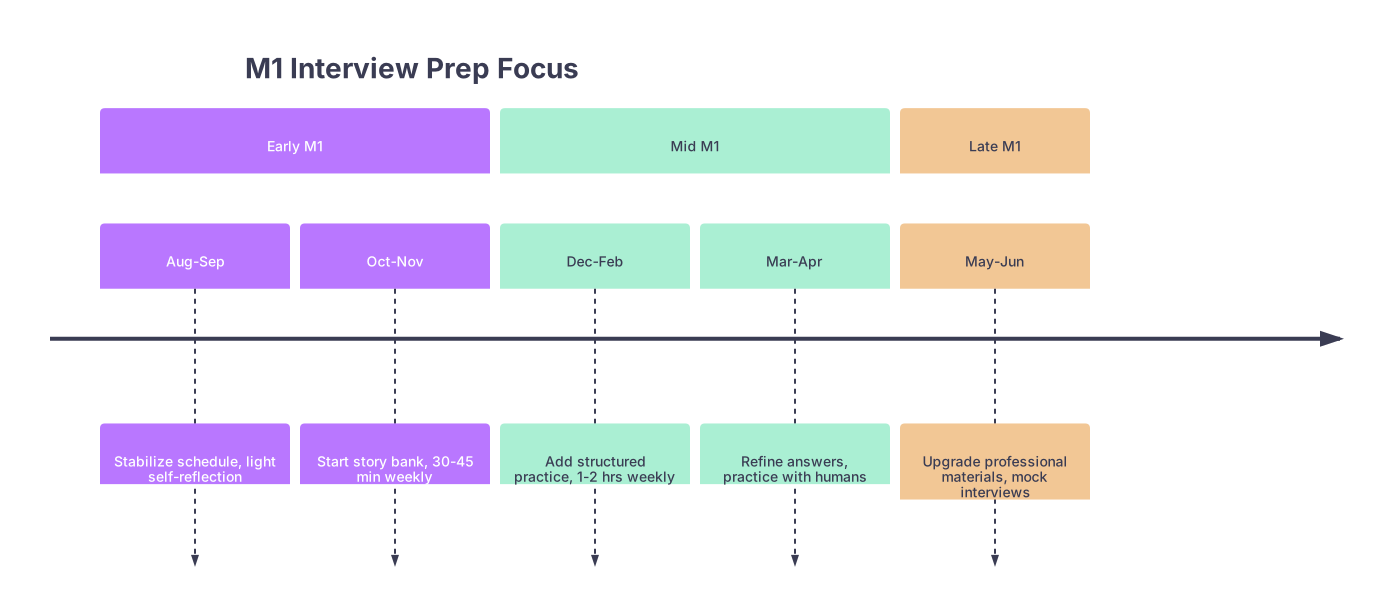
| Period | Event |
|---|---|
| Early M1 - Aug-Sep | Stabilize schedule, light self-reflection |
| Early M1 - Oct-Nov | Start story bank, 30-45 min weekly |
| Mid M1 - Dec-Feb | Add structured practice, 1-2 hrs weekly |
| Mid M1 - Mar-Apr | Refine answers, practice with humans |
| Late M1 - May-Jun | Upgrade professional materials, mock interviews |
Now, let’s zoom into how this shows up in your actual week.
Step 1 (Weeks 1–4 of M1): Stabilize Your Academic Week First
At this point you should not be doing heavy interview prep. You’re just trying not to drown in anatomy and biochem. But you do need a skeleton schedule that leaves space later.
Week 1–2: Build the Core Weekly Template
Your first job: map your non‑negotiables.
Block all required activities:
- Lectures (live or asynchronous windows)
- Labs (anatomy, clinical skills, etc.)
- Problem-based learning / small groups
Add your must‑have life blocks:
- Sleep: aim for consistent times (e.g., 11 pm–6:30 am)
- Exercise: 2–3 slots per week (30–45 min)
- Groceries / laundry / cooking
Once that’s in, you’ll see the “real estate” you can work with.
A typical M1 who’s not lying to themselves has about:
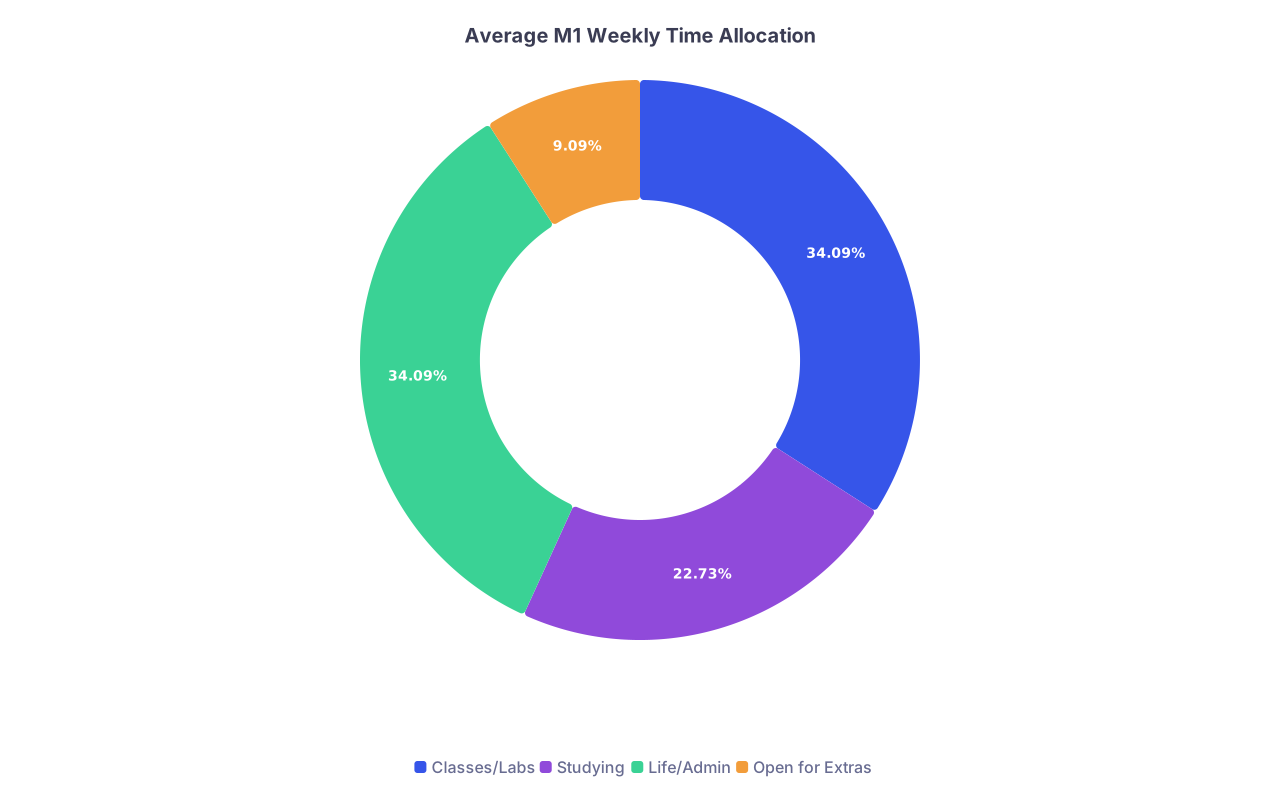
| Category | Value |
|---|---|
| Classes/Labs | 30 |
| Studying | 20 |
| Life/Admin | 30 |
| Open for Extras | 8 |
Those ~8 open hours? That’s where interview prep will live—later. For now, just protect them. Don’t auto-fill all of them with extra Anki.
Week 3–4: Start the 30‑Minute Reflection Habit
Once your study system is not a dumpster fire, at this point you should introduce one small, recurring interview-related block:
- Sunday 30 minutes – “Career & Reflection”
- Location: somewhere away from your main study desk if possible
- No notes, no laptop initially; just a notebook or OneNote page
What you do in this block:
- Write quick bullet answers to prompts like:
- “Why did I really go to med school?”
- “Best moment this week working with a patient / preceptor / peer?”
- “One time I failed in the last 6 months and what I learned”
- Capture stories, not polished sentences
You’re building raw material. Interview prep later will be 10x easier if you’ve got this.
Step 2 (Months 2–4 of M1): Build a Weekly “Interview Foundation”
By now, you should have your exam rhythm somewhat predictable. This is when you stop saying “I’ll prep later” and start inserting scheduled mini prep into your week.
Weekly Structure: The 90‑Minute Total Commitment
At this point you should aim for about 60–90 minutes per week of deliberate interview prep, spread out. Not more. You can’t afford more without hurting your grades.
Here’s a sample weekly layout that works for most M1s on a normal (non‑exam) week:
| Day | Time Block | Activity |
|---|---|---|
| Sunday | 30 min (afternoon) | Reflection + story bank updates |
| Tuesday | 20 min (evening) | Read 1–2 common questions, brainstorm bullets |
| Thursday | 20–30 min (evening) | Record 1 answer on voice memo |
| Friday | 10 min (afternoon) | Quick review of notes / patterns |
Let’s break that down.
Sunday: 30-Min Story Bank Session
You extend that original reflection block into something more structured.
Tasks:
- Pick 1–2 common categories:
- Team conflict
- Ethical dilemma
- Leadership experience
- Working with a difficult person
- Failure / setback
- For each, write:
- Situation (2–3 sentences)
- Your actions (bullet points)
- Outcome and what you’d say you learned
You’re building a story bank. Later, you’ll plug these into real questions.
Tuesday: Question Awareness (20 Minutes)
At this point you should start seeing patterns in questions, not individual monsters.
Plan:
- Keep a running doc titled “Common Interview Questions”
- Each Tuesday:
- Add 2–3 new questions you’ve seen/heard
- For 1–2 of them, jot bullets, not full paragraphs:
- One line: main point
- 2–3 bullets: specific example you’d use
You’re training your brain to connect questions → story categories → stories.
Thursday: 1 Recorded Answer (20–30 Minutes)
This is the part most students avoid because it feels cringe. That’s exactly why you need it.
At this point you should:
- Choose 1 question (e.g., “Tell me about yourself” or “Why medicine?”)
- Hit record on your phone (voice memo, video if you can stand it)
- Answer in 1–2 minutes, max 3
- Then:
- Listen once
- Write 3 bullet notes:
- What worked
- What was rambling/confusing
- One thing to fix next time
Do not aim for perfection. The goal now is just: sound like a human who has thought about these questions before.
Friday: 10-Minute Pattern Check
Quick reset:
- Skim your story bank
- Glance at question list
- Ask: “What stories am I overusing? What gaps do I have?”
- Make 1 note for Sunday: “Need a story for: teaching / mentorship” etc.
Total time: ~90 minutes per week, including thinking, not just writing.
Step 3 (Exam Heavy Weeks): How to Cut Without Quitting
Here’s where most M1s blow it. The week before an exam hits, and interview prep vanishes “just for now” and somehow never comes back.
You’re not doing that.
Exam Week Rule: Minimum Viable Prep (20 Minutes Total)
On any week where:
- You have a major block exam, OR
- You’re clearly sleep-deprived and behind
At this point you should scale down to a single 20‑minute block.
Pick one:
- Sunday or Saturday
- After the main cram session or after lunch
Use that 20 minutes for:
- Super short reflection:
- 5 minutes: one story from the last 2–3 weeks (clinical skill session, anatomy lab meltdown, group project drama)
- 1 quick recorded answer:
- 1–2 minutes
- Compare to a previous answer if you have time
The point is continuity. You’re keeping the gears from rusting.
Step 4 (Mid M1 Transition – December to February): Upgrade to Real Practice
By now you’ve got:
- A small but usable story bank
- Experience hearing your own voice answering questions
- A weekly schedule that doesn’t collapse every exam
At this point you should add human feedback and tighten your schedule.
Monthly Structure: Add 1 “Long” Interview Session
Plan one 45–60 minute session once per month:
- With a trusted classmate
- Or a mentor
- Or your school’s career/advising office
Structure:
- 15 minutes: 3–4 questions back‑to‑back
- 15 minutes: feedback
- Switch roles if you’re with a peer
You can protect this by making it:
- First Sunday of the month, 5–6 pm
- Or a fixed evening where classes are lighter
Then adjust your weekly schedule to about 2 hours total on normal weeks:
- Sunday: 35–40 min — reflection + story bank
- Tuesday: 20–25 min — question work + framework refinement
- Thursday: 20–25 min — recorded answer
- Floating 20–30 min — reviewing feedback from monthly session
You don’t need more than this as an M1. If you’re going above 2 hours a week regularly, you’re either procrastinating other work or anxiety‑spiraling.
Step 5 (Late M1 – March to June): Tighten, Don’t Balloon
By late M1, you’re probably doing:
- More clinical exposure
- Early specialty exploration
- Research or interest group work
This is where good interview prep can quietly track with your activities instead of stealing time from them.
Weekly Integration: Tie Stories to Real Activities
At this point you should:
- Use your Sunday session to:
- Pick 1 experience from the week (clinic, shadowing, volunteering, research)
- Turn it into an interview‑ready story:
- “What did I see?”
- “What did I actually do?”
- “What did I learn about patients / teams / myself?”
This is how you avoid the generic “I just love helping people” answers down the line.
Add One Specialty-Related Block (Optional, 20 Minutes Weekly)
If you already have a leaning (e.g., EM, surgery, psych), add:
- One 20‑minute block (maybe Wednesday night) to:
- Read 1–2 short pieces: program director blog, interview tips for that specialty, common values they emphasize
- Jot how your current experiences might fit that specialty mindset
You’re not locking anything in. You’re learning the language and priorities of real programs early.
Day-by-Day Example: Non-Exam Week Schedule (M1)
Here’s how this might look in real life. Assume:
- Classes 8–12 most weekdays
- Labs 2 afternoons
- Reasonable, not heroic, study habits
Monday
- 8–12: Class
- 1–4: Study (Anki / review)
- 4–5: Gym
- Evening: Flex study, no interview work
Tuesday
- 8–12: Class
- 1–4: Study
- 7:30–7:50 pm: Interview prep
- Add 2 questions
- Bullet 1–2 skeleton answers
Wednesday
- Heavy study day; no interview work scheduled
Thursday
- 8–12: Class / lab
- 1–4: Study
- 8:30–9:00 pm: Interview prep
- Record answer to one question
- Listen once, jot 3 critique bullets
Friday
- 8–12: Class
- 1–3: Study
- 3–3:10 pm: Quick skim of story bank / question doc
Saturday
- Mostly academic work / life stuff
- No interview work required
Sunday
- Morning: Review last week’s content
- 3–3:40 pm: Interview prep
- Reflection + story bank updates
- Evening: Prep for week
Total interview time: about 100 minutes. Sustainable.
Day-by-Day Example: Exam Week Schedule (M1)
When a big exam is coming:
Monday–Friday
- Heavy study focus
- No scheduled interview work
Saturday
- All exam prep
Sunday
- 4:00–4:20 pm:
- 10 minutes: pick one moment from the last month, convert to story bullets
- 5–7 minutes: record answer to any behavioral question using that story
- 3–5 minutes: very quick self-feedback
That’s it. 20 minutes. You can afford that, even exhausted.
How to Know if Your Weekly Balance Is Off
Here’s the blunt audit you should run every 4–6 weeks:
If you notice:
- You’re skipping Sunday reflection 3+ weeks in a row
- You’re doing 3+ hours/week on interview prep as an M1
- You dread any interview session so much you procrastinate everything
Then at this point you should:
Case 1: Too Little Prep
- Cut your target to 30 minutes once a week for 2 weeks
- Pick only one activity: story bank OR recorded answers
- Once that’s consistent, add back a second small block
Case 2: Too Much Prep
- Cap total time at 2 hours/week max
- Move any extra “interview” time into:
- Reading actual clinical cases
- Shadowing or volunteering
Real clinical engagement does more for your future interviews than over‑polished answers in a vacuum.
Leveraging Summers and Breaks (Preview for Later)
You’re M1, but let me plant this now so you don’t waste your first summer.
On longer breaks (winter, summer), your weekly structure changes:
- Keep interview prep at 2–3 hours per week max
- Shift focus to:
- Mock interviews (1 per week)
- Personal statement brainstorming
- Shadowing and actually getting more stories
Do not try to burn through 10 hours/week of hypothetical interview questions in July. That’s not preparation; that’s self‑torture.
Final Thoughts: What Actually Matters
You don’t need a perfect color‑coded calendar or a 100‑page question bank.
You do need:
- A small, recurring weekly interview habit that survives exam weeks—30–90 minutes, depending on the season.
- A growing story bank fed by your real M1 experiences, not fictional “ideal” scenarios.
- Occasional real‑time practice with humans, not just talking into the void.
Stick to that timeline and you’ll reach interview season looking like someone who’s thought deeply, practiced intentionally, and still did well in classes—because you learned how to balance both from M1 onward.


