
What’s actually realistic: four hours of studying after a 12‑hour day on surgery… or collapsing into bed and hoping “learning on the wards” is enough?
Let me give you the blunt answer first, then we’ll unpack it.
The Realistic Numbers (Not the Fantasy Ones)
Here’s the bottom line for MS3s on core rotations:
- On typical weekdays (8–10 hour clinical days):
Aim for 1.5–3 hours of focused studying. - On heavy days (12–14+ hours, call, brutal surgery days):
Aim for 30–90 minutes of targeted studying, max. - On weekends/off days:
Aim for 3–6 hours, depending on what’s coming (shelf soon? chill week?).
If you’re consistently trying to do 4–5 hours every day on top of full clinical days, you’re going to burn out or start phoning it in on the wards. I’ve watched it happen. It’s not pretty.
Here’s the more useful question:
How do you structure those hours so you don’t fail the shelf or look clueless on rounds?
We’ll go rotation by rotation in a minute, but zoom out first.
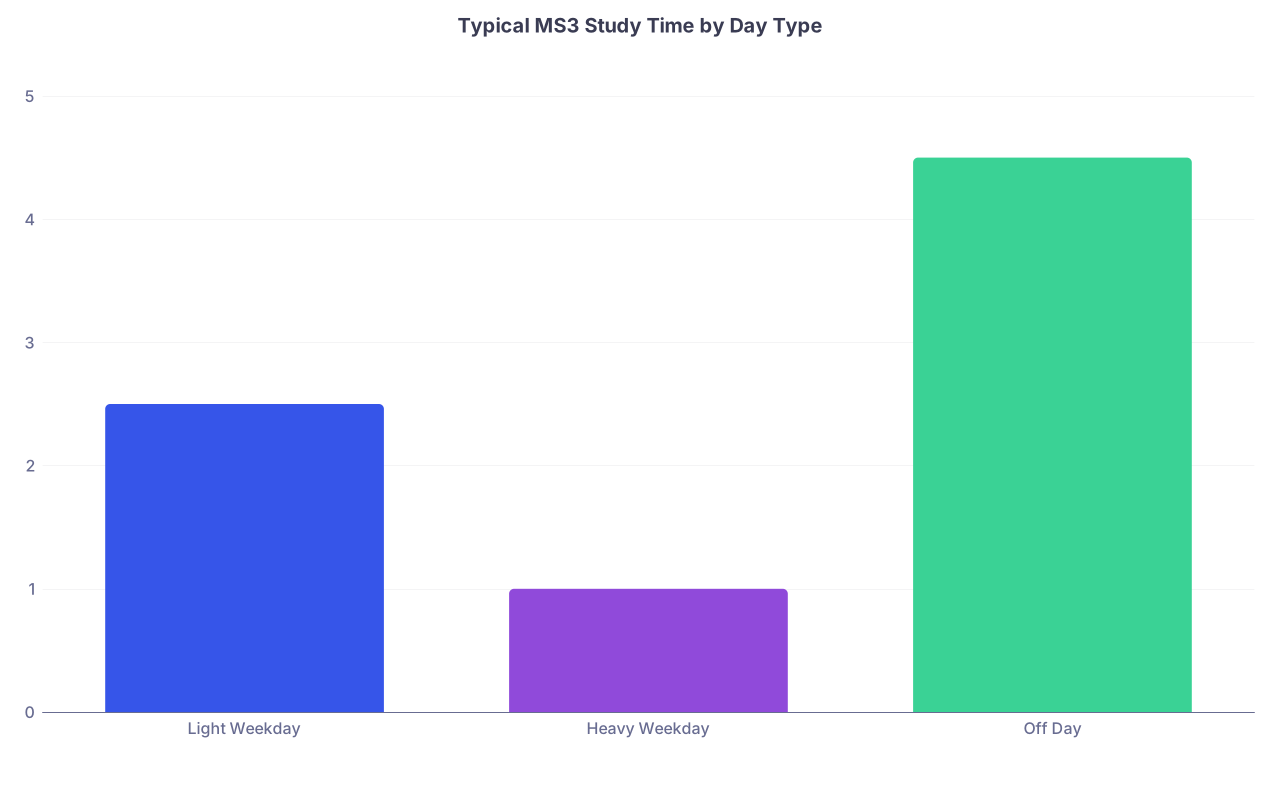
| Category | Value |
|---|---|
| Light Weekday | 2.5 |
| Heavy Weekday | 1 |
| Off Day | 4.5 |
The Tradeoff You’re Actually Managing
You’re not just managing “study time.” You’re juggling three competing things:
- Shelf exam performance
- Clinical performance (evaluations, letters, how attendings perceive you)
- Mental health and physical survival
You can’t max all three. No one does.
What high-performing MS3s actually do is this:
- Protect 60–90 minutes a day no matter what. Flashcards, key questions, or prep for next day’s cases.
- Use off days as shelf days. 3–6 focused hours, broken into chunks.
- Tie studying to patients. What you see, you study. That makes the hours stick.
If you’re aiming for honors on both shelf and clinical evals, you’re typically in the range of:
- 15–25 focused study hours per week
- Heavily weighted toward evenings and weekends
Not 40. Not 5. Somewhere in that 15–25 range, depending on rotation intensity and how efficient you are.

Rotation-by-Rotation: What’s Reasonable?
These are typical expectations for core rotations. Adjust for your hospital schedule and your own speed.
| Rotation | Weekday Study | Off-Day Study | Weekly Total |
|---|---|---|---|
| Internal Med | 1.5–2.5 hrs | 3–5 hrs | 15–20 hrs |
| Surgery | 0.5–1.5 hrs | 4–6 hrs | 12–18 hrs |
| Pediatrics | 1.5–2.5 hrs | 3–5 hrs | 15–20 hrs |
| OB/GYN | 1–2 hrs | 3–5 hrs | 14–18 hrs |
| Psych | 1–2 hrs | 2–4 hrs | 10–15 hrs |
| Family Med | 1–2 hrs | 3–4 hrs | 12–16 hrs |
Use this as a range, not a law. If you’re starting a rotation with weak baseline knowledge, stay at the upper end for the first 1–2 weeks.
Let’s get more concrete.
Internal Medicine
- Typical day: 7 a.m. – 5 p.m.
- Realistic plan:
- Weekdays: 1.5–2.5 hours (UWorld questions + Anki or notes)
- Off days: 3–5 hours (longer question blocks, focused review)
- What it looks like:
- 20–40 UWorld questions most days
- +/- 30–45 minutes of targeted reading (UpToDate on patient problems, or review book chapters)
You don’t need 4 hours a day. You need consistent daily reps with medicine questions. The people who crush the IM shelf usually aren’t doing insane marathon days; they’re doing 150–250 questions per week, every week.
Surgery
This is where students blow up their schedules the most.
- Typical day: 5–6 a.m. start, 5–7 p.m. end. Sometimes later.
- Realistic plan:
- Weekdays: 30–90 minutes
- Off days: 4–6 hours focused
- What it looks like:
- On weekdays: 10–20 targeted questions (Surgery UWorld/AMBoss) or a short case review
- On off days: 60–80 questions + review
If you’re on a string of 14–16 hour days and telling yourself you’ll study 3–4 hours nightly, you’re lying to yourself. Better plan: non-negotiable 45–60 minutes the moment you get home, then bed.
And learn surgically (no pun intended): trauma, acute abdomen, shock, postop complications, fluids/electrolytes. High-yield topics, not random deep dives.
Pediatrics
- Typical day: 7–8 a.m. to 4–5 p.m.
- Realistic plan:
- Weekdays: 1.5–2.5 hours
- Off days: 3–5 hours
- Execution:
- 20–40 questions/day
- Strong emphasis on well-child checks, vaccines, rashes, respiratory stuff
Peds is content-heavy but not usually as schedule-insane as surgery, so you can actually do a bit more on weekdays without dying.
OB/GYN
- Typical day: very variable – some chill clinic days, some insane L&D nights
- Realistic plan:
- Weekdays: 1–2 hours on average (some days 30 min, others 3+)
- Off days: 3–5 hours
- Key strategy:
- On any truly light day, overcompensate. 3–4 hours.
- On 24-hour call or L&D nights, 30–45 minutes of spaced review is enough.
If your schedule is all over the place, aim for a weekly total (say, 16 hours) instead of a strict daily number.
Psychiatry
- Typical day: 8 a.m. – 4 p.m. generally
- Realistic plan:
- Weekdays: 1–2 hours
- Off days: 2–4 hours
- Use this as a “breather” rotation if it really is lighter at your site.
But don’t treat it like a vacation. The shelf can be trickier than students expect.
Family Medicine
- Typical day: 8 a.m. – 5 p.m., lots of outpatient
- Realistic plan:
- Weekdays: 1–2 hours
- Off days: 3–4 hours
- Great time to solidify bread-and-butter medicine, preventive care, screening guidelines.

| Step | Description |
|---|---|
| Step 1 | Leave Hospital |
| Step 2 | 30-45 min decompress |
| Step 3 | 60-90 min questions |
| Step 4 | 15-30 min targeted review |
| Step 5 | Prep for next day patients/cases |
| Step 6 | Sleep |
So Is “X Hours Per Day” Even the Right Question?
Honestly, not really. Two MS3s both “study 3 hours a day” and get totally different results.
The better question:
“How many focused, question-heavy hours am I putting in per week?”
Here’s how I’d prioritize those hours:
- Questions first. UWorld/AMBoss/Pretest. Whatever your school prefers. This is 60–70% of your time.
- Immediate review of missed/wishy-washy questions. Not 20-page detours. 2–5 minute focused fixes.
- Spaced review (Anki or short notes) for high-yield concepts and what you miss repeatedly.
- Patient-driven reading. 1–2 key topics per day from your patient list.
If you have 90 minutes on a typical night, something like:
- 60 minutes: 15–20 questions + review
- 20 minutes: Anki/spaced review
- 10 minutes: Look up 1–2 things related to your patients for tomorrow
That’s it. You don’t need to rewrite BRS into your own words in a color-coded notebook. That’s study cosplay.

When You’re Completely Exhausted: Bare Minimum Plan
You will have days where your brain is cooked. Post-call, 14-hour OR day, emotional code, whatever.
On those days, your bare minimum:
- 15–30 minutes of:
- Reviewing Anki cards
- Or skimming through missed questions from earlier in the week
- Or reading about one patient’s main problem (e.g., DKA, appendicitis, CHF)
If you hit that, you’re still in the game. Miss that for 4–5 days in a row? That’s when shelves go south.
Sleep vs Study: Which Wins?
If you’re consistently choosing study over sleep after midnight, you’re sabotaging yourself.
Here’s the hierarchy:
- Non-negotiable: 6 hours of sleep minimum. 7–8 if you can swing it.
- Then: 60–90 minutes of focused content.
- Only then: any “nice to have” extras like long textbook chapters, videos, or niche topics.
I’ve seen students brag about four hours of sleep and 4–5 hours of studying. They look impressive for two weeks. Then their performance on the wards gets sloppy and they start missing basic things. Attendings notice that much more than whether you read all of Step-Up to Medicine.
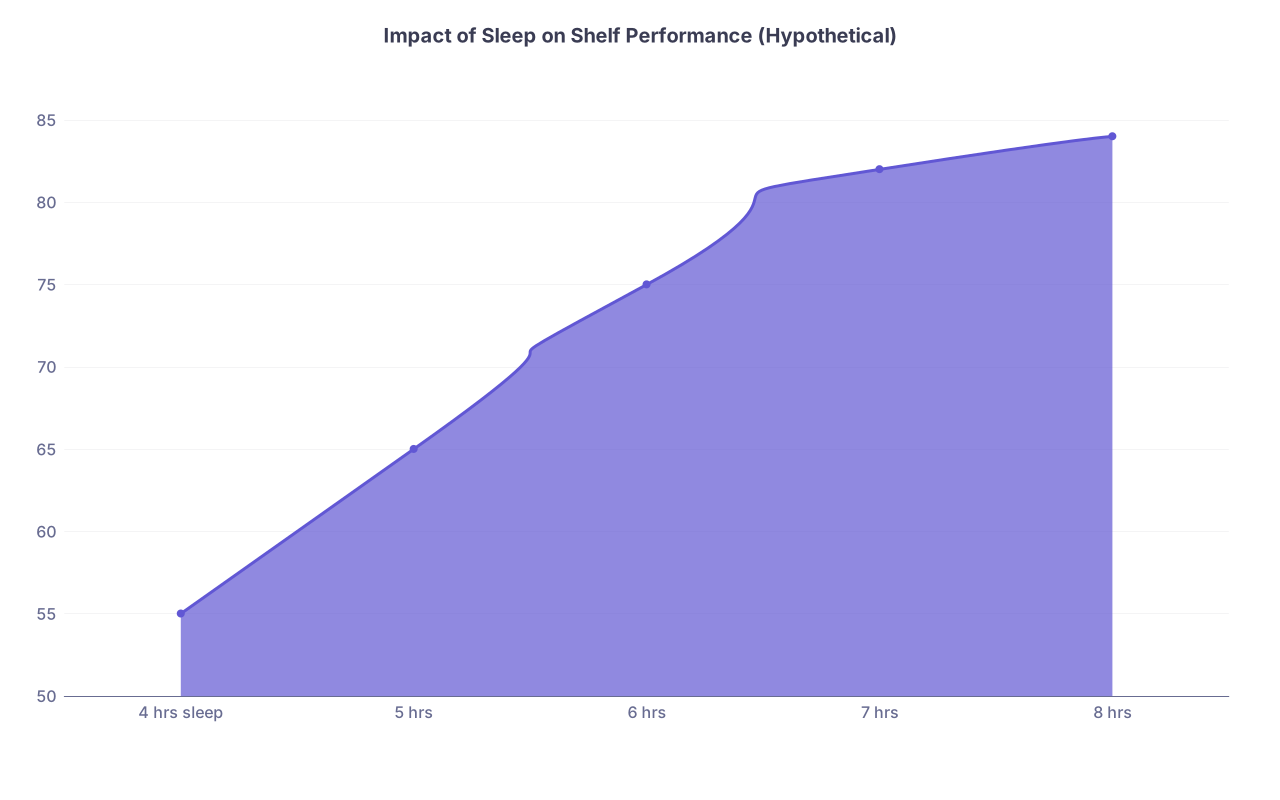
| Category | Value |
|---|---|
| 4 hrs sleep | 55 |
| 5 hrs | 65 |
| 6 hrs | 75 |
| 7 hrs | 82 |
| 8 hrs | 84 |
How to Adjust as the Shelf Approaches
Last 7–10 days before your shelf? Bump things up without wrecking yourself.
Reasonable adjustment:
- Weekdays: add ~30–60 extra minutes (so maybe 2–3.5 hours total)
- Off days: 4–6 hours, broken into 2–3 blocks
- Focus:
- Practice NBME(s)
- Clean up weak topics based on question performance
- Fast review of high-yield summaries (not starting new huge resources)
What you should NOT do the week before the shelf:
- Start a brand new 800-page textbook
- Pull repeated all-nighters
- Ignore questions in favor of endless passive reading
Red Flags You’re Overdoing It
If these start showing up, you’re studying too much relative to your clinical and mental bandwidth:
- You’re nodding off during patient interviews or presentations.
- You’re irritable, snappy, or checked out with staff/patients.
- You’re missing basic clinical responsibilities (labs not checked, notes late).
- You can’t remember what you studied yesterday because you’re so tired.
Dial the hours down. Tighten the quality and protect your sleep.
Red Flags You’re Underdoing It
On the flip side, you’re not studying enough if:
- You routinely skip weekday studying “because the day was long.”
- You’re saving “real studying” for weekends only.
- On practice NBMEs you’re sitting in the 40–50th percentile and shrugging it off.
- You show up to rounds and never have answers when someone asks for mechanisms, guidelines, or next steps.
If that’s you, increase your study load by:
- Adding 30–60 non-negotiable minutes every weekday
- Using at least half of your off days for 3–5 hours of focused work
Not complicated. Just uncomfortable.
Quick Summary: A Solid MS3 Study Template
If you want a clean starting point, here’s a template that works for most students on most rotations:
- Weekdays on “normal” rotations (IM, Peds, FM):
- 1.5–3 hours total
- Mainly questions + brief review
- Weekdays on heavy rotations (Surgery, tough OB/GYN blocks):
- 30–90 minutes
- Non-negotiable, usually right after you get home
- Off days / weekends:
- 3–6 hours
- Split into 2–3 blocks to avoid brain mush
- Last week pre-shelf:
- Modest bump: +30–60 min on weekdays, +1–2 hours on off days
- Add practice NBME and targeted fix-it review
If your weekly total is somewhere around 15–25 focused hours, and you’re actually doing active work (questions, recall, application), you’re in the right territory for solid shelf performance and good clinical showing.
FAQ (Exactly 7 Questions)
1. Is 4–5 hours of studying every day on rotations realistic or overkill?
For most MS3s on full clinical days, 4–5 hours every single day is overkill and usually unsustainable. You’ll either sacrifice sleep, performance on the wards, or both. That kind of volume might make sense on lighter rotations or right before a shelf, but as a baseline? Not realistic. Target 1.5–3 hours on normal days, more on weekends.
2. How many UWorld questions should I be doing per day on rotations?
On average, 20–40 questions per day is a strong target on normal rotations, with more (60–80) on off days. On brutal surgery/OB days, even 10–20 questions with careful review is a win. Consistency matters more than hitting some magical question count once a week.
3. Can I rely on “learning on the wards” instead of formal studying?
No. You’ll learn clinical judgment and communication on the wards, which is crucial—but it’s not organized or comprehensive enough for shelf exams. The wards will not systematically cover pediatric vaccines, OB triage algorithms, or every arrhythmia. You need deliberate study time for that.
4. How do I balance studying with being a “good team player” on rotations?
Simple rule: clinical responsibilities first, then study. Show up early, know your patients, write clean notes, follow through on tasks. Once you’re home (or during downtime that your team truly doesn’t need you), then you flip to student mode and grind through questions. Don’t be the person doing Anki on rounds or hiding to “study” while work is piling up.
5. Should I prioritize reading textbooks, watching videos, or doing questions?
Questions win. Always. Question banks + targeted reading from a reliable source (like UpToDate or one concise review book) beat passive textbooks and endless video watching. If you have 90 minutes, I’d put at least 60 into questions + review, and only use the rest for reading or videos to patch specific gaps.
6. How early should I ramp up studying for a shelf exam?
Don’t “ramp up” from zero. Start day 1 with manageable daily studying (questions and review). About 7–10 days before the shelf, increase your total weekly hours modestly, add at least one NBME or full-length practice, and tighten your focus on weak areas. The worst plan is coasting for four weeks then trying to save it all in the last five days.
7. What if my scores stay mediocre even when I’m hitting these hour targets?
Then the problem probably isn’t hours—it’s method. Look at how you’re studying:
- Are you actively reviewing why you missed each question?
- Are you tracking patterns in your mistakes (e.g., always missing OB triage, EKGs, antibiotics)?
- Are you spacing review of weak topics, or just reading once and moving on? If your method is weak, add structure: use a log of missed concepts, schedule specific review blocks, and consider fewer resources but deeper engagement with each.
Open your calendar for this week right now. Block off one non-negotiable 60–90 minute study window for each weekday and two longer blocks for your off day. That’s your real shelf prep plan—not some fantasy number you’ll never actually hit.