
The wrong question is “before or after call?” The right question is “what kind of studying belongs before call, and what (if anything) belongs after?”
Let me be blunt: heavy, high‑stakes studying after call is usually a bad idea. But you can absolutely use post‑call time strategically—if you respect your brain’s limits.
Here’s how to think about it like an adult instead of like a martyr.
The core answer in one sentence
For most medical students:
Do your serious learning before call, and reserve after call for either sleep or very light, low‑stakes review—nothing that “needs” to stick.
If you remember nothing else from this article, remember that.
What actually happens to your brain on call
People romanticize “grinding after call.” They should not.
On call—especially overnight or 24‑hour calls—you’re dealing with:
- Sleep deprivation (even “just” 1–2 hours lost matters)
- Fragmented attention (pages, alarms, new admits)
- Emotional load (codes, angry families, sick kids, your own anxiety)
- Physical fatigue (rounding all day, walking everywhere, terrible hospital chairs)
Post‑call, your:
- Working memory is shot
- Attention span is shortened
- Decision‑making is worse
- Error rate goes up
- Learning efficiency is garbage
You can still do tasks, but your ability to encode and retain new information is heavily compromised. That’s the key difference.
You’re not “weak” if you can’t study much after call. You’re human.
Studying before call: when it usually wins
You get far more learning per minute if you front‑load the meaningful work before call.
Best uses of pre‑call study time
This is when you tackle anything that actually has to stick:
- Dedicated exam prep (NBME shelf, Step 2 CK blocks and review)
- New concepts you’ve never learned (e.g., heart failure management algorithms)
- Memorization that demands a fresh brain (antibiotic regimens, onc staging, congenital heart lesions)
- Practice questions where you care about performance and detailed review
Think: “What would I be mad at myself for botching because I tried to learn it while half‑dead?”
That goes before call.
Concrete example: surgery rotation, weekday call
Let’s say you’re on a surgery rotation with Q4 weekday call and a Saturday call every other week.
Pre‑call weekday (normal day, call starts at 5 pm):
- Morning: Round, OR, notes
- Afternoon lull: Between cases, you do 10–15 targeted shelf questions on your phone and screenshot 2–3 high‑yield explanations to revisit later.
- Final hour before call: 45–60 minutes of focused study in the workroom:
- One small topic (e.g., acute abdomen, post‑op fever)
- One short question block (5–10 questions) with rapid review
You’re not trying to cram everything. You’re moving one or two things from “vague” to “solid.”
Weekend pre‑call (Saturday call starting 7 am, off Sunday):
- Friday evening: 1–2 hours of high‑yield shelf prep while your brain is still functional
- You deliberately do NOT plan “real studying” for Sunday post‑call beyond maybe 20–30 minutes of flashcards if you feel decent
You protect your post‑call for recovery and basic life tasks, not heroics.
Studying after call: when it works and when it’s dumb
When post‑call studying is usually bad
If any of these are true, heavy studying post‑call is a bad idea:
- You were awake past 1–2 am (or repeatedly interrupted all night)
- It was emotionally intense (code, bad outcome, traumatic case)
- You’re so foggy that you’re rereading the same line 3 times
- Your head hurts, eyes burn, you feel physically sick
Trying to “power through” 3 hours of UWorld in that state isn’t grit. It’s inefficient and self‑sabotaging. You remember almost none of it and just burn yourself out faster.
When post‑call studying can make sense
There are a few specific scenarios where light studying after call isn’t insane:
Light call + good sleep
Example: You’re on an “in‑house” call but had:- 10 pm to 5 am without pages
- A nap before sign‑out
- You’re off by 10–11 am and genuinely feel okay
Fine. Use 30–60 minutes for:
- Quick Anki review
- Skimming a short topic you saw on the wards (“what’s the full workup for hematuria again?”)
- Cleaning up notes from the night (what you learned, mistakes)
Then stop.
Exam emergency
You have a shelf in 3 days. You just came off a brutal call. You can’t afford to lose the entire day.In that case:
- Sleep 2–3 hours after getting home
- Eat actual food
- Then do one highly controlled session:
- 10–15 questions, max
- Or 30–45 minutes of targeted review on your highest‑yield weak area
You’re not trying to have a “big study day.” You’re just refusing to let the day be a total zero.
Very low‑stakes tasks
Post‑call is fine for things that don’t require deep encoding:- Organizing your Anki decks or tagging cards
- Printing/organizing PDFs
- Planning the week’s study schedule
- Light reading of a topic you’ll revisit later when rested
If you forget all of it by tomorrow, no big deal.
Matching your study to your call schedule
Different rotations have different kinds of call. The “best” strategy depends heavily on what you’re actually dealing with.
| Call Type | Best Focus Time | Post-Call Study Level | Notes |
|---|---|---|---|
| 24-hr In-House | Day Before | Very Light / None | Protect recovery |
| Q4 Overnight | Pre-Call Days | Light (if rested) | Plan ahead |
| Night Float | Before Shift | Tiny Review After | Respect circadian flip |
| Home Call | Daytime Before | Depends on night load | Highly variable |
24‑hour in‑house call (medicine, surgery, OB)
Strategy:
- The day before call is your main study day. Treat it like gold.
- On the actual call day, fit in micro‑studying between pages:
- 1–2 flashcards between patients
- One or two quick UWorld questions during downtime
- Look up conditions your patients actually have
Post‑call:
- Go home. Shower. Sleep.
- If you wake up feeling human and it’s not too late, 20–30 minutes of very light review is okay. But only if you genuinely feel up for it.
Q4 overnight call + regular days
Think “waves” of intensity.
- High focus on non‑call days
- Moderate micro‑study on call days (expect interruptions)
- Minimal to zero on post‑call
You’re studying on a 3‑day cycle, not every single day like a robot.
Night float
This wrecks most students at first because they try to keep a “normal” daytime study schedule. That fails.
Do this instead:
- Block 45–90 minutes of pre‑shift studying:
- Same time every day (e.g., 4–5:30 pm before a 7 pm shift)
- Hard boundary: you stop at least 60–90 minutes before you need to leave so you can eat, decompress, and commute calmly
- After shift:
- Back home, you do zero or at most 10–15 minutes of flashcards in bed. Your priority is sleep and circadian adaptation.
What to study before vs after call
Think of your tasks in four buckets.
Best for BEFORE call
- New, complex concepts
- Practice questions where you care about deep review
- Memorization that must stick (ABG interpretation patterns, management algorithms)
- Any graded assessment prep (OSCE, shelf, Step exams)
Acceptable for AFTER call (only if you feel okay)
- Light Anki review (especially mature cards)
- Reviewing topics you saw that night (“I had 3 chest pain patients; let me quickly review ACS workup”)
- Planning and logistics (study schedules, organizing resources, downloading Qbanks)
Never for AFTER call
- Long, dense textbook chapters that matter for exams
- Big, fresh question blocks you planned to review thoroughly
- “I absolutely must learn this tonight” content
If you catch yourself saying, “I have to learn this tonight after call,” that’s usually a sign you mis‑planned earlier in the week. Fix the planning, not by punishing yourself while your brain is half‑off.
Practical weekly example: medicine rotation, frequent call
Let’s build a simple weekly structure. Assume:
- Q4 call
- Shelf in 3 weeks
- You get 1 full post‑call day “off” each time
Weekly plan (simplified):
Non‑call weekdays (2–3 days/week):
- 1 block of 20 questions + full review (60–90 minutes)
- 20–30 minutes of Anki
- Quick case‑related reading (10–15 minutes): “Why did we order this?” “What’s the guideline?”
Pre‑call day:
- 15–20 questions (trimmed) + partial review
- 15–20 minutes Anki
- Optional: 10 minutes reading on common night issues (e.g., delirium, chest pain orders, insulin adjustments)
Call day:
- Zero formal studying scheduled
- Opportunistic micro‑learning from cases and quick lookups
Post‑call:
- Sleep
- Life maintenance (laundry, food, errands)
- If you’re functional: 10–20 minutes of Anki and/or quick review of something you saw that night
Notice the pattern: studying before call is blocked and intentional. After call is optional and deliberately light.
How to decide in the moment: Should I study after this call?
Use a quick, honest mini‑checklist.
Ask yourself:
- Did I get at least 4–5 hours of relatively continuous sleep?
- Do I feel more “sleepy tired” or “wired but mentally foggy”?
- When I try to read a paragraph, do I understand it on the first try?
- Do I have an exam extremely soon (≤ 3 days) that truly justifies pushing a little?
If:
- You slept poorly
- You’re re‑reading lines
- You’re miserable
…then the correct move is: stop, sleep, reset.
Protecting your future weeks of functioning is more valuable than salvaging one low‑yield exhausted hour.
Two mistakes I see over and over
The all‑or‑nothing mindset
“Either I study 3+ hours after call, or I’m lazy.”
Reality: 0–20 minutes post‑call is often perfect. Consistency over heroics.Romanticizing suffering
Students brag:“I did 60 questions post‑call on nights, I’m so hardcore.”
What they don’t say: they burned out by week 3, started hating medicine, and their scores plateaued because nothing stuck.
You’re not paid to be miserable. You’re paid (eventually) to be competent and safe. Study patterns should serve that, not your ego.
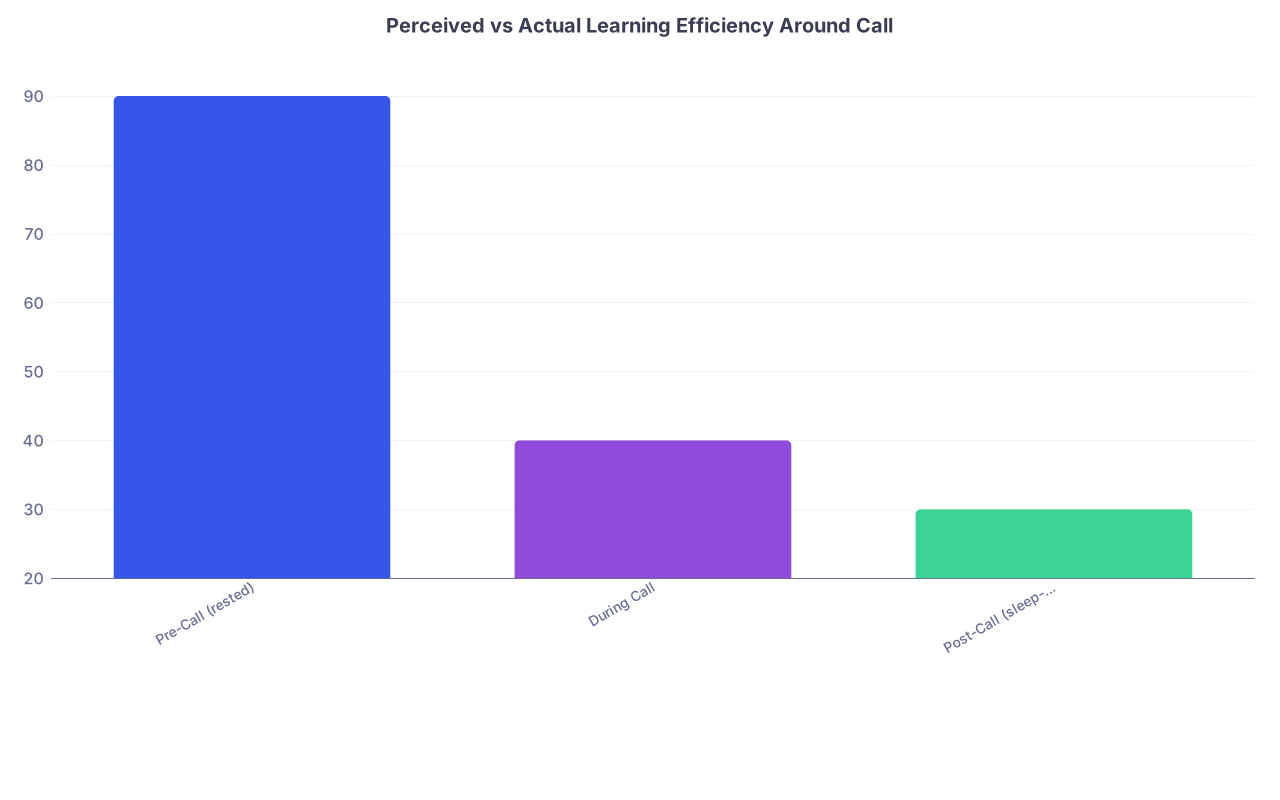
| Category | Value |
|---|---|
| Pre-Call (rested) | 90 |
| During Call | 40 |
| Post-Call (sleep-deprived) | 30 |

| Step | Description |
|---|---|
| Step 1 | Upcoming Call? |
| Step 2 | Front-load serious study today |
| Step 3 | Do light review only if time |
| Step 4 | Go to call |
| Step 5 | Post-call |
| Step 6 | Sleep, no real studying |
| Step 7 | 10-30 min light review max |
| Step 8 | When is call? |
| Step 9 | Exhausted & sleep-deprived? |
FAQs
1. If I never study after call, am I falling behind my peers?
No, not if you’re using your non‑call days effectively. The students who crush shelves aren’t usually the ones grinding post‑call; they’re the ones who protect real study blocks when their brain works. If you’re honest about your effort on non‑call days and pre‑call days, you’re fine.
2. How many hours should I study on a pre‑call day?
For a typical core rotation with a shelf coming, 1.5–3 hours of real, focused study on a pre‑call day is plenty. That can be broken into:
- 45–90 minutes of questions + review
- 30–60 minutes of targeted reading or Anki
If you’re consistently above 3–4 hours on workdays, you’re probably borrowing energy you’ll pay for later.
3. Is it ever worth doing a full question block after call?
Rarely. The only exception I’d accept: you slept decently on call, you feel surprisingly okay, and you have an exam extremely soon. In that case, a single short block (10–15 questions), done early in the post‑call day, might be reasonable. But full 40‑question blocks with detailed review? Wrong timing.
4. How should I use Anki around call?
Before call:
Use Anki in 20–30 minute chunks when you’re relatively fresh. Those reps actually encode.
After call:
Cap yourself at 10–20 minutes, and mainly do mature cards you’ve seen before. If new cards feel impossible or you’re failing everything, stop. That’s your brain telling you it’s done.
5. What if my resident or attending brags about studying after every call?
You’re hearing survivor bias and ego. People selectively remember the nights they “crushed it” and forget the blurry, useless hours. You can respect their work ethic but still choose a strategy that’s biologically sane. Medicine has a long history of glorifying suffering. You don’t need to inherit all of it.
6. I feel guilty if I don’t study post‑call. How do I handle that?
Set rules ahead of time so it’s a decision, not a failure. For example: “Post‑call, I’ll only do up to 20 minutes of light review if I feel okay. If I feel awful, I’m not allowed to study.” Then when you follow that rule, you’re succeeding, not slacking. Guilt usually comes from vague expectations; clear plans kill guilt.
7. Does this change during dedicated Step 2 or Step 3 study with call?
Yes, slightly. If you’re in an elective with light call and you’re in dedicated mode, you may push a bit more on post‑call days. But the principle stays: serious new learning before call, and post‑call is for shorter, more targeted tasks. Even during dedicated, your score tanks if you burn out. Sleep is still performance‑critical.
Key points to walk away with:
- Heavy, meaningful studying belongs before call, when your brain can actually learn.
- Post‑call is for sleep, recovery, and at most light, low‑stakes review—never for heroics.
- Your job isn’t to suffer; it’s to build competence sustainably. Plan your studying like you plan patient care: with respect for physiology, including your own.