

What do you actually do when your partner says, “I feel like I never see you anymore,” and you’re only halfway through surgery rotation?
You’re not imagining it: busy clerkship months are relationship grinders. Long hours. Random calls. Shelf exams. Notes. Pre-rounding at 5 a.m. And somewhere in there, you’re supposed to be emotionally available for someone who might be in another city—or another time zone.
I’ve seen couples break up on trauma call. I’ve also seen couples get stronger during away rotations, of all things. The difference is never vibes or “true love.” It’s systems. Clear rules. And a willingness to be brutally realistic about what your life actually looks like.
Let’s walk through what to do if you’re trying to keep a long-distance relationship alive during your busiest clerkship months.
Step 1: Stop Lying (To Yourself) About Your Schedule
The biggest relationship killer in clerkships isn’t the hours. It’s false expectations.
You tell your partner, “I’ll call you tonight after I get home.”
You get home at 10:30 p.m., still need to read for tomorrow and shower, and you crash.
They’re hurt. You feel guilty. Cycle repeats.
Break that cycle.
Do a ruthless schedule reality check
For each upcoming rotation, map out what your life actually looks like. Not the idealized version.
| Rotation | Typical Hours | Unpredictability | Study Load |
|---|---|---|---|
| Surgery | 5a–6p (often later) | High (add-on cases, emergencies) | High |
| Internal Med | 6a–5p | Moderate | High |
| Psych | 8a–4p | Low | Moderate |
| OB/GYN | 5a–? (varies) | Very High | High |
| EM | Variable shifts | High | Moderate |
Now, use that to set contact expectations with your partner.
Bad:
“I’ll text you throughout the day when I can.”
Better:
“On surgery, I basically vanish from 5 a.m. to 6 p.m. Let’s assume I’ll send 1–2 quick messages during a bathroom/water break and one longer check-in at night if I’m not dead.”
Spell it out. Literally.
Have “The Rotation Talk” before each block starts
This is non-negotiable if you want this to work long-term. Sit down (video preferably) and say something like:
- “This month is internal medicine, call days are X, post-call I’m basically a zombie.”
- “I can reasonably promise:
- A 5–10 minute check-in call on weekdays at [time window]
- One longer call on [specific day] unless I’m on call
- Quick good-morning/good-night texts almost every day”
Do not overpromise. Underpromise and over-deliver instead.
Then ask: “What do you need from me this month to feel okay in this?”
And actually shut up and listen.
Step 2: Build a Simple, Rigid Communication System
You won’t have mental bandwidth for elaborate gestures. You need low-friction habits that survive post-call brain fog.
Create a “default day” plan
On a normal clerkship weekday, decide:
- When you’ll send the first message
- When you’ll have your main connection moment
- What “backup plan” is if you’re too exhausted
- 4:30 a.m. – Alarm, send “Good morning, headed in, love you. Today I’m on until X.”
- 12–1 p.m. – If you get a break, send a 30-second voice note instead of a text (easier, more emotional).
- 8–9 p.m. – 10-minute call while you eat, walk home, or collapse in bed.
- If you miss the night call – quick text: “Just got home, destroyed. Will send a voice note in the morning. Love you.”
Simple. Predictable. Repeatable.
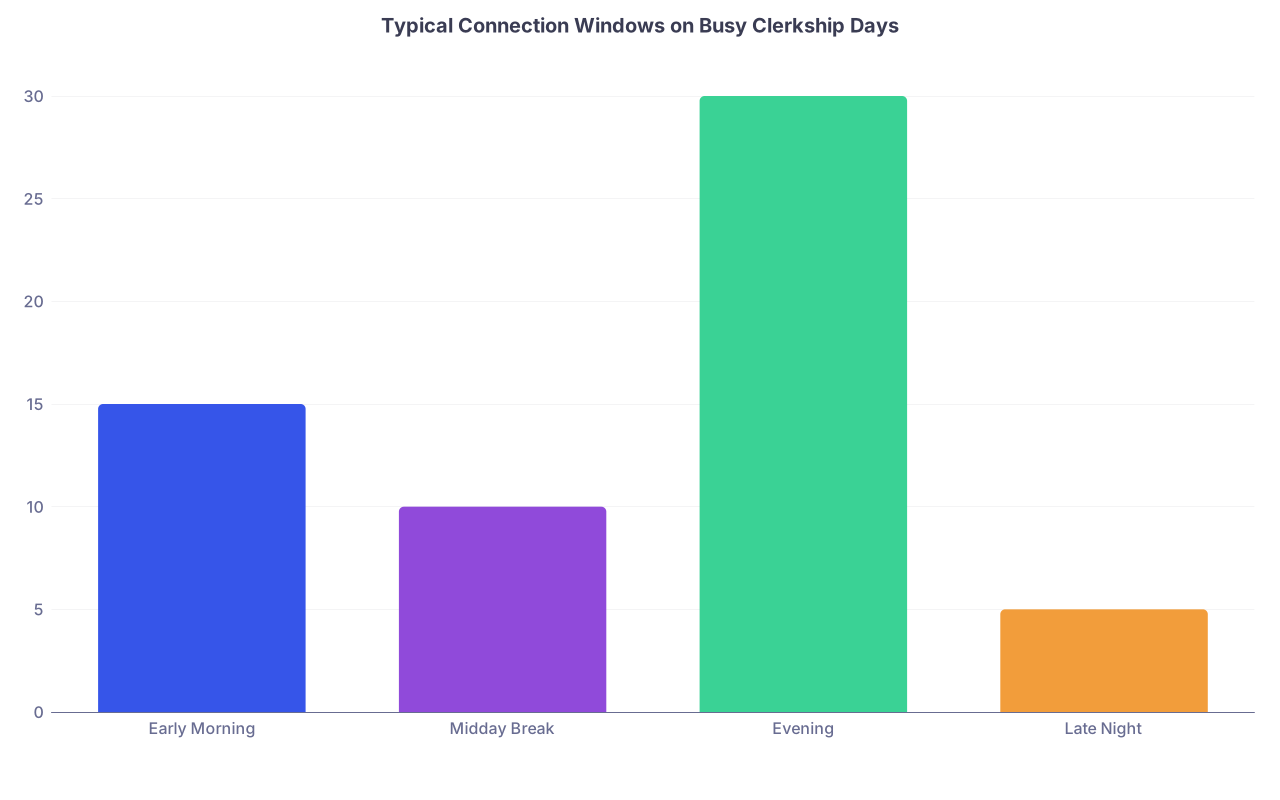
| Category | Value |
|---|---|
| Early Morning | 15 |
| Midday Break | 10 |
| Evening | 30 |
| Late Night | 5 |
Use the right tools for the right situation
On your busiest rotations, think in tiers:
- Text: Good for quick pings, but easy to misinterpret tone.
- Voice notes: Gold. Human voice, low effort, can be played anytime.
- Short calls (5–15 minutes): For actual connection.
- Long calls (30–60 minutes): Reserve for off-days or lighter rotations.
Decide together when each gets used. For instance: “If I send a voice note during the day, I’m not expecting a full reply until you have time. Zero pressure.”
Step 3: Translate “I’m Busy” Into Something Your Partner Can Feel
To your partner, “I’m busy” can sound like a cop-out. Especially long-distance, where they can’t see you pre-round, hunched over the EMR, or nodding off on the bus reading about CHF.
So show them.
Give a window into your world without violating HIPAA or professionalism
You do not need to trauma-dump your patients’ stories. But you can give texture.
Instead of:
“Today was crazy.”
Try:
“Today I pre-rounded on 5 patients, ran to rounds, then admitted someone who came in very sick, then I had to read about their condition before presenting tomorrow. I’ve been on my feet since 5.”
Or:
“I had a 12-hour day, and I spent 2 of those hours trying to understand one lab trend. My brain is mush.”
Occasionally send a quick photo (no patients, no identifiers, obviously): your call room, your destroyed notes, your 4 a.m. coffee. It gives your partner mental images for “this is where they are when they say they’re exhausted.”

Name what you wish you could do
This matters more than people think.
“I wish I had the energy for a real conversation tonight, but if I force it, I’ll sound annoyed and that’s not about you. Can we do a real call Saturday and I’ll send you a voice note in the morning?”
You’re telling them:
It’s bandwidth, not desire. That distinction keeps resentment from festering.
Step 4: Set Hard Rules Around Conflict During Heavy Months
You’re tired. They’re lonely. This is a perfect storm for stupid fights that spiral.
You need rules of engagement.
Decide together: what’s an immediate-respond issue vs. can-wait issue?
Examples that usually can wait:
- “You sounded distant last night.”
- “I feel like we’re not talking as much.”
- “I miss you and feel disconnected.”
Examples that usually cannot wait:
- “I’m wondering whether this relationship is still right for me.”
- “I’m feeling disrespected or unsafe.”
- “I’m considering making a big decision that affects us (moving, job, etc.).”
Make an agreement:
“If it’s a ‘can wait’ issue and I’m on call / shelf week, we flag it and schedule a real conversation on X date.”
You literally say: “Let’s put a pin in this for Saturday, I want to give it real attention, not my post-call zombie version.”
Never have serious relationship talks post-call
This one is blunt: post-call you should not be making any big decisions. Your emotional control is garbage. Your empathy tank is empty.
If a tough topic comes up and you’re post-call, say:
“I want to talk about this when my brain is at least 30% functional. Can we pick it up tomorrow/this weekend?”
If your partner pushes, you need to hold the boundary. That’s part of protecting the relationship too.
Step 5: Design Actual Rituals, Not Vague “We’ll Talk More”
Rituals are what make people feel secure when the schedule is chaos.
Build 2–3 anchor rituals
Pick things you can realistically sustain even on your worst weeks.
Some that work well:
“Daily check-in question”:
Every night, each of you answers the same simple question by text or voice note:- “What’s one thing you’re proud of from today?”
- “What’s one thing that stressed you out?”
- “What’s one tiny thing that made you smile?”
“Sunday planning call”:
20–30 minutes where you:- Look at your schedule for the week
- Mark any impossible days (“Wednesday I’m on call, assume I vanish.”)
- Decide when your main call(s) will be
- Share one thing you’re each looking forward to
“Pre-sleep connection”:
Even if it’s 30 seconds: “I’m going to bed. One thing I appreciate about you is __. Talk tomorrow.”
It sounds cheesy. It works. Especially long-distance.
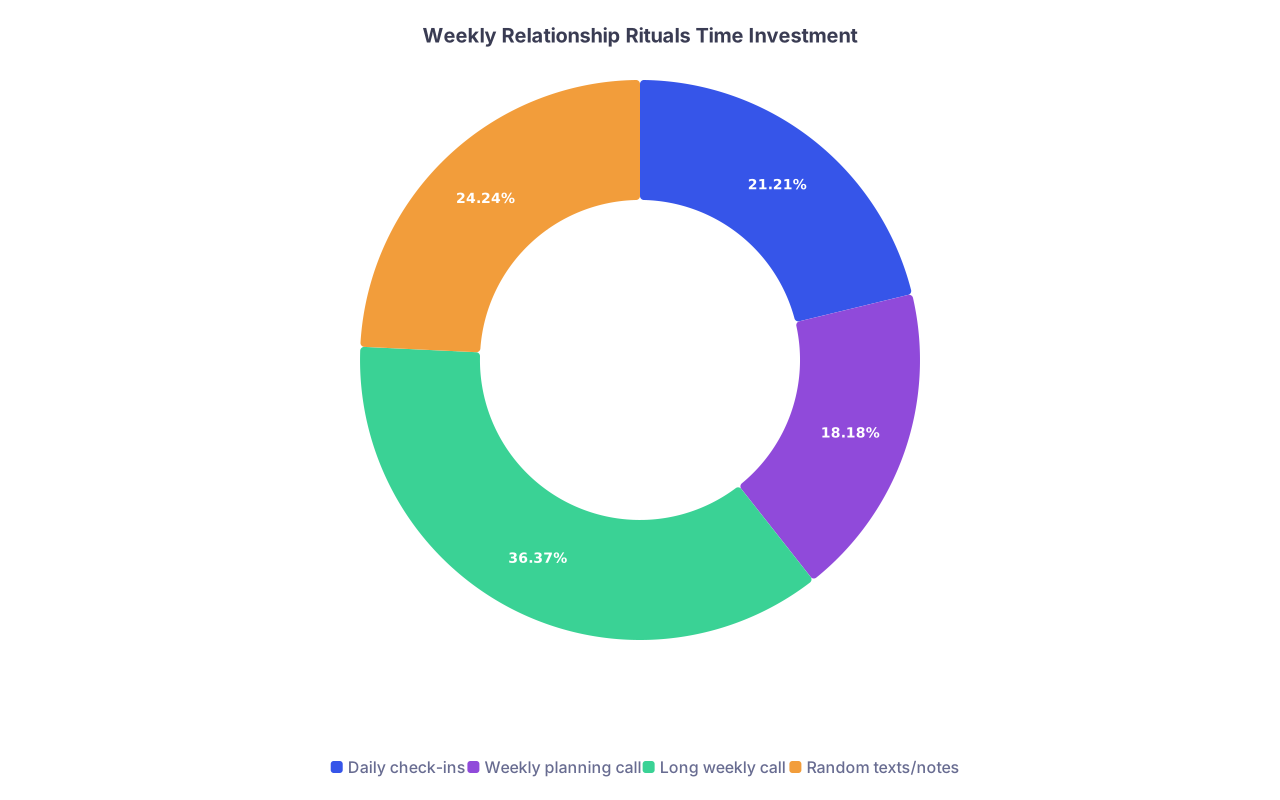
| Category | Value |
|---|---|
| Daily check-ins | 35 |
| Weekly planning call | 30 |
| Long weekly call | 60 |
| Random texts/notes | 40 |
(Those values are minutes per week. Not crazy. Very doable.)
Step 6: Handle Time Zones and Shift Work Without Going Insane
If you’re long-distance with time zones and clerkship chaos, you need structure or you’ll constantly miss each other.
Create overlap windows like a project, not a fantasy
Be boringly practical. Write it down.
If you’re on the East Coast in surgery (5 a.m.–6 p.m.) and your partner is on the West Coast with 9–5:
- Your realistic weekday overlap =
9–9:30 p.m. ET (6–6:30 p.m. PT)
Maybe plus a 1–2 minute “have a good day” message at 4:45 a.m. ET they’ll see later.
Design around that instead of wishing for “more time.”

| Step | Description |
|---|---|
| Step 1 | Sunday Planning Call |
| Step 2 | Weekdays |
| Step 3 | Morning Text/Voice Note |
| Step 4 | Midday Ping if Possible |
| Step 5 | Evening 10-min Call Window |
| Step 6 | Weekend |
| Step 7 | One 45-60 min Deep Call |
| Step 8 | Optional Video Date if Off-Call |
If one of you has night shifts or EM:
- Make a “shift week” version of the plan
- Explicitly say: “This week my days are flipped; our main communication will be [X time] and we’ll use more voice notes since live overlap is harder.”
Step 7: Protect Shelf Exam Prep Without Freezing Your Partner Out
Shelf weeks and Step prep on top of clerkships are brutal. This is where lots of people either ghost their partner or burn themselves out trying to be “fully present” and failing both school and relationship.
There is a middle ground.
Name it: “This is a grind month”
Don’t pretend it’s normal. Tell your partner:
“The next 3 weeks are going to be rough—shelf exam plus this rotation. I will be more absent. This is not forever, but I need your help to get through this without us imploding.”
Then be specific:
- “I’ll probably only have mental energy for:
- A quick good-morning text
- One 10-minute call on weekdays
- One longer call on the weekend if I’m not on call”
And pair it with a reassurance:
“After this exam, I want to plan something just for us.”
Study blocks + communication
Design your evenings like this:
- 30–45 minutes decompressing after getting home
- 10–15 minutes connecting with partner
- 60–120 minutes studying
- 10 minutes wind-down (shower, phone away)
If you’re honest, you can carve out 10–15 minutes most nights. The key is to not let those 10 minutes get eaten by Instagram or mindless scrolling. Give them to your partner first. Then to UWorld.
Step 8: When You’re the Partner, Not the Student
If you’re reading this as the non-med partner, here’s what most students won’t say clearly.
What they probably feel but do not articulate
- Constant guilt (“I’m failing you and school at the same time.”)
- Pressure to be cheerful on calls even when exhausted
- Fear that you’ll get tired of this and leave
- Resentment when asked for “just one more call” on nights they’re barely functioning
The best thing you can do?
Be clear about needs vs. wants.
“I need to hear from you at least once a day, even if it’s 1–2 minutes.”
“I want more long calls, but I understand those will be less frequent during tough months.”
And if you’re hurt, say it without weaponizing their schedule:
Instead of:
“You always choose the hospital over me.”
Try:
“When I don’t hear from you for a whole day, I feel unimportant. Can we agree on some kind of daily check-in, even if it’s tiny?”
Step 9: Know the Difference Between “Hard Month” and “Wrong Relationship”
Some months will suck no matter what. But there are specific red flags that this is a deeper problem, not just clerkship chaos.
You likely have a relationship problem (not just a busy-rotation problem) if:
- They consistently dismiss your feelings as “you’re being dramatic”
- They use your schedule as an excuse to never compromise
- They guilt-trip you about studying or going to sleep
- They threaten the relationship every time you set a boundary
- You feel relieved when you’re too busy to talk
On the other hand, if:
- You both occasionally drop the ball but repair quickly
- You both try to understand the other’s world
- You can have hard conversations without the relationship feeling constantly at stake
- You both are willing to adjust expectations rotation by rotation
Then you probably have something worth protecting, even in an ugly ICU month.
A Quick Self-Check Template You Can Actually Use
Here’s a simple weekly check-in structure you can copy-paste into a text or note app and use together:
- One thing I appreciated about you this week:
- One moment I felt close to you:
- One moment I felt distant from you:
- One small thing we could each do next week to feel more connected:
- Any schedule landmines this coming week (call, exams, travel):
That’s it. Five questions. Ten minutes. Keeps a lot of problems from festering.

Common Mistakes That Blow Up Long-Distance During Clerkships
Just to be blunt, here are the repeat offenders I see:
- Saying “I’ll call you tonight” instead of “I’ll try; if I can’t, I’ll send a short message.”
- Treating every rotation the same instead of resetting expectations each block.
- Having big relationship talks at midnight post-call.
- Letting shame/guilt prevent you from explaining your reality.
- Expecting your partner to “just understand” medicine without any context.
- Assuming long-distance automatically gets easier after clerkships (it usually changes again in residency).
Skip these, and you’re already ahead.
FAQ (Exactly 4 Questions)
1. How often should we really be talking during busy clerkship months?
There’s no universal number, but here’s a realistic baseline for heavy rotations like surgery or OB:
- Daily:
- 1 short check-in (text or voice note, 1–3 minutes)
- 3–5 days a week:
- 5–15 minute call
- Weekly:
- 20–60 minute deeper conversation on a day you’re not on call
If both of you feel constantly rushed and resentful, it’s too little. If you’re chronically sleep-deprived or skipping essential studying to maintain your call volume, it’s too much. Adjust weekly.
2. What if my partner keeps saying, “You’re choosing medicine over me”?
You need both empathy and backbone. Try:
“I hear that it feels that way. I chose medicine years ago, before this rotation, and I’m in a phase where training demands a lot of me. I’m not choosing against you; I’m choosing for my future, which I hope includes you. Let’s talk about specific ways I can show up that feel doable for me and meaningful for you.”
If they refuse to engage in specifics and just repeat the accusation, that’s less about your schedule and more about compatibility and emotional maturity.
3. Is it a bad idea to start a new long-distance relationship during clerkships?
Not automatically—but it’s harder. Your margin for miscommunication is low. If you do start something:
- Be brutally honest about your schedule from the beginning
- Set low, clear communication expectations
- Watch how they respond when you’re legitimately unavailable
If, early on, they frame your reality as “excuses,” that’s a red flag. It will not magically improve in residency.
4. How do we reconnect after a brutal month that left us both feeling distant?
Do three things, in this order:
- Name it: “This month kicked my ass and I felt disconnected from you. I’d like us to reset.”
- Do a 30–60 minute “reset call” where you:
- Share how the month felt for each of you
- Apologize for any specific dropped balls
- Decide 1–2 rituals for the next month
- Plan one small, tangible “us” thing:
- A virtual movie night
- A shared meal over video
- A weekend visit if possible
Reconnection is less about one grand gesture and more about showing, consistently, “I’m still choosing you,” even in small ways.
Open your calendar for the next rotation right now. Block off one 20–30 minute window this week labeled “Relationship planning call.” Then message your partner: “Can we use this time to make a simple plan for staying connected this month?” Start there.


