
18% of surgery clerkship questions target the same handful of topics over and over, regardless of hospital, attending, or subspecialty.
That is why some students look “naturally sharp” on rounds. They are not. They just know the patterns.
Let me break those patterns down for you, topic by topic, in the exact way they show up as pimp questions.
1. Post‑Op Fever: The Classic “5 W’s” Trap
This is easily in the top three most pimped concepts on a surgery clerkship.
You will get something like:
“Your patient is POD#3 after a right hemicolectomy with a temp of 38.9. What is your differential for post‑op fever?”
They want structure. Not rambling.
You give them the 5 W’s, with timing:
- Wind – atelectasis, pneumonia (POD 1–2)
- Water – UTI (POD 3–5, especially with Foley)
- Wound – wound infection, abscess (POD 5+)
- Walking – DVT/PE (POD 5+; earlier if high risk)
- Wonder drugs – drug fever, transfusion reaction (any time)
Now, how this actually gets pimped:
“POD#1 fever after laparoscopic cholecystectomy. Most likely cause?”
Answer: Atelectasis. Then expect a follow‑up:
“So what is your management?”
Incentive spirometry, early ambulation, pain control.“POD#7 fever after open colectomy. Wound is red and tender. Next step?”
Answer: Open the incision, look for pus, send for culture, start antibiotics.“How would you distinguish atelectasis from pneumonia in a post‑op patient?”
Talk about CXR findings: atelectasis shows volume loss (elevated hemidiaphragm, shift of mediastinum), pneumonia shows consolidation/infiltrate.
The high‑yield move: always give timing + likely cause + first diagnostic test. Three beats, clean.
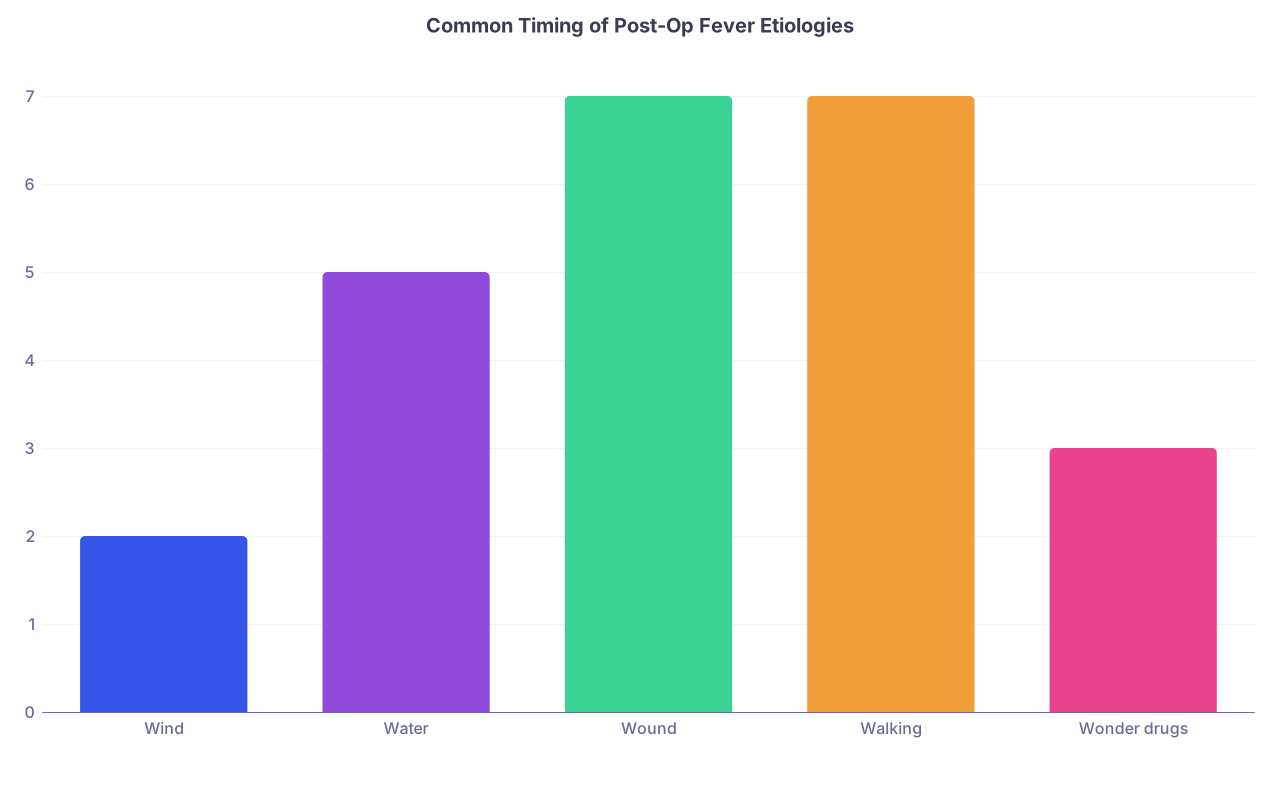
| Category | Value |
|---|---|
| Wind | 2 |
| Water | 5 |
| Wound | 7 |
| Walking | 7 |
| Wonder drugs | 3 |
2. Acute Abdomen: “What Do You Do Right Now?”
Attendings live for this one. They see a student list 14 causes of abdominal pain and still not say the actual answer: call surgery and resuscitate.
You will hear:
“You are the intern in the ED. A 65‑year‑old with sudden onset severe abdominal pain, rigid abdomen, hypotensive. What do you do?”
They do not want a full differential yet. They want immediate steps:
- ABCs – airway, breathing, circulation.
- Two large‑bore IVs, fluids (LR or NS bolus).
- Labs: CBC, CMP, lactate, type & cross, coags.
- Broad‑spectrum antibiotics (e.g., pip‑tazo).
- NPO, NG tube if concern for obstruction or vomiting.
- Call attending / senior – likely to OR, not CT if peritonitic and unstable.
Common specific pimp questions in the “acute abdomen” family:
“How do you define peritonitis?”
Rebound tenderness, involuntary guarding, rigidity, diffuse tenderness.“When do you skip CT and take a patient directly to the OR?”
Hemodynamically unstable + peritonitic abdomen (suspected perforation, ruptured ectopic, etc.).“Pain out of proportion to exam suggests what?”
Acute mesenteric ischemia.“RUQ pain, fever, jaundice?”
Charcot triad → acute cholangitis. They may push further: hypotension + AMS → Reynolds pentad.
Students screw this up when they start listing vague diagnoses instead of saying: “This patient needs emergent surgical evaluation and resuscitation right now.”
Say “resuscitate, broad‑spectrum antibiotics, surgical consult, likely emergent laparotomy.” Then you can talk differentials.
3. Shock Types: The “Why Is Your Patient Hypotensive?” Drill
Another favorite. Because it ties directly into post‑op care and acute abdomen.
You will be asked:
“Your post‑op patient is hypotensive. Tell me the types of shock and the one you are most worried about in him.”
You need the 4 main types, with examples:
- Hypovolemic – hemorrhage, severe dehydration, third spacing.
- Cardiogenic – MI, cardiomyopathy, arrhythmia.
- Obstructive – PE, tension pneumothorax, cardiac tamponade.
- Distributive – sepsis, anaphylaxis, neurogenic.
High‑yield pimp variants:
“What happens to cardiac output, SVR, and PCWP in septic vs hypovolemic shock?”
You should know basic patterns:- Hypovolemic: low CO, high SVR, low PCWP.
- Septic (early): high CO, low SVR, low/normal PCWP.
- Cardiogenic: low CO, high SVR, high PCWP.
“How do you manage septic shock, stepwise?”
- 30 mL/kg crystalloid bolus.
- Broad‑spectrum antibiotics within 1 hour.
- Blood cultures before antibiotics if possible.
- Pressors (norepinephrine) if MAP <65 after fluids.
“Post‑op day #1 after colectomy, HR 120, BP 82/40, urine output minimal. What is your first concern?”
Hypovolemia/bleeding until proven otherwise.
You say: “Assess for bleeding, check surgical site, drain output, belly exam, POCUS if available, stat CBC, bolus fluids while preparing for possible return to OR.”
Do not just name the type; tie it to your post‑op patient. Surgery attendings care less about board‑style phrases and more about: “Do you recognize this is probably bleeding or sepsis and not just ‘pain’?”
4. Fluid and Electrolytes: “What Are You Going To Hang?”
If you cannot order fluids appropriately on a surgical service, people notice. Fast.
Typical opening shot:
“What fluids do you order for a NPO patient post‑op and at what rate?”
Standard answer on wards:
- “D5 ½ NS with 20 mEq KCl at ~75–125 mL/hr,” adjusted for weight, age, comorbidities.
But the pimp questions are more pointed:
“What is in Lactated Ringer’s?”
Sodium ~130, chloride ~109, potassium ~4, calcium ~3, lactate ~28 (metabolized to bicarbonate).“Normal saline in large volumes—what acid‑base disturbance?”
Hyperchloremic non‑anion gap metabolic acidosis.“Maintenance fluids—how do you calculate daily needs?”
4‑2‑1 rule for hourly rate:
4 mL/kg for first 10 kg, 2 mL/kg for next 10, 1 mL/kg for each kg above 20.“Hyponatremia in post‑op patient. What do you check and how fast do you correct?”
Check serum osm, urine osm, volume status. Correct chronic hypoNa slowly—no more than 8–10 mEq/L in 24 hours to avoid osmotic demyelination.
Where students get grilled hardest: replacing GI losses.
“Your patient has an NG tube putting out 2 liters/day of bilious fluid. What fluid do you order?”
You should say something like:
“Normal saline with 20–40 mEq KCl, 1:1 replacement of NG losses, plus maintenance fluids.”
They want to see if you understand that upper GI losses are rich in chloride, can cause metabolic alkalosis, and need chloride‑rich fluid.

5. Wound Healing and Surgical Site Infections
Wound questions come up everywhere: OR, clinic, rounds. Because they are visual, and attendings love pointing to a wound and saying, “So, what do you see?”
Basic pimp prompt:
“The layers of the abdominal wall you go through in a midline laparotomy—name them.”
At minimum, you should be able to rattle off:
- Skin
- Subcutaneous tissue (Camper’s, Scarpa’s in lower abdomen)
- Anterior rectus sheath
- Rectus muscle
- Posterior rectus sheath (above arcuate line)
- Transversalis fascia
- Preperitoneal fat
- Peritoneum
Then the infection angle:
“Superficial vs deep vs organ/space surgical site infection—what is the difference?”
Superficial: skin/subQ only.
Deep: fascia/muscle involvement.
Organ/space: abscess etc. in cavity/organs handled in surgery.“Clean vs clean‑contaminated vs contaminated vs dirty wounds—give examples.”
| Class | Name | Example |
|---|---|---|
| I | Clean | Hernia repair |
| II | Clean-contaminated | Elective colon resection |
| III | Contaminated | Fresh traumatic wound |
| IV | Dirty/Infected | Perforated bowel with abscess |
The favored follow‑up:
“What factors impair wound healing?”
Diabetes, smoking, malnutrition (low albumin), steroids, infection, poor perfusion, radiation.“Fever, pain, and purulent drainage from incision on POD#5. What do you do?”
Remove some staples/sutures, open wound, probe, culture if pus, irrigate, pack wound, antibiotics if systemic signs.
If you say “start antibiotics” before “open the wound,” many surgeons will pounce on that.
6. Acute Appendicitis and Right Lower Quadrant Pain
Appendicitis is pimp comfort food. Almost everyone gets this.
Classic scenario:
“18‑year‑old with periumbilical pain that migrated to RLQ, nausea, low‑grade fever. Exam shows tenderness at McBurney’s point. What else do you look for?”
You should name at least a few:
- Rovsing sign – LLQ palpation causing RLQ pain.
- Psoas sign – pain with hip extension (retrocecal appendix).
- Obturator sign – pain with internal rotation of flexed hip (pelvic appendix).
Then they move to:
“What score helps you risk stratify for appendicitis?”
Alvarado score (migration, anorexia, N/V, tenderness RLQ, rebound, fever, leukocytosis, left shift).“What imaging do you order—adult vs child vs pregnant?”
Adults: CT abdomen/pelvis with contrast.
Children / pregnant: ultrasound first; MRI if equivocal.“Complication of delayed appendicitis?”
Perforation, abscess, peritonitis, sepsis, pylephlebitis (portal vein thrombosis).
Many attendings like to sneak this in:
“When can you treat appendicitis non‑operatively?”
Uncomplicated appendicitis can sometimes be treated with antibiotics only, but in U.S. surgical culture, operative management is still the default for young, healthy patients. For appendiceal abscess or phlegmon, you might see antibiotics and interval appendectomy.
Bottom line: know the physical exam signs cold, know the imaging choices, and say “urgent appendectomy” confidently for the textbook case.
7. Biliary Disease: RUQ Pain, Jaundice, and All That
Gallbladder and biliary disease produce some of the most repeated pimp patterns on surgery.
You will hear:
“Differentiate biliary colic, acute cholecystitis, choledocholithiasis, and cholangitis for me.”
Do it systematically: symptoms, labs, imaging.
Biliary colic
Intermittent RUQ/epigastric pain, often after fatty meal, no fever, normal WBC, normal LFTs, ultrasound: stones without wall thickening.Acute cholecystitis
RUQ pain, fever, positive Murphy sign, leukocytosis, ultrasound: gallstones, wall thickening, pericholecystic fluid.Choledocholithiasis
RUQ pain +/- jaundice, elevated direct bilirubin and alk phos, dilated CBD on ultrasound/MRCP.Cholangitis
Charcot triad: fever, RUQ pain, jaundice.
Reynolds pentad: + hypotension, altered mental status.
Management: resuscitate, broad‑spectrum antibiotics, urgent biliary decompression (ERCP).
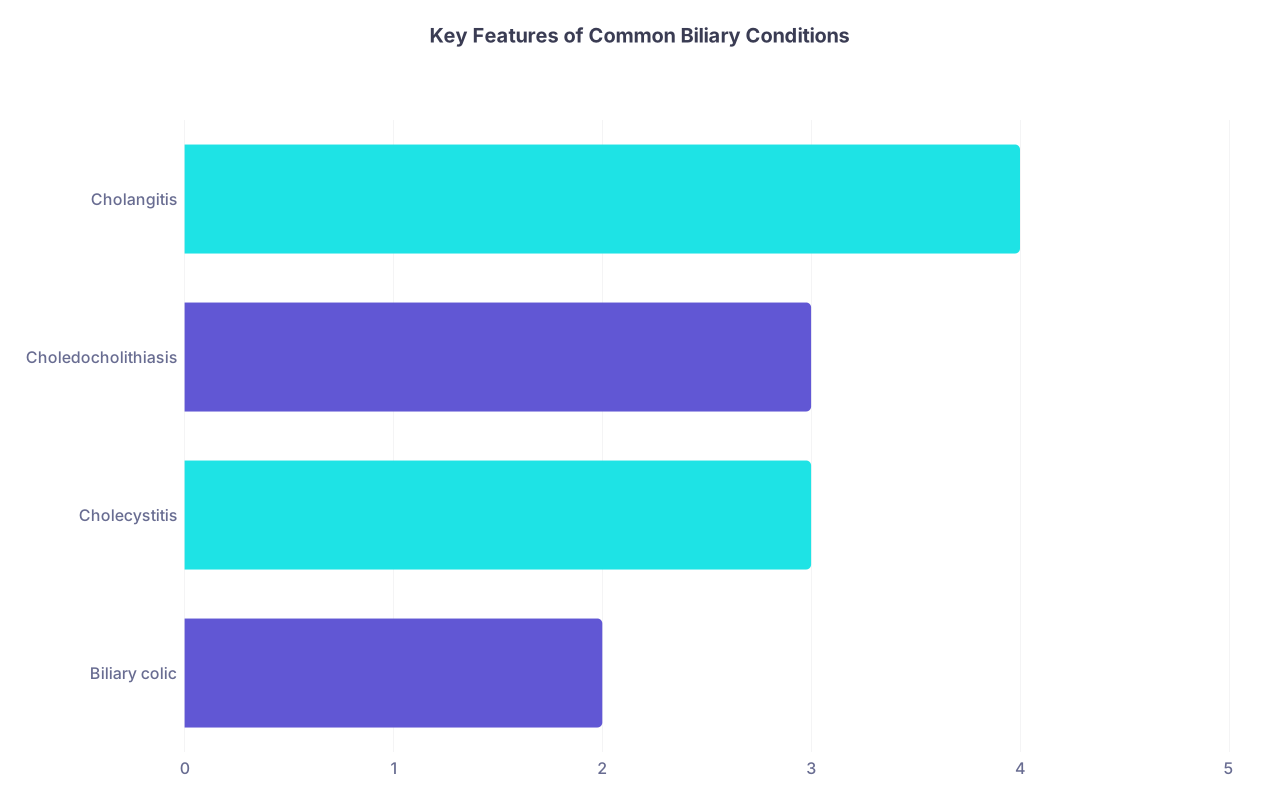
| Category | Value |
|---|---|
| Biliary colic | 2 |
| Cholecystitis | 3 |
| Choledocholithiasis | 3 |
| Cholangitis | 4 |
Other common question angles:
“What is the most sensitive test for acute cholecystitis?”
HIDA scan (non‑visualization of gallbladder).“When do you operate on symptomatic gallstones?”
Elective laparoscopic cholecystectomy for recurrent biliary colic or complicated disease.“Why do you worry about gallstones in a patient with pancreatitis?”
Gallstone pancreatitis—stone in ampulla; you may need ERCP.
If you can cleanly say:
“RUQ pain + fever + positive Murphy + leukocytosis = acute cholecystitis; do ultrasound → lap chole”
you will already look more competent than half the team.
8. Bowel Obstruction: “Air‑Fluid Levels” and the Old NG Tube
Another guaranteed topic. Surgeons see bowel obstruction constantly.
Classic pimp:
“Your patient has crampy abdominal pain, vomiting, distention, and no flatus. X‑ray shows dilated loops of small bowel with air‑fluid levels. What is your differential and your first steps?”
You should say:
- Likely small bowel obstruction (SBO).
- Differentiate between partial vs complete, and simple vs strangulated.
First steps:
- NPO
- NG tube to low intermittent suction
- IV fluids, electrolyte correction
- Pain control, antiemetics
- CT scan with contrast to confirm level and cause (adhesions, hernia, mass).
They will then throw this at you:
“What are signs of strangulation or ischemia?”
Constant severe pain (not colicky), fever, tachycardia, leukocytosis, metabolic acidosis, peritonitis, localized tenderness.“When does SBO need the OR rather than conservative management?”
Peritonitis, strangulation signs, closed‑loop obstruction, failure of conservative therapy after 24–48+ hours (varies by surgeon and patient).“How do you distinguish small vs large bowel obstruction on imaging?”
Small bowel: centrally located, valvulae conniventes all the way across bowel lumen.
Large bowel: peripheral, haustra that do not extend across full width.
Do not forget to mention hernias:
“What is the most common cause of SBO in a patient with no prior abdominal surgery?”
Hernia. Adhesions if prior surgery.
9. Trauma Basics: ATLS and “What Kills People First”
On a trauma service, pimping can feel relentless. But the patterns are predictable: ATLS, FAST, chest tube indications.
Opening line:
“ATLS primary survey—tell me each step and what you do.”
You should be able to say, rapidly:
- A – Airway with C‑spine protection.
- B – Breathing and ventilation.
- C – Circulation with hemorrhage control.
- D – Disability (neuro status, GCS).
- E – Exposure and environmental control.
Then you will be pushed:
“Hypotensive trauma patient—what are the four places a patient can bleed to death inside the body?”
Chest, abdomen, pelvis/retroperitoneum, long bones (particularly femur).“What is a FAST exam? What are you looking for?”
Focused Assessment with Sonography in Trauma. Look for free fluid in RUQ (Morison pouch), LUQ, pelvis, and pericardium.“Indications for immediate thoracotomy in trauma?”
- Massive initial chest tube output (>1500 mL)
- Continued bleeding (>200 mL/hr for 3–4 hours)
- Cardiac tamponade
- Penetrating chest trauma with loss of vitals in ED
Common trick question:
“How do you manage a tension pneumothorax in a crashing trauma patient—do you get a chest X‑ray first?”
No. Clinical diagnosis → immediate needle decompression followed by chest tube. Do not say “CXR first” if patient is unstable.
This is one of those areas where sounding decisive matters. Trauma surgeons do not like hesitation on textbook situations.
10. Perioperative Risk: Cardiac, Pulmonary, VTE
This one feels more “medicine‑ish” but you will get pimped on it on surgery too:
“Your patient is scheduled for elective colectomy. What pre‑op cardiac risk factors matter?”
You should think along Revised Cardiac Risk Index (RCRI):
- High‑risk surgery (intraperitoneal, intrathoracic, suprainguinal vascular).
- History of ischemic heart disease.
- History of CHF.
- History of cerebrovascular disease.
- Diabetes requiring insulin.
- Creatinine >2.0.
Then the follow‑ups:
“What METs level suggests acceptable functional capacity?”
≥4 METs (climb one flight of stairs without symptoms).“When do you stop anticoagulants pre‑op?”
Warfarin: 5 days prior, consider bridging depending on risk.
DOACs: 2–4 days depending on renal function and bleeding risk.“How do you reduce pulmonary complications post‑op?”
Incentive spirometry, early ambulation, adequate pain control, smoking cessation, head‑of‑bed elevation.“Who gets VTE prophylaxis?”
Almost everyone unless contraindicated:- Mechanical: SCDs for all.
- Pharmacologic (LMWH, heparin) for moderate/high risk unless active bleeding or high bleeding risk.
On rounds, this often evolves into:
“Your 70‑year‑old POD#2 is tachycardic and mildly hypoxic. What are you worried about?”
Pulmonary embolism is on that list, with differential including atelectasis, pneumonia, fluid overload.
If you can talk logically about perioperative cardiac risk, pulmonary risk, and VTE prevention, you jump from “student” to “almost intern” in attendings’ heads.
How To Use These Patterns On The Wards
You do not need to memorize a surgery textbook. You need to recognize the shape of the question.
Most pimp sessions on surgery fall into one of these templates:
- “What is your differential?” – post‑op fever, acute abdomen, hypotension.
- “What is your immediate management?” – ABCs, resuscitate, call surgery/trauma, NG tube, antibiotics.
- “Explain these physical exam signs.” – appendicitis, peritonitis, gallbladder, hernias.
- “Interpret this imaging conceptually.” – obstruction patterns, free air, dilated bowels.
- “Layer the anatomy for me.” – abdominal wall, inguinal canal, biliary tree.
You answer better when you recognize which template they are using.
If you want a simple practice schedule for a week before starting your surgery clerkship:
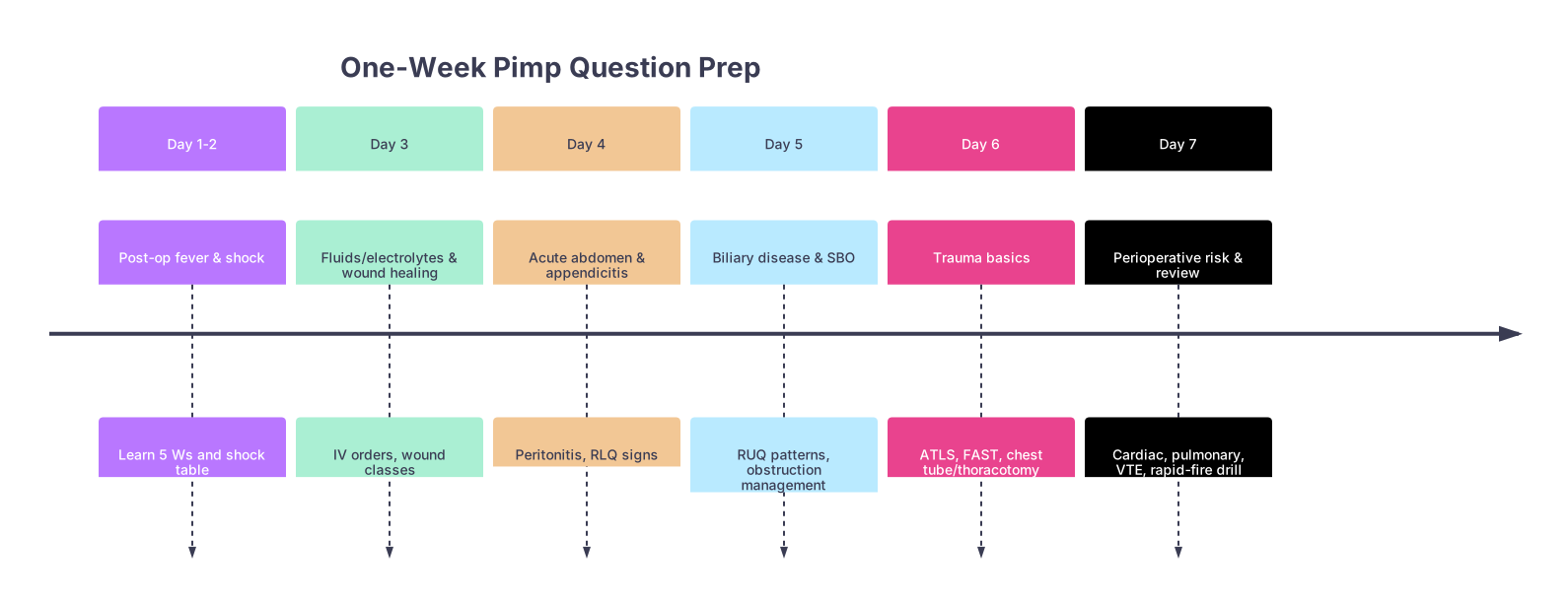
| Period | Event |
|---|---|
| Day 1-2 - Post-op fever & shock | Learn 5 Ws and shock table |
| Day 3 - Fluids/electrolytes & wound healing | IV orders, wound classes |
| Day 4 - Acute abdomen & appendicitis | Peritonitis, RLQ signs |
| Day 5 - Biliary disease & SBO | RUQ patterns, obstruction management |
| Day 6 - Trauma basics | ATLS, FAST, chest tube/thoracotomy |
| Day 7 - Perioperative risk & review | Cardiac, pulmonary, VTE, rapid-fire drill |
Read, close the book, then say the answers out loud as if an attending just asked you. That is what actually moves the needle.
FAQ (Exactly 5)
1. How many pimp questions should I expect per day on a typical surgery rotation?
Depends heavily on the attending and service. On a busy general surgery service, 5–15 direct questions per day on rounds is normal, more in the OR if you are scrubbed and the case is straightforward. Trauma and vascular can be more intense. The point is not the number. It is that the content is repetitive—these 10 topics show up disproportionately.
2. Should I admit when I do not know the answer or try to guess?
Bluffing is a bad idea in surgery. Better to say: “I am not certain, but my thought process is X, and I would read about Y tonight.” Attendings respect honest thinking and follow‑through. They do not respect confident nonsense with no plan to improve. If you have partial knowledge, say what you know clearly and where your uncertainty starts.
3. What is the best single resource to prep for surgery pimp questions?
For clerkship level, “Surgical Recall” is still the standard—organized by Q&A in exactly the style attendings use. But you must actually speak the answers out loud. If you only read it passively at 1 a.m., you will freeze when they ask you to define the 5 W’s in front of the whole team.
4. How do I handle being pimped aggressively or in a humiliating way?
You will meet at least one surgeon who thinks fear equals education. Your job: keep your affect steady, answer what you can, say “I do not know, but I will look that up” for what you cannot, then actually look it up. Write it down. Use the frustration as fuel, not a reason to shut down. And remember: their style is about them, not about your worth as a student.
5. How much of this content overlaps with shelf exam questions?
A lot. Post‑op fever, acute abdomen, trauma basics, fluids/electrolytes, biliary disease, and SBO are all heavily tested on the Surgery shelf and on Step 2. If you can confidently answer the typical pimp questions in these 10 topics, you are already covering a major chunk of shelf‑relevant material and performing better on the wards.
Key points:
- Surgery pimp questions are not random; about ten core topic clusters show up over and over: post‑op fever, acute abdomen, shock, fluids, wounds, appendicitis, biliary disease, obstruction, trauma, periop risk.
- Attendings care most about whether you recognize unstable patterns and can state immediate management clearly—resuscitate, evaluate, involve surgery—rather than reciting obscure facts.
- If you spend one focused week drilling these patterns out loud, you will feel dramatically less blindsided on rounds and in the OR.