
The academic year does not slowly become chaos. It snaps. Certain weeks, certain months—departments just… get funny. And if you know when they’re coming, you suffer less and laugh more.
You’re in medicine; your life now runs on a weird July-to-June clock. At each point in that cycle, departments start acting in predictable, unhinged ways—email storms, last‑minute curriculum changes, bizarre evaluations, and “fun” wellness initiatives that make everyone more tired.
Here’s your guided tour of the year: month‑by‑month, then week‑by‑week inside the worst stretches, and finally some day‑by‑day “this is how today will go off the rails” patterns.
Big Picture: The Academic Year at 30,000 Feet
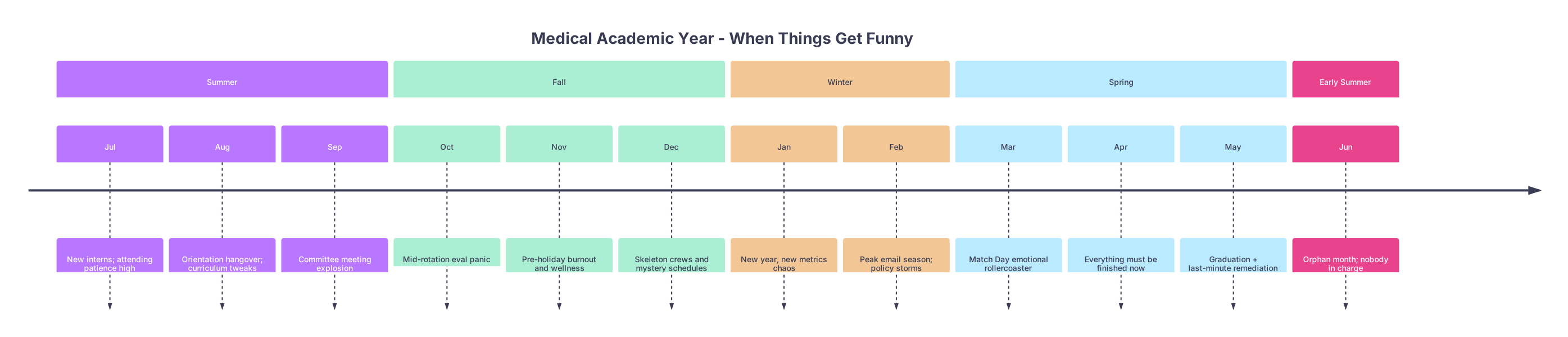
| Period | Event |
|---|---|
| Summer - Jul | New interns; attending patience high |
| Summer - Aug | Orientation hangover; curriculum tweaks |
| Summer - Sep | Committee meeting explosion |
| Fall - Oct | Mid-rotation eval panic |
| Fall - Nov | Pre-holiday burnout and wellness |
| Fall - Dec | Skeleton crews and mystery schedules |
| Winter - Jan | New year, new metrics chaos |
| Winter - Feb | Peak email season; policy storms |
| Spring - Mar | Match Day emotional rollercoaster |
| Spring - Apr | Everything must be finished now |
| Spring - May | Graduation + last-minute remediation |
| Early Summer - Jun | Orphan month; nobody in charge |
Here’s when departments tend to flip from “professional” to “comically unhinged”:
| Time of Year | Who Gets Weirdest | What It Feels Like |
|---|---|---|
| July | Residents | Chaos with enthusiasm |
| October | Clerkship Offices | Rubric worship season |
| December | Admin Leadership | Holiday schedule roulette |
| February | Everyone | Email apocalypse |
| April | Program Directors | Panic about unmet goals |
Keep this mental map. Now let’s walk it, in order.
July–September: Welcome to the Circus
At this point you should… stop expecting anything to make sense.
July: The Great Reset
Departments are at their least funny in early July. They’re earnest. Overprepared. Then the wheels come off by week 3.
Early July (Weeks 1–2)
- New interns arrive, July 1.
- Departments roll out:
- Overdesigned orientation slides (“Our Core Values” x 47)
- Way too many logins, passwords, and LMS modules
- Grand plans for “this year will be different”
At this point you should:
- Accept that every process is “in transition.”
- Keep your own notes; half of what they tell you is already outdated.
Late July (Weeks 3–4)
This is when departments realize: their beautiful plans don’t survive contact with the wards.
You’ll see:
- “Quick updates” to call schedules that require total rewrites.
- Pager trees that contradict the posted pager trees.
- Faculty emails like: “Wait, who’s covering nights?” sent at 4:52 pm.
At this point you should:
- Screenshot any schedule you care about. It will disappear.
- Double‑check who is actually on call. Do not trust the printed list from July 1.
August: The Orientation Hangover
By August, the optimism is gone. Departments get funny in subtle ways—policy changes announced as if they always existed, and “pilot programs” nobody remembers approving.
Week 1–2 of August
- Clerkships “clarify” expectations:
- New documentation requirements you allegedly learned in June.
- Extra logs to track encounters, procedures, reflections, your soul.
- IT rolls out mid-year “improvements” to the EMR training modules.
At this point you should:
- Assume any “clarification” email adds work.
- Keep one “admin” hour per week to catch up on nonsense.
Week 3–4 of August Faculty remember there’s a curriculum. And that ACGME or LCME or “that last site visit” wanted them to fix things.
Typical moves:
- Small group session formats get rearranged the night before.
- A “required” workshop is scheduled opposite your only free afternoon.
- Someone decides to “standardize feedback” with a new form nobody understands.
At this point you should:
- Ask directly: “Is this truly required for me right now?” Half of it won’t be.
September: Committee Season
September is when departments stop pretending they’re nimble. They retreat into committees. Suddenly everything is “under review.”
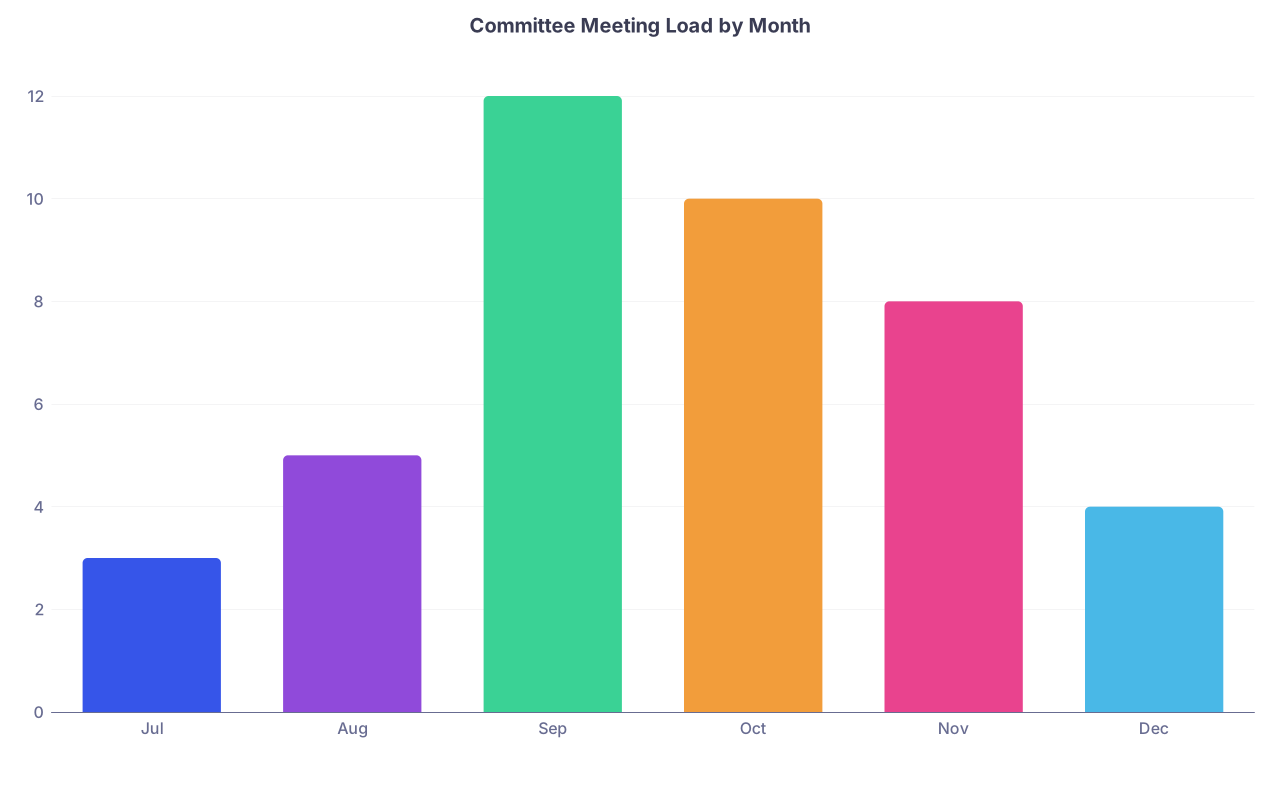
| Category | Value |
|---|---|
| Jul | 3 |
| Aug | 5 |
| Sep | 12 |
| Oct | 10 |
| Nov | 8 |
| Dec | 4 |
What you feel on the ground:
- Policies stall. No one can approve anything without a meeting.
- You’re told, “Yes, we know the form is broken; the committee meets next month.”
- Grading scales get “revisited,” usually mid-rotation, after you’ve already been evaluated.
At this point you should:
- Get things in writing before September if you need sign‑offs (LORs, electives, special schedules).
- Assume any “pending committee review” means “see you in 2027.”
October–December: Evaluations, “Wellness,” and Schedule Roulette
This is the first real cluster of the academic year. Everyone’s tired, nobody wants to admit it, and departments cope by inventing initiatives.
October: Evaluation Season Gets Weird
By October, rotations have churned enough that grades are due. Departments go full rubric mode.
You’ll see:
- Mass emails: “Please complete your evaluations by EOD TODAY.”
- Faculty rushing to evaluate students they barely remember from July.
- Residents asking, “Remind me… were you on my team?”
At this point you should:
- Politely remind key evaluators before the rotation ends.
- Keep a log: where, when, and with whom you worked. You’ll need it later.
Mid–Late October: Clerkship Offices Get Funny
- They suddenly discover “grade distributions.”
- If too many Honors were given out, there’s an “emergency recalibration.”
- You receive a cryptic email: “Your grade is delayed due to routine review.”
Translation: someone’s spreadsheet broke.
November: Pre‑Holiday Burnout + Weaponized Wellness
November is classic for departments trying to fix morale without changing anything structural.
Common patterns:
- Mandatory wellness events at 7 pm, after 12‑hour shifts.
- “Optional but strongly encouraged” town halls before weekend call.
- Vitamin D handouts + blackout ORs. Irony not acknowledged.
At this point you should:
- Choose your battles. You don’t have to attend every pizza‑based resilience seminar.
- Protect your post‑call time; that’s when “just a quick focus group” appears.

December: Skeleton Crews and Calendar Chaos
December is where departments really get funny. Schedules are a jigsaw puzzle made by people who requested vacation in July and “forgot” to tell the scheduler.
You’ll notice:
- Rotations where half the team is on leave and the other half is cross-covering three services.
- Lectures rescheduled three times due to “low attendance” a.k.a nobody is physically present.
- Clinic schedules double‑booked because someone checked the wrong holiday calendar.
At this point you should:
- Triple‑check your call schedule over the holidays; errors are common.
- Clarify expectations for Christmas/New Year coverage in writing.
January–March: Resolution Season, Email Storms, and Match Mayhem
January is when departments try to “fix” the year. February is when they give up and send emails. March is just feelings.
January: New Year, New Metrics
January 2. Admin walks in with new dashboards and zero shame.
You’ll see:
- Brand‑new metrics: completion rates, duty‑hour attestation compliance, note timeliness.
- New “mandatory” modules that somehow all expire January 31 at 11:59 pm.
- Grand Rounds about “learner outcomes” that quietly add reporting tasks for you.
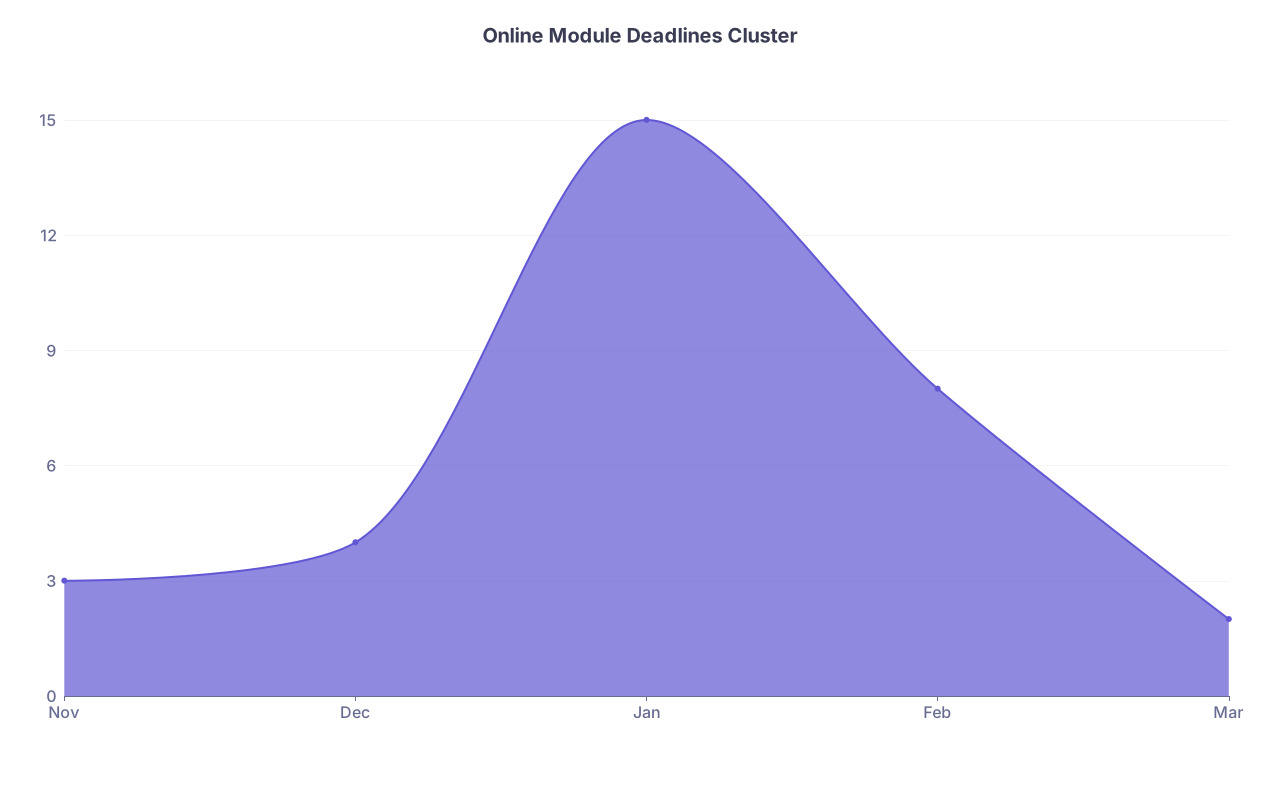
| Category | Value |
|---|---|
| Nov | 3 |
| Dec | 4 |
| Jan | 15 |
| Feb | 8 |
| Mar | 2 |
At this point you should:
- Block out one full evening early January as “deal with the modules” time.
- Do not assume “it’s probably optional” unless someone says the word optional clearly.
February: Peak Administrative Comedy
February is when the inbox becomes a war zone.
Typical week-by-week pattern:
Week 1–2
- Curriculum surveys, wellness surveys, climate surveys, IT satisfaction surveys.
- Each marked “takes only 5 minutes” and each actually takes 20.
Week 3–4
- Policy updates land all at once:
- New dress code nuance.
- New duty hour logging interface.
- New “professionalism” checklist that basically says “don’t be a jerk,” in 12 pages.
At this point you should:
- Ruthlessly prioritize: safety-critical > graduation-critical > everything else.
- Keep a folder of “do later” emails. Spoiler: later may never come, and that’s fine.
March: Match Day and Emotional Whiplash
Departments get emotionally funny in March. Half the building is thrilled. Half is quietly panicking about “next steps.”
For Students:
- Clerkship leadership acts like proud parents, even if they met you twice.
- Everyone suddenly cares about where you matched, not how you’re sleeping.
- Some services become “senioritis zones” where nobody says no to your days off.
For Residents and Fellows:
- PDs start future-tripping: “Next year’s interns will be great, right?” asked in a slightly desperate tone.
- Schedule discussions for next year start now with zero confirmed details.
At this point you should:
- Use the brief March goodwill to ask for:
- Letters you still need.
- Schedule tweaks for away rotations or interview season next cycle.

April–June: Panic, Paperwork, and the Orphan Month
This is the stretch where departments realize the year is ending and half their promised “initiatives” are still theoretical.
April: Everything Must Be Finished Now
April has strong “group project the night before it’s due” energy.
You’ll feel it as:
- Sudden urgency around evaluations:
- “We must improve narrative feedback starting immediately.”
- Which translates to five new required comment boxes.
- Acceleration of remediation plans:
- Anyone borderline now has a “personalized plan” with three different offices involved.
At this point you should:
- Keep your own record of competencies/procedures completed; systems break now.
- If something critical (LOA, remediation, accommodation) is unresolved by mid‑April, start chasing hard. Politely but daily if needed.
May: Graduations, Loose Ends, and Last-Minute Fixes
Departments get sentimental and forgetful in May.
Common funny behavior:
- Graduation planning consumes admin attention. Everything else slows to a crawl.
- Certificates, transcripts, and official letters get stuck behind “the dean has to sign this personally.”
- People promise: “We’ll fix that for next year’s cohort,” while your cohort just lives with the broken version.
At this point you should:
- Check your graduation or promotion requirements line by line:
- Logs done?
- Mandatory sessions attended?
- Evaluations in?
- Do not assume “they would have told me if something was missing.” I’ve seen people get surprised… in June.
June: The Orphan Month
June is when departments truly “get funny.” Many people are on vacation, others are checked out, and next year’s planning is pure science fiction.
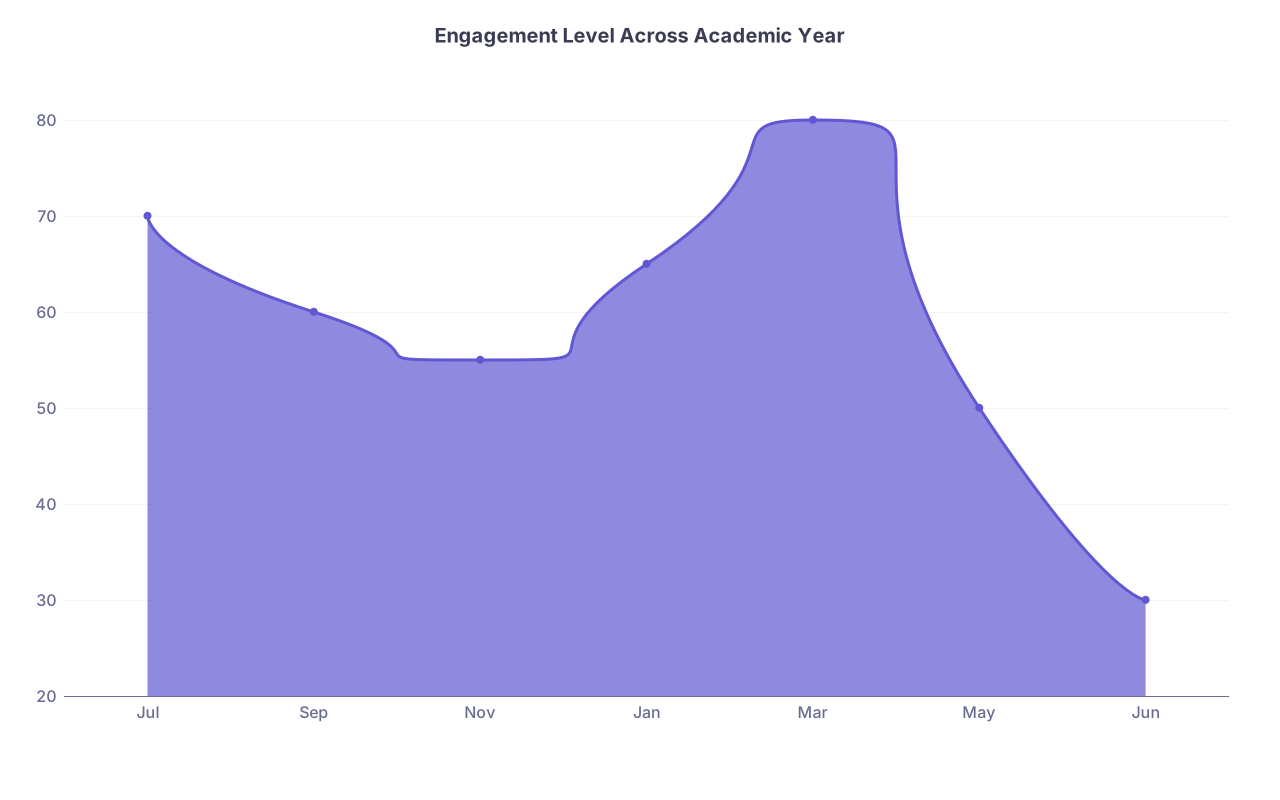
| Category | Value |
|---|---|
| Jul | 70 |
| Sep | 60 |
| Nov | 55 |
| Jan | 65 |
| Mar | 80 |
| May | 50 |
| Jun | 30 |
This is what June looks like in real life:
- Your emails vanish into the void because the one person who knows the answer is on leave.
- Orientation materials for next year are being made by people who can’t remember what actually worked last July.
- Rotations feel like a liminal space: outgoing seniors already mentally gone, new people not here yet.
At this point you should:
- Get every important document downloaded: evaluations, letters, final transcripts, contracts.
- Ask “Who is the backup person if you’re away?” every time you deal with admin in May/early June.
Micro-Timeline: A Typical “Funny” Week
Let’s drop down to the week level. Take a random “peak funny” week—say mid‑February or late April.
Here’s how it usually plays out:
Monday
- 7:02 am: New policy email. Effective… today.
- Noon: Mandatory meeting announced. For Wednesday. During your clinic session.
- 4:30 pm: Reminder that your evaluations are “overdue,” even though your rotation ended last Thursday.
At this point you should:
- Decide immediately what you can realistically attend.
- Ask for recording/alternative if the “mandatory” thing conflicts with patient care. They usually cave.
Tuesday
- 8:15 am: Your attending learns about the new policy from you.
- 11:00 am: IT quietly changes an EMR workflow. Nobody told you. Orders disappear.
- 5:45 pm: Survey link #4 of the week: “We value your feedback!”
Wednesday
- 9:00 am: That “short” meeting expands into a 90‑minute vent session about “the state of medical education.”
- 2:00 pm: Someone remembers logging requirements. You get a warning about being “behind” on procedures you were never told to log.
At this point you should:
- Ask for a clear, written list: “What exactly must I log, by when?”
- Ignore the guilt tone; they lost track of this months ago.
Thursday
- 6:45 am: New rotation schedule version 3.2 is sent out. Effective Monday.
- Noon: Wellness committee schedules a debrief “to process all the changes.”
- 7:30 pm: You realize the new schedule double‑books you on call and clinic.
Friday
- 8:00 am: You email the coordinator. Out‑of‑office reply.
- 11:15 am: PD says, “Just sort it out among yourselves and let us know what you decide.”
- 4:59 pm: Grading policy update email. Effective retroactively.
At this point you should:
- Call. Don’t just email. Voice still works in 2026.
- Loop in more than one person so problems don’t stall when one admin disappears.
Day-Level Patterns: When Departments Get Funny in a Single Day
There are classic “funny” points in a standard clinical day:
- 06:30–07:00 – Paging chaos. Who’s actually covering? Depends which list you check.
- 08:00 – New requirement announced at morning conference. “Starting today, everyone will…”
- 12:00 – Lunchtime teaching moved, but the calendar wasn’t updated. You’re the only one there.
- 15:00 – Admin shows up on the ward looking for consent forms, badges, fit‑testing, something you had no idea was due.
- 17:00–18:00 – Most likely time for “Can you quickly finish this mandatory module?” requests.
- 23:00 (if on call) – You discover an entire workflow changed “earlier this week.” No one on nights got trained.
At this point you should:
- Build a habit: morning calendar check, midday email skim, 5 pm triage. Systematically, not constantly.
- Ask the night team each handoff: “What changed this week that nobody told me?”
How to Use the Calendar to Stay Sane (And Maybe Laugh)
Departments will continue to “get funny.” That’s not changing. What you can change is when you expect nonsense and how you buffer it.
Three practical guardrails:
Front-load what matters in the “quiet” months.
- July–early August and early January are when people are listening. Get approvals, letters, and special requests sorted there.
Lower expectations in the chaos zones.
- October evaluations, December schedules, February admin storms, June orphans. During those, assume:
- Emails may go unanswered.
- Policies may be contradictory.
- Nobody sees the full picture.
- October evaluations, December schedules, February admin storms, June orphans. During those, assume:
Keep your own meta‑calendar.
- Track:
- When grades are usually released.
- When schedules typically get updated.
- When departments tend to “remember” certain requirements.
- Track:
Over a couple of years, you’ll know: “Ah, it’s November. Time for mandatory fun and ‘optional’ surveys.”
Today, do one specific thing:
Open your calendar and mark the three worst months for your institution—your local “funny season.” Add a 1‑hour “admin armor” block in the first week of each. That hour will save you ten later.