
Last Tuesday at 3:15 p.m., you were three patients into your afternoon Zoom clinic when it happened. You made a light comment, six faces on your screen smiled or chuckled—and one face stayed completely flat. The one you were actually talking to. Now the room’s laughing, the chat is popping, and your actual patient looks like they’d rather close the laptop and never call again.
If you practice telemedicine long enough—especially group visits, multi-participant family calls, or student-observed clinics—you’ll hit this exact moment. Here’s how to handle it without losing trust, dignity, or your sanity.
Step 1: Freeze the Scene in Your Head, Not on Camera
The instinct is to either overcompensate (laugh harder, explain more, pivot wildly) or shut down (go dead serious, ignore what just happened). Both are bad.
What you do instead:
- Give yourself a half-second mental pause.
- Shift your eyes deliberately back to the patient who isn’t laughing.
- Drop your facial expression one notch calmer.
Literally: soften your smile, relax your eyebrows, slow your speech.
Out loud, you say something simple like:
- “Let me slow down for a second.”
- “Let’s pause there.”
- “I want to make sure I’m not missing you.”
Then you address that patient directly, by name, and with a neutral tone.
Step 2: Name What Happened—But Don’t Turn It Into A Therapy Session
This is where people either get too clinical or too apologetic. You don’t need, “I sense there might be discordant affect in the group dynamic.” You also don’t need a rambling apology the group doesn’t understand.
You need one clean, human statement that:
- Validates the patient who isn’t laughing
- Signals to everyone else this isn’t a free-for-all
- Keeps clinical authority in your hands
Examples:
- “I can see some people smiling, but I’m noticing you look more serious, Mr. Lopez. I want to check in with you first.”
- “I’ve made a light comment there, but I don’t want that to minimize what you’re actually feeling, Ms. Grant.”
- “I realize that came off as more of a joke to some, but what you’re talking about is real and serious, and I want to stay with that.”
Short, direct, and then shut up. Let them respond.
Step 3: Clarify the Intent Without Defending Yourself to Death
If your own joke or light comment triggered the mismatch, you have to own it. Not grovel. Own.
Bad response:
“I was just joking; everyone else understood. Sorry if you were offended.”
Good response:
“I tried to use a bit of humor there, but I can see it did not land well for you. That’s on me. Let me reset and focus on what you’re dealing with.”
You’re doing three things there:
- Explicitly stating you used humor intentionally.
- Acknowledging impact > intent.
- Pivoting back to the patient’s problem, not your ego.
If the laughter came from students, a family member, or another patient in a group visit, you shift to this:
- “I’m glad some of you can find the light side of this, but I want to stay tuned into how hard this is for [Name] right now.”
Then you move on. Brief is better. The longer you stay in apology monologue, the more awkward and self-centered it feels.
Step 4: Re-Anchor the Visit on the Non-Laughing Patient
The goal isn’t to erase the moment. You can’t. The goal is to show that despite the awkwardness, they’re still the center of your clinical attention.
Ask one grounding question directly tied to what they just shared:
- “Can you tell me what part of this feels most heavy for you right now?”
- “When you hear others laughing, how does that fit—or not fit—with how you’re feeling?”
- “I want to make sure I really understand what this has been like. What’s the hardest part day-to-day?”
You’re pulling the spotlight back onto their lived experience.
Then you reflect briefly:
- “Got it. So while some people may find pieces of this absurd or ironic, for you it’s been exhausting and scary. That makes sense.”
Now you’re back in clinical territory instead of comedy club territory.
Step 5: Control the Zoom Room Like It’s a Physical Room
The biggest mistake: acting like Zoom is some chaotic uncontrollable universe. It isn’t. You have tools—use them.
Here’s what that looks like in practice when others are still smiling, whispering, or chuckling:
Reset the norms verbally.
“Let’s all slow down a bit. I want to keep this space respectful for how different people are feeling.”Use mute proactively.
If a family member keeps making side comments, you say:
“I’m going to mute everyone for a moment so I can focus on what [Name] is saying, then I’ll bring others back in.”Direct traffic clearly.
“I’ll start with [Name], then I’ll come to you, Mrs. Johnson, and then to our students.”
You are not being rude. You are being a clinician in charge of a room—with the added chaos of webcams and home Wi-Fi.
Step 6: When Humor Is Actually Part of Their Coping
Sometimes the non-laughing patient isn’t offended. They’re just exhausted. Or flat. Or wired differently.
You do not need to psychologize every non-smile.
Quick check-in script:
- “I notice some folks are laughing a bit. How does that feel for you right now—totally fine, a bit off, or not great?”
- “Some people use humor a lot with this stuff, some people hate that. Where do you fall?”
If they say, “Oh no, it’s fine, I’m just tired,” take them at their word—but still dial your humor down a notch and monitor.
If they say, “Honestly, I don’t find this funny,” that’s your cue to explicitly state:
- “Thank you for telling me. I’ll keep this straightforward. We’ll keep the focus on what’s been tough.”
Then actually do that. Less banter. More clarity. No sarcasm.
Step 7: Students, Observers, and the “Intern Laugh”
If you’ve ever had a Zoom clinic with med students or residents observing, you’ve heard it. The nervous intern laugh. They chuckle at everything—even stuff that’s not funny—because they’re scared and trying to be agreeable.
You have to protect the patient from that.
Before the clinic even starts, set ground rules with learners:
- “Patients can see and hear you. If you wouldn’t laugh in a physical exam room, don’t laugh here.”
- “If I use humor, you don’t need to pile on. Stay neutral; let me read the room.”
If they mess up in real time:
- “I’m going to ask our team to stay pretty neutral-faced for this part. This topic can feel heavy for people.”
You’re sending a signal to the patient: I’m on your side. I see the mismatch. I’m fixing it.
Then you debrief with the learner afterward, off-camera:
- “When I said X and you laughed, how do you think that landed for the patient?”
- “In tough conversations, default to neutral. Let the patient lead the emotional tone.”
You don’t need to crucify them. But you do need them to learn.
Step 8: Use the Technology to Lean In, Not Hide
Most people forget they have actual tactical controls in Zoom beyond mute and unmute.
Some concrete tricks:
| Feature | How to Use It in This Situation |
|---|---|
| Mute All | Silence background chuckling or side talk |
| Spotlight Video | Keep non-laughing patient visually central |
| Gallery/Speaker View | Switch to focus on speaker/patient |
| Chat Disable | Stop side jokes or commentary |
| Waiting Room | Stagger entry of late family/learners |
If your platform allows spotlight: use it. Spotlight the patient you’re prioritizing so they see themselves front and center, and others see them as the focal point.
If the chat starts getting “lol” or “so true” comments while they’re not laughing, you say:
- “I’m going to turn off the group chat for now so we can keep our focus on the conversation.”
You are allowed to be directive. Patients usually find it reassuring.
Step 9: When You Actually Screwed Up with a Bad Joke
Sometimes, the problem is simple: your joke was dumb. Or off-color. Or too flippant for their situation. You overreached.
Do not spin. Just own it, quickly and cleanly:
- “That joke was not appropriate for what you just shared. I’m sorry about that. Let’s reset.”
- “I tried humor there and it missed the mark. Thank you for staying with me; I don’t want that to take away from what you’re dealing with.”
Then, important: change behavior in that visit. No “anyway…” followed by three more jokes. That makes your apology look performative.
You can circle back near the end, if needed:
- “Before we wrap up, I want to repeat that I’m sorry for that earlier comment. If you leave and feel upset about it later, I want you to know I did take it seriously.”
That’s it. Done. No self-flagellation monologues.
Step 10: The Emotional Aftermath—Yours, Not Theirs
You’re going to log off and replay this in your head for an hour. Maybe more.
A few rules so you do not let this wreck your practice:
Do a 60-second debrief.
Ask yourself:- Was I misreading the room?
- Was my humor for them or for me?
- Did I recover quickly enough?
Decide one concrete adjustment for next time.
- “I’ll save humor for after I’ve explicitly validated the hard part.”
- “I’ll check in before leaning into group jokes.”
- “I’ll brief students better on camera behavior.”
Then stop. No late-night catastrophizing about how you’re a terrible clinician. You had a human moment on camera. Join the club.
A Short Word on When Humor Is Appropriate in Zoom Clinic
I’m not anti-humor. I’m anti-lazy humor.
Humor works best when:
- You’ve already demonstrated serious understanding of their problem.
- You’re matching their style, not forcing yours.
- You’re using it to reduce shame, not minimize severity.
Zoom-specific tip: delay humor until you’ve had at least one solid, empathetic reflection that lands well. Something like:
- “You’ve been carrying a lot of this on your own and it’s wearing you down.”
(Watch their face. If they nod, soften, or say “exactly,” then you have some room for lightness later.)
Humor first, empathy later = bad medicine. On camera, it’s devastating because there’s no body language buffer.
A Quick Flow to Keep in Your Head
If you like mental checklists, here’s the simple one I use when I see the “everyone’s laughing except the patient I care about” moment:

| Step | Description |
|---|---|
| Step 1 | Notice mismatch |
| Step 2 | Pause briefly |
| Step 3 | Look at non laughing patient |
| Step 4 | Name what you see |
| Step 5 | Clarify intent briefly |
| Step 6 | Re anchor on patient story |
| Step 7 | Reset group norms if needed |
| Step 8 | Adjust humor level |
| Step 9 | Debrief self after visit |
You don’t say all of that out loud, obviously. But that’s the skeleton.
Example Scripts in Real Scenarios
Let me run through a few real-world-ish situations I’ve seen.
Scenario 1: Group Weight Management Visit
You say something like, “None of us woke up one day and said, ‘You know what I want? A lifelong relationship with MyFitnessPal.’”
Most of the group laughs. One patient looks like they’re about to cry.
You:
“Let me slow down a second. I see some smiles, but I’m also seeing that this hits differently for you, Dana. I don’t want to skip over that. What’s coming up for you right now as we talk about this?”
Then:
“Thank you for saying that. For you this has felt more like constant shame than a funny shared struggle. That matters. We’re not going to make light of that today.”
Humor later, maybe. But you’ve re-centered.
Scenario 2: Chronic Pain Visit with Medical Student
You quip gently about “our good friend, the 0–10 pain scale.” Student chuckles reflexively. Patient stares.
You:
“I’m glad you two still have a sense of humor; this 0–10 thing drives a lot of us nuts. But I want to be clear that the pain behind those numbers for you is very real, Mrs. Kumar. Let’s stick with how it actually feels for you, not the silly scale.”
To the student after the call:
“In chronic pain visits, be cautious with laughter. Patients often feel dismissed. Even a small laugh can reinforce that.”
Scenario 3: Family Call with One Serious Member
You make an offhand comment about “everyone arguing over who gets to drive to appointments less,” most family members laugh, one adult child is stone-faced.
You:
“I’m noticing different reactions here. Some of you can see the funny side of these logistics. Jordan, I see you look more serious. I don’t want to gloss over that—how is all this landing for you?”
Lean in. Let them say, “Honestly, I’m the one doing all of this and I’m exhausted.” Now you’re having the real visit.
Visual Checkpoint: When Humor Helps vs Hurts
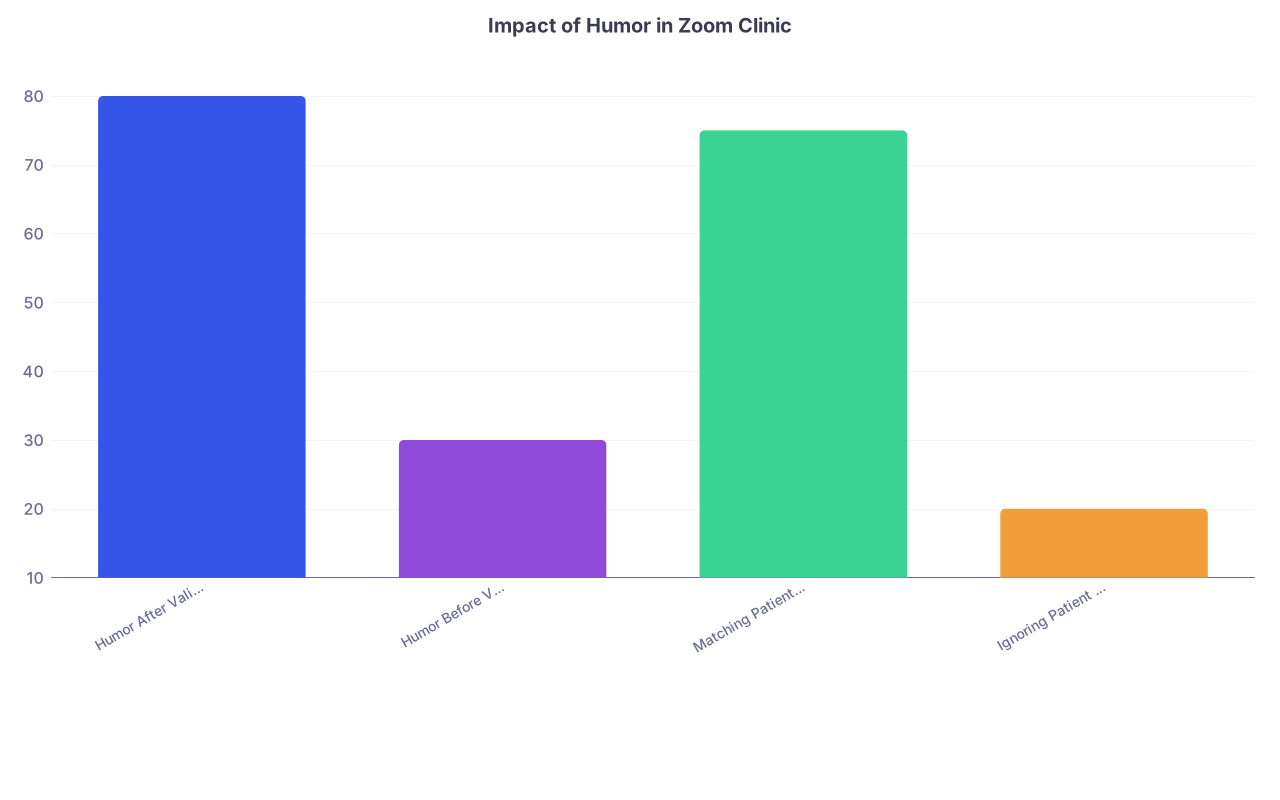
| Category | Value |
|---|---|
| Humor After Validation | 80 |
| Humor Before Validation | 30 |
| Matching Patient Style | 75 |
| Ignoring Patient Cues | 20 |
Interpretation is obvious: humor used after you’ve validated and aligned with the patient tends to help. Humor that ignores or overrides their cues usually backfires.
One Last Piece: Future of Medicine, Same Old Human Problem
Telemedicine will get fancier. VR clinics, AI scribes, holographic consults, whatever. But this specific scenario—most people laughing, one person not—will never go away. Whether it’s a physical room, a virtual waiting room, or some metaverse clinic.
The skill you’re building here isn’t “how to manage Zoom.” It’s:
- Read the room.
- Prioritize the most vulnerable person in it.
- Use humor with precision, not laziness.
That skill set will age better than any platform.

FAQs
1. Should I stop using humor entirely in Zoom clinic to avoid this problem?
No. You should stop using thoughtless humor. Humor that follows real validation, respects the patient’s emotional state, and is used to ease shame or tension can be powerful. The rule of thumb: if you haven’t clearly shown you understand their pain yet, hold the joke.
2. What if the patient insists they’re “fine” but clearly looks upset when others laugh?
Take “fine” as a starting point, not the whole story. You can say, “Okay, I hear you. I’m still going to keep things pretty straightforward today because I don’t want you to feel minimized in any way.” Then treat their situation with obvious seriousness in your tone, questions, and plan. They may not open up right then, but they’ll remember you took them seriously.
3. Is it ever appropriate to call out a specific person for laughing?
Sometimes, yes—but do it gently and with a clinical frame, not as a scolding. For example: “John, I’m hearing some laughter there. I want to keep the focus on how hard this has been for Maria. I’ll come back to you in a minute so everyone gets space to share.” You’re not shaming them; you’re protecting the patient and modeling the room standard.
Key things to remember: read the mismatch quickly, re-center on the non-laughing patient fast, and use your Zoom tools like you’re actually in charge—because you are.