
The resident group chat is both the best and worst thing about residency.
Step 1: Figure Out What Kind of “Problematic” You’re Dealing With
Do not respond yet. First, diagnose the chat like you would a patient.
Here are the usual pathologies:
The Chat Has Become A Dumpster Fire
Constant complaining, name-calling, attending-bashing, and unhinged 3 a.m. rants. You open WhatsApp and think, “If GME saw this, we’d all be in remediation by noon.”One Person Keeps Crossing the Line
A co-resident who:- Makes creepy or flirty comments
- Shares patient info with way too much detail
- Posts racist/sexist jokes or “memes” that are not memes, just discrimination
The Chat Is Being Used for Unsafe Clinical Stuff
Medical advice is being given about real patients, with names/locations, and people are screen-shotting the EMR and dropping it in there like it’s a study group, not a HIPAA minefield.The Chat Has Turned Into a Bullying Arena
One person repeatedly targeted. Sarcastic “jokes” that are actually hostile. Subtweets, except it’s in a group thread. You can feel the tension on rounds.The Chat Is Being Used to Undermine Faculty or Program Leadership
Not just venting. Coordinated disrespect, plotting to sabotage, sharing defamatory rumors as if they’re facts.
You need to decide: is this an “annoying and unprofessional” problem or a “this could actually blow up careers and patient care” problem?
Rough rule:
- Eye-roll bad: sarcasm, occasional dark humor, mild complaining.
- Career-ending bad: PHI screenshots, targeted harassment, explicit discrimination, sexual messages, threats, direct insubordination.
If you’re in the second category, you’re not overreacting. You’re late.
Step 2: Protect Yourself Before You Do Anything
Self-preservation first. Then heroics.
Here’s what you do immediately:
Stop Contributing to the Problem
No more “lol” reacting to questionable messages. No more typing the perfect savage reply. Screenshots last longer than your fellowship hopes.Check Your Own Footprint
Scroll back. Is your name attached to:- Patient identifiers?
- Jokes about attendings?
- Comments you’d be mortified to see in a CCC or HR meeting?
If yes, stop digging. From this point on, you’re on “professional mode.”
Turn Off Auto-Download and Auto-Backup
Especially if graphic or PHI screenshots are being sent. That stuff backing up to your personal cloud or laptop is a HIPAA disaster waiting to happen.Separate Work & Social Channels
If the problematic chat is currently the default for schedule swaps, handoff questions, and night float coverage, make sure you’ve got at least one non-toxic channel where you can get official info (email, program-approved app, or a small sub-chat).
You do not have to blow up your professional life to “fix the culture.” You can set boundaries and still be collegial.
Step 3: Decide Your Role – Are You Participant, Bystander, or Target?
Be honest with yourself.
If You’re the Target
You’re the one being mocked, excluded, or directly messaged things that cross the line.
Concrete steps:
- Document
Save screenshots of:- Repeated targeting
- Anything discriminatory
- Any threats, sexual comments, or retaliation (“If you tell anyone…”)
Do not edit the screenshots. Keep them with timestamps and sender names visible.
Don’t Respond in Anger
No “fight text” at 2 a.m. when you’re post-call. That’s how they’ll frame you as “emotional” or “overreacting.”Decide: Quiet Fix vs Formal Report
Quiet fix:- You pull one or two sane people aside (chief, senior resident you trust) and say, “This has gone over the line. I need this to stop.”
Formal report: - You go to the PD, GME, or HR with documentation. Especially if it’s harassment, discrimination, or impacting your work.
- You pull one or two sane people aside (chief, senior resident you trust) and say, “This has gone over the line. I need this to stop.”
If you’re being targeted, you don’t need to “handle this in-house” just to be a team player. That’s how people burn out and leave medicine.
If You’re a Bystander
You see the problem, but it’s not directed at you.
This is where most residents live.
You have three main levers:
Withdraw Participation
Stop reacting, stop laughing along, stop amping up the tone. That alone shifts the dynamics. Group chats thrive on dopamine. Remove yours.Name the Line Once
Example messages that are firm but not melodramatic:- “Hey, can we leave patients out of the jokes? That’s making me uncomfortable.”
- “Guys, that’s getting pretty personal. Maybe not the group thread for this.”
- “We probably shouldn’t be posting screenshots of charts here. This is not secure.”
Say it once, cleanly. You are not required to be the 24/7 moral enforcement bot.
- Support the Target Offline
Quiet, face-to-face.
“I saw the stuff in the chat. That wasn’t OK. If you want to bring it up with chiefs or PD, I’ll back you.”
That one sentence can keep someone from feeling crazy and isolated.
If You’ve Been Participating
You laughed, you piled on, you made your own edgy jokes.
Then you realized: this is bad.
You have two responsibilities:
- Stop
- Don’t rewrite history
If someone brings this to leadership and your name is in those screenshots, your best move is honesty:
“Yes, I was part of this. I see now it was inappropriate, and I’ve stopped.”
Trying to pretend your account was “hacked” or “out of context” just makes you look worse.
Step 4: Cleanly Reset the Group Chat (If That’s Still Possible)
Sometimes the group chat is salvageable. Sometimes it needs to die.
Here’s how to attempt a reset without a soap opera.
Option A: The Gentle Reset
Best if the vibe is mostly good but drifting.
Someone with some social capital (often a senior or chief) posts:
“Hey everyone, quick thing: the memes are funny, but the PHI / personal stuff is making a few people uncomfortable. Can we keep this thread for logistics and dumb memes that don’t involve patients or people we work with? Thanks.”
Then, they actually enforce it:
- No more responding to borderline stuff
- Nudge people privately: “Hey, can you delete that last message? That one’s risky.”
Option B: The Structural Reset
If the chat is a mess, split functions:
- “Call Room Chaos” – pure memes, no patient identifiers, no work gossip about specific people
- “Ward Logistics” – coverage swaps, schedule info, announcements, strictly professional
You message:
“Creating a clean thread just for work logistics so stuff doesn’t get lost in the chaos. Keep this one boring, move the chaos elsewhere.”
Then stick to it. Do the coverage and call swaps only in the “boring” thread.
Option C: The Controlled Abandon
Sometimes the correct action is: leave.
Not dramatically. No manifesto. Just:
“I’m going to mute/leave this thread and stick to the call room group for logistics, my notifications are getting out of hand. Text me directly if something urgent comes up.”
You’re signaling boundaries without accusing anyone directly. If the chat is truly toxic, you probably won’t be the last one to bail.
Step 5: When the Problem Is Ethical or Legal, Not Just Annoying
This is the part people like to pretend doesn’t exist.
There are situations where you are not “tattling.” You’re doing your job as a physician.
Red flags that should push you toward formal reporting:
- Photos of patients, charts, or identifiable details
- Explicit discriminatory language about patients or colleagues (racial slurs, misogynistic comments, anti-LGBTQ statements)
- Explicit sexual messages toward a co-resident who hasn’t invited it
- Threats, talk that feels like stalking, or “jokes” about harming someone
- Instructions that encourage cutting corners on safety: “Just don’t document that,” “Nobody needs to know we did x”
In those cases, your options:
Save Evidence
Screenshots (uncropped), dates, names.
If you print anything, blur identifiers that aren’t necessary for context.Start Low-Risk: Trusted Chief or Faculty Advocate
“I’m uncomfortable with things happening in the resident group chat. It involves X (e.g., PHI, discriminatory comments). I wanted your guidance on next steps.”
If they blow you off, that’s data too.
- Escalate: PD, GME, or Compliance
Many hospitals have anonymous hotlines. Those aren’t perfect, but they’re there for this exact problem.
Your report doesn’t need to be a legal brief. Just clear: “Resident group chat contains PHI and inappropriate content. I have screenshots.”
You are not responsible for punishing people. You’re responsible for telling someone when the plane’s on fire.
Step 6: Manage the Fallout If Things Blow Up
Sometimes, someone complains (maybe not you), screenshots get involved, and suddenly the group chat is being reviewed by people who own suits.
What you do then:
Do Not Start Deleting Everything
Mass deletion looks worse. And often, the complaining person or IT already has copies.Don’t Coordinate a Cover Story
“Let’s all say it was just jokes” is how you move from “unprofessional conduct” to “dishonesty and conspiracy.” Programs care about that second one a lot more.Be Honest but Not Self-Incriminating in a Dumb Way
Wrong: “We are all horrible people but it was funny.”
Better:
“The culture of dark humor and venting got out of control. I didn’t fully appreciate the impact at the time. I understand now that it was not appropriate, and I’ve changed how I communicate.”Don’t Ostracize the Person Who Reported It
That’s the fastest way to escalate this to retaliation, which programs and hospitals treat very seriously.
This is survivable. Residents have done worse and graduated. The ones who come out okay show insight and change.
Step 7: Build Better Communication Habits Going Forward
You’re going to be in group chats for the rest of your career. Residents, fellows, attendings, hospitalist service, the works. Set your internal rules now.
Here’s a simple litmus test for any message:
If this screenshot were in:
- Your CCC meeting
- A promotion file
- A legal review
- The front page of the hospital’s email blast
Would you be able to defend it without sweating?
If no—don’t send it.
Reasonable resident rules:
- No patient details beyond what’s absolutely necessary for safe coverage
- Never send screenshots from the EMR into unsecured apps
- No trash-talking specific nurses, techs, attendings, or co-residents by name in writing
- Humor is fine; cruelty disguised as humor is not
- If you would not say it at the workroom table with the door open, do not put it in writing
And for your own sanity, limit the chaos. Mute nonessential threads. You do not need 247 unread messages after a call night.
Quick Comparison: Situations and What You Should Actually Do
| Situation Type | Your Primary Move |
|---|---|
| Mildly toxic venting | Stop engaging, suggest reset |
| Targeted bullying | Document, support target, report |
| PHI / chart screenshots | Save evidence, escalate to PD/GME |
| Discriminatory “jokes” | Call out once, then report if needed |
| Sexual comments to resident | Document, support, formal report |
The Future Angle: This Stuff Will Matter More, Not Less
Everyone loves to talk about “the future of medicine” like it’s all AI, robotics, and precision oncology. The less glamorous reality: your digital paper trail will be part of your professional identity.
Institutions are getting less tolerant of:
- Informal channels used for clinical decisions
- “Hidden” cultures of harassment documented in texts
- Casual HIPAA issues (that screenshot you thought nobody would see)
That resident group chat that feels private? In an investigation, it’s not. Texts are screenshots. Screenshots are PDFs. PDFs end up in official files.
The residents who will be fine in the future:
- Treat any written platform with the same seriousness as an email
- Keep the memes but ditch the malice
- Know when something has crossed into “I need to tell someone with power”
You don’t need to be a saint. You do need to be smarter than the chat.
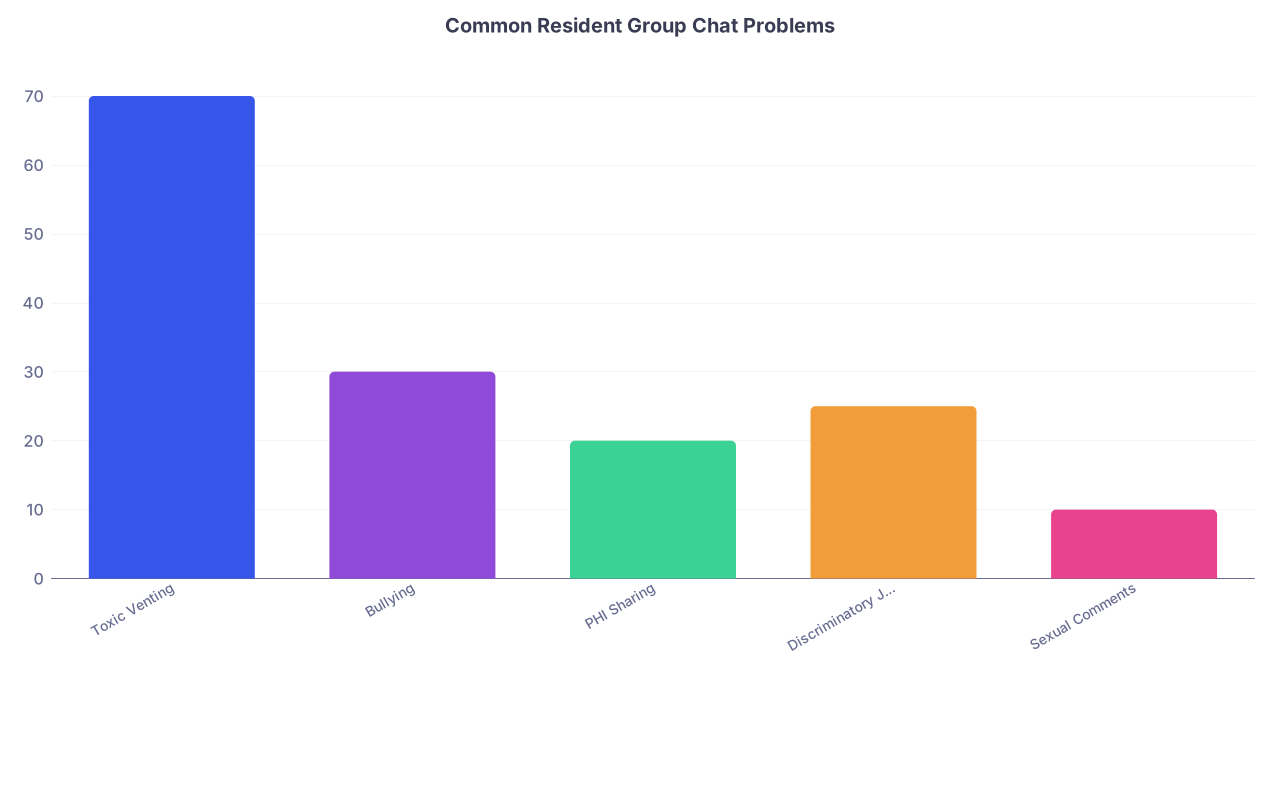
| Category | Value |
|---|---|
| Toxic Venting | 70 |
| Bullying | 30 |
| PHI Sharing | 20 |
| Discriminatory Jokes | 25 |
| Sexual Comments | 10 |

| Step | Description |
|---|---|
| Step 1 | See problematic message |
| Step 2 | Save evidence |
| Step 3 | Talk to chief or PD |
| Step 4 | Support target offline |
| Step 5 | Consider reporting |
| Step 6 | Withdraw participation |
| Step 7 | Suggest reset or leave chat |
| Step 8 | Is it unsafe or illegal |
| Step 9 | Is someone targeted |
FAQs
1. Am I overreacting if I feel uncomfortable but others are laughing?
No. Group chats amplify the loudest energy. People “haha” react to avoid friction, not because they genuinely think everything is fine. If your internal alarm is going off, pay attention to it. You’re allowed to set a higher standard for yourself than the lowest common denominator in the chat.
2. Will reporting a problematic group chat ruin my relationship with co-residents?
It might change some dynamics, yes. But here’s the truth: if the only way they’ll accept you is if you tolerate harassment, PHI sharing, or discrimination, that relationship is already rotten. Often, you’ll find more people relieved than angry—because someone finally said, “This is not normal.”
3. Can I just stay quiet and ignore it until residency is over?
You can, but there are two risks. One: something in that chat eventually blows up, and your silence plus your presence in the thread gets interpreted as complicity. Two: the behavior escalates and starts affecting patient care or your mental health. Ignoring is a short-term comfort that often becomes a long-term problem.
Key points:
Set boundaries for yourself in any group chat and assume screenshots live forever.
Know when something is merely annoying vs truly unsafe or unethical—and escalate the second category.
You do not have to fix the culture alone, but you are responsible for not fueling the fire.