

You’re sitting in a hospital cafeteria on post-call autopilot, stethoscope still around your neck, listening to a “business guy” walk you through the deck for your potential startup. He’s excited. He’s animated. He keeps calling you “the clinical brain” and himself “the operator.”
He drops phrases like “we’ll raise easily,” “we’ll hire a dev team,” “we’ll figure out regulatory stuff later.”
You’re exhausted. Flattered. A little dazzled. And you do not realize you’re about three meetings away from signing yourself into a co‑founder nightmare you won’t fully understand until you’re burning out in both medicine and a failing startup.
Let me be blunt: physicians are uniquely vulnerable to terrible co‑founder choices. You’ve spent a decade in a rigid hierarchy where trust is assumed, titles mean something, and everyone mostly plays by the same rules. Startups are the opposite.
If you treat co‑founders like colleagues instead of like potential legal, financial, and psychological hazards, you’re setting yourself up to get steamrolled.
Let’s go through the red flags doctors routinely ignore—until it’s too late.
1. “You’re the Clinical Face, I’ll Handle Everything Else”
The moment a potential co‑founder positions you as decoration, you’re already losing.
They’ll phrase it as a compliment:
- “You’ll be the face of the company.”
- “Investors love MDs on the slide.”
- “You don’t have to worry about the business stuff.”
Read that again: You don’t have to worry about the business stuff. That’s code for: I expect control.
Here’s the pattern I’ve seen too many times:
- The physician is “Chief Medical Officer” or “Co‑founder” in title only.
- The non‑clinical partner controls the bank account, cap table, hiring, and eventually… your replacement.
- When equity discussions get real, your value suddenly shrinks from “essential co‑founder” to “advisory role with 1–3%.”
If they want you for:
- your NPI
- your credentials on the website
- your ability to cold open doors at hospitals
…but they’re vague about giving you real decision rights (board seat, voting power, veto rights on clinical direction), walk away.
Red flags inside this dynamic:
- They say “we’ll paper it later” instead of drafting real founder agreements now.
- They propose titles without clearly defined roles, responsibilities, and equity vesting.
- They talk about you as “our doctor” when pitching to others, like you’re an asset, not a partner.
You’re not a prop. If you feel like one, believe that feeling.
2. “I Don’t Really Do Details, I’m More Vision”
If your potential co‑founder can talk for 30 minutes and never once says words like “budget,” “runway,” “unit economics,” or “FDA classification,” that’s not a visionary. That’s a liability.
You’re trained to think in worst‑case scenarios:
- “What’s the catastrophic complication?”
- “What’s the one lab I can’t miss?”
A good co‑founder has a similar reflex for the business side:
- “What kills this company?”
- “Where does this get stuck? Billing? Integration? Regulation?”
Common physician mistake: mistaking charisma for competence.
Here’s what overconfident, under‑disciplined co‑founders say:
- “We’ll just get a dev team overseas, super cheap.”
- “Hospitals will adopt because it saves lives.”
- “We’ll figure out HIPAA and FDA after MVP.”
- “If we get traction, regulators can’t really shut us down.”
I’ve watched this movie. It does not end well.
You don’t need your co‑founder to be a CFO. But you absolutely need someone who:
- tracks burn rate
- can explain the business model clearly
- knows basic healthcare acronyms without Googling (CPT, CDI, MACRA, PBM, prior auth, etc.) or admits what they do not know and actively learns
If they’re allergic to spreadsheets, contracts, and boring operational grind? You’re signing up to be the adult in the room—on top of having a medical career. That’s unsustainable.
3. “Let’s Just Split 50/50 and Figure the Rest Out Later”
This one feels fair. It’s not. It’s lazy—and dangerous.
Early‑stage equity decisions shape everything:
- Power
- Control
- Incentives
- How ugly fights get when things go sideways (they will)
The physician trap:
You’re so used to predetermined pay scales and standard contracts that “we’ll just do 50/50” feels harmless. You’re not used to thinking: What happens if he stops working but keeps his shares?
You must insist on:
- Vesting (standard 4 years with 1‑year cliff is fine)
- Clear IP assignment
- Defined roles in writing
- Founder break‑up plan (buy‑back clauses, what happens if someone leaves)
| Setup Type | Why It's Dangerous / Healthy |
|---|---|
| 50/50, no vesting | Frozen deadlock, no recourse if one quits |
| 60/40, no roles | Power imbalance without clarity |
| 33/33/33, no IP assignment | Confusion over who owns what |
| 4-year vesting with 1-year cliff | Aligns commitment and ownership |
| Clear buy-back rights | Prevents dead equity blocking progress |
The red flag is resistance to structure:
- “We don’t need vesting, we trust each other.”
- “IP assignment is overkill for now.”
- “Lawyers make this too complicated; let’s just move fast.”
Translation: they want flexibility for themselves and permanence for your commitment.
If someone immediately wants equal equity but brings no capital, no relevant track record, and no willingness to tie their ownership to performance? That’s not a partner. That’s dead weight looking for a free ride.
4. “Regulation? Legal Will Handle That”
Any co‑founder in medical startups who hand‑waves away regulatory, privacy, or billing complexity is waving a big red flag in your face.
Here’s where doctors get fooled:
You assume everyone treats rules like you do. Licensure, board certification, charting—there are guardrails everywhere in your world. Enforcement is real.
In startups? Enforcement often feels far away—until it’s not.
Watch for these lines:
- “We’re just a tech platform, we’re not practicing medicine.”
- “It’s not really PHI if it’s de‑identified… kinda.”
- “This is more wellness than healthcare; we can skip HIPAA.”
- “We’ll do a 510(k) later if we need it. Let’s just get users first.”
Your name and license will be attached to this thing. Their name will be attached to… a LinkedIn pivot.
Specific red flag behaviors:
- No interest in talking to a healthcare attorney before product launch.
- No budget line for legal/regulatory in the financial plan.
- Dismissive attitude when you raise concerns: “You’re being too conservative, this is why doctors don’t build big companies.”
You should be wary of two extremes:
- The co‑founder who underestimates risk and wants to “ask forgiveness not permission” in a heavily regulated space.
- The co‑founder who is terrified of all risk and uses regulation as an excuse to do nothing.
You want someone who will say:
“OK, let’s figure out: are we a medical device? Do we trigger telehealth laws? What states are we touching? Who do we need to pay to get this right?”
If you’re the only adult in the conversation when regulation comes up, that’s a bad sign.
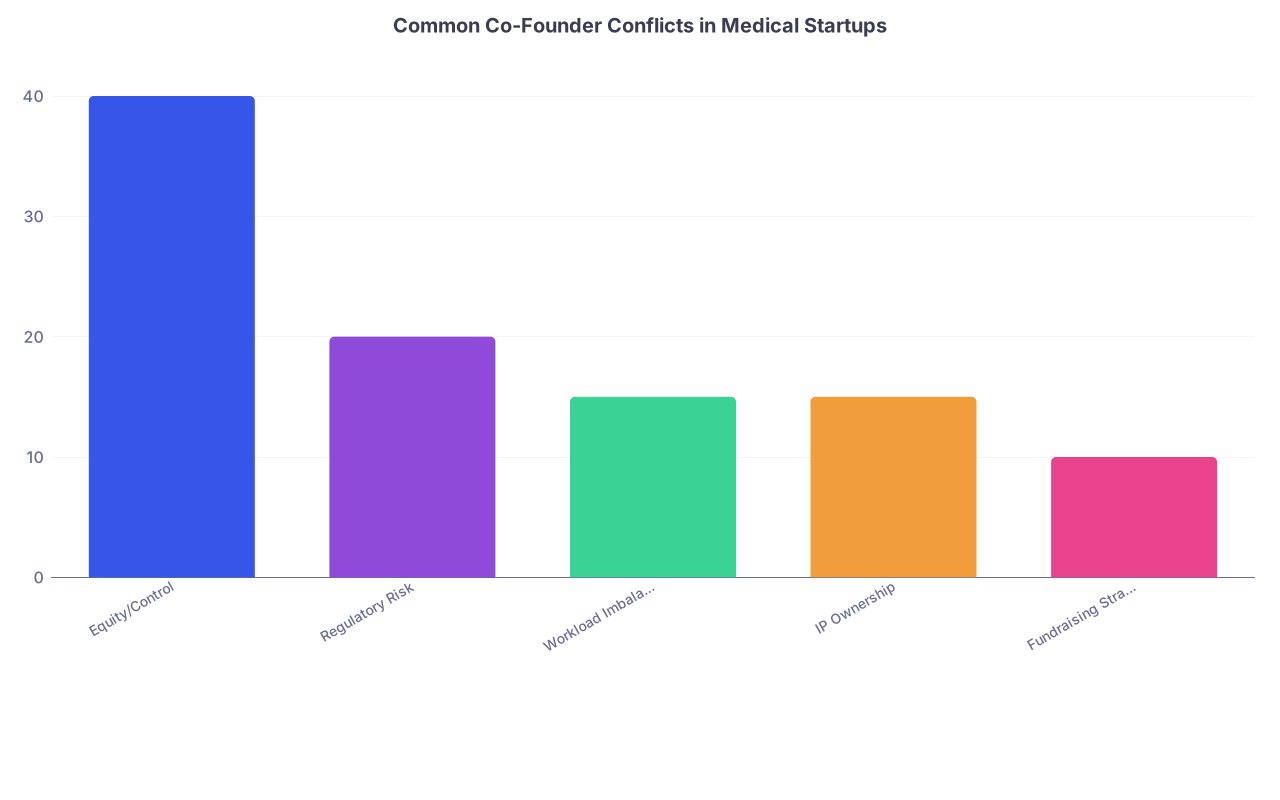
| Category | Value |
|---|---|
| Equity/Control | 40 |
| Regulatory Risk | 20 |
| Workload Imbalance | 15 |
| IP Ownership | 15 |
| Fundraising Strategy | 10 |
5. The “Always Selling, Never Owning” Personality
Beware the co‑founder who can pitch to investors for hours but disappears when work gets unglamorous.
You’ll recognize them:
- Every setback becomes someone else’s fault—developers, lawyers, “lazy” clinicians, “old‑school” hospital admins.
- They’re constantly “on calls” but you never see deliverables.
- They love visionary whiteboard sessions, hate deadlines and post‑mortems.
Doctors are at risk here because you’re used to visible output:
- Did you round?
- Did you operate?
- Did you sign the notes?
So when someone’s job is more abstract—strategy, partnerships, fundraising—you may hesitate to call out the lack of tangible work. Don’t.
Red flags:
- They can’t send a weekly summary of what they actually did.
- They live in “we’re about to” land: about to get a big customer, about to get a term sheet, about to partner with Mayo. Always about to. Never done.
- They push you to “just see a few patients on the platform to prove the model” while they keep tweaking pitch decks.
If you removed them from the startup for two weeks, what would break?
If the honest answer is “mostly the narrative,” you don’t have a co‑founder. You have a hype man.
6. Misaligned Motivation: Mission vs. Exit
You want to fix something broken in healthcare. They want a 10x exit in 3–5 years. That mismatch will surface—usually right when it’s hardest to untangle.
I’ve watched this play out with:
- A telepsychiatry platform where the doc wanted to improve access; the co‑founder wanted to cut every possible cost, including clinician pay and safety protocols.
- A digital therapeutics idea where the physician wanted robust trials; the co‑founder wanted “good enough data” for a quick acquisition.
You do not have to be a martyr. Making money is fine. But if:
- You care about clinical outcomes, patient safety, and long‑term credibility, and
- They care about user growth, valuation, and flipping the company…
…that’s not alignment. That’s a future war.
Ask uncomfortable questions early:
- “Would you be okay shutting this down if we discover it’s clinically harmful but still profitable?”
- “What’s a ‘win’ for you—selling fast for $10M or building for 10 years?”
- “How would you feel if we never raised VC and instead built a smaller, sustainable company?”
If their answers make you uneasy, believe that unease. It doesn’t get better under pressure.

7. Disrespect for Your Time, Training, and Boundaries
You finish a 12‑hour shift, open your phone, and see:
- 14 Slack messages
- 6 “urgent” emails
- 3 missed calls
All from your co‑founder who knows you’re on service.
This is not passion. It’s disrespect.
Red flags doctors ignore:
- Scheduling important meetings during your OR block or clinic and acting annoyed when you say no.
- Guilt‑tripping you: “If you’re serious about this, we need to move faster.”
- Trivializing your clinical work as “your day job” while expecting you to sacrifice professional obligations for speculative startup tasks.
I’ve seen non‑clinical co‑founders assume:
- Physician income = infinite safety net
- Physician time = infinitely flexible
- Physician burnout = your personal problem, not a company risk
Your clinical reputation is non‑negotiable. Losing your job or angering your department because you’re constantly distracted by sloppy startup demands is not worth it. If a co‑founder can’t respect that, they don’t belong in a medical startup.
8. Vague or Shady Money Behavior
Here’s where doctors get burned hardest: money and paper.
You’re used to:
- Payroll showing up every 2 weeks
- Someone else dealing with billing, collections, taxes
Startups are the opposite. Money is fluid. And if you’re not watching, it gets weird fast.
Red flags you cannot ignore:
- They resist putting you on company bank accounts or giving you read‑only access.
- They “loan” money to the company from their personal account but won’t document it.
- They bring in “angel investors” who are friends/family but refuse to share the terms.
- They keep delaying formal incorporation, IP assignment, or updated cap tables.
Ask to see:
- The cap table (who owns what, fully diluted)
- All signed SAFE/convertible note/seed docs
- Current cash, runway, and monthly burn
If they make you feel dumb for asking—walk. That’s not transparency, that’s control.
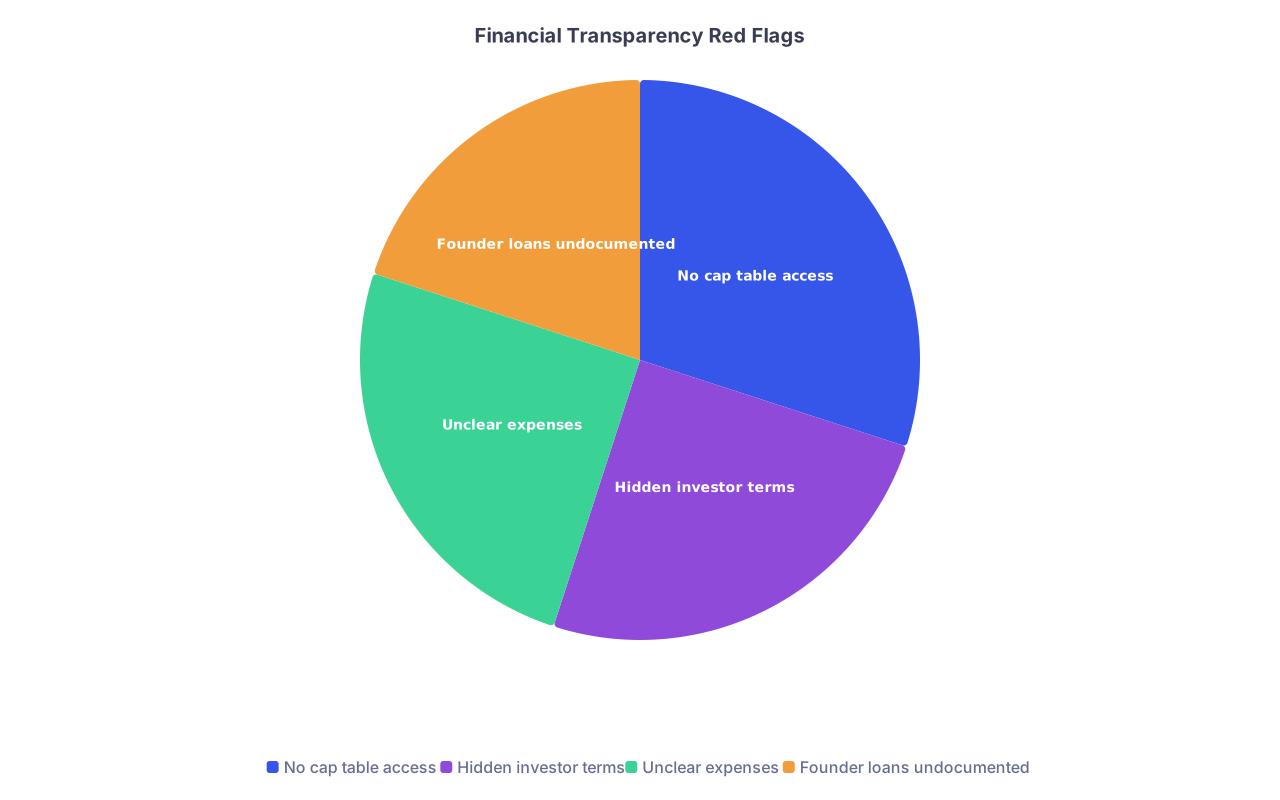
| Category | Value |
|---|---|
| No cap table access | 30 |
| Hidden investor terms | 25 |
| Unclear expenses | 25 |
| Founder loans undocumented | 20 |
9. No Real Skin in the Game
You’re taking real risk:
- Reputation
- License (if clinical care is involved)
- Time you could use for moonlighting, fellowship, or career advancement
If your co‑founder has structured their life so nothing truly changes whether this startup sinks or swims, be careful.
Signs they’re not actually in:
- They refuse to reduce hours at their day job while pushing you to go part‑time clinically.
- They won’t invest even a modest amount of their own money while happily spending yours.
- They always defer their sacrifice: “Once we raise, I’ll quit and go full‑time.”
Compare commitments:
- Who’s leaving a stable attending role?
- Who’s burning their nights and weekends while the other “builds relationships” at networking events?
- Who actually loses something tangible if this fails?
If the answer is “mostly you,” then you’re not co‑founders. You’re a founder, and they’re overhead.

| Step | Description |
|---|---|
| Step 1 | Meet Potential Co-Founder |
| Step 2 | Walk Away |
| Step 3 | Proceed With Lawyer and Written Terms |
| Step 4 | Values Aligned |
| Step 5 | Transparency on Money and Equity |
| Step 6 | Respects Clinical Boundaries |
| Step 7 | Understands Healthcare Risk |
10. You Can’t Say “No” Without a Fight
Test this early:
Say no to something important.
- “No, I don’t feel comfortable with that marketing claim.”
- “No, I won’t supervise NPs in 10 states while I’m licensed in 2.”
- “No, I’m not putting my name on that paper until I’ve reviewed the data.”
- “No, I can’t do daily standups while I’m on nights.”
Then watch what happens.
Healthy co‑founder:
- “Okay, let’s find another way.”
- “Help me understand your boundary so we can design around it.”
Red‑flag co‑founder:
- “This is why doctors slow everything down.”
- “You’re overreacting; no one else would have a problem with this.”
- “If you’re not all in, maybe this isn’t for you.”
You’re not their resident. You’re not their subordinate. If every disagreement feels like a power struggle, that’s not a partnership, it’s a prolonged conflict with paperwork.

11. The “We Don’t Need a Lawyer Yet” Line
If I could put one warning label on every early-stage medical founder’s laptop, it would be this: Do not skip the lawyer.
The exact sentence that precedes most co‑founder disasters:
“We’re too early for lawyers. Let’s not waste money.”
Here’s what “too early” actually means:
- You have no clear IP assignment.
- Your equity split is whatever you remember from a coffee meeting.
- Your “agreement” lives in a PDF pitch deck, not in signed legal docs.
- Someone is already building code, content, or clinical workflows with no contract.
You need:
- Incorporation (likely a Delaware C‑Corp)
- Founder stock purchase agreements with vesting
- IP assignment agreements
- Basic confidentiality + contractor agreements
Yes, it costs money. Yes, it’s boring. Compared to losing your company over a co‑founder blow‑up, it’s cheap.
If your co‑founder:
- Pushes to DIY legal documents from templates they don’t understand
- Refuses to involve a neutral third‑party lawyer
- Acts like you’re “paranoid” for wanting things in writing
…do not ignore that. You’re seeing the future.

12. How to Stop Ignoring These Red Flags
Let’s get practical. You’re post‑residency, maybe early attending. You’re tempted by the startup world, and someone charismatic is promising the shortcut.
Here’s how you avoid being the cautionary tale:
Run reference checks like you would for a surgeon you’d let operate on your family.
Talk to people who’ve worked with this person before. Ask:- “How did they handle setbacks?”
- “Did they take responsibility or blame others?”
- “Would you start another company with them?”
Do a small “project sprint” before you form a company.
Work together for 4–6 weeks on:- A deck
- A pilot protocol
- A customer discovery sprint
You’ll see their work habits, reliability, and tolerance for your medical schedule.
Insist on brutal clarity, in writing.
- Who owns what.
- Who does what.
- What happens if someone leaves.
- What decisions require mutual consent.
Listen to your discomfort.
If you find yourself:- Avoiding hard questions
- Rationalizing their behavior
- Telling yourself “it’ll be different once we raise money”
…you’re already ignoring your own judgment.
Remember your opportunity cost.
Every hour with the wrong co‑founder is an hour you’re not:- Building something better with the right partner
- Growing in your clinical or academic career
- Resting enough to not self‑destruct
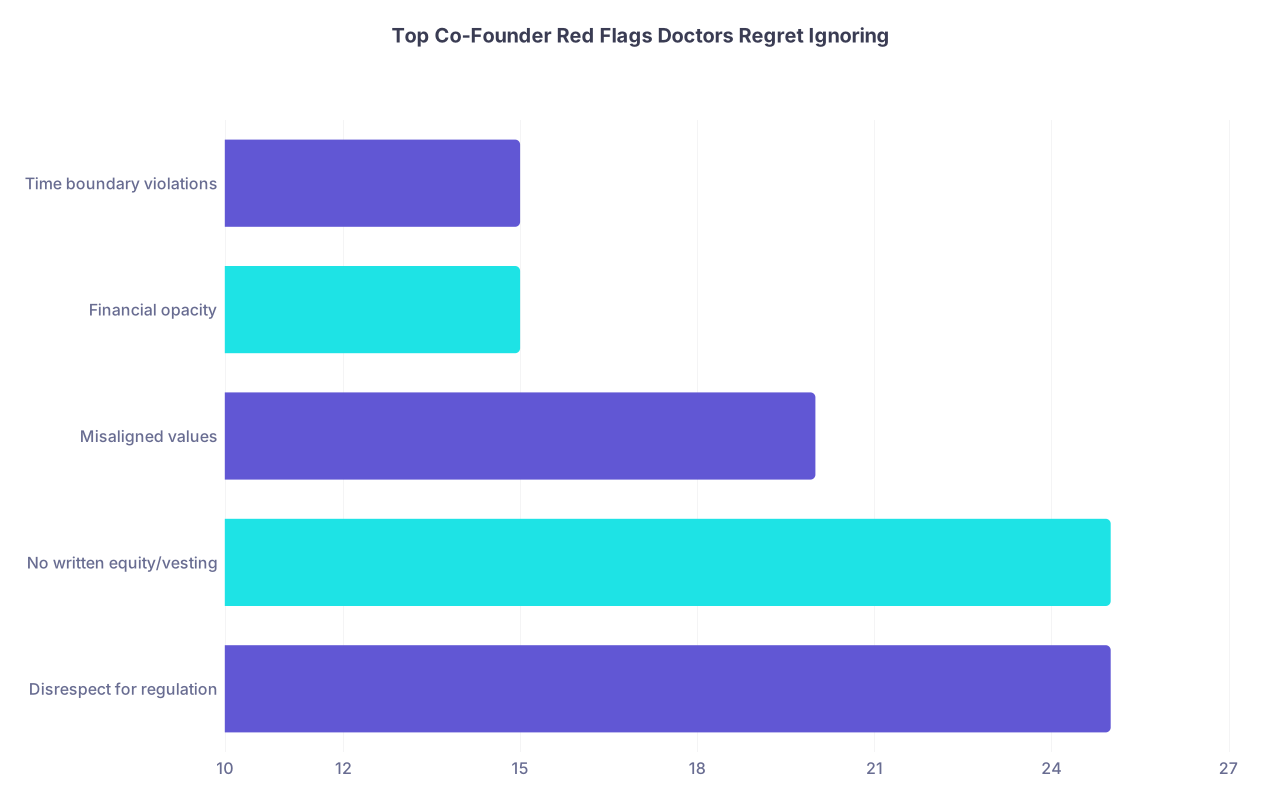
| Category | Value |
|---|---|
| Disrespect for regulation | 25 |
| No written equity/vesting | 25 |
| Misaligned values | 20 |
| Financial opacity | 15 |
| Time boundary violations | 15 |
The Short Version: What You Actually Need to Remember
You do not need a perfect co‑founder. You do need to stop ignoring obvious danger signs because you’re flattered someone “gets” your idea.
Three big points to keep in your pocket:
- If they minimize regulation, paperwork, or legal structure, they’re not building a medical startup—they’re playing with your license.
- If you can’t get clear, written agreements about equity, roles, and decision‑making, you’re not co‑founders, you’re improv partners.
- If your gut says, “I don’t fully trust this person,” believe it now, not after you’ve tied your name, time, and career to theirs.
You’ve already survived premed, med school, residency. Don’t blow that resilience by handing your future to the wrong partner because you were too polite—or too tired—to notice the red flags.


