
What do you actually do the week after you get called into the office, told your hospitalist position is ‘being restructured,’ and you walk out with a severance packet and a knot in your stomach?
You do not need another vague “reinvent yourself” pep talk. You need a concrete path: bills, licensing, your CV, and whether health tech is a real option or just LinkedIn fantasy.
Let’s get into it.
1. First 7–14 Days: Stabilize Your Life So You Can Take Strategic Risks
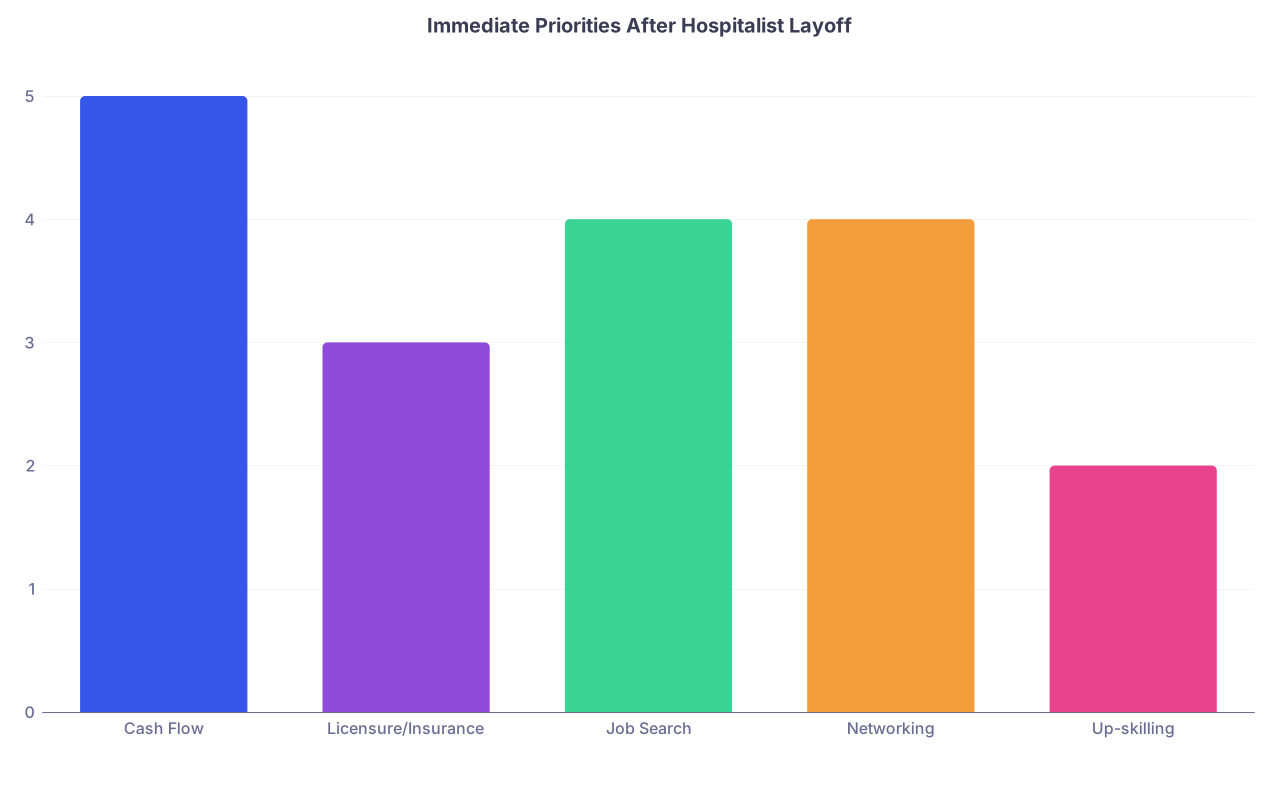
| Category | Value |
|---|---|
| Cash Flow | 5 |
| Licensure/Insurance | 3 |
| Job Search | 4 |
| Networking | 4 |
| Up-skilling | 2 |
If you just got laid off, your brain is ping‑ponging between anger, fear, and scrolling job boards at 1:30 a.m. That’s normal. But the physicians who pivot well do something different: they stabilize the basics fast so they can think clearly and take asymmetric bets.
Here’s what you handle in the first 1–2 weeks.
Lock down your financial runway
You cannot pivot intelligently if you’re in survival mode.
- Calculate your runway.
- Add: severance, emergency savings, spouse/partner income, expected locums/PRN shifts.
- Subtract: fixed monthly costs (housing, loans, insurance, childcare, minimum payments).
- Decide: “I have X months where I can afford to not take a full‑time clinical job.”
You want an honest number, not vibes. If it’s 2 months, you’re in “move fast, use temp clinical work” mode. If it’s 9–12 months, you can be more selective and strategic.
- Freeze lifestyle creep immediately.
- Pause: big purchases, home reno, extra subscriptions, travel upgrades.
- Refinance / adjust: student loans if possible (IDR, refi if appropriate), car payments.
- Health insurance: know exactly what happens when your employer coverage ends. COBRA? Marketplace plan? Spouse’s plan?
Preserve your clinical “option value”
Even if you want out of the hospital yesterday, you do not burn the clinical bridge right now. That’s how people trap themselves.
Do this:
Confirm license timelines
When do your state licenses renew? Any pending CME requirements? Do not let licenses lapse while you’re “in between.” Renew them. It’s annoying; do it anyway.Keep malpractice doors open
Understand your tail coverage from the hospital. If you take locums or telemedicine work, you’ll usually get separate coverage—but know your current policy’s terms.Set a minimum clinical activity level
I like a simple rule: keep at least one of these going if possible:- Locums shifts
- Per‑diem hospitalist role
- Telemedicine/virtual urgent care
Even 2–4 shifts/month can: - Pay your basic bills
- Protect your CV from “What happened to your clinical practice?”
- Give you negotiating leverage in any health tech or startup conversation
You want the ability to say, “I still practice clinically part‑time” for at least the next couple of years while you pivot.
2. Before You “Go Health Tech”: Who Actually Hires Hospitalists, and For What?

Most physicians who say they “want to go into health tech” cannot answer a basic question: “What specific roles does your skill set fit in the current market?”
You’re not just “a doctor.” You’re a hospitalist. That matters. You understand:
- Throughput, length of stay, discharge chaos
- Sepsis protocols, readmission metrics, DRGs
- How EMR workflows actually break in real life
- How hospital incentives are misaligned with patient flow
Health tech companies pay for those patterns—in very specific buckets.
Common health tech roles where hospitalists are actually competitive
| Role Type | Typical Level | Clinical % | Tech Experience Needed |
|---|---|---|---|
| Medical Director | Mid–Senior | 0–20% | Low–Moderate |
| Clinical Strategy / Ops | Mid | 0–10% | Low–Moderate |
| Clinical Product Manager | Assoc–Mid | 0% | Moderate |
| Clinical Content Lead | Assoc–Mid | 0–10% | Low |
| Utilization Management (UM) | Assoc–Mid | 0–20% | Low |
- Medical Director / Clinical Lead (health tech, virtual care, startups)
You:- Design or approve clinical workflows
- Build protocols and escalation pathways
- Train non‑physician staff (APPs, nurses, health coaches)
- Sit in endless Zooms with product, sales, and ops
Ideal for a hospitalist who:
- Understands inpatient/transition‑of‑care pain points
- Can speak both “clinical” and “ops” language
- Is willing to be more than a rubber‑stamp signature
- Clinical strategy / clinical operations
Think roles with titles like:
- “Director, Clinical Operations”
- “Clinical Strategy Lead”
- “Population Health Medical Lead”
You:
- Help design new care models (e.g., hospital‑at‑home, SNF‑at‑home, post‑discharge monitoring)
- Translate quality metrics into operational workflows
- Fix the “we have an app but nobody uses it correctly” problem
Hospitalists are very good at this because you’ve seen discharge planning, readmission penalties, and case management up close.
- Clinical product roles
Titles:
- “Clinical Product Manager”
- “Physician Product Specialist”
- “Medical Product Owner”
You:
- Work with engineers and designers
- Turn clinical workflows into features and requirements
- Decide what to prioritize based on user pain (physicians, nurses, patients)
This is where you’ll get grilled on:
- Can you think in systems and edge cases?
- Can you prioritize ruthlessly?
- Can you say “No, that’s feature creep” to the CEO?
- Utilization management / payer‑adjacent tech
Unsexy but stable. UM‑oriented health tech, payviders, or virtual care orgs hire hospitalists to:
- Review inpatient / observation status
- Decide on SNF vs HH vs home
- Interface with hospital teams, case management
If you know DRGs, LOS, and readmissions cold, you’re useful here.
- Content, guidelines, education, and quality
More niche, but real:
- Build clinical content libraries
- Create order sets / pathways
- Design decision support tools
This leans on your ability to synthesize evidence and translate it into usable workflows.
3. Turn “I Was a Hospitalist” into a Marketable Health Tech Story
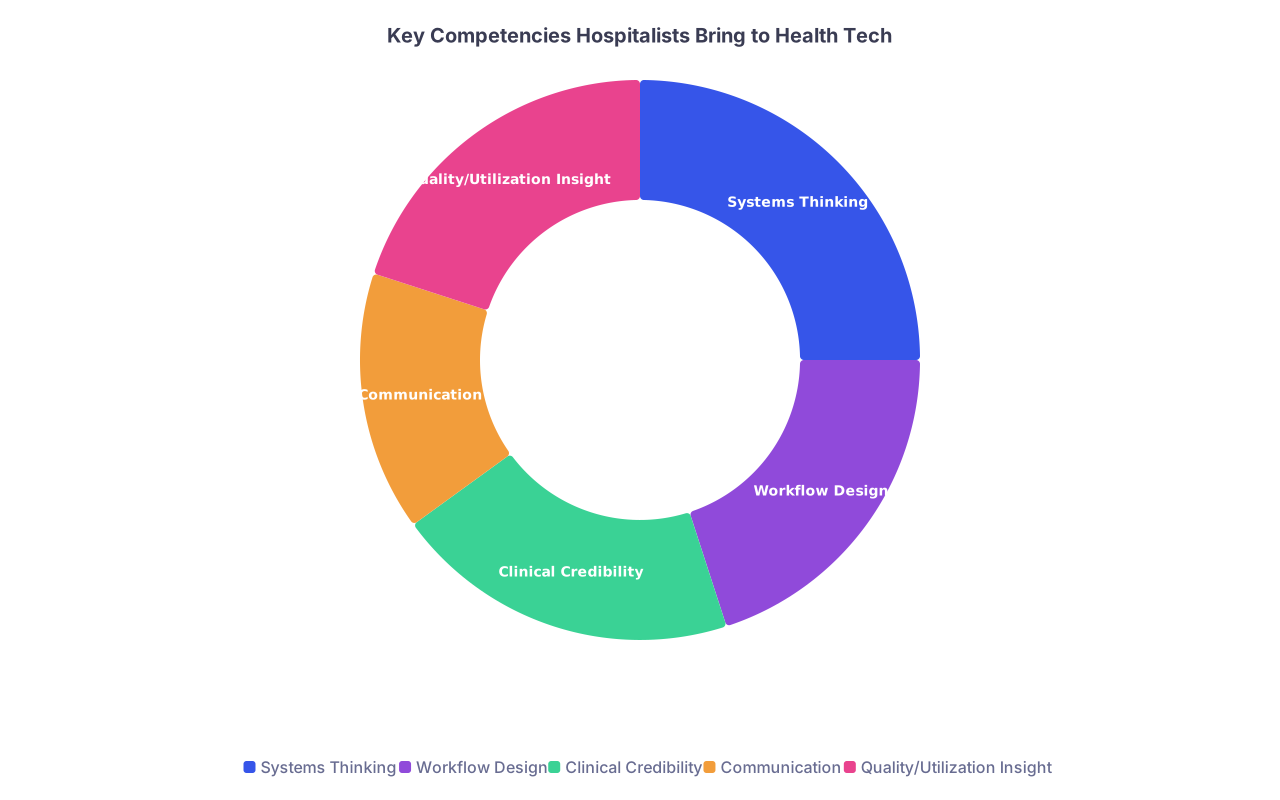
| Category | Value |
|---|---|
| Systems Thinking | 25 |
| Workflow Design | 20 |
| Clinical Credibility | 20 |
| Communication | 15 |
| Quality/Utilization Insight | 20 |
If your current CV is “Hospitalist, Hospitalist, Hospitalist,” that’s not going to land you a product, strategy, or medical director role. You need to reframe what you already did in a way non‑clinical hiring managers understand.
Step 1: Translate your existing work into business language
Take your last 2–3 years and ask:
- Where did you change a process?
- Where did you help fix a bottleneck—formally or informally?
- Where did you interface with admin, quality, or IT?
Examples you might be under‑valuing:
- You helped redesign the discharge summary template to reduce callbacks and confusion.
- You sat on the sepsis committee that changed order sets and dropped time‑to‑antibiotics.
- You coordinated with case management to reduce avoidable observation days.
Turn those into bullets like:
- “Collaborated with IT and nursing leadership to redesign discharge summary template, reducing average clarifying nurse calls by ~30% and improving patient instruction clarity.”
- “Served on sepsis quality committee; contributed to revision of ED and inpatient order sets associated with a 15% reduction in time‑to‑antibiotic for severe sepsis cases.”
Hiring managers in health tech don’t care about how many admissions per night you did. They care about whether you see systems and can improve them.
Step 2: Fix your resume structure for non‑clinical roles
You need a non‑traditional, hybrid resume. Key sections:
Summary (3–4 lines, no fluff)
- “Board‑certified Internal Medicine hospitalist with 6+ years leading inpatient care and cross‑disciplinary initiatives in discharge planning, sepsis quality, and EMR workflow optimization. Interested in clinical strategy and product roles improving hospital‑to‑home transitions and acute care delivery.”
Core skills
- Clinical operations, care transitions, EMR workflow design, quality improvement, utilization management, cross‑functional collaboration, protocol development, stakeholder alignment.
Experience: grouped by impact, not only job title Under “Hospitalist, XYZ Health System,” break out sub‑sections:
- Clinical Operations & Quality
- EMR & Workflow Optimization
- Leadership & Education
and put relevant bullets under each.
Optional: “Health Tech & Innovation Projects”
- Any pilot you participated in with remote monitoring, hospital‑at‑home, telehealth, decision support, etc. Put it here.
4. Fill the Gaps Fast: What Skills You Actually Need to Learn
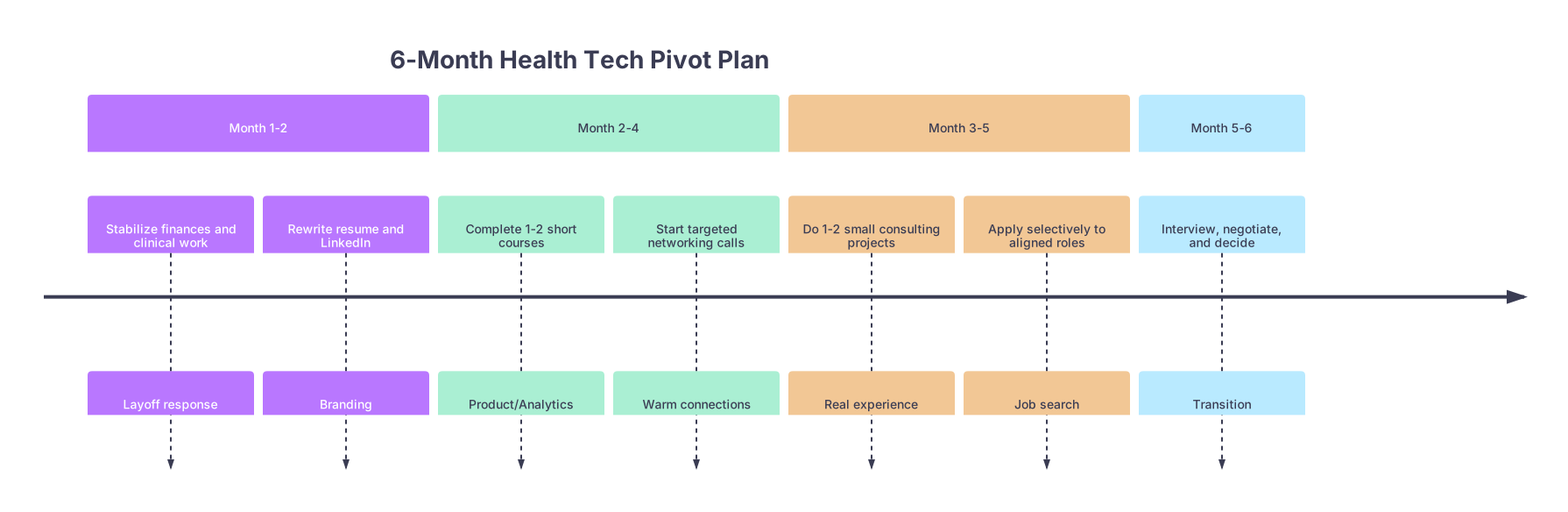
| Period | Event |
|---|---|
| Month 1-2 - Stabilize finances and clinical work | Layoff response |
| Month 1-2 - Rewrite resume and LinkedIn | Branding |
| Month 2-4 - Complete 1-2 short courses | Product/Analytics |
| Month 2-4 - Start targeted networking calls | Warm connections |
| Month 3-5 - Do 1-2 small consulting projects | Real experience |
| Month 3-5 - Apply selectively to aligned roles | Job search |
| Month 5-6 - Interview, negotiate, and decide | Transition |
You do not need a CS degree. You also cannot just “be a smart doctor” and expect to slot into senior tech roles. There’s a middle path: focused skill acquisition tied to the roles you want.
For clinical product / strategy roles
You should, at minimum, get baseline competence in:
Product basics:
Understand concepts like MVP, user stories, backlog, roadmap, PRD, feature prioritization.
One concrete action: take a focused product management course (e.g., Product 101 from a reputable provider, not a random YouTube binge) and do the exercises.Basic analytics literacy: You do not need to be a data scientist. But you should:
- Be comfortable with metrics like retention, conversion, engagement, NPS
- Interpret simple dashboards and ask smart questions
- Have basic familiarity with SQL or at least how queries work conceptually
Project management and communication tools:
- Hands‑on with tools like Jira, Asana, Notion, Figma (for commenting, not design)
- Comfort running structured meetings, writing clear summaries, and documenting decisions
For utilization, virtual care, or medical director roles
Focus on:
Payer and value‑based care literacy: DRGs, HCCs, bundled payments, risk contracts, readmission penalties, LOS management—you already know pieces of this; formalize it.
Remote care workflows: Know the building blocks of:
- RPM (remote patient monitoring)
- CCM (chronic care management)
- Hospital‑at‑home models
- Escalation pathways from chat to RN to APP to MD to ED/911
Regulatory basics: HIPAA, telehealth state licensure, prescribing regulations, documentation requirements. You already know the spirit; you need the telehealth specifics.
5. How to Get Actual Health Tech Experience Without Already Being in Health Tech

Here’s the nasty loop: companies want “prior health tech experience,” but you need someone to hire you to get it. So you manufacture experience.
Option 1: Clinical advisory or consulting projects (paid or unpaid initially)
You look for:
- Seed or Series A startups in:
- Hospital‑at‑home
- Care coordination / discharge planning
- AI chart summarization for inpatient notes
- Remote monitoring for post‑discharge patients
What you offer:
- 5–10 hours/month of structured input:
- Reviewing clinical workflows
- Helping build protocols
- Pressure‑testing a feature set: “No clinician will use this because you buried the important button.”
- Joining a few calls with engineering or design
You do not pitch yourself as “I’ll be your CMO.” That’s how founders immediately tune out. You pitch:
“I’m a laid‑off hospitalist who spent 6 years dealing with exactly the care transition problems you’re targeting. I’m not looking for a full‑time clinical job right now. I’m willing to advise a couple of early companies 5–10 hours/month to help you avoid building something clinicians will hate.”
You want at least one small advisory/consulting engagement you can point to on your resume and in interviews.
Option 2: Micro‑projects you design yourself
Pick a problem relevant to health tech and build a “mini‑portfolio” around it. For example:
- Problem: 30‑day readmissions for CHF patients after discharge.
- You:
- Map the current workflow in a typical hospital.
- Identify 3 failure points (e.g., med reconciliation, follow‑up appointment scheduling, home monitoring).
- Design a hypothetical tech‑enabled intervention.
- Outline:
- Workflow diagram
- Rough metrics you’d track
- Risks and mitigations
Now you have something to physically walk through in an interview.
You can literally bring this as a 2–3 page PDF or Notion document titled “Sample CHF Discharge to Home Program – Clinical and Product Perspective.”
That screams: “I think how you think.”
Option 3: Short sprints with existing companies
You’d be surprised how often a company will say yes to:
“I’m a hospitalist between roles. I’m not asking for a job today. I’m willing to do a 2–4 week, clearly scoped project with your clinical or product team at a modest rate just to see if there’s a fit long term.”
Scope examples:
- “Audit your current discharge summaries template and remote follow‑up workflows for a specific patient segment.”
- “Review your RPM protocols for common inpatient‑to‑home transitions and suggest changes.”
- “Shadow customer success calls with health system clients and document clinical friction points.”
If you do 1–2 of these, you stop being “just a hospitalist” and become “a hospitalist who has already worked with product and ops at two startups.”
6. Networking, But Without the Gross Desperation
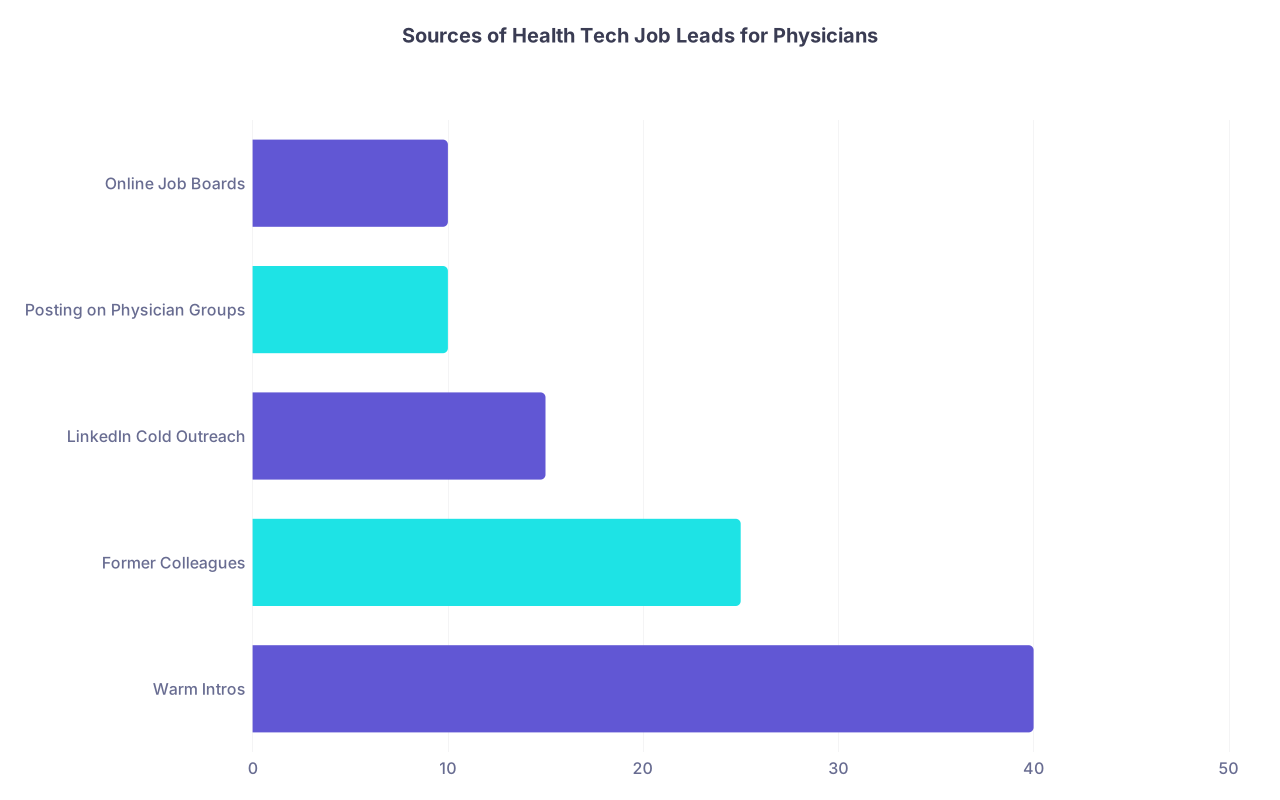
| Category | Value |
|---|---|
| Warm Intros | 40 |
| Former Colleagues | 25 |
| LinkedIn Cold Outreach | 15 |
| Posting on Physician Groups | 10 |
| Online Job Boards | 10 |
Blind applications on generic job boards rarely work for physicians trying to pivot. You will drown in a sea of PMs, MBAs, and engineers with directly relevant experience.
So you stack the deck.
Build a short, serious target list
Not “health tech.” Specifics. For a laid‑off hospitalist, strong fits often include:
- Virtual hospitalist or hospital‑at‑home companies
- Care coordination / transitions of care platforms
- AI documentation and workflow tools for inpatient teams
- Tele‑ICU, tele‑hospitalist, or post‑acute management platforms
- Value‑based care orgs managing high‑risk populations leaving the hospital
Pick 10–20 companies, not 200. You’re going for depth, not spam.
Your basic outreach script (customized, not copy‑pasted garbage)
On LinkedIn or email, to someone in a role you’d like to understand (product, clinical lead, strategy):
Subject: Hospitalist recently laid off – interested in your work at [Company]
Body (short):
Hey [Name],
I’m a board‑certified hospitalist who spent the last [X] years at [System]. I was part of [briefly mention 1–2 relevant initiatives – sepsis order sets, discharge workflow, hospital‑at‑home pilot].
I was recently laid off in a restructuring and am using this as a chance to move toward health tech roles focused on [specific domain they work in – e.g., inpatient workflow, discharge, virtual care].
I’m not asking for a job or referral right now. I’d love 15 minutes to ask you 3–4 specific questions about how physicians add the most value in roles like yours.
If you’re open to it, I’ll send a couple of time options and keep it tight.
Thanks either way,
[Your Name, MD]
You do not attach a resume in the first message. You’re trying to start a conversation, not trigger their spam radar.
If they take the call, your goals are:
- Understand: How did they get their current role?
- Identify: What skills/experiences were actually decisive?
- Ask: “If you were me—laid‑off hospitalist, 6 years in practice—what 2–3 things would you prioritize in the next 3 months to be competitive for roles like yours?”
People like that question. It shows you respect their time and judgment.
7. Timeline: What a Realistic 6–12 Month Pivot Can Look Like

| Step | Description |
|---|---|
| Step 1 | Laid Off |
| Step 2 | Stabilize Finances and Licenses |
| Step 3 | Part Time Clinical Work |
| Step 4 | Reframe Resume and Story |
| Step 5 | Targeted Networking and Learning |
| Step 6 | Micro Projects and Advisory Work |
| Step 7 | Apply to Select Roles |
| Step 8 | Negotiate and Transition |
| Step 9 | Iterate Skills and Network |
| Step 10 | Offers? |
Let me be blunt: a clean pivot from full‑time hospitalist to full‑time health tech role in 4 weeks is fantasy for most people. But 6–12 months? Very doable if you treat it like a serious project.
A reasonable 6–9 month arc:
Months 0–2:
- Stabilize: finances, part‑time clinical, insurance.
- Rewrite resume and LinkedIn to reflect systems/ops/product‑oriented language.
- Start taking 1 focused course (product, analytics, or health tech‑specific).
Months 2–4:
- 1–2 micro‑projects (your own or with early‑stage companies).
- 10–20 targeted networking calls.
- Tighten your pitch: “I’m a hospitalist who does X in the health tech ecosystem.”
Months 4–7:
- Apply to:
- Clinical product roles where inpatient experience is directly relevant.
- Clinical strategy / ops roles in virtual care orgs.
- Medical director/clinical lead roles with strong inpatient or transition‑of‑care components.
- Continue some clinical shifts to keep runway and optionality.
Months 7–9+:
- Interview cycles.
- Negotiate an offer that does not lock you out of occasional clinical work (if possible).
- Decide how quickly to ramp down hospital shifts.
FAQs
1. Do I need an MBA or formal tech credential to get hired in health tech?
No. For most early and mid‑level roles, nobody cares that you did not do an MBA. They care whether you:
- Understand a real problem they are solving.
- Can work with non‑clinicians without being arrogant or useless.
- Show evidence of thinking in systems, not one‑off patient encounters.
Short, targeted courses and 1–2 real projects beat a generic extra degree in this context. If you later want to move into executive leadership or broad healthcare business roles, then an MBA might be useful, but it is not a prerequisite for your first health tech job.
2. How much of a pay cut should I expect if I leave full‑time hospitalist work?
Early on, probably some. Hospitalist pay—especially with nights and weekends—is often higher than non‑clinical physician roles, at least on cash comp. I’ve seen:
- First health tech roles land at 70–90% of prior hospitalist base salary.
- Sometimes lower, sometimes equal, occasionally higher if equity is meaningful and the company is later stage.
But: you’re trading some cash for lifestyle, growth, and an asset you don’t yet have—non‑clinical experience. Many physicians then grow into roles that surpass their old clinical compensation, especially if they move into leadership or revenue‑generating positions (e.g., product leaders, strategy leads, executives).
3. Should I just jump to another hospitalist job and think about health tech “later”?
You can. That’s the safe, default move. The risk is you get comfortable again and 3–5 years vanish. If you want a pivot, this layoff is actually leverage. You can:
- Take a lower‑intensity or part‑time clinical role.
- Free up intentional time for networking, learning, and projects.
- Use the socially acceptable explanation: “My department was restructured and I’m exploring health tech roles that align with the system issues I’ve been frustrated by for years.”
What you should not do is panic‑accept the first 1.0 FTE hospitalist offer with the same night schedule and committee work, then pretend you’ll “figure out a pivot in your free time.” That rarely happens.
4. How do I explain the layoff in interviews without sounding bitter or weak?
Keep it clean, factual, and forward‑looking:
“My hospitalist group went through a restructuring after [merger/census drop/contract change]. Several of us were affected. I had been thinking about moving into roles focused on fixing inpatient and discharge workflows for a while, so I decided to use this as a forcing function to pursue health tech opportunities more seriously. In the meantime I’m doing part‑time clinical work and a couple of small projects with early‑stage companies while I look for the right long‑term fit.”
No rants about administration. No “I was blindsided and betrayed.” You can feel that internally. You just do not bring it into the interview.
Open your resume file right now. Take your last hospitalist role and rewrite at least three bullets so they sound like something a health tech leader or product manager would care about—system problems, workflows, outcomes, collaboration—not just RVUs and census. That’s your first real step out of the layoff haze and into an actual pivot.