
It's January 2nd. Your clinical schedule is packed, your startup finally has real revenue, and a strategic just sent an email that casually mentions “potential acquisition interest over the next 18–24 months.”
You know what that really means: you’re now on the clock.
Here’s the part most physician founders underestimate—acquisitions are won or lost 6–12 months before any banker is hired. Not during the LOI negotiation. Not in the last-minute data room scramble. Long before that, in the slow, boring cleanup work you do (or refuse to do) this year.
This is your 12‑month, month‑by‑month cleanup timeline to get your startup sellable, defensible, and actually attractive to a buyer.
Big Picture: What This 12‑Month Acquisition Cleanup Is Actually For
At this point you should be clear on one thing: “We might sell in a year or two” means:
- Your financials need to be clean enough that a PE associate cannot shred them in a single spreadsheet session.
- Your compliance posture cannot be an embarrassment if an in‑house counsel at Optum or HCA reads it line by line.
- Your value story (clinical + business) must be obvious in the numbers, not just in your pitch deck.
This timeline assumes:
- You’re post‑residency and practicing (part‑time or full‑time).
- You have an active medical startup: clinic group, digital health product, telemedicine platform, or some hybrid.
- You’re at least break‑even or have a reasonable path to it.
We’ll walk this as a 12‑month runway. If someone comes out of nowhere and tries to buy you in 3 months, fine—you’ll be 25% less of a mess than you would have been.
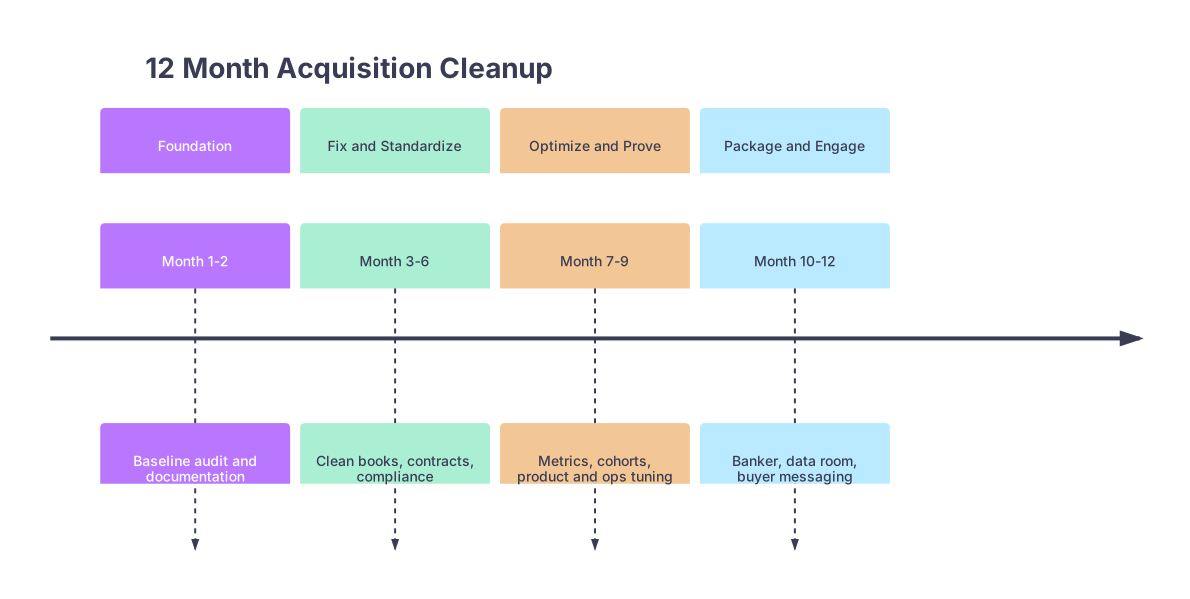
| Period | Event |
|---|---|
| Foundation - Month 1-2 | Baseline audit and documentation |
| Fix and Standardize - Month 3-6 | Clean books, contracts, compliance |
| Optimize and Prove - Month 7-9 | Metrics, cohorts, product and ops tuning |
| Package and Engage - Month 10-12 | Banker, data room, buyer messaging |
Months 1–2: Establish the Baseline and Stop Making New Messes
At this point you should stop guessing. You need a clear starting line.
Week 1–2: Reality Check and Intent
Decide your rough horizon
- Are you aiming for:
- Soft‑shop in 12 months?
- Formal process in 18–24?
- Commit to one internal working plan. Wandering between “we’re not selling” and “we’ll flip next year” is how you end up half‑prepared for both.
- Are you aiming for:
Lock in no‑more‑sloppy‑stuff rule
From this week forward:- No significant verbal agreements. Get everything in writing.
- No “just expense it on my personal card and we’ll figure it out later.”
- No “we’ll sort out equity next quarter.”
If you keep generating chaos while trying to clean up old chaos, you’ll drown.
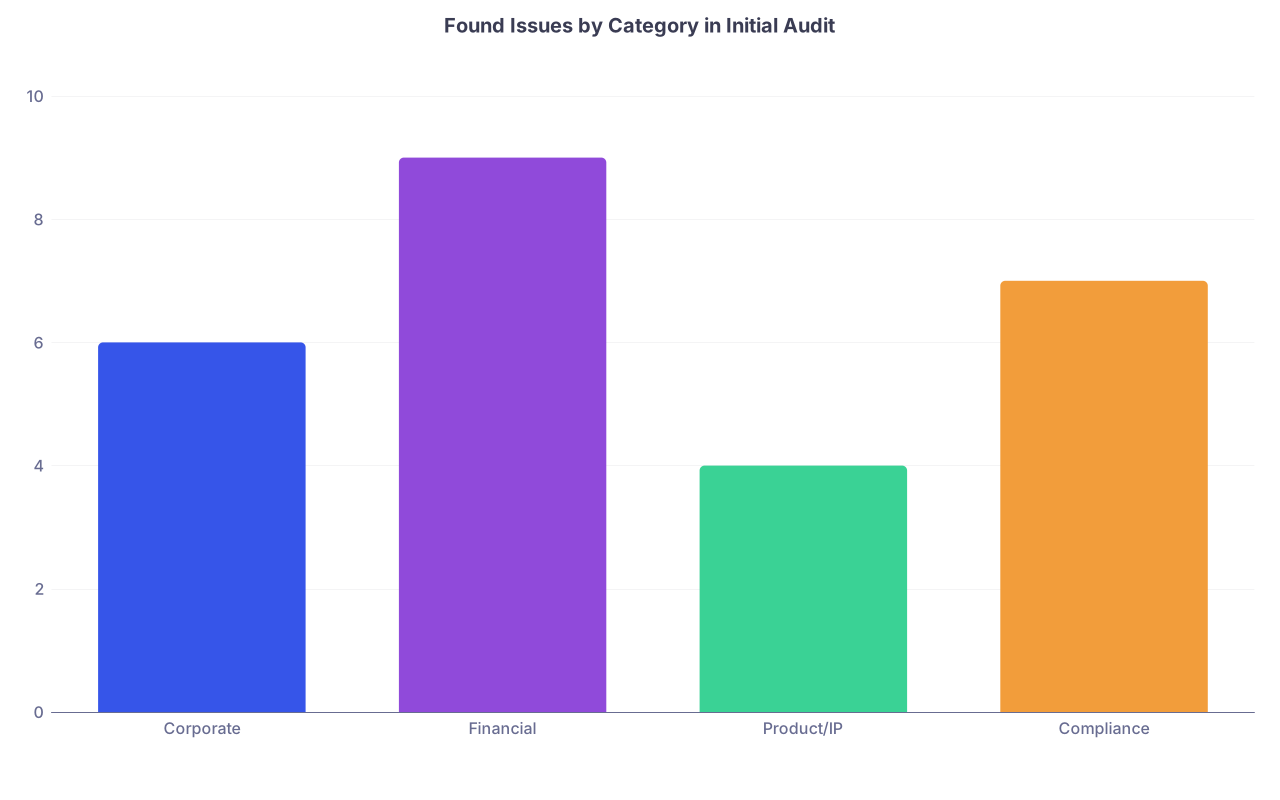
Week 3–4: Quick‑and‑Dirty Company Audit
You’re not doing a full diligence check yet. You’re just listing the landmines.
Run through four buckets:
Corporate & Equity
- Cap table: Do you have a single, accurate spreadsheet that matches all signed documents?
- Founders’ agreements, vesting, option grants, SAFEs/notes—centralized or scattered in email?
- Any lingering verbal promises of equity or revenue share to “friend who helped early”?
Financial
- One bookkeeping system? Or a Frankenstein of Excel, Stripe exports, and your memory?
- Are personal and business expenses mixed?
- Any outstanding loans from you personally to the company with no paper trail?
Product & IP
- Who actually owns the IP? Contractor with no IP assignment? Developer agency with vague contract?
- Any open‑source software with sketchy licenses mixed into your product?
-
- Are you clean on Stark/AKS exposure? Or did you set up “referral fees” that smell like kickbacks?
- Telehealth basics: licensure, consent documentation, PDMP use, prescribing controls.
- PHI: where is it actually stored? And is that written anywhere?
Document everything in a simple “issue list” with three columns: Area / Problem / Severity.
This becomes your master cleanup roadmap.
| Category | Value |
|---|---|
| Corporate | 6 |
| Financial | 9 |
| Product/IP | 4 |
| Compliance | 7 |
Months 3–4: Clean the Books and the Cap Table
At this point you should make your company legible to a buyer. They hate ambiguity. They really hate mystery equity.
Month 3: Financial Cleanup
Week 1–2: Bring in a Grown‑Up Accountant
Non‑negotiable: hire a startup‑savvy accountant or firm.
Give them:
- Bank and credit card statements
- Stripe/Square/Payor remits
- Payroll records
- Tax returns
Your mandate: “Within 6–8 weeks, I want GAAP‑ish books, clean P&L, and a balance sheet that actually reflects reality.”
You want:
- Monthly P&L for at least last 12 months
- Revenue broken down by segment:
- B2B vs B2C
- Cash‑pay vs insurance vs value‑based arrangements
- Clear tracking of:
- COGS vs operating expenses
- One‑time vs recurring costs
Week 3–4: Separate Personal From Business, For Real
If you’ve been sloppy (many physician founders are early on):
- Move everything operational to:
- Business checking account
- Business credit card
- Create a simple expense policy, even if it’s just you and one admin.
Go line by line through the last 6–12 months of company expenses and recategorize.
Your goal: if a buyer’s finance team exports your general ledger, they shouldn’t be asking, “Why is there a Peloton and a trip to Maui here?”

Month 4: Cap Table and Equity Promises
At this point you should have one source of truth for ownership. No exceptions.
Week 1: Gather All Equity‑Related Documents
- Incorporation documents
- Stock purchase agreements
- Option grants and board approvals
- SAFEs / convertible notes
- Employee and contractor agreements with any equity language
Create a master cap table that shows:
- Common stock
- Preferred (if any)
- Options granted / reserved
- SAFEs or notes with clear conversion assumptions
Week 2–3: Clean Up Verbal or Messy Promises
This is the ugly part:
- That “I’ll give you 1% if this ever works” conversation with your coder.
- The advisor who “gets 0.25% for introductions” but you never signed anything.
- The cofounder who quit fellowship and then vanished 18 months ago.
Deal with it now, not during buyer diligence where it becomes a leverage point against you.
You might:
- Formalize with small, clean, vesting equity grants.
- Buy out with cash or a tiny fixed payment at exit.
- Get explicit releases in writing.
Week 4: Board/Minutes Catch‑Up
If you’ve been ignoring corporate formality:
- Draft written consents for:
- Major prior financings
- Option pool increases
- Key executive hires
- Keep it minimal but real. Buyers do not expect perfection; they do expect an attempt at sanity.
| Category | Key Documents |
|---|---|
| Corporate | Articles, bylaws, board consents, cap table |
| Financial | 12+ month P&L, balance sheet, tax returns |
| Equity | Stock/option agreements, SAFEs/notes |
| HR | Offer letters, contractor agreements |
Months 5–6: Contracts, Compliance, and Clinical Risk
At this point you should become “boringly safe” from a buyer’s legal perspective. No one wants to acquire a regulatory grenade.
Month 5: Contracts and Commercial Risk
Week 1–2: Centralize Every Contract
Make a single folder system (Google Drive, Dropbox, whatever—but structured):
- /Customers
- /Vendors
- /Payers / Health Systems
- /Partnerships & Referrals
- /Licenses & Software
Create a quick spreadsheet summary:
- Counterparty
- Start/end date
- Termination clauses
- Auto‑renew?
- Most Favored Nation (MFN) clauses?
- Exclusivity?
- Revenue share or referral conditions?
You’re looking for:
- Anything that restricts a future acquirer (non‑competes, exclusives).
- MFN clauses that blow up pricing if a buyer tries to rationalize contracts.
Week 3–4: Fix the Worst Offenders
Prioritize:
- Any contract that:
- Caps margin in a way that makes scale unattractive.
- Locks you into terrible long‑term vendor pricing.
- Has ambiguous or aggressive referral/fee language.
Renegotiate or terminate now, while you still have leverage and time, not under LOI pressure.

Month 6: Compliance and Clinical Governance
This is where a lot of physician‑led companies look good on the surface and rotten on inspection.
Week 1–2: Regulatory and Clinical Audit
If you’re doing anything in these areas, get eyes on it:
- Telehealth across state lines
- Prescribing (especially controlled substances)
- Referral relationships
- Shared savings or value‑based contracts
Bring in:
- A healthcare regulatory attorney.
- Possibly a part‑time compliance consultant if you’re meaningfully clinical.
Ask them bluntly:
- “If a large health system acquired us, what are they going to freak out about?”
Typical red flags:
- “Marketing fees” to referral sources that look like AKS violations.
- Sloppy telehealth documentation: consent, location, licensure.
- Prescribing policies that are a patchwork of “what seems okay.”
Week 3–4: Implement Minimum Viable Compliance
You’re not building Mayo Clinic’s compliance department. But you need basic structure:
- Written policies for:
- Telehealth workflows and consent
- Prescribing guidelines
- Documentation standards
- PHI handling and breach response
- Simple clinical governance:
- Named medical director (even if it’s you)
- Quarterly quality/safety review (track it in a simple doc)
Buyers don’t need perfection. They do need to feel that grown‑ups are in charge of patient safety and regulatory risk.
| Category | Value |
|---|---|
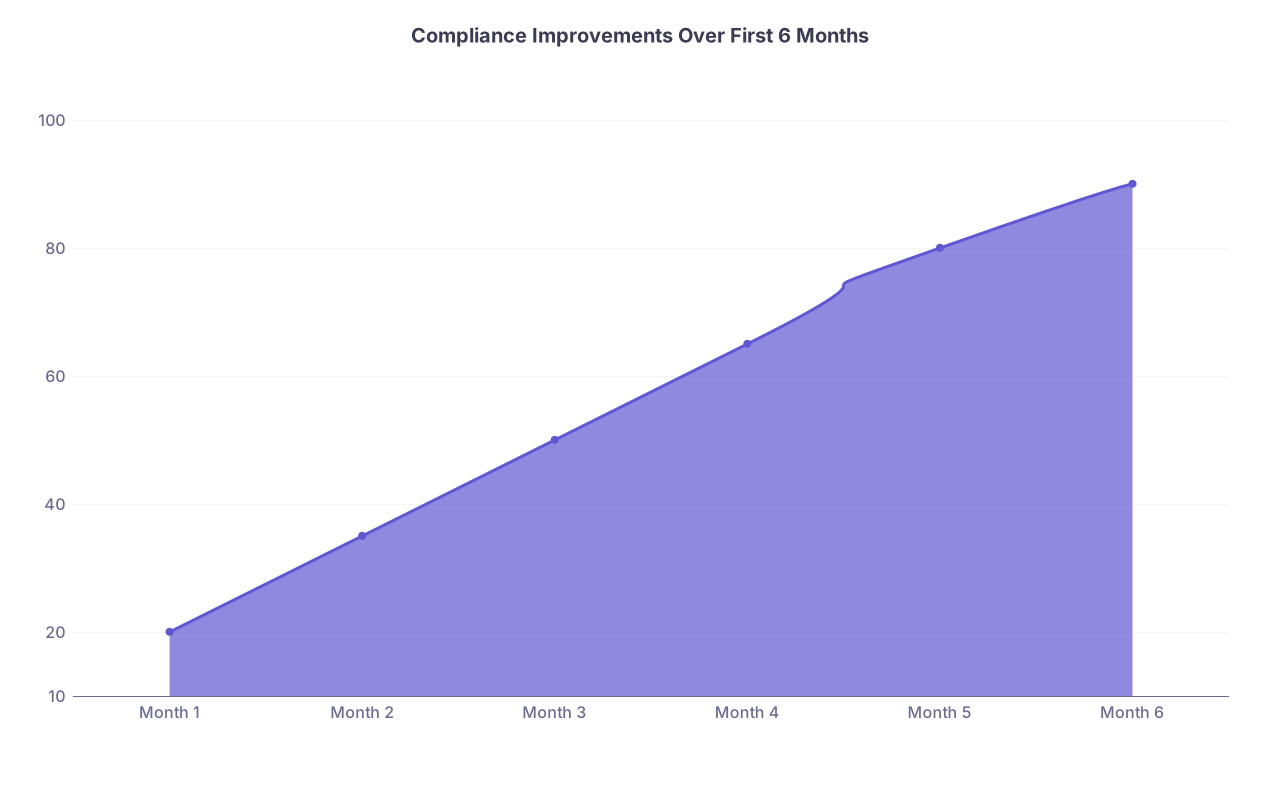
| Month 1 | 20 |
| Month 2 | 35 |
| Month 3 | 50 |
| Month 4 | 65 |
| Month 5 | 80 |
| Month 6 | 90 |
Months 7–9: Prove the Business, Not Just the Medicine
At this point you should stop telling stories and start showing numbers that hold up under Excel abuse.
Month 7: Define and Lock Your Core Metrics
Buyers care less about your overall revenue line and more about the engine underneath it.
Pick and standardize a tight metric set:
For a clinic / service business:
- New patients per month
- Retention at 3 / 6 / 12 months
- Revenue per visit / per patient per year
- Provider productivity (visits or RVUs per FTE)
- Payer mix and denial rates
For a digital health / SaaS hybrid:
- MRR / ARR
- Churn (logo and revenue)
- CAC and payback period
- Cohort retention curves
- Gross margin
Build a simple monthly dashboard that you update every month. No fancy BI required. A good Excel or Sheets model is fine.
Month 8: Cohorts and Unit Economics
Buyers love cohorts. Because you can’t fake them easily.
- Break users/patients/customers into cohorts by:
- Month or quarter of acquisition
- Channel (self‑pay, employer, payer)
- Track:
- Revenue over time
- Retention / activity
- Cost to serve
You want to be able to answer:
- “What’s the LTV for a January 2024 cohort vs July 2024?”
- “Does your newest cohort have better retention and margin than the first?”
If the answer is “no idea,” fix that this month.
Also tighten unit economics:
- Remove obviously unprofitable offerings.
- Standardize pricing where it’s chaotic.
- Kill weird one‑off deals that tank margin.
Month 9: Operational and Product Cleanup
At this point you should make your operations and product look like something that can plug into a bigger company.
For operations:
- Document the top 10–15 key workflows:
- Intake
- Scheduling
- Clinical documentation
- Billing / RCM
- Escalation / urgent issues
- Who does what, using which system, in what order.
For product/tech:
- Basic architecture overview (one‑page diagram).
- Updated, working environment:
- Staging and production clearly separated
- Access controls reasonable
- If your lead developer is one guy in another country with no backup, fix that dependency.

Months 10–12: Package the Story and Prepare for Real Diligence
Now we move from cleanup to presentation. At this point you should be ready to show your work without panic.
Month 10: Build the Internal Data Room
You’re not formally on the market yet, but you’re going to act as if you are.
Organize an internal data room (even if it’s just a well‑structured folder system):
- Corporate
- Formation docs
- Cap table
- Board consents
- Financial
- 3 years of P&L / balance sheet (or as much as you have)
- Forecast model (12–24 months)
- Commercial
- Top 20–30 customer contracts
- Any material vendor contracts
- Product & Tech
- Architecture overview
- Security policies
- Clinical & Compliance
- Policies, quality metrics, incident logs (if any)
The goal: if someone signs an NDA tomorrow, you’re 80% ready to share.
| Section | Target Status |
|---|---|
| Corporate | 90% complete |
| Financial | 80–90% complete |
| Commercial | 70–80% complete |
| Product/Tech | 70% complete |
| Compliance | 75–85% complete |
Month 11: Sharpen the Narrative and Buyer Map
At this point you should stop being vague about “who might buy us someday.”
Draft your acquisition thesis
One page. Not a deck. Answer:- Who buys us and why now?
- Do we give them:
- New patient population?
- Better unit economics?
- A capability they don’t have (e.g., telepsychiatry in all 50 states)?
Build a buyer list (quietly)
- Strategics: regional systems, national payers, digital health platforms, specialty roll‑ups.
- Financial: PE platforms rolling up similar assets.
List:
- Name
- Rationale
- What gap you fill for them
- Align your numbers with your story
If your pitch is “we’re the most efficient virtual GI group,” then:
- Show visit throughput per provider vs benchmarks.
- Show readmission/ED reduction data if you have it.
Month 12: Decide on Go‑to‑Market Strategy for the Deal
At this point you should be able to choose: banker‑led process, targeted outreach, or wait and be ready.
Options:
Banker‑led (for deals usually >$25–30M)
- Pros: structured process, competition, insulation from direct negotiation.
- Cons: cost, time, and you’re committing to “we’re really selling.”
Targeted outreach (you or a light‑touch advisor)
- Quietly explore with 5–10 top strategic fits.
- Good if you’re in the $5–25M range or niche.
Be “ready but not pushing”
- If inbound interest is already strong, you can wait but:
- Keep the data room fresh monthly.
- Update metrics dashboard religiously.
- If inbound interest is already strong, you can wait but:
By the end of Month 12, you should have:
- Clean, credible financials.
- A stable, understandable cap table.
- Contracts centralized and major landmines defused.
- Basic compliance architecture actually used.
- Metrics and cohorts that prove the business, not just your clinical quality.
- A tidy data room and an honest acquisition thesis.
You’re not “done.” You’re simply in shape to start a real conversation without embarrassment.
FAQ (Exactly 3 Questions)
1. What if we’re still losing money—should we delay acquisition prep?
Not necessarily. Plenty of digital health and service companies sell while unprofitable if:
- Revenue growth is strong and improving.
- Unit economics are clearly trending toward break‑even.
- There’s a strategic rationale for the buyer (access to a market, technology, or network they need).
Do the cleanup anyway. Clean books and honest metrics help you negotiate from reality instead of hope.
2. When should I actually tell potential buyers we’re “for sale”?
You usually do not lead with “we’re for sale.” You lead with partnership conversations:
- Pilots
- Joint ventures
- Strategic collaborations
Once you’ve built some relational and commercial traction, you can shift to, “We’ve started thinking about strategic combinations and would be open to discussing that if there’s mutual interest.” By then, your 12‑month cleanup makes you look ready, not desperate.
3. How much time per week should I expect this cleanup to take as a practicing physician?
Realistically:
- Months 1–6: 4–8 hours/week (front‑loaded on accountant, lawyer, contracts).
- Months 7–9: 3–5 hours/week (metrics, ops documentation).
- Months 10–12: 3–6 hours/week (data room, buyer narrative, advisor discussions).
If you can’t carve that out, delegate aggressively—ops lead, part‑time CFO, counsel. You cannot wing acquisition prep in one frantic month without paying for it heavily in price and terms.
Key points: Start cleanup a full year before you think you need it. Make the company legible—financially, legally, and operationally. And build a metrics story that proves the business, not just your clinical excellence.