
The biggest mistake senior residents make is assuming “teaching” means giving a few noon conferences and calling it a day. It does not. Your final year is your live-fire test as an educator.
Here’s the hard truth: by graduation, your program expects you to function like junior faculty when it comes to teaching. Not perfect. But competent, intentional, and reliable.
I’m going to walk you through that year as a timeline. Month by month and then week by week. At each point: what you should be doing, what skills you should hit, and what boxes you must check before you walk out with your graduation photo.
Big-Picture Timeline: Your Senior Year as a Teacher
Before we zoom into the months, you need the map.
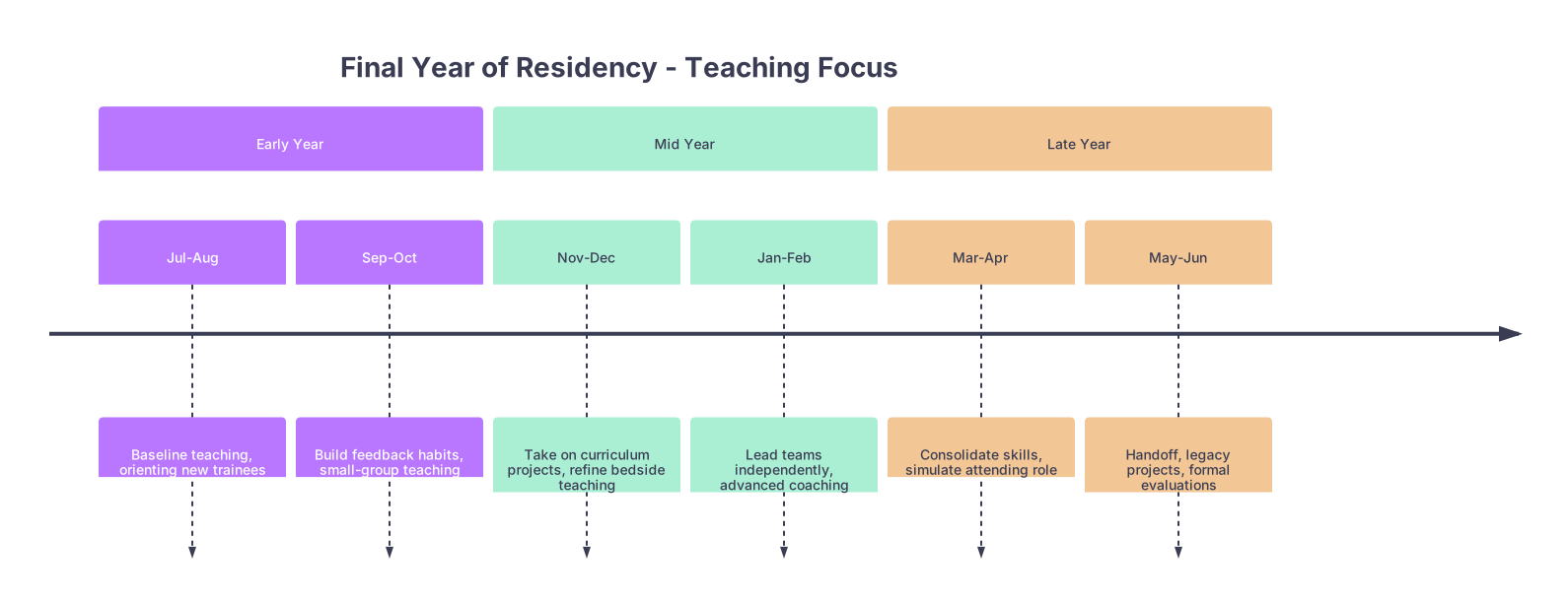
| Period | Event |
|---|---|
| Early Year - Jul-Aug | Baseline teaching, orienting new trainees |
| Early Year - Sep-Oct | Build feedback habits, small-group teaching |
| Mid Year - Nov-Dec | Take on curriculum projects, refine bedside teaching |
| Mid Year - Jan-Feb | Lead teams independently, advanced coaching |
| Late Year - Mar-Apr | Consolidate skills, simulate attending role |
| Late Year - May-Jun | Handoff, legacy projects, formal evaluations |
At each stage, you’re aiming for specific teaching milestones. Think of them as competencies, not vague aspirations.
| Phase | Core Teaching Milestone |
|---|---|
| Early Year | Run a clear, structured teaching encounter |
| Mid Year | Give actionable feedback that changes behavior |
| Late Year | Function as near-attending educator on service |
Now let’s go chronological.
July–August: Set Your Teaching Identity Early
At this point, you’re the new senior. People are quietly asking, “Are they going to be useful or just another stressed-out chief of nothing?”
Week 1–2 of July: Decide Who You’re Going to Be as a Teacher
By the end of the first 2 weeks, you should:
Pick 1–2 signature teaching moves you’ll use all year:
- The “one-minute preceptor” for quick case discussions.
- “SNAPPS” for student presentations.
- Short, focused chalk talks (5–7 minutes, not 25).
Block out recurring teaching slots in your brain:
- 5 minutes during pre-rounds.
- 10 minutes post-rounds a few days a week.
- One short case-based session per call day.
Do not wait for “free time” to teach. It never shows up.
By the End of July: Hit Your First Milestones
By July 31, you should be able to:
Run a basic bedside teaching encounter
- Before entering: set agenda (“We’ll focus on JVP today with the student leading.”)
- Inside: let learner talk first, then you model, then you tie it together with 2–3 key teaching points.
- After: ask, “What’s one thing you’re taking away from that?”
Orient new interns and students intentionally
- Lay out expectations for:
- How you want presentations structured.
- How you’ll give feedback (and how often).
- How they can ask questions without feeling stupid.
- And then follow through. Interns remember the seniors who set clear rules and then actually stick to them.
- Lay out expectations for:
Deliver a short, structured teaching moment most days on service
Not a 30-minute ramble. Something like:- 2–3 minute pearl on AKI staging.
- 5-minute “things that get you pimped on morning rounds in this unit.”
- One-page handout you made and use repeatedly.
If you hit July without doing any consistent teaching, fix it now. August is your reset.
September–October: Feedback and Small-Group Teaching
By early fall, the new interns are not brand new. Medical students are cycling through. This is your window to sharpen feedback and group teaching.
September: Build a Feedback Habit
At this point you should be:
Giving at least one piece of specific feedback per learner per week. Not “you’re doing great.” Try:
- “Your differential was broad, but next time I want you to prioritize and say what’s most likely first.”
- “On rounds tomorrow, focus only on 3 key data points for each patient – no reading the EMR out loud.”
Scheduling mid-rotation feedback:
- For students: around day 7–8 of a 2-week rotation, or week 2 of a 4-week block.
- For interns: mid-month.
- Ask them first: “What’s one thing you’re working on?” Then aim your feedback there.
By the end of September, you should have:
- Given documented feedback (in whatever system your program uses) to multiple learners.
- Corrected at least one problematic behavior early (chronic lateness, sloppy notes, unsafe orders) through clear, direct, non-punitive feedback.
If you’ve never had the “Hey, we need to talk about your performance” conversation by now, you’re behind. That’s a core attending skill.
October: Own a Small-Group Teaching Slot
This is where you move beyond hallway pearls.
By October 31, you should have:
Designed and delivered at least one case-based session
Something like:- “Approach to Shock on Night Float”
- “Hyponatremia for Interns: What Do I Do at 3 a.m.?”
Structure:
- 2–3 short vignettes.
- Each with 1 core decision point.
- You ask: “What would you actually do here?” before lecturing.
Experimented with at least one interactive method:
- Turn presentations into questions: “So what’s your working diagnosis, and what’s your next test?”
- Use whiteboard flowcharts that you build with the group.
- Assign a student to “teach back” a concept the next day.
Started collecting quick data on yourself
Try a 3-question anonymous survey with your team at the end of a block:- What’s one thing I do that helps your learning?
- One thing that gets in the way?
- One topic you learned well with me?
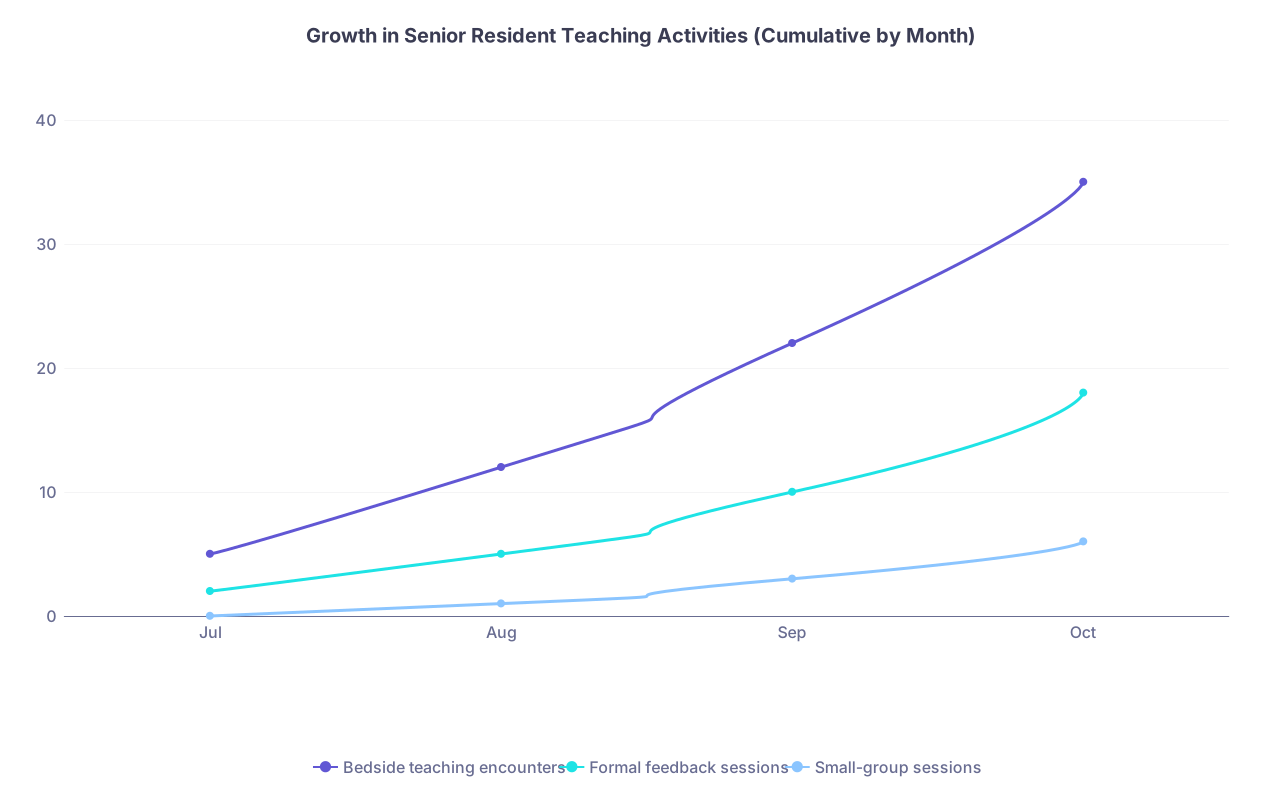
| Category | Bedside teaching encounters | Formal feedback sessions | Small-group sessions |
|---|---|---|---|
| Jul | 5 | 2 | 0 |
| Aug | 12 | 5 | 1 |
| Sep | 22 | 10 | 3 |
| Oct | 35 | 18 | 6 |
If your line is flat for any of those categories in real life, push yourself.
November–December: Curriculum, Ownership, and Advanced Feedback
By mid-year, you’re no longer “getting used to being a senior.” You’re the culture.
November: Take Ownership of a Teaching “Domain”
At this point you should:
Choose one area of content you’re known for among residents:
- “They always teach EGDT and shock resus.”
- “They’re the EKG person.”
- “They’re the procedures checklist guru.”
Build a mini-curriculum around it:
- 2–3 short sessions.
- A one-page visual or algorithm.
- A few pre-selected cases to discuss on call.
By November 30, you should have:
- Delivered that mini-curriculum to at least two different teams.
- Refined it at least once based on feedback.
- Saved everything in a form you could hand off to the next class.
This is exactly how you later turn into “the faculty member who runs the X workshop.”
December: Level Up Your Feedback – Coaching, Not Just Critiquing
Now you move from generic feedback to coaching toward goals.
At this point you should be able to:
Run a 10–15 minute focused coaching conversation:
- Start: “What’s one thing you want to be better at by the end of this month?”
- Clarify: “When does this problem show up?”
- Plan: “For the next 3 days on rounds, I’ll watch for this and give immediate feedback.”
Use micro-feedback during real work:
- Right after a note is signed.
- Immediately after a family meeting.
- After an on-call admission: “Take 2 minutes—how do you think that went?”
Document growth over time:
- “Your notes in week 3 are much more concise compared to week 1; you’re clearly prioritizing now.”
By the end of December, you should have coached at least:
- One intern on clinical reasoning.
- One student on presentations or note-writing.
- One learner on professionalism/time management.
If you’re still only saying “great job” and “read about this” six months into senior year, that’s not enough.
January–February: Act Like Junior Faculty on the Wards
This is where you start simulating your future attending life.
January: Lead the Team as the Primary Teacher
On ward months in January, you should aim to:
Run most of the “on-the-fly” teaching:
- You lead post-call reviews.
- You break down complex cases before the attending steps in.
- You debrief codes or near-misses first, then bring attending in.
Coordinate who-teaches-what:
- Intern teaching 5-minute antibiotic talk.
- Student presenting a short article.
- You linking everything back to real patients.
Protect teachable moments from getting crushed by chaos:
- After a rough rapid response, say: “We’re debriefing for 5 minutes before we disperse.”
- During busy admits, still pull 2 minutes to ask, “What did we miss on that history?”
By January 31, you should have led at least:
- One formal debrief after a critical event (even if short).
- One post-call case review session that isn’t just venting about admissions.
February: Teach Clinical Reasoning Explicitly
At this point, you should be making your thinking visible. Residents rarely see this; attendings often forget to narrate.
You should:
Use problem representation in front of learners:
- “Let’s compress this case into one sentence. 65-year-old with 3 days of progressive dyspnea, orthopnea, and new lower extremity edema…”
Teach illness scripts:
- For each major diagnosis, walk through:
- Typical features.
- Red flags when it is not that disease.
- Common pitfalls and misdiagnoses.
- For each major diagnosis, walk through:
Ask better questions:
- Not “What’s the differential?”
- Try: “What’s the single most dangerous thing you can’t miss here—and what data would support or refute it?”
By the end of February, you should have:
- Led multiple discussions where learners say “Oh, that’s how you’re thinking through it.”
- Helped at least one learner catch a cognitive error (anchoring, premature closure) in real time.
If you’re just rattling off answers without showing your reasoning, you’re robbing them of what they actually need from you.
March–April: Consolidate, Simulate Attending, and Get Evaluated
Now you’re in the home stretch. This is where you test whether you can really do this at faculty level.
March: Do a “Near-Attending” Month
If your program offers a senior or acting-attending style rotation, this is when you lean into it. If it doesn’t, simulate it.
At this point you should:
Ask a trusted attending to let you lead:
- You run rounds start to finish.
- You decide when to teach, when to move on.
- You give the first pass at all feedback.
Act like the default problem-solver:
- Family is confused → you lead the family meeting.
- Intern is overwhelmed → you triage their work.
- Student is lost → you set a 3-day learning plan.
By March 31, you should have:
- At least one formal evaluation focused mainly on your teaching (from an attending or medical education faculty).
- Direct quotes from learners about you as a teacher (you’ll need these for future teaching portfolios, job talks, fellowships).
- Identified one big weakness in your teaching you still want to fix before graduation.

April: Fix the Gaps and Polish Your Style
This month is about deliberate repair.
At this point you should:
Pick one teaching behavior to upgrade:
- If you talk too much: practice asking 2 questions before giving any answers.
- If you avoid hard feedback: script the first 1–2 sentences and practice saying them.
- If you never have time to teach: pre-plan 3 micro-teaching moments per day on service.
Get one more direct observation:
- Ask faculty to watch a teaching encounter and focus ONLY on your teaching, not your clinical decisions.
- Or ask a chief resident/education fellow to sit in on your small-group session.
By the end of April, you should have:
- A short list of go-to teaching tools that you reliably use:
- Your favorite quick framework (One-minute preceptor, SNAPPS, etc.).
- Your best 2–3 mini-sessions (“I can teach this in my sleep”).
- A consistent feedback approach.
May–June: Handoff, Legacy, and Transition to Faculty-Level Teaching
Now you’re almost done. No one cares what your intentions were; they care about what you’re leaving behind.
May: Build Your Teaching Legacy Before You Leave
This is not dramatic. It’s practical.
At this point you should:
Package your best material:
- Slide decks.
- One-pagers.
- Cases.
- Email it to chiefs/education office, or put it in the shared drive.
Mentor at least one junior resident specifically as a future teacher:
- Pull them aside: “I think you have potential as a teacher; want to take over this session next year?”
- Co-teach with them once.
- Give feedback on their teaching, not just their medicine.
Document your teaching experiences:
- List your lectures, workshops, recurring sessions.
- Note any awards, strong eval comments, or invitations to repeat sessions.
| Item Type | Target Number by Graduation |
|---|---|
| Bedside encounters led | 40–60+ |
| Short group sessions | 10–20 |
| Formal evaluations citing teaching | 6–10 |
| Learners mentored | 5–10 |
| Teaching materials created | 3–5 |
You’re not guessing. You’re tracking.
June: Final Month – Close the Loop and Prepare for Your Next Role
The last month is not coasting. It’s consolidating.
At this point you should:
Request final summative feedback specifically about teaching from:
- One or two attendings you respect.
- One chief or education faculty.
- Optional: a couple of trusted peers.
Ask very specific questions:
- “What do I do as a teacher that I should absolutely keep doing as faculty?”
- “What will hold me back as an educator if I do not fix it?”
Reflect and write down:
- 3 teaching strengths you’ll bring into your next role.
- 2 weaknesses you will actively work on in your first year as faculty/fellow.
- 1 concrete goal (e.g., “Run a resident workshop at my new program within 12 months.”)
Say your goodbyes with intent:
- Thank the attendings who modeled good teaching.
- Tell a couple of interns or students, “Watching you grow this year was a highlight for me.”
- Let people know you care about teaching and plan to keep doing it.

Micro-Timeline: What a “Teaching-Competent” Week Looks Like
Here’s what a solid teaching week in your final year should roughly include when you’re on a busy inpatient month:
Daily (Mon–Fri)
- 1–2 micro-teaching moments (2–5 minutes) during or after rounds.
- At least one targeted question that pushes clinical reasoning, not trivia.
- One instance of immediate, behavior-specific feedback to someone on the team.
Twice per week
- A 5–10 minute structured case-based discussion (not a lecture).
- Ask one learner, “What do you want to learn tomorrow?” and follow through.
Once per week
- A brief debrief of a challenging patient, transition, or event.
- Mid-week check-in: “How is this rotation going for your learning? Anything you want to change?”
If you’re hitting those marks most weeks on service in your final year, you’re ready.
Today’s Action Step
Open your calendar for the next 4 weeks and block three 10-minute teaching slots per week on your upcoming rotations. Label them with actual topics (e.g., “Approach to chest pain,” “AKI crash course,” “How to give bad news”). Then, in your next shift, tell your interns and students: “I’ve set aside some short teaching times for you. What would be most useful to cover first?”