
It’s 11:47 pm. You’ve just finished a brutal call, finally sat down, and instead of sleeping, you’re on your phone looking at “clinical educator” job postings and academic salaries. Your brain is doing that spiral:
“Am I about to throw away six figures a year if I choose teaching?” “Will I regret not maximizing income when I still have loans the size of a mortgage?” “Are people just… being nice when they say ‘follow your passion’ while they quietly go do private practice and buy a house?”
You want to teach. Actually love teaching. But you’re terrified that being an educator means signing up for permanent “broke doctor” status while your classmates post vacation photos from Bora Bora.
Let me walk through this like I’d talk to a co-resident on a late-night cross-cover. No fluff.
The Hard Truth: Pure Teaching Pays Less Than Pure Clinical
Let’s rip off the Band-Aid.
If you take two physicians with the same specialty, similar years out of training, similar location:
- The one doing mostly clinical work
- Versus the one doing a lot of teaching and less clinical
The heavily clinical one almost always makes more money. Sometimes a lot more.
Here’s a rough feel of what happens when you trade clinical time for teaching time (these are broad patterns, not exact guarantees):
| % Time Teaching | % Time Clinical | Relative Income vs Full Clinical |
|---|---|---|
| 0% | 100% | Baseline (100%) |
| 20% | 80% | ~85–95% |
| 40% | 60% | ~70–85% |
| 60% | 40% | ~55–75% |
| 80–100% | 0–20% | Often paid like admin/educator |
The exact numbers depend on:
- Specialty (surgical vs primary care vs peds, etc.)
- Academic vs community
- RVU bonuses and comp structure
- Geography and cost of living
But the pattern holds: the more your job shifts from revenue-generating RVUs to “non-billable good deeds” like teaching, the more tension you feel in your paycheck.
And yes, that can hurt. Especially when you still have:
- $200–400k in loans
- High cost-of-living city
- Maybe kids, aging parents, or partner income uncertainty
You’re not crazy for worrying. The financial gap is real.
Where Teaching Lives on the Money Spectrum
The question isn’t “does teaching pay less than pure clinical?” because… yeah, usually it does.
The real question is: how much teaching can you do before your finances start to feel tight or scary? And where’s the sweet spot?
Let’s break down some common setups I’ve actually seen people end up in.
| Role Type | Clinical Load | Teaching Role | Typical Financial Feel |
|---|---|---|---|
| Full private practice | 90–100% clinical | Informal teaching only | Maximum income, no time |
| Classic academic | 60–80% clinical | Ward teaching, lectures | Solid, but not max money |
| Clinician-educator | 40–60% clinical | Protected teaching, admin | Trade-off, but can work |
| Mostly educator/admin | 10–30% clinical | Curriculum, leadership | Lowest income, more stable |
Full Clinical / Private Practice
- High income ceiling.
- Minimal formal teaching. Maybe precept here and there.
- Great for paying loans fast, saving early.
- Bad if teaching is what keeps you from burning out.
If you’re chasing pure salary, this is the obvious route. Lots of your classmates are thinking this. Some will pretend they aren’t.
Classic Academic Attending
Think: big university hospital, teaching on the wards, giving noon conferences, some clinic.
- Maybe 70–80% clinical, 20–30% “academic stuff.”
- Income: usually 20–40% less than someone doing the same work in pure private practice, sometimes more.
- You do teach, but most of your day is still notes, inbox, patients.
This is the “default” teaching career for many people. You’ll feel the pay gap vs your private practice friends, but you won’t usually be destitute unless your debt and lifestyle are extreme.
Clinician-Educator Track
This is the one everyone romanticizes.
You have:
- Protected teaching time
- Roles like clerkship director, residency associate PD, small group lead
- Less clinical work than a standard attending
Income drops relative to classic clinical work, but in a managed way. If done right, this is where:
- You still pay your loans
- You still save
- You don’t totally burn out
- You get to be “the teacher” residents and students know
But if you overdo the protected time without negotiating pay or side income, this is where you can end up financially squeezed.
Mostly Educator/Admin
These are people who become:
- Program directors
- Associate deans
- Curriculum directors
- Full-time simulation faculty
They usually keep a little clinic or hospital time, but their main job is running things.
Money can be… all over the place. Some PDs make solid attending-level salaries. Others are underpaid and quietly resentful but feel trapped.
The Big Fear: “What If I Can’t Pay My Loans If I Teach?”
Let’s talk about the part that makes your stomach drop.
Teaching doesn’t automatically mean you can’t pay your loans. What it does mean is:
- You lose margin for error.
- Stupid financial decisions hurt more.
- You can’t assume “I’ll just pick up more shifts” to fix everything if your contract is already packed.
The people I’ve seen struggle financially in teaching-heavy roles usually shared some combination of:
- High-cost city + low academic pay
- High loans + no refinancing / no strategy
- Lifestyle quickly inflated (big house, expensive car, daycare, etc.)
- No side income from moonlighting, locums, or consulting
The people I’ve seen comfortable in similar roles:
- Not living above their means early on
- Often refinanced loans or used PSLF strategically
- Kept at least some income-boosting levers:
- Moonlighting
- Weekend telemedicine
- Extra call
- Occasional locums
- Negotiated their educator roles: “If you take 0.2 FTE of my clinical, how are you making up that compensation?”
Hidden Upsides: Teaching Can Quietly Protect You Financially
Does it pay less? Usually.
Does that automatically mean it’s a dumb financial move? No.
Here’s the thing nobody sells properly: burnout is insanely expensive.
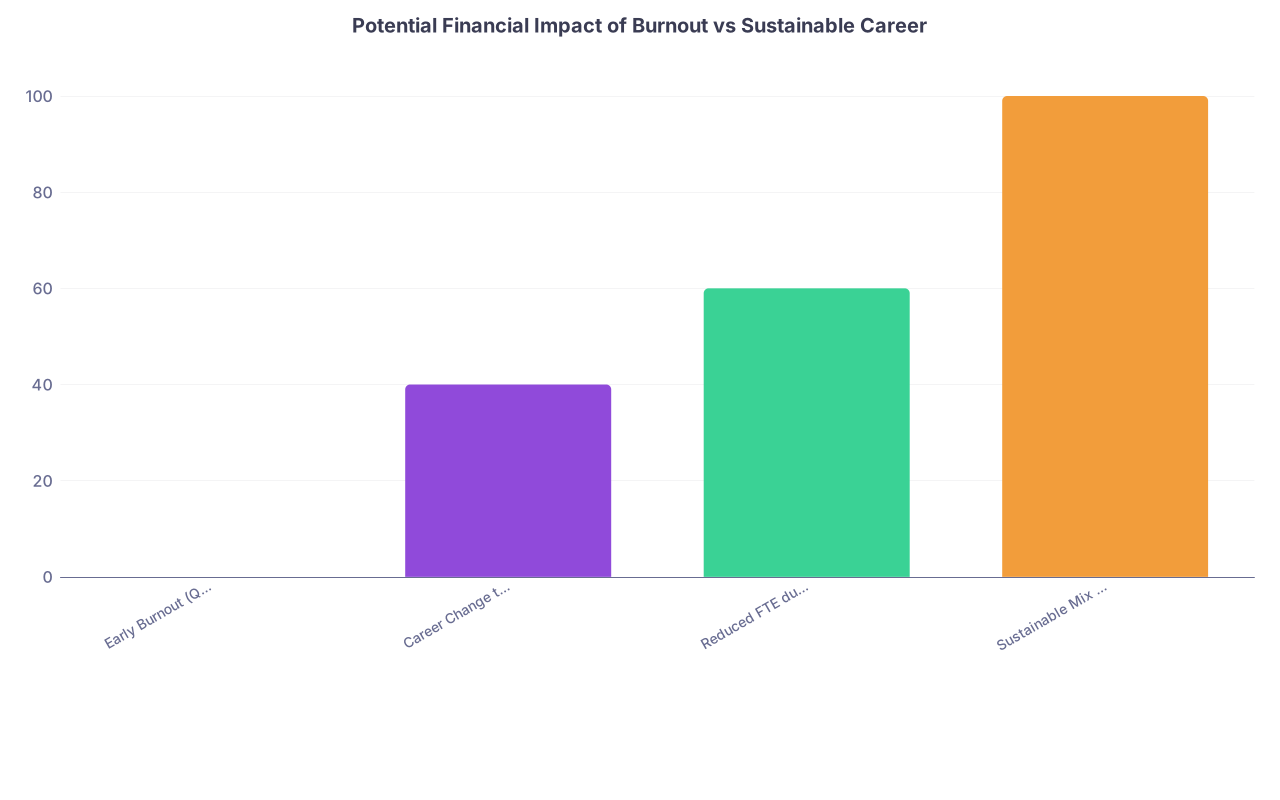
| Category | Value |
|---|---|
| Early Burnout (Quit 10 yrs early) | 0 |
| Career Change to Non-Clinical | 40 |
| Reduced FTE due to Exhaustion | 60 |
| Sustainable Mix with Teaching | 100 |
That chart isn’t dollars—it’s just a visual for relative lifetime earning stability. People who burn out hard at 8–10 years and drop to 0.5 FTE or leave medicine entirely can lose millions of potential future income. I’ve watched it happen.
Teaching can:
- Make each week feel more meaningful
- Break the monotony of clinic
- Create a sense of impact that purely RVU grinding doesn’t give
For some people, that’s the only reason they’re still in medicine at all.
Is that “bank account” income? No. But it absolutely affects how long and how sustainably you work. And that does become financial.
How to Add Teaching Without Financial Self-Sabotage
You’re worried about hurting your finances. Good. That means you’ll probably be more deliberate instead of just drifting into a pleasant-sounding title with a terrible salary.
Here’s a more structured way to approach it.

| Step | Description |
|---|---|
| Step 1 | Want to teach |
| Step 2 | Prioritize higher-pay job 3-5 yrs |
| Step 3 | Consider academic role now |
| Step 4 | Do informal teaching at work |
| Step 5 | Ask about pay for teaching roles |
| Step 6 | Clinician-educator track |
| Step 7 | Negotiate or limit teaching time |
| Step 8 | Reassess after loans decrease |
| Step 9 | Loan burden high |
| Step 10 | Protected time funded? |
Phase 1: Stabilize, Then Specialize
If your loans are massive and you’re panicking, one very reasonable strategy:
- Do a higher-paying, more clinical-heavy job for 3–5 years.
- Hammer loans, build an emergency fund, start investing.
- During this time, still:
- Precept students
- Give a few lectures
- Stay connected to an academic center or residency
That way, when you shift into a more teaching-heavy job later, you do it from a position of strength instead of desperation.
Phase 2: Test Teaching in Smaller Doses
Before you commit to a big pay cut for teaching, make sure you actually like the reality of it—not just the fantasy.
Test drive:
- Precepting medical students 1 half-day a week
- Being an attending on teaching teams
- Giving a noon conference
- Running simulation sessions
- Helping with OSCEs
Some people discover they love it. Some discover they hate grading, scheduling, dealing with 50 emails about evaluation forms, and sitting on endless committees.
Better to find that out before giving up income.
The Part Nobody Mentions: Side Income Is Your Friend
This is where a lot of anxious, teaching-oriented people buy themselves peace of mind.
You don’t have to live or die by your base salary. Teaching + selective side work can actually feel pretty stable.
Common add-ons I’ve seen:
- Moonlighting in urgent care, ED fast track, or hospitalist shifts
- Telemedicine a few evenings a week
- Board review courses or question writing
- Consulting for education companies
- Occasional locums during vacations or gaps
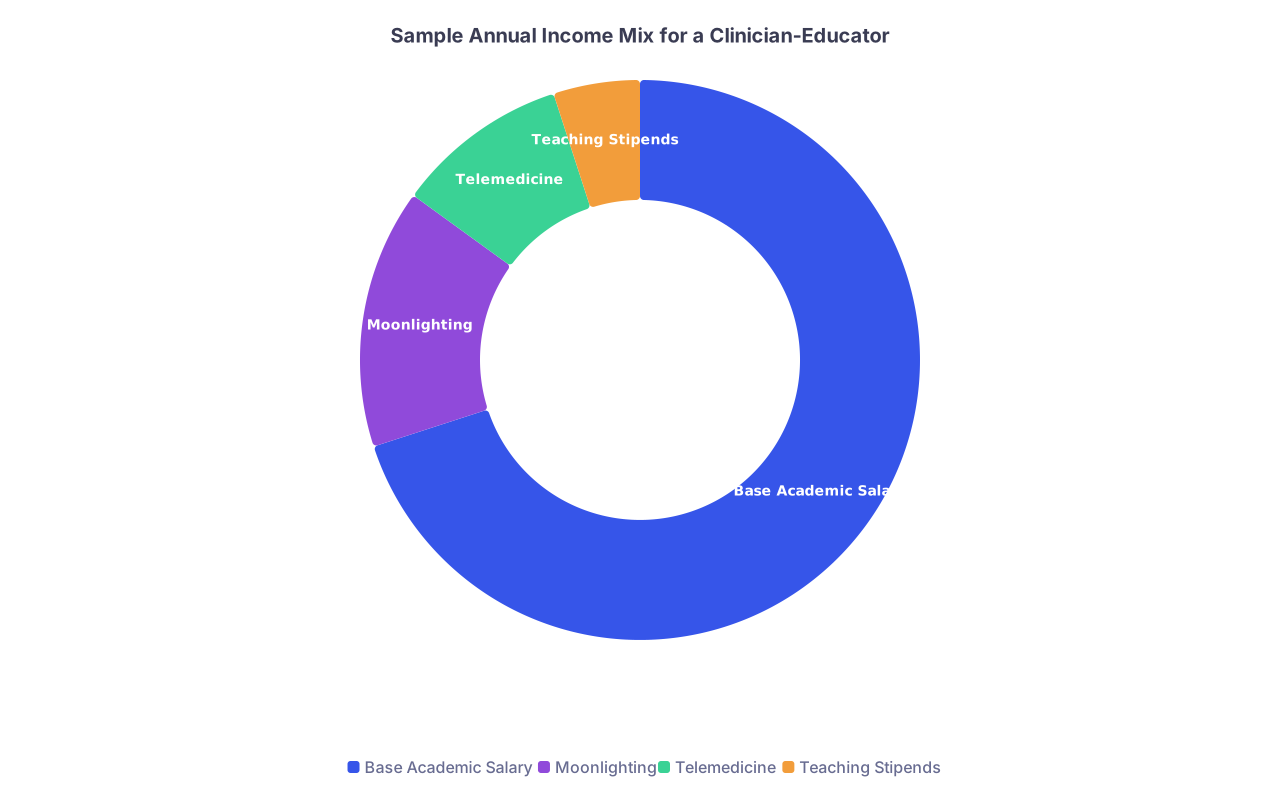
| Category | Value |
|---|---|
| Base Academic Salary | 70 |
| Moonlighting | 15 |
| Telemedicine | 10 |
| Teaching Stipends | 5 |
That little sliver of “non-base” income can:
- Make student loan payments feel manageable
- Allow saving for a house down payment
- Reduce the panic when comparing yourself to pure private-practice money
Is it tiring? Yes. But you choose your trade-offs.
Red Flags When Considering an Educator Role
You asked if becoming an educator will hurt your finances. Sometimes the answer is: yes, and badly, if you ignore the red flags.
Be careful when:
- A job expects tons of teaching but calls it “service” with no pay or protected time.
- They “protect” 0.2 FTE of your time but cut your pay as if you’re 0.2 FTE less clinical with no extra compensation.
- Everyone in the role before you quietly left after 2–3 years and no one will tell you why.
- The offer relies on, “But this could be great for promotion!” while your bank account laughs in the background.
Ask straight questions:
- How much of my FTE is clinical vs teaching vs admin?
- How is the non-clinical time funded?
- What’s the expected total compensation?
- What happened to the last person in this role?
If they dodge, that’s your sign.
So… Will Teaching Hurt Your Finances?
Here’s the honest, uncomfortable answer:
- If you chase teaching blindly, ignore your debt, don’t negotiate, and never add side income? It can hurt. A lot.
- If you treat teaching as part of a long game—pay loans early, pick your setting carefully, protect a minimum income floor, maybe use moonlighting—it doesn’t have to wreck you.
The worst-case scenario isn’t “I become an educator and end up poor.”
The worst-case scenario is:
- You ignore what actually keeps you going
- Burn out in a high-pay, high-clinical grind
- Quit medicine early or drop to minimal FTE because you can’t stand it
- And that definitely nukes your finances
You’re allowed to care about money. You’re allowed to care about meaning. The trick is not pretending you don’t care about one of them.
FAQs
1. If I want to do PSLF, is teaching/academic work better or worse financially?
Better aligned, not automatically better paid. PSLF requires 10 years at a qualifying employer (usually academic, non-profit hospitals, VA, etc.). Academic/teaching-heavy jobs fit that nicely. But you still need to:
- Make sure your salary is high enough for a livable budget
- Use an income-driven repayment plan correctly
- Keep certification of employment updated
PSLF can make a lower academic salary more tolerable if your huge loan burden disappears at year 10. It’s not “free money,” but it’s real.
2. Is it smarter to do pure private practice first, then switch into teaching later?
Often, yes. Especially if you’re really worried about debt. A common path:
- 3–5 years high-clinical, higher-paying job
- Aggressively pay down loans / build savings
- Then move into academic/clinician-educator work with less financial pressure
The risk: you get used to the higher income and can’t stomach the drop later. So if you choose this, be deliberate and treat it as a temporary phase, not an accidental forever.
3. Will choosing an education fellowship or chief year hurt my finances long term?
Short term, yes—those are usually lower-paid years. Long term, not necessarily. They can:
- Position you for better educator roles
- Make you more competitive for leadership (PD, APD, dean-level)
- Give you skills that justify protected time and stipends
If your loans are brutal and you have zero financial cushion, adding another low-salary year can sting. But it can also accelerate you into roles where your teaching time is structured and funded instead of just extra unpaid work.
4. How much of a pay cut is “reasonable” for a teaching-heavy job?
There’s no universal number, but I start getting nervous for people when:
- They’re taking >30–40% pay cut compared to a realistic alternative
- They have big loans + dependents + high cost of living
- And there’s no clear path to side income or future raise
A 10–20% haircut for a job you truly like and can sustain? That’s often fine. A 40–50% haircut with no support and huge debt? That’s how you end up resenting the thing you wanted to love.
Key points to hold onto:
- Yes, teaching usually pays less than pure clinical—but that gap can be managed, not catastrophic, if you’re intentional.
- Burnout and quitting medicine early are far more financially destructive than a well-thought-out shift toward education.
- The smartest move is combining: some clinical, some teaching, and one or two income levers (moonlighting, telemed, etc.) so your passion for teaching doesn’t turn into constant financial anxiety.