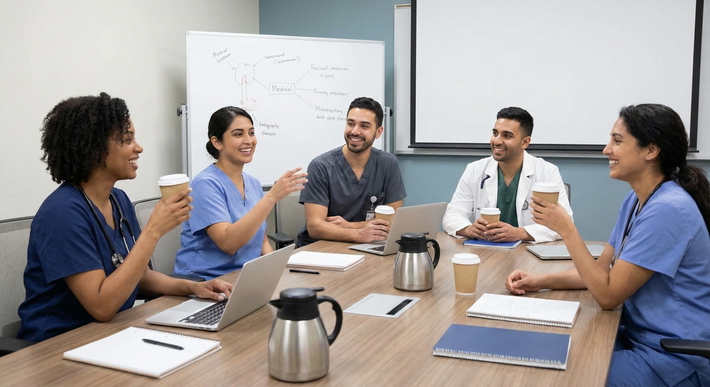
Networking in medicine is often the hidden curriculum of residency success—especially in a small, competitive field like radiation oncology. For a Caribbean IMG, networking isn’t just a “nice to have”; it can directly influence your ability to secure strong letters, build a recognizable name, and ultimately strengthen your rad onc match prospects.
This guide is designed specifically for Caribbean medical graduates interested in radiation oncology residency, with a special lens on those coming from schools like SGU, Ross, AUC, Saba, and similar institutions. It focuses on medical networking strategies you can apply right now—during preclinical years, clinical rotations, gap years, and even during residency.
Why Networking Matters Even More for Caribbean IMGs in Rad Onc
Radiation oncology is a small community. The number of residency spots is limited, the faculty pool is tight-knit, and most program directors know each other—or know someone who knows you.
For a Caribbean IMG, this has several implications:
1. You’re often an unknown quantity
US MD and DO students frequently rotate at academic centers that have rad onc departments; many Caribbean students do not. Program directors may not be familiar with your school, your grading system, or the rigor of your curriculum. Networking humanizes your application and turns a generic file into a person with a face, reputation, and story.
2. The “closed door” problem
Some radiation oncology residency programs may have an implicit preference for US MDs. That doesn’t mean IMGs can’t match, but it does mean:
- You may not be on their radar by default.
- You may need sponsorship/visa support.
- Your application may be filtered more heavily based on scores and known institutions.
Personal connections—through mentorship medicine, conference networking, research collaborations, and away rotations—can push your application into the “take a closer look” pile.
3. Reputation and trust are everything
Radiation oncology emphasizes teamwork and long-term patient relationships. Faculty want residents they can trust in emotionally and technically complex situations. When someone they know says, “I’ve worked with this Caribbean medical student; they’re excellent,” it carries significant weight.
Key takeaway: For Caribbean IMGs, networking isn’t about “schmoozing.” It’s about creating enough meaningful interactions that people in radiation oncology know who you are, what you stand for, and why you’re worth investing in.
Understanding the Landscape: Who You Need to Know in Radiation Oncology
Before you can network effectively, you need to understand who the key players are and how they connect.
1. Core groups in radiation oncology
You should aim to build relationships with:
- Radiation oncologists (attendings) – Clinicians who can mentor you, involve you in research, and eventually write letters of recommendation.
- Residency program directors and associate PDs – Decision-makers for your rad onc match process.
- Medical physicists and dosimetrists – Important team members who may involve you in QA, planning research, or educational projects.
- Residents and fellows – Often your most accessible mentors; they can give honest insider advice about programs and the SGU residency match landscape for IMGs in competitive specialties.
- Department administrators and coordinators – Crucial contacts for setting up observerships, electives, or research time.
2. Key organizations and spaces where networking happens
For rad onc and Caribbean IMG interests, prioritize:
- ASTRO (American Society for Radiation Oncology) – The main professional organization. Their annual meeting is the largest rad onc conference and a prime site for conference networking.
- ARRO (Association of Residents in Radiation Oncology) – Offers mentorship programs, webinars, and resident connections.
- Institutional tumor boards – Multidisciplinary settings (surgical onc, med onc, rad onc, radiology, pathology) where networking across fields happens.
- Departmental grand rounds and journal clubs – Local opportunities at hospitals where you rotate or do observerships.
- Caribbean medical school alumni networks – Especially those who’ve achieved a radiation oncology residency or similarly competitive fields.
Actionable step: Create a simple spreadsheet with columns: Name, Role, Institution, How We Met, Date, Follow-up Plan. Start logging every radiation oncology–related contact you make from now on.

Building Your Network from the Caribbean: Before You Step Into a Rad Onc Department
Many Caribbean IMGs worry that they’re “behind” because they may not have early exposure to radiation oncology. You can still lay serious groundwork for medical networking even while on the island or during core rotations.
1. Use your school’s resources strategically
Even if your school doesn’t have an in-house rad onc department:
Ask about alumni in radiation oncology
Many Caribbean schools have graduates who matched into rad onc (even if the numbers are small). Your dean’s office, career services, or student affairs may be able to connect you.Join oncology or research interest groups
Start with oncology or internal medicine interest groups if there’s no dedicated rad onc group. Ask them to invite radiation oncologists as guest speakers (virtual works too).Leverage SGU-style infrastructure (if applicable)
If you’re at a school like SGU:- Inquire if there is an “SGU residency match” database or alumni directory you can search by specialty.
- Look for webinars featuring alumni who matched into competitive specialties and ask specific questions about networking.
2. Begin online networking early
You do not need to physically stand in a US hospital to start medical networking.
Practical approaches:
LinkedIn
- Build a professional profile: clean headshot, strong summary, list of experiences and interests (especially radiation oncology).
- Connect with: radiation oncologists, residents, Caribbean grads in competitive specialties.
- Message politely with a short, specific note (e.g., “I am a second-year student at [Caribbean school], exploring radiation oncology and interested in how you navigated residency as an IMG. Would you be open to a brief 15–20 minute Zoom call?”).
X (Twitter) / “MedTwitter”
- Follow hashtags and accounts: #RadOnc, #MedEd, #ASTRO, #ARRO.
- Engage by liking, retweeting, and occasionally commenting thoughtfully.
- Share relevant articles you read and your reflections (HIPAA-safe and professional).
Professional society mentorship medicine programs
- ASTRO and ARRO periodically offer mentorship pairings, including opportunities for med students and IMGs.
- Apply early and be specific that you are a Caribbean IMG interested in radiation oncology residency.
3. Use virtual conferences and webinars
If travel is hard due to cost or visas:
- Register for virtual ASTRO or regional rad onc meetings if offered.
- Attend rad onc webinars hosted by academic centers.
- During Q&A, ask a concise, insightful question and introduce yourself: “I’m a third-year Caribbean IMG interested in radiation oncology…” This can create a memorable impression.
- Follow up with speakers via email or LinkedIn: mention the session, what you learned, and ask one or two targeted questions.
Example follow-up email:
Subject: Thank you for your talk on [Topic] at [Meeting Name]
Dear Dr. [Last Name],
I am a third-year medical student at [School], a Caribbean medical school, exploring a career in radiation oncology. I attended your session on [topic] at [meeting/webinar] and was particularly interested in your discussion of [specific detail].
I wondered if you might have any advice for international graduates pursuing radiation oncology residency, particularly in terms of early research or clinical exposure. If you have time for a brief email response, I’d be very grateful.
Thank you again for your time and for an excellent presentation.
Sincerely,
[Your Name]
[School] | [Graduation year]
Clinical Rotations, Observerships, and Research: Turning Contact into Connection
Once you are in clinical years or in the US, you gain higher-yield opportunities for in-person networking.
1. Targeted clinical exposure to radiation oncology
Even if rad onc is not part of your standard core rotations, you can:
- Request an elective or sub-internship in radiation oncology at a teaching hospital, preferably at an academic center with a residency program.
- If a formal elective is not possible, seek:
- Observerships in rad onc departments.
- Shadowing experiences facilitated by alumni or contacts you made online.
Maximizing these experiences for networking:
- Arrive early, stay late when appropriate, and offer to help with tasks like chart review or literature searches.
- Ask residents about their research projects and whether they need help.
- After a few days, request a brief meeting with an attending to discuss your career interests and ask for advice.
- Keep a running list of everyone you work with, what you did, and notable feedback.
2. Research as a networking engine
Research in radiation oncology serves three purposes for Caribbean IMGs:
- Strengthens your CV for a rad onc match.
- Gives you a reason to interact regularly with attendings and residents.
- Generates co-authorships and presentations that increase your name recognition at conferences.
How to break into rad onc research as a Caribbean IMG:
Cold email faculty at academic centers with rad onc departments. Focus on:
- Early-career attendings (often building their portfolios and more open to helpers).
- Residents who have active projects (they may appreciate motivated students).
Sample research inquiry email:
Subject: Medical student interested in radiation oncology research
Dear Dr. [Last Name],
I am a [year] medical student at [Caribbean medical school] planning to apply for radiation oncology residency. I have a strong interest in [e.g., breast cancer, health disparities, palliative radiation] and am eager to gain research experience in this field.
I saw that your work focuses on [specific topic from their recent paper or profile], and I found your paper on [brief detail] particularly compelling. I wondered if you might have any ongoing clinical, retrospective, or educational projects that could use an additional, highly motivated student.
I am comfortable with [list skills: data entry, chart review, basic statistics in Excel/R, manuscript preparation, etc.], and I’m willing to commit [X hours] per week remotely. I’d be happy to send my CV if that would be helpful.
Thank you very much for your time and consideration.
Sincerely,
[Your Name]
Cast a wide but targeted net: Email multiple faculty across institutions, but personalize each message.
Be consistent and reliable: Fast responses, careful work, meeting deadlines—this builds a reputation that leads to more opportunities, stronger mentorship, and better letters.
3. Turning mentors into advocates
Mentorship medicine is most powerful when mentors become your advocates in the rad onc match:
- Clarify your goals: Tell your mentor directly that you are aiming for radiation oncology residency as a Caribbean IMG and ask for honest feedback on feasibility and gaps.
- Ask for strategic guidance: Request advice on where to apply, what type of research to prioritize, and who else they recommend you connect with.
- Letters of recommendation: Once you’ve worked with someone for a meaningful time (and performed well), ask if they are comfortable writing a strong letter for your radiation oncology residency application.
Tip: Aim for at least one letter from a radiation oncologist who is known in the field (speaker at ASTRO, published, or at a recognized academic center). Networking makes this much more attainable.
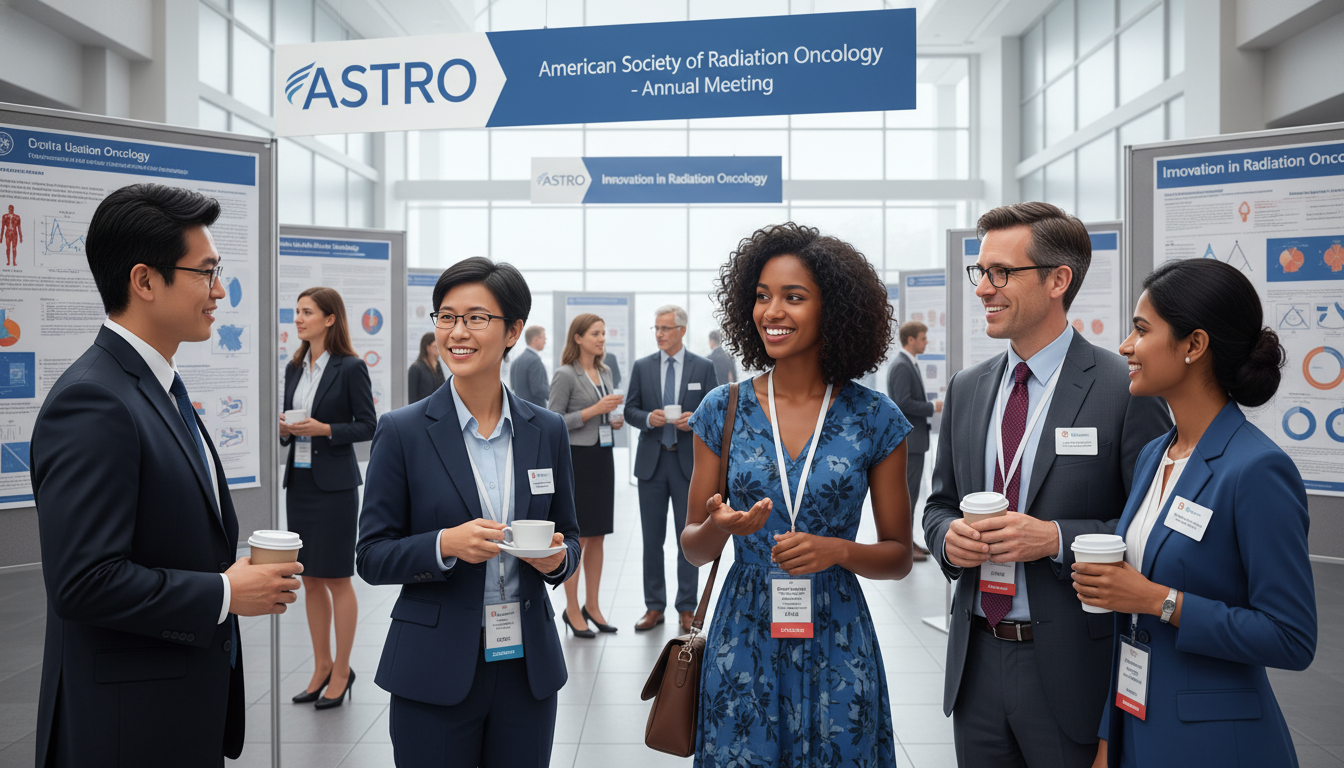
Conference Networking and the Rad Onc Match: Showing Up Where It Matters
Conferences are concentrated networking environments. For competitive fields like radiation oncology, attending even one major meeting can change the trajectory of your Caribbean medical school residency plans.
1. Planning for ASTRO and other key meetings
Prioritize:
- ASTRO Annual Meeting – Flagship conference, ideal for presenting research and meeting programs.
- Regional or institutional rad onc symposia – Often more intimate, easier to have meaningful conversations.
- ARRO sessions – Frequently include resident panels and “meet the faculty” events.
If finances are an issue:
- Look for travel scholarships for students and IMGs.
- Ask your school if they help fund conference attendance when you have an accepted abstract.
2. Presenting at conferences as a visibility strategy
If you have research:
- Aim to submit abstracts to ASTRO or similar meetings.
- Even a poster presentation gives you:
- A place for people to find you.
- A natural conversation starter.
- A reason to email faculty/programs ahead of time to say you’ll be there.
At your poster:
- Stand by it during the assigned times.
- Prepare a 1–2 minute explanation of your project.
- Have a simple “business card” or contact card (or a QR code linking to your email/LinkedIn).
3. How to talk to faculty and residents at conferences
Many Caribbean IMGs worry about “bothering” people. The key is to be respectful, concise, and clear.
Opening lines you can use:
- “Hi Dr. [Last Name], I really enjoyed your talk on [topic]. I’m a Caribbean IMG interested in radiation oncology, and I had a quick question about…”
- “I’m a medical student presenting a poster in [session]. I’m especially interested in [field], and I’ve been following your work on…”
Keep these interactions short unless they clearly have time and interest to continue.
After the conversation:
- Write down: who you spoke with, what you discussed, any advice they gave, and whether they invited you to follow up.
- Within 48 hours, send a short thank-you email or message referencing something specific you discussed.
4. Using conferences to refine your application strategy
Through conference networking, you can learn:
- Which programs are more IMG-friendly in radiation oncology.
- How PDs perceive Caribbean medical school residency applicants.
- Common strengths/weaknesses they see in IMG applications.
- How important US-based rad onc rotations and research are for their program.
This insider information can shape your application list, your personal statement emphasis, and your gap-year or research-year decisions.
Putting It All Together: Strategic Networking Plan for Caribbean IMGs in Rad Onc
Below is a sample streamlined roadmap, tailored to a Caribbean IMG aiming for a rad onc match.
Preclinical / Basic Sciences (Island Phase)
- Learn basics about radiation oncology (online modules, ASTRO resources).
- Join oncology or rad onc interest groups (local and virtual).
- Build LinkedIn and start following rad onc professionals.
- Contact your school’s alumni office about any rad onc graduates (or competitive specialties) and request introductions.
- Attend virtual webinars and start emailing 1–2 speakers per month.
Core Clinical Rotations
- Inform your internal medicine, surgery, and oncology attendings that you’re interested in radiation oncology.
- Ask them if they know any radiation oncologists they could introduce you to.
- Begin emailing radiations oncologists at potential elective sites 3–9 months in advance to inquire about rotations or observerships.
- Start small oncology-related research if full rad onc research isn’t accessible yet (health disparities, palliative care, oncology QI projects).
Elective Year / Dedicated Rad Onc Exposure
- Arrange at least one rotation or observership in a radiation oncology department with a residency program (two if possible).
- During rotations:
- Show up early, work hard, be humble, ask thoughtful questions.
- Offer to join or start a small research or QI project.
- Request feedback mid-rotation (not just at the end).
- Ask for letters of recommendation from those who know your work well and can speak to your performance in rad onc.
Gap Year / Research Year (if taken)
- Aim for a formal research position in radiation oncology or a related oncology field at an academic center.
- Present at ASTRO or other oncology meetings if possible.
- Systematically expand your network—faculty, residents, physicists, coordinators.
- Seek mentors who will advocate for you and help shape your application strategy.
Application and Interview Season
- Email programs (especially those where you have prior contact) expressing interest, referencing your previous interactions or rotations.
- If you attend interviews:
- Treat every conversation—formal or casual—as part of your network-building.
- Follow up with brief, personalized thank-you notes.
- Use your network to:
- Learn about program culture.
- Refine your rank list.
- Explore backup specialties or combined plans if necessary.
Common Mistakes and How to Avoid Them
1. Only networking when you “need something”
People can sense when every interaction is transactional. Instead:
- Be genuinely curious about others’ work and careers.
- Ask thoughtful questions.
- Offer to help when appropriate (e.g., data collection, literature searches).
2. Being passive during rotations or observerships
Simply showing up is not networking. To stand out:
- Ask, “Is there any project I could help with, even on a small scale?”
- Volunteer to present at journal club or tumor board.
- Seek feedback proactively.
3. Overemphasizing your Caribbean IMG status with a defeated tone
You should acknowledge your background honestly but not apologetically. Frame it as:
- Evidence of resilience and adaptability.
- An international perspective valuable for diverse patient populations.
- Motivation for your dedication and work ethic.
4. Neglecting professionalism online
Everything you post on social media contributes to your reputation:
- Keep public accounts professional.
- Avoid controversial, unprofessional, or patient-identifiable content.
- Use platforms to share your interest in oncology, research, and education.
FAQs: Networking in Medicine for Caribbean IMGs in Radiation Oncology
1. Is it realistic for a Caribbean IMG to match into radiation oncology?
Yes, but it is challenging. Radiation oncology is a small, competitive specialty, and many programs prefer US MDs. However, Caribbean IMGs do match, especially those who:
- Have strong exam scores.
- Accumulate meaningful rad onc research and presentations.
- Obtain strong letters from US-based radiation oncologists.
- Build a solid network through mentorship, clinical rotations, and conference networking.
Your networking efforts don’t guarantee success, but they significantly improve your odds and often open doors that your application alone cannot.
2. What if my Caribbean medical school doesn’t have any radiation oncology connections?
You can still build your network by:
- Using alumni offices to identify graduates in any oncology field and asking them for secondary connections.
- Reaching out cold to rad onc departments at hospitals where you plan to rotate.
- Leveraging online platforms (LinkedIn, MedTwitter) and professional societies (ASTRO, ARRO).
- Seeking oncology or related research at major academic centers, then branching into rad onc-specific projects once you have an in.
Many Caribbean IMG success stories in rad onc started with zero initial connections.
3. How many conferences should I attend, and which ones matter most?
For most Caribbean IMGs, even one major conference can be highly impactful if you:
- Present a poster or abstract.
- Prepare in advance (know who you want to meet).
- Follow up after the meeting.
If you must prioritize, aim for:
- ASTRO Annual Meeting (if you have rad onc research to present).
- Local or regional oncology/rad onc symposia where travel is feasible.
- Virtual ARRO and ASTRO offerings when in-person travel is not possible.
4. How early should I start networking if I’m considering radiation oncology?
As soon as you’re even moderately interested. For a Caribbean medical school residency applicant, earlier networking gives you:
- More time to explore whether rad onc is really right for you.
- More opportunities to join research projects.
- Time to cultivate long-term mentors who know you well enough to support your rad onc match.
Starting in preclinical years is ideal, but even if you’re late in core rotations or in a gap year, intentional networking can still make a meaningful difference.
Networking in medicine, particularly in a small specialty like radiation oncology, is not about luck, charisma, or coming from a prestigious US medical school. For a Caribbean IMG, it’s about showing up consistently, building genuine relationships, and turning each interaction into a chance to demonstrate your curiosity, reliability, and commitment to patient care.
If you approach networking as an integral part of your professional growth—not just a tool for the match—you’ll find that doors open not only in residency, but throughout your entire career in radiation oncology.