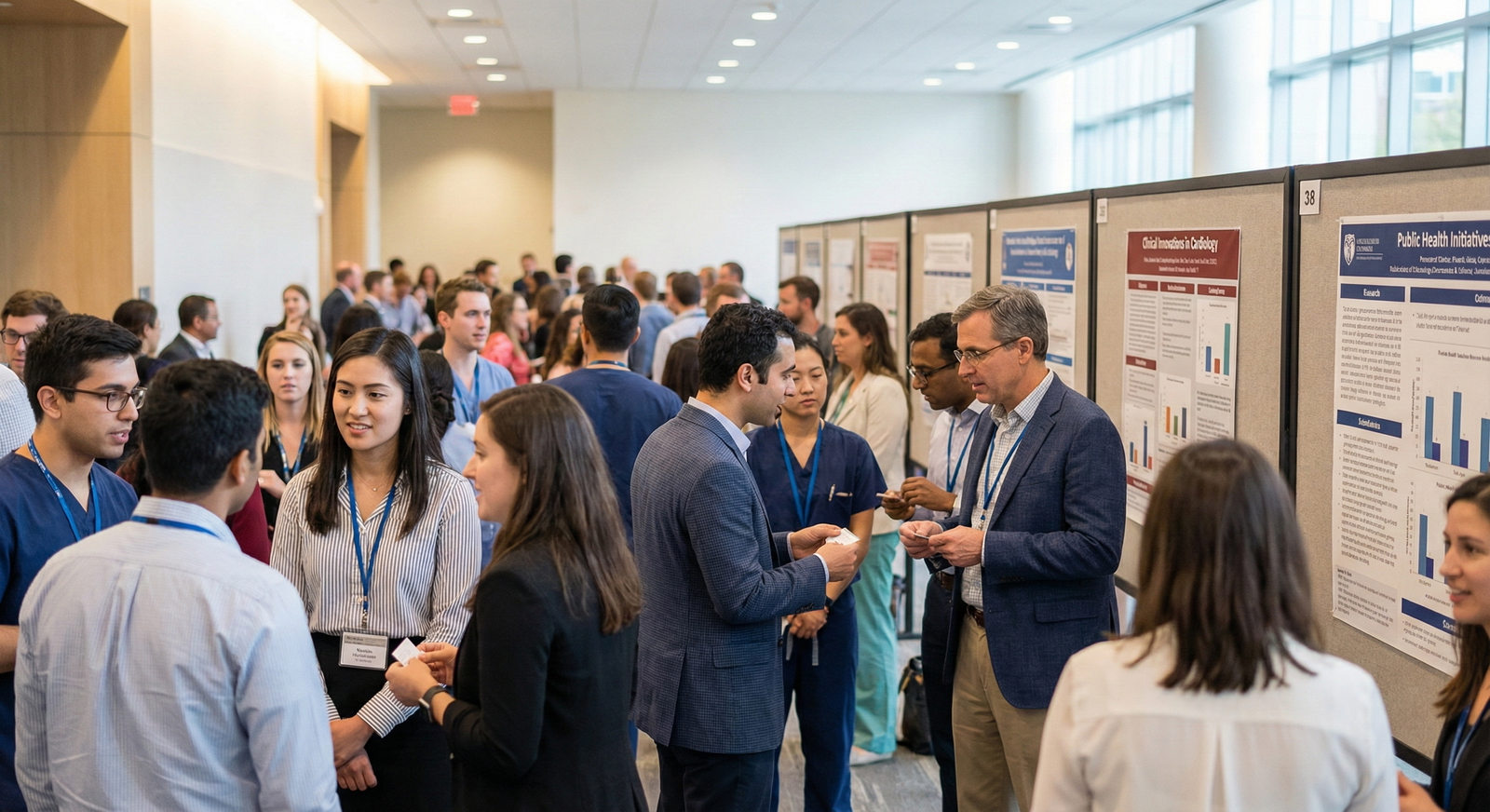
Understanding Networking in Medicine as a DO in a Preliminary Medicine Year
For a DO graduate entering a preliminary medicine year (prelim IM), networking is not a “nice to have”—it’s one of the most powerful tools you have for shaping your future residency and career. Unlike categorical residents, you have a compressed timeline and an additional layer of uncertainty about what comes next. Thoughtful, strategic networking in medicine can:
- Strengthen your chances in the osteopathic residency match or NRMP match for a categorical spot
- Open doors to internal transfers from preliminary to categorical positions
- Help you identify mentors who will advocate for you
- Plug you into opportunities for research, leadership, and letters of recommendation
This article focuses specifically on how a DO graduate in a preliminary medicine year can use medical networking and conference networking to build meaningful professional relationships, especially if you ultimately want to continue in internal medicine or another competitive specialty.
We’ll break down mindset, strategies on the wards, conference and online networking, and how to nurture mentorship in medicine—all with step-by-step tactics and realistic examples tailored to a busy prelim schedule.
1. The Networking Mindset for a DO in a Prelim IM Year
Before specific tactics, you need a clear mindset. Many DO graduates feel they have to “prove themselves” more than their MD peers. That pressure can either motivate you or paralyze you. Networking done well is not about being pushy; it’s about being:
- Curious
- Helpful
- Reliable
- Visible
1.1 Why Networking Matters More in a Preliminary Medicine Year
As a prelim IM resident, your path is different from categorical colleagues:
- Time-limited position: You typically have only one year to leave an impression, secure strong letters, and identify your next step.
- Transition uncertainty: You may be aiming for:
- A PGY-2 categorical internal medicine position (either at your current institution or another)
- A categorical position in another specialty (e.g., neurology, anesthesiology, radiology)
- A re-application strategy in the osteopathic residency match or NRMP Main Match
In all of these scenarios, who knows you and what they say about you often matters as much as your test scores. Networking increases the number of people who can:
- Write you specific, detailed letters
- Call program directors on your behalf
- Alert you to open or “off-cycle” positions
- Pull you into research or QI projects that strengthen your application
1.2 Reframing Networking as Service and Curiosity
If traditional “networking” makes you think of forced small talk and self-promotion, reframe it around two goals:
- Service: How can I make the lives of my team, attendings, and institution easier or better?
- Curiosity: What can I learn from each person’s path, decisions, and experience?
Examples of service-oriented networking:
- Volunteering to help with a QI project your attending mentioned in passing
- Offering to present a concise case or teaching topic at noon conference
- Helping co-interns with admissions or cross-coverage when you finish early
Networking built on service tends to feel genuine, which is crucial in medicine.
2. Everyday Networking on the Wards and Clinics
Your most powerful networking opportunities don’t happen at national conferences—they happen on rounds, in the workroom, and in clinic every day. As a DO graduate in a preliminary medicine year, your clinical performance is your networking.
2.1 First Impressions: What People Notice About a Prelim DO
Early in the year, attendings and senior residents will form quick impressions. You want them to say:
- “This prelim DO is reliable.”
- “They care about patients.”
- “They’re eager to learn and easy to work with.”
- “If we had an open spot, I’d want them in our program.”
Key behaviors that build this reputation:
Preparation:
- Read about your patients’ conditions the night before.
- Review recent labs, imaging, and notes before pre-rounds.
- Know basic guidelines for common conditions (HF, COPD, DKA, sepsis).
Follow-through:
- If you say, “I’ll call the consultant” or “I’ll update the family,” do it promptly.
- Close the loop: “I spoke with cardiology; they recommend… I placed the orders.”
Communication:
- Keep your senior and attending updated on key changes.
- Present concisely and confidently, even if you’re still learning.
Professionalism:
- Show up early; stay engaged during rounds; avoid complaining in front of attendings.
- Own your mistakes and learn from them.
When you combine these with a positive attitude about being a DO (not defensive, not apologetic), you start distinguishing yourself.
2.2 Strategic Visibility: Choosing Where to Shine
As a prelim, you may rotate through several services. Be intentional:
- Identify rotations with high influence:
- General medicine team led by IM program leadership
- ICU rotations (PDs often ask intensivists for resident feedback)
- Subspecialty rotations in fields you’re considering (cards, GI, heme/onc)
On these rotations:
- Ask seniors or chiefs, “Which attendings are particularly involved in residency decisions or mentorship?”
- Time your best efforts for when those attendings are supervising you.
Example:
You’re on general medicine with an attending who sits on the residency selection committee. You stay late to help with a complex discharge, present a thoughtful case at noon conference, and later meet with them to discuss your career goals. That attending may become a critical advocate when a PGY-2 categorical spot unexpectedly opens.
2.3 Building Micro-Connections Every Day
Networking in medicine often starts with small, consistent interactions:
With Attendings:
- Ask 1–2 thoughtful questions per day about management choices or their career path.
- Example: “Dr. Patel, I’m a DO grad in a preliminary medicine year and I’m interested in staying in IM long-term. Can I ask what you look for when you recommend someone for a categorical spot?”
With Fellows:
- Fellows often know about upcoming research, QI, or off-cycle positions.
- Example: “If you ever need help with chart reviews or data collection on your project, I’d be happy to pitch in on my days off.”
With Senior Residents:
- Many are involved in recruitment, scheduling, or program committees.
- Ask for feedback: “What’s one thing I can do to function more like a strong PGY-2?”
This daily micro-networking, combined with strong performance, is often more impactful than a single big conference encounter.

3. Intentional Mentorship in Medicine: Finding Advocates, Not Just Advisors
For a DO graduate in prelim IM, you don’t just need “nice mentors”; you need advocates—people willing to email program directors, pick up the phone, and explicitly support your next step.
3.1 Types of Mentors You Should Seek Out
Aim for at least three categories:
Clinical Mentor in Internal Medicine
- Someone who has directly supervised you on wards or clinic.
- Can speak to your patient care, reliability, and growth.
- Ideal source of a strong letter of recommendation and internal advocacy for a categorical IM spot.
Career Mentor in Your Target Specialty (If Not IM)
- For example, a neurologist, radiologist, or anesthesiologist.
- Can guide how best to use your preliminary medicine year to strengthen your application to that specialty.
- May help you connect with programs in that field, including combined osteopathic residency match or allopathic programs open to DOs.
Peer or Near-Peer Mentor
- A senior resident or recent graduate who successfully transitioned from a preliminary year to a categorical spot.
- Offers pragmatic advice on applications, timing, and mistakes to avoid.
3.2 How to Approach Potential Mentors
Many prelim residents wait too long to seek mentorship—start early (first 2–3 months).
Sample script for approaching an attending:
“Dr. Lee, I’ve really appreciated working with you this month and the feedback you’ve given. I’m a DO graduate in a preliminary medicine year, and I’m hoping to apply to categorical internal medicine positions for next year. Would you be open to meeting briefly to discuss my career plans and possibly serving as a mentor as I navigate this process?”
Key points:
- Be clear you’re a prelim.
- State your goal (categorical IM at same institution vs elsewhere, or different specialty).
- Ask for a short, time-limited meeting (15–20 minutes).
3.3 Structuring Mentorship Meetings
Make it easy for your mentor to help you:
Bring:
- A one-page CV
- A brief “future plans” paragraph (1–2 short paragraphs)
- If you’re farther along, a draft of your personal statement
Agenda for a 20-minute meeting:
- 3–4 minutes: Quick summary of your background (DO school, interest in IM or target specialty).
- 5–7 minutes: Feedback on your performance and how you’re perceived.
- 5–7 minutes: Concrete questions:
- “How can I make myself competitive for a PGY-2 categorical spot?”
- “Are there faculty here who might be open to having me join a research or QI project?”
- “Would you feel comfortable writing a strong letter of recommendation if things continue to go well this year?”
3.4 Turning Mentors into Advocates
Advocacy is more likely when:
- You consistently perform well clinically.
- You follow through on projects you begin.
- You show humility and responsiveness to feedback.
Specific ways to encourage advocacy:
Ask explicitly but respectfully:
“If any PGY-2 categorical medicine spots open here or in affiliated programs, would you be comfortable letting me know or putting in a word for me if you think I’d be a good fit?”Keep mentors updated:
- Send a short email every 2–3 months:
- What you’re doing now (rotations, responsibilities)
- Any new achievements (posters, QI project progress)
- Your current application or match strategy
- Send a short email every 2–3 months:
This allows them to advocate in a timely, informed way when opportunities arise.
4. Conference Networking and Professional Societies: Extending Your Reach
Hospital-based networking is foundational, but conference networking allows you to expand beyond your own institution—crucial if internal transfers are limited or your current program has few categorical spots.
4.1 Choosing the Right Conferences as a Prelim DO
For a DO graduate in preliminary medicine, good conference choices include:
Internal medicine-focused conferences:
- American College of Physicians (ACP)
- Society of Hospital Medicine (SHM)
- Regional IM or hospitalist meetings
Specialty-specific conferences (if you’re planning to switch fields):
- For example, AAN (neurology), ASA (anesthesiology), RSNA (radiology), depending on your goals.
Osteopathic-focused meetings:
- ACOI (American College of Osteopathic Internists)
- AOA or osteopathic specialty organizations
Look for conferences that offer:
- Resident abstract/poster sessions
- Career development or residency application workshops
- Dedicated networking events or receptions
4.2 Maximizing Conference Networking: Before, During, After
Before the conference:
- Check the program and identify:
- Sessions led by program directors or key faculty from programs you’re interested in
- Mentoring breakfasts, meet-the-professor events, or trainee receptions
- Prepare a short “introduction pitch”:
- Who you are (DO prelim IM resident at X institution)
- Your area of interest (e.g., categorical IM, hospital medicine, or future specialty)
- What you’re hoping to learn or accomplish
Example:
“I’m Dr. Smith, a DO graduate completing a preliminary medicine year at [Hospital]. I’m very interested in pursuing a categorical internal medicine position with a focus on hospital medicine. I’d love to learn what your program values in DO applicants and how I can make myself a stronger candidate.”
During the conference:
- Attend smaller sessions where conversation is easier (workshops, roundtables).
- Stay after talks to briefly introduce yourself to speakers.
- Visit residency or fellowship program booths if present; engage authentically:
- Ask about how they view DO applicants.
- Ask if they consider preliminary residents for off-cycle positions.
After the conference:
- Email key contacts within 3–5 days:
- Remind them who you are and where you met.
- Mention any specific advice they shared.
- Attach your CV only if they offered to review or requested it.
Sample follow-up email:
Subject: Thank you and follow-up from ACP conference
Dear Dr. [Last Name],
It was a pleasure meeting you after your session on [topic] at ACP. I’m the DO preliminary medicine resident from [Institution] who asked about transitioning to a categorical IM position.
I appreciated your advice about [briefly reference]. As I continue my prelim year, I’ll be focusing on [brief action tied to their advice].
If your program ever considers prelim residents for PGY-2 categorical spots, I’d be grateful to learn about the process and what you tend to look for. In the meantime, thank you again for your time and insight.
Best regards,
[Your Name], DO
Preliminary Internal Medicine Resident, PGY-1
[Institution]

5. Online Networking: LinkedIn, Email, and Digital Presence
In addition to in-person interactions, online medical networking can substantially widen your opportunities, especially if you’re applying broadly.
5.1 Optimizing Your LinkedIn (or Online) Presence
Even if you’re not very active on social media, consider at least maintaining an updated, professional LinkedIn profile:
Include:
- Clear headline: “Preliminary Internal Medicine Resident (PGY-1) | DO Graduate | Interested in Categorical IM / [Specialty]”
- Professional headshot
- Brief “About” section:
- Your DO school, current prelim IM program, areas of interest
- Goals for the next 1–3 years (e.g., categorical IM, hospital medicine, subspecialty training)
- Experience section:
- Clinical roles, leadership or volunteer work, research projects, conference posters or presentations
Use LinkedIn to:
- Follow internal medicine and osteopathic professional societies
- Connect with attendings and fellows you’ve worked with (after asking if they’re comfortable)
- Keep an eye on posts about open PGY-2 categorical spots or “unexpected vacancies”
5.2 Cold Emails and Warm Introductions
Cold emailing can feel intimidating, but used sparingly and thoughtfully, it can be effective—especially for research or to express interest in programs that regularly take DO graduates.
When to cold email:
- A faculty member whose research closely aligns with your interest and might accommodate remote or chart-based work.
- A program director at a program that historically has taken prelims into categorical spots, particularly if you have a geographic tie.
Key principles:
- Keep emails short, specific, and respectful of time.
- Personalize each email; avoid generic text.
- If possible, reference a shared connection or a talk/article of theirs you read.
Example cold email to potential research mentor:
Dear Dr. [Last Name],
I’m a DO graduate currently completing a preliminary internal medicine year at [Hospital]. I recently read your [article/abstract] on [topic] and was particularly interested in your work on [specific element].
I’m hoping to strengthen my research experience in [IM or specialty area] during this year. If you are seeking assistance with data collection, chart review, or manuscript preparation, I would be grateful for the opportunity to contribute remotely or during my elective time.
I understand your time is limited and appreciate any consideration. I have attached a brief CV for your reference, and I would be happy to adapt to the needs and timelines of your ongoing projects.
Sincerely,
[Your Name], DO
Preliminary Internal Medicine Resident, PGY-1
[Institution]
Warm introductions—through your mentors, seniors, or fellowship directors—are often even more powerful. Ask:
“Would you be comfortable introducing me via email to anyone you think I should talk to about categorical IM opportunities or research in [topic]?”
Mentors are usually happy to do this if you’ve shown reliability.
6. Putting It All Together: A Networking Strategy for Your Prelim Year
To avoid feeling overwhelmed, translate these ideas into a concrete, time-phased plan.
6.1 First 3 Months: Lay the Foundation
Focus on:
- Strong clinical performance; be known as reliable and teachable.
- Identifying 2–3 potential mentors (one clinical IM mentor, one career/specialty mentor, one near-peer).
- Asking for early feedback:
- “What are my strengths and what should I work on to function at the level of a strong PGY-2 by the end of the year?”
Action items:
- Schedule at least one mentorship meeting per month.
- Set up or update your LinkedIn and CV.
- Start a simple log of:
- Attendings you’ve worked with
- Rotations completed
- Teaching activities, QI, or interesting cases you might later present
6.2 Months 4–8: Build Depth and Visibility
Focus on:
- Identifying QI, research, or educational projects you can realistically complete or meaningfully contribute to.
- Presenting at least one case report, poster, or conference abstract (local, regional, or national).
- Attending at least one relevant conference if feasible (ACP regional, SHM, ACOI, or specialty-specific).
Action items:
- Ask mentors directly about opportunities:
- “Is there a project I could help with that might lead to a poster or abstract by [month]?”
- Practice conference networking (before/during/after strategy).
- Begin exploring programs that:
- Have historically accepted DO graduates
- Have a track record of converting prelims to categorical slots
- Are located in regions where you have ties (family, medical school, etc.)
6.3 Months 9–12: Convert Relationships into Opportunities
Focus on:
- Securing strong letters of recommendation:
- Ask attendings who know you well and have seen your growth over time.
- Having explicit conversations with mentors about your future:
- “Do you think I’m competitive for a categorical IM position here or elsewhere?”
- “Would you be willing to reach out to any colleagues on my behalf?”
Action items:
- Finalize your application strategy:
- NRMP match (categorical IM or specialty)
- Osteopathic residency match if applicable in your target field
- Off-cycle or unadvertised PGY-2 opportunities (keep mentors informed so they can alert you).
- Email professional contacts made at conferences or via online networking to let them know you are formally applying and to ask if their programs consider prelims for open positions.
Throughout the year, remember: networking is cumulative. Small, consistent actions build trust and visibility that often pay off months later, sometimes in unexpected ways.
FAQs: Networking in Medicine for DO Graduates in a Preliminary Medicine Year
1. As a DO prelim resident, should I disclose that I’m looking for a categorical spot?
Yes, but thoughtfully. Early in the year, share your goals with trusted mentors, chiefs, and selected attendings, especially those involved in residency decisions. Phrase it positively:
“My goal is to transition into a categorical internal medicine position, ideally here or at a similar program. I’d appreciate any guidance on how to make myself a strong candidate.”
Avoid sounding like you’re using the prelim year only as a stepping stone while disengaging from current responsibilities. Your credibility depends on fully committing to your current role.
2. How is networking different for a DO graduate compared to an MD?
In many programs, it’s not fundamentally different—strong performance and professionalism matter most. However, as a DO graduate you may:
- Need to be more proactive about demonstrating your readiness and competence, especially in historically MD-dominant institutions.
- Benefit from specifically seeking out DO-friendly programs and faculty who trained as DOs or have a track record of mentoring DO graduates.
- Use osteopathic organizations and conferences as additional venues for mentorship and advocacy.
Networking helps you overcome residual bias by allowing decision-makers to know you as an individual, not just a set of letters and scores.
3. What if I’m introverted and dislike traditional “networking”?
You don’t need to be extroverted to network effectively. Focus on:
- One-on-one conversations: Mentorship meetings, quick hallway check-ins, or email follow-ups.
- Service-based connections: Volunteering to help with projects or teaching; your work speaks for you.
- Small, structured events: Workshops, case conferences, or journal clubs where discussion is guided.
Think of networking as building professional friendships centered on shared goals and patient care—not as self-promotion.
4. How can I balance networking with a demanding prelim IM schedule?
Integrate networking into what you’re already doing:
- Turn daily rounds into networking with attendings and seniors through questions and consistent performance.
- Use brief downtime (post-call, between pages) to send quick follow-up emails or schedule mentorship meetings.
- Choose 1–2 high-yield conferences rather than trying to attend many.
- Treat any project you join (QI, research, teaching) as both academic and networking opportunities.
If you allocate even 30–60 minutes per week intentionally to networking and mentorship, over a full preliminary medicine year you’ll build a substantial web of relationships that can significantly shape your residency trajectory.
By approaching networking in medicine strategically—on the wards, at conferences, and online—you can transform your preliminary medicine year from a “holding pattern” into a launchpad. As a DO graduate, you bring a valuable perspective on holistic care and patient-centered medicine; effective networking ensures the right people see it, remember it, and are willing to advocate for you when it matters most.