Why Networking Matters So Much in Global Health
Networking in medicine is always important, but in global health it is absolutely mission-critical. Unlike many domestic-focused specialties, global health work:
- Spans countries, cultures, and health systems
- Depends heavily on partnerships and trust
- Often runs on short-term grants, NGOs, and collaborative projects rather than fixed institutional roles
Because of this, your relationships become your infrastructure. Strong connections can:
- Open doors to global health residency tracks and fellowships
- Connect you with NGOs, ministries of health, and academic partners abroad
- Introduce you to mentors who can guide you in mentorship medicine and career development
- Help you navigate visas, licenses, housing, local customs, and safety concerns
- Lead to concrete opportunities: electives, research, policy roles, implementation science projects, and more
In global health, people hire and collaborate with those they know, trust, and have seen follow through in challenging environments. Degrees and CVs matter, but your network often determines where and how you can actually work.
The Unique Nature of Global Health Networking
Compared to other fields, global health networking:
- Is cross-sector: physicians, nurses, epidemiologists, data scientists, economists, anthropologists, policy-makers, community leaders, and NGO staff
- Is longitudinal: the student you meet now may be a ministry of health leader in 10 years
- Is geographically distributed: you may collaborate daily with colleagues in 5+ time zones
- Involves sensitive issues: power imbalances, funding disparities, “parachute medicine,” and post-colonial legacies
A thoughtful, ethical approach to networking in global health is not just good strategy—it’s a professional responsibility.
Laying the Foundation: Clarify Your Global Health Identity
Effective networking starts before you shake a single hand or send a single email. You need a clear sense of:
- Who you are now
- What you’re aiming toward
- How global health fits into your long-term trajectory
Define Your Global Health Focus (Even If It’s Provisional)
You don’t need a perfectly defined niche, but you should be able to articulate your current interests in specific terms. Compare:
- Vague: “I’m interested in international medicine.”
- Specific: “I’m interested in non-communicable disease prevention in low-resource urban settings in East Africa, especially hypertension and diabetes.”
Some helpful dimensions:
- Clinical area: infectious diseases, maternal-child health, surgery, mental health, emergency medicine, non-communicable diseases, etc.
- Population focus: refugees, rural communities, urban slums, adolescents, LGBTQ+ populations, TB/HIV-affected groups, etc.
- Type of work: clinical care, implementation science, health systems strengthening, policy, humanitarian response, digital health, medical education.
- Regions: Sub-Saharan Africa, South Asia, Latin America, the Middle East, etc.
You can (and will) evolve, but temporary specificity makes you more memorable and easier to help.
Craft a 30–45 Second “Global Health Introduction”
Have a concise, confident way to introduce yourself in global health contexts—whether at a conference, on Zoom, or during an elective. Structure:
- Who you are (name, training level, institution)
- Your current clinical field or interest
- Your global health focus (problem + population + region where possible)
- What you’re looking for / working on
Example:
“I’m Dr. Samira Khan, a PGY-2 in internal medicine at City Medical Center. I’m interested in non-communicable disease management in low-resource urban settings, especially hypertension in East Africa. I’m currently working on a quality improvement project related to blood pressure control in community clinics and I’m hoping to connect with people involved in similar programs or global health residency track opportunities.”
This immediately orients others and invites relevant connections.
Align Your Story with Your Actions
Your networking will be more credible if your current activities match your stated interests:
- Join your institution’s global health residency track if available
- Participate in global health journal clubs, electives, local immigrant/refugee clinics
- Work on international medicine-related QI or research projects
- Take relevant courses (global health ethics, health systems, epidemiology)
People take you more seriously when they see you already investing effort in your stated goals.
Where to Network: High-Yield Arenas for Global Health Connections
Networking in medicine for global health happens across multiple venues—both in person and online. Using several in combination usually works best.

1. Your Own Institution
Don’t underestimate what’s right in front of you. Even if your program isn’t branded as global health–heavy, you may have:
- Faculty who do part-time work abroad or with NGOs
- Researchers with international collaborations
- Hospital-based global health centers or international offices
- Telemedicine initiatives with partner hospitals abroad
Action steps:
- Search your institution’s website for “global health,” “international medicine,” “refugee,” “HIV,” “TB,” “implementation science,” “health equity,” or region-specific terms.
- Email faculty whose work interests you:
- Express genuine interest
- Reference a specific paper or project
- Ask for a brief meeting (15–20 minutes) to learn about their path
- Attend global health grand rounds, seminars, and visiting lectures; stay after to introduce yourself.
Even one or two strong institutional mentors can transform your opportunities.
2. Global Health Residency Tracks and Fellowships
If your program has a global health residency track, it is both a training and networking powerhouse:
- Residents ahead of you become near-peer mentors
- Faculty leaders are often plugged into international partnerships
- Program-affiliated NGOs and universities abroad become accessible training sites
If your current program lacks such a track:
- Look for global health electives or “international medicine” rotations
- Explore short courses or certificate programs in global health at nearby institutions
- Attend virtual events from other institutions’ global health divisions—many are open-access
For future planning, inclusion in a global health residency track or global health fellowship is both a credential and a network multiplier.
3. Conferences and Workshops: Mastering Conference Networking
Conferences are dense networking environments—but only if you approach them strategically.
Before the Conference
Identify target people and sessions:
- Speakers in your area of interest
- Panels focused on your regions of interest
- Trainee-specific sessions and mentorship hours
Reach out in advance:
- Email 2–5 people whose work truly resonates with you
- Briefly introduce yourself and ask if they have 10–15 minutes to meet during the conference
- Mention a specific paper, talk, or project of theirs you admire
Prepare your materials:
- Updated CV or short biosketch
- 1–2 sentence description of your current project(s)
- Business cards or a simple digital contact card with QR code
During the Conference
To make conference networking effective:
Attend key sessions early and sit where you can easily approach speakers afterward
Ask concise, thoughtful questions during Q&A if appropriate
After a talk, introduce yourself to the speaker with:
- A specific compliment or question about their content
- A quick version of your global health introduction
- A request to follow up by email
Use organized networking events: trainee meetups, dinner discussions, interest group sessions.
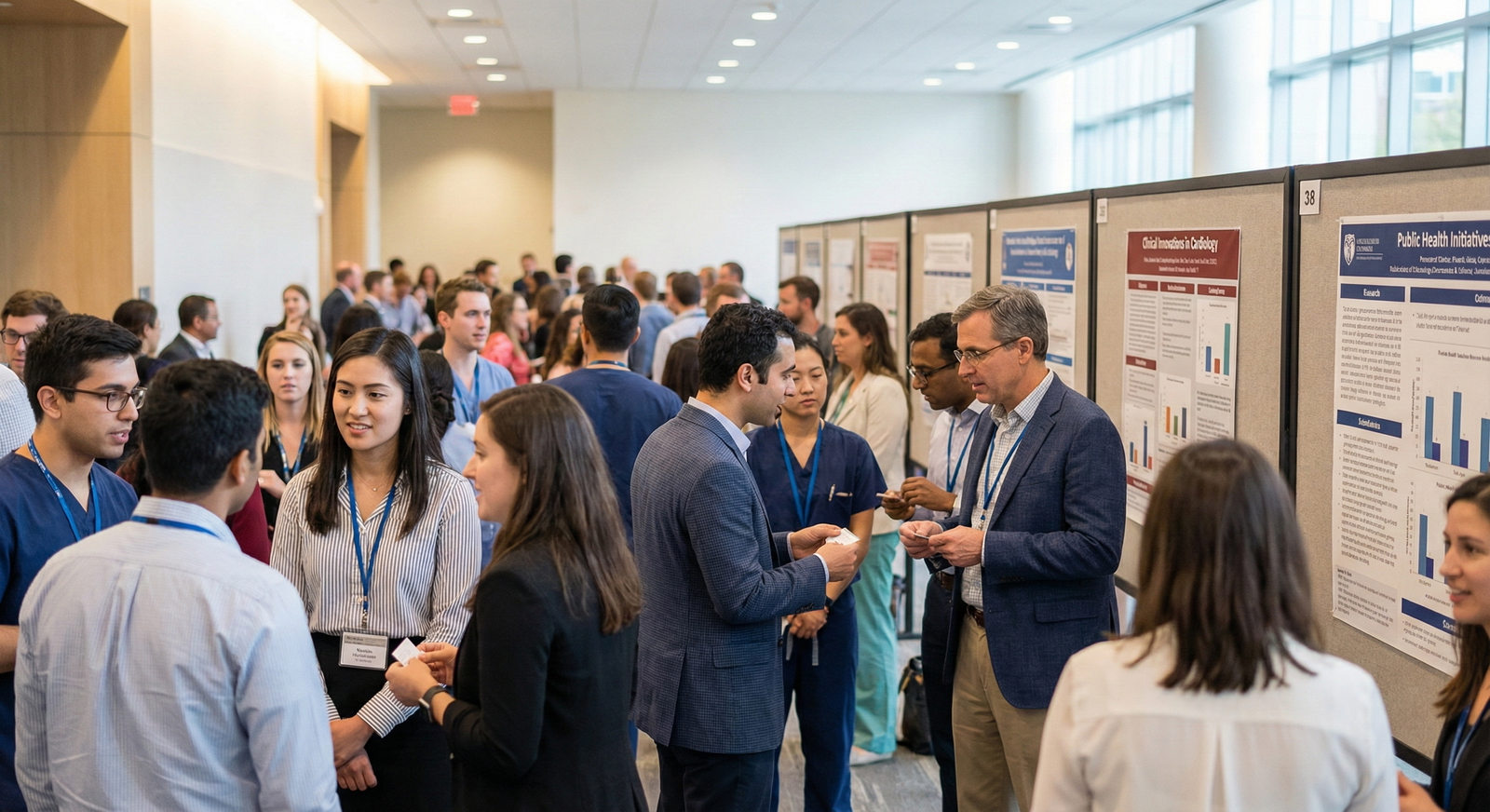
Be open to serendipity: talk with people sitting near you, at posters, in lines. A casual chat can lead to major opportunities.
After the Conference
- Email people within 48–72 hours:
- Thank them for their time or presentation
- Reference something specific from your discussion
- Follow up on any action items you discussed
Conference networking is only as valuable as your follow-up.
4. Digital and Social Platforms
Global health is inherently distributed; online networking is a norm, not an exception.
Email: Still the backbone of professional communication. Keep messages concise, specific, and respectful of time.
LinkedIn:
- Build a clear profile with a global health–oriented headline
- Connect with speakers after conferences
- Follow institutions and NGOs you care about
X (Twitter) and similar platforms:
- Follow global health leaders, journals, and organizations
- Participate in hashtags like #GlobalHealth, #MedTwitter, #GlobalSurgery, etc.
- Share reflections from talks or articles (respect confidentiality and policy)
Global health communities:
- Professional societies’ trainee groups
- Listservs and Slack/Discord communities for global health trainees
- Implementation or specialty-specific groups (e.g., global EM, global pediatrics)
Aim to be a respectful, consistent contributor, not just a passive observer.
5. Field Sites and International Rotations
When you’re on a rotation abroad or at a partner site:
- See every day as a networking opportunity—but not in a transactional way.
- Show up prepared, humble, and eager to learn how things work locally.
- Build relationships with:
- Local staff physicians and trainees
- Nurses, community health workers, administrators
- Research coordinators and NGO staff
These are the people who know what the real needs are—and who may later vouch for you when projects or roles arise.
How to Network Ethically in Global Health
Global health has a complex history. Ethical networking is essential to avoid repeating harmful patterns.
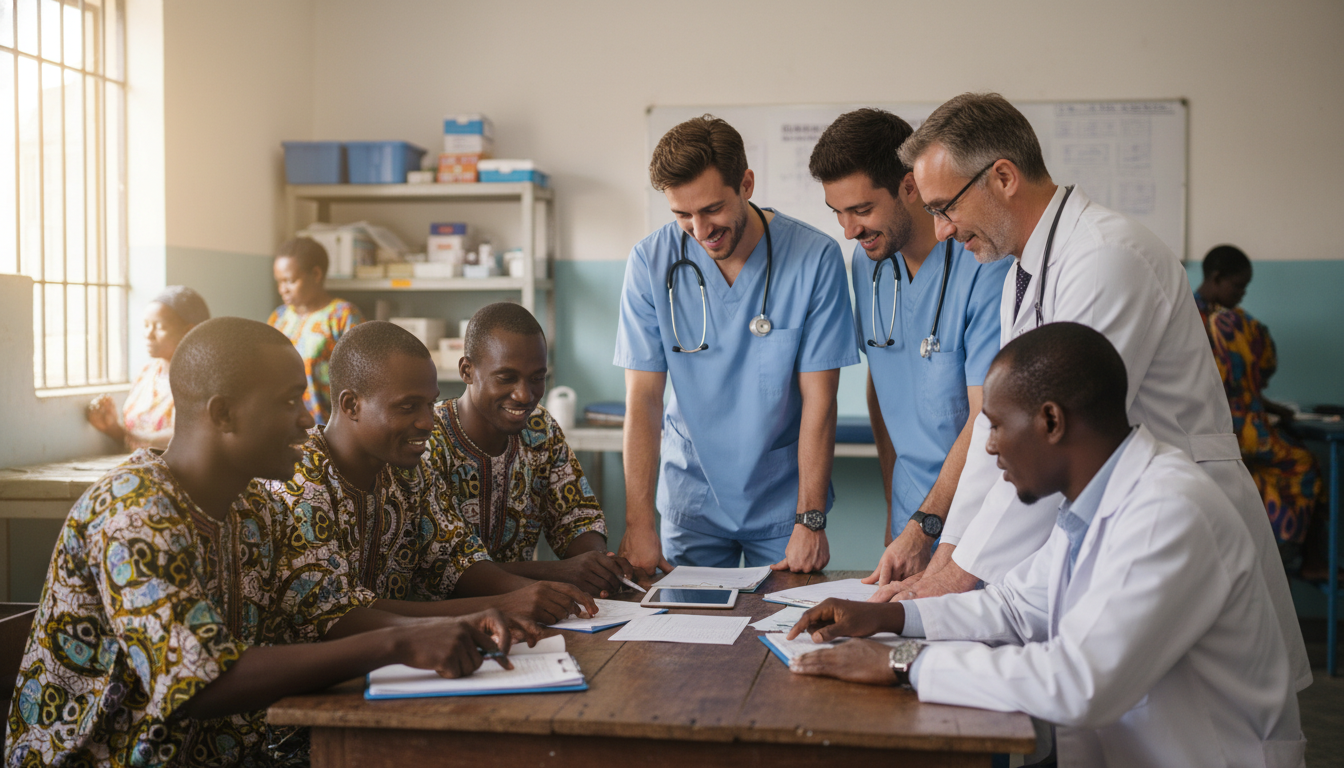
Center Reciprocity, Not Extraction
Unethical networking is extractive: “What can I get from this person or site?” Ethical global health networking asks:
- “What skills or perspective can I offer that could be helpful?”
- “How can this relationship be mutually beneficial over time?”
Practical ways to contribute:
- Offer to help with data collection or manuscript preparation (and follow through reliably).
- Share educational resources or create teaching sessions requested by local partners.
- Advocate for acknowledging and compensating local collaborators fairly in grants and publications.
Respect Power Dynamics
As a resident or trainee, you may feel you have little power—but relative to many local partners, especially in low-resource settings, you carry:
- Passport privilege
- Institutional affiliation
- Access to funding channels
When networking in international medicine:
- Avoid assuming you know what’s best for a setting you just arrived in.
- Ask: “What are your priorities and challenges? How might someone at my stage be genuinely helpful?”
- Give proper credit to local colleagues in presentations, abstracts, and manuscripts.
Practice Cultural Humility
Cultural humility is not a checkbox; it’s a stance:
- Learn basic local phrases and customs before arriving.
- Ask about context before judging practices (“Can you help me understand how this approach developed here?”).
- Recognize that your biomedical training is one framework among many; local knowledge is essential.
Networking that respects culture builds deep, lasting trust.
Safeguard Boundaries and Professionalism
Even when relationships feel informal:
- Maintain confidentiality and privacy.
- Avoid posting patient photos or sensitive site information on social media.
- Clarify expectations early for roles, authorship, and credit.
Ethical networking in medicine builds your reputation as someone safe and reliable to partner with.
Practical Strategies: Building and Sustaining a Strong Global Health Network
Once you’re clear on your interests and acting ethically, networking becomes a set of repeatable habits.
Use a Simple “Relationship Management” System
You’re going to meet many people; don’t leave it to memory. Use:
- A spreadsheet
- A notes app
- A CRM-style tool if you prefer
Track:
- Name, title, institution, contact info
- Where and when you met
- Their main interests and current projects
- What you discussed
- Possible ways to help them or collaborate
- When you last followed up
Review this every 1–2 months and intentionally reconnect with a few people.
Follow the 70/30 Rule: Give More Than You Ask
Healthy networking in medicine—and especially in global health—thrives when you:
- Share resources: an article relevant to their work, a new funding opportunity, a call for abstracts.
- Amplify others: Retweet or repost colleagues’ successes, especially those from underrepresented regions.
- Connect people: Introduce colleagues who might benefit from each other’s expertise.
If 70% of your interactions are about helping and 30% about requesting help, you’re likely building a robust, sustainable network.
Make the Most of Mentorship in Medicine
Mentorship medicine is the backbone of professional development. In global health, you often need:
- Content mentors: Experts in your clinical or research area
- Context mentors: People who understand a specific region or health system deeply
- Career mentors: Those who can help you navigate big-picture decisions
- Near-peer mentors: Senior residents, fellows, or early faculty who were recently in your shoes
How to maximize mentorship:
- Be specific when asking for guidance (“I’m choosing between two global health fellowships focused on implementation science in West Africa. Could we talk through the trade-offs?”).
- Prepare before meetings (CV, questions, recent updates).
- Act on advice when it makes sense and report back results.
Mentors are more likely to advocate for you (for opportunities, letters, positions) when they see you using their guidance thoughtfully.
Build Lateral and Cross-Disciplinary Networks
Many residents focus only upward (attendings, directors), but lateral and cross-disciplinary relationships are equally powerful.
- Peers in your cohort: Future collaborators and co-authors.
- Non-physician colleagues: Epidemiologists, public health workers, NGO staff, and data scientists play central roles in global health.
- Local trainees abroad: Residents and students at partner sites; they are the future leaders of their health systems.
Your long-term global health impact will often come from multi-year, peer-level collaborations that grow as all of you progress.
Navigating Challenges and Common Pitfalls
Networking in medicine for global health isn’t always straightforward. Anticipating challenges can help you respond constructively.
Limited Time and Burnout Risk
Residency is demanding. To make networking feasible:
- Integrate it into existing activities (e.g., talk to visiting speakers at noon conference).
- Set small goals:
- One new connection or follow-up email per week
- One conference or major workshop per year (virtual if needed)
- Protect boundaries: Don’t say yes to every request; choose those aligned with your long-term goals and capacity.
Imposter Syndrome
Feeling like you don’t “belong” in global health is incredibly common, especially early on.
- Remember that everyone started somewhere; people expect you to be a learner.
- Share your level of training honestly; don’t exaggerate.
- Focus on curiosity: ask good questions and be transparent about what you don’t yet know.
Many senior global health leaders are explicitly invested in supporting the next generation; don’t self-exclude.
Geographic and Financial Constraints
If travel is limited:
- Prioritize virtual conferences and webinar series; many offer trainee discounts or free registration.
- Seek institutional or society-based travel grants for key events.
- Leverage remote research or telehealth collaborations that don’t require long-term in-country presence.
Hybrid networking is here to stay; you can build a significant portion of your global health connections without constant travel.
Balancing Breadth and Depth
You don’t need hundreds of superficial contacts. Strive for a mix of:
- A core circle of 5–15 strong relationships (mentors, co-investigators, near peers)
- A broader outer circle of people you know and can occasionally reconnect with
Depth often matters more than sheer numbers, especially for long-term collaboration.
Frequently Asked Questions
1. How early in training should I start networking in global health?
You can start as early as medical school by attending talks, joining student global health groups, and seeking elective experiences. As a resident, it’s ideal to begin in PGY-1 or PGY-2, but it’s never too late. Focus first on your core clinical competence—strong clinical skills are a key asset in international medicine—and build networking habits alongside them.
2. What if my program doesn’t have a formal global health residency track?
You can still build a robust global health career. Look for:
- Individual faculty doing global work
- Electives in immigrant/refugee health
- Remote collaboration with global health centers at other institutions
- Online courses or certificates in global health
You can also consider applying to a global health residency track or fellowship later, using your self-directed experiences as evidence of commitment.
3. How do I approach someone senior in the field without feeling like I’m bothering them?
Keep your message:
- Short (a few paragraphs)
- Specific (mention what about their work resonates with you)
- Respectful of time (ask for 15–20 minutes, or to answer 2–3 questions by email)
Many global health leaders see mentorship as part of their role. If they’re too busy, they may redirect you to a colleague or trainee who can also be an excellent connection.
4. How do I avoid being perceived as a “parachute” global health trainee?
- Engage in longitudinal relationships rather than one-off trips.
- Prioritize projects that respond to locally defined needs.
- Work with established partnerships your institution already has.
- Ask what preparations you can do before arrival to be helpful, not burdensome.
- Maintain contact after your rotation ends, when appropriate—share results, manuscripts, and follow-through.
Networking in medicine for global health is neither a side activity nor a popularity contest; it is a deliberate, ethical, and sustained practice of building relationships that support better health outcomes across borders. By clarifying your goals, showing up consistently, investing in mentorship medicine, using conference networking wisely, and centering reciprocity with international partners, you can develop a network that not only advances your career but also strengthens the global health systems and communities you aim to serve.