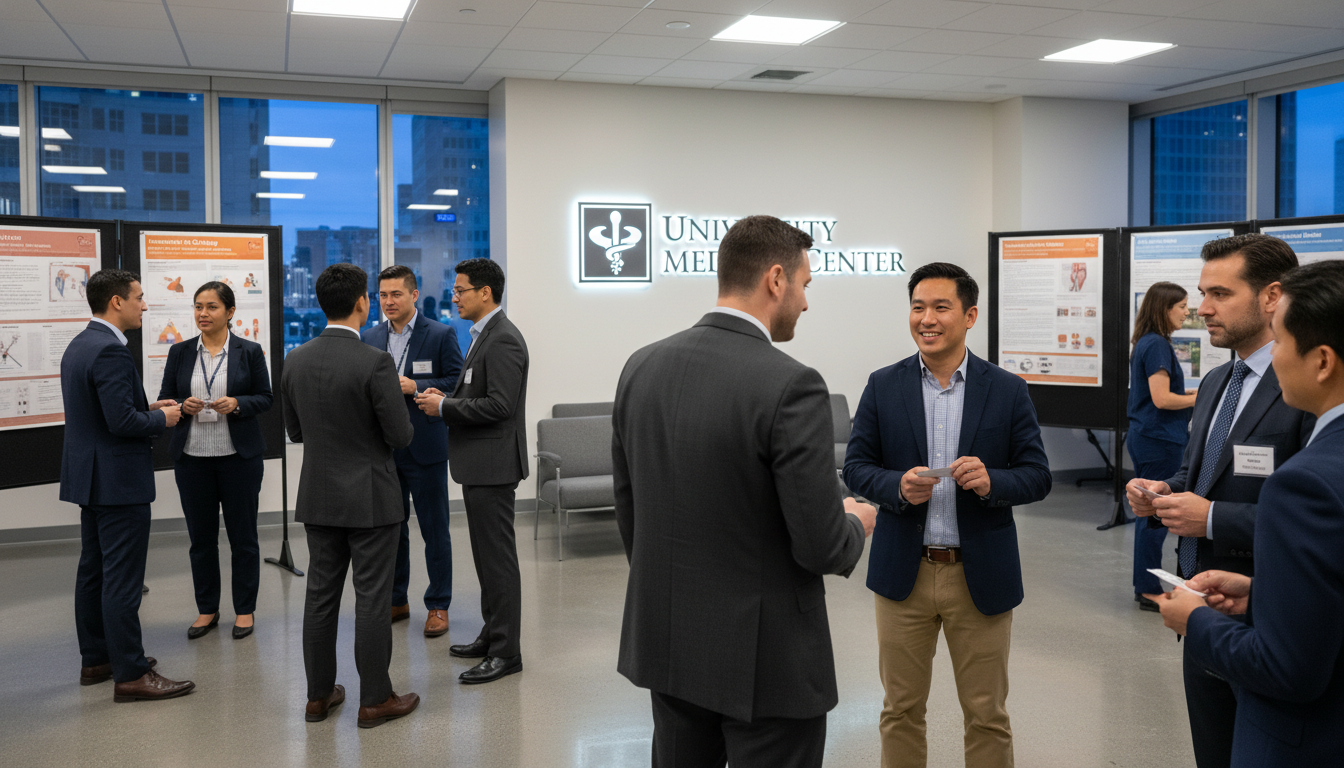
Networking in medicine isn’t a side quest—it’s part of the job. Your clinical skills earn you respect, but your relationships often determine which doors open, whose name gets remembered for key opportunities, and how quickly you grow into the physician you want to be.
This guide walks through what medical networking actually is (beyond awkward small talk), why it matters at every stage from MS3 to senior resident, and how to build authentic, sustainable relationships—with practical examples you can use today.
Understanding Networking in Medicine: What It Is (and Isn’t)
Medical networking is the intentional process of building professional relationships that help you:
- Learn from others’ experiences
- Access mentorship and sponsorship
- Discover research, leadership, or career opportunities
- Navigate training and career decisions more effectively
Networking is not:
- Collecting the most LinkedIn or Doximity connections
- Flattering people to “get ahead”
- Only for “extroverts” or born schmoozers
- Something you do only at big conferences once a year
Networking is:
- Being curious about people and their work
- Following up consistently and respectfully
- Offering value where you can (yes, even as a student or intern)
- Playing the long game—relationships built over years, not weeks
Think of networking in medicine as building a “professional safety net”: attendings, residents, fellows, administrators, and peers who know you, trust you, and are willing to help you navigate your path.
Why Networking Matters at Every Stage of Training
The importance of medical networking changes slightly as you move from medical school to residency and beyond, but it never goes away.
In Medical School
Networking can help you:
- Explore specialties and practice settings
- Find early mentorship in medicine (clinical, research, or career-focused)
- Secure research positions, sub-internships, and away rotations
- Obtain strong letters of recommendation from people who actually know you
Example:
A second-year medical student regularly attends their school’s surgery interest group events, asks thoughtful questions, and follows up with a vascular surgeon after a talk. Within a few months, that surgeon connects the student to a lab needing help with a retrospective outcomes project—leading to a poster and later a publication before residency applications.
As a Resident
During residency, medical networking becomes even more powerful:
- Identifying fellowship programs and “hidden” spots
- Connecting with program leadership, division chiefs, and potential collaborators
- Finding QI (quality improvement) and research projects tailored to your career goals
- Getting early career advice on community vs academic practice, job search strategies, and work–life integration
Example:
A PGY-2 in internal medicine meets a visiting cardiologist speaker during a noon conference. After a brief conversation and follow-up email, the resident is invited to co-author a review article and eventually secures an away rotation at that institution’s cardiology program—later matching there for fellowship.
As Faculty or Attending
Networking never stops at graduation:
- Building referral networks that benefit your patients
- Finding collaborators for multi-center trials or educational initiatives
- Securing speaking invitations, committee roles, or leadership positions
- Staying visible in your field as guidelines and practice patterns evolve
Medical networking is part of building a sustainable and meaningful career, not just checking boxes for your CV.
Foundations of Effective Medical Networking
Before jumping into conference networking or reaching out on LinkedIn, build a strong foundation so your efforts feel authentic, not forced.
1. Clarify Your Goals
You don’t need a 10-year plan, but you should know what you’re aiming for right now.
Ask yourself:
- What am I trying to learn or achieve this year?
- Which specialties, subspecialties, or career paths am I curious about?
- Do I need clinical mentors, research mentors, or both?
- Am I seeking letters, projects, role models, or long-term sponsors?
Your networking strategy should reflect one or two primary goals, such as:
- Explore pediatric subspecialties
- Identify research mentors in health disparities
- Build relationships at a specific target residency or fellowship program
- Learn about academic career paths in hospital medicine
Your clarity helps other people help you.
2. Prepare a Brief Personal Introduction
You don’t need a pitch, but you do need a clear, concise way to introduce yourself.
Include:
- Who you are (training level, institution)
- What you’re interested in (clinical/research/education focus)
- A sentence on what you’re working on or hoping to explore
Example (MS3):
“I’m Sarah, a third-year medical student at UCLA, currently leaning toward internal medicine. I’m especially interested in cardiology and health equity and I’m hoping to get more involved in outcomes research in those areas.”
Example (PGY-1):
“I’m Ahmed, an intern in emergency medicine at Emory. I’m passionate about prehospital care and systems-based improvements in ED flow, and I’m trying to learn more about implementation science.”
Practice saying this naturally so it doesn’t sound rehearsed.
3. Adopt a “Giver” Mindset
Even as a student or junior resident, you can add value:
- Offer to help with data collection, IRB submissions, or literature reviews
- Share relevant articles or guidelines you come across
- Connect peers with similar interests
- Volunteer for roles in student interest groups or house staff councils
Being generous with your time and attention (within reason) builds reputation and trust—key parts of mentorship medicine and long-term professional relationships.

How to Network Strategically in Everyday Clinical Life
Many people think networking in medicine only happens at big national meetings. In reality, some of your most valuable connections are formed where you already are: wards, clinics, and conferences at your own institution.
On the Wards and in Clinic
Your daily clinical work is your most important “business card.”
Practical strategies:
- Show up prepared and engaged. People are more likely to invest in you if they see you care about patient care and learning.
- Ask thoughtful questions. Instead of “What specialty should I choose?” ask, “What do you enjoy most and least about your field?” or “How did you decide between fellowship and general practice?”
- Ask for brief follow-ups. After rounds, say, “I’ve really appreciated working with you this week and I’m interested in your specialty—would it be okay if I emailed you about setting up a 15-minute meeting to ask about your career path?”
- Follow through reliably. If you volunteer to look something up or send an article, do it promptly.
Attending physicians remember reliable, engaged trainees—and those impressions often translate into strong support later.
Using Institutional Events
Most medical schools and residency programs offer:
- Departmental grand rounds
- Noon conferences or morbidity & mortality (M&M) sessions
- Specialty interest group talks
- Research days or poster sessions
Use these as structured networking spaces:
- Sit toward the front, away from your usual friend group.
- After a talk, approach the speaker with a specific comment or question (e.g., “I appreciated your point about X—how did your team handle Y?”).
- Introduce yourself using your brief introduction.
- If the interaction feels positive, ask: “Would it be alright if I email you to learn more about your work or about getting involved in projects in this area?”
Building Peer Networks
Your peers—classmates, co-residents, colleagues from other institutions—are a critical part of medical networking:
- Future collaborators on multi-center trials or quality improvement initiatives
- Sources of insider knowledge about programs, rotations, and fellowships
- Emotional and professional support through challenging stages
Don’t overlook:
- Group chats and email lists for interest groups
- Slack/Discord channels for specific specialties
- Resident wellness or advocacy committees
Peers often become the people who recommend you for opportunities before you even hear about them.
Conference Networking: Turning Events into Opportunities
Conference networking is where many people feel most awkward, but it’s also where you can accelerate your professional growth quickly—if you approach it intentionally.
Before the Conference
Clarify your objectives. Examples:
- Meet at least three faculty members in pulmonary/critical care.
- Learn about careers in academic pediatrics.
- Explore potential fellowship programs.
Review the program in advance.
- Highlight sessions and speakers aligned with your interests.
- Note institutional affiliations of people you want to meet.
Reach out before you arrive.
- Email 2–3 people you’d like to meet:
- Brief introduction
- Why you’re interested in their work
- Ask if they’d have 10–15 minutes for coffee or to chat after their session
Example email:
Subject: Brief meeting at [Conference Name]?
Dear Dr. Patel,
My name is Daniel Lee, and I’m a PGY-2 in internal medicine at [Institution]. I’ve been following your work on heart failure readmissions and implementation science, and it overlaps closely with a QI project I’m involved in at my program.
I’ll be attending [Conference Name] next month and saw that you’re presenting on Friday afternoon. If you have 10–15 minutes at any point during the meeting, I’d be grateful for the chance to briefly introduce myself and ask a few questions about your career path and current projects.
Thank you for considering this, and regardless, I’m looking forward to your session.
Sincerely,
Daniel Lee, MD
PGY-2, Internal Medicine, [Institution]- Email 2–3 people you’d like to meet:
During the Conference
Effective conference networking is about intentional, low-pressure interactions.
In Sessions and Posters
- Arrive a few minutes early and introduce yourself to people sitting near you.
- After a talk, approach the speaker with:
- A specific comment or question
- Your brief introduction
- A request to follow up by email if appropriate
For poster sessions:
- Focus on areas aligned with your interests.
- When you see a poster relevant to your goals:
- Ask the presenter, “How did you get involved in this project?”
- If you’re interested in similar work, say so explicitly: “I’d love to be involved in research like this—does your group collaborate with residents/students from other institutions?”
Social Events and Receptions
These may feel intimidating, but they’re prime networking in medicine environments:
- Stand near high-traffic areas (food tables, entrances).
- Join small groups of 2–3 people who look open to conversation.
- Use simple openers:
- “What brought you to this conference?”
- “What did you think of the session on X?”
- “Which institution are you with?”
Aim for quality over quantity: 3–5 meaningful conversations per event beats 20 shallow introductions.
After the Conference: Follow-Up That Actually Works
Conference networking only matters if you follow up.
Within 3–5 days:
Send personalized emails:
- Mention something specific from your conversation.
- Express appreciation for their time or insights.
- If appropriate, propose a next step (e.g., brief Zoom, sending your CV, asking about project opportunities).
Connect on professional platforms:
- LinkedIn, Doximity, or relevant specialty societies’ networking tools.
- Add a short note reminding them where you met.
Track your contacts:
- Simple spreadsheet or note: Name, role, institution, where you met, topics discussed, next steps.
- This transforms scattered encounters into an organized professional network.

Mentorship in Medicine: Finding, Building, and Maintaining Relationships
Mentorship is where medical networking becomes deeply personal and powerful.
Types of Mentors You Need
Clinical mentors
- Help you grow as a clinician in a specific field
- Give feedback on your patient care, decision-making, and bedside manner
Career mentors
- Advise on specialty choice, fellowship, job search, and long-term planning
- Offer perspective on academic vs private practice, research vs clinical focus
Research mentors
- Guide you through project design, data analysis, writing, and publication
- Introduce you to collaborative networks in your niche
Near-peer mentors (senior residents, fellows, recent grads)
- Provide practical, “this is what it’s really like” advice
- Often more available and approachable
Strong mentorship in medicine often involves more than one person; build a small “personal board of directors” rather than seeking a single perfect mentor.
How to Approach Potential Mentors
- Start with someone who already knows your work (an attending from a rotation, a research supervisor, a chief resident).
- Request a short meeting (15–20 minutes), ideally with:
- A clear purpose (“to ask for your advice on exploring cardiology as a career”)
- One or two specific questions prepared
During the meeting:
- Be concise about your background and goals.
- Ask about their path and what they learned along the way.
- If the fit feels right, you might say:
- “I’ve really appreciated your insights today. Would you be open to my checking in periodically as I make decisions about [field/fellowship/research]?”
Mentorship relationships often start informally and deepen over time as you show reliability and engagement.
Being a Good Mentee
You strengthen your network by being someone mentors want to invest in:
- Be prepared. Don’t show up asking questions you could have Googled.
- Follow through. If they suggest reading something or contacting someone, do it and circle back.
- Respect their time. Arrive on time, keep meetings focused, send a brief thank-you afterward.
- Share progress. Mentors like to know when their advice leads to good outcomes—email them when you match, publish, or get a leadership role.
Your reputation as a proactive, thoughtful mentee spreads—often leading to new connections you didn’t even have to seek out yourself.
Digital Tools and Online Networking in Medicine
Networking in medicine increasingly happens online, and when used thoughtfully, digital platforms can extend your reach far beyond your home institution.
Professional Platforms
LinkedIn
- Build a concise, professional profile (photo, headline, summary).
- Highlight clinical interests, research projects, and leadership roles.
- Follow institutions, journals, and leaders in your field.
- Engage by commenting on posts or sharing brief reflections (respecting patient privacy and professionalism).
Doximity / Specialty-Specific Networks
- Useful for physicians, residents, and often for exploring training programs and alumni pathways.
- Some specialties have formal online communities (e.g., Slack groups, member forums through societies).
Email and Institutional Directories
- Still the backbone of professional communication.
- Well-crafted cold emails can open surprising doors—especially if you reference a shared connection, paper, or interest area.
Social Media (Used Carefully)
Platforms like X (Twitter), Instagram, or specialty-specific Facebook groups can be powerful for:
- Following researchers, thought leaders, and residency/fellowship programs
- Learning about new articles, guidelines, and initiatives
- Participating in journal clubs or case discussions
However:
- Never share patient-identifying information (even de-identified cases can be risky).
- Avoid posting in anger or during high emotion.
- Assume attendings, program directors, and employers may see anything you post.
Use social media as an extension—not a replacement—of your professional identity.
Overcoming Common Networking Barriers
Many trainees feel hesitant about networking in medicine for understandable reasons. These concerns are real but manageable.
“I’m Introverted / I Hate Small Talk”
Networking doesn’t require you to be the loudest person in the room.
Try:
- One-on-one conversations instead of large receptions
- Structured settings (poster sessions, mentoring programs) where roles are clear
- Prepared questions so you’re not improvising everything
Focus on curiosity rather than “performance.” Your goal is to understand the other person’s work and path, not impress them with yours.
“I Don’t Want to Seem Opportunistic”
You can pursue opportunities ethically:
- Be transparent: “I’m very interested in [field] and hoping to learn more and get involved in relevant work.”
- Offer value: “I’d be happy to help with data collection or chart review, even on a small scale, to get experience with your group’s work.”
- Show genuine interest in the person, not just what they can give you.
Healthy medical networking is mutually beneficial; most mentors also gain satisfaction, collaborators, and recognition from investing in trainees.
“I Don’t Have Time”
You don’t need hours each week:
- 1–2 events per month (conference, grand rounds, interest group meetings)
- 20–30 minutes weekly for follow-ups, emails, and maintaining connections
- Periodic check-ins with key mentors (every 3–6 months)
Think of it as part of your education, not extra-curricular.
Putting It All Together: A Simple Networking Plan
Here’s a practical, low-friction plan you can start this month, regardless of your training level:
Weekly (15–30 minutes):
Send 1 email to:
- Thank someone who taught you
- Follow up with a contact
- Request a brief meeting with a potential mentor
Update a simple networking log:
- New people met
- Key takeaways
- Any promised follow-ups
Monthly:
- Attend 1 departmental or institutional event outside your usual schedule.
- Introduce yourself to at least 2 new people in your field of interest.
Every 3–6 Months:
- Check in with primary mentors:
- Share an update (projects, rotations, decisions).
- Ask 1–2 focused questions.
- Thank them specifically for past guidance.
Annually:
- If possible, attend at least one regional or national conference in your field.
- Prioritize conference networking: set clear goals, meet targeted people, and follow up methodically.
Over a few years, this consistent, low-intensity approach compounds—building a robust, supportive network that shapes your training, career opportunities, and day-to-day satisfaction in medicine.
FAQ: Networking in Medicine
1. How early should I start networking in medical school?
Start as early as MS1, but keep it low pressure. Attend interest group events, say hello to speakers, and ask simple questions about their career paths. You don’t need a fixed specialty choice to begin; curiosity and reliability are enough. By clinical years, having a few established contacts makes it much easier to find mentors, projects, and letters.
2. How do I ask for a letter of recommendation from someone I’ve networked with?
Ask only if they know your work well enough to write a strong letter. Phrase it as:
“Would you feel comfortable writing a strong letter of recommendation in support of my application to [residency/fellowship/program]?”
Provide:
- Your CV and personal statement
- A brief summary of your work with them
- Specific points they might highlight (e.g., project contributions, clinical strengths)
Give them 4–6 weeks whenever possible.
3. What’s the difference between a mentor and a sponsor in medicine?
- Mentor: Guides, advises, and teaches you.
- Sponsor: Uses their influence to advocate for you—recommending you for positions, speaking roles, or committees.
Sponsors are often senior figures who have seen your work over time and trust you. Strong mentorship relationships sometimes evolve into sponsorship as your mentors begin to put your name forward for opportunities.
4. How can international medical graduates (IMGs) network effectively in the US system?
For IMGs, medical networking is especially critical:
- Attend US-based conferences (even virtually) in your target specialty.
- Engage with residency program events, open houses, and webinars.
- Reach out to alumni from your school who matched into your field.
- When on observerships or electives, treat every day like a prolonged interview—show up prepared, interested, and professional.
Focus on building long-term relationships rather than one-time interactions; these are more likely to translate into robust letters and advocacy during selection processes.
Networking in medicine is not about being the most charismatic person in the room; it’s about showing up consistently as a curious, reliable, and generous colleague. If you approach it as part of being a good physician—learning from others, supporting peers, and building systems of trust—you’ll find that your network grows naturally alongside your skills and experience.