Understanding the Power of Networking in Cardiothoracic Surgery as an IMG
For an international medical graduate (IMG), cardiothoracic surgery is one of the most competitive and network-driven specialties in medicine. Excellent scores, strong letters, and research are necessary—but often not sufficient. What frequently differentiates successful applicants is deliberate, strategic networking.
In cardiothoracic surgery, decisions about interviews, rotations, fellowships, and jobs frequently rely on trusted recommendations, informal conversations, and perceptions of “fit” within a program’s culture. This IMG residency guide focuses on how you, as an international medical graduate, can build those relationships authentically and effectively.
In this article, you’ll learn:
- How networking actually works in heart surgery training and why it matters even more for IMGs
- Concrete strategies for building a network from outside the U.S. (or new to it)
- How to use conferences, email, social media, and mentorship medicine to advance your goals
- How to avoid common networking mistakes that can quietly hurt your chances
Throughout, examples will be tailored for cardiothoracic surgery residency and early-career heart surgery training.
1. Why Networking Matters Even More for IMGs in Cardiothoracic Surgery
1.1. The invisible curriculum of cardiothoracic surgery
Cardiothoracic surgery is a small, highly interconnected world. Most faculty know each other from:
- Training together at major centers
- Collaborative multicenter trials
- Specialty societies and subcommittees
- Conference networking and recurring annual meetings
This creates an “invisible curriculum”: information, opportunities, and informal evaluations that are shared through conversations and trusted relationships, not just formal applications.
Examples:
- A program director calls a colleague: “You worked with Dr. X in the lab—what do you really think of them as a potential resident?”
- A faculty member hears: “We have an unexpected research opening—know any strong IMG candidates?”
- A chief resident says at a meeting: “We had an excellent sub-intern from abroad last month; they’d be a great fit here.”
If nobody in that room knows your name, you are at an immediate disadvantage, no matter how strong your paper application.
1.2. Unique challenges for IMGs
As an IMG, you often start with additional barriers:
- Limited or no home institution in the U.S. for cardiothoracic surgery
- Fewer natural opportunities to meet North American or UK faculty in person
- Visa concerns that make programs hesitant unless strongly reassured
- Less familiarity with unwritten rules of residency culture, communication styles, and expectations
Networking helps you:
- Make yourself visible to decision-makers
- Obtain context-rich letters from U.S.-based surgeons or researchers
- Demonstrate professionalism, communication skills, and cultural fit—beyond exam scores
- Gain insider knowledge about which programs truly consider IMGs
In a field as small and reputation-driven as cardiothoracic surgery, intentional networking is not optional; it is a core strategy for survival and success.
2. Laying the Foundation: Professional Identity and Strategic Planning
Before you start emailing surgeons or attending conferences, invest time in your professional foundation. Networking is far more effective when people can quickly see who you are, what you’ve done, and where you are going.
2.1. Clarify your narrative as an IMG in cardiothoracic surgery
Your “story” should answer three questions clearly:
Why cardiothoracic surgery?
- A specific patient encounter? A long-standing interest in physiology? Exposure to complex heart surgery?
- Focus this on authentic, repeated experiences, not a single dramatic event.
Why in this system (e.g., U.S., UK, Canada)?
- Access to certain technologies, research infrastructure, complex case-mix, or training models.
- Demonstrate that you’ve studied what makes that system different.
How have you already demonstrated commitment?
- Electives in cardiothoracic surgery
- Research projects, audits, or quality-improvement in cardiac or thoracic surgery
- Case reports in heart or lung surgery
- Membership in relevant societies
A concise, consistent narrative helps faculty remember you and confidently recommend you.
2.2. Build a polished professional footprint
Before you network widely, ensure your professional materials are polished and aligned:
CV (U.S.-style or region-appropriate)
- Emphasize cardiothoracic-related experiences: rotations, case logs, conferences, presentations, research.
- Include visa status or eligibility if relevant and stable.
Professional headshot
- Simple, neutral background, professional attire, good lighting.
Email address & signature
- Professional email (e.g., firstname.lastname@).
- Signature including: name, degree, expected graduation, institution, contact, LinkedIn, research profile if any.
Online presence
- LinkedIn updated with a focused summary: “IMG aspiring cardiothoracic surgeon with interests in [specific areas].”
- Consider a simple, professional webpage (Google Scholar, ResearchGate, or a personal site) summarizing your work.
When you later meet someone at a conference or they look you up after an email, your materials should reinforce the impression you want to make.

3. Core Networking Channels for IMGs in Cardiothoracic Surgery
3.1. Clinical rotations and observerships: your most powerful platform
For an IMG, hands-on exposure (where allowed) or even observerships are often the most potent networking opportunities in heart surgery training.
3.1.1. Maximizing an observership or rotation
Whether you’re a visiting student, observer, or research fellow:
Show up early, leave late
- Be present in the OR, ICU, and clinic as much as you are permitted.
- Offer to help with presentations, literature reviews, or data collection.
Demonstrate reliability and humility
- Take small tasks seriously (collecting data, organizing presentations).
- Accept feedback without defensiveness; ask how you can improve.
Ask targeted questions
- Instead of “What should I do to match?”, ask:
- “From your experience, what makes a cardiothoracic applicant stand out?”
- “How do you recommend I prioritize research vs. clinical observerships as an IMG?”
- Instead of “What should I do to match?”, ask:
Signal your interest in letters and future opportunities
- After a few weeks of consistent performance, you can say:
“I’m planning to apply for cardiothoracic surgery in [year]. If, by the end of my time here, you feel you can evaluate me fairly, I would be honored to request a letter of recommendation.”
- After a few weeks of consistent performance, you can say:
Faculty appreciate clear, respectful communication of your goals.
3.1.2. Staying connected after your rotation
Your networking should not end when you leave:
- Send a thank-you email summarizing what you learned and your future plans.
- Every 3–6 months, send brief updates:
- New publication or poster
- Step exam score
- Upcoming conference where you might meet again
You are building a long-term relationship, not a one-time favor.
3.2. Research as a networking engine, not just a CV line
In cardiothoracic surgery, research is both an academic requirement and a major networking engine.
3.2.1. Finding research opportunities as an IMG
Practical strategies:
Cold emails to faculty
- Target academic centers with known cardiothoracic programs.
- Look for faculty with recent publications actively recruiting collaborators or trainees.
- Craft personalized emails (avoid templates). Mention specific papers and explain how your skills align.
Leverage your own institution’s connections
- Ask your local cardiac surgeons if they collaborate with international colleagues.
- Even a single shared project with a U.S.-based PI can open doors.
Structured research fellowships
- Many major centers have 1–2 year research positions in cardiac surgery or related fields.
- Though competitive, they are one of the most powerful bridges for an IMG.
3.2.2. How research builds your network
Well-executed research can give you:
- Regular contact with faculty (weekly meetings, manuscript discussions)
- Opportunities to present at conferences and meet their colleagues
- Stronger, more specific letters:
“I worked with Dr. X for 18 months; they led a multicenter analysis, drafted manuscripts, and presented at STS.”
Your aim is not just “a publication” but a cluster of people who know you, can discuss your work, and trust your professionalism.
3.3. Conference networking: turning meetings into opportunities
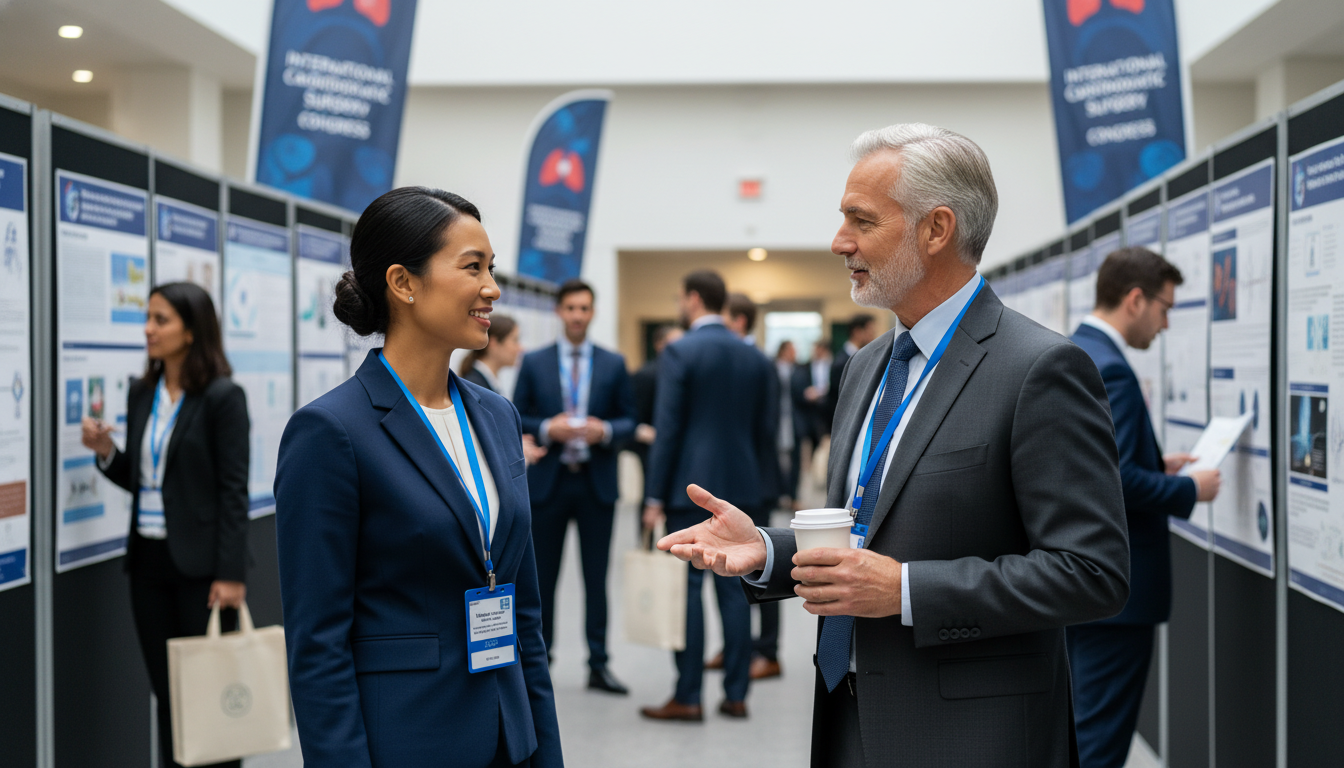
Conferences are concentrated networking environments—especially in such a niche field as cardiothoracic surgery. Strategic conference networking is critical for any IMG residency guide focused on this specialty.
Key conferences include (examples; always check current options and IMG accessibility):
- The Society of Thoracic Surgeons (STS) Annual Meeting
- American Association for Thoracic Surgery (AATS) Annual Meeting
- European Association for Cardio-Thoracic Surgery (EACTS)
- Regional thoracic surgery societies (e.g., Western Thoracic Surgical Association)
- State or local cardiothoracic or surgical society meetings
3.3.1. Preparing before the conference
To maximize conference networking:
Study the program
- Highlight sessions and speakers in your research or clinical areas of interest.
- Identify program directors, fellowship directors, and prolific researchers.
Reach out beforehand
- Email key people:
“I’ll be attending STS this year and have been following your work on [topic]. Would you have 10–15 minutes for a brief conversation about research pathways for IMGs in cardiothoracic surgery?”
- Email key people:
Prepare your “micro-introduction” (20–30 seconds):
- Name, current position (IMG from [country]), current or planned training, main interests in cardiothoracic, key project or goal.
3.3.2. Effective behaviors during the conference
- Attend early-morning or evening networking events, trainee sessions, and interest groups.
- Ask concise questions in Q&A that show you did your homework.
- After speaking with someone:
- Ask if you could connect on LinkedIn or obtain their email.
- Take brief notes in your phone: name, affiliation, summary of conversation.
3.3.3. Following up after the conference
Within 3–7 days, send a tailored follow-up:
Subject: Great to meet you at STS – IMG interested in mitral valve repair
Dear Dr. [Name],
It was a pleasure meeting you at the trainee luncheon at STS and briefly discussing your work on minimally invasive mitral surgery. I particularly appreciated your comment about the importance of longitudinal outcomes research.
As an IMG currently [state your stage] with an interest in [specific focus], I would be very grateful for any advice on how to build a research portfolio that prepares me for future cardiothoracic training opportunities. If appropriate, I would also be happy to assist with ongoing projects remotely.
Thank you again for your time and guidance.
Sincerely,
[Name, credentials, contact]
Many people you meet at conferences expect this type of professional follow-up.
4. Mentorship in Medicine: Building a Supportive Network Around You
4.1. Understanding types of mentors and sponsors
When exploring mentorship medicine, distinguish between:
Mentors – Provide guidance, advice, and feedback over time.
- Career mentors (big-picture trajectory)
- Research mentors (projects, publications)
- Skills mentors (surgical technique, OR behavior)
Sponsors – Use their influence to actively promote you.
- Recommend you for positions, interviews, committees, or speaking roles.
Near-peer mentors – Residents and fellows 1–5 years ahead of you.
- Highly valuable because they remember the path and common pitfalls.
As an IMG, you ideally want a small team of mentors and at least one sponsor in the system you are targeting.
4.2. How to find mentors as an IMG
Practical approaches:
Ask faculty you’ve worked with directly:
“Would you be comfortable if I reached out occasionally for advice on my career path in cardiothoracic surgery?”
Identify IMG role models in cardiothoracic surgery:
- Use program websites, LinkedIn, and publications to find faculty or residents who trained outside the country.
- Many are especially sympathetic to IMGs and understand your challenges.
Use formal mentorship programs:
- Many societies (STS, AATS, EACTS) have trainee or international mentorship initiatives.
- Apply and be proactive in maintaining contact once matched.
4.3. Being a good mentee
To sustain these relationships:
Respect their time
- Come with specific questions and a short agenda.
- Don’t email weekly unless invited to.
Act on advice and report back
- If they recommend a conference or research project, follow through or explain constraints.
- Send updates: “I applied to the research position you suggested and was accepted.”
Offer value where you can
- Help with literature reviews, data entry, or presentations.
- Share insights about healthcare in your home country if relevant to global surgery or outcomes.
Mentoring relationships often evolve; a research mentor may become a sponsor, and a near-peer may eventually become a colleague who collaborates on multi-institutional heart surgery training projects with you.
5. Digital Networking: Email, Social Media, and Online Communities
5.1. Email etiquette that builds, not burns, bridges
Email is still the backbone of professional communication. Poor emails are a common silent barrier for IMGs—even highly qualified ones.
Key principles:
Short subject lines that clarify your intent:
- “IMG interested in cardiothoracic research opportunities”
- “Follow-up from STS trainee session – [Your Name]”
Keep the body structured and concise:
- 1–2 lines: who you are and your context.
- 1–2 lines: why you are reaching out to this person.
- 1–3 lines: specific request (advice, brief meeting, possible research involvement).
- Closing with gratitude.
Avoid mass emails, generic messages, and heavy attachments without warning. Consider attaching your CV only when you have a reasonable basis to think the recipient might want it, or mention: “I would be happy to send my CV if helpful.”
5.2. Using social media and online platforms strategically
Platforms like Twitter/X, LinkedIn, and sometimes Instagram are increasingly important in academic medicine and medical networking.
For cardiothoracic surgery:
Follow key societies and journals
- STS, AATS, EACTS, major journals.
- Engage with conference hashtags to join discussions.
Follow surgeons and programs
- Many faculty post about publications, surgical tips (within privacy limits), and positions.
- Thoughtful comments or questions can start a digital relationship.
Show your professional interests
- Occasionally share:
- Articles you read and learned from
- Your conference posters
- Milestones (accepted abstract, manuscript, exam)
- Maintain a professional, respectful tone at all times.
- Occasionally share:
Social media should supplement, not replace, traditional networking. It is particularly useful for staying visible and learning about opportunities you would otherwise miss.
5.3. Online communities and educational events
Look for:
- Webinars by cardiothoracic societies geared toward residents, fellows, or IMGs
- Virtual journal clubs or case discussions
- Online bootcamps in surgery or heart-lung transplantation where you can interact with faculty
When you attend a virtual session, you can:
- Ask a short, wise question (typed or spoken).
- Introduce yourself in the chat if appropriate.
- Follow up via email afterward to express appreciation and introduce yourself more fully.
6. Strategic Mindset, Common Pitfalls, and Long-Term Planning
6.1. Networking as relationship building, not transactional hunting
A frequent misstep in medical networking is treating every interaction as a direct request for a position or letter. This can feel uncomfortable and insincere to faculty.
Adopt a long-term mindset:
- Focus on learning, contributing, and building trust.
- Recognize that many interactions may not lead to immediate outcomes, but they build your reputation.
- Be open to indirect paths: research positions, preliminary surgery spots, or general surgery followed by cardiothoracic fellowship.
6.2. Common mistakes for IMGs in cardiothoracic networking
Avoid these pitfalls:
Overemphasizing scores and underemphasizing relationships
- Scores matter, but in cardiothoracic surgery, reputation and trust carry huge weight.
Mass, generic emails
- They are often ignored and can damage your name within a department.
Unrealistic expectations or entitlement
- Assuming one conversation guarantees a letter or spot.
- Instead, think: “How can I show consistent value over time?”
Neglecting cultural context
- Hierarchies, communication styles, and expectations differ across countries.
- Observe how residents and faculty interact and adapt appropriately.
Silence after help is given
- Failing to update someone who wrote a letter or recommended you can appear ungrateful.
- Always loop them in on major outcomes (match results, fellowship acceptance).
6.3. Building a multi-year plan
Networking impact grows over time. Consider a 3–5 year plan if you are still early:
Year 1–2 (pre-application):
- Strengthen language and communication skills.
- Engage in at least one significant cardiac/thoracic research project.
- Attend at least one major or regional cardiothoracic conference (virtual if necessary).
- Cultivate 1–2 mentors and 2–4 near-peer contacts.
Year 2–3 (application preparation):
- Secure observerships, electives, or research fellowships at institutions with active heart surgery training.
- Aim for conference presentations and at least one publication.
- Ensure 2–3 strong letters from surgeons who know you well.
Year 3–5 (if pursuing alternate pathways):
- If direct integrated cardiothoracic residency is not feasible, consider:
- General surgery residency with a strong CT exposure.
- Research-intensive positions that strengthen your candidacy.
- Maintain your network; some paths to cardiothoracic surgery are longer but still achievable.
Every step is easier when you are not starting from zero in terms of people who know and support you.
Frequently Asked Questions (FAQ)
1. As an IMG, do I need a mentor who is specifically a cardiothoracic surgeon?
It is highly beneficial but not absolutely required at the very beginning. Early on, any mentor who understands the residency landscape in your target system (e.g., U.S. surgery, UK training) can help you plan exams, timelines, and broad strategy. However, as you get closer to applying for cardiothoracic surgery residency or fellowship, having at least one cardiothoracic mentor or sponsor becomes crucial. They understand field-specific expectations, can introduce you to colleagues at conferences, and can write letters with credibility in heart surgery training.
2. I live outside the U.S. and cannot travel easily. How can I still network effectively?
Focus on digital and research-based networking:
- Email faculty about remote research collaboration (data analysis, systematic reviews, manuscript drafting).
- Attend virtual conferences, webinars, and journal clubs; ask good questions and follow up afterward.
- Use LinkedIn and Twitter/X to interact with cardiothoracic surgeons and societies.
- Seek out IMG-focused initiatives or global surgery collaborations, especially those involving outcomes research or telemedicine.
Even if you cannot attend in person, you can still become known as a reliable, thoughtful collaborator.
3. How many conferences should I attend, and which ones matter most?
Quality is more important than quantity. For an IMG with limited resources:
- Aim for 1–2 major specialty conferences (e.g., STS, AATS, EACTS) across a couple of years.
- Supplement with regional or national meetings that you can attend more easily.
- Try to attend as a presenter (poster or oral) whenever possible; it makes introductions easier and strengthens your CV.
Your goal is not to collect badges but to leave each conference with a few real relationships that you nurture over time.
4. What if I network extensively but still don’t match into cardiothoracic surgery?
Cardiothoracic surgery is one of the most competitive specialties worldwide. Strong networking increases your probability but does not guarantee a specific outcome. If you do not match:
- Discuss candidly with mentors where your application was weak (scores, letters, research, visas, communication).
- Consider bridge options:
- General surgery residency with strong CT exposure and research
- Additional research years or structured fellowships
- Maintain your network and stay visible in cardiothoracic research and conferences.
Many cardiothoracic surgeons—especially IMGs—have non-linear career paths. The relationships you build through networking will continue to support you, even if your route to heart surgery training differs from your initial plan.
Intentional, sustained networking can transform your journey from an unfamiliar IMG applicant to a recognized, trusted future colleague in cardiothoracic surgery. By combining professionalism, authenticity, and persistence, you can build the relationships that make competitive opportunities realistically attainable.