Why Networking Matters So Much for IMGs in Clinical Informatics
Networking is not a nice-to-have for an international medical graduate interested in clinical informatics; it is infrastructure. In a niche, relationship‑driven field that sits between medicine, technology, and operations, the people who know you and trust you will open far more doors than your CV alone.
Clinical informatics is still relatively small compared to other specialties. Jobs and fellowships often circulate through email lists, word of mouth, and internal referrals long before they appear on public job boards. For an IMG—often without U.S. medical school networks, local mentors, or “home institution” advantages—strategic medical networking is one of the most powerful ways to:
- Learn the unwritten rules of the U.S. system
- Discover residency and clinical informatics fellowship pathways
- Get connected to health IT training opportunities and projects
- Earn champions who will speak for you in closed‑door meetings
- Transition from “outsider applicant” to “known quantity”
This IMG residency guide for networking in medicine will focus on the clinical informatics pathway—from early interest, through residency, into clinical informatics fellowships and health IT roles. You will learn where to meet the right people, how to approach them, what to say, and how to maintain relationships over time.
Understanding the Clinical Informatics Landscape as an IMG
Before you can network effectively, you need a clear mental map of the field you’re entering.
What Is Clinical Informatics?
Clinical informatics is the application of data, information systems, and technology to improve patient care, workflows, and health outcomes. Typical activities include:
- Leading or optimizing EHR implementations (Epic, Cerner, etc.)
- Designing clinical decision support tools (alerts, order sets, pathways)
- Working on data analytics, dashboards, quality metrics, and population health
- Bridging communication between clinicians, IT teams, administration, and vendors
- Evaluating, implementing, and governing digital health tools (telemedicine, apps, AI tools)
Physicians trained in clinical informatics work as:
- Clinical informatics fellows and attending informaticians
- CMIOs (Chief Medical Information Officers) or associate CMIOs
- Health IT medical directors, medical informatics analysts, or physician builders
- Leaders in digital health startups, payers, and health tech companies
Key Stakeholders to Network With
Your networking targets should be specific. For an IMG in clinical informatics, the most valuable categories typically include:
Clinical informatics fellowship directors and faculty
- Gatekeepers to formal training programs
- Know who is hiring and what backgrounds are valued
Physician informaticians at your institution or locally
- Epic/Cerner physician builders
- CMIOs and associate CMIOs
- Service line informatics liaisons (e.g., ED informatics lead)
Non‑physician informatics professionals
- Clinical analysts (nurses, pharmacists, allied health in IT)
- Data scientists, data engineers, and product managers in health IT
- Implementation specialists, project managers, and UX designers
Academic mentors beyond informatics
- Program directors and core faculty who can support your residency or fellowship applications
- Researchers using EHR data or AI/ML in clinical questions
Industry and professional society contacts
- Leaders in AMIA, HIMSS, and specialty societies’ informatics groups
- Digital health startup founders or medical directors
Each group plays a different role in helping you progress—from getting research to getting a job. As an IMG, mapping out names in each category is your first strategic move.
Laying the Foundation: Preparing to Network as an IMG
Before you start reaching out widely, you need to be “network‑ready.” That means having a clear story, a basic portfolio, and a professional online presence.
Clarify Your Narrative
Networking is easier when you can clearly articulate who you are and what you want. Outline:
Your core identity
- “I’m an internal medicine resident and international medical graduate with a strong interest in clinical informatics and quality improvement.”
Your specific informatics interests (pick 1–2 themes)
- Examples:
- EHR usability and clinician burnout
- Clinical decision support for sepsis or antimicrobial stewardship
- Data analytics and dashboards for population health
- AI/ML in imaging or predictive modeling
- Examples:
Your near‑term goals
- “I’d like to get involved in clinical informatics projects and position myself for a clinical informatics fellowship.”
- “I’m exploring health IT training opportunities that I can start during residency.”
Your constraints as an IMG
- Visa status, geographic limits, need for sponsorship
- Limited U.S. clinical background but strong experience in another system
- Being honest about these helps mentors give realistic advice.
Write this as a short paragraph and refine it until you can say it smoothly in 30–45 seconds. This becomes your “informal pitch” in meetings, conferences, and emails.
Build a Basic Professional Portfolio
Even early on, you can create assets that make it easier for others to remember and help you:
Updated CV
- Include any tech‑related work: database, coding, QI projects, telemedicine, EHR optimization, or undergraduate computing background.
- Highlight any work with data (audit projects, registry analysis, etc.).
Simple LinkedIn profile
- Professional photo, concise headline (e.g., “Internal Medicine Resident | International Medical Graduate | Aspiring Clinical Informatician”)
- Short About section describing your interests in clinical informatics and digital health.
- Connect with peers, faculty, AMIA/HIMSS contacts.
Optional: Personal website or online portfolio
- Not required, but helpful if you have projects, dashboards, or code you can showcase.
- For IMGs with limited U.S. publications, even small local QI or workflow projects can be highlighted descriptively.
Understand the Cultural Nuances of Networking in the U.S.
Many IMGs come from systems where hierarchy is strict and “networking” can feel like favoritism. In the U.S., networking in medicine is expected and, when done ethically, benefits both sides.
Important norms:
- It is acceptable to reach out to people you don’t know—briefly, respectfully, and with a specific ask.
- First‑name basis is common, but mirror what the other person uses. If unsure, start with “Dr. [Last Name].”
- Asking for a job directly is usually too forward; asking for advice, feedback, or to learn about someone’s path is appropriate.
- Time is valued—keep asks small at first: a 20‑minute video call, feedback on one idea, or guidance on where to start.
Once you internalize these norms, the discomfort drops and your confidence rises.

High-Impact Networking Channels for IMGs in Clinical Informatics
There are many ways to “do networking.” For IMGs in clinical informatics, some are much higher yield than others. Focus your energy where the return is greatest.
1. Within Your Own Institution
Your home institution is usually your most powerful networking arena—especially during residency or observerships.
Who to look for:
- CMIO or associate CMIO
- Physician informaticians within your department
- IT liaisons for different services (ED, ICU, ambulatory)
- QI and patient safety officers
- Data analytics or “clinical intelligence” teams
How to find them:
- Hospital intranet searches for “informatics,” “information services,” “quality and safety,” “clinical analytics,” or “Epic/EHR committee.”
- Ask your program director: “Who here is involved in clinical informatics or health IT?”
- QI committee rosters, EHR governance committees, or Physician Builder lists.
How to reach out (sample email):
Subject: Resident interested in clinical informatics – brief meeting request
Dear Dr. Smith,
My name is [Your Name], and I am an internal medicine PGY‑1 and international medical graduate with a growing interest in clinical informatics. I recently learned about your role as Associate CMIO and your work on sepsis alerts.
I’m hoping to learn more about clinical informatics pathways and how residents can get involved in EHR or data projects here. If you’re open to it, I would greatly appreciate 20 minutes of your time for a brief conversation over Zoom or in person, at your convenience.
Thank you for considering this,
[Your Full Name, Credentials]
[Program, Institution]
What to ask during the meeting:
- “How did you get into clinical informatics?”
- “What kinds of projects are happening here that residents can participate in?”
- “Are there any committees, build groups, or QI efforts that might be good entry points?”
- “What would you suggest I do over the next 6–12 months if I hope to pursue a clinical informatics fellowship?”
End with: “Is there anyone else you think I should talk to?” This simple question multiplies your network.
2. National Societies: AMIA, HIMSS, and Specialty Organizations
For clinical informatics, two organizations are foundational for medical networking and health IT training opportunities:
AMIA (American Medical Informatics Association)
- Home base for clinical informaticians
- Offers clinical informatics fellowship and career resources
- Annual Symposium and Clinical Informatics Conference are prime venues for conference networking
- Student and trainee communities are welcoming, including to IMGs
HIMSS (Healthcare Information and Management Systems Society)
- Broader health IT focus—administration, vendors, analytics, implementation
- Regional chapters—less expensive, great for local connections and jobs
Also look at:
- Specialty societies’ informatics sections: e.g., ACEP (ED informatics), ACP, AAP, etc.
- AI/ML focused groups within radiology, pathology, cardiology, and more.
How to use them strategically:
- Join as a student/trainee member (often cheaper).
- Introduce yourself in trainee or international subgroups and listservs.
- Attend webinars and virtual meetups; ask 1–2 thoughtful questions in chat.
- Reach out afterward to speakers whose work resonates with you (brief email or LinkedIn note: “I enjoyed your talk on…”).
3. Conferences and “Conference Networking”
Conferences can be expensive but extremely high yield if approached strategically.
For IMGs interested in clinical informatics fellowship or health IT training:
- AMIA Annual Symposium
- AMIA Clinical Informatics Conference (CIC)
- HIMSS Global Conference
- Regional HIMSS or AMIA chapter meetings
- Specialty meetings with informatics tracks (e.g., RSNA for imaging, ACC for cardiology with digital health sessions)
Before the conference:
Review the program and identify:
- Fellowship program directors or faculty listed as speakers
- CMIOs or physician informaticians at institutions you’re targeting
- Sessions on topics you care most about (AI, CDS, usability, etc.)
Send 5–10 short messages:
- “I’m an IMG resident interested in clinical informatics. I’ll be attending [Conference]. If you have 15 minutes during the meeting, I’d be grateful to briefly hear about your path and any advice you have for an IMG aiming for clinical informatics.”
During the conference:
- Attend sessions led by people you might want to meet; ask concise, thoughtful questions.
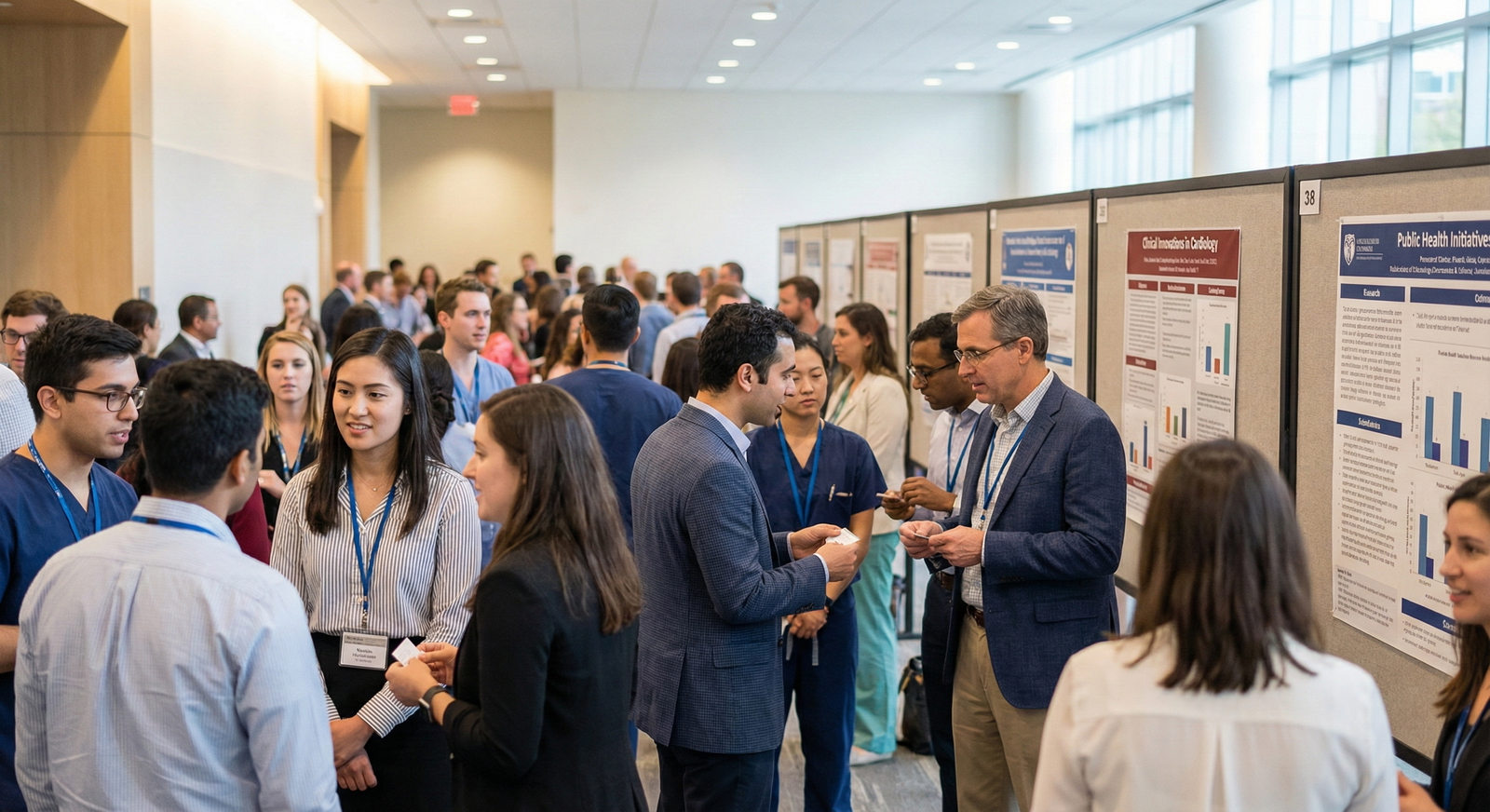
- Use poster sessions for low‑pressure introductions: “Hi, I’m [name]. I’m an IMG resident interested in [related topic]. I really liked your approach to [X]. How did you get involved in this project?”
- Carry simple business cards or use QR codes with your LinkedIn.
After the conference:
- Send brief follow‑up notes within 3–5 days:
- “Thank you again for taking the time to speak with me at AMIA. I especially appreciated your advice about starting with small CDS projects. I’ll keep you updated as I explore opportunities at my institution.”
This transforms a single meeting into a long‑term contact.

Making Mentorship and Sponsorship Work for You
In mentorship medicine, relationships are the backbone of career progress. For IMGs, deliberate cultivation of mentors and sponsors is especially critical.
Types of Mentors You Need
No single person can meet all your needs. Aim for a small “board of advisors”:
Clinical mentor
- Helps with residency performance, clinical references, and navigating being an IMG in everyday medicine.
Informatics mentor
- Works on EHR, analytics, or digital health; guides your informatics skill‑building and projects.
Career/strategy mentor
- Helps you plan long‑term steps: visa issues, specialty decisions, timing of a clinical informatics fellowship.
Peer mentors
- Residents or early‑career physicians 2–3 years ahead of you who recently went through the process of matching into a clinical informatics fellowship or informatics‑related job.
Each mentor does not need to be formally labeled; what matters is regular contact and mutual clarity about what you’re seeking.
How to Ask for Mentorship Without Making It Awkward
Don’t start with: “Will you be my mentor?”
Instead:
- Build rapport over 1–2 short meetings.
- Show that you act on advice and follow up.
- Ask concrete questions (“What would be a realistic first informatics project for me?”).
Then, after a couple of interactions, you might say:
“Your guidance has been incredibly helpful as I explore clinical informatics. Would you be comfortable if I check in with you every couple of months as I progress, and occasionally ask for your advice on next steps?”
Most people will say yes if they have already shown interest.
Sponsorship: The Hidden Power
Sponsors go beyond advice—they put their reputation behind you. In clinical informatics, a sponsor might:
- Recommend you for a project or committee role
- Introduce you to a fellowship director
- Suggest your name for a talk, panel, or working group
- Advocate for you when your CV is being reviewed
Sponsorship often grows from mentorship, but not always. To attract sponsors as an IMG:
- Deliver excellent work reliably, even on small tasks.
- Communicate clearly and professionally.
- Make your goals known: “I’m working toward a clinical informatics fellowship; I’m especially interested in CDS and population health analytics.”
- Make it easy to champion you—keep your CV updated and send concise updates on major accomplishments.
Practical Networking Strategies and Scripts for IMGs
Here are concrete tactics you can start using immediately, with examples tailored to international medical graduates.
1. The “Three Contacts per Month” Rule
Instead of trying to “network with everyone,” commit to a realistic, sustainable habit: reach out to three new people per month.
Your three could be:
- One local/institutional contact
- One national/informatics society contact
- One peer (resident, fellow, or early attending)
This steady cadence, maintained for a year, generates 36 new contacts—far more impactful than one burst of activity before applications.
2. Cold Email and LinkedIn Outreach Templates
Initial outreach to a fellowship faculty member:
Subject: IMG resident exploring clinical informatics – brief conversation?
Dear Dr. Lee,
My name is [Your Name], and I am a PGY‑2 internal medicine resident and international medical graduate at [Institution]. I’m strongly interested in clinical informatics, particularly [brief interest, e.g., “clinical decision support for high‑risk medication prescribing”].
I saw that you are a faculty member in the [Institution] clinical informatics fellowship and have worked on [specific project/publication if possible]. If you’re open to it, I would be very grateful for 20 minutes of your time to learn more about your path into clinical informatics and any advice you may have for an IMG hoping to pursue this field.
I understand your schedule is busy and would be happy to work around any time that’s convenient for you in the coming weeks.
Sincerely,
[Your Full Name, Credentials]
[Program, Institution]
LinkedIn connection request (short and focused):
Hello Dr. Patel,
I’m an IMG internal medicine resident with a strong interest in clinical informatics and digital health. I enjoyed your recent AMIA talk on EHR usability and wondered if I might connect here to follow your work and, if appropriate, ask a few questions about pathways into clinical informatics for IMGs.
– [Name]
3. How to Talk About Being an IMG Constructively
Do not apologize for being an international medical graduate; frame it as part of your unique value:
- Emphasize adaptability: “I’ve practiced in two different health systems, which gives me perspective on workflow and design.”
- Highlight resourcefulness: “Working in resource‑constrained settings taught me to innovate with limited tools, which is relevant to informatics implementations.”
- Be transparent about limitations (visa, lack of home program), but couple them with solutions and determination.
An example during a meeting:
“As an IMG, I’ve had to be intentional about building a network here because I don’t have a U.S. medical school alumni base. It’s pushed me to be very proactive about reaching out, seeking feedback, and building skills in a structured way.”
4. Turning Small Interactions into Long-Term Relationships
The follow‑up is where real networking happens. After a meeting:
Thank‑you email within 24–48 hours
- Mention 1–2 specific points you found helpful.
- Share how you will act on them.
Progress update in 6–8 weeks
- “Since we spoke, I joined the EHR medication safety committee and started a small QI project on…”
- Ask one focused follow‑up question.
Annual or semiannual update
- Major milestones: accepted abstract, started fellowship application, new role.
- Express appreciation and briefly highlight how their advice influenced your path.
This pattern turns “a person I met once” into “someone invested in my success.”
Avoiding Common Networking Pitfalls for IMGs
Even highly motivated IMGs can unintentionally sabotage their networking efforts. Be mindful of:
Being overly transactional
- Asking for a letter, job, or interview in the first interaction.
- Aim first to build understanding and mutual interest.
Lack of preparation
- Meeting someone without reading their bio or basic work.
- Always arrive with 3–4 questions ready and a sense of their background.
Overwhelming busy people
- Sending long, dense emails or multiple follow‑ups within a week.
- Keep messages concise and spaced reasonably.
Undervaluing peer networks
- Focusing only on senior leaders and ignoring residents and fellows.
- Many opportunities will come from people just 1–3 years ahead of you.
Disappearing after receiving help
- Not updating or acknowledging mentors who supported you.
- This makes future sponsors hesitant to invest in you.
Not being clear about your visa or constraints when it matters
- You don’t have to lead with it, but for serious opportunities, clarity helps mentors and programs advise accurately and advocate for you effectively.
FAQ: Networking in Medicine for IMGs in Clinical Informatics
1. I don’t have any informatics experience yet. What should I do before networking heavily?
Start with small, tangible steps that show seriousness: complete an introductory online course (e.g., basic health informatics, data analytics, or Epic physician builder if available at your institution), join a QI committee, or participate in a simple EHR optimization project. Then you can approach mentors with: “I’ve started doing X and would like guidance on next steps,” which signals initiative rather than mere interest.
2. How early in residency should I start networking for a clinical informatics fellowship?
For an IMG, earlier is better—ideally during PGY‑1 or PGY‑2. Networking does not mean asking for letters on day one; it means learning the landscape, identifying mentors, and getting involved in small projects. By the time you formally apply for a clinical informatics fellowship, you want several people who know your work and can advocate for you.
3. Are virtual connections (email, Zoom, LinkedIn) really useful, or do I need in-person meetings?
Virtual connections are absolutely valuable, especially for IMGs and for networking across institutions. Many fellowship faculty and CMIOs are accustomed to mentoring via Zoom. In-person interactions at your institution and conferences remain powerful, but they are not the only route. A well‑conducted virtual mentorship can lead to invitations for talks, collaborations, and strong letters.
4. I feel uncomfortable “promoting myself.” How can I network without feeling inauthentic?
Focus on curiosity and contribution rather than self-promotion. Approach people because you genuinely want to understand their work and path. Share your interests and experiences factually, not boastfully. Offer your help where appropriate—data collection, literature review, prototyping, testing workflows. When you think of networking as building shared value instead of selling yourself, it becomes more natural and sustainable.
Networking in medicine as an international medical graduate in clinical informatics is not about being extroverted or knowing the “right” people from the start. It is about consistent, purposeful relationship‑building: understanding the field, seeking guidance, contributing where you can, and staying connected over time. With a clear narrative, deliberate outreach, and respect for the culture of mentorship medicine, you can turn an uncertain path into a structured, achievable journey toward a fulfilling career in clinical informatics.