Why Networking Matters So Much for IMGs in EM-IM
For an international medical graduate (IMG), matching into an Emergency Medicine–Internal Medicine (EM IM combined) residency is challenging—but not impossible. One of the most powerful tools you have is professional networking in medicine.
EM-IM is a small, competitive niche. Many programs receive far more applications than they can review in depth. Your application may be one of hundreds from qualified international medical graduates. Networking can:
- Turn you from a “name on paper” into a real person with a story
- Help program faculty and residents place your CV in context
- Lead to concrete opportunities: observerships, research, letters, and interviews
- Provide mentorship medicine connections that guide your strategy
- Give you insight into whether EM-IM truly fits your goals
This IMG residency guide focuses on networking in medicine specifically for IMGs pursuing Emergency Medicine–Internal Medicine in the United States, with practical, step-by-step advice you can act on now—whether you’re still abroad or already in the U.S.
Understanding the EM-IM Combined Pathway and Its Networking Culture
Before networking effectively, you need to understand the “culture” of your target specialty.
What Makes EM-IM Unique?
The emergency medicine internal medicine combined pathway is a five-year, dual-board-eligible training track. Graduates can work:
- As emergency medicine physicians
- As hospitalists or outpatient internists
- In critical care (with further fellowship)
- In academic or leadership roles bridging acute and chronic care
Because EM-IM combined training is relatively uncommon:
- There are limited programs and spots nationwide.
- Programs tend to be very close-knit, with strong resident-faculty relationships.
- Faculty often remember applicants who show genuine interest in this specific combined training.
In such an environment, medical networking is not optional—it’s expected. Many successful applicants have already interacted with EM-IM faculty or residents through rotations, conferences, or research before interview season.
The Networking Norms in EM and IM
Emergency Medicine culture values:
- Approachability and teamwork
- Clear, concise communication
- People who can function in high-pressure, interdisciplinary environments
Networking in EM often feels informal, energetic, and conversational.
Internal Medicine culture values:
- Thoughtfulness and curiosity
- Longitudinal relationships and follow-through
- Evidence-based thinking
Networking in IM can be more reflective and mentorship-oriented.
In EM-IM programs, you should bring the best of both:
- Be approachable, concise, and action-oriented (EM).
- Be reliable, thoughtful, and academically engaged (IM).
Your networking should reflect these traits—especially as an IMG, where you may need to counter unconscious biases about training or communication.
Foundations of Effective Networking for IMGs
Before you go to conferences or email program directors, you need a strategy. Networking in medicine is more than “collecting business cards.” It’s about building relationships that are mutually beneficial, authentic, and long-term.
Step 1: Clarify Your Story and Goals
You should be able to clearly answer:
Why EM-IM combined instead of EM alone or IM alone?
Example framing:- “I enjoy acute decision-making and resuscitation, but I also value continuity of care and managing complex chronic illness. EM-IM will allow me to lead care for critically ill patients in both the ED and ICU while also understanding their long-term medical needs.”
Why you, as an international medical graduate, are a strong fit for EM-IM?
You might highlight:- High volume and diverse pathology in your home country
- Resilience, adaptability, and cross-cultural communication
- Prior experience in emergency settings or internal medicine wards
Your longer-term goals.
Examples:- Academic EM-IM with a focus on sepsis and critical care
- Global health work bridging emergency systems and chronic disease management
- ED-based observation units and transitional care innovations
Networking conversations flow better when your narrative is clear and consistent.
Step 2: Build a Professional Online Presence
Program directors and potential mentors may look you up. Make sure what they find supports your story.
Professional LinkedIn profile:
- Current photo with professional attire
- Headline like: “International Medical Graduate | Aspiring EM-IM Physician | Clinical Research in Sepsis”
- About section summarizing:
- Medical school and graduation year
- EM/IM interests
- Research or QI projects
- Licensing progress (USMLE steps, ECFMG status)
- Experience and publications listed clearly
Professional email address:
- Use a simple format:
firstname.lastname.md@gmail.com.
Optional: Simple professional website or portfolio
- One page is enough:
- Bio
- CV (PDF)
- List of publications/posters
- Contact info
Keep everything consistent with your EM-IM focus.
Step 3: Understand the “Give Before You Take” Principle
Effective networking in medicine is reciprocal. As an IMG applicant, it’s easy to feel you have nothing to offer, but that’s not true. You can:
- Help with data collection or literature reviews for busy faculty
- Share unique perspectives on global health, resource-limited care, or diverse patient populations
- Support junior students from your home school navigating the US system (building your own mentorship medicine profile)
When you contact people, avoid starting with “Can you write me a LOR?” Instead, show interest in their work and ask how you might get involved or learn from them.

Strategic Medical Networking: Tactics for IMGs Targeting EM-IM
This section details practical strategies you can start using today. Tailor them based on whether you are:
- Still in your home country
- In the U.S. on observerships/research
- In the active application or interview phase
1. Use Conference Networking to Get on the Radar
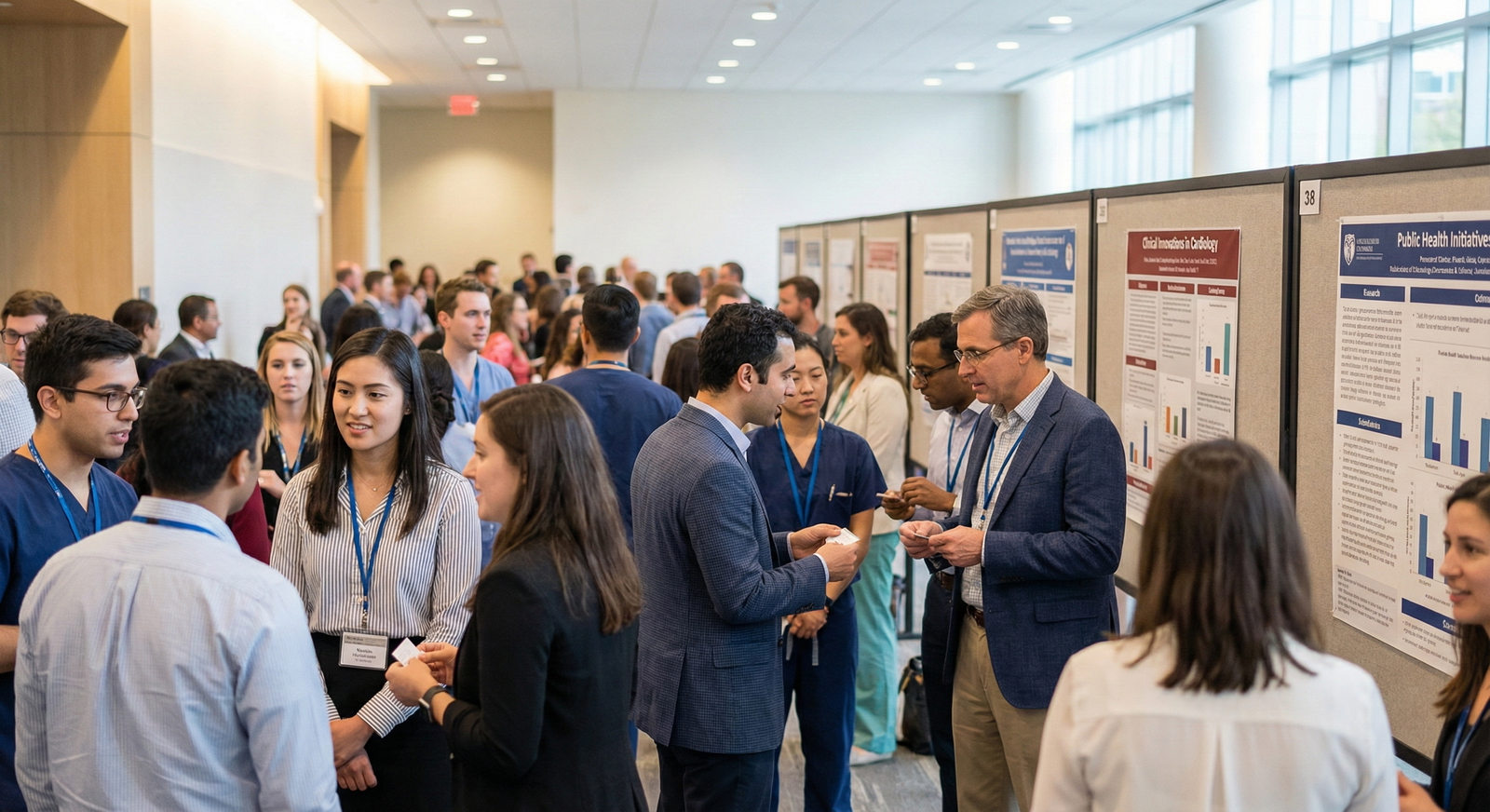
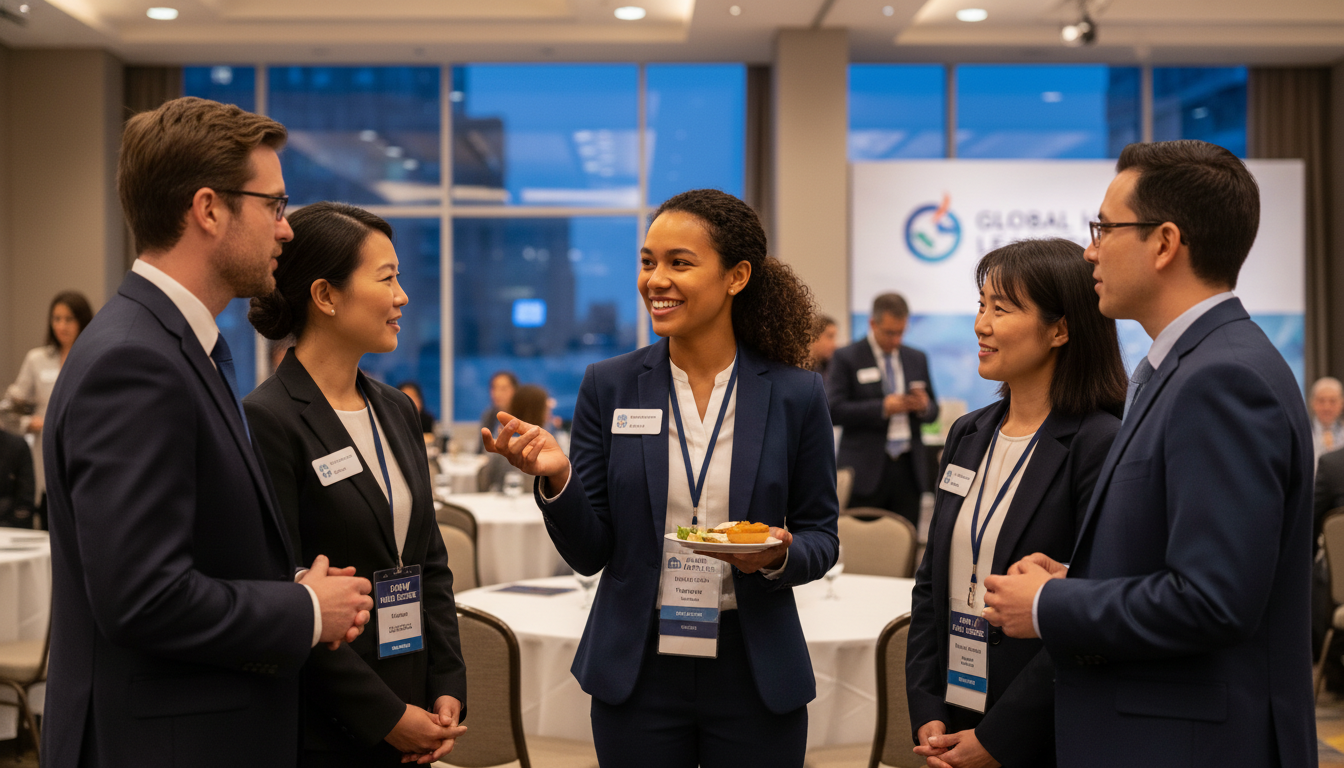
Conferences are among the most powerful networking spaces for EM-IM hopefuls.
Which conferences to consider
- Emergency Medicine:
- ACEP (American College of Emergency Physicians)
- SAEM (Society for Academic Emergency Medicine)
- Internal Medicine:
- ACP (American College of Physicians)
- Combined / relevant themes:
- SCCM (Society of Critical Care Medicine)
- Society of Hospital Medicine meetings
Some EM-IM faculty attend these regularly.
If travel is difficult, leverage virtual attendance and regional/state meetings, which are often more intimate and accessible.
How to prepare for conference networking
Pre-conference homework:
- Identify sessions led by EM-IM faculty or featuring “dual training” or “combined residency” topics.
- Search the conference app or program for “Emergency/Internal Medicine” or “combined program.”
- Note names and affiliations of people you want to meet.
Reach out in advance: A concise email you might send 1–2 weeks before:
Subject: IMG Interested in EM-IM – Hoping to Meet at [Conference Name]
Dear Dr. [Last Name],
I am an international medical graduate from [Country], currently [brief status – e.g., completing research in X / preparing to apply for EM-IM combined residency in 2026]. I have a strong interest in Emergency Medicine–Internal Medicine, particularly [specific area, e.g., sepsis care across ED and inpatient settings].
I noticed you will be speaking on [session title] at [Conference]. If you have a few minutes during the meeting, I would be grateful for the chance to briefly introduce myself and ask a few questions about EM-IM training and your career path.
Thank you for considering this,
[Full Name]
[Medical school, graduation year]
[LinkedIn or professional link]During the conference:
- Arrive early to EM-IM–relevant talks; sit near the front.
- Ask one concise, thoughtful question at the end if appropriate.
- Approach the speaker afterward:
- Introduce yourself.
- Thank them for the talk.
- Briefly share your EM-IM interest and one concrete takeaway.
- Ask: “Would it be all right if I followed up by email with a couple of questions about EM-IM training and potential ways I could prepare or get involved from my position as an IMG?”
After the conference:
- Send a thank-you email within 48–72 hours.
- Mention something specific you learned.
- If appropriate, ask one or two focused questions (not a long list).
- Add them on LinkedIn with a short personalized note.
This kind of intentional conference networking often leads to:
- Advice on specific programs that welcome international medical graduates
- Invitations to join research/QI projects
- Informal mentors in EM-IM
2. Leverage Observerships and Rotations for Relationship-Building
Clinical proximity is one of the strongest networking tools.
During EM or IM observerships/rotations:
- Show up early, leave late: Reliable presence gets noticed.
- Volunteer for small tasks (e.g., helping with patient follow-up calls, preparing handoff lists, reviewing charts for QI).
- Ask content-focused questions, not just career questions:
- “I’ve seen several COPD exacerbations in the ED. How do you think about deciding ED discharge vs admission vs ICU for these patients?”
- Express your combined interest clearly and early:
- “My goal is EM-IM combined training. I’d appreciate any advice about how I can demonstrate that I’d be a good fit for that path.”
Identifying potential mentors or sponsors
You’re looking for:
- An attending who explains things well and seems invested in learners
- A senior resident who enjoys teaching
- A faculty member associated with EM-IM or dual interests (ED-ICU, acute care medicine, etc.)
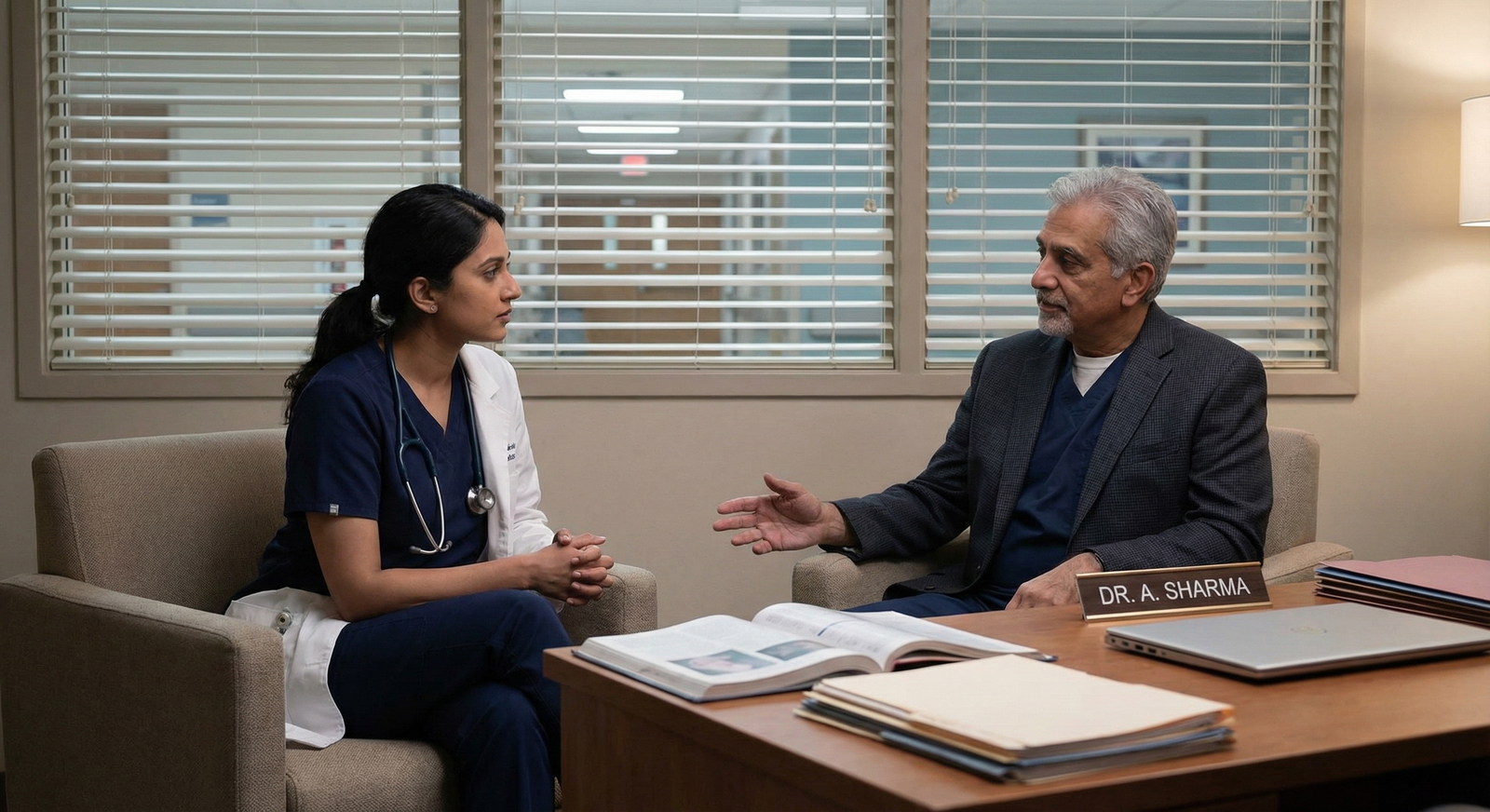
Ask for a short meeting or debrief:
- 15–20 minutes at a mutually convenient time
- Come prepared with 3–4 focused questions:
- “What qualities do EM-IM programs look for in applicants?”
- “How can an IMG without U.S. EM-IM rotations still demonstrate readiness?”
- “Which conferences or societies would you recommend I engage with?”
If the relationship develops, this may evolve into:
- Strong letters of recommendation
- Inclusion on research/QI or educational projects
- Advocates who can email program leadership on your behalf
3. Research and Academic Networking
For many EM-IM programs, research involvement signals commitment and reliability—especially for an IMG.
Finding EM-IM-related research
EM-IM faculty often work in areas like:
- Sepsis and shock
- ED-to-ICU transitions
- Observation medicine and short-stay units
- Chest pain pathways
- Health systems and quality improvement
- Chronic disease management in frequent ED users
Look up:
- EM and IM departments at academic centers
- Faculty with dual appointments in EM and Internal Medicine or Critical Care
Send a targeted email:
- Mention your background briefly.
- Reference one of their recent publications (“I read your paper on…”).
- Ask if they need help with ongoing projects (data entry, chart review, literature searches).
You might write:
I am particularly interested in the interface between emergency and inpatient care, and I noted your work on [topic]. If you have ongoing or upcoming projects where a motivated volunteer could contribute (e.g., chart review, database work, literature review), I would be eager to help and learn.
How to be a valuable research collaborator
- Meet deadlines consistently.
- Communicate proactively if something is unclear.
- Ask to understand the bigger picture of the project, not just your assigned tasks.
- Over time, express interest in presenting abstracts or posters at conferences.
A track record of research, especially with U.S.-based mentors, can carry weight when EM-IM program directors review applications from international medical graduates.
4. Digital Networking: Email, Social Media, and Alumni
If you cannot be physically present, digital networking is your bridge.
Email etiquette for EM-IM networking
- Subject line: concise and specific (e.g., “IMG interested in EM-IM – Seeking advice on preparation”).
- Keep the body short: 2–3 short paragraphs.
- Show you have done homework:
- Reference the person’s role, scholarship, or program.
- Ask 1–2 specific questions, not “Can you tell me everything?”
LinkedIn and X (Twitter) for EM and IM communities
- Follow EM-IM programs and faculty.
- Engage with posts thoughtfully:
- Comment with brief, content-based observations.
- Share relevant articles with your perspective.
- Avoid controversial or unprofessional posting.
Over months, this steady activity builds name recognition.
Alumni from your medical school
Your home institution may have:
- Graduates who matched into EM, IM, or EM-IM in the U.S.
- Doctors working as hospitalists, intensivists, or ED physicians abroad
Ask your dean’s office or alumni office for contact information, or search on LinkedIn.
When you contact them:
- Be respectful of their time.
- Ask how they navigated licensing exams, visas, and early opportunities.
- If they are connected to EM-IM programs, they may give you introductions or recommendations.

Building a Mentorship and Sponsorship Network in EM-IM
Mentorship and sponsorship are related but different—and both are critical for an IMG residency guide focused on EM-IM.
Mentors vs Sponsors
Mentors:
- Provide advice and feedback
- Help you with decisions and long-term planning
- May not directly influence your career advancement
Sponsors:
- Use their influence to create opportunities for you
- Recommend you for rotations, committees, research, or residency interviews
- Often senior attendings, program directors, or influential faculty
As an international medical graduate, you typically need a small group of mentors and at least one sponsor who is willing to advocate for you.
Types of mentors you should seek
Content mentor (EM/IM clinical focus)
- Helps you deepen knowledge in emergency medicine internal medicine topics.
- Guides your choice of conferences and educational resources.
Career strategy mentor (IMG–U.S. system navigation)
- Understands visas, licensing, gap years, and CV building.
- May be an IMG who successfully matched into EM, IM, or EM-IM.
Local mentor (at your current institution)
- Knows you personally and can observe your work ethic.
- Potential letter-writer.
You do not need one person to fill all roles; having different mentors for different needs is normal.
How to cultivate mentorship medicine relationships
Begin with small, concrete interactions:
- Ask for a 20–30 minute meeting.
- Come prepared with a short list of questions and a 1–2 sentence summary of your background and goals.
Demonstrate follow-through:
- If your mentor suggests something (e.g., “You should consider submitting to this conference”), act on it if feasible.
- Update them briefly later: “I followed your advice and submitted an abstract…”
Ask permission before listing someone as a mentor or reference:
- “You’ve been very helpful in my EM-IM planning. Would it be alright to consider you a mentor and possibly list you as a reference when appropriate?”
Maintain the relationship over time:
- Email updates 2–3 times a year.
- Share milestones (exam scores, publications, conference presentations).
Over time, mentors may naturally evolve into sponsors, especially if they see your consistent effort and character.
Applying Your Network to the EM-IM Match: Strategy and Pitfalls
Networking is only useful if it supports your actual EM-IM application and interview strategy.
How to signal genuine interest in EM-IM combined programs
Program-specific communication:
- If allowed, send a concise email to the program coordinator or associate PD:
- Introduce yourself.
- State your genuine interest in the EM-IM combined track.
- Reference a faculty member, research area, or curriculum feature that aligns with your goals.
- Attach your CV if appropriate.
- If allowed, send a concise email to the program coordinator or associate PD:
Use your network strategically:
- If a mentor knows someone at an EM-IM program, ask if they’d be comfortable sending a brief introductory email:
- “I’ve worked with Dr. X, an IMG applying to EM-IM; I’ve found them to be reliable and motivated. Just wanted to bring them to your attention.”
- If a mentor knows someone at an EM-IM program, ask if they’d be comfortable sending a brief introductory email:
Tailor your personal statement:
- Many EM-IM programs appreciate a specific EM-IM personal statement, not just an EM or IM statement with one sentence about combined training.
- Reflect the themes you’ve heard from mentors and faculty in the field.
During interviews: turning networking into meaningful conversations
You may meet people you’ve previously interacted with via conferences, research, or email. When that happens:
- Remind them of your previous interaction briefly:
- “We spoke at SAEM after your talk on ED-ICU transitions.”
- Ask follow-up questions:
- “You mentioned that EM-IM graduates at your institution often pursue critical care. How has that evolved recently?”
Show that you listened and learned from prior advice.
Common networking pitfalls for IMGs—and how to avoid them
Being overly transactional
- Avoid emails that immediately ask for a letter of recommendation, observership, or visa support.
- Start with interest and curiosity; opportunities come later.
Mass, copy-pasted messages
- Faculty can recognize generic templates.
- Customize each message with a concrete detail relevant to their work.
Not respecting boundaries
- If someone doesn’t reply after 1–2 attempts, move on.
- Don’t pressure people to provide things (e.g., letters) they’re hesitant about.
Neglecting professionalism online
- Avoid posting unprofessional comments, patient images, or controversial remarks on social media.
- Maintain the same professionalism you would in the hospital.
Overcommitting
- Don’t say yes to more research or projects than you can realistically complete.
- Your reputation as a reliable collaborator is a key networking asset.
FAQs: Networking in Medicine for IMGs Targeting EM-IM
1. I’m still in my home country with no U.S. contacts. Where do I start?
Begin with digital medical networking:
- Create or polish your LinkedIn profile with a clear EM-IM focus.
- Identify EM and IM departments at academic U.S. institutions and look for faculty with interests in acute care, ED–ward transitions, or dual appointments.
- Send concise, respectful emails asking for advice and potential research collaboration, especially on remote-friendly tasks like literature review or data analysis.
- Attend virtual sessions from ACEP, SAEM, ACP, or SCCM when possible, and engage thoughtfully with speakers and attendees.
Your early goal is not a job or LOR; it is one or two meaningful conversations that can grow into mentorship over time.
2. How important is conference networking if I have a strong academic record?
Strong scores and a solid CV are necessary but often not sufficient for competitive pathways like EM-IM—especially for an international medical graduate. Conference networking can:
- Differentiate you from other high-achieving applicants
- Provide insight into how programs view IMGs
- Create real advocates (sponsors) who can vouch for your character and interests
If finances are limited, prioritize:
- One key meeting (ACEP, SAEM, or ACP) where EM-IM faculty are likely to be
- Digital/virtual meetings and online networking in between
3. I’m worried about my accent and communication as an IMG. Will this hurt my networking?
Clear communication is essential in emergency medicine internal medicine, but accents themselves are not disqualifying. Many EM-IM physicians are IMGs. To strengthen your communication:
- Practice concise case presentations and self-introductions with peers or mentors.
- Join English conversation or presentation skills workshops, possibly offered by hospitals or community colleges.
- Focus on clarity, brevity, and structure, which often matter more than native fluency.
Networking can actually improve your communication skills as you get repeated practice in low-stakes settings before residency interviews.
4. How do I know if a networking relationship is appropriate to request a letter of recommendation?
Consider asking for a LOR if:
- The person has worked with you closely (clinically, academically, or in research) for at least several weeks or months.
- They have seen your reliability, work ethic, and clinical or academic performance.
- You sense genuine support in their feedback.
When asking:
- Give them an easy way to decline (“I know you are very busy, so if you do not feel you can write a strong letter, I fully understand.”).
- Provide your CV, personal statement draft, and a brief summary of your work with them.
If they seem hesitant, do not push. A lukewarm letter can hurt more than a missing one.
Networking in medicine as an international medical graduate can feel intimidating, especially in a competitive niche like EM-IM combined training. But with a clear story, consistent professionalism, and strategic use of conferences, digital tools, and mentorship, you can build the relationships that turn opportunities into outcomes.
Think of networking not as a one-time effort before the match, but as the start of your professional community in emergency medicine internal medicine—a community you will both benefit from and contribute to throughout your career.