Why Networking Matters Even More for IMGs in PM&R
When you are an international medical graduate (IMG) interested in Physical Medicine & Rehabilitation (PM&R), your application is evaluated through more filters than a typical US graduate. Strong scores and solid clinical performance are necessary but rarely sufficient. Doors often open because someone knows you, trusts you, and is willing to advocate for you.
In physiatry, which is still a relatively small specialty, medical networking is not optional—it’s a core strategy for:
- Getting PM&R clinical experiences and observerships
- Finding research and quality improvement projects
- Securing strong, personalized letters of recommendation
- Understanding program culture and “fit”
- Improving your chances in the physiatry match
A thoughtful networking strategy can convert you from “another IMG applicant” into a known quantity in a program or region. This IMG residency guide will walk you step-by-step through how to network effectively in medicine—specifically tailored to PM&R and to your unique IMGs challenges and strengths.
Understanding the PM&R Landscape for IMGs
Before diving into concrete networking strategies, you need a clear map of the terrain.
How PM&R Differs from Other Specialties
PM&R is:
- Team-based: You collaborate daily with PT, OT, SLP, nursing, case management, neuropsychology, and orthotists/prosthetists.
- Relationship-heavy: Success depends on your ability to coordinate and communicate with many people.
- Smaller and more connected: Fewer programs and fewer residents per program than fields like Internal Medicine or Pediatrics. People know each other across institutions.
These features make interpersonal reputation extremely important. Attendings, fellows, and residents regularly ask each other:
- “Do you know this applicant?”
- “How are they to work with?”
- “Would you take them in your program?”
Networking is how you shape the answers to those questions.
Unique Challenges and Advantages for IMGs in Physiatry
Common challenges:
- Limited or no home PM&R department
- Visa requirements (J-1/H-1B) creating program hesitancy
- Less familiarity with US rehab systems, billing, and documentation
- Uncertainty about where and how IMGs fit into PM&R
Real advantages you may not fully appreciate:
- Experience with disability and rehabilitation in under-resourced settings
- Multilingual skills and cultural competence for diverse patient populations
- Demonstrated resilience, persistence, and adaptability
- A global perspective on neurorehab, MSK medicine, and community reintegration
Effective networking in medicine helps you translate these strengths into concrete, visible value to mentors, programs, and colleagues.
Core Principles of Effective Medical Networking for IMGs
Think of networking not as “collecting contacts” but as building a professional reputation over time. Four core principles should guide every interaction.
1. Relationships Before Opportunities
Asking for observerships, letters, or research positions too early can feel transactional. Instead:
- Start by showing genuine interest in the person’s work.
- Ask thoughtful questions about their clinical or academic interests.
- Follow up with short, respectful updates on how their advice helped you.
When they see your consistency, your ask becomes mutual: you get an opportunity, and they get a reliable, motivated collaborator.
2. Give Value, Even as a Student or IMG
You might think, “I have nothing to offer; I’m just an applicant.” That’s wrong. You can add value by:
- Offering help with data entry, literature searches, or IRB applications.
- Assisting with conference abstracts and poster preparation.
- Translating patient education materials into another language.
- Sharing public health or rehab perspectives from your home country for global health projects.
The more value you provide, the more people want you on their team—and in their program.
3. Consistency Beats Intensity
Successful medical networking is not built in one big conference or a single email. Instead:
- Schedule 15–20 minutes weekly to send 1–2 follow-up emails or LinkedIn messages.
- Maintain a simple spreadsheet of your contacts, their interests, and your last interaction.
- Return emails on time, keep deadlines, and show reliability.
In PM&R, “being easy to work with” is priceless. Consistency is proof.
4. Professionalism in Every Channel
Whether you’re emailing, messaging on LinkedIn, or attending a conference:
- Use professional language and formatting.
- Be on time, appropriately dressed, and prepared.
- Respect boundaries—don’t spam or over-message.
- Accept “no” gracefully and leave the door open for future contact.
Your digital footprint and interpersonal behavior are part of your reputation.

Building Your PM&R Network from Zero: Step-by-Step
You may feel like you’re starting with nothing—but you probably have more than you think. Here’s a structured approach to medical networking tailored to the physiatry match.
Step 1: Map Your Existing Connections
Start with a “network inventory”:
- Medical school faculty who did training or fellowships in the US, Canada, or UK.
- Alumni from your school now in PM&R, neurology, orthopedics, or pain in North America.
- Family/friends with any connection to healthcare systems in the US.
- Previous rotations (e.g., spine, neuro, orthopedics, rheumatology) that may link to PM&R.
Send short, personalized messages asking:
- How they got into their field
- Any PM&R contacts they might introduce you to
- Advice specific to an international medical graduate interested in PM&R
Even one warm introduction can lead to a chain of new contacts.
Step 2: Use Digital Platforms Strategically
Optimize your profile:
- Headline: “International Medical Graduate | Aspiring Physiatrist | Interested in Neurorehab & Pain”
- About section: 3–5 sentences summarizing your background, interests, and goals in PM&R.
- Featured: Any posters, publications, or presentations—even from other specialties—that relate to rehab, neuro, MSK, or disability.
Search and connect with:
- Current PM&R residents (especially IMGs)
- Faculty at programs you are targeting
- Researchers publishing in areas you enjoy (e.g., traumatic brain injury, spinal cord injury, MSK ultrasound)
Template connection message (concise):
“Dear Dr. Smith,
I’m an IMG from [Country], interested in PM&R with a focus on [interest]. I’ve been reading about your work in [topic] and would be grateful to connect and learn from your perspective as I prepare for the physiatry match.
Best regards,
[Name]”
X (Twitter) and Other Academic Platforms
Many physiatrists and PM&R departments are active on X:
- Follow departmental accounts and PM&R leaders.
- Engage thoughtfully: like, retweet, and occasionally comment with specific, respectful questions.
- Share your own academic work and reflections on disability and rehabilitation.
This builds a visible identity in the PM&R community, even before you meet in person.
Step 3: Leverage Professional Societies and Interest Groups
For PM&R, the main US organizations are:
- AAPM&R (American Academy of Physical Medicine and Rehabilitation)
- AAP (Association of Academic Physiatrists)
- Specialty groups (e.g., neurorehab, MSK, pain, pediatric rehab)
Actions you can take:
- Join as a student/trainee or international member—fees are often reduced.
- Sign up for special interest groups aligned with your goals (e.g., Brain Injury, SCI, Sports Medicine, Global Health & International Rehabilitation).
- Attend virtual journal clubs, webinars, and resident panels—these are relatively accessible from abroad.
- Introduce yourself briefly in chat: “IMG from [country] aspiring to PM&R, interested in [area].”
You’ll start seeing the same names repeatedly, which makes future one-on-one outreach easier.
Step 4: Targeted Email Outreach for Observerships and Mentorship
Cold emailing is often uncomfortable but can be effective if done correctly.
Whom to Email
- Program directors or associate PDs
- Site directors at major rehabilitation hospitals
- Faculty with research aligned to your interests
- PM&R residents who share a background similar to yours (e.g., fellow IMG, same home country)
How to Structure a Strong Email
Subject line
- “Prospective IMG interested in PM&R observership at [Institution]”
- “IMG seeking mentorship in neurorehabilitation (Interested in [Program/City])”
Brief introduction
- Who you are, where you trained, your exam status.
Specific reason for contacting this person
- A paper of theirs you read, a talk/webinar you attended, a program feature that aligns with your goals.
Clear, modest ask
- Mentorship meeting, feedback on career path, guidance on observership opportunities.
Professional closing
- Concise, with CV attached if appropriate.
Example:
Dear Dr. [Last Name],
My name is [Name], an international medical graduate from [School, Country], currently preparing for the physiatry match. I recently attended your webinar on [topic] through [organization] and was particularly interested in your discussion of [specific point].
I am very interested in a career in PM&R with a focus on [interest area], and I hope to gain more exposure to rehabilitation in the US. If possible, I would be grateful for a brief 15–20 minute virtual meeting to ask your advice on how an IMG can best prepare for a career in your field, and to learn whether there are any observership or research opportunities within your department.
I have attached my CV for your reference but understand you are very busy and would appreciate any guidance you can offer.
Sincerely,
[Name]
[Contact info]
Expect many non-responses; that’s normal. If even 10–20% respond, you are building a substantial network.
Step 5: Convert Contacts into Long-Term Mentors
Networking in medicine is not only about having many acquaintances; you need a small core of true mentors who know you well.
Identify potential mentors who:
- Respond reliably to your emails
- Offer thoughtful advice rather than generic replies
- Show interest in your growth, not just your immediate tasks
- Are willing to introduce you to others
Maintain the relationship:
- Send brief updates every 4–8 weeks on your progress.
- Show that you applied their advice.
- Offer to help with their projects.
- Thank them consistently and specifically.
This is how mentorship in medicine evolves from one conversation into enduring professional guidance.
Mastering Conference Networking as an IMG in Physiatry
Conference networking is one of the fastest ways to immerse yourself in the PM&R community. Even if you can only attend one meeting, approach it strategically.
Before the Conference
Choose the Right Meeting
- AAPM&R Annual Assembly is the biggest and best for broad networking.
- AAP focuses more on academic and research-oriented networking.
Plan Your Targets
- Identify 5–10 programs you’re most interested in.
- Look up faculty and residents from those institutions in the conference program.
- Note poster or podium presentations by people you’d like to meet.
Reach Out Ahead of Time (optional but powerful)
- Email: “I’ll be at AAPM&R and saw you’re presenting on [topic]. Would it be okay if I briefly introduce myself after your session?”
- Many will say yes, and you now have a reason to approach them.
Prepare Your 30–60 Second Introduction
- Who you are (IMG from…)
- What you’re interested in (PM&R, specific sub-area)
- Your current status (USMLE, visa, any US experience)
- What you’re hoping to learn or do (e.g., find mentors, explore research, understand their program).
During the Conference
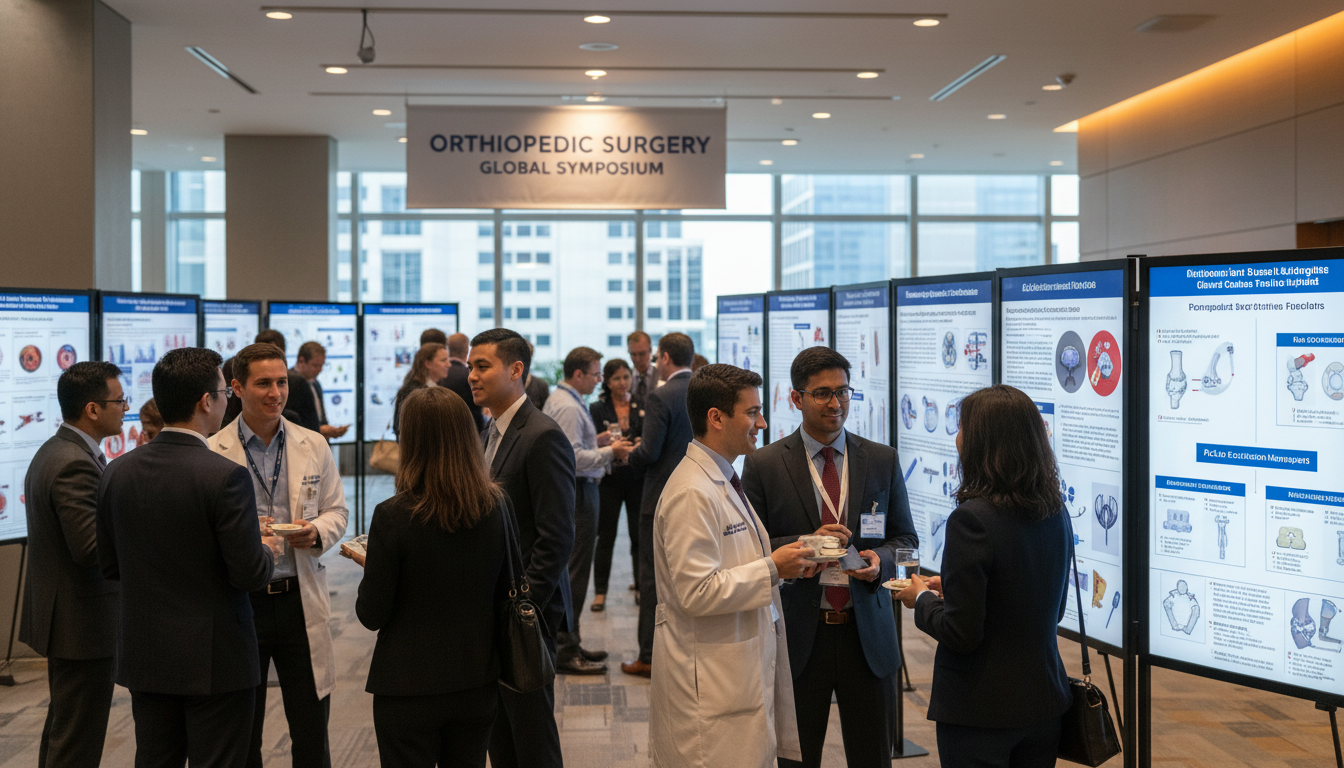
At Poster Sessions:
- Prioritize posters from programs you’re targeting and topics that match your interests.
- Ask presenters:
- “What inspired this project?”
- “How did you get involved in research as a resident/medical student?”
- “Are there opportunities for remote collaboration or for IMGs to get involved?”
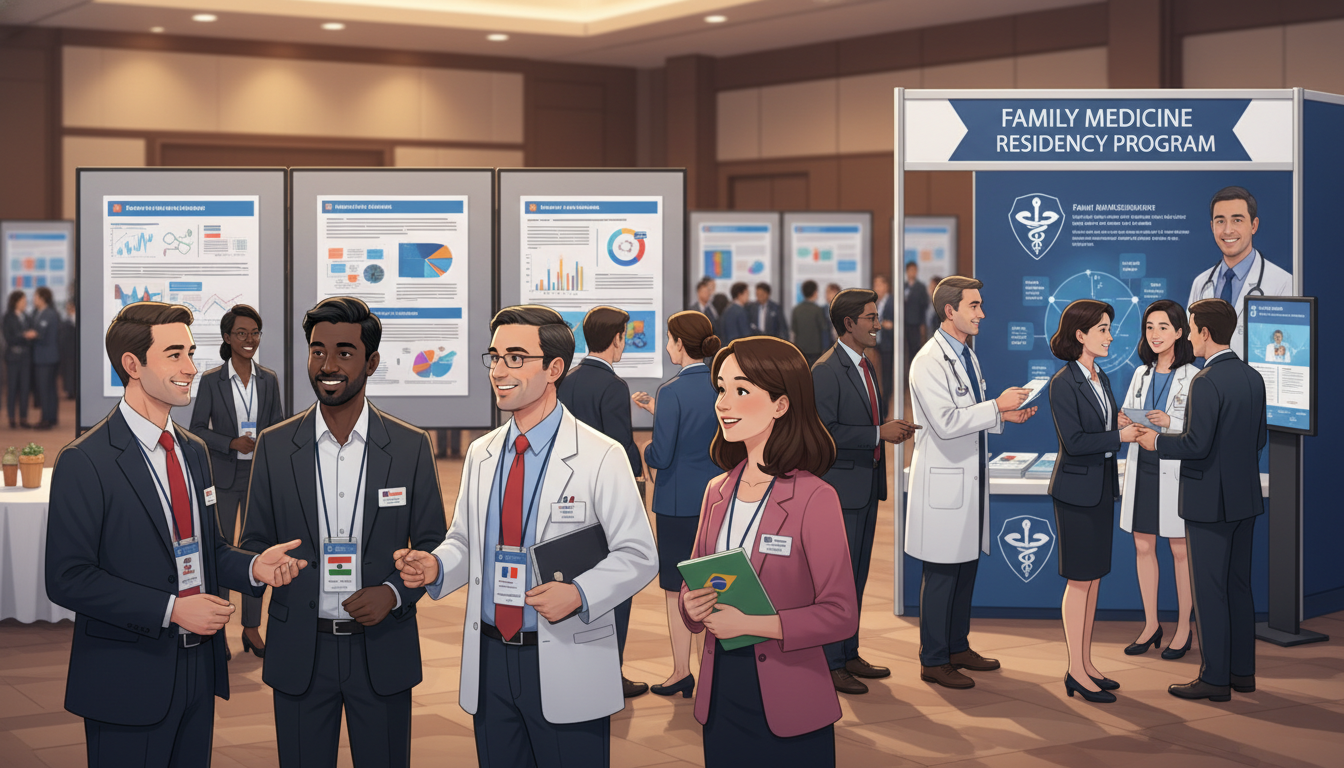
At Program Showcases/Residency Fairs:
- Approach booths of programs you’re seriously considering.
- Speak to both residents and faculty; ask about:
- IMG experiences at their program
- Typical profile of their successful applicants
- What makes someone stand out as a rotating student or observer
- How many international medical graduates they’ve matched recently
General Tips at Conferences:
- Wear your badge visibly and dress in professional business attire.
- Carry simple, clean business cards (name, email, “International Medical Graduate, aspiring physiatrist”).
- Take notes immediately after conversations (on your phone or a small notebook), including:
- Person’s name and role
- Program/institution
- Topics discussed
- Any promised follow-up (e.g., “Send CV,” “Email Dr. X,” “Share abstract draft”).
After the Conference: Turning Contacts into Opportunities
Within 3–7 days, send follow-up emails:
- Remind them how you met.
- Mention something specific from your conversation.
- Attach your CV if appropriate.
- Ask a focused question or propose a next step (e.g., “Could we schedule a brief call to discuss potential remote research involvement?”).
Example:
Dear Dr. [Last Name],
It was a pleasure meeting you at the AAPM&R Annual Assembly during the [session name]. I enjoyed our conversation about [specific topic, e.g., spinal cord injury neurorecovery] and learning more about your program at [Institution].
As we discussed, I am an IMG from [Country] preparing for the physiatry match, with particular interest in [interest]. If possible, I would be grateful for any advice on how I might become involved in research or observership opportunities related to your work. I have attached my CV for your reference.
Thank you again for your time and guidance.
Sincerely,
[Name]
This is how conference networking evolves into real collaborations and mentorship.
Networking Within Clinical Rotations, Observerships, and Research
Your time in US clinical or research settings is the most powerful networking opportunity you’ll have. PM&R is a niche field; people pay close attention to who works well on the team.
How to Stand Out on a PM&R Rotation or Observership
Be Early, Reliable, and Prepared
- Arrive before rounds; review charts and therapy notes.
- Know your patients’ PT/OT/SLP progress and goals.
Communicate Like a Physiatrist
- Think function-focused: transfers, mobility, ADLs, communication, cognition.
- Learn to present patients with a rehab structure:
- Brief history
- Current functional status
- Barriers to discharge
- Rehab goals and plan
Engage the Rehab Team
- Introduce yourself to PT, OT, SLP, nurses, and case managers.
- Ask them what they look for in a good physiatry trainee.
- Help with small tasks that show respect and teamwork.
Signal Interest in the Program (only if genuine)
- Ask residents what they like most and what challenges they face.
- Let attendings know you’re interested in PM&R and possibly their program.
- Ask politely how an IMG like you can become competitive for their residency.
Turning Rotations into Letters and Advocacy
- Ask for feedback midway through the rotation so you can improve.
- Toward the end, if you’ve worked closely with an attending, ask:
- “Do you feel you know my work well enough to write a strong letter of recommendation for PM&R residency?”
- If the answer is yes:
- Provide your CV, personal statement draft, and a bullet list of your key contributions on the rotation.
- For those who know you well but can’t write a letter (e.g., residents):
- They can still advocate informally to the program director or selection committee.
Networking Through Research and Quality Improvement
If you’re involved in research:
- Communicate clearly and frequently with your supervisor.
- Meet deadlines and volunteer for unclaimed tasks (e.g., figure formatting, references).
- Ask to be involved in conference abstracts and posters—this leads naturally to conference networking.
- When a paper or poster is accepted, thank your mentors publicly and privately.
This is where mentorship in medicine deepens; you become someone mentors are proud to recommend.
Common Pitfalls and How to Avoid Them
Even well-intentioned IMGs sometimes damage their networking efforts unintentionally.
Pitfall 1: Being Too Transactional
Constantly asking for LORs, observerships, or job leads without building a relationship first can push people away.
Solution:
Focus initially on learning from them, helping with their work, and showing consistent professionalism. Ask for opportunities only after trust is established.
Pitfall 2: Over-messaging or Following Up Too Aggressively
Sending multiple emails within a few days or pressuring someone to respond can appear unprofessional.
Solution:
- Wait at least 10–14 days before a gentle follow-up.
- If there’s still no response, move on gracefully. Don’t take it personally.
Pitfall 3: Not Respecting Boundaries Around Visas or Program Policies
Some programs cannot take certain visa types or have institutional restrictions.
Solution:
- Be transparent about your visa needs.
- If a program says they can’t accommodate your situation, thank them and move on.
- Don’t try to “convince” someone to bypass institutional rules.
Pitfall 4: Underestimating Your Own Value
Some IMGs apologize excessively or present themselves as burdens.
Solution:
- Frame your IMG background as an asset: global health experience, resilience, multilingual skills.
- Speak confidently but humbly about what you bring to a PM&R team.
Putting It All Together: A Networking Blueprint for IMGs in PM&R
Here’s a practical 6–12 month roadmap you can adapt to your situation:
Months 1–2: Foundation
- Optimize LinkedIn and CV with a clear PM&R focus.
- Map existing connections and send 10–20 initial outreach messages.
- Join at least one PM&R professional society and relevant interest groups.
Months 3–4: First Real Connections
- Attend virtual PM&R webinars, journal clubs, or panels.
- Schedule 3–5 short mentoring calls or meetings.
- Begin exploring remote or local research/quality improvement opportunities.
Months 5–7: Deepening Engagement
- Secure at least one observership, rotation, or structured clinical experience in PM&R if possible.
- Attend a major conference (in person or virtual) and actively network.
- Develop 2–3 strong mentorship relationships.
Months 8–12: Positioning for the Physiatry Match
- Request letters of recommendation from mentors who know you well.
- Ask your mentors for honest input on your program list.
- Stay visible in your network with concise updates and continued contributions.
- Use your network for interview preparation and insights into program culture.
Over time, your goal is to transform from a stranger applicant to a known, trusted future colleague in the PM&R community.
FAQs: Networking in Medicine for IMG Physiatrists
1. Do I need US clinical experience in PM&R specifically, or will any USCE help?
US clinical experience in any specialty is beneficial, but for the physiatry match, PM&R-specific exposure is strongly preferred. It shows genuine interest and provides the right type of letters and mentorship. If you can’t secure PM&R rotations, try related fields (neurology, ortho, rheumatology, pain) and highlight how these experiences relate to rehabilitation.
2. How important is conference networking if I can’t attend in person due to cost or visa issues?
In-person is ideal, but virtual attendance still matters. Many conferences now offer online sessions, networking lounges, and chat-based Q&A. Use these to ask questions, introduce yourself, and follow up by email or LinkedIn. You can still present posters virtually and list them on your CV.
3. As an IMG, should I mention my visa status early when networking with programs and mentors?
With potential mentors, you don’t need to lead with your visa status, but be transparent once conversations turn toward observerships, research positions, or residency. With programs, it’s best to be upfront, especially for formal inquiries about rotations or positions, so they can give you realistic guidance.
4. What if I’m introverted or uncomfortable approaching people? Can I still succeed at networking in medicine?
Yes. Many excellent physiatrists are introverted. Focus on one-on-one or small-group interactions, prepare talking points in advance, and use email/LinkedIn to start conversations before meeting in person. Quality and consistency matter more than being naturally outgoing. Thoughtful questions and reliable follow-up can make a strong impression—sometimes stronger than loud self-promotion.
Networking in medicine, especially for an international medical graduate pursuing PM&R, is not about pretending to be someone you are not. It’s about showing who you are—reliable, curious, hardworking, and committed to rehabilitation—and letting the right people see it over time. With a structured approach, patience, and authenticity, you can build a network that not only helps you match into physiatry but also supports your growth throughout your career.