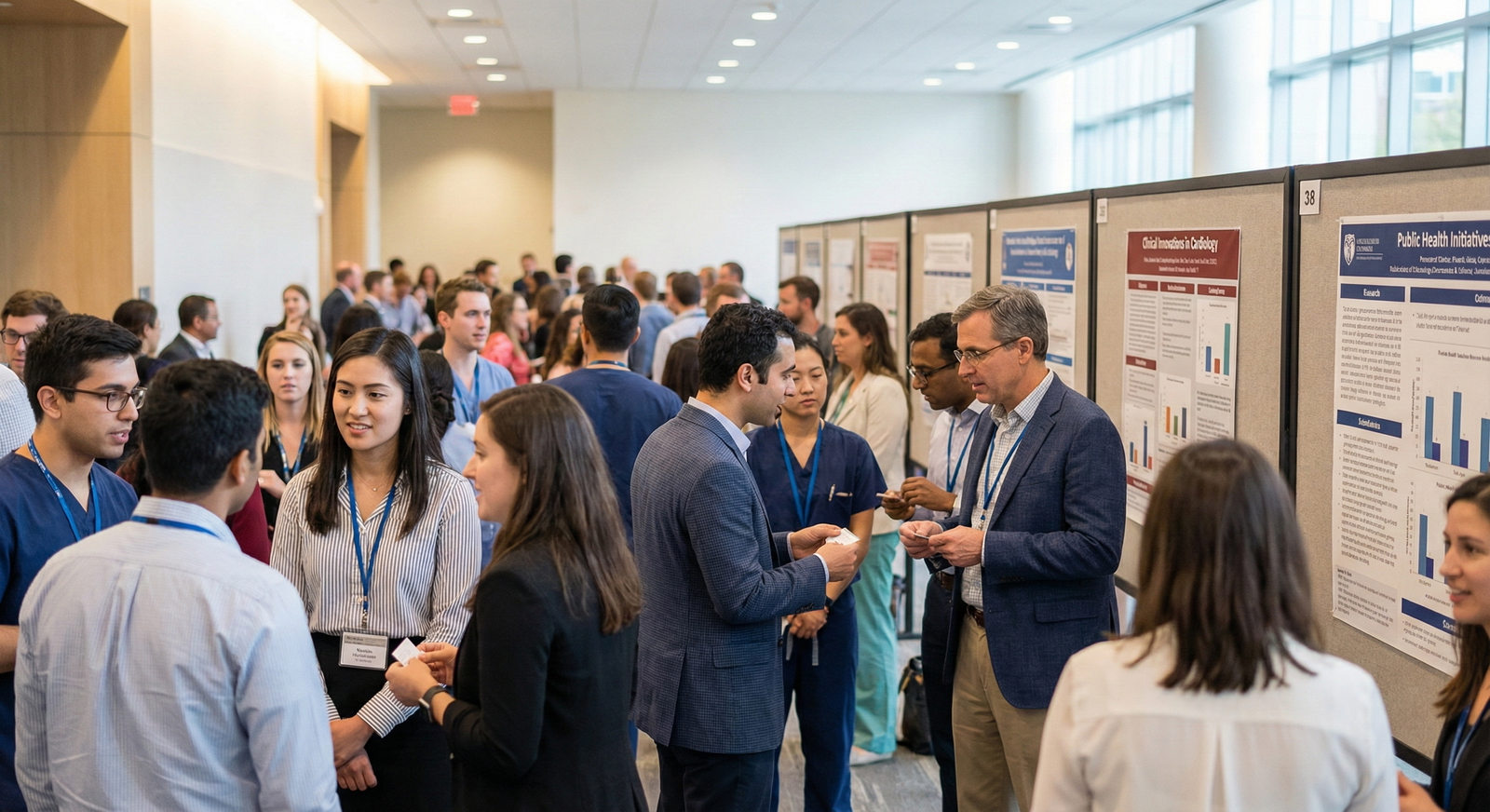
Why Networking Matters So Much for IMGs in OB‑GYN
For an international medical graduate interested in Obstetrics & Gynecology, strong scores and good letters are necessary—but rarely sufficient. OB GYN residency is increasingly competitive, and for IMGs, the gap between a strong application and an actual interview is often bridged by one thing: effective networking in medicine.
Networking is not about superficial small talk or “using” people. It is about building authentic, professional relationships that:
- Help program directors put a face and story to your application
- Lead to concrete opportunities (observerships, electives, research, QI projects)
- Provide honest feedback about your readiness and competitiveness
- Connect you with mentors and sponsors who will actively support your obstetrics match journey
In short: your network often determines which doors even open for you.
This IMG residency guide focuses specifically on networking strategies tailored to IMGs pursuing OB‑GYN in the United States (though much applies elsewhere). You will learn how to:
- Build a clear networking strategy aligned with your OB‑GYN goals
- Use conferences and medical networking events effectively
- Leverage social media and online communities without being unprofessional
- Find and maintain mentorship in medicine, including cross‑cultural challenges
- Turn short‑term connections into long‑term advocates for your residency match
Laying the Foundation: Clarifying Your OB‑GYN Story and Brand
Before you start emailing faculty or approaching people at conferences, you need a clear narrative. Networking works best when others quickly understand:
- Who you are
- What you want
- Why OB‑GYN specifically
- How they might realistically help
Define Your OB‑GYN Narrative
Spend time answering these questions in writing:
- Why Obstetrics & Gynecology and not another field?
- Which aspects attract you most (high‑risk pregnancy, MIGS, REI, gyn oncology, public health, global women’s health, family planning, etc.)?
- What experiences in medical school, internships, or your home country reinforce this interest?
- How does being an international medical graduate give you a unique perspective on women’s health?
Turn this into a 30–45 second “professional introduction”:
“I’m Dr. [Name], an international medical graduate from [Country] with two years of experience in women’s health. I’m working toward OB‑GYN residency in the U.S., with a strong interest in high‑risk obstetrics and global maternal health. I’ve done research on [topic] and completed [observership/elective] at [institution], and I’m especially interested in programs that serve diverse, underserved populations.”
You’ll use variations of this at conferences, on Zoom, in emails, and even on LinkedIn.
Clarify Your Short‑Term Networking Goals
Networking should be intentional, not random. For the next 6–12 months, decide what you want your networking to achieve. For an IMG in OB‑GYN, realistic goals might include:
- Securing 2–3 U.S.‑based OB‑GYN clinical experiences (observerships, externships, sub‑internships)
- Joining at least one OB‑GYN–specific research or QI project
- Developing 2–4 strong mentorship relationships in OB‑GYN
- Gaining at least 3–5 faculty/resident advocates who know you well enough to support interview invitations or letters
Once your story and goals are defined, you can choose where and how to focus your medical networking efforts.

Core Networking Channels for IMGs in OB‑GYN
1. Clinical Experiences: Your Most Important Networking Platform
For IMGs, in‑person clinical exposure in the U.S. is the most powerful networking tool, especially in OB‑GYN where teamwork and communication are heavily emphasized.
During an observership, externship, or elective:
- Show up consistently: Be early, prepared, and present for rounds, clinics, and conferences. Reliability is remembered.
- Participate actively but respectfully: Ask focused clinical questions, volunteer for tasks (notes, literature searches, presentations), and demonstrate genuine curiosity.
- Make your goals explicit: Early in the rotation, tell your attending something like:
“I’m an IMG working toward OB‑GYN residency in the U.S. I’d really appreciate any feedback about how I can strengthen my application and my performance on this rotation.”
- Request feedback regularly: After a clinic or call shift, ask: “Is there anything I could improve in how I present patients or interact with the team?” Then apply that feedback.
Clinical performance is the primary basis for strong letters and trusted advocacy. Every day on your rotation is a networking opportunity.
2. OB‑GYN Conferences: High‑Yield Medical Networking
Conference networking is often underused by IMGs, yet it can be transformative. Key organizations include:
- ACOG – American College of Obstetricians and Gynecologists
- APGO – Association of Professors of Gynecology and Obstetrics
- SMFM – Society for Maternal‑Fetal Medicine
- Subspecialty societies (AAGL for MIGS, SGO for gyn onc, etc.)
Many conferences offer discounted registration for medical students, residents, or early‑career professionals and increasingly include virtual options.
How to Prepare for Conference Networking
Review the attendee list and program:
- Identify OB‑GYN residency programs and institutions that are IMG‑friendly.
- Highlight sessions where their faculty are speaking.
- Note poster sessions on topics that interest you (e.g., maternal mortality, contraception, global women’s health).
Prepare your materials:
- Up‑to‑date CV (PDF on your phone, cloud)
- Short professional bio (2–3 sentences)
- A simple business card (optional but useful)
Plan specific targets:
- Aim to have meaningful conversations with 5–10 people: faculty, fellows, residents, or program coordinators.
- Prioritize institutions aligned with your obstetrics match goals (community vs academic, geographic regions, patient populations).
How to Approach People at Conferences
- During Q&A:
- Ask a genuine, concise question after a talk, then introduce yourself briefly as an IMG interested in OB‑GYN.
- At poster sessions:
- Visit posters in your interest areas.
- Ask the presenter about their methods or challenges.
- Mention your own related experience and end with:
“I’m an IMG aiming for OB‑GYN residency. Would it be okay if I reach out later by email to ask about potential research or observership opportunities at your institution?”
Always follow up within 48–72 hours, referencing the specific session where you met.
Mastering Conference Networking: From First Contact to Follow‑Up
Conference days pass quickly. Turning brief conversations into meaningful connections requires deliberate strategy.
During the Event: Be Present, Visible, and Curious
- Attend early‑morning and evening sessions: These are less crowded and often more informal—ideal for one‑on‑one conversations.
- Sit toward the front and next to people: Don’t hide at the back with your phone. Being approachable matters.
- Use structured networking events: Many OB‑GYN meetings have career panels, student–resident meetups, or “mentorship in medicine” sessions. These are designed for you.
Example opening line at a social event:
“Hi, I’m [Name]. I’m an international medical graduate interested in OB‑GYN residency. What is your role at your institution?”
Then listen. Most good conversations start by showing interest in the other person.
After the Event: High‑Quality Follow‑Up
Within 2–3 days, send a brief, personalized email:
Subject: Great to meet you at [Conference Name]
Dear Dr. [Last Name],
It was a pleasure speaking with you after your session on [topic] at [Conference]. I appreciated your insights on [specific detail].
As I mentioned, I am an international medical graduate from [Country], currently [location/status], working toward OB‑GYN residency in the U.S. I’m particularly interested in [area related to their work].
If your time permits, I would be grateful for any brief advice about strengthening my candidacy and learning more about training at [Institution].
Thank you again for your time and for your work in [field].
Sincerely,
[Full Name, Credentials]
[Current Position]
[Contact information]
Avoid asking for a letter, position, or observership in the first email. Build rapport first; ask for advice, not favors.

Building and Using Mentorship in Medicine as an IMG
For many IMGs, mentorship is the missing ingredient in their obstetrics match journey. A good mentor does more than encourage you; they:
- Provide realistic feedback on your competitiveness
- Suggest concrete steps to strengthen your profile
- Introduce you to their network (sponsorship)
- Sometimes become letter writers or vocal advocates
Types of Mentors You Should Look For
Clinical mentors in OB‑GYN:
- Attendings, fellows, or senior residents who see you in action.
- Ideal for letters, advocacy, and specialty‑specific guidance.
Career mentors (general):
- Faculty familiar with the U.S. residency system (even outside OB‑GYN).
- Especially valuable if they have experience supporting international medical graduates.
Peer mentors:
- Current OB‑GYN residents—particularly former IMGs.
- They can give honest, updated advice about the obstetrics match, interview strategies, and program cultures.
Near‑peer mentors (recent graduates):
- PGY‑1 & PGY‑2 residents who recently matched in OB‑GYN.
- They remember the process and may be more approachable.
How to Approach Potential Mentors
Mentorship often grows out of existing interactions—rotations, conferences, research projects—but you can also initiate it intentionally.
Sample email to a potential mentor:
Dear Dr. [Last Name],
My name is [Name], an international medical graduate from [Country], currently [your current position/status]. I am working toward OB‑GYN residency in the U.S. and am particularly interested in [specific area].
I have admired your work in [their area of expertise] and wondered if you might have 15–20 minutes for a brief conversation about how I can better prepare for an OB‑GYN residency application as an IMG.
I understand you have many commitments and completely understand if this is not possible, but even a few pointers or recommended resources would be extremely helpful.
Thank you for considering my request.
Sincerely,
[Name]
Keep the initial ask small. Many busy faculty are more willing to give you a short meeting than to commit immediately to long‑term mentorship.
Maintaining Mentor Relationships
Once someone has invested time in you:
- Update them periodically: Every 2–3 months, send a short progress email (“Since we last spoke, I completed X rotation, started Y research, plan to take Z exam…”).
- Act on their advice: Then let them know what you implemented. This builds trust.
- Respect boundaries: They are not obligated to solve all problems or guarantee outcomes.
Mentorship in medicine is mutually respectful, not one‑sided. Over time, those who see your consistency and growth may become powerful advocates in the obstetrics match process.
Leveraging Online Platforms and Research for Strategic Networking
Using LinkedIn and Professional Social Media
Thoughtful online presence can extend your reach far beyond your local environment.
- Use a professional headshot, clear headline:
“International Medical Graduate | Aspiring OB‑GYN Resident | Women’s Health & Global Maternal Health”
- Add a concise summary that reflects your OB‑GYN story.
- Connect with:
- OB‑GYN residents and fellows (especially former IMGs)
- Faculty at programs you’re targeting
- People you meet at conferences or on rotations
- Engage by:
- Commenting thoughtfully on posts about women’s health
- Sharing your involvement in research, QI projects, or presentations (respecting patient confidentiality)
X (Twitter) and Instagram (professional accounts)
- Many OB‑GYN programs and faculty share research, advocacy, and educational content.
- You can follow program accounts to understand their culture and priorities.
- Interact professionally—no venting, no controversial debates that could damage your image.
Avoid overly aggressive “cold messaging” on social media; instead, use it to learn, follow, and lightly engage, and reserve formal asks (like observerships) for email or official channels.
Research and QI as Networking Tools
Participation in research or quality improvement projects is not just about publications—it is structured, long‑term medical networking.
How Research Helps IMGs
- Puts you in regular contact with faculty and residents
- Gives you measurable outcomes (abstracts, posters, papers)
- Shows programs you understand scholarly activity expectations in OB‑GYN
- Can lead to conference presentations where you further expand your network
How to Find Research Opportunities
- Ask attendings during or after rotations:
“Are there any ongoing projects or data sets where I could help with chart review, data entry, or literature review?”
- Email faculty whose work interests you (after reading at least one of their recent papers)
- Look beyond “big projects”—even small QI initiatives can be impactful:
- Postpartum hemorrhage protocols
- Improving Pap smear follow‑up
- Contraception counseling documentation
Even if you are outside the U.S., remote research is sometimes possible (e.g., literature‑based projects, survey studies, global health collaborations).
Cultural Nuances and Common Networking Pitfalls for IMGs
Networking norms vary widely by culture. Many international medical graduates feel uncomfortable “promoting themselves” or fear being seen as pushy. Recognizing this is the first step to adapting.
Cultural Differences You May Encounter
- Directness: U.S. physicians often value clear, concise communication and explicit questions (“I am hoping to pursue OB‑GYN residency; what would you recommend I prioritize next year?”).
- Self‑advocacy: Stating your strengths and goals is not considered arrogance if done respectfully.
- Time: Respect for time is crucial—keep emails brief, meetings punctual, and presentations focused.
Common Pitfalls in Medical Networking
Sending overly generic mass emails
- Example: “Dear Sir/Madam, I am an IMG seeking observership. Please help.”
- These are usually ignored. Personalize every message.
Immediately asking for big favors
- Asking for a letter or a position in the first interaction often backfires.
- Build trust first; allow people to see your work and character.
Being too passive on rotations
- Showing up but not engaging, not asking questions, not volunteering for tasks—this leaves no memorable impression.
Failing to follow up
- Initial contact means little without follow‑through. Many opportunities are lost simply because IMGs never send that second email.
Unprofessional online content
- Political rants, unprofessional jokes, or patient details on social media can seriously harm your application and reputation.
Turning Networking into Long‑Term Advocacy
The ultimate goal of your OB‑GYN networking is not just to “know people” but to cultivate advocates—people who:
- Email program coordinators to recommend you for interviews
- Call colleagues at other institutions on your behalf
- Write specific, enthusiastic letters of recommendation
- Introduce you to additional mentors and opportunities
You earn advocates through consistent professionalism, demonstrated growth, and genuine relationships—not quick transactions.
Putting It All Together: A 12‑Month Networking Plan for an IMG in OB‑GYN
Here is a sample structured plan you can adapt:
Months 1–3: Foundation and Local Networking
- Clarify your OB‑GYN narrative and update your CV and LinkedIn.
- Identify nearby hospitals or clinics with OB‑GYN services.
- Arrange at least one observership or shadowing experience.
- Request brief meetings with 2–3 OB‑GYN attendings to discuss your goals.
Months 4–6: Deepening Clinical and Mentorship Ties
- Perform maximally on your first OB‑GYN rotation (punctual, prepared, engaged).
- Ask for feedback halfway through and at the end.
- Identify 1–2 attendings or residents as potential mentors; request brief follow‑up conversations.
- Ask specifically about research or QI project participation.
Months 7–9: Expanding Through Conferences and Research
- Submit an abstract (case report, QI, small study) to at least one OB‑GYN‑related conference.
- Attend (in‑person or virtual) and actively practice conference networking.
- Reach out to 5–10 new contacts with thoughtful follow‑up emails.
- Continue working on ongoing projects; aim for at least one poster or manuscript under preparation.
Months 10–12: Converting Relationships into Advocacy
- Update mentors and key contacts on your progress and timeline for the obstetrics match.
- Ask a small group of faculty (who know you well) if they would feel comfortable writing letters of recommendation.
- Carefully research OB‑GYN residency programs, including those where your network has connections.
- As interview season approaches, let advocates know when you’ve applied and ask if they’re comfortable supporting your candidacy where appropriate.
By approaching networking in medicine as a structured, long‑term process—not a last‑minute scramble—you significantly increase your chances of a successful OB GYN residency match as an international medical graduate.
FAQs: Networking in Medicine for IMGs in OB‑GYN
1. I’m still in my home country. How can I start networking in OB‑GYN before coming to the U.S.?
You can:
- Reach out by email to OB‑GYN faculty at institutions where you hope to rotate, expressing interest early.
- Join international sections of ACOG or other global women’s health organizations.
- Attend virtual conferences and webinars; participate in Q&A and follow up with speakers.
- Seek remote research collaborations (e.g., literature reviews, survey studies) with OB‑GYN departments abroad.
- Connect with former IMGs on LinkedIn who matched into OB‑GYN and ask for brief informational conversations.
2. How many contacts do I really need for an effective obstetrics match network?
Quality matters more than quantity. A realistic target is:
- 2–4 mentors (including at least one in OB‑GYN)
- 3–5 faculty/resident advocates who know your work
- 1–2 research collaborators
Beyond this, additional connections are helpful but not essential. Focus on depth, not just numbers.
3. Is it okay to ask a mentor directly for a letter of recommendation?
Yes—if they know you well enough. A respectful way to ask:
“Based on our work together in [rotation/project], would you feel comfortable writing a strong, supportive letter of recommendation for my OB‑GYN residency application?”
This gives them an opportunity to decline gracefully if they do not feel able to write a strong letter, which is better for you in the long run.
4. What if I’m introverted or shy—can I still succeed at medical networking?
Absolutely. Many excellent physicians are introverted. You do not need to be loud or charismatic; you need to be:
- Prepared (know your story and your questions)
- Genuine (show real interest in others and their work)
- Reliable (follow up when you say you will)
Focus on one‑on‑one conversations and small‑group situations rather than large social events. Written communication (email, LinkedIn) can also be a strength for more introverted IMGs.
Thoughtful, strategic networking can transform your path as an international medical graduate in Obstetrics & Gynecology. By combining strong academic preparation with intentional relationship‑building—through clinical work, conferences, mentorship, and research—you are not just “looking for a residency spot”; you are becoming part of the OB‑GYN community you hope to join.