Understanding Networking in Medicine as an IMG in Preliminary Medicine
Networking in medicine is not just “meeting people.” For an international medical graduate (IMG), especially in a preliminary medicine year (prelim IM), networking is about building purposeful professional relationships that can:
- Open doors to categorical positions and subspecialty training
- Generate strong letters of recommendation
- Connect you with mentors who guide your career decisions
- Help you adapt to U.S. clinical culture, expectations, and unwritten rules
In a one‑year preliminary medicine year, time is limited and pressure is high. You are juggling clinical work, exams, visa issues, and often a new country and culture. Yet this year is one of the most powerful opportunities you have to shape your long‑term trajectory in U.S. residency and beyond.
This IMG residency guide will focus on pragmatic, step‑by‑step strategies for networking in medicine specifically tailored to IMGs in prelim IM:
- How to think strategically about your network
- Day‑to‑day tactics on the wards and in clinic
- High‑yield medical networking at conferences and local events
- Building mentorship medicine relationships
- Avoiding common pitfalls and “looking desperate”
- Using your preliminary year to position yourself for categorical or advanced spots
1. Mindset: Redefining Networking for the IMG in Preliminary Medicine
Before tactics, you need the right frame of mind. Many IMGs associate “networking” with:
- Being pushy or self‑promotional
- Asking for favors before building trust
- Awkward small talk with strangers
That mindset is not only uncomfortable; it’s ineffective.
1.1 What Networking in Medicine Really Is
In the U.S. medical system, effective networking is:
- Relationship building – creating ongoing, genuine professional connections
- Reputation building – being known as reliable, teachable, and collegial
- Information exchange – learning about opportunities, expectations, and norms
- Mutual support – helping others when you’re able, not just receiving help
For an international medical graduate, networking is often the bridge between your strong academic background and real opportunities in a system that may not fully understand or recognize your prior achievements.
1.2 Why It Matters More in a Preliminary Medicine Year
The prelim year is uniquely intense:
- You have only 12 months to impress faculty and program leadership
- You might be aiming to transition into a categorical internal medicine spot
- You may need support for subspecialty fellowship goals (e.g., neurology, radiology, anesthesiology, dermatology) that require strong medicine foundations
- You have limited time to learn U.S. medical culture, documentation, and communication norms
Networking amplifies every rotation you do. In a well‑networked prelim year, a strong impression on one attending can lead to:
- An introduction to a fellowship program director
- A research collaboration
- A last‑minute opportunity to interview for a PGY‑2 spot
- Insight on how to improve your application and step scores usage
Think of networking as part of the job, not an extra task.
2. Day‑to‑Day Clinical Networking: Wards, Clinic, and Night Float
Your most powerful networking platform is not LinkedIn or conferences; it is your daily clinical work. Each shift is an audition.
2.1 Core Behaviors That Build Reputation
Whether you are on wards, ICU, or night float, these habits are your networking foundation:
Be predictably reliable
- Show up early, not just “on time”
- Anticipate needs (discharge summaries, follow‑up appointments, consult notes)
- Communicate clearly with nurses and case managers
Demonstrate active learning
- When attendings or seniors teach, write brief notes and follow up with reading
- Next day, mention: “I read about [topic we discussed]; I learned that…”
- This shows humility, growth, and long‑term potential
Communicate like a colleague, not just a trainee
- Present concisely and structured
- Ask focused questions: “Given X and Y, I was wondering if Z would change your management?”
- Show respect for time—don’t ask questions you could easily look up unless context‑specific
Be generous with help
- Offer to help co‑interns with admissions or follow‑ups when you finish early
- Check on cross‑cover patients even if it’s not strictly “your job”
- Small gestures build your peer network and your reputation
These behaviors are the foundation of medical networking because people talk. Senior residents, attendings, and nurses will comment: “This IMG prelim is excellent—hardworking, eager to learn, great team player.” Those comments frequently reach program leadership.
2.2 Turning Clinical Interactions into Networking Moments
You don’t need a formal “networking meeting” to connect. Use organic moments:
Before or after rounds:
“Dr. Smith, I really appreciated your feedback on my presentations this week. I’m an IMG in a prelim IM year and hoping to pursue categorical internal medicine. Could I get your perspective on skills I should focus on building this year?”End of a rotation:
“Thank you for the teaching this month. I’ve learned a lot about managing complex patients. Would it be alright if I reached out in the future for advice on my career path?”Night float interactions:
Senior pages you for an admission or cross‑cover. If they walk you through a complex decision, say the next day:
“Your explanation of that sepsis case was very helpful. I summarized it for myself—could I email you my notes to see if I captured it correctly?”
This transitions a one‑time interaction into a mentorship seed.
2.3 How to Ask for Feedback Without Sounding Insecure
Feedback is a high‑yield networking tool when done correctly. Instead of asking, “How am I doing?” (too vague), try:
- “Is there one thing I could improve in my presentations this week?”
- “From your perspective, what skill would be most valuable for me to strengthen during my prelim year to be competitive for a categorical IM spot?”
You get usable guidance and show maturity and openness—qualities attendings remember when writing letters or recommending you.
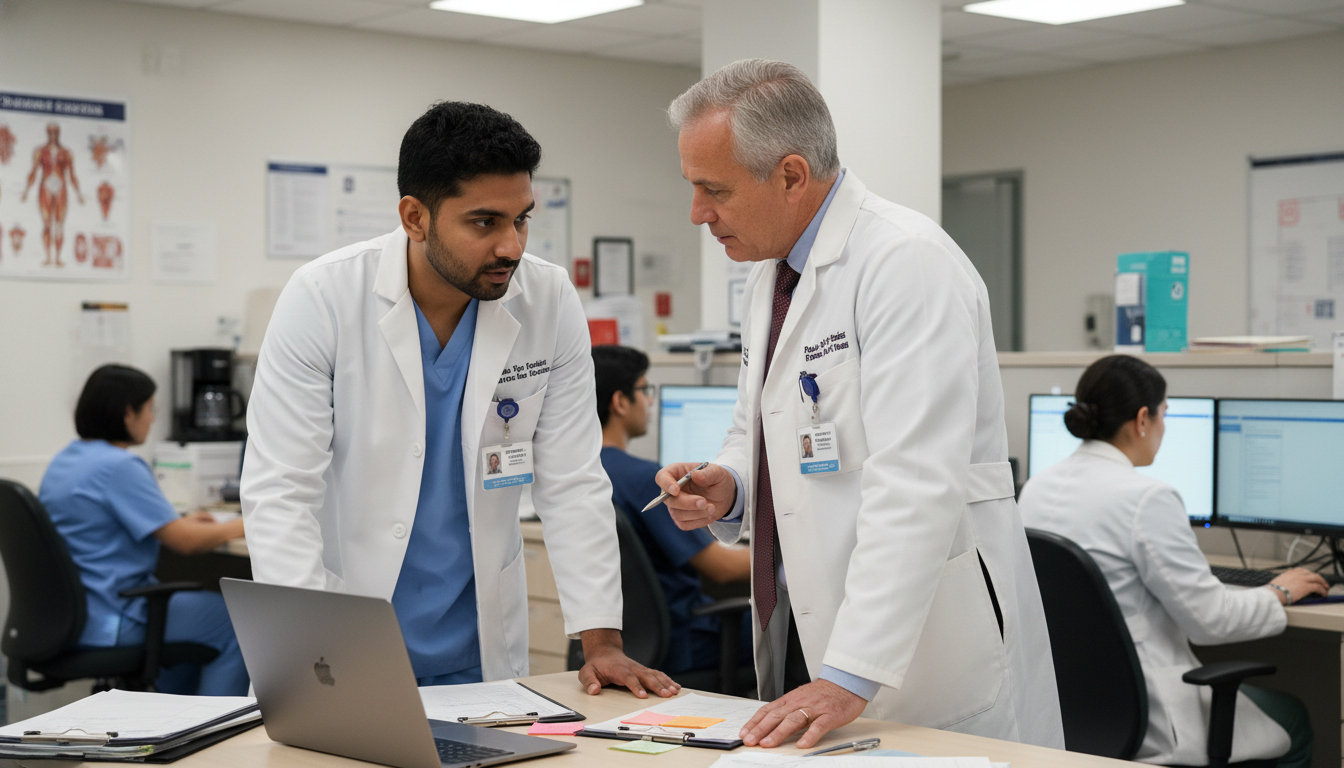
3. Building Mentorship & Sponsorship: The Heart of Networking in Medicine
You often hear the phrase mentorship in medicine, but for IMGs in prelim IM, you actually need two layers:
- Mentors – give you advice and guidance
- Sponsors – use their influence to open doors (offer interviews, nominate you for roles, connect you to decision‑makers)
3.1 Identifying Potential Mentors in a Preliminary Medicine Year
Look for faculty or senior residents who:
- Consistently teach on rounds
- Are approachable and interested in learners
- Show respect for IMGs and diverse backgrounds
- Are connected to your field of interest (internal medicine, subspecialty, or your advanced specialty)
Examples of potential mentors:
- Hospitalist attendings who see you on multiple rotations
- Residency program associate program directors (APDs)
- Subspecialty attendings in cardiology, nephrology, oncology, etc.
- Chief residents who are accessible and enjoy teaching
3.2 How to Start a Mentorship Conversation
Keep it simple and specific:
“Dr. Lee, I’ve appreciated your teaching this month. I’m an international medical graduate in a preliminary medicine year and I’m planning to apply for a categorical internal medicine position next cycle. Would you be open to meeting briefly sometime to discuss how I can best use this year to strengthen my application?”
If they agree:
- Show up on time
- Come with a clear agenda (2–3 questions)
- Bring an updated CV
- End by asking: “Would it be alright if I updated you on my progress over the year?”
This question turns a one‑time meeting into an ongoing relationship.
3.3 Converting Mentors into Sponsors
Sponsorship emerges when:
- You consistently perform well clinically
- You keep mentors updated on your progress
- You ask for help at the right time, in a respectful manner
When you are close to application season:
“Dr. Lee, I’ll be applying for categorical internal medicine this fall. Would you feel comfortable writing a strong letter of recommendation for me? If yes, I can send my CV, personal statement draft, and a summary of patients we managed together.”
If they say yes, you can later (if the relationship is strong) gently ask:
“If appropriate, would you be comfortable sharing my application with colleagues or program directors who might be looking for a strong PGY‑2 candidate?”
Not everyone will become a sponsor, but one strong sponsor can transform your trajectory.
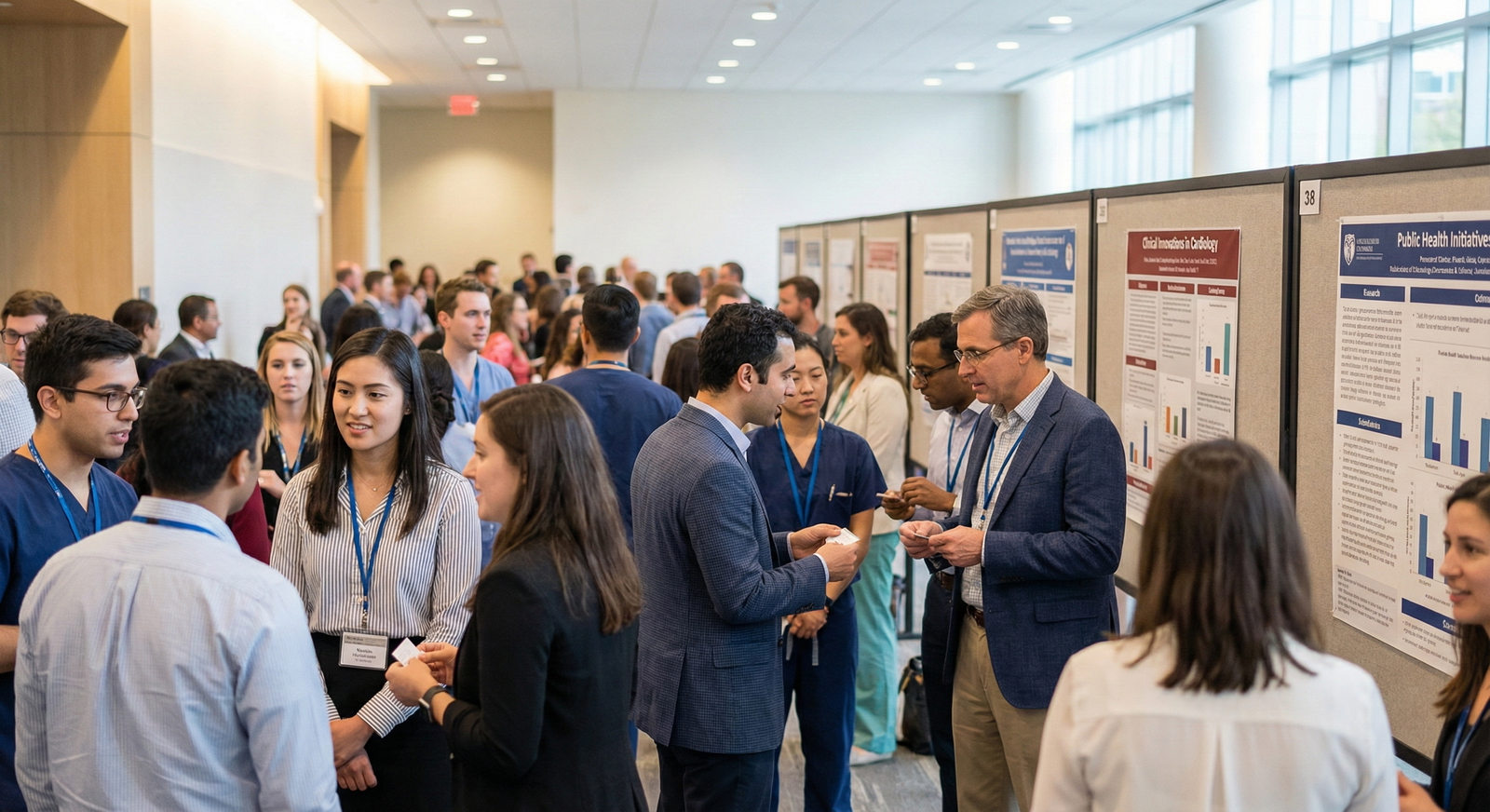
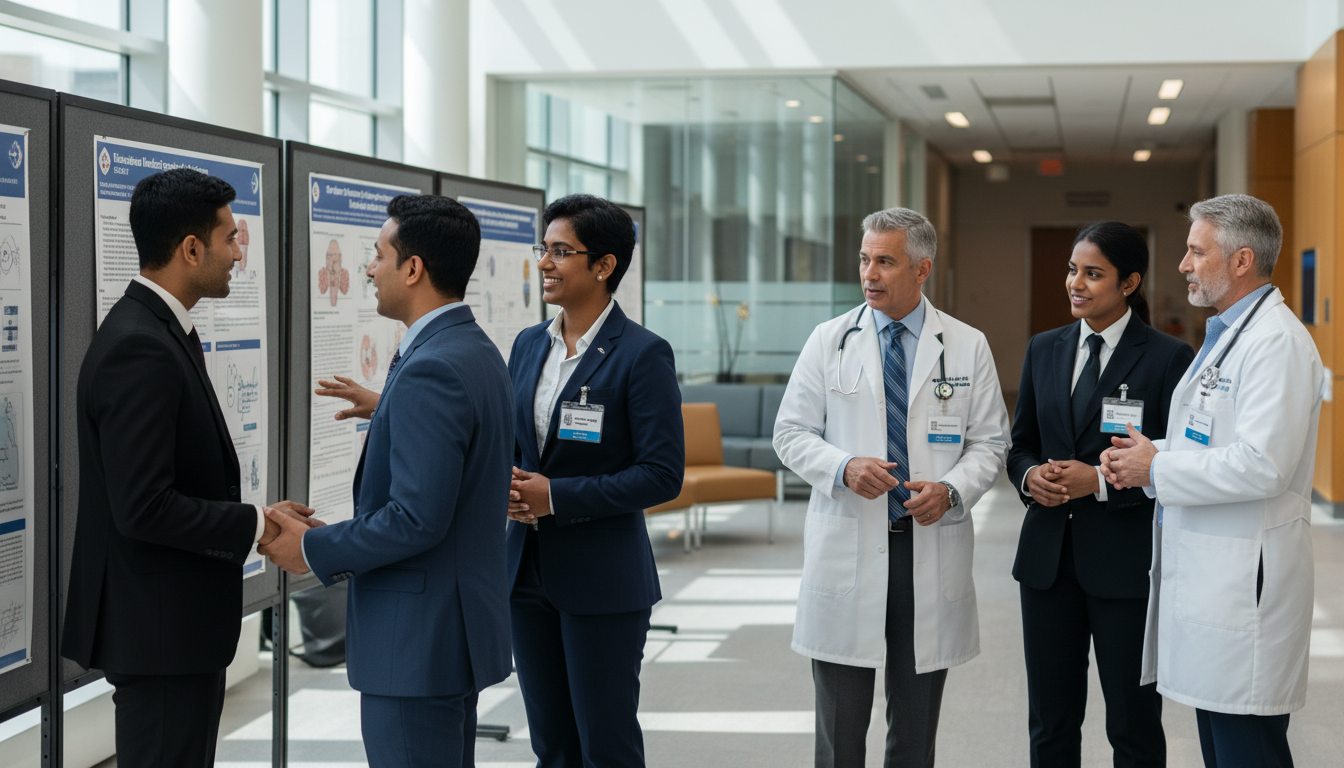
4. Conference & External Networking: Making Every Event Count
While day‑to‑day clinical work is primary, conferences and organized events are powerful tools, particularly for IMG residency guide strategies.
4.1 Why Conferences Matter for an IMG in Prelim IM
Effective conference networking can:
- Expose you to leaders in your field of interest
- Allow you to present posters or case reports, enhancing your CV
- Provide opportunities for research collaboration
- Help you understand expectations of fellowship or advanced training programs
Key events may include:
- National IM meetings (e.g., ACP, SGIM)
- Subspecialty conferences (cardiology, GI, oncology, etc.)
- Local/regional quality improvement or education conferences
- Hospital‑wide research days or resident scholarship days
4.2 Preparing for Conference Networking
Before you attend:
Define your goal
- Looking for research collaborators?
- Seeking information on categorical positions?
- Wanting to understand fellowship readiness?
Research attendees and sessions
- Check speakers who are program directors, APDs, or research leaders
- Note relevant poster sessions with resident or fellow presenters
Prepare your introduction (15–20 seconds)
Example:“Hello, I’m Dr. [Name], an international medical graduate currently in a preliminary internal medicine year at [Hospital]. I’m interested in pursuing categorical internal medicine with a focus on [interest area, e.g., cardiology].”
Have a simple “ask” ready
- “Could I email you a brief summary of my background and get your advice?”
- “Would you mind if I contacted you about potential research involvement?”
4.3 How to Approach People at Conferences
Use structured, respectful steps:
- Timing – Approach speakers after their talk when they are done answering immediate questions, or during breaks/poster sessions.
- Open with appreciation – “Thank you for your talk on [topic]; I found your point on [specific detail] especially helpful.”
- Connect your background – “As an IMG in a prelim IM year, I’m particularly interested in…”
- Make a clear, small request – “Would you be open to a brief email follow‑up to ask about paths for someone like me to enter your field?”
Ask for a business card or permission to email. Then follow up within 48–72 hours with:
- A 1–2 paragraph email
- Reference to where you met
- A concise “ask” (advice, short mentorship, potential future collaboration)

5. Digital & Local Networking: Extending Your Reach Beyond the Hospital
In a tightly packed preliminary medicine year, you may feel you never have time for anything outside work. But a small amount of structured digital and local networking can significantly increase opportunities.
5.1 Professional Online Presence for IMGs
A thoughtful online profile can support your in‑person networking:
LinkedIn
- Professional headshot
- Clear headline: “Preliminary Internal Medicine Resident (IMG) at [Institution] | Interested in [Field]”
- Short summary indicating IMG status, long‑term goals, major interests
- Add connections you meet at conferences, rotations, and grand rounds
Institutional profile / internal email groups
- Many hospitals have intranet directories, interest groups (e.g., QI, global health, medical education)
- Join internal committees or working groups where residents from various departments collaborate
5.2 Email Etiquette for Networking in Medicine
When reaching out cold (to faculty, researchers, PDs):
- Clear subject line
- “Prelim IM resident (IMG) seeking advice on cardiology research opportunities”
- Brief introduction (1–2 sentences)
- Who you are, where you train, your prelim status
- Connection or reason
- “I attended your talk at…” or “I read your paper on…”
- Specific ask
- “Could I schedule a 15‑minute call to ask your advice on X?”
- Professional close
- Polite, with your contact details and CV attached only if relevant
This approach respects time and increases the chance of a response.
5.3 Local Networking Opportunities
In addition to national meetings, look for:
- Hospital‐sponsored teaching conferences and noon conferences
- Morbidity and mortality conferences
- Departmental grand rounds (especially where external speakers visit)
- City or regional medical society meetings
- Resident wellness or diversity, equity, and inclusion (DEI) committees
Attend, ask questions, introduce yourself briefly to speakers or organizers, and follow up when relevant.
6. Strategic Networking for Career Transitions: From Prelim IM to Long‑Term Goals
Networking in medicine becomes crucial when you plan your next step after the preliminary medicine year.
6.1 If You Want a Categorical Internal Medicine Spot
Key strategies:
Signal your interest early
- Inform your program director or APD:
“I am very interested in staying in internal medicine and would like to be considered if a categorical position becomes available.”
- Inform your program director or APD:
Consistently strong evaluations
- Your clinical reputation must match your stated interest.
Seek targeted mentorship from:
- Chief residents
- Program leadership
- Faculty with influence in the residency program
Use networking to identify openings at other institutions
- Chief residents often know about mid‑year or next‐year PGY‑2 openings
- Ask mentors:
“If you hear of programs seeking PGY‑2 internal medicine residents, would you mind letting me know? I’d be very grateful for any leads.”
6.2 If Your Ultimate Goal Is an Advanced Specialty (e.g., Neurology, Radiology, Anesthesia)
Your prelim IM year is still a powerful networking environment:
- Identify faculty in your target specialty at your institution
- Ask your program director to connect you if the specialty is at a different hospital
- Express that you value strong internal medicine foundations and want to be competitive for their specialty
Networking actions:
- Attend that specialty’s grand rounds
- Ask if you can participate in research or QI projects
- Seek specialty‑specific mentors who understand the transition from prelim to advanced programs
Frame your identity as:
“I’m an IMG prelim IM resident building strong internal medicine skills as a foundation for [specialty], and I’m committed to a career in [field]. I’d love any advice on how to align my current work with that goal.”
6.3 Using Research and QI as Networking Multipliers
Research and quality improvement (QI) projects allow:
- Closer work with faculty
- Co‑authorships and presentations
- Stronger letters based on longitudinal interaction
Practical approach:
Ask your mentors:
“Are there ongoing projects I could assist with that don’t require extensive protected time?”
Join existing teams rather than starting from scratch; this fits better in a busy prelim year.
Use each collaboration as a relationship‑building platform—take responsibility, meet deadlines, communicate clearly.
7. Common Networking Pitfalls for IMGs in Preliminary Medicine (and How to Avoid Them)
Being aware of common mistakes will save you time and protect your reputation.
7.1 Appearing Transactional or Desperate
Red flags include:
- Asking for letters of recommendation very early in a rotation
- Immediately requesting job opportunities when you first meet someone
- Sending frequent follow‑ups that pressure people
Solution:
- Focus first on adding value (good clinical work, engagement, reliability)
- Allow relationships to form before large requests
- When in doubt, ask for advice, not direct favors
7.2 Overcommitting and Underdelivering
Another common issue:
- Saying yes to multiple research/QI projects, then struggling to meet deadlines
- Offering help to coworkers but not following through due to exhaustion
This damages both your network and your credibility.
Solution:
- Start small—one or two projects at most
- Honestly assess your schedule (especially on ICU or night float rotations)
- Communicate early if you’re falling behind
7.3 Ignoring Peer and Nursing Networks
Many IMGs overfocus on attendings and program leadership while neglecting:
- Co‑residents, particularly those in categorical IM or other specialties
- Nurses, PAs, NPs, social workers, case managers
Peers and allied health professionals:
- Influence how you are perceived by faculty
- Share information about opportunities or internal policies
- Can become future colleagues and collaborators across institutions
Treat everyone with consistent respect and professionalism—this is one of the strongest long‑term medical networking strategies.
7.4 Underestimating Cultural Nuances
As an international medical graduate, you may face:
- Different communication norms
- Unfamiliarity with hierarchy and boundaries
- Uncertainty about when it’s acceptable to reach out or ask for help
Mitigation strategies:
- Observe how U.S. graduates interact with faculty and emulate appropriate behaviors
- Ask trusted peers or chief residents:
“Is it appropriate to email Dr. X for this question?”
- When unsure, choose respectful, concise communication; err on the side of professionalism
FAQ: Networking in Medicine for IMGs in Preliminary Medicine
1. When should I start networking during my preliminary medicine year?
Start immediately, but pace yourself. On your first rotations, focus on strong clinical performance and professionalism. By the end of your first month, begin asking for brief feedback and expressing long‑term goals. More formal networking (mentorship meetings, conference networking) can ramp up after you’ve established yourself as a reliable intern.
2. How can I ask for a letter of recommendation without being awkward?
Wait until you’ve worked with an attending long enough (typically 2–4 weeks) and have received positive feedback. Then ask:
“Dr. [Name], I’ve really appreciated working with you this month. I’ll be applying for [categorical IM / advanced specialty] positions and would be honored if you felt comfortable writing a strong letter of recommendation based on our work together.”
Make it easy by providing your CV, personal statement draft, and a list of cases or projects you shared.
3. I’m shy and feel uncomfortable with “networking.” What can I do?
You don’t need to be extroverted. Focus on small, structured steps:
- Ask one mentor for a 15‑minute meeting per month
- Attend conferences or grand rounds and introduce yourself to only 1–2 people
- Use email follow‑ups if in‑person interaction feels overwhelming
Remember, reliability and thoughtfulness often matter more than charisma.
4. Does networking really compensate for being an IMG with visa needs?
Networking does not erase objective requirements (exam scores, clinical performance, visa sponsorship realities), but it significantly improves your chances by:
- Ensuring decision‑makers see you as a whole person, not just a file
- Providing advocates (sponsors) who can vouch for your clinical skills and work ethic
- Helping you identify programs genuinely open to IMGs and visa holders
For an IMG in a preliminary medicine year, well‑executed networking can be the difference between remaining “just a prelim” and progressing to a strong categorical or advanced position aligned with your long‑term goals.
Networking in medicine, especially during a high‑pressure prelim IM year, is not about collecting business cards—it’s about earning trust, building relationships, and demonstrating your value over time. As an international medical graduate, you already bring resilience, adaptability, and global perspective. With intentional networking, you can turn your preliminary year into a powerful launchpad for the rest of your U.S. medical career.