Why Networking Matters So Much for IMGs in Psychiatry
For an international medical graduate (IMG) pursuing psychiatry residency in the US, networking is not optional—it is a strategic necessity. Strong clinical credentials and exam scores get your application noticed; effective networking often determines who remembers your name when interview lists are made or rank lists are finalized.
Psychiatry is a relatively small, relationship‑driven specialty. Program directors, faculty, and residents talk to each other across institutions and at conferences. The more people who can genuinely say, “I know this applicant, and I’d be happy to train with them,” the stronger your psych match prospects become.
Key reasons networking is especially critical for IMGs in psychiatry:
- Limited visibility: Many IMGs are trained outside the US system, so program directors may be unfamiliar with your school or training environment.
- Visa and institutional bias: Some programs rarely sponsor visas. A strong internal advocate can help overcome reluctance.
- Communication focus of psychiatry: Psychiatry values interpersonal skills, cultural sensitivity, and reflective thinking. Networking gives you a chance to demonstrate these in person.
- Letters and “off-paper” impressions: Informal feedback from faculty (“I’ve worked with them; they were excellent”) can matter as much as what’s on your CV.
This IMG residency guide focuses on how to build and use a professional network—ethically and strategically—to strengthen your psychiatry residency application, even if you are starting from zero.
Understanding Networking in Medicine as an IMG
What “Networking” Really Means in Psychiatry
Networking in medicine is not about collecting business cards or sending mass emails. In psychiatry especially, it’s about:
- Forming authentic professional relationships
- Demonstrating reliability, curiosity, and emotional intelligence
- Being remembered for your work ethic and character
- Creating mutual value (you contribute, not just ask)
Effective networking behaviors in psychiatry include:
- Asking thoughtful questions at grand rounds or journal clubs
- Following up with a thank-you and a specific point you learned
- Volunteering to help with a small project and delivering on time
- Staying in periodic contact in a professional, low‑pressure way
The IMG-Specific Networking Challenges
As an international medical graduate, you may face:
- Physical distance: You may still be outside the US, limiting in-person contact.
- Lack of initial connections: No home US medical school, alumni network, or built-in advisors.
- Cultural differences: Different norms about hierarchy, self-promotion, and approaching senior physicians.
- Visa constraints: Some mentors may assume you’re “too complicated” to help unless they understand your situation.
These challenges are real but not insurmountable. Many successful IMG psychiatrists built their careers from a cold start—often through deliberate conference networking, sustained mentorship in medicine, and a structured approach to contacting people.
The Three Layers of Your Psychiatry Network
Think of your professional network as three layers:
Core network (strong ties)
- Faculty you have worked closely with
- Research supervisors
- Psychiatrists who know your clinical skills and personality
- People who will likely write letters and advocate for you
Supportive network (moderate ties)
- Residents you have shadowed
- Faculty who have met you at conferences or rotations
- Mentors from online interest groups or alumni chapters
Expanded network (weak ties)
- Psychiatry doctors and researchers you follow or occasionally email
- Professionals you meet briefly at events or webinars
The psych match is often influenced by all three layers: strong ties advocate, moderate ties confirm your reputation, weak ties may open surprising doors (electives, observerships, research).

Building a Strong Foundation: Personal Brand and Story
Before you start networking in medicine, you need clarity about who you are, what you want, and how you communicate it.
Define Your Psychiatry Narrative
Your narrative is the through‑line that makes your past experiences and future goals coherent. A clear narrative helps others remember and recommend you.
Ask yourself:
- Why psychiatry, and not internal medicine or neurology?
- What experiences shaped your interest (clinical, research, personal, cultural)?
- What aspects of psychiatry excite you most (e.g., psychosis, mood disorders, addictions, child and adolescent, consultation-liaison)?
- How does your background as an international medical graduate enrich your perspective?
Example of a concise narrative:
“I trained in a resource-limited psychiatric hospital in India, where I saw how untreated depression and psychosis destroyed families. I became interested in early intervention and cultural factors in help‑seeking. During my observership at XYZ Hospital in the US, I saw the benefits of integrated care and evidence-based psychosocial interventions. I hope to train in a psychiatry residency that values culturally-informed care and academic inquiry.”
This kind of story:
- Helps mentors see where you might fit in
- Gives context for your research and electives
- Makes you memorable beyond your scores
Develop Your Professional Presence
Your professional “brand” isn’t marketing; it’s consistency between your values, behavior, and how you present yourself.
Key elements:
- Email address: Use a professional email (e.g., first.last.md@gmail.com).
- CV: Up-to-date, clean layout, focused on psychiatry-relevant activities.
- LinkedIn: Brief, clear profile with your psychiatry interests and achievements.
- Professional photo: Neutral background, clear lighting, conservative attire—use the same across platforms.
- Online footprint: If you use X/Twitter or other platforms for medical discussion, keep them professional and respectful.
When you reach out to someone for medical networking or mentorship in medicine, they may Google you within minutes. Make sure what they find aligns with how you want to be seen.
Communication Skills: Crucial in Psychiatry Networking
Psychiatry values nuanced communication. When networking:
- Be concise but warm. Long, unfocused messages are rarely read.
- Avoid sounding demanding or entitled. Ask, don’t assume.
- Show gratitude, but not flattery. Be specific about what you appreciate.
- Listen more than you speak. This is crucial in one-on-one conversations.
Example of a clear email subject line:
- “IMG interested in psychiatry – seeking brief advice about research opportunities”
- “Prospective psychiatry applicant – follow-up after grand rounds on psychosis”
Practical Networking Strategies for IMGs in Psychiatry
1. Maximize Clinical Rotations, Observerships, and Externships
These are your most powerful networking opportunities: you get to demonstrate your work ethic and interpersonal skills in real time.
How to turn a rotation into a network:
- Arrive early, leave late (within reason). Be visible and dependable.
- Volunteer for small tasks. Offer to help with presentations, handouts, or literature reviews.
- Ask faculty about their work. Many psychiatrists are involved in research, advocacy, or quality improvement.
- Request feedback. “Is there anything I could improve in my clinical notes or presentations?”
- Ask for a meeting before you leave.
Example: “I’ve really appreciated this rotation. Could we set up 15 minutes to discuss my plans for psychiatry residency and get your advice?”
Use that meeting to:
- Share a short summary of your background and goals
- Ask targeted questions (e.g., “Given my profile, what kinds of programs should I consider?”)
- Ask whether they’d be comfortable staying in touch
- If appropriate, ask if they would consider writing a letter of recommendation (LOR)
2. Engage in Research and Academic Work
Academic psychiatry is a natural arena for building relationships:
- Join ongoing projects. Many labs or clinical groups need help with data entry, chart review, or literature reviews.
- Start small. Case reports, posters, QI projects are realistic starting points, especially for IMGs.
- Be reliable. Meeting deadlines is more important than being brilliant. Reliability earns trust.
Networking benefits of research:
- You build mentorship in medicine with principal investigators and senior residents.
- You gain co-authors who can become part of your extended network.
- Presentations at conferences multiply your contacts.
If you’re outside the US:
- Reach out to psychiatry researchers whose papers you’ve genuinely read.
- Mention specific aspects of their work that align with your interests.
- Offer to assist remotely with literature reviews, data collection (if feasible), or manuscript preparation.
3. Master Conference Networking in Psychiatry
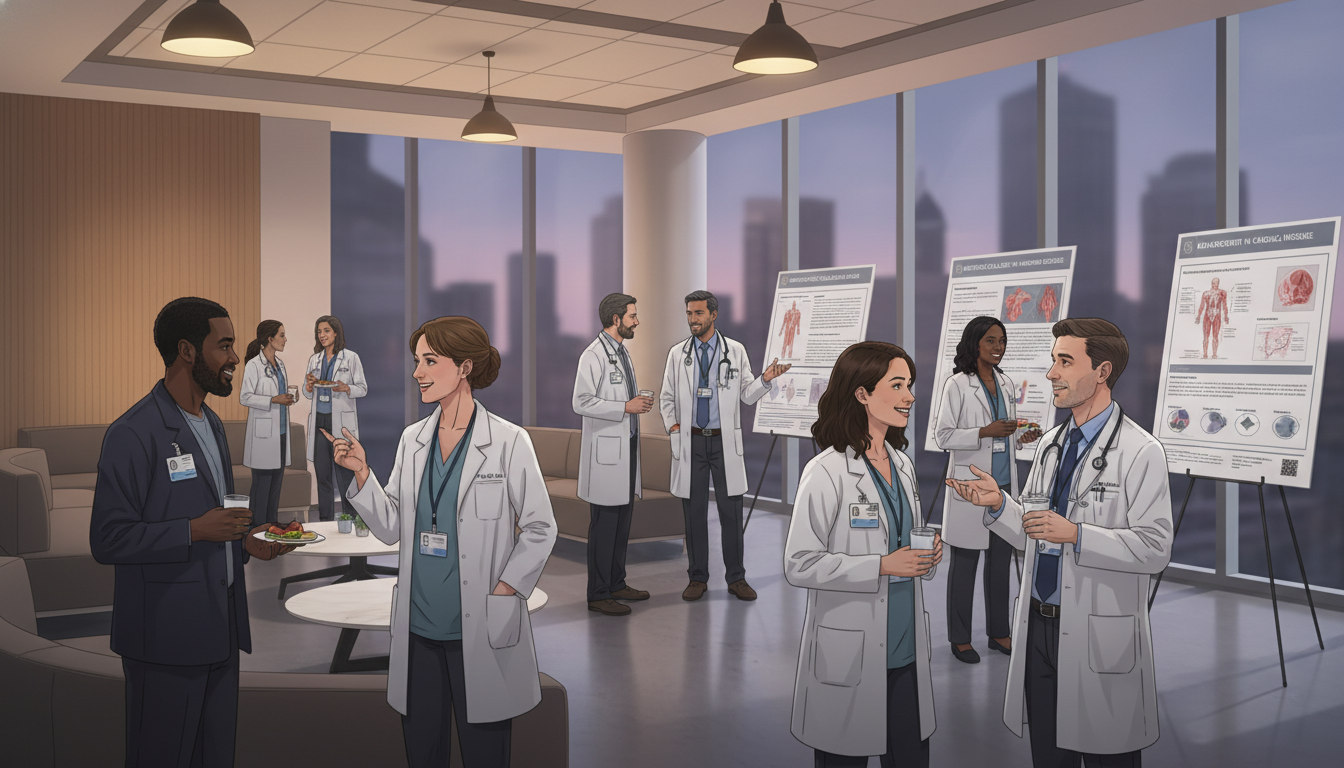
Psychiatry conferences are some of the richest networking environments. As an IMG, prioritizing one or two high-yield events can significantly expand your network.
High-value conferences for IMGs in psychiatry include:
- American Psychiatric Association (APA) Annual Meeting
- American Association of Directors of Psychiatric Residency Training (AADPRT) workshops/webinars
- Regional/state psychiatric society meetings
Tips for effective conference networking:
Prepare beforehand:
- Review the program and mark sessions where key program directors or faculty from your target programs are speaking.
- Learn basic information about those programs (size, strengths, IMG-friendliness, fellowship tracks).
- Prepare a 15–30 second self-introduction.
Example self-introduction:
“Hello, Dr. Smith. My name is [Name]. I’m an international medical graduate from [Country], currently doing a research assistantship in mood disorders at [Institution]. I’m very interested in US psychiatry residency, particularly programs with strong psychotherapy and research training.”
During sessions:
- Ask brief, thoughtful questions if appropriate.
- After the session, approach the speaker:
- Thank them for a specific point.
- Introduce yourself and your psychiatry interests.
- Ask if you may follow up by email for advice.
Poster sessions:
- If you have your own poster, treat every visitor as a potential contact.
- If you don’t, visit posters from programs you’re targeting, speak with residents, and ask about their training experience.
Follow-up within 48–72 hours:
- Short email reintroducing yourself
- Reference your conversation
- Ask for a brief meeting or advice if appropriate
- Connect on LinkedIn if they are active there
Conference networking is where medical networking and conference networking intersect: you meet many people in a short time and create reasons to continue the conversation later.

Digital Networking: Making Geography Less Important
If you are not yet in the US—or have limited travel resources—digital tools can dramatically reduce the distance.
Using Professional Platforms Effectively
- Build a concise, psychiatry-focused profile:
- Headline: “International medical graduate pursuing psychiatry residency | Interest in [e.g., addiction psychiatry, early psychosis].”
- Summary: 3–5 sentences describing your training, psychiatry interests, and goals.
- Connect with:
- Psychiatry residents and faculty from programs you are interested in
- Alumni from your school who matched into psychiatry
- When sending a connection request:
- Add a short note:
“I’m an IMG from [Country] interested in psychiatry residency. I’ve been following [Program/Your work in X]. I’d be grateful to learn from your experience when convenient.”
- Add a short note:
X/Twitter and other academic platforms
- Many psychiatrists discuss research, education, and advocacy online.
- Follow people in your areas of interest (e.g., psychosis, global mental health, child psychiatry).
- Engage thoughtfully:
- Comment on articles or threads with genuine insight.
- Share relevant psychiatry content with brief commentary.
Professional online presence builds your weak ties network, which sometimes leads unexpectedly to research offers, introductions, or informal advice.
Email Outreach: Cold, Warm, and Hot Contacts
- Hot contact: Someone you already know or who has been introduced to you by a mutual contact.
- Warm contact: Someone you met briefly (e.g., at a webinar or conference) or who knows of you indirectly.
- Cold contact: No prior connection.
In all cases, your goal is to be respectful of their time and focused in your request.
Sample structure for a concise outreach email:
- Subject line: clear and specific
- “IMG interested in psychiatry – request for brief career advice”
- Greeting: formal (Dear Dr. X)
- One-sentence introduction: who you are
- One or two sentences: why you’re reaching out to this person
- One sentence: specific ask (e.g., a 15–20 minute Zoom to get advice)
- Appreciation and flexibility
Example:
Dear Dr. Smith,
My name is [Name], and I am an international medical graduate from [Country], currently preparing for a psychiatry residency application in the US. I recently attended your webinar on cultural psychiatry and was particularly struck by your discussion of stigma in immigrant communities.
I am very interested in this area and was wondering if you might be willing to spare 15–20 minutes for a brief Zoom call at your convenience so I could ask your advice about building a career in psychiatry as an IMG with interests in cross-cultural care.
I understand you are very busy and completely understand if this is not possible. Thank you for considering my request.
Sincerely,
[Name]
[Email] | [LinkedIn link if appropriate]
Not everyone will respond. Even a 20–30% response rate for cold or warm contacts is a success.
Turning Connections into Advocacy and Opportunities
Networking only helps your psych match if it leads to meaningful professional engagement and, ultimately, advocacy.
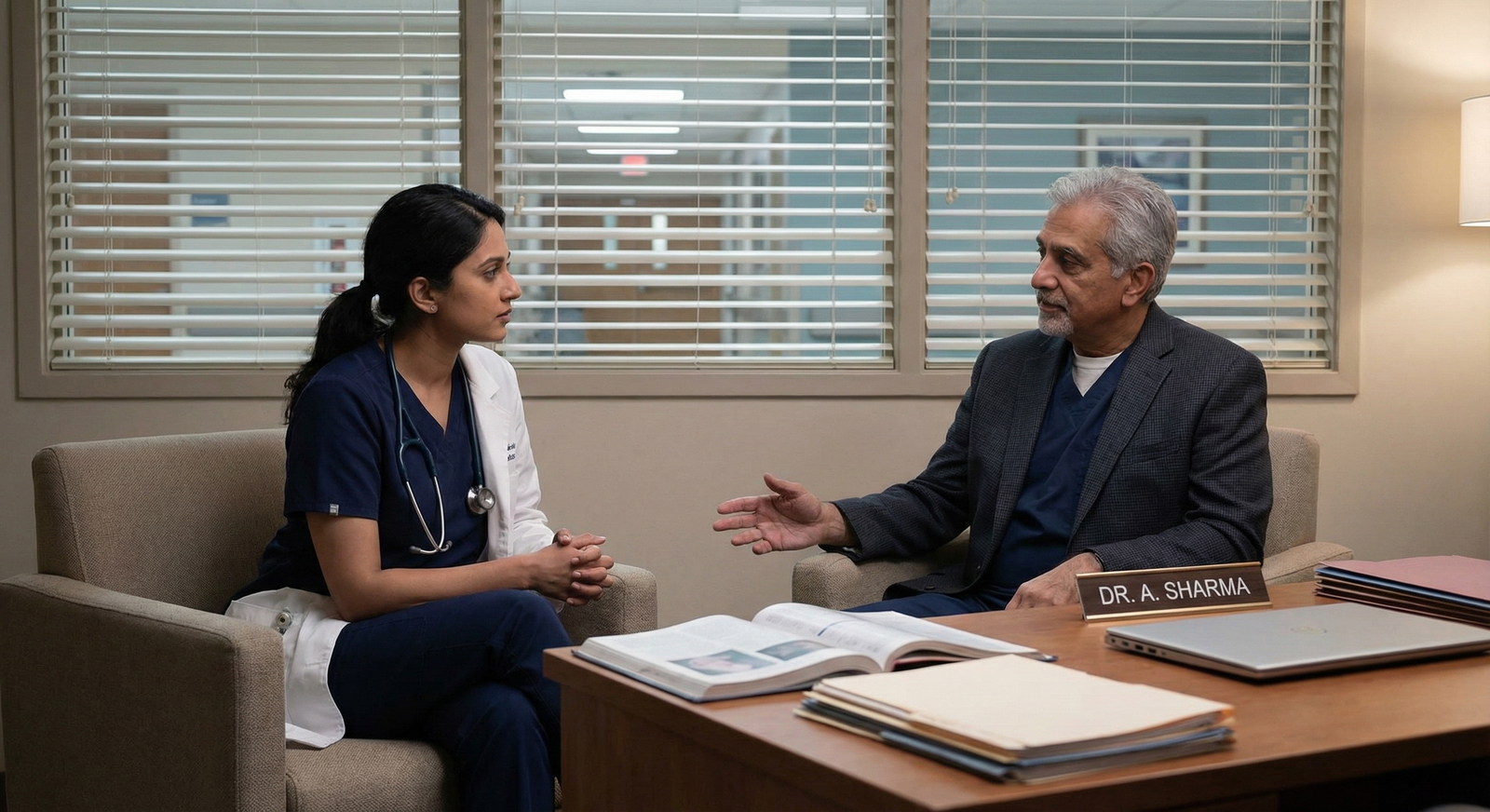
Building True Mentorship in Medicine
A mentor is more than someone who answers one email. They:
- Understand your goals and constraints (e.g., visa status, exam timeline)
- Provide honest feedback on your competitiveness
- Help you prioritize clinical, research, and networking opportunities
- Sometimes introduce you to others in their network
To nurture mentorship relationships:
- Be proactive in updating them on your progress (2–3 times per year).
- Ask specific questions, not “What should I do with my life?”
- Implement their advice when possible, and later share what happened.
- Respect boundaries and time—don’t over-contact or expect immediate responses.
Example of a periodic update email:
Dear Dr. Patel,
I hope you have been well. I wanted to briefly update you that since our last conversation in March, I have completed a psychiatry observership at [Hospital], co-authored a case report on first-episode psychosis, and scheduled my Step 2 CK for October.
I am now starting to build my ERAS application for the upcoming cycle. If you have time in the next month, I would be very grateful for any advice on how to prioritize programs as an IMG with strong interest in psychosis and academic psychiatry.
Thank you again for your continued guidance.
Best regards,
[Name]
Asking for Letters of Recommendation and Support
When a faculty member knows you and your work, you can ask:
- For a letter of recommendation (LOR)
- Whether they would be comfortable reaching out to colleagues at programs where you are applying (in some cases)
How to ask appropriately:
- Ensure they know you well enough (after working together on rotations, projects, or over repeated interactions).
- Ask if they can write a strong letter.
- Provide your CV, personal statement draft, and a short bulleted list of things you hope they might highlight (e.g., your work ethic, communication with patients, cross-cultural strengths).
Example phrase:
“Would you feel comfortable writing a strong letter of recommendation in support of my psychiatry residency application?”
If they hesitate, it’s better to not use that letter.
Networking with Current Residents
Residents can be your most honest and accessible source of inside information, and sometimes your most active advocates.
How to connect:
- During rotations: show interest in their experiences, ask about their program.
- At conferences: ask about their training environment and advice for IMGs.
- Online: many residency programs have social media or resident‑run accounts.
Good questions to ask residents:
- “What do you think your program looks for in an IMG applicant?”
- “What helped you the most when you were applying?”
- “Are there electives or observerships that are particularly useful here?”
Residents may:
- Give you realistic feedback on your chances
- Flag specific faculty who are supportive of IMGs
- Sometimes mention you to the program director if they are genuinely impressed
Common Pitfalls and How to Avoid Them
Even with good intentions, IMG residency networking can go wrong if you’re not careful.
1. Overly Transactional Behavior
If every interaction is “Can you write me a letter?” or “Can you help me get in?”, people will pull away.
Instead:
- Focus first on learning, contributing, and building relationships.
- View networking as a long-term investment in your career, not just this year’s psych match.
2. Mass Emailing or Copy-Paste Messages
Program directors and faculty recognize generic templates. These rarely generate meaningful responses.
Instead:
- Personalize each message with at least one or two specific references.
- Keep your volume manageable so you can maintain depth with a smaller number of people.
3. Ignoring Cultural and Hierarchical Norms
In some countries, students never email senior professors directly. In US academic psychiatry, polite initiative is usually appreciated.
Balance:
- Be respectful and formal in initial contacts.
- Once a rapport is established, follow their lead on informality or frequency.
4. Not Following Up—or Over-Following Up
Both extremes are harmful:
- No follow-up: The relationship fades and the person may forget you by application season.
- Excessive follow-up: You risk becoming a burden and damaging the relationship.
Guideline:
- After an initial meeting: follow up once within 1 week with thanks and any requested information.
- Beyond that: periodic updates every few months, unless they’ve invited more frequent communication.
5. Exaggerating or Misrepresenting Yourself
The medical world is smaller than you think, especially in psychiatry. People talk.
- Never claim involvement in research or clinical work that you did not actually perform.
- Be honest about your visa status and exam attempts.
- Integrity is crucial; your long-term reputation is more important than any single match cycle.
FAQs: Networking in Medicine for IMGs in Psychiatry
1. I’m still in my home country with no US contacts. Where do I start?
- Begin by strengthening your local psychiatry experiences: rotations, research, mental health outreach.
- Join virtual events from organizations like APA or regional US psychiatry societies.
- Use LinkedIn and email to reach out to:
- Alumni from your school who matched into psychiatry in the US
- Authors of psychiatry papers that match your interests
- Aim to arrange at least one US-based observership or research experience if feasible; even a short one can seed a network.
2. How many conferences should I attend as an IMG psychiatry applicant?
Quality matters more than quantity. For most IMGs:
- Aim for 1–2 major psychiatry conferences (e.g., APA) if financially possible.
- Supplement these with virtual symposia, webinars, or regional meetings.
- Maximize each event by planning your schedule, reaching out to speakers beforehand when appropriate, and following up after.
3. Is it appropriate to tell someone I meet that I want to match at their program?
Yes—but do it tactfully and with humility.
You can say:
“Your program is exactly the kind of psychiatry training I’m hoping for, especially given its strengths in [X]. I plan to apply here and would be very grateful for any advice on how I can strengthen my application as an IMG.”
Avoid sounding like you expect special treatment; focus on seeking guidance, not guarantees.
4. How much can networking really change my chances in the psych match as an IMG?
Networking will not replace minimum requirements (USMLE scores, ECFMG certification, clinical experience). However, for applicants who meet basic thresholds, a strong professional network can:
- Increase your chances of being noticed and invited for interviews
- Strengthen your letters of recommendation
- Improve your program fit by guiding you to the right places
- Sometimes lead to informal advocacy, such as a faculty member emailing a colleague to recommend you
For an international medical graduate in psychiatry, networking is often the difference between being just another application in a large pile and being a recognizable, trusted name that people feel comfortable supporting.
By approaching networking in medicine as a long-term, relationship-based process—grounded in authenticity, reliability, and curiosity—you can build a powerful support system that not only helps you match into psychiatry, but also sustains your growth throughout residency and your career.