Why Networking Matters So Much for IMGs in a Transitional Year
For an international medical graduate (IMG), the Transitional Year (TY) residency is often more than just a rotating internship—it’s a launchpad. Whether your goal is anesthesia, radiology, dermatology, PM&R, radiation oncology, or another advanced specialty, what you achieve and who you meet in this year can strongly influence your next step.
Networking in medicine is not superficial socializing; it is the deliberate process of building professional relationships that:
- Help you learn the hidden curriculum of residency and US healthcare
- Open doors to advanced positions, research, and electives
- Provide mentors and sponsors who advocate for you
- Create a reputation that follows you throughout your career
For IMGs, strategic networking can:
- Offset disadvantages of a foreign medical school and unfamiliarity with US systems
- Help overcome visa-related barriers by connecting you early with programs that support IMGs
- Provide credible voices (US-based attendings and program directors) who will write strong letters and speak on your behalf
In the context of a Transitional Year residency, you have a unique advantage: you rotate across multiple departments and frequently meet many attendings, residents, and staff. Used correctly, your TY program becomes an intensive one-year networking laboratory.
This IMG residency guide focuses specifically on networking in medicine during a Transitional Year residency, walking you through strategies, scripts, timelines, and common pitfalls so you can convert this year into long-term opportunities.
Understanding the Networking Landscape in a Transitional Year (TY) Program
A Transitional Year residency is structured differently from categorical programs. This structure creates specific networking opportunities and challenges.
How a Transitional Year Structure Shapes Your Network
Typical features of a TY program:
- Multiple specialty rotations (e.g., internal medicine, surgery, emergency medicine, ICU, electives)
- Short rotation blocks (often 2–4 weeks per specialty)
- Exposure to several departments and multiple program directors
- Less continuity with a single team, more breadth across the hospital
This means you will:
- Meet more people than a categorical intern in a single year
- Spend less time with each person, so first impressions and follow-up matter more
- Need a deliberate system to turn brief interactions into meaningful relationships
In a TY residency, every rotation becomes a networking mini-campaign. You are building:
- Horizontal connections with co-residents (TY, prelim, categorical)
- Vertical connections with attendings, fellows, chief residents, and program leadership
- Cross-institutional connections via conferences, electives, and research collaborations
Key Networking Goals for an IMG in TY
Clarify what you want from your networking efforts. For most international medical graduates in a Transitional Year, the high-yield goals are:
Securing a position in your target advanced specialty
- Categorical residency (e.g., Neurology, Radiology, Dermatology)
- Advanced position (e.g., Anesthesiology PGY-2)
- Fellowship-style transitional pathway in certain countries or systems
Building a strong US-based professional reputation
- Attendings who will remember you positively
- Residents and fellows who become future colleagues and referral sources
Obtaining high-quality letters of recommendation (LoRs)
- At least 2–3 letters from US-based faculty in or related to your target specialty
- Ideally from recognized or academically active faculty
Developing mentorship and sponsorship
- Mentors: guide your decisions, review your CV, advise you on strategy
- Sponsors: actively recommend you for positions, projects, and opportunities
Expanding your opportunities through medical networking
- Research projects, quality improvement (QI) initiatives, educational work
- Leadership roles within the program or hospital
- Visibility at conferences through presentations and posters
Understanding these goals helps you avoid random networking and instead build a targeted strategy.

Building Your Core Network Inside the Transitional Year Program
Your TY program is the foundation of your networking in medicine. It’s where you are most visible, and where people will see you work daily. This section translates networking into concrete behaviors, day by day, rotation by rotation.
Step 1: Master the Basics of Professional Presence
You cannot network successfully without a strong baseline of professionalism and reliability. For IMGs, this is especially critical because others may unconsciously stereotype or doubt your training background. You want your behavior to quietly but consistently disprove those biases.
Focus on these fundamentals:
- Punctuality: Arrive early, especially in the first week of any rotation.
- Preparedness:
- Read about common conditions seen on that rotation.
- Know your patients extremely well (labs, imaging, overnight events).
- Communication:
- Speak clearly; avoid overly complex phrasing.
- Confirm understanding: “Just to confirm, you’d like me to…?”
- Helpfulness: Offer help to co-residents (notes, discharges, procedures) when appropriate.
- Respect: Be kind to nurses, techs, clerks—they influence how attendings perceive you more than you realize.
Networking tip: The most powerful networking tool you have is being the intern everyone wants on their team. People naturally advocate for and remember those who make their lives easier.
Step 2: Identify Key People on Each Rotation
On every rotation, quickly map out the “networking targets”:
- Attendings
- Who is known for teaching or mentoring?
- Who is connected to your target specialty or a related department?
- Program leaders
- Chief residents
- Assistant program directors (APDs)
- Clerkship directors (for specialty rotations)
- Fellows and senior residents
- Often more accessible than attendings
- Can introduce you to attendings or research projects
Actionable strategy:
- Week 1 of each rotation:
- Observe who is engaged, friendly, and relevant to your goals.
- Note names, roles, and interests (keep a small note on your phone or a notebook).
Step 3: Use Structured “Mini-Introductions”
Early in each new rotation, introduce yourself in a way that seeds future networking:
Example script (to an attending or senior resident):
“Hi Dr. Smith, I’m Dr. Patel, one of the Transitional Year residents. I trained in India and I’m interested in pursuing anesthesiology after this TY program. I’m really looking forward to learning from you on this rotation.”
This brief statement accomplishes several things:
- Announces you as an IMG in a confident, neutral way
- Names your TY program and your target field
- Signals openness to learning and connection
You don’t need to repeat this to everyone, but use variations with key people you want to engage.
Step 4: Turn Everyday Work into Networking Moments
You don’t need special events to network. Use normal clinical interactions strategically:
- During rounds:
- Ask focused, thoughtful questions (avoid slowing the team too much).
- Example: “For this patient with sepsis, could you share how you choose between norepinephrine and vasopressin in our ICU?”
- After a teaching moment:
- “Thank you for explaining that approach to DKA. I hadn’t seen it presented that clearly before.”
- When receiving feedback:
- “I appreciate the feedback on my presentations. I’m working on being more concise; please let me know if you see other areas I can improve.”
These small, respectful interactions build your reputation as teachable, engaged, and professional—all core to effective networking in medicine.
Step 5: Asking for Mentorship and Opportunities
Once you’ve worked with someone for at least 1–2 weeks and have demonstrated reliability, you can start to transition from “good intern” to “mentee” or “research partner.”
How to ask for mentorship (informal start):
- “Dr. Lopez, I’ve really appreciated working with you this month. I’m an IMG in the Transitional Year program and planning to apply to radiology. Would you be open to my reaching out occasionally for advice about my career path or ERAS application?”
Most faculty members say yes to a light, low-commitment ask like this.
How to ask for project involvement:
- “Dr. Nguyen, I’m interested in getting involved in a small research or quality improvement project in emergency medicine or critical care, especially something that could lead to a presentation. If you know of any ongoing projects where an extra pair of hands would be helpful, I’d be very grateful to participate.”
Always emphasize that you are ready to do the groundwork (data collection, chart review, literature search) and that you will respect deadlines.
Step 6: Securing Strong Letters of Recommendation
A key output of effective networking during a TY program is strong letters of recommendation for your next application cycle.
Timing and approach:
- Ask near the end of a rotation where you performed well and had exposure.
- Ask in person if possible, then follow up by email.
- Preferred phrasing:
- “Dr. Williams, I’ve really valued working with you this month. I’m an international medical graduate in the Transitional Year and will be applying to anesthesiology. Would you feel comfortable writing a strong letter of recommendation on my behalf?”
The word “strong” gives them a graceful way to decline if they can’t write a supportive letter.
Support your letter writer:
- Provide your CV, personal statement draft, and ERAS AAMC ID.
- Remind them of cases or responsibilities you handled that reflect your skills.
- Send polite reminders if needed as deadlines approach.
Expanding Beyond the TY Program: Conferences, Social Media, and Cross-Institutional Networking
Once you’ve established a solid internal network, widen your reach. This is where medical networking goes from local to national (and sometimes international).
Conference Networking for Transitional Year IMGs
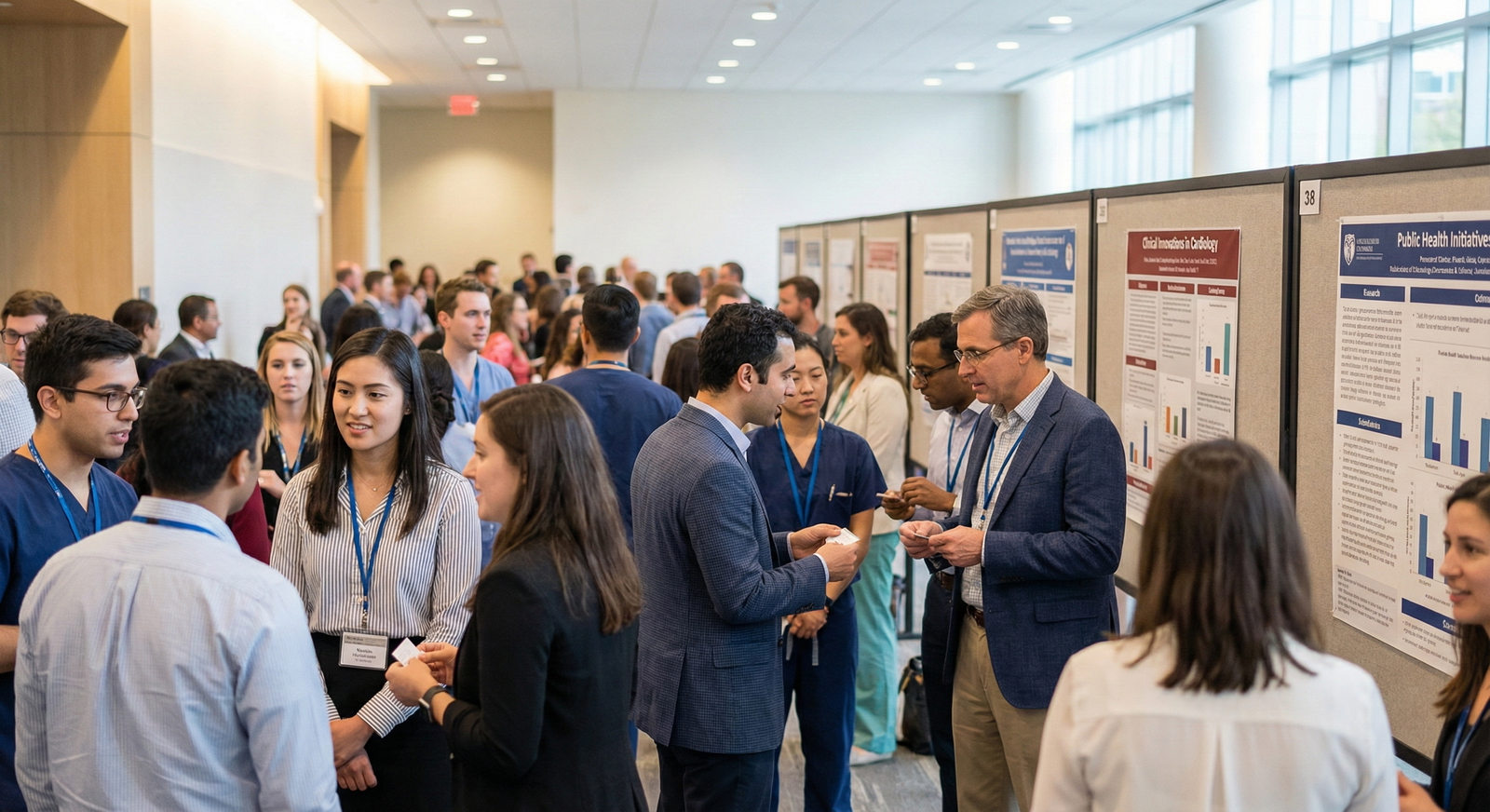
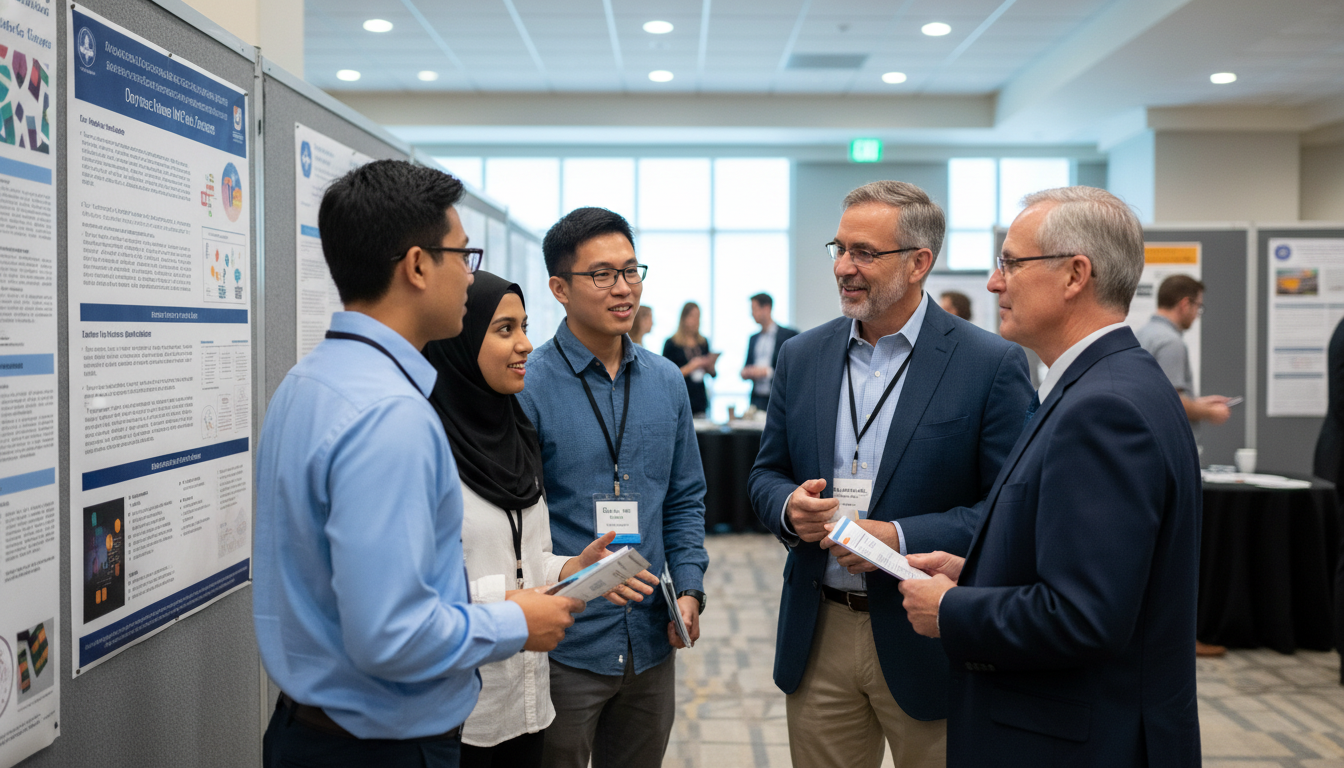
Conference networking is one of the most efficient ways to gain visibility in your target specialty. For an IMG in a Transitional Year, it signals seriousness and exposes you to programs you might not otherwise access.
Step 1: Choose the Right Conferences
Prioritize:
- National specialty conferences in your planned field (e.g., ASA for Anesthesiology, RSNA for Radiology, AAN for Neurology).
- Regional or state specialty meetings where competition for attention may be lower.
- Meetings focused on medical education or quality improvement if you have related projects.
If you have a poster or abstract, your presence becomes even more meaningful—this doubles as both scholarship and networking.
Step 2: Prepare for Conference Networking
Before attending:
- Review the program schedule and identify:
- Sessions where program directors or leaders from target programs are speaking
- IMG-focused or early-career sessions
- Create a simple, updated CV and save it as PDF (accessible on your phone and email).
- Practice a short 30–45 second introduction:
Example:
“I’m Dr. Ahmed, an international medical graduate currently in a Transitional Year residency in [City]. I’m interested in pursuing a categorical position in radiology, with particular interest in thoracic imaging. I have been involved in a QI project on reducing CT turnaround time in the ED.”
Step 3: Professional Conference Behavior
During the conference:
Attend early-morning and smaller sessions—easier to approach speakers.
Ask one or two concise questions at the microphone during Q&A (if comfortable).
Approach speakers afterward:
- “Thank you for your talk on ultrasound-guided nerve blocks. I’m a Transitional Year resident planning to apply to anesthesia and found your data on post-op pain particularly helpful. May I ask a quick question about how you implemented that protocol at your institution?”
If the interaction goes well, you may say:
- “Would it be alright if I emailed you about potential opportunities for visiting electives or research? I’m very interested in your institution’s work in this area.”
Obtain email contact when appropriate, and write a brief follow-up within a week.
Smart Use of Social Media and Online Platforms
Online presence can complement real-life networking, especially for IMGs who began outside the US.
LinkedIn and Professional Profiles
- Create or update your LinkedIn profile:
- Professional photo
- Headline: “Transitional Year Resident Physician | International Medical Graduate | Aspiring [Specialty]”
- Sections for education, clinical experience, research, presentations
- Connect with:
- Attendings you’ve worked with
- Residents and fellows you know personally
- Faculty you met at conferences
Send personalized connection requests:
“Dear Dr. Chen, it was a pleasure meeting you at the [Conference] session on cardiac MRI. I’m an IMG in a Transitional Year residency and aspiring radiologist. I’d be grateful to stay connected here on LinkedIn.”
Specialty-Specific Online Communities
Some fields (e.g., radiology, EM, anesthesiology) have active communities on X (Twitter) or other platforms. Use them carefully:
- Follow leading academic centers and program accounts.
- Engage with educational content (like or share, sometimes comment with thoughtful, non-controversial remarks).
- Avoid discussing specific patients or violations of confidentiality.
Your digital footprint is part of your medical networking profile; treat it as such.
Finding and Sustaining Mentorship and Sponsorship in Medicine
Mentorship in medicine is often informal and unstructured, which can be confusing for IMGs entering a new culture. Understanding the difference between mentors and sponsors will help you network with intention.
Mentors vs Sponsors: Both Are Crucial
- Mentor: Advises you, reviews your CV, practices interviews with you, offers strategic advice.
- Sponsor: Uses their influence to actively create opportunities for you—recommends you to a program director, nominates you for a role, adds you to a project.
You often meet mentors first. Over time, strong mentors can become sponsors as they gain confidence in your abilities.
How to Identify Potential Mentors in a TY Program
Good mentor candidates often:
- Enjoy teaching and give constructive feedback
- Have a stable presence at the institution (not locum-only)
- Show interest when you mention your background or goals
- Are approachable and respond to your emails in a timely manner
These might be:
- Core TY faculty
- Specialty attendings on rotations closely related to your future field
- Chief residents with an interest in education
Making the Mentoring Relationship Work
To transform a casual relationship into active mentorship, you need to:
Be Specific About Your Needs
- “I’d love your advice on my ERAS personal statement and how to position my Transitional Year experience as an IMG.”
- “Could we schedule a brief meeting to discuss which programs might be realistic for me to target in anesthesia, given my background?”
Respect Their Time
- Propose 20–30 minute meetings.
- Arrive prepared with questions, your CV, and draft materials.
Follow Through on Advice
- If they suggest revising your CV, do it and send the update.
- Show that you act on guidance—this encourages mentors to invest more energy.
Maintain Periodic Contact
- Email updates every 2–3 months:
- “I wanted to share that I presented our QI project at the state conference last week. Thank you again for helping me get involved in that project.”
- Email updates every 2–3 months:
These behaviors slowly shift you from “one of many interns” to “a mentee worth investing in.”
How Sponsors Emerge—and How to Help Them Help You
Sponsorship often looks like:
- “I know an anesthesia program director at [Institution]. I’ll email her your CV and mention you.”
- “We’re looking for someone to present at this national conference; would you like to take that on?”
- “I’ll introduce you to our radiology program director; he should know about your interest and your strong work this month.”
You cannot ask someone outright to be your sponsor, but you can:
- Prove your reliability and quality through consistent performance
- Communicate your goals clearly
- Provide them with an excellent CV and summaries of your achievements
When a sponsor advocates for you, follow up professionally and promptly. Their reputation is partly attached to you.
Common Pitfalls for IMGs in Networking—and How to Avoid Them
Even well-intentioned international medical graduates can undermine their networking efforts through small missteps. Being aware of these risks allows you to adjust early.
Pitfall 1: Overly Aggressive or Transactional Networking
Red flags:
- Asking for letters or research within the first few days of a rotation
- Sending multiple follow-up emails in a short time
- Centering every interaction on “What can you do for me?”
Solution:
- Focus first on delivering value—excellent clinical work, reliability.
- Space your requests appropriately, and accept “no” gracefully.
- Build genuine professional relationships, not just short-term favors.
Pitfall 2: Waiting Too Long to Start
Some IMGs wait until the last 2–3 months of their Transitional Year to think about networking and applications.
Solution:
- Start networking in your first month.
- Identify at least 1–2 potential mentors by month 3–4.
- Aim to join at least one project (QI, research, or educational) by mid-year.
Pitfall 3: Underestimating Non-Physician Relationships
Nurses, case managers, pharmacists, and other staff:
- Often have direct access to attendings and program leadership
- Share informal feedback about resident performance
- Can make your days smoother—or harder
Solution:
- Treat all staff with consistent respect and gratitude.
- Learn names, say thank you, listen to feedback.
- This is not only ethical; it’s also excellent networking in medicine.
Pitfall 4: Poor Follow-Up Habits
You meet someone at a conference or on a consult rotation, then never reach out again.
Solution:
Within 3–7 days of an important interaction, send a brief email:
- “Thank you for taking the time to discuss your work in regional anesthesia at the conference last week. I appreciated your advice about early exposure to ultrasound-guided blocks. As an IMG in a Transitional Year, I hope to apply some of these lessons during my rotations this year.”
Use a simple tracking system (spreadsheet or note) for contacts, dates, and follow-ups.
FAQs: Networking in Medicine for IMGs in a Transitional Year
1. As an IMG in a Transitional Year, how many mentors should I aim to have?
Aim for 2–4 mentors during your TY year:
- At least one from your TY core faculty
- One or two in or near your target specialty
- Possibly one near your background interests (e.g., research, education, global health)
Depth matters more than quantity; a few highly engaged mentors are better than many superficial contacts.
2. How can I network effectively if I’m introverted or shy?
You don’t need to be extroverted to succeed in medical networking. Focus on:
- One-on-one conversations rather than large group events
- Prepared questions before meetings or conferences
- Email-based follow-up, which gives you time to think
- Listening carefully and asking thoughtful clarifying questions
Consistency and sincerity matter more than charisma.
3. I’m on a visa as an IMG. Should I bring this up when networking with faculty and programs?
Yes, but strategically and factually:
- When discussions move toward applications or positions, say:
- “I’m currently on an [H-1B/J-1] visa, so I’m particularly interested in programs that have experience supporting IMGs with this status.”
Avoid leading with visa status in your very first introduction, but do not hide it when it becomes relevant to planning.
4. What if my Transitional Year program is small and has limited research? How do I network beyond it?
You can expand your IMG residency guide beyond your home institution by:
- Attending regional and national conferences (even as a participant)
- Requesting away electives, if allowed, at institutions with strong programs in your specialty
- Collaborating remotely on research (e.g., multicenter projects, chart reviews)
- Using LinkedIn and specialty-focused social media to connect with academic physicians
Even a small TY program can be a strong base if you intentionally build outward through conference networking, outreach, and mentorship in medicine.
By treating your Transitional Year as both a clinical apprenticeship and a structured networking in medicine campaign, you transform one intense year into a lasting network of mentors, sponsors, and colleagues. For an international medical graduate, this deliberate approach can make the difference between a narrow set of options and a wide horizon of opportunities in your chosen specialty.