Why Networking in Medicine Matters So Much for IMGs in Vascular Surgery
As an international medical graduate (IMG) aiming for vascular surgery, your clinical knowledge and exam scores are only part of the story. Vascular surgery is a small, highly interconnected specialty; most program directors know each other, and reputations travel quickly. In this environment, networking in medicine isn’t optional—it’s a core strategy that can determine whether you secure research positions, meaningful mentorship, and ultimately a spot in a vascular surgery residency or integrated vascular program.
For IMGs, the challenge is even more complex:
- You may lack a built-in U.S. school network.
- You might not know which conferences, societies, or surgeons are most influential.
- You may feel uncertain about cultural norms of professional interaction in North America or Europe.
The good news: networking is a learnable skill. This IMG residency guide will walk you step-by-step through strategies tailored specifically for international medical graduates interested in vascular surgery, with practical scripts, examples, and an action plan you can start today.
Understanding the Vascular Surgery Landscape as an IMG
Before you network, you need to understand the ecosystem you’re entering.
The Structure of Vascular Surgery Training
There are two main pathways:
Integrated Vascular Program (0+5)
- Medical school → 5-year vascular surgery residency (integrated).
- Highly competitive; many applicants with strong research portfolios.
Traditional Pathway (5+2)
- General surgery residency (5 years) → Vascular surgery fellowship (2 years).
- Vascular networking still matters early because your reputation and interest in the field influence your chances of getting a vascular fellowship later.
As an IMG, you may apply to:
- Integrated vascular programs directly (if eligible).
- General surgery with a long-term plan for a vascular fellowship.
- Research and observership positions in vascular divisions as a stepping stone.
In all scenarios, networking is the bridge between “unknown applicant” and “known, trusted future colleague.”
Why Networking Is Especially Critical for IMGs
Compared with U.S. graduates, IMGs often:
- Have fewer U.S. letters of recommendation from vascular surgeons.
- Need more face-to-face interactions to show communication skills and professionalism.
- Benefit greatly from sponsors and mentors who can say, “I’ve worked with this person; they will do well in our program.”
Networking helps you:
- Identify vascular surgery departments that are IMG-friendly.
- Access research projects and publications that strengthen your CV.
- Learn which programs value your background and experience.
- Receive early advice on Step scores, rotations, and application strategy.
Think of networking not as “self-promotion” but as relationship-building around genuine academic and clinical interests.
Foundations of Effective Networking in Medicine for IMGs
Define Your Networking Goals
Vague goals like “meet people” are not enough. Clarify what you want from networking:
Short-term goals (next 3–6 months):
- Obtain a research position in vascular surgery.
- Secure an observership or externship in a U.S. or European vascular program.
- Connect with at least 3 vascular surgeons willing to offer career guidance.
Medium-term goals (6–24 months):
- Get 1–3 strong U.S. letters of recommendation from vascular faculty.
- Present at a vascular surgery conference.
- Be known by name in at least a few programs you’re targeting.
Long-term goals (2–5 years):
- Match into an integrated vascular program or a general surgery residency with strong vascular exposure.
- Develop an early subspecialty interest (e.g., endovascular, limb salvage, aortic disease) and build a research niche.
Having clear goals will guide where you invest your time (conferences, emails, research, observerships, online networking, etc.).
Build a Professional Foundation Before You Reach Out
Before you begin extensive networking, prepare:
Polished CV
- Highlight any vascular or cardiovascular exposure: rotations, dissertations, case reports.
- Include international experiences and language skills (important in large, diverse cities).
Concise Personal Summary
Prepare a 2–3 sentence “professional snapshot” you can adapt for emails, conferences, or LinkedIn. Example:“I’m an international medical graduate from [Country] with a strong interest in limb salvage and endovascular interventions. I’m currently preparing for the USMLE and looking for research and clinical exposure in vascular surgery to strengthen my application for an integrated vascular program.”
Basic Online Presence
- Updated LinkedIn with a professional headshot and clear headline (e.g., IMG aspiring vascular surgeon | Research interested in PAD and limb salvage).
- Optional: an X (Twitter) account to follow vascular surgeons, journals, and societies.
When people look you up after meeting you, they should see a coherent professional profile.
Conference and In-Person Networking: Where IMGs Can Stand Out
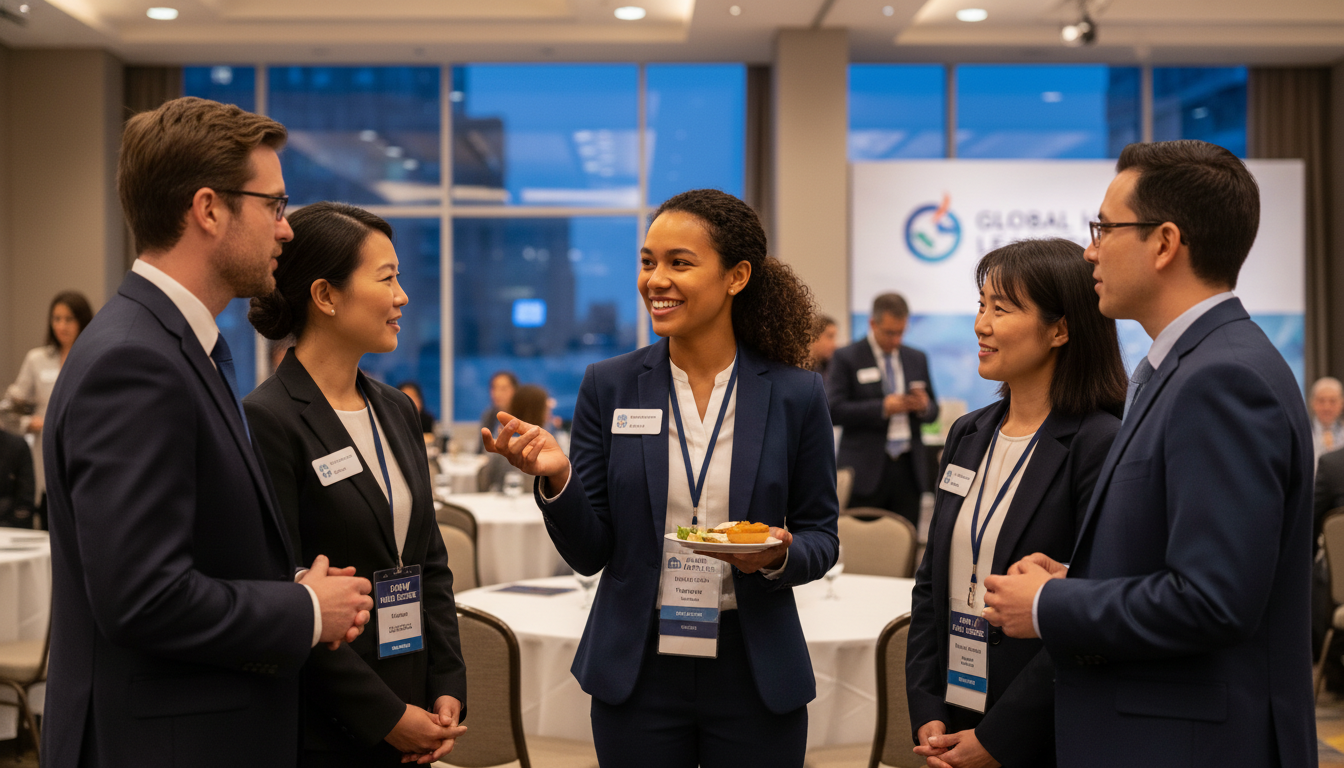
In-person interactions are incredibly powerful, especially in a small field like vascular surgery.
Key Vascular Surgery Conferences to Know
Depending on your target country, consider:
- Society for Vascular Surgery (SVS) – Vascular Annual Meeting (VAM)
- European Society for Vascular Surgery (ESVS) – Annual Meeting
- Regional meetings (e.g., New England Society for Vascular Surgery, Midwestern Vascular Surgical Society)
- Local hospital or university vascular research days and surgery grand rounds
As an IMG, attending even one major meeting can dramatically expand your medical networking opportunities.

How to Prepare for Conference Networking
Study the program in advance
- Identify sessions on topics you’re interested in (e.g., aortic aneurysm, carotid disease, limb salvage).
- Note names of speakers from programs you might apply to.
Make a short target list
- 5–10 faculty you would like to meet: program directors, research leaders, surgeons at your dream institutions.
- 3–5 residents/fellows in vascular surgery who can give you realistic advice.
Prepare talking points
A one-line introduction:
“Hello Dr. [Name], my name is [Name]. I’m an IMG from [Country] interested in vascular surgery and specifically in [brief interest]. I really enjoyed your talk on [topic].”
1–2 simple questions about their work or institution:
- “How do you see the role of endovascular techniques evolving in [specific condition]?”
- “Do residents in your program get early exposure to complex endovascular cases?”
Bring professionally printed cards (optional but helpful)
- Name, degree, country, email, LinkedIn.
- This can be especially useful if you don’t have a U.S. affiliation yet.
Practical Conference Networking Strategies for IMGs
Arrive early, stay late for sessions
- The best time to approach a speaker is right after their talk, once the line has shortened.
- Start with appreciation, then connect:
“I found your comment on [X] really helpful. As an IMG hoping to train in the U.S., do you have any advice for someone trying to enter vascular surgery?”
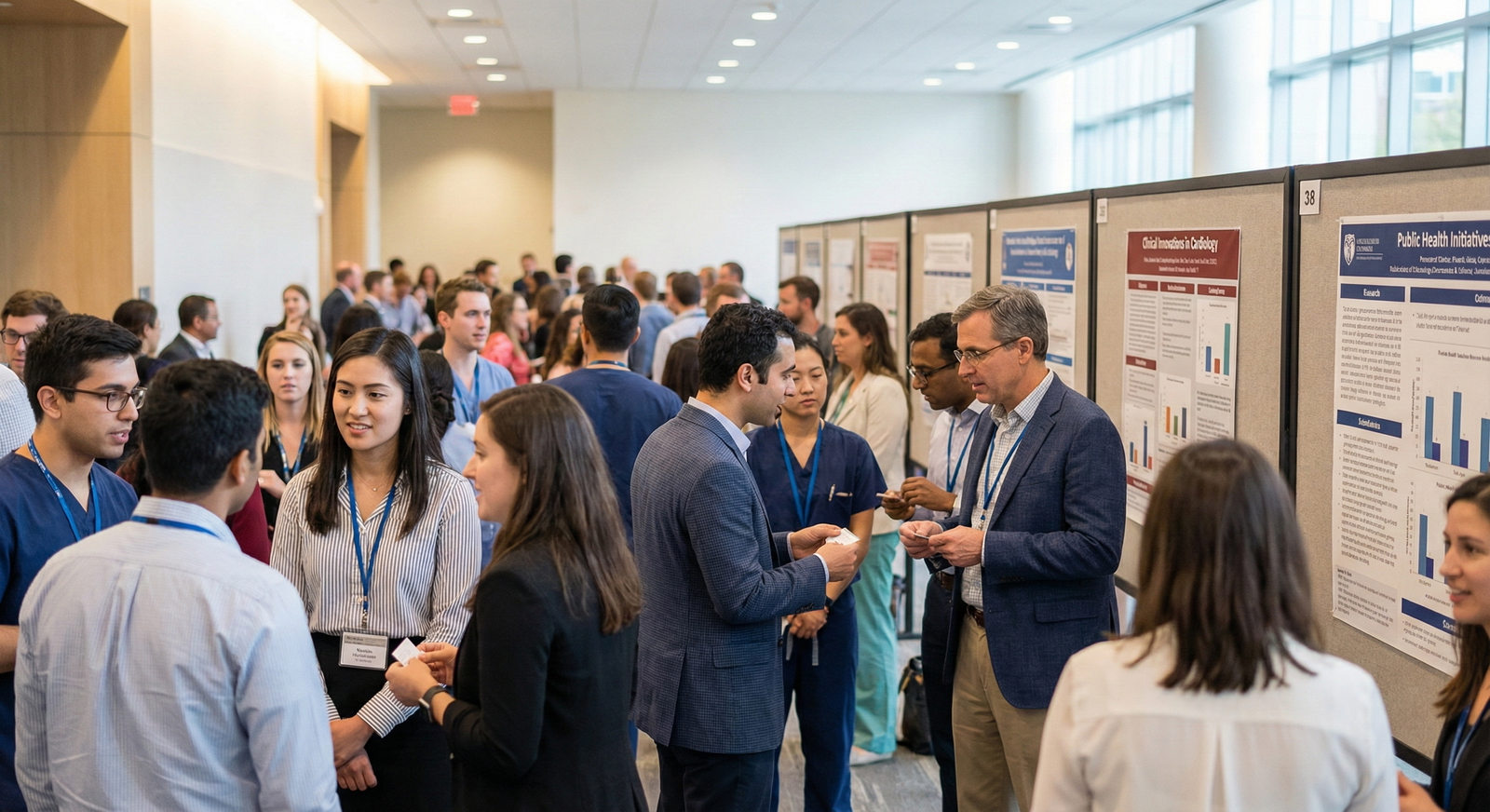
Engage in poster sessions
- Even if you’re not presenting, use posters as a natural reason to talk:
“I’m interested in limb salvage, and your poster on CLI outcomes caught my attention. I’m an IMG exploring research opportunities—how did you get involved in this project?”
- Even if you’re not presenting, use posters as a natural reason to talk:
Look for trainee-focused events
- Many meetings have “Residents & Students” sessions or networking receptions.
- Introduce yourself to residents and fellows; they’re often more approachable and can give inside information on their programs.
Follow up quickly
- Within 48–72 hours, send a brief thank-you email or message:
“It was a pleasure speaking with you at the SVS meeting after your session on PAD. Your advice about focusing my initial research on limb salvage outcomes was very helpful. I’ll explore potential projects in this area and would be grateful if I might reach out with questions in the future.”
- Within 48–72 hours, send a brief thank-you email or message:
This not only reinforces the connection but opens the door for ongoing communication.
Digital Networking: Email, Social Media, and Virtual Opportunities
For many IMGs, traveling to conferences is difficult. Digital networking in medicine can partially level the playing field.
Emailing Vascular Surgeons and Researchers
Cold emails can work—if they’re done correctly.
Key principles:
- Be short, specific, and respectful.
- Show you have read their work.
- Clearly state what you’re asking for.
Example cold email (adaptable template):
Subject: IMG with interest in vascular surgery research – potential collaboration?
Dear Dr. [Last Name],
My name is [Full Name], an international medical graduate from [Country], currently [brief current status: e.g., preparing for USMLE/doing an internship/working as a junior doctor]. I have a strong interest in vascular surgery, particularly in [specific area: e.g., peripheral arterial disease and limb salvage].
I recently read your work on [specific paper or topic], especially your article on “[Title or topic]” in [Journal/Year]. The findings on [brief point] were very insightful and aligned with my interests.
I am hoping to gain research experience in vascular surgery to strengthen my application for an integrated vascular program (or general surgery with the goal of vascular fellowship). If there are any ongoing or upcoming projects—chart reviews, database analysis, systematic reviews—where an extra pair of hands could be useful, I would be very grateful for an opportunity to contribute, even remotely.
I have attached my CV for your reference and would be happy to complete any tasks or training required.
Thank you very much for considering this request.
Sincerely,
[Full Name]
[Country]
[Email] | [LinkedIn link if available]
Send many such emails—realistically, it may take 20–40 messages to identify one good opportunity.
Using LinkedIn and X (Twitter) for Medical Networking
LinkedIn:
Follow vascular surgery departments, societies (SVS, ESVS), and individual surgeons.
Engage by commenting thoughtfully on posts:
“This is an impressive analysis of outcomes after endovascular aneurysm repair. As an IMG interested in vascular training, I found the discussion on long-term surveillance particularly relevant.”
Send connection requests with short, tailored messages:
“I’m an IMG from [Country] interested in pursuing vascular surgery residency. I’ve been following your work on [topic] and would be grateful to connect here on LinkedIn.”
X (Twitter):
- Many vascular surgeons and societies are active here.
- Follow hashtags: #VascularSurgery, #MedEd, #VascularTwitter.
- Share and comment on educational cases or published research.
- Avoid controversial or unprofessional content—your digital footprint is part of your reputation.
Virtual Conferences and Webinars
COVID-19 normalized virtual academic events, which can be a huge advantage for IMGs:
- Attend webinars, online journal clubs, and case discussions hosted by:
- SVS, ESVS, regional societies.
- University vascular divisions.
- Ask thoughtful questions in chat or Q&A; then follow up by email:
“I attended your webinar on complex aortic interventions and appreciated your explanation of [specific point]. I’m an IMG with interest in vascular surgery and would love any advice you might have for someone in my position.”
This builds familiarity and can lead to mentoring relationships.
Mentorship, Sponsorship, and Long-Term Relationship Building
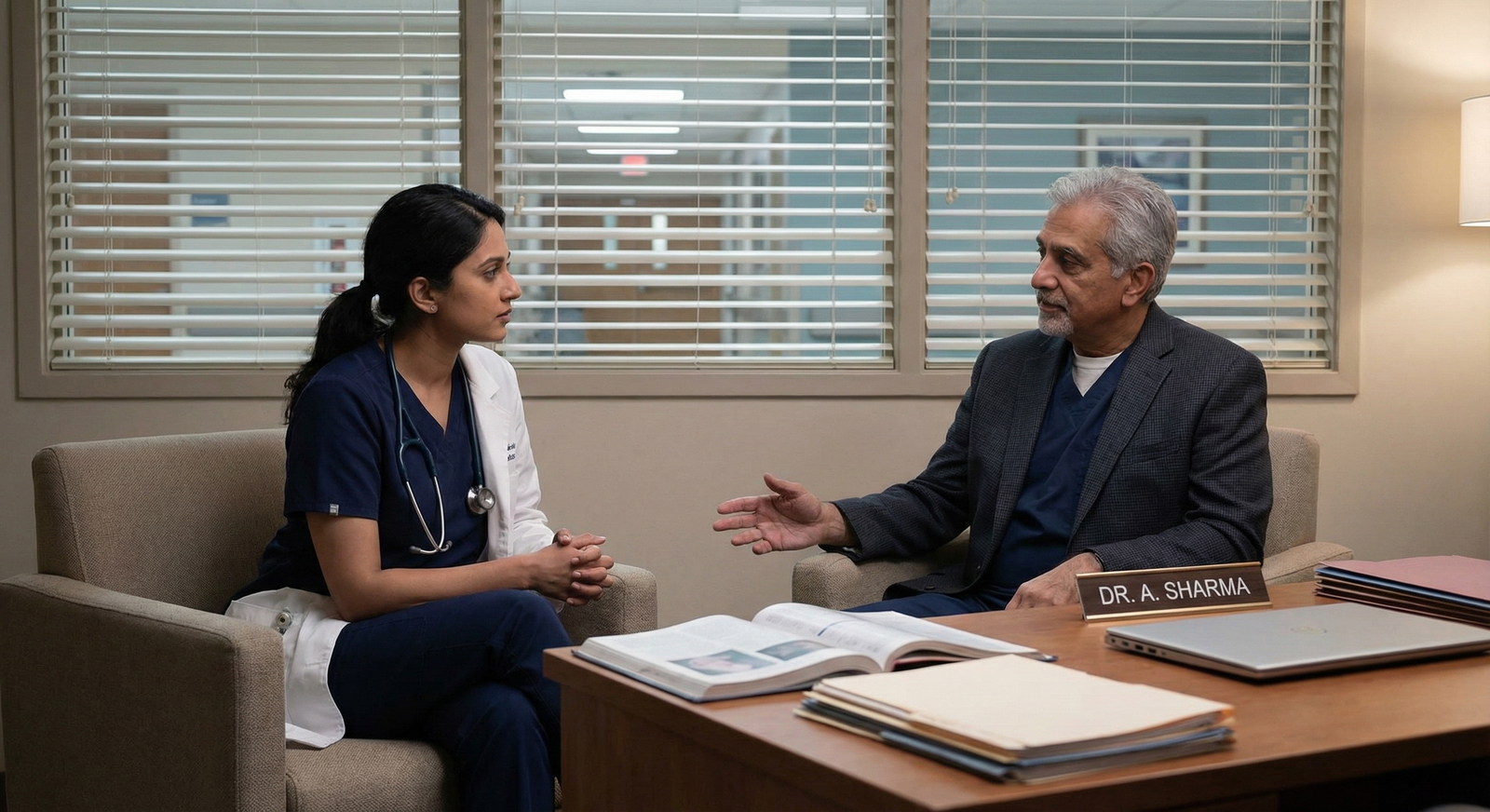
Networking is not just collecting contacts; it’s about developing mentorship and sponsorship in medicine.

Understanding Mentorship vs. Sponsorship
Mentor
- Offers guidance, advice, feedback.
- Helps you grow professionally and navigate challenges.
- May or may not have power to influence your career directly.
Sponsor
- Actively advocates for you in closed-door meetings.
- Recommends you for positions, interviews, and opportunities.
- Often a senior faculty member or program director.
As an IMG, you ideally want both: people who help you improve and people who open doors.
How to Find Mentors in Vascular Surgery
You can find mentors through:
- Research supervisors.
- Faculty leading observerships or rotations.
- Surgeons you meet at conferences or webinars.
- Senior residents and fellows (informal mentors).
Steps to build a mentoring relationship:
Show reliability
- If you’re assigned a task (e.g., data collection, literature review), deliver it on time and at high quality.
Ask for specific guidance
- Instead of “Can you be my mentor?” start with:
“I really value your perspective. Would you mind if I emailed you occasionally for advice on my path toward vascular surgery training?”
- Instead of “Can you be my mentor?” start with:
Schedule periodic check-ins
- A brief email every 2–3 months: updates + 1–2 questions.
- Example:
“Since we last spoke, I have completed [X step]. I’m now considering [two options] and would appreciate your opinion on which might better prepare me for an integrated vascular program.”
Express gratitude visibly
- Acknowledge your mentors in presentations and papers.
- Thank them after important milestones (interviews, match).
Building Toward Sponsorship
Sponsors often emerge from successful collaborations:
- Faculty who see your work ethic in research projects.
- Surgeons who observe you during clinical rotations and see how you interact with patients and teams.
- Leaders who notice you consistently showing up and contributing in departmental activities.
To encourage sponsorship:
Make your goals explicit:
“My long-term aim is to match into a vascular residency or a strong general surgery program with vascular exposure. If you ever feel comfortable advocating for me at programs or with colleagues, I would be deeply grateful.”
Provide “sponsor-friendly” materials:
- Updated CV.
- Short “biographical sketch” they can paste into recommendation emails.
Mentorship medicine is fundamentally about trust; over time, as you demonstrate consistency and professional maturity, mentors are more likely to become sponsors.
Putting It All Together: A Step-by-Step Networking Action Plan for IMGs
To make this IMG residency guide practical, here is a structured plan you can adapt.
Phase 1: Preparation (Months 0–3)
- Finalize a clean CV and short personal summary.
- Create/refresh LinkedIn with a professional photo and headline.
- Identify:
- 10–20 vascular surgeons whose work interests you.
- 2–3 vascular societies relevant to your region (SVS, ESVS, national societies).
- Start following these individuals and societies on LinkedIn/X.
Deliverable: Ready-to-send CV + 1–2 adaptable email templates.
Phase 2: Initial Outreach (Months 2–6)
- Send 10–20 targeted cold emails to vascular faculty asking about research or observership opportunities.
- Attend at least 1 virtual webinar per month in vascular surgery.
- Engage online: comment thoughtfully on 1–2 posts per week.
Deliverable: At least 1–2 ongoing email conversations; potential research leads.
Phase 3: Deepening Connections (Months 6–12)
- Aim to secure:
- A research position (even part-time or remote)
or - An observership/clinical attachment in a vascular unit.
- A research position (even part-time or remote)
- If possible, attend at least one major or regional vascular meeting.
- Present a poster or abstract if you can; if not, still attend and network.
Deliverable: At least one mentor who knows your goals and work.
Phase 4: Application Phase (Months 12–24+)
- Maintain regular communication with mentors.
- Ask for letters of recommendation early, giving writers sufficient time.
- Inform mentors and sponsors of:
- Programs you’re applying to.
- Interview invites you receive.
- Continue conference networking; meet in person those you’ve known only online.
Deliverable: Strong application supported by well-connected mentors.
Common Mistakes IMGs Make in Medical Networking (and How to Avoid Them)
Overly long emails
- Keep cold emails concise; busy surgeons won’t read long blocks of text.
Making big asks immediately
- Don’t start with: “Can you get me an observership/spot?”
- Begin by seeking advice or asking if there are ways to help with research.
Not following up
- Many opportunities are lost because IMGs feel they might be “bothering” people.
- A polite follow-up after 7–10 days is reasonable:
“I just wanted to kindly follow up on my previous email regarding potential research opportunities. I understand you are very busy, and I appreciate any guidance you can provide.”
Ignoring residents and fellows
- Trainees often shape decisions about who joins research groups or observerships.
- Respect their time and seek their advice—they can become strong advocates.
Unprofessional online presence
- Avoid public complaints, political arguments, or sharing unverified medical information.
- Assume program directors may see anything linked to your name.
By avoiding these pitfalls, your medical networking efforts are far more likely to lead to meaningful, long-term relationships.
FAQs: Networking in Medicine for IMGs in Vascular Surgery
1. As an IMG with no U.S. clinical experience, where should I start networking?
Start online. Target vascular surgeons with active research portfolios and email them about remote research opportunities. Simultaneously, attend virtual vascular webinars and follow societies like SVS and ESVS. Build your first connections through research, then pursue observerships when you have mentors who can support your application.
2. How many conferences should I attend as an IMG interested in vascular surgery?
Quality matters more than quantity. If resources are limited, even attending one major meeting (like SVS VAM or an ESVS annual meeting) can be transformative if you prepare properly, introduce yourself to speakers, interact with residents and fellows, and follow up afterward. If possible, add one regional or virtual meeting each year as well.
3. Is it realistic to get significant research experience in vascular surgery remotely as an IMG?
Yes, especially for database studies, retrospective chart reviews, or systematic reviews. Many IMGs successfully collaborate remotely on data analysis, manuscript drafting, and literature reviews. However, you must be disciplined about deadlines, responsive to feedback, and comfortable working across time zones. Once trust is built, remote work can lead to in-person observerships or visiting scholar roles.
4. How do I know if a vascular surgery residency or integrated vascular program is IMG-friendly?
Look at current and past trainees on the program’s website or social media—are there IMGs listed? Talk to residents and fellows (via email or LinkedIn) and ask about their program’s experience with international medical graduates. Mentors in the field can also tell you which programs have historically supported IMGs and which may have visa or institutional barriers.
Networking in medicine, especially in a small, close-knit specialty like vascular surgery, can be the single most powerful accelerator for an international medical graduate. By combining strategic conference networking, thoughtful digital outreach, and sustained mentorship relationships, you position yourself not just as an applicant, but as a future colleague in a demanding and rewarding field.