Why Networking Matters So Much for IMGs in Neurology
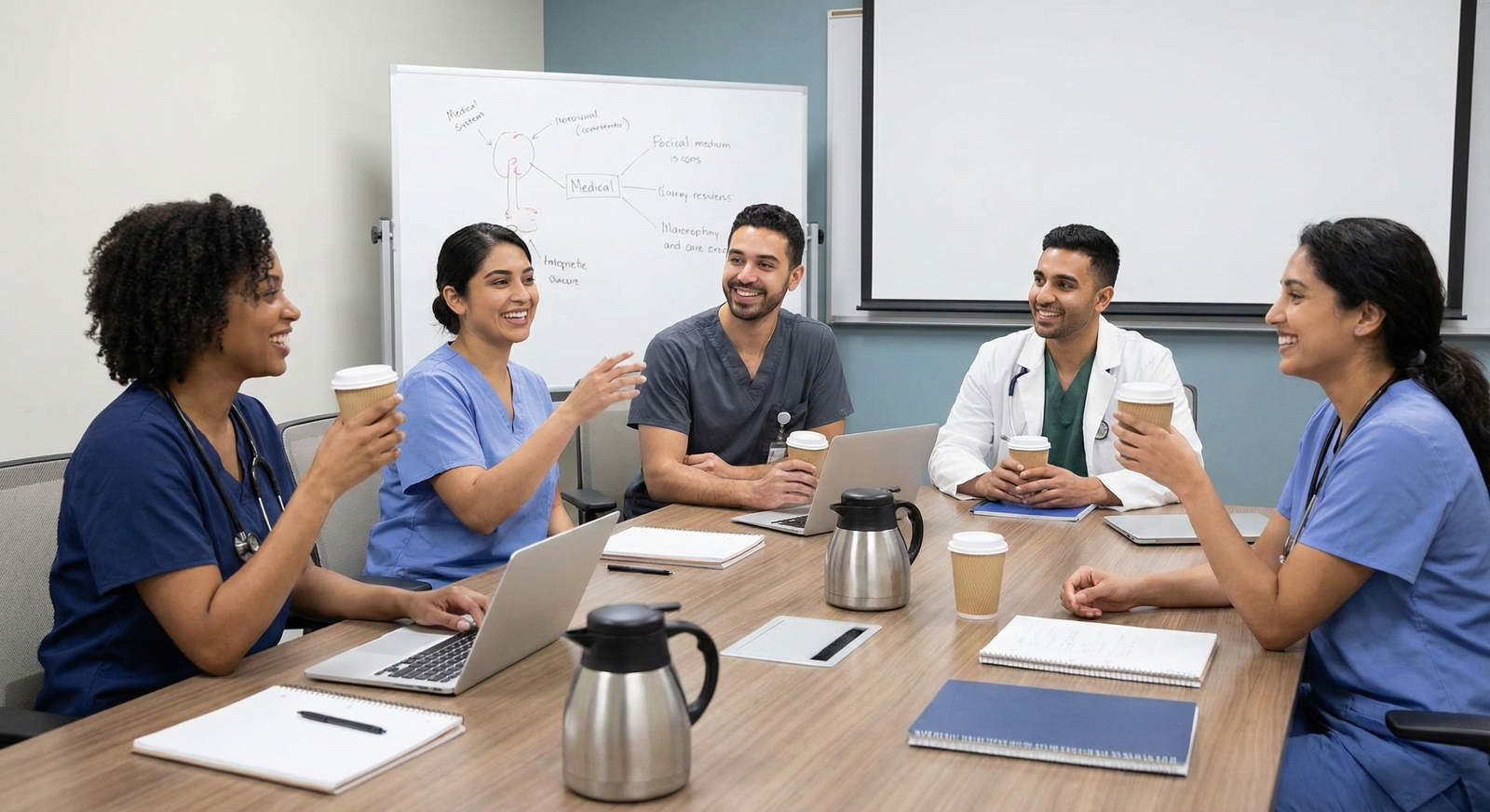
For an international medical graduate, neurology is both an exciting and a challenging specialty to enter. Beyond test scores and CV lines, your network—the people who know you, trust you, and are willing to advocate for you—often becomes the deciding factor in your neuro match outcome.
In the US system, neurology residency programs frequently rely on:
- Word-of-mouth from trusted faculty
- Informal impressions from rotations and conferences
- References and backchannel queries about applicants
As an IMG, you are often starting with:
- No US medical school classmates
- Limited access to home-institution alumni in US neurology
- Little awareness of the “hidden curriculum” (unwritten rules)
A targeted networking strategy helps you:
- Turn brief encounters into strong letters of recommendation
- Convert observerships and electives into interview invitations
- Gain realistic insights about which programs to target
- Find mentors who will critique your personal statement, practice interviews, and open doors
- Grow long-term professional relationships in neurology that last well beyond residency
Think of this as your IMG residency guide for building a strategic neurology network, not random socializing. Your goal: become a known, trusted name rather than just an ERAS application number.
Foundations of Effective Networking as an IMG in Neurology
Networking in medicine is not about being extroverted or “salesy.” It is about professional relationship building. You can do this effectively even if you are quiet or introverted.
1. Shift Your Mindset: From Transactional to Relational
Many IMGs feel pressured to “get something” immediately—an observership, a LOR, or a research position. This can come across as transactional.
Instead, focus on:
- Curiosity: Learn about people’s careers and research
- Contribution: Offer help (data collection, literature review, language skills)
- Consistency: Stay in touch over months, not just days before ERAS opens
Ask yourself with each interaction:
“If I never get a LOR from this person, would this still be a valuable professional relationship?”
If the answer is yes, you’re networking correctly.
2. Clarify Your Neurology Narrative First
Before you start networking aggressively, clarify your own story:
- Why neurology, specifically?
- What parts of neurology most interest you (stroke, epilepsy, movement, neuromuscular, neurocritical care, cognitive neurology)?
- What unique strengths do you bring as an international medical graduate?
- Multilingual abilities
- Experience with different health systems
- Exposure to unique neurological disease patterns
- What are your current gaps?
- US clinical experience
- US-based research
- Mentorship in medicine within neurology
- Understanding of neuro match strategy
Having a focused narrative helps others remember you and see how they can help.
Example “short intro” you might use at a conference or email:
“I am an international medical graduate from Brazil with a strong interest in vascular neurology and neurocritical care. I completed my thesis on predictors of early neurological deterioration in ischemic stroke and am now seeking opportunities to gain more US-based neurology experience and research exposure, particularly in stroke or ICU neurology.”
This is clear, specific, and memorable.
3. Understand the Neurology Network Ecosystem
Your neurology network will typically involve:
- Faculty neurologists
- Program directors (PDs) and associate PDs
- Clerkship directors
- Division chiefs (stroke, epilepsy, movement disorders, etc.)
- Residents and fellows
- Frontline sources of honest program culture information
- Potential advocates with faculty
- Researchers
- Clinical trial PIs
- Basic science neuroscientists
- Outcomes and epidemiology researchers
- Allied professionals
- Neuropsychologists
- Epilepsy technologists
- Stroke nurse coordinators (often very well connected)
- Peers & fellow IMGs
- Co-observers, research assistants, online study groups
- Recent matches in neurology (from your home country or elsewhere)
Map out who you already know in each category, then intentionally expand.
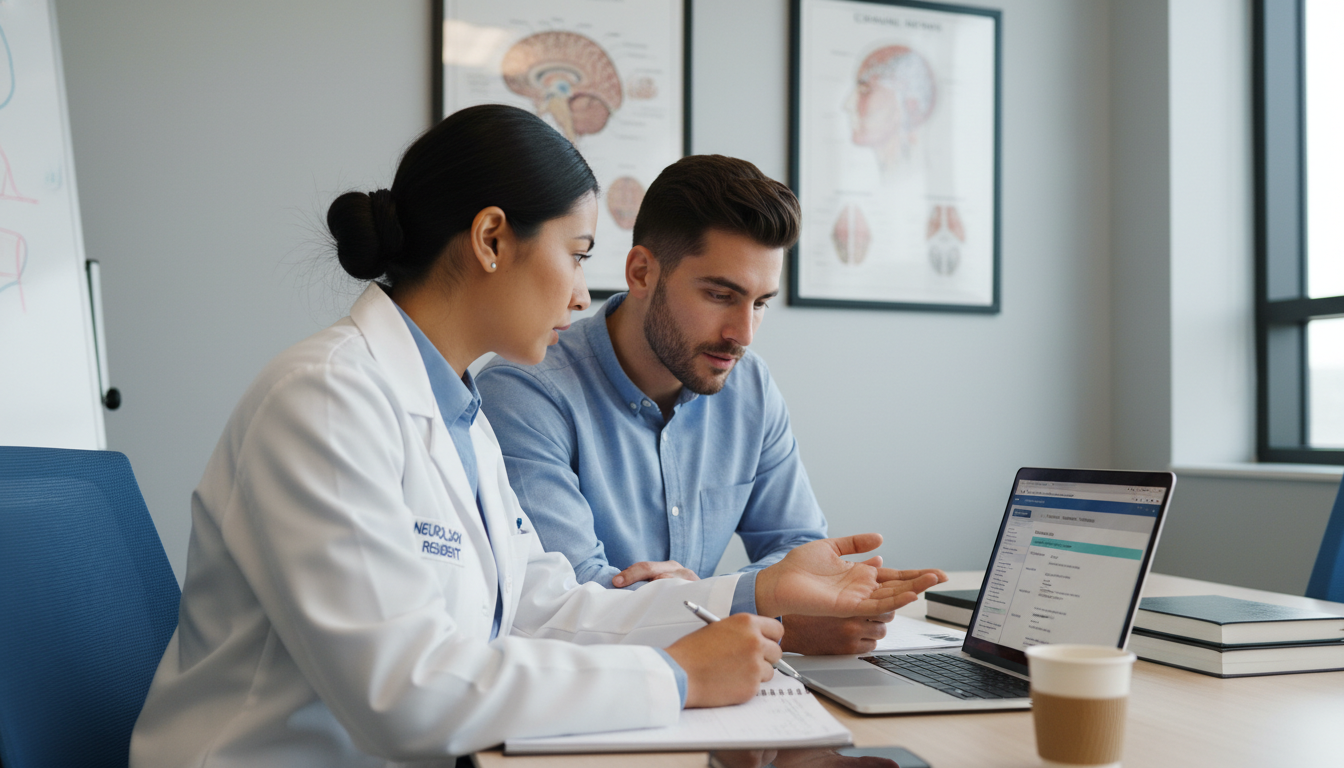
Building High-Impact Relationships: Mentors, Sponsors, and Peers
Not all contacts are equal. For an effective IMG residency guide in neurology, you must differentiate between mentors, sponsors, and peers, and intentionally cultivate all three.
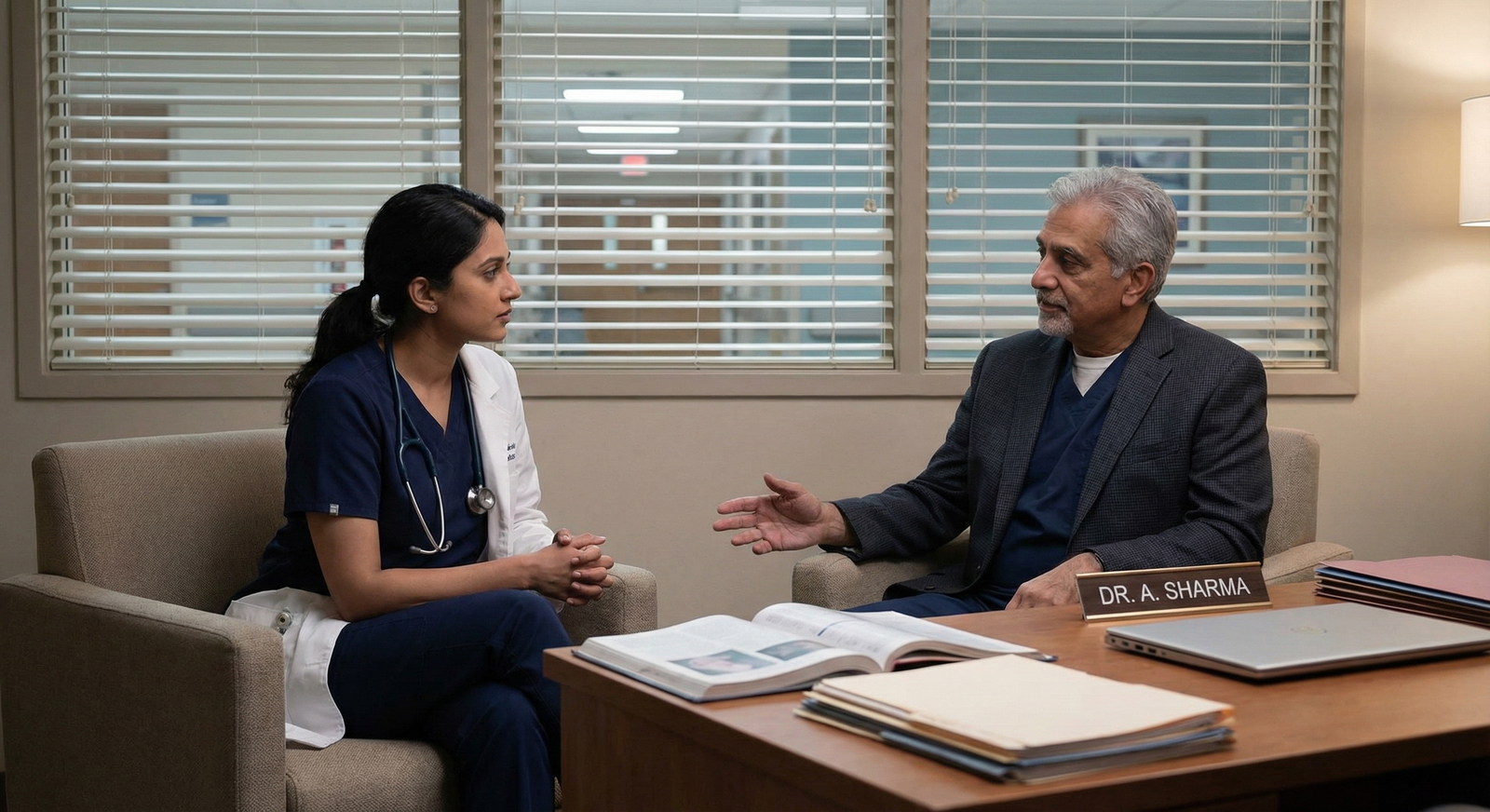
1. Mentors in Medicine: Your Strategic Advisors
A mentor is someone who:
- Knows your story, strengths, and weaknesses
- Helps you plan stepwise goals (exam timing, neuro match list strategy)
- Gives honest feedback on your CV, personal statement, and interview skills
- May or may not directly help you get into a specific program, but will help you navigate the system
Types of mentors you should seek as an international medical graduate:
Content mentor (neurology-focused)
- A neurologist or neuroscience researcher in your area of interest
- Helps guide your clinical and research development in the specialty
Process mentor (US system-focused)
- Anyone who deeply understands US residency—could be an internist, psychiatrist, or senior resident—not necessarily neurologist
- Helps with logistics: ERAS, interviews, visas, ranking, backup specialties
Peer mentor (recent IMG neuro match)
- Someone who matched to neurology in the last 1–3 application cycles
- Provides fresh, realistic insights into what currently matters
How to find them:
- During observerships or electives
- Through virtual neurology interest groups or IMG support forums
- Via alumni from your medical school who are now in US neurology
- At neurology conferences and webinars
When you approach potential mentors:
Be specific in what you’re asking:
- “Could I get 20 minutes of your time to review my neurology CV and suggest improvements?”
- “Would you be willing to look at my neuro match strategy and suggest where my profile might be competitive?”
Show preparation:
- Send a one-page CV and a short paragraph about your goals ahead of time
- Prepare specific questions (3–5)
Respect time:
- Keep calls short unless they offer more
- Always close with: “Is there anything I can help you with?” (e.g., reading papers, translating, data extraction)
2. Sponsors: The People Who Open Doors
Sponsors are different from mentors. A sponsor:
- Has power or influence in the system
- Uses their own reputation to support you
- Might:
- Offer a research position
- Create an observership or elective spot
- Advocate for you to be interviewed
- Call or email colleagues at other institutions about you
Sponsors are often:
- Program directors or associate PDs
- Division chiefs
- Principal investigators (PIs) of large neurology studies
- Well-known clinical teachers respected across departments
You earn sponsorship by:
- Showing reliability and professionalism consistently
- Delivering high-quality work (e.g., on a research project)
- Demonstrating kindness and teamwork with staff and residents
- Being humble, teachable, and responsive to feedback
Instead of asking directly, “Can you write me a strong letter?” early on, ask:
“What can I do over the next few months to demonstrate that I can be a strong neurology residency candidate?”
Their answer will tell you how to convert mentorship into future sponsorship.
3. Peer Networks: Your Hidden Advantage
Many IMGs underestimate the power of horizontal networking—building strong relationships with peers at your level.
Peers may:
- Share research or observership opportunities they hear about
- Exchange study resources, interview experiences, and program impressions
- Become your co-authors on papers or abstracts
- Years later, become attendings who refer patients or collaborate on projects
Ways to build your peer network:
- Join neurology- or IMG-focused WhatsApp/Telegram/Discord groups
- Participate actively in online question banks’ discussion forums
- Engage in journal clubs or case-discussion groups (virtual or in-person)
- Stay in contact with co-observers and co-researchers after the experience ends
Do not restrict your network to people in “top-tier programs.” Relationships with peers in community-based neurology programs can be just as valuable, especially for understanding realistic neuro match options.
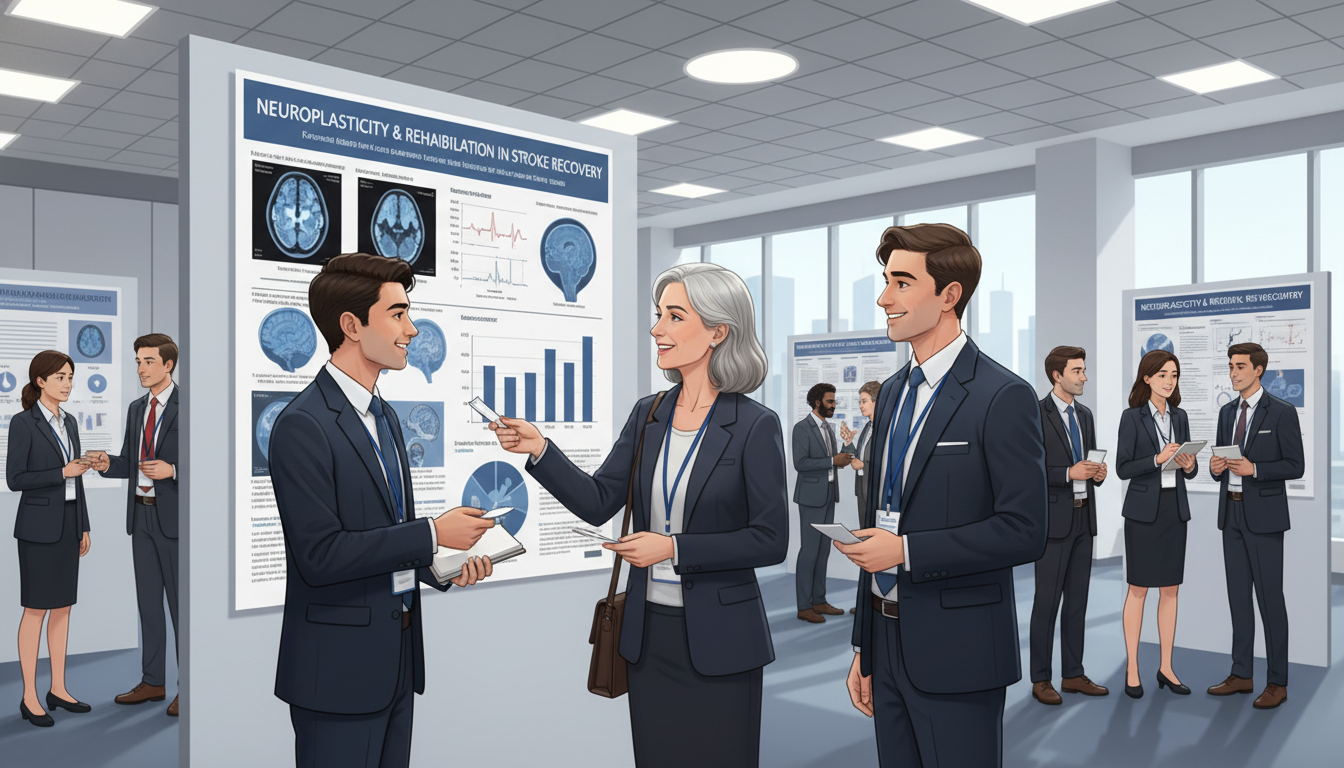
Conference and Event Strategy: Turning Encounters into Opportunities
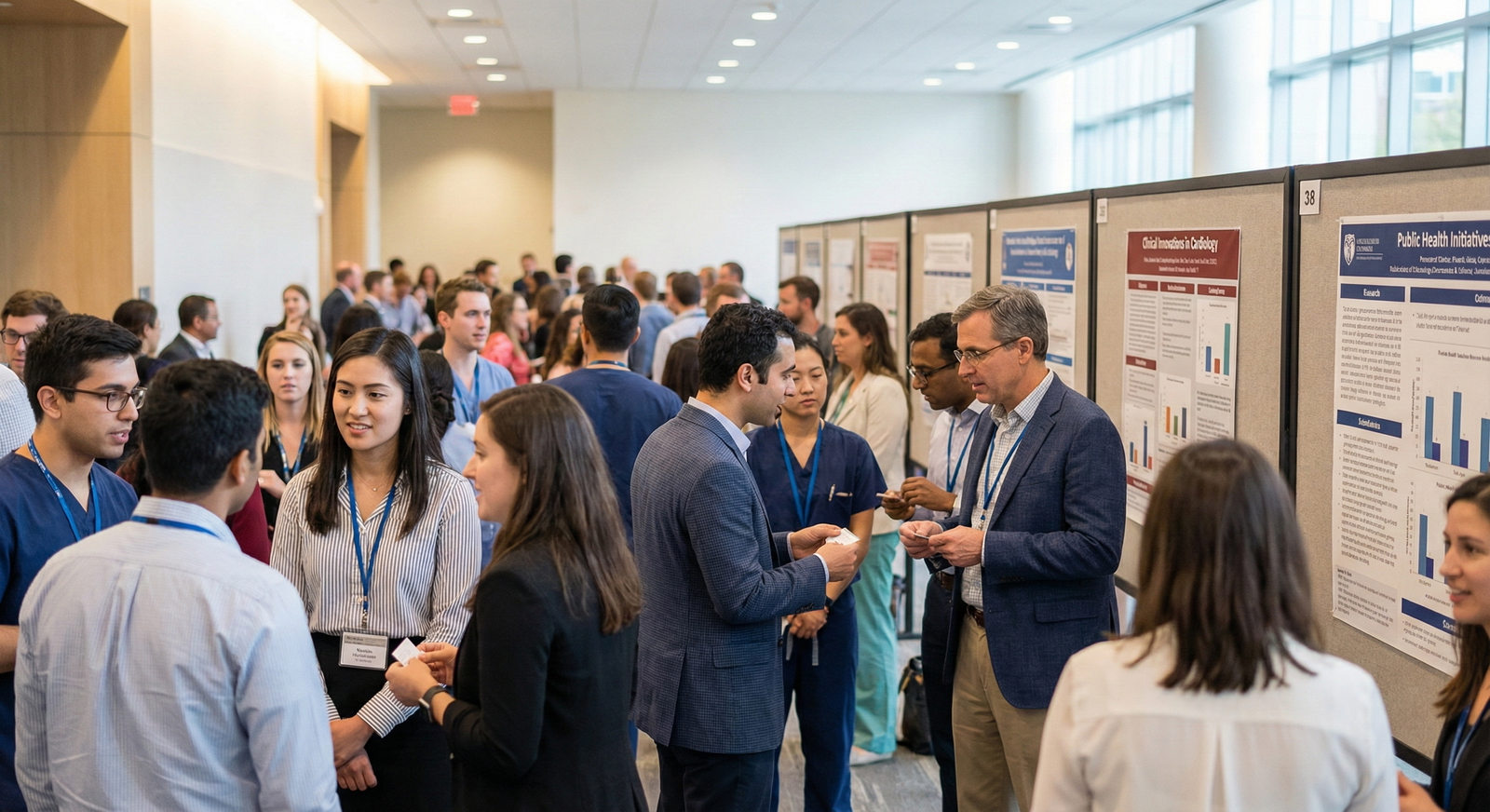
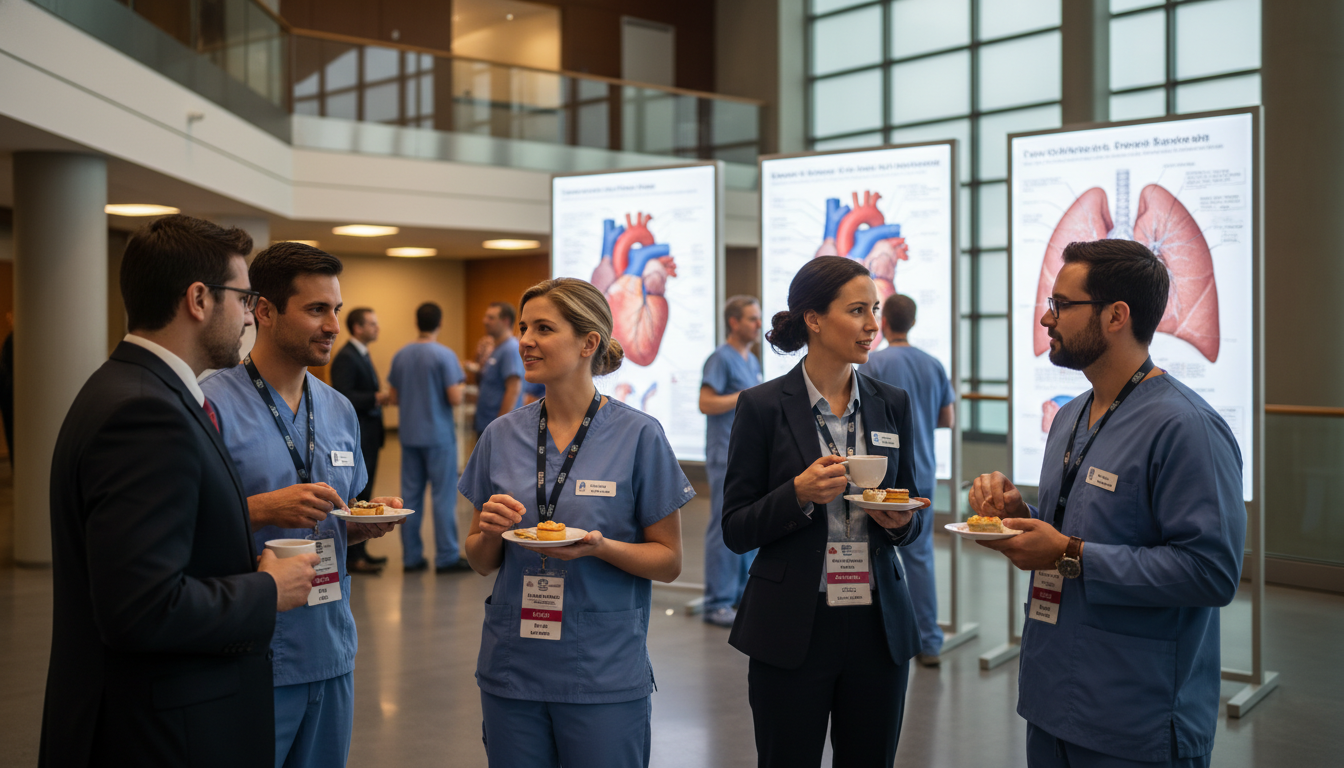
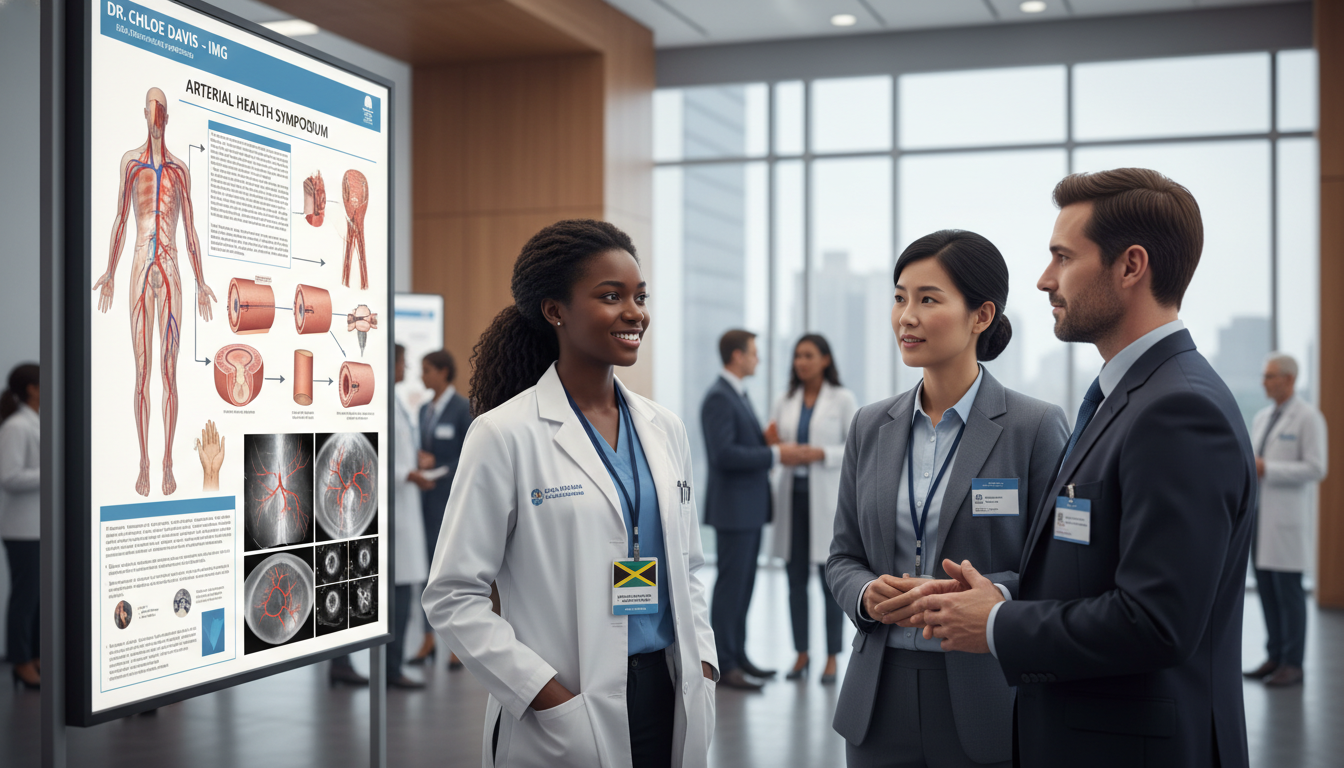
Conferences are among the most powerful environments for medical networking in neurology. For IMGs, even one well-strategized meeting can alter your trajectory.
1. Choosing the Right Neurology Conferences and Events
Consider:
- Major US/International neurology meetings
- American Academy of Neurology (AAN)
- American Epilepsy Society (AES)
- International Stroke Conference (ISC)
- Movement Disorder Society (MDS)
- Regional or state neurology meetings
- Often smaller, more accessible, easier to meet people
- Subspecialty seminars and symposia
- Epilepsy, neuromuscular, MS, headache, neurocritical care
- Virtual conferences and webinars
- Lower cost, good for initial exposure and introductions
Align events with your interests and realistic geographic targets (e.g., East Coast US, Midwest, etc.).
2. Preparing for Conference Networking
Before the conference:
Set concrete goals
- Example: “I want to have meaningful conversations with at least 3 neurology residents and 2 faculty in stroke neurology.”
Research attendees and program presence
- Many conferences list:
- Faculty speakers and topics
- Residency program booths or meet-and-greet sessions
- Identify:
- PDs/APDs of programs you’re targeting
- Researchers whose papers you’ve read
- Many conferences list:
Prepare a polished digital profile
- Update your:
- ResearchGate/ORCID/Google Scholar (if you have publications)
- Prepare a short 20–30 second introduction tailored to neurology
- Update your:
Bring materials
- Digital CV (PDF on your phone and cloud)
- Business cards if feasible—simple, with your name, “International Medical Graduate – Aspiring Neurologist,” email, LinkedIn
3. Conference Networking Tactics That Work
During the conference:
Attend program showcases and resident meet-and-greets
- Common at big meetings like AAN
- Introduce yourself to residents and ask:
- “What kind of applicants seem to thrive in your program?”
- “How does your program view IMGs?”
- “Do you recommend any specific ways for an international medical graduate to get involved with your department (research, observerships, etc.)?”
Ask good questions at talks and poster sessions
- After a talk:
- Approach the speaker
- Introduce yourself briefly
- Ask a specific follow-up question based on the content
- Mention you’re an IMG interested in that subspecialty
- At posters:
- Start with: “Could you walk me through the main findings?”
- Share short, relevant points from your own experience
- Ask if their group hosts observers or research volunteers
- After a talk:
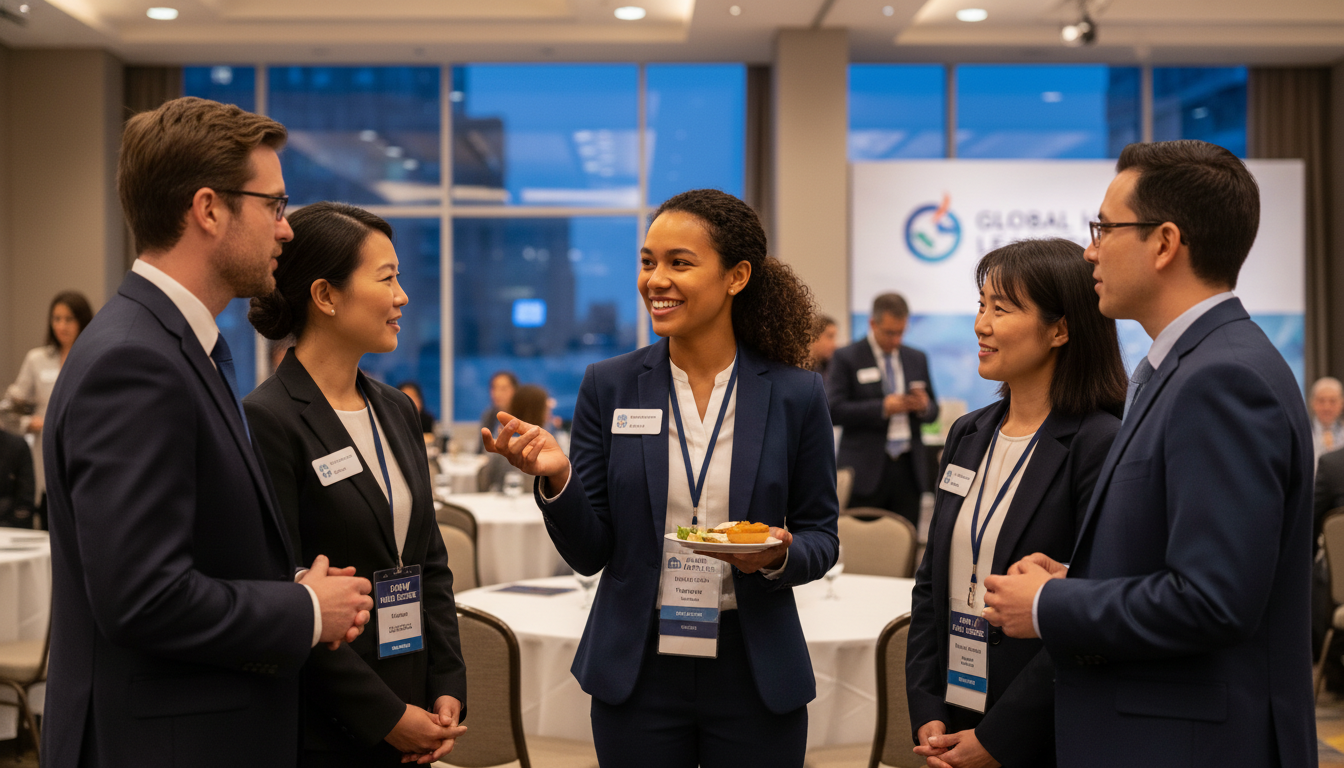
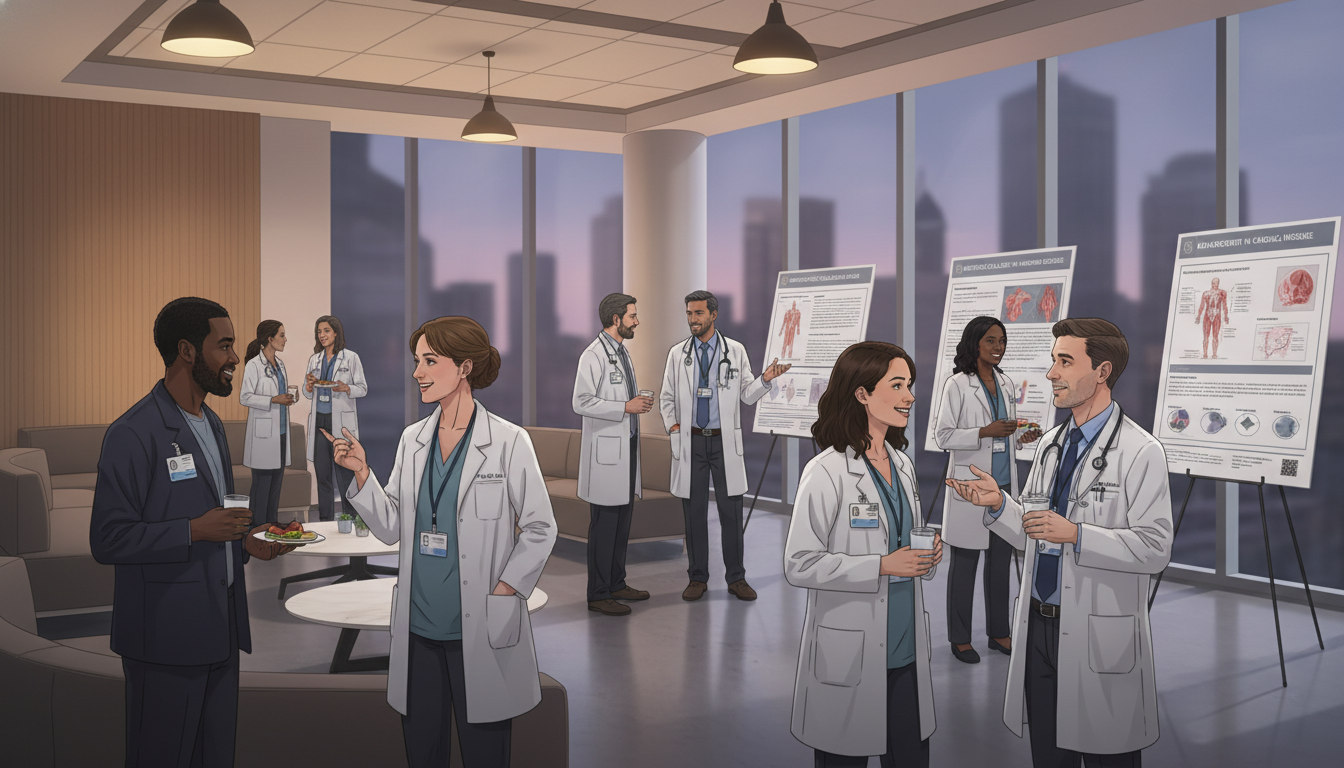
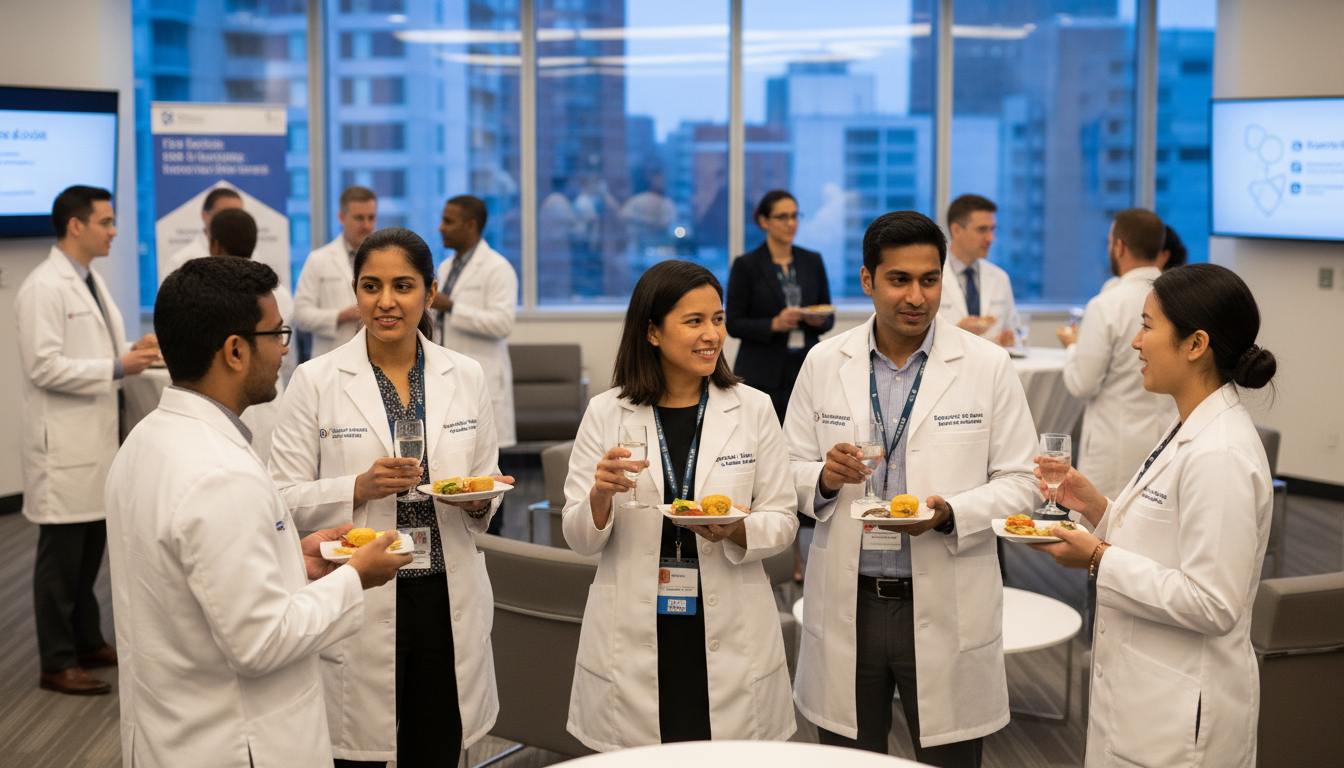
Use social and networking events
- Resident socials, trainee receptions, early-career mixers
- Easier to have informal conversations
- If you’re introverted, aim for 1–2 meaningful conversations rather than working the entire room
4. Following Up After Conferences
The follow-up is where networking becomes real.
- Within 48–72 hours:
- Send a concise email or LinkedIn message:
- Remind them who you are and where you met
- Highlight 1–2 points you appreciated from the conversation
- If appropriate, ask a specific next-step question
- Send a concise email or LinkedIn message:
Example follow-up email:
Subject: Pleasure meeting you at AAN – aspiring IMG neurologist
Dear Dr. Smith,
I enjoyed speaking with you after your stroke session at AAN on Friday. Your discussion of early mobilization in ICU stroke patients resonated with my prior experience working in a neuro-ICU in India.
As an international medical graduate preparing for neurology residency applications, I am particularly interested in vascular neurology and critical care. If your group ever considers volunteers or short-term research assistants, I would be grateful to be considered and would be happy to assist with data collection or literature review remotely.
I have attached a one-page CV for your reference.
Thank you again for your time and for an excellent talk.
Best regards,
[Name], MD
International Medical Graduate – Neurology Applicant
[Email] | [LinkedIn link]
Keep track of each contact in a simple spreadsheet: name, role, institution, when you met, topics discussed, last follow-up.
Digital Networking and Outreach: Building Your Neurology Presence Online
In modern neurology, digital identity is part of your professional identity. Many faculty and programs will search your name. Use this to your advantage.
1. LinkedIn and Professional Profiles for Neurology
Create or refine a professional LinkedIn profile:
- Professional headshot (simple background, business or clinic attire)
- Headline: “International Medical Graduate | Aspiring Neurologist | Interested in [Subspecialty]”
- About section:
- 3–5 sentences on your background, neurology interests, and goals
- Featured section (if available):
- Links to publications, posters, or presentations
- Experience:
- Clinical internships, observerships, research roles
- Skills:
- Clinical neurology skills, statistics, languages
Use LinkedIn to:
- Connect with:
- Neurology residents and faculty
- Conference contacts
- Alumni from your school in US neurology
- Engage professionally:
- Comment thoughtfully on neurology-related posts
- Share your academic achievements (e.g., “Honored to present our work on [topic] at [conference].”)
Avoid controversial or unprofessional content; your profile should align with how you want PDs and faculty to see you.
2. Email Outreach for Research and Observerships
For many international medical graduates, cold emailing is a major gateway to research and observerships—a critical part of an IMG residency guide. Done poorly, this is spam. Done well, it can open doors.
Key principles:
- Personalize every email
- Use the person’s name, reference their recent work or talk
- Be specific and realistic
- Offer to help with concrete tasks (data collection, chart review, systematic review)
- Show commitment
- Mention your willingness to work consistently and your time availability
- Keep it concise
- 3–5 short paragraphs
Template structure:
- Who you are (IMG, from where, neurology interest)
- How you found them (paper, conference, website)
- Why you’re interested in their work (1–2 specific details)
- What you’re asking for (research role, remote help, observership)
- Attach CV
Understand that most emails won’t get a response, but consistent, thoughtful outreach often leads to at least a few positive replies.
3. Using Social Media in a Professional Way
- Twitter/X and similar platforms:
- Many neurologists are active in #neurotwitter or similar hashtags
- You can:
- Follow neurology journals and key opinion leaders
- Engage by liking and retweeting academic content
- Comment with thoughtful questions or observations
- Precautions:
- Maintain professionalism—assume PDs might read your posts
- Avoid sharing identifiable patient information or sensitive topics
Applying Networking to the Neuro Match: From Connections to Outcomes
Networking is not just about feeling connected; it should tangibly impact your neurology residency application.
1. Translating Relationships into Strong Letters of Recommendation
A strong neurology LOR:
- Is written by someone who really knows you
- Includes:
- Specific clinical episodes (cases you handled well)
- Concrete examples of your work ethic, reliability, and growth
- Direct comparison with other students/trainees (e.g., “top 10%”)
- Mentions your suitability for neurology specifically
Your role:
- Work closely and consistently with potential letter writers
- Seek feedback throughout your time with them
- Update them on your progress and neuro match plans
- When asking:
- “Would you feel comfortable writing a strong neurology residency letter for me?”
If they hesitate, continue building experience and consider alternative writers.
2. Using Networking to Target the Right Programs
Conversations with residents, fellows, and junior faculty can reveal:
- How IMG-friendly a neurology program really is
- The importance they place on research vs. clinical experience
- Typical USMLE ranges for interview offers
- Visa support realities (J-1 vs H-1B openness)
Use this information to:
- Build a realistic neuro match list:
- Mix of:
- IMG-friendly university programs
- Community-based neurology programs
- A few aspirational choices
- Mix of:
- Tailor your ERAS application:
- Emphasize experiences or skills each program values (stroke-heavy, epilepsy focus, etc.)
3. Interview Season: Networking During and Between Interviews
During interviews, networking continues:
- Be kind and authentic with:
- Residents
- Fellow applicants
- Program coordinators
- Ask informed questions that show you’ve done your research
- Save names and notes for each program (who you met, what stood out)
After interviews:
- Send brief thank-you emails:
- Particularly to PDs, APDs, and anyone who spent a lot of time with you
- Mention 1–2 specifics from your conversation
Even if you don’t match at a program, people you impressed there may:
- Move to other institutions
- Consider you for research or fellowship later
- Become your colleagues in other contexts
Frequently Asked Questions (FAQ)
1. As an IMG with limited funds, is attending a major neurology conference really worth it?
It can be, if you approach it strategically. If finances are tight, consider:
- Prioritizing one high-yield conference (AAN, ISC, AES) where:
- You are presenting a poster or abstract (increases visibility)
- Multiple target programs are represented
- Applying for trainee/IMG scholarships or fee waivers
- Attending virtual components of conferences, which are often cheaper The key is not just attending, but preparing, setting goals, and following up afterward.
2. I’m introverted and feel uncomfortable initiating conversations. Can I still network effectively?
Yes. Networking doesn’t require being loud or overly social. Focus on:
- Preparing 2–3 short, rehearsed introductions and questions
- Targeting one-on-one conversations (e.g., at posters, after talks)
- Scheduling brief virtual meetings instead of large group events
- Following up with thoughtful emails—written communication can be a strength for quieter personalities
Consistency and sincerity matter more than extroversion.
3. Is it acceptable to ask someone directly for an observership or research position when we first meet?
It depends on context. In the first interaction:
- Prioritize building rapport and showing genuine interest in their work
- If the situation feels appropriate (e.g., they mention having IMGs in observerships or their team needing help), you can politely explore:
- “Do you think your department ever considers international medical graduates for short observerships or volunteer research roles?” It’s usually better to follow up by email after the initial meeting with a specific, well-structured request and your CV attached.
4. My home country has very few connections to US neurology. Where do I even start with medical networking?
Start with what you can control:
- Build a strong LinkedIn profile focused on neurology
- Join online neurology communities, interest groups, and IMG forums
- Attend virtual neurology webinars and interact with speakers
- Cold email faculty aligned with your interests, with a professional approach
- Connect with IMGs (even in other specialties) from your region who have navigated US training; they can share strategy and sometimes introduce you to neurologists they know
Over time, these small steps accumulate into a meaningful neurology network, even if you start with zero contacts.
Networking in medicine for an international medical graduate in neurology is not about collecting business cards; it is about building trust, demonstrating value, and staying visible over time. With a thoughtful, sustained approach, your relationships can become the bridge between your current position and a successful neuro match—and the foundation of a lifelong career in neurology.