Understanding the Power of Networking in Addiction Medicine
For a DO graduate pursuing Addiction Medicine, networking in medicine is not a “nice to have”—it’s a core skill that shapes your training, your career path, and the impact you’ll ultimately have on patients and communities.
Addiction Medicine is a rapidly evolving field where evidence, policy, and practice move quickly. The best opportunities—whether it’s a competitive osteopathic residency match, an addiction medicine fellowship, research projects, or leadership roles—often arise through relationships rather than formal postings alone.
This article focuses on how a DO graduate can build, sustain, and strategically use a professional network centered on Addiction Medicine. We’ll connect these strategies directly to residency life and challenges, especially for DO graduates navigating their unique training pathways.
You’ll learn:
- How networking differs in Addiction Medicine compared with other specialties
- How to weave networking into every stage of your osteopathic residency match and early career
- Practical tactics for conference networking, mentorship in medicine, and medical networking online
- How to leverage networks for substance abuse training, addiction medicine fellowship placement, and long-term career development
Why Networking Matters Especially for DO Graduates in Addiction Medicine
Bridging the DO–MD Perception Gap
Although the DO–MD parity has improved, DO graduates can still encounter biases—subtle or explicit—especially in academic centers or highly competitive programs. Effective networking in medicine helps you:
- Get your name and work known beyond your CV
- Gain advocates who can speak to your competence and character
- Demonstrate the strengths of osteopathic training (whole-person, biopsychosocial approach) in the context of substance use and co-occurring conditions
In Addiction Medicine, your DO background can be a powerful asset, and a strong network helps others see and value that.
Addiction Medicine Is Interdisciplinary by Nature
Addiction Medicine overlaps with:
- Psychiatry
- Internal medicine and family medicine
- Emergency medicine
- Pain medicine, anesthesiology
- Public health and policy
- Behavioral health, psychology, and social work
Networking in this specialty means learning to build relationships across disciplines. These relationships directly affect:
- How you manage complex patients with substance use disorders (SUDs)
- Your access to multidisciplinary substance abuse training experiences
- Your eligibility for collaborative research and quality improvement (QI) projects
The Hidden Job and Opportunity Market
Many opportunities are never widely advertised or are filled before official postings appear:
- Research assistant roles
- Addiction electives or rotations at outside institutions
- Early-career academic or hospitalist positions with a focus on SUD care
- Funded addiction medicine fellowship positions
- Leadership roles in committees focused on opioid stewardship, harm reduction, or hospital addiction consult services
Networking puts you on the “short list” when these opportunities come up.
Turning Residency Challenges into Networking Opportunities
Residency is demanding; it’s easy to focus only on surviving call schedules and board prep. But almost every challenge is also a networking opportunity:
- Difficult cases → chance to collaborate closely with addiction psychiatrists, consult services, social work, and community programs
- Transfers of care → opportunities to build relationships with outpatient addiction clinics or methadone/buprenorphine prescribers
- System-level barriers → chances to join committee work on protocols, stigma reduction, or ED-initiated buprenorphine
Learning to think, “Who should I talk to about this?” converts day-to-day frustrations into connective points for your career.
Laying the Foundation: Networking During the Osteopathic Residency Match
For a DO graduate aiming at Addiction Medicine, networking should start before Match Day and continue through training. Even if you’ve already matched, the principles below remain useful.
Step 1: Clarify Your Addiction Medicine Identity Early
Before approaching others, be able to say—in one or two sentences—who you are and where you’re headed. Example:
“I’m a DO graduate applying to internal medicine with a strong interest in Addiction Medicine and improving inpatient SUD care. I’m especially interested in substance abuse training and continuity of care after discharge.”
This clarity helps:
- Advisors give specific guidance
- Faculty remember you when addiction-related opportunities arise
- Program directors see you as focused and purposeful
Step 2: Use School and Institutional Resources Aggressively
Even if your osteopathic medical school doesn’t have a formal Addiction Medicine department, there are usually hidden or underused resources:
Advising office and dean’s office
- Ask specifically: “Do we have alumni in Addiction Medicine or substance use–focused psychiatry, internal medicine, or family medicine I could speak with?”
- Request email introductions, not just names.
Clinical faculty with related interests
- Primary care doctors with MAT (medication-assisted treatment) waivers
- Emergency physicians involved in ED-initiated buprenorphine
- Psychiatry or pain medicine faculty managing high SUD volumes
Student interest groups
- Psychiatry, internal medicine, family medicine, public health, and osteopathic manipulative medicine (OMM) groups often host relevant events.
- Volunteer for roles that position you to interact with guest speakers and faculty.
Step 3: Targeted Outreach to Residency Programs
As you navigate the osteopathic residency match, strategic outreach can make you more than just an application number:
Identify programs with strong SUD training
- Programs with addiction consult services, MAT clinics, or a nearby addiction medicine fellowship
- Centers with NIH or state-funded SUD research projects
- Safety-net hospitals or VA systems with high SUD case volumes
Email faculty or program leadership
- Focus on the Addiction Medicine angle:
- Ask about substance abuse training for residents
- Ask if residents can work with addiction medicine specialists or join QI projects
- Focus on the Addiction Medicine angle:
Ask for brief Zoom or phone conversations
- 15–20 minutes is realistic and respectful of busy schedules
- Prepare 3–4 focused questions; end by asking if there are others you should talk to
Step 4: Use Away Rotations as Networking Accelerators
Away rotations are powerful networking in medicine tools, particularly if you’re aiming for:
- A specific region
- A particular addiction medicine fellowship
- A large academic center that might not know many DO graduates
On an away rotation:
- Show early and consistent interest in SUD-related cases
- Ask to follow patients longitudinally from inpatient detox/withdrawal management to outpatient follow-up when feasible
- Ask attending physicians, “Are there any addiction-related QI projects or patient-education initiatives where a rotating student could help?”
Your performance and reliability during these rotations become your most persuasive “networking pitch.”

Mentorship in Medicine: Building Your Addiction Medicine Support Team
Mentorship is the backbone of effective medical networking. For a DO graduate in Addiction Medicine, you’ll often need more than one mentor to cover different aspects of your career.
The Three Types of Mentors You Need
Clinical Mentor (Addiction-Focused)
- Helps shape your day-to-day practice and clinical judgment
- Teaches practical skills: managing withdrawal, buprenorphine induction, methadone coordination, harm reduction conversations
- Ideal mentors: addiction medicine specialists, addiction psychiatrists, or internists/family physicians with robust SUD practices
Career/Systems Mentor
- Guides big-picture choices: residency path, addiction medicine fellowship selection, academic vs community practice
- Helps you navigate institutional politics and the DO/MD dynamics
- Often someone in leadership (program director, division chief, medical director)
Peer Mentor / Near-Peer
- Someone 1–3 years ahead of you: a senior resident, chief resident, or early-career fellow
- Offers practical advice on schedules, studying, and small but vital decisions (e.g., which rotation gives the best SUD exposure)
- Easier to approach frequently and informally
How to Ask for Mentorship Without Making It Awkward
Instead of declaring, “Will you be my mentor?,” start with practical, time-limited requests:
- “Would you be open to a 20-minute meeting so I can get your advice on developing a career in Addiction Medicine as a DO graduate?”
- “Could I follow you in clinic for a half-day to learn more about your addiction consult service?”
- “Would it be okay if I email you once in a while when I’m making major career decisions?”
If the relationship develops organically and the mentor is responsive, you can later say:
“You’ve been so helpful in guiding my career decisions—would you be comfortable if I considered you a formal mentor?”
Making It Easy for Mentors to Help You
Mentors are more likely to invest in mentees who:
- Come prepared with clear questions or agenda items
- Follow through on suggestions and report back outcomes
- Show gratitude and share credit for successes (e.g., acknowledging their help in a poster presentation)
Your actions should signal, “If you help me, your time will be well used.”
Protecting Yourself from Mismatched or Unhelpful Mentorship
Not every mentor will be a good fit:
- Some may be too busy or unresponsive
- Some may not understand the DO-specific aspects of your journey
- Some may have a narrow view of what an Addiction Medicine career must look like
You are allowed—and encouraged—to build a network of multiple mentors and quietly “rebalance” your time toward those who are genuinely helpful and respectful.
Conference and Online Networking: Where Addiction Medicine Connections Happen
Choosing the Right Meetings for Addiction Medicine
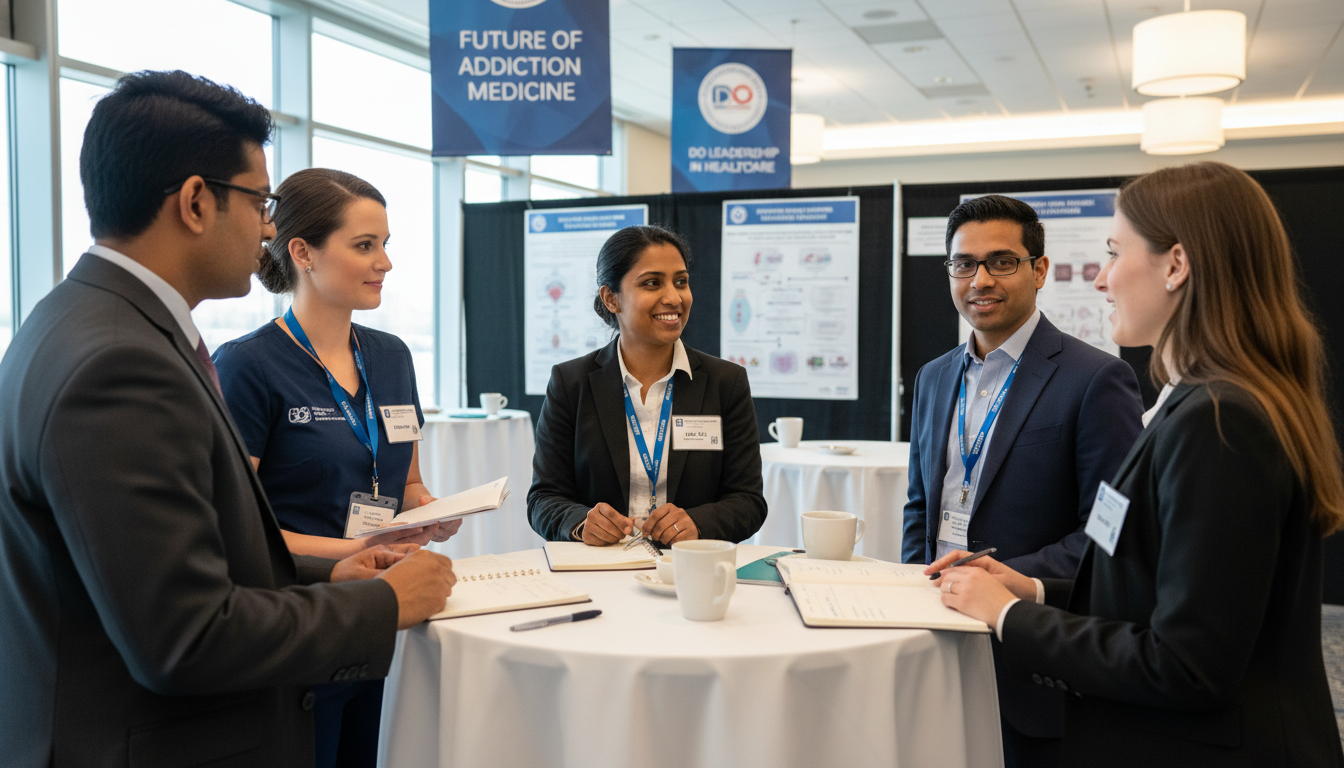
For a DO graduate, conference networking can be high-yield if you choose strategically. Key meetings and organizations to consider:
- American Society of Addiction Medicine (ASAM) – flagship conference with broad clinical and policy content
- American Osteopathic Association (AOA) meetings with addiction-related tracks or sessions
- American Academy of Addiction Psychiatry (AAAP) – especially if you come from a psychiatry route
- Regional/state addiction medicine societies or opioid task-force meetings
Look for sessions labeled:
- “Addiction consult services”
- “Buprenorphine initiation in hospital settings”
- “Substance abuse training in residency”
- “Harm reduction and overdose prevention”
These will attract the colleagues you most want to meet.
Conference Networking: Step-by-Step Strategy
Before the conference
- Review the program and identify 5–10 people you’d like to meet (e.g., fellowship directors, key faculty, DO-friendly programs).
- Send brief, targeted emails:
- “I’m a DO graduate and current [PGY level] with a deep interest in Addiction Medicine. I’ll be at [conference] and would appreciate 10–15 minutes to ask about your program’s training in SUD care.”
During the conference
- Ask concise questions at microphones after talks—people will remember your name and face.
- Approach speakers briefly:
- “Thank you for addressing stigma in SUD care. As a DO resident considering an addiction medicine fellowship, what skills should I focus on building now?”
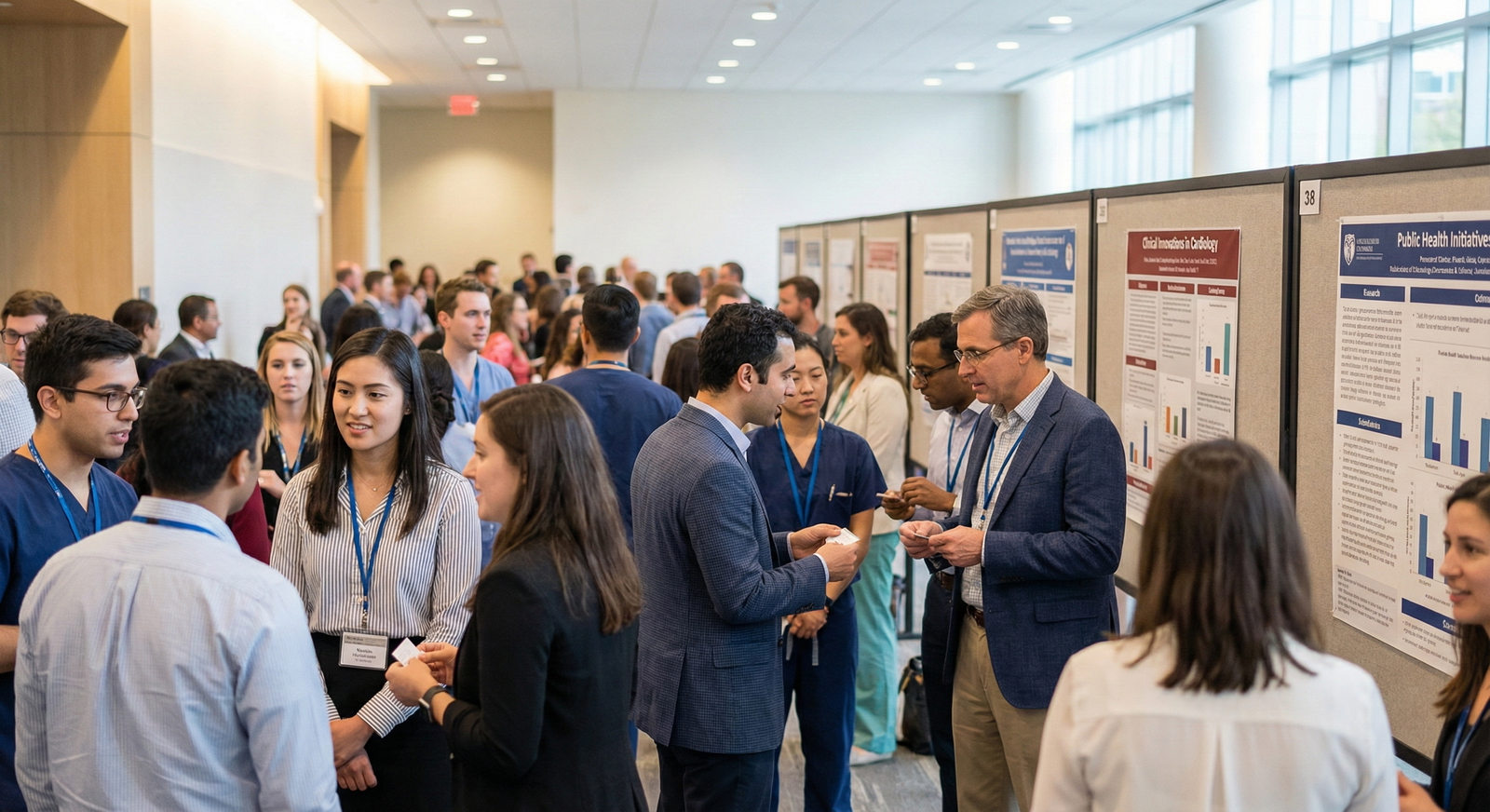
- Use poster sessions for low-pressure networking:
- Present if possible; if not, circulate and ask thoughtful questions, then introduce yourself.
After the conference
- Send follow-up emails within 1 week:
- Remind them who you are and reference your specific conversation.
- Ask one clear next-step question (e.g., “Could I shadow your addiction consult service if I’m in town?” or “Would you recommend your fellowship for a resident with a strong DO background in internal medicine?”).
- Send follow-up emails within 1 week:
Online and Social Media Medical Networking
Used wisely, online platforms can significantly boost your visibility in Addiction Medicine:
LinkedIn
- Keep a professional profile emphasizing SUD-related activities, rotations, and quality improvement work.
- Connect with colleagues you meet at conferences or during rotations.
- Post short reflections on addiction-related learning (while strictly avoiding any identifiable patient information).
X (Twitter) and similar professional networks
- Follow addiction medicine thought leaders, academic departments, and societies.
- Participate in journal clubs or hashtag discussions (e.g., #AddictionMedicine, #MedEd, #FOAMed).
- Retweet and briefly comment on new research or guidelines related to SUD care.
Institutional and fellowship websites
- Many addiction medicine fellowships highlight their faculty and fellows—these profiles often include email addresses or research interests that give you an opening to reach out.
Using Networking to Advance Training, Fellowship, and Career
Building Robust Substance Abuse Training During Residency
Regardless of your base specialty (internal medicine, family medicine, psychiatry, EM), you can use your network to deepen your substance abuse training:
Ask mentors to help you:
- Arrange elective time with an addiction consult service or outpatient MAT clinic
- Join multidisciplinary case conferences focusing on SUD
- Participate in community outreach (syringe services, naloxone distribution, recovery groups)
Offer to help with:
- Curriculum development (e.g., adding SUD content to residency noon conferences)
- Quality improvement projects, such as:
- Increasing screening for alcohol and drug use
- Implementing standardized withdrawal protocols
- Improving transitions of care from hospital to SUD treatment programs
These activities not only build skills but also deepen relationships with faculty and administrators who can later support your addiction medicine fellowship applications.
Positioning Yourself for an Addiction Medicine Fellowship
Networking plays a central role in the addiction medicine fellowship selection process:
Identify programs where DOs have thrived
- Look for programs listing DO fellows or faculty.
- Reach out to them directly:
- “I see you completed your DO training before fellowship. Could I ask how your DO background was perceived and supported at your program?”
Cultivate advocates who know your addiction work
- Program directors, chief residents, and addiction-focused faculty who can describe your commitment and competence in SUD care are invaluable.
- In letters and calls, they can emphasize your unique strengths from osteopathic training: whole-person focus, strong communication with patients, and comfort with biopsychosocial models of disease.
Align your scholarly work with addiction medicine
- Case reports and QI projects about SUD presentations, withdrawal management, or MAT implementation
- Posters or presentations at ASAM or related conferences
- Collaboration with public health departments or community programs on overdose prevention
These scholarly products serve as concrete evidence of your commitment and make it easier for your network to advocate for you.
Everyday Clinical Networking: Small Habits, Big Impact
You don’t have to wait for conferences or formal meetings to network in medicine. Day-to-day residency life is full of chances to build your professional reputation:
On rounds
- Volunteer to present on SUD-related topics when they arise.
- Offer to call addiction consult services or community programs to facilitate safe discharge.
Cross-discipline collaborations
- Develop relationships with social work, pharmacy, case management, and nursing staff who routinely care for patients with SUD.
- Communicate respectfully and consistently; be the resident who always closes the loop.
Community program interfaces
- Learn the names and roles of people at local methadone clinics, residential treatment centers, shelters, and harm-reduction programs.
- When you routinely hand off patients to the same community partners, introduce yourself and build a reputation for thoughtful, comprehensive transfers of care.
Over time, this kind of relational reliability leads to invitations: to sit on committees, to join grants, to co-lead educational sessions—each of which expands your network further.
Protecting Yourself from Burnout While You Network
Networking can start to feel like another obligation stacked on top of a demanding schedule. To keep it sustainable:
Set small, concrete goals:
- “One new professional contact per month”
- “Attend one addiction-related talk per quarter”
- “Email one potential mentor after each major conference”
Be selective:
- You do not need to attend every meeting or respond to every opportunity.
- Choose opportunities that align with your core Addiction Medicine goals.
Build “networking into” what you’re already doing:
- Turn a challenging case into an email to a potential mentor.
- Turn a routine QI requirement into an addiction-focused project.
- Turn end-of-rotation thank-you notes into a foundation for long-term relationships.
The goal is to integrate networking into your professional life, not bolt it on as a separate, exhausting task.
FAQs: Networking in Medicine for DO Graduates in Addiction Medicine
1. As a DO graduate, will program directors in Addiction Medicine view me differently than MD applicants?
Some may have unconscious biases or simply less familiarity with DO training, especially at historically MD-heavy institutions. This is where networking in medicine becomes critical. When faculty and fellowship directors personally know you, your skills, and your commitment to SUD care, your degree label matters far less. Your network can also direct you toward addiction medicine fellowship programs known to be DO-welcoming.
2. I’m introverted. How can I network effectively without feeling inauthentic?
You don’t need to be outgoing or charismatic to build a strong network. Focus on:
- One-on-one conversations instead of large group mingling
- Asking thoughtful questions and listening carefully
- Following up with clear, appreciative emails
Quiet consistency and reliability often build stronger, more enduring relationships than aggressive self-promotion.
3. What if my current residency program has limited Addiction Medicine resources?
Use external networks:
- Seek out regional addiction medicine societies or ASAM chapter meetings
- Ask your program director for permission to do outside electives or virtual rotations with addiction consult services or MAT clinics
- Look for online courses or mentorship programs in Addiction Medicine
By leveraging conference networking, online platforms, and cross-institutional mentorship, you can build a strong training experience even in a resource-limited home program.
4. How early should I start networking if I’m interested in an Addiction Medicine fellowship?
Start as early as possible—ideally during the first year of residency—but it’s never “too late.” In PGY-1 or PGY-2:
- Identify potential mentors and addiction-focused rotations
- Present a case or QI project with SUD relevance
By late PGY-2 or early PGY-3, you’ll want at least one mentor in Addiction Medicine and a few concrete projects or presentations that highlight your interest and skills. Your network will then be in place to support your applications and advocate for you when fellowship positions are discussed.
By approaching networking in medicine as a deliberate, integrated part of your DO training—not an afterthought—you can build a career in Addiction Medicine that is both deeply impactful and personally sustainable. Your relationships will become the scaffolding that supports your learning, your opportunities, and your long-term ability to care for patients with substance use disorders at the highest level.