Understanding Networking in Medicine as a DO Graduate in Global Health
For a DO graduate passionate about global health, networking in medicine is not a “nice-to-have”—it is a core career skill. Your clinical training gives you the ability to care for patients; your network gives you the ability to find the right residency, join impactful projects, secure funding, and build a sustainable career in international medicine.
As a DO, you bring a distinctive osteopathic perspective to global health—holistic care, emphasis on prevention, and hands-on skills. Yet you may also face extra questions or barriers, particularly in the osteopathic residency match and in international settings where the DO degree is less familiar. Strategic, intentional medical networking helps bridge those gaps.
This article will walk you through:
- How networking in medicine specifically works for global health–minded DOs
- How to use rotations, conferences, and online platforms to build connections
- How to approach global health residency tracks and mentors
- How to avoid common mistakes and follow up effectively
- Concrete scripts and examples you can adapt immediately
Throughout, assume this: networking is not about self-promotion. It is about deliberately building relationships that create value for both you and others over time.
Why Networking Matters More for DOs in Global Health
1. Navigating the Osteopathic Residency Match
For many DO graduates, the immediate priority is residency. If you are aiming for a global health residency track—whether in family medicine, internal medicine, pediatrics, EM, or OB/GYN—networking can dramatically influence your trajectory.
Ways networking impacts the osteopathic residency match:
Program awareness: Some global health–oriented programs may not explicitly advertise all their opportunities online. Knowing residents, faculty, or alumni gives you inside information about:
- Global health electives
- Funded international rotations
- Scholarly project support
- Visa/credentialing support for work abroad
Advocacy in selection: A faculty member who knows your interest and work ethic can:
- Flag your application for closer review
- Provide a strong, tailored letter of recommendation
- Educate selection committees less familiar with DO training about your capabilities
Clarifying DO-specific questions: Networking helps you quickly identify:
- Programs friendly to DO graduates
- Sites where DOs have held leadership roles in international medicine
- Hidden barriers (e.g., board exam preferences, prior GME experience)
Think of networking as a way to place more “nodes” in the system who understand who you are and what you can do.
2. Standing Out in Global Health
Global health is an increasingly crowded space. Many applicants list “global health” or “international medicine” as an interest, but far fewer demonstrate:
- Sustained, structured engagement
- Specific skills (e.g., implementation science, health systems, ultrasound, OMT in low-resource settings)
- Experience working with ministries of health, NGOs, or community-based organizations
A strong professional network can help you:
- Find meaningful projects rather than one-time “mission trips”
- Get involved in grant-funded or research-based initiatives
- Connect with local partners in-country, not just US-based faculty
- Understand ethical challenges, decolonization frameworks, and best practices
3. Overcoming Name-Recognition Gaps for DOs Abroad
Outside North America, many stakeholders are unfamiliar with the DO degree. You may need advocates—US-trained MD/DO attendings, NGO leaders, or academic global health faculty—who can:
- Explain the equivalence of your education and training
- Provide letters or references for foreign licensure applications
- Connect you with institutions in countries that already work with DOs
Networking ensures you are not introducing yourself to each new system alone.

Where and How to Build Your Global Health Network
1. Leverage Rotations and Clinical Experiences
Your most natural networking environment is where you already are: rotations, sub-internships, and electives.
If you’re still in medical school or early in residency:
Choose rotations with a global health lens
- Federally Qualified Health Centers
- Refugee health clinics
- Indian Health Service sites
- Border health or migrant health programs
These environments often attract physicians actively involved in global health.
Signal your interest early
Early in a rotation, say something like:“I’m a DO graduate planning a career in global health, ideally through a family medicine residency with a global health residency track. I’d really love to learn from anyone here who’s involved in international work.”
Ask targeted questions
- “How did you get started in international medicine?”
- “If you were in my position as a DO graduate today, what would you prioritize?”
- “Are there people or programs you think I should know about?”
Request ongoing contact—professionally
At the end of a strong rotation:“I’ve really appreciated your mentorship during this rotation. Would it be okay if I stayed in touch via email as I apply for residency and explore global health opportunities?”
Concrete step:
Keep a simple spreadsheet of your clinical mentors with:
- Name, role, institution
- Email/contact
- How you know them
- Your global health/osteopathic angle they found interesting
- Date of last contact
Update this every 3–6 months.
2. Use Conference Networking Strategically
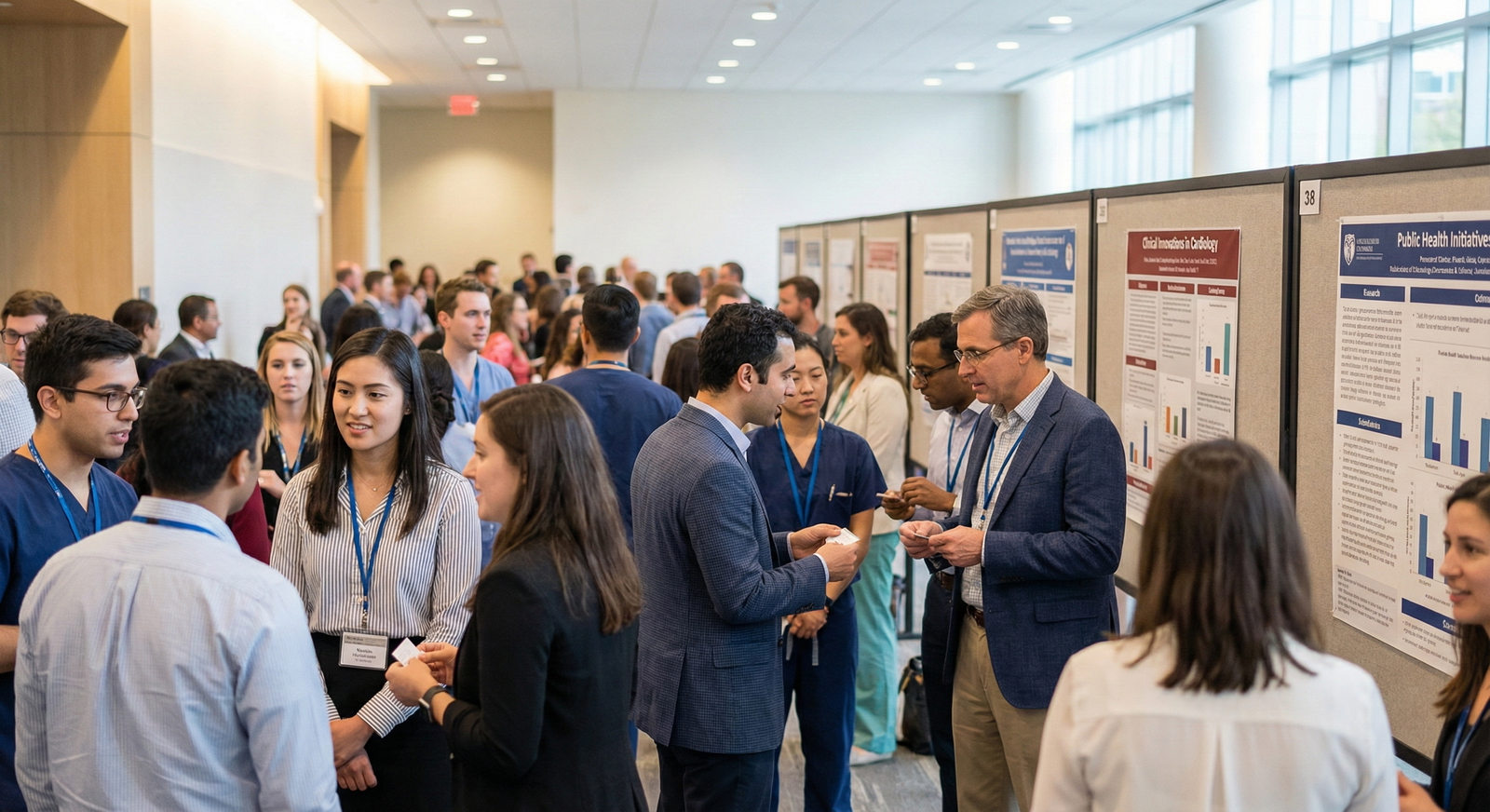
Conference networking is one of the highest-yield ways to meet global health leaders and peers who share your interests.
Key conferences to consider (depending on budget and timing):
- ASTMH (American Society of Tropical Medicine and Hygiene)
- CUGH (Consortium of Universities for Global Health)
- Family medicine, internal medicine, pediatrics, or EM conferences with global health tracks
- DO-focused meetings with international medicine sessions or poster tracks
Before the Conference
Search the program for:
- Sessions on global health residency tracks
- Workshops on global health ethics, implementation science, or humanitarian response
- Presentations by DO faculty or DO-friendly programs
Reach out early (2–3 weeks before) to 3–5 people you’d most like to meet:
Subject: DO graduate exploring global health – quick meeting at [Conference Name]
Dear Dr. [Name],
I’m a recent DO graduate with a strong interest in global health, particularly [e.g., maternal health / refugee health / infectious disease]. I saw that you’re presenting on [session title] at [Conference].
I’ll be attending and would be grateful for 10–15 minutes of your time to briefly ask about your career path and any advice you might have for a DO graduate entering global health–oriented residency programs.
Best regards,
[Your Name], DO
[Institution, if any]
[Email / LinkedIn]
Not everyone will respond; the ones who do are already semi-invested in you.
During the Conference
Practice a concise professional introduction (30–45 seconds):
“I’m [Name], a DO graduate interested in global health, especially [specific area]. I’m exploring global health residency tracks in [specialty]. I’ve been involved in [very brief experience], and I’m hoping to learn more about pathways to sustainable international work.”
Ask thoughtful, specific questions after talks:
- “How did you balance residency training with your international work?”
- “If you were advising a DO graduate today, how would you recommend building skills that are actually useful to partners on the ground?”
- “Are there particular residency programs that you feel do global health ethically and rigorously?”
Follow the “two meaningful conversations” rule
Instead of collecting 30 business cards, aim for 2–3 truly in-depth discussions daily with:- Faculty on global health tracks
- Residents in global health residency tracks
- NGO or ministry-of-health partners
After the Conference
Within 7 days:
Send a concise follow-up:
Dear Dr. [Name],
Thank you for taking the time to speak with me at [Conference]. I especially appreciated your insights about [specific point].
As a DO graduate planning to pursue [specialty] with a focus on global health, your advice about [X] was particularly helpful. I will [mention one concrete action you will take].
If it’s alright, I may reach out in the future as I move through the osteopathic residency match and look for global health–oriented programs.
Best regards,
[Your Name], DOAdd them to your network spreadsheet and calendar a light-touch check-in every 4–6 months.
Building a Digital Network: Email, LinkedIn, and Beyond
In global health, geography is wide and time zones are many. Online platforms are crucial to sustaining medical networking.
1. Email as Your Primary Professional Channel
Email remains the standard for professional communication. Use it to:
- Introduce yourself before meetings or conferences
- Request short informational interviews
- Share updates on milestones (match results, completed projects, publications)
Essentials of effective email networking:
- Concise subject line: “DO graduate seeking global health advice – brief call?”
- Short intro (1–2 lines), clear ask (“15-minute call,” “feedback on program list,” etc.)
- Acknowledge their time and expertise
- Make it easy to say yes by offering specific time windows and keeping it brief
2. LinkedIn for International and Cross-Sector Connections
LinkedIn is especially useful when you want to connect with:
- Global health NGOs
- International agencies (WHO, UNICEF, MSF, Partners In Health)
- Alumni from your DO program working abroad
Profile essentials for a DO graduate in global health:
Headline (not just “Resident Physician”):
“DO physician | Aspiring global health clinician-educator | Interested in [topic]”
About section:
- 3–4 sentences describing:
- Your DO background
- Specific global health interests
- Concrete experiences (e.g., projects, QI, research)
- Your short-term goal (e.g., matching into a global health residency track)
- 3–4 sentences describing:
Experience and skills:
- Highlight clinical experiences with diverse or underserved populations
- Include languages, cultural competencies, and research or QI projects
How to connect:
Personalize connection requests:
“I’m a DO graduate interested in global health [specialty area]. I came across your work on [X] and would love to follow your updates and learn more from your path.”
Join global health groups and DO-focused professional groups
Comment meaningfully on posts by leaders you respect
3. Specialty and Global Health Listservs
Many residency programs, departments, and global health consortia run listservs or Slack/Teams workspaces.
These can help you:
- Find short courses, workshops, and funded training opportunities
- Locate calls for research assistants or project volunteers
- Stay informed about changes in global health policy or practice
When appropriate, introduce yourself briefly in these spaces as a DO graduate interested in particular aspects of international medicine.

Mentorship in Medicine: Building Your Personal “Board of Directors”
Networking without mentorship can become scattered. Mentorship in medicine makes your network purposeful and strategic.
1. Types of Mentors You’ll Want
For a DO in global health, think about assembling a small “board of directors” with mentors who cover different roles:
Clinical specialty mentor
Guides you through your chosen field (family med, IM, pediatrics, EM, etc.) and the osteopathic residency match.Global health content mentor
Has sustained, ethically grounded experience in international medicine—particularly in your area of interest (e.g., NCDs, maternal health, health systems).Osteopathic role model
A DO who has navigated the dual challenges of DO visibility and global work.Career strategy mentor
Helps you plan long-term steps (fellowships, academic vs NGO work, leadership pathways).
One person can fill multiple roles, but you should not expect a single mentor to provide everything.
2. How to Ask for Mentorship (Without Saying “Will You Be My Mentor?”)
Strong mentorship relationships often begin informally. Start with small, focused asks:
- “Could I schedule 20 minutes to get your advice on my residency program list, especially regarding global health options?”
- “Would you be willing to review a brief paragraph on my global health interests for my personal statement?”
- “May I send you an occasional update and question as I move through the next year or two?”
Over time, if the relationship continues, you can acknowledge it more explicitly:
“You’ve been an incredible mentor to me over the past year. I really appreciate your ongoing guidance as I develop my path in global health as a DO.”
3. Be a Good Mentee
Increase the odds that mentors will invest in you by:
- Preparing for meetings with specific questions
- Sending a short agenda ahead of time
- Following through on their suggestions (and reporting back)
- Respecting their time (start and end on time; don’t ask for massive favors without context)
Prompts you can bring to a mentorship meeting:
- “I’m a DO graduate interested in global primary care in low-resource settings. Here are three global health residency tracks I’m considering. What do you see as their strengths and weaknesses?”
- “What skills do you wish you’d developed earlier in your career that I could start working on now?”
- “If I want to be competitive for an academic global health role, what should I be doing during residency?”
Targeting Global Health Residency Tracks as a DO
1. Identifying Programs That Fit
When exploring a global health residency track, look beyond the headline and examine:
- Structure: Is it a longitudinal track, a dedicated global health pathway, or just “optional electives”?
- Funding: Are international rotations funded, partially funded, or self-funded?
- Equity and ethics: Does the program emphasize bidirectional exchange, long-term partnerships, and capacity-building rather than short-term “medical missions”?
- DO experience: Have DO graduates successfully completed the track?
How networking helps:
Current residents can tell you:
- How global health is actually supported day-to-day
- Whether DO graduates get the same opportunities as MDs
- Which faculty are truly invested in resident development
Alumni can share:
- What career doors the track opened (fellowships, NGO roles, academic positions)
- How their experience prepared them for real-world international medicine work
2. Approaching Programs as a DO Grad
When contacting program leadership or global health track directors:
Be explicit but not defensive about your DO background:
“I’m a DO graduate planning to apply in [specialty]. My interest is in global health, particularly [specific focus]. I’d love to understand how DO residents have engaged with your global health track and what opportunities might be available.”
Emphasize alignment with their mission:
- If they focus on health equity, emphasize your work with underserved populations
- If they emphasize research, mention any scholarly work or your readiness to engage in projects
Ask pointed questions:
- “Have DO residents participated in this global health track before?”
- “What sorts of international medicine roles have your graduates gone on to?”
- “How do you support residents in balancing ACGME requirements with global rotations?”
3. Integrating Osteopathic Principles into Global Health
As a DO, you bring a valuable, often under-recognized set of strengths:
- Training in holistic, person-centered care
- Strong MSK and OMT skills that can be helpful in low-resource settings
- Emphasis on prevention, function, and long-term well-being
In conversations with mentors and programs, highlight how osteopathic principles align with:
- Community-based approaches
- Rehabilitation and functional medicine in low-resource contexts
- Integrative perspectives on mental health and chronic disease
Common Networking Pitfalls and How to Avoid Them
1. Being Vague About Your Interests
“I’m interested in global health” is too general. Instead, try:
- “I’m a DO graduate interested in maternal health and health systems strengthening in low- and middle-income countries.”
- “I hope to work in refugee health and global emergency medicine.”
Specificity:
- Makes it easier for people to recommend programs or contacts
- Shows you’re serious and have thought about your path
2. Treating Networking as One-Sided
Avoid approaching networking as, “What can you do for me?”
Even as a DO graduate just starting out, you can:
- Offer to help with small research tasks, data entry, or literature reviews
- Share relevant articles, resources, or contacts with peers
- Support classmates or co-residents exploring global health as well
Long-term, your reputation as someone who contributes and follows through becomes itself a powerful networking asset.
3. Failing to Follow Up
Most missed opportunities happen not because of a bad first impression, but because of no second interaction.
Practical follow-up strategy:
- Within 7 days: Thank-you email with 1–2 concrete takeaways
- Within 2–3 months: Brief update (“I applied to the programs you suggested and have already heard from X…”)
- Twice yearly: Short note with a major update (match result, publication, new project)
Use your spreadsheet plus calendar reminders to systematize this so it doesn’t depend on memory.
FAQs: Networking in Medicine for DO Graduates in Global Health
1. As a DO graduate, will my degree limit my options in global health?
Your DO degree may require extra explanation in some countries or institutions, but it does not inherently limit your ability to work in global health. Many global health leaders are DOs. Networking helps you:
- Identify institutions familiar with DO training
- Secure strong endorsements from MD/DO mentors
- Navigate licensure or credentialing questions abroad
Being proactive—especially in medical networking and mentorship in medicine—is more important than your degree letters.
2. How early should I start networking for a global health residency track?
Ideally, start in late medical school, but it is never too late. A realistic timeline:
Late MS3/MS4 or pre-residency:
- Attend at least one conference with a global health focus
- Connect with 3–5 potential mentors or program directors
Intern year:
- Clarify your specific global health interests
- Seek rotation or elective opportunities aligning with international medicine
PGY2–PGY3:
- Deepen involvement in one or two projects
- Present at conferences and expand your network intentionally
The key is consistency, not perfection.
3. I’m introverted and find conference networking overwhelming. What can I do?
You can still be highly effective at conference networking with a quieter style:
- Set a goal of 1–2 meaningful conversations per day, not dozens
- Prepare a simple introduction and 3–4 open-ended questions in advance
- Use email and LinkedIn to start relationships before the conference
- Attend smaller workshops or breakout sessions where conversation is more natural
Introverts often excel at building deep, long-term mentoring relationships—an asset in global health.
4. How can I show genuine commitment to global health rather than just a “check box” interest?
You signal seriousness by:
- Sustained engagement with underserved or marginalized communities, domestically or abroad
- Learning about ethics, power dynamics, and the history of global health (not just “travel medicine”)
- Producing tangible work: quality improvement, research, curricula, or long-term partnerships
- Seeking feedback and mentorship in medicine from people who have worked in the same region or field
When you combine your DO training with thoughtful, long-term engagement and strategic networking in medicine, you position yourself not just to “do global health,” but to contribute meaningfully and ethically to the field over an entire career.