Networking in medicine can feel abstract—especially if you are a Caribbean IMG stepping into a Transitional Year residency. Yet your ability to build and maintain professional relationships will strongly influence your fellowship options, your long-term specialty match, and the quality of your day‑to‑day residency life. This is doubly true if you are in a one‑year TY program and need to leverage that short time to secure your next position.
Below is a comprehensive, practical guide tailored specifically for Caribbean IMGs in a transitional year residency, including those from schools like SGU, AUC, Ross, and others.
Understanding Networking in Medicine as a Caribbean IMG
For many Caribbean graduates, “networking” can sound like forced small talk or “using” people. In medicine, it is neither. Networking is:
The intentional, professional exchange of information, support, and opportunities that helps everyone deliver better patient care and advance their careers.
Why Networking Matters More in a Transitional Year
A Transitional Year (TY) residency is uniquely positioned at the intersection of training and transition:
- Time-limited: You have only one year to impress program leadership, subspecialty attendings, and potential future mentors.
- Bridge year: Many Caribbean IMGs use a TY program to transition into advanced specialties (e.g., Anesthesiology, Radiology, PM&R, Neurology).
- Evaluation window: Faculty and program directors are assessing whether they can confidently recommend you for advanced positions or subspecialty fellowships.
Your networking efforts during this year can lead to:
- Strong letters of recommendation from U.S. faculty
- Insider knowledge about open advanced positions or fellowship spots
- Connections at other institutions willing to vouch for you
- Research or quality improvement (QI) collaborations that enhance your CV
Unique Challenges for Caribbean IMGs
Compared with U.S. MD/DO graduates, Caribbean IMGs often face:
- Less built-in alumni presence in U.S. academic centers (though SGU residency match and other major Caribbean schools have improved this dramatically)
- Visa considerations, which may limit some program options
- Implicit bias or misconceptions about Caribbean medical school training
- Smaller pre-existing networks in the U.S. healthcare system
Networking is one of the most powerful ways to close these gaps—especially if you approach it intentionally and systematically.
Laying the Groundwork: Professional Identity, Story, and Presence
Before you start active medical networking, you need a clear, credible professional identity. This forms the foundation of how others perceive and remember you.
Define Your Professional Story
In a Transitional Year residency, people will constantly ask: “So what are you planning to go into?” You should have a concise, confident answer that includes:
- Your background
- “I completed medical school at [Caribbean school] and I’m currently a Transitional Year resident at [institution].”
- Your intended path
- “I’m pursuing an advanced position in [specialty] starting next year.”
- Your genuine interests
- “I’m particularly interested in [specific clinical area, patient population, or procedural focus].”
- Your value proposition
- “I enjoy [research/QI/teaching/leadership] and I’m working on projects in [brief description].”
Example “elevator pitch”:
“I’m a Transitional Year resident at Mercy Medical Center, originally from an SGU residency match in internal medicine prelim. I’m pursuing advanced training in anesthesiology with a particular interest in perioperative medicine and patient safety. I’m currently working on a QI project to reduce pre-op delays, and I’m hoping to continue similar systems-based work in a categorical program.”
Practice this out loud until it feels natural, not scripted.
Optimize Your Digital Professional Presence
Your digital identity is often the first impression you make beyond your own program.
1. LinkedIn
- Professional headshot (clinic attire or suit, neutral background)
- Headline example:
“Transitional Year Resident | Aspiring Anesthesiologist | Caribbean IMG | Quality Improvement & Patient Safety” - Detailed “About” section summarizing:
- Medical school (Caribbean)
- Current TY residency
- Intended specialty
- Key interests and ongoing projects
- Connect with:
- Co-residents, attendings, program leadership
- Alumni from your Caribbean medical school
- Speakers you meet at conferences
- Physicians you collaborate with on rotations or research
2. Doximity
- Complete profile with:
- Medical school (ensure correct Caribbean school listing)
- Residency program and PGY level
- Special interests
- Use for:
- Discovering alumni from your medical school or program
- Reading physician-authored content related to your specialty
3. Email Professionalism
Your email style heavily contributes to your networking success:
- Use an institutional or professional email if possible
- Clear subject lines (“TY Resident interested in anesthesiology mentorship”)
- Brief intro, specific ask, clear next step
- Signature with:
- Full name, credentials (e.g., MD)
- “PGY-1 Transitional Year Resident, [Institution]”
- Contact info, LinkedIn link (optional)
Networking Within Your Transitional Year Program
Your TY program is your immediate ecosystem—and often your most powerful network.

Build Strong Relationships with Core Faculty
Even if your end-goal specialty is elsewhere, your core faculty can become:
- Letter writers
- Advocates to other departments
- References for future positions
How to stand out:
- Show up prepared and on time
- Volunteer for small tasks (follow-up calls, teaching med students, short presentations)
- Ask for feedback regularly—and act on it
- Express your career goals early (e.g., “I’m hoping to match into radiology and would appreciate any guidance or connections you might recommend.”)
Strategic move:
Ask the program director or chief resident:
“Are there faculty members who have strong connections in [your specialty] who you’d recommend I talk with?”
Then send a polite email to those faculty requesting a short meeting.
Leverage Rotations for Targeted Networking
Your transitional year often includes rotations in multiple departments (medicine, surgery, emergency, electives). Each is a networking opportunity.
On each rotation:
- Identify key people
- Attendings who are well respected
- Fellows in your intended specialty
- Chiefs or program leadership
- Signal your interest early
- “I’m really interested in PM&R and hoping to apply next cycle—if you have any advice about building a competitive application, I’d be very grateful.”
- Ask for opportunities
- Short teaching talks
“Would it be possible for me to give a 5-minute mini-presentation on [relevant topic] at our next team meeting?” - Small projects or QI involvement
“Is there a QI initiative or brief project I could help with during this rotation?”
- Short teaching talks
Turn Clinical Encounters into Networking Moments
You don’t need formal meetings to network. Everyday interactions matter.
- Show reliability: When you promise to follow up on labs, notes, or consults, do it consistently.
- Ask curious questions: “How did you decide on this specialty?” often leads to personal mentorship conversations.
- Offer help: “If you ever need a resident to help with data collection or case write-ups, I’d be interested.”
Consistently doing good clinical work is the most powerful form of networking—because people remember residents who make their lives easier and their patient care better.
Conference Networking and External Opportunities
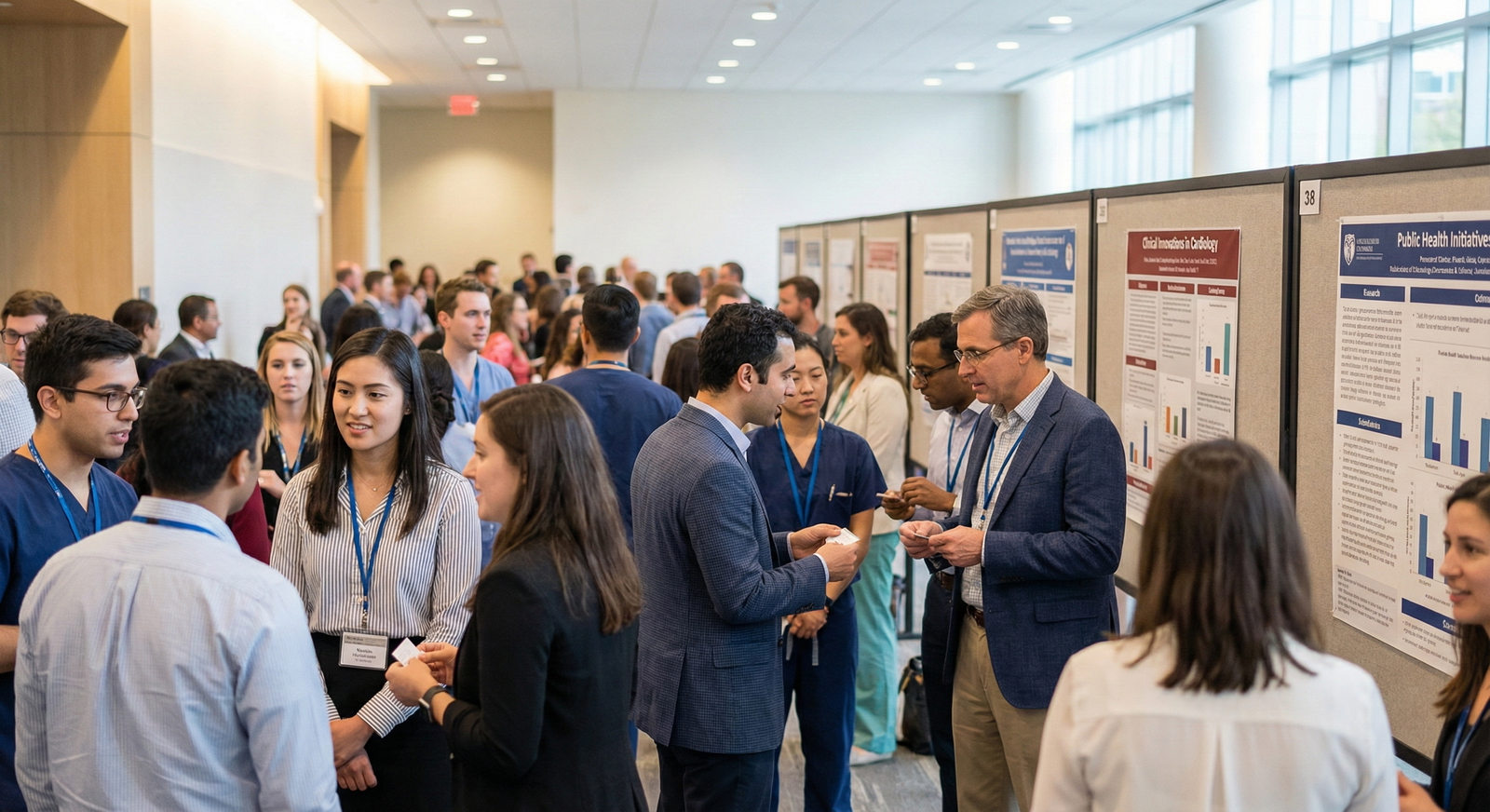
Conference networking is one of the most effective ways to expand beyond your home institution, particularly for SGU residency match alumni and other Caribbean IMGs aiming to connect with larger academic centers.

Get to Conferences—Even if It’s Just One
During a Transitional Year residency, your time and money are limited. But attending even one major specialty conference can be career-changing.
Strategies to attend:
- Apply to present:
- Case reports
- Small QI projects
- Retrospective chart reviews
- Ask your program about:
- Travel funds for residents presenting research
- “Education days” or conference leave policies
- Look for:
- Virtual options (cheaper, still valuable for networking via chat, Q&A, and follow-up emails)
- Regional meetings (less expensive than big national conferences)
How to Network Effectively at Conferences
Before the conference:
- Review the program and note:
- Sessions in your target specialty
- Speakers whose work interests you
- Residency program meet-and-greet events
- Email 2–4 people in advance:
- Introduce yourself briefly
- Mention your TY program and Caribbean medical school
- Ask if you can meet for 10 minutes during a break
Example email:
Subject: TY Resident Interested in Neurology – Quick Meeting at [Conference Name]?
Dear Dr. Patel,
My name is [Name], and I’m a Transitional Year resident at [Institution]. I completed medical school at [Caribbean school] and am applying to neurology for the upcoming cycle. I’ve been following your work on stroke systems of care and found your recent publication on telestroke particularly impactful.I’ll be attending [Conference Name] and wondered if you might have 10 minutes sometime during the meeting for brief career advice regarding neurology applications from a Caribbean IMG perspective. I’d be very grateful for any guidance you’re able to share.
Sincerely,
[Name], MD
PGY-1 Transitional Year Resident
[Institution]
During the conference:
- Attend networking sessions and residency/fellowship program booths
- Prepare a 20–30 second introduction:
- Who you are
- Where you train
- Your career goal and one specific interest
- Ask focused questions:
- “What traits do you value most in residents in your program?”
- “For Caribbean IMGs, what experiences best showcase readiness for your specialty?”
- “Are there ways I could get involved in multicenter projects or committees as a resident?”
After the conference:
- Send personalized follow-up emails within 3–5 days:
- Mention something specific from your conversation
- Express gratitude
- Include a small ask if appropriate (e.g., “Would it be okay if I emailed you my CV for feedback sometime?”)
- Connect on LinkedIn or Doximity with a short note referencing where you met
Mentorship and Sponsorship: Going Beyond Casual Contacts
Networking is not just collecting business cards—it’s building deeper, meaningful relationships, especially through mentorship and sponsorship in medicine.
Types of Mentors You Need as a Caribbean IMG in a TY Program
- Career Mentor (Specialty-specific)
- In your target specialty (e.g., anesthesiology, radiology, neurology)
- Helps you understand the landscape, application strategy, and fellowship pathways
- Process Mentor (Local Program)
- Within your TY program
- Guides you on:
- How to navigate the hospital culture
- Which electives to pick
- How to get projects done
- IMG-Savvy Mentor
- Ideally someone who:
- Is an IMG themselves, or
- Has worked closely with Caribbean IMG residents
- Can advise on visa issues, bias navigation, and realistic expectations
- Ideally someone who:
- Peer Mentors
- Residents 1–2 years ahead of you
- More approachable for day-to-day advice and honest feedback
How to Ask for Mentorship in Medicine
You don’t need to (and often shouldn’t) start with “Will you be my mentor?” Instead:
- Identify someone whose path or work you admire.
- Ask for a short meeting (15–20 minutes) for specific advice.
- Prepare thoughtful questions:
- “Given that I’m a Caribbean IMG in a Transitional Year residency, what would you prioritize over the next 6–9 months to strengthen my application for [specialty]?”
- “What are common pitfalls you’ve seen residents make when applying to your field?”
- After the meeting:
- Act on at least one piece of advice and update them later.
- If the relationship feels natural, you can say:
“I’ve really appreciated your guidance. Would you be open to my reaching out periodically as I navigate applications?”
That’s how mentorship in medicine typically evolves—organically, based on repeated, meaningful interactions.
Understanding Sponsorship vs. Mentorship
- Mentor: Advises you; helps you develop.
- Sponsor: Uses their reputation to open doors for you.
Examples of sponsorship:
- An attending emails a colleague in another program:
“We have a TY resident you should interview; she’s excellent.” - A research mentor lists you as a co-author and introduces you at a conference.
- A program director calls another PD to personally recommend you.
Sponsorship is critical for Caribbean IMGs, especially when competing for limited advanced positions. You cultivate sponsors by:
- Delivering consistently strong work
- Being reliable with deadlines
- Showing integrity and professionalism
- Demonstrating clear drive and initiative
Intentional Strategy: Turning Networking into Concrete Career Outcomes
Networking should not be random “chatting.” As a Caribbean IMG in a transitional year, you need a strategy aligned to your goals and timeline.
Step 1: Clarify Your Priority Outcome
Common goals during a TY program:
- Secure an advanced position in your chosen specialty (e.g., PGY-2 in Anesthesia, Radiology, PM&R)
- Strengthen your profile for a future categorical match if you don’t yet have a guaranteed PGY-2 spot
- Build a track record in research or QI for later fellowship applications
Write down your top two priorities and refer to them when deciding how to spend your time.
Step 2: Design a Networking Map
On a blank page (or digital note), list:
- Inside your institution
- Program director and associate PDs
- Chiefs and senior residents
- Faculty in departments related to your target specialty
- Outside your institution
- Alumni from your Caribbean medical school in your desired specialty
- Faculty you met at conferences or on away rotations
- Online communities (specialty societies, IMG groups)
Next, tag each contact with:
- “Potential mentor”
- “Potential sponsor”
- “Information resource”
- “Peer support”
Aim to deepen relationships with a manageable subset (e.g., 5–10 people) rather than spreading yourself too thin.
Step 3: Structure Your Time
You have limited hours as a PGY-1. To keep medical networking realistic:
- Weekly (15–30 minutes):
- Send 1–2 emails or LinkedIn messages (updates, thank-yous, check-ins)
- Read 1–2 recent articles relevant to your specialty so you can speak intelligently
- Monthly:
- Schedule one 20–30 minute mentorship conversation
- Work on one small, ongoing project (case report, QI, research)
- Every rotation:
- Identify 1–2 faculty worth staying in touch with
- Ask for feedback and potential letters of recommendation if appropriate
Step 4: Be Explicit About Letters and Support
As deadlines approach, you’ll need letters of recommendation and possibly advocacy for advanced positions.
When asking for a letter:
- Ask in person or via a personalized email:
“Dr. Lee, I’ve learned a lot on this rotation and valued your feedback. I’m applying for advanced positions in radiology and was wondering if you’d feel comfortable writing me a strong letter of recommendation?”
- Provide:
- Your updated CV
- Brief summary of your goals
- Specific points they might highlight (clinical strengths, work ethic, particular cases)
If you sense hesitation, thank them and consider asking someone else. The word “strong” in your request helps ensure you get supportive letters.
Common Pitfalls and How to Avoid Them
Mistake 1: Treating Networking as Transactional
If you only reach out when you need something (letter, connection, opportunity), relationships will feel shallow. Instead:
- Share updates: “I took your advice and joined the [specialty] society as a resident member.”
- Show appreciation: “Your comment about [X] really shifted how I think about [Y].”
- Offer value when you can: share relevant articles, help with a project, volunteer to mentor a junior IMG.
Mistake 2: Hiding Your Caribbean Background
You might feel tempted to downplay your Caribbean medical school, but honesty builds trust. The goal is to own your story:
- Highlight resilience, adaptability, and clinical exposure from your Caribbean training.
- Be prepared to address it briefly and confidently if someone asks:
“I chose [Caribbean school] because it gave me a path into medicine, and I maximized that opportunity by [research, leadership, excellent clinical performance]. Now I’m focused on being the best resident and colleague I can be here.”
Mistake 3: Over-Networking at the Expense of Performance
No amount of connections can overcome poor clinical performance. Protect your core responsibilities:
- Prioritize patient care and professionalism first
- Treat networking and conference networking as enhancers, not substitutes
Mistake 4: Waiting Too Long
In a one-year transitional year residency, the clock starts immediately. Start networking in medicine from your first month:
- Meet your PD and share your career goals early
- Introduce yourself to faculty in your target specialty
- Join relevant professional societies and email lists
FAQs: Networking in Medicine for Caribbean IMGs in a Transitional Year
1. I’m in a Transitional Year and unsure of my specialty. How should I network?
Focus on broad-based networking initially:
- Build strong relationships across rotations (medicine, surgery, ED)
- Seek mentors who can help you clarify your interests
- Attend general sessions at conferences and explore multiple specialties As your interests crystallize, narrow your networking toward that specialty, but the broad relationships you built will still benefit you in any field.
2. I’m from a Caribbean medical school with no strong alumni at my TY program. How can I still compete?
You can build a powerful network from scratch:
- Proactively reach out to attendings and fellows in your specialty
- Use LinkedIn and Doximity to find Caribbean IMG alumni in your target field nationwide
- Attend at least one specialty conference and practice effective conference networking
- Deliver outstanding clinical work so your U.S. faculty will advocate for you, regardless of school
3. Is it acceptable to directly ask attendings about unadvertised advanced or fellowship positions?
Yes—if you do it respectfully and at the right time. For example:
“Dr. Smith, as someone interested in matching into anesthesiology, I wondered if you know of any programs that might consider TY residents or have unadvertised PGY-2 positions. I’d appreciate any insights or introductions you might suggest.”
Many positions, especially in competitive fields, are filled through word-of-mouth. Your network often hears about them before they’re ever posted.
4. How can I effectively network if I’m introverted or uncomfortable approaching people?
Lean into structured, low-pressure settings:
- Schedule one-on-one meetings instead of trying to mingle in large groups
- Prepare 2–3 questions in advance so you aren’t stuck thinking of what to say
- Follow up more actively in writing (email, LinkedIn) after brief conversations
- Consider starting with peer mentorship and gradually expanding to senior physicians
Your goal is not to change your personality; it’s to build genuine, respectful relationships in ways that feel sustainable for you.
Networking in medicine is not about being the loudest person in the room—it’s about being consistent, reliable, and intentional. As a Caribbean IMG in a transitional year residency, your TY program is both a proving ground and a launchpad. Use this year to build authentic connections, seek thoughtful mentorship, and create sponsors who believe in you. Over time, those relationships will matter just as much as your scores or CV in shaping where your career goes next.