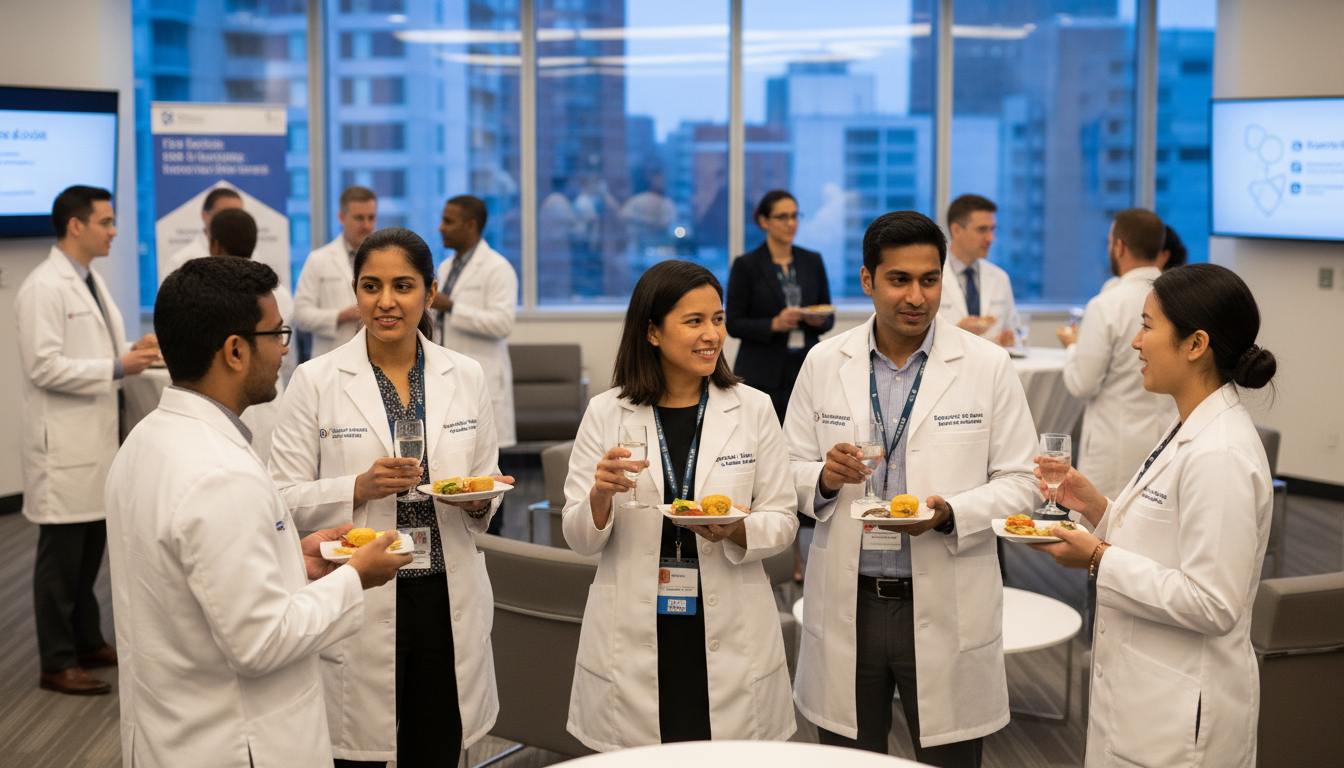
Why Networking Matters Even More for Caribbean IMGs in Clinical Informatics
Caribbean medical graduates entering clinical informatics occupy a unique—and often under-recognized—space in medicine. You may be navigating questions about a Caribbean medical school residency path, building credibility as an IMG, and simultaneously trying to break into a niche field that blends medicine, data, and health IT training.
Networking in medicine is not just a “nice to have” for this path. For a Caribbean IMG in clinical informatics, it is one of the primary levers that can:
- Offset biases and unfamiliarity with your medical school
- Open doors to informatics projects, electives, and research
- Connect you to mentors who understand both IMG and informatics pathways
- Position you competitively for a clinical informatics fellowship and related roles in health systems, startups, and academia
In clinical informatics—where job descriptions are often vague, roles are evolving, and opportunities are frequently shared through back-channel conversations—medical networking is the infrastructure that supports your transition from “curious resident” to “trusted informatics physician leader.”
This article breaks down a practical, step-by-step networking strategy tailored to Caribbean IMGs interested in or already pursuing clinical informatics.
Understanding Clinical Informatics as a Caribbean IMG
Clinical informatics is a board-certified subspecialty in the U.S. focusing on how data, information systems, and technology improve patient care, workflow, and population health. Typical work includes:
- Optimizing EHR workflows and clinical decision support
- Implementing quality improvement and data-driven interventions
- Leading health IT projects and digital health initiatives
- Translating between clinical teams and IT/analytics teams
For a Caribbean IMG, the route usually looks like:
- Caribbean medical school → U.S. residency (often in IM, FM, Pediatrics, EM, Pathology, or Anesthesia)
- Residency → clinical informatics fellowship (2-year ACGME-accredited program)
or
Residency → clinical + informatics-heavy role (e.g., CMIO track, data/quality projects, digital health roles)
Your networking strategy should support each of these steps:
- Helping your Caribbean medical school residency application stand out
- Building relationships during residency that lead to informatics projects and strong letters
- Positioning you for a clinical informatics fellowship or informatics-heavy attending role
Key mindset:
Networking is not about asking for favors. It is about systematically building relationships, reputation, and relevance in your chosen field.
Core Principles of Networking in Medicine for Caribbean IMGs
Before jumping into tactics, anchor yourself in a few principles that matter especially for IMGs:
1. Relationships Before Opportunities
Clinical informatics is collaborative and project-based. People want to work with colleagues they trust. If you make every interaction transactional (“Can you help me get into your program?”), you’ll stall quickly.
Instead:
- Lead with curiosity, not requests.
- Ask about their work, their path into informatics, their current projects.
- Follow up with value (articles, tools, data, summaries) rather than immediate asks.
2. Reputation is Your Strongest Currency
As a Caribbean IMG, you may sometimes feel you start with less name recognition compared to U.S. grads. Reputation can more than compensate:
- Be the person who follows through early, reliably, and well.
- If you say you’ll send a paper summary, code a simple dashboard prototype, or draft a project proposal—do it on time and with care.
- Over time, “She’s from SGU” becomes “She’s the resident who always delivers on informatics projects.”
This is especially powerful if you’re an SGU graduate or from another well-known Caribbean school where alumni success—like a strong SGU residency match record—can be amplified through your own performance and visibility.
3. Show, Don’t Just Tell, Your Interest in Informatics
Many people say they are “interested in clinical informatics.” Few demonstrate it. You stand out by:
- Completing online courses (e.g., basic SQL, R/Python for clinicians, FHIR, HL7).
- Contributing to QI, EHR optimization, or data projects in your hospital.
- Presenting posters at informatics or quality conferences.
- Joining committees or working groups (e.g., EHR optimization, quality, data governance).
Networking then becomes the process of showing the right people what you’re already doing, rather than convincing them you might be interested someday.
4. Consistency Over Intensity
You don’t need to attend every conference or message 20 people a week. Instead, build a gentle but steady cadence:
- 1–2 networking touches per week (email, LinkedIn, conversation with a faculty, quick update to a mentor).
- Monthly rounds of follow-up and updates.
- Annual or semi-annual visibility at key conferences.
This slow and steady visibility is what leads to serendipitous opportunities.

Building Your Core Network: From Medical School to Early Residency
1. Start Where You Are: Caribbean Medical School Environment
If you’re still in the Caribbean or early in your journey, leverage your immediate environment:
- Find informatics-adjacent faculty:
Even if your school doesn’t have a formal informatics department, look for:- Faculty involved in QI, data projects, EHR implementation, telemedicine, or simulation
- IT-savvy course directors or deans working on curriculum analytics
- Offer to support small projects:
- Help collect and structure data for educational outcomes
- Assist with SurveyMonkey/REDCap data for faculty projects
- Create simple dashboards in Excel or basic BI tools
These experiences may not be labeled “clinical informatics,” but they are real informatics work. Document and later translate them into informatics language for your CV and interviews.
If you are from a larger institution like SGU, check if there are:
- Alumni in clinical informatics or health IT roles
- Research or QI offices that connect students to projects
- Student interest groups related to technology, data, or innovation
2. Strengthening Your Position During the Residency Application Phase
While applying for residency from a Caribbean medical school:
Leverage your Caribbean medical school residency networks:
- Identify alumni from your school who matched into programs known for informatics, QI, or strong IT infrastructure.
- Ask for short, focused conversations: “I’d love to learn how you integrated informatics or QI into your residency.”
Signal informatics interest in your application:
- Emphasize tech/data/quality-related work in your personal statement and CV.
- If you have experience in coding, data analysis, or digital health, highlight how it complements your clinical training.
Use LinkedIn strategically:
- Connect with alumni in informatics-oriented settings.
- Post 1–2 times per month about health IT training you’re doing, articles you’re reading, or small projects you’re working on.
Your aim is to enter residency already known as “the IMG who’s serious about clinical informatics,” not just “another strong applicant.”
3. Early Residency: Your Greatest Networking Accelerator
Residency is the most powerful phase for networking in medicine because you interact daily with:
- Core clinical faculty
- Program leadership
- Quality and safety officers
- IT and analytics teams behind the scenes
Actionable steps:
Find the local “informatics people”:
- CMIO (Chief Medical Information Officer)
- Associate CMIOs or physician informaticists
- EHR medical director / clinical documentation improvement leadership
- Quality improvement and patient safety leaders
Introduce yourself thoughtfully:
- Short email: who you are, your background as a Caribbean IMG, why you’re interested in clinical informatics, and a clear ask for a brief meeting to learn about their work.
- Bring 2–3 questions about their path, day-to-day work, and advice for residents.
Volunteer for tangible tasks:
- Join an EHR optimization or clinical documentation committee as a resident representative.
- Ask to help with a small piece of a larger data or workflow project (data extraction, chart review, literature review, user feedback collection).
This is where mentorship medicine becomes real: physicians or leaders who see your dedication will naturally start advocating for you.
Conferences, Online Spaces, and Medical Networking Tactics for Informatics
Your immediate institution is foundational, but broader conference networking and online presence are what connect you to the national clinical informatics community.
1. Conferences: Where Clinical Informatics Lives in Public
Key meetings where clinical informatics professionals gather include:
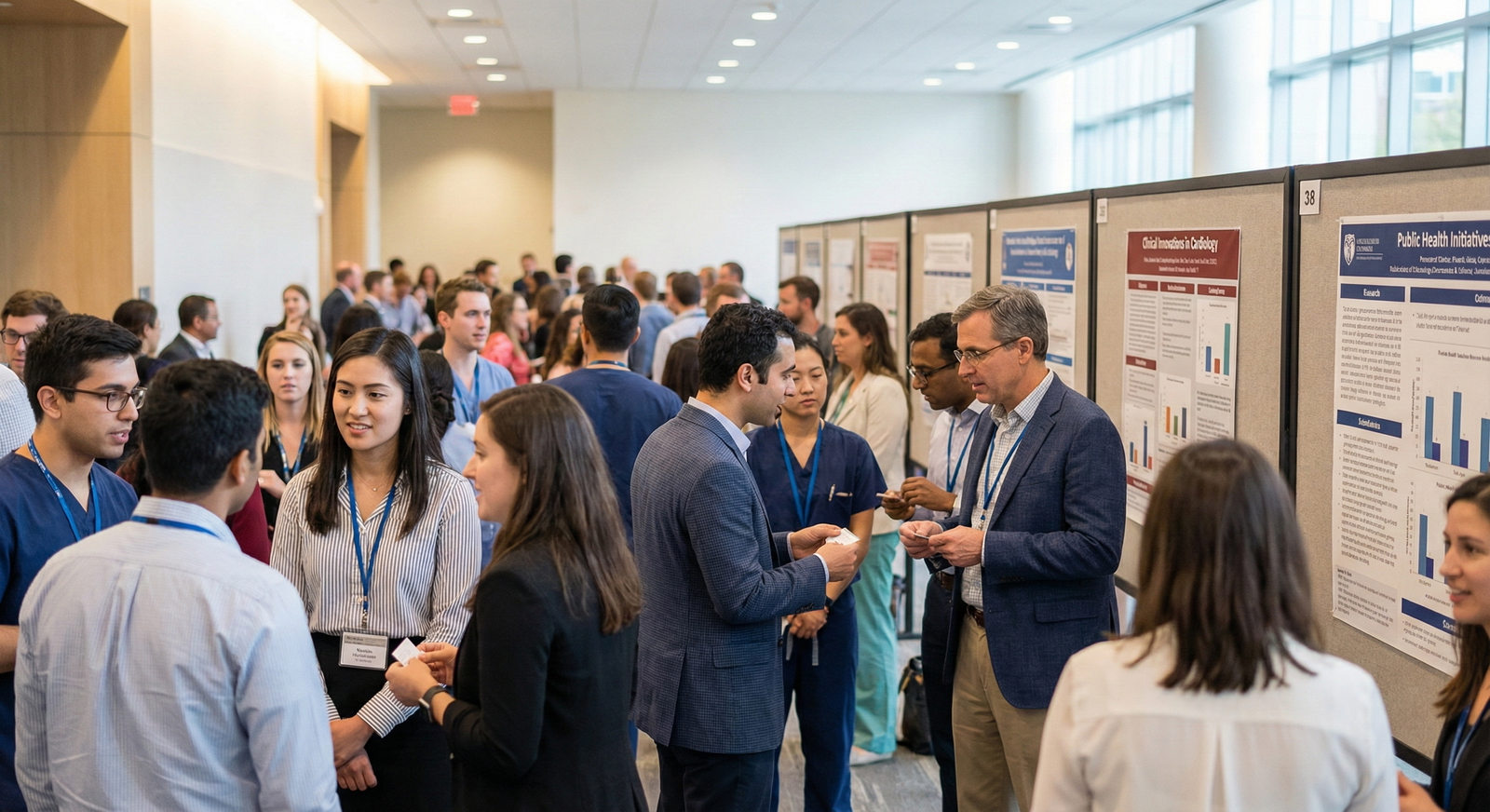
- AMIA (American Medical Informatics Association) Annual Symposium
- AMIA Clinical Informatics Conference (CIC)
- Specialty-specific informatics or quality conferences (e.g., HIMSS, quality & safety meetings, digital health events)
As a Caribbean IMG and trainee, you may worry about cost and access. Counter-strategies:
- Apply for student/trainee discounts and travel scholarships.
- Prioritize poster submissions—even modest QI or EHR projects boost your visibility and can offset costs.
- If travel is not possible, attend virtual tracks, poster sessions, or regional meetings.
How to do effective conference networking:
Before the conference
- Identify 5–10 people you’d like to meet (program directors of clinical informatics fellowships, CMIOs, informatics faculty).
- Send short emails or LinkedIn messages: mention your background (Caribbean IMG interested in informatics), your current role, and ask if they have 10–15 minutes to talk during the event.
During the conference
- Attend sessions where your target contacts are presenting or moderating.
- Ask 1–2 thoughtful questions in Q&A sessions or briefly introduce yourself right after.
- Collect business cards or confirm LinkedIn connections on the spot.
After the conference
- Send a thank-you email with a brief recap of what you learned.
- Attach or link to your poster or project if applicable.
- Ask for one specific, small next step (e.g., “May I email you an update in 6 months to get your advice on informatics fellowship applications?”).
Over years, this builds a national-scale network that can strongly support your clinical informatics fellowship applications.
2. Online Platforms: LinkedIn, AMIA Communities, and Beyond
For clinical informatics, online visibility matters.
LinkedIn:
- Use a clear headline:
“Internal Medicine Resident | Caribbean IMG | Aspiring Clinical Informaticist | EHR & QI Projects” - Post quarterly summaries of informatics-related work:
- “Completed a course in SQL for healthcare data.”
- “Presented our EHR sepsis alert QI project at [Conference].”
- Share short reflections on relevant topics (EHR usability, data equity, telehealth, interoperability).
- Use a clear headline:
Professional communities:
- Join AMIA as a trainee member if feasible.
- Participate in informatics mailing lists, Slack groups, or forums where cases, tools, and jobs are discussed.
- Contribute by asking good questions, summarizing articles, or sharing your experiences as a Caribbean IMG navigating this space.
GitHub or portfolio sites (optional but powerful):
- If you have technical skills, maintain a simple repository of:
- De-identified example code (SQL queries, R/Python scripts).
- Mock dashboards (e.g., using sample/EHR synthetic data).
- Project summaries or slide decks.
- If you have technical skills, maintain a simple repository of:
This gives people something tangible to associate with your name, which is especially helpful when your Caribbean training background is unfamiliar to them.

Mentorship, Sponsorship, and the Path to Clinical Informatics Fellowship
Networking becomes especially critical as you transition from “interested” to “competitive candidate” for clinical informatics fellowships or informatics-heavy attending positions.
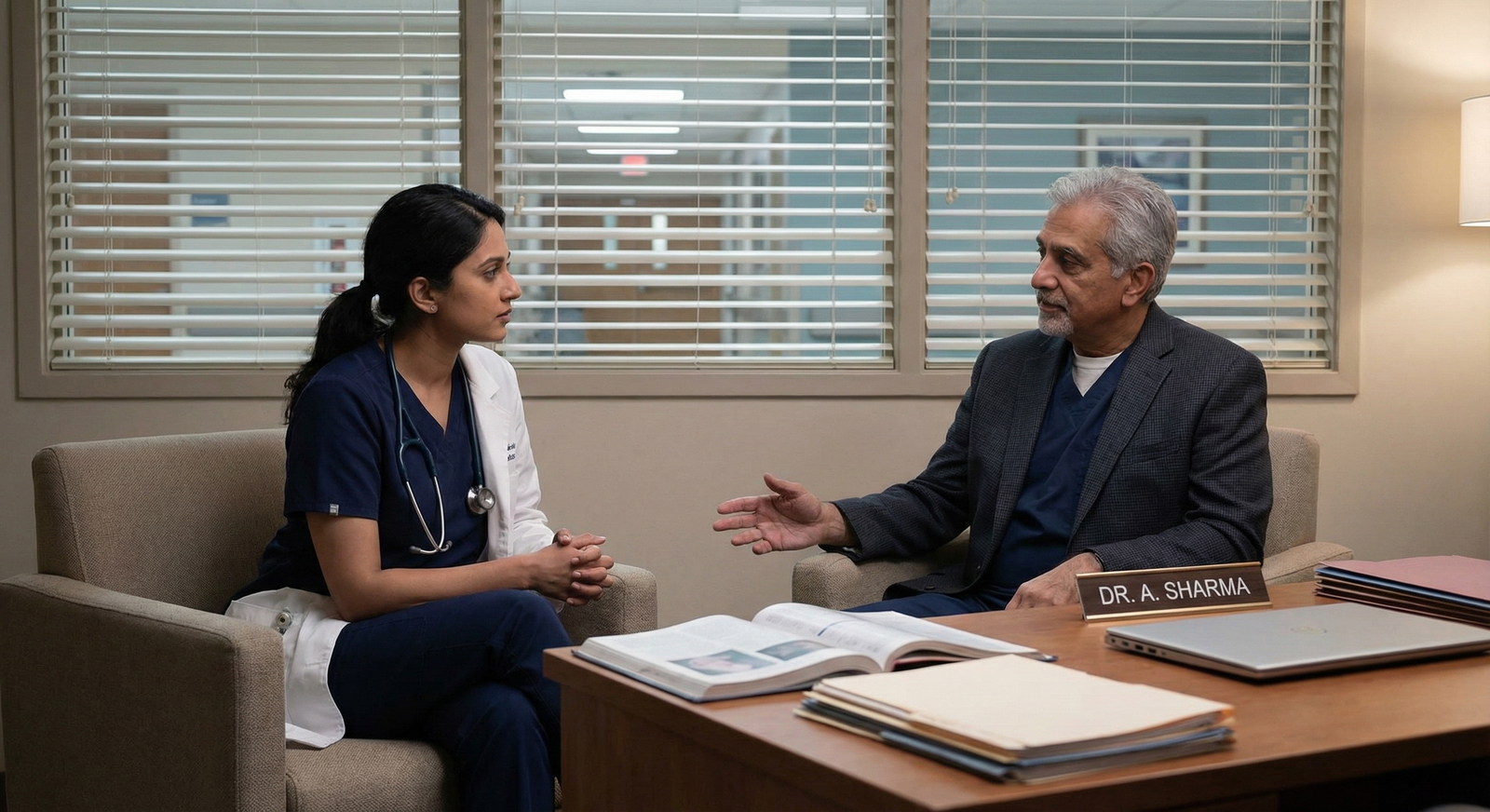
1. Building a Mentorship Team (Not Just One Mentor)
Aim for 3–4 types of mentors:
Clinical mentor in your base specialty
- Helps you excel clinically and secure strong letters.
- Protects your time and supports informatics involvement.
Local informatics mentor
- Might be a CMIO, EHR medical director, or informatics-savvy faculty.
- Connects you to in-house projects and committees.
- Co-authors posters or papers with you.
External clinical informatics mentor
- Someone from another institution—often met through conferences, AMIA, or alumni networks.
- Gives you honest insight into fellowship competitiveness and national trends.
- Offers feedback on your CV, personal statement, and project portfolio.
Peer mentor
- Current or recent clinical informatics fellow.
- Shares “live” advice on interviews, expectations, and daily work.
Approach potential mentors with:
- A brief narrative of your journey as a Caribbean IMG.
- Clear statement of your interests (e.g., EHR optimization, population health, telehealth, data analytics).
- Specific ways you hope they can help (e.g., career guidance, occasional check-ins, feedback on projects).
2. From Mentors to Sponsors
Mentors advise you; sponsors advocate for you when you’re not in the room.
To transform a mentor into a sponsor:
- Deliver exceptional work on any project they entrust you with.
- Make their lives easier: meet deadlines, communicate clearly, anticipate needs.
- Regularly update them with your progress—this gives them material to share when recommending you.
Sponsors do things like:
- Email a fellowship director: “You should strongly consider this resident—she’s been a key part of our EHR optimization team.”
- Nominate you for committees, awards, or small leadership roles.
- Introduce you to high-level decision-makers in informatics and health IT.
For a Caribbean IMG, a sponsor’s voice can powerfully counteract any unconscious bias or lack of familiarity with your training path.
3. Making Yourself Competitive for a Clinical Informatics Fellowship
Networking alone isn’t enough; you also need a portfolio. Your networking should help you build:
- Projects:
At least 2–3 substantial informatics/QI projects where your contribution is clear. - Outputs:
- Posters, abstracts, or presentations (local, regional, national).
- Manuscripts if possible, but not mandatory.
- Skills:
- EHR configuration/optimization exposure
- Basic analytics skills (SQL, Excel, R, or Python)
- Understanding of clinical decision support, workflow analysis, and change management
Use your network to:
- Identify project ideas that matter to your institution.
- Get early feedback on study design and implementation.
- Find venues to present and disseminate your work.
When you apply for a clinical informatics fellowship, your application will demonstrate not just interest, but evidence of sustained engagement, supported by concrete achievements and strong letters from your mentors and sponsors.
Common Pitfalls and How Caribbean IMGs Can Avoid Them
Pitfall 1: Waiting Too Long to Start Networking
Many residents wait until late PGY-2 or PGY-3 to think about networking in medicine and informatics. For a Caribbean IMG, this is especially risky because:
- You may need more time to build trust and overcome unfamiliarity with your background.
- You’ll likely need longer to accumulate projects, presentations, and letters.
Solution:
Start in PGY-1 (or even in your final year of medical school) with small, manageable steps—an introductory meeting, one committee, one project.
Pitfall 2: Over-Focusing on Technical Skills and Under-Focusing on Relationships
Yes, learning SQL, Python, or data science is helpful. But fellowship directors and CMIOs ultimately look for:
- Clinical credibility
- Ability to work with clinicians, IT, and leadership
- Communication and leadership skills
Solution:
Balance your health IT training with strong soft skills and visible participation in cross-functional projects. Use technical learning as a complement, not a substitute, for relationship-building.
Pitfall 3: Being Vague About Your Interests
Saying “I like informatics and tech” is too broad. It’s hard for others to know how to help you.
Solution:
Develop a clearer focus, even if provisional, such as:
- EHR workflow and usability
- Data analytics and population health
- Clinical decision support and order sets
- Telehealth and virtual care delivery
- Health equity and data
People can then connect you to specific colleagues, projects, and resources in those domains.
Pitfall 4: Hiding or Minimizing Your Caribbean IMG Identity
Some IMGs feel compelled to downplay their training history. Yet your Caribbean background can be a strength, reflecting resilience, adaptability, and familiarity with diverse health systems.
Solution:
Embrace and frame your Caribbean IMG story:
- Highlight how your path sharpened your resourcefulness and adaptability.
- Connect your diverse clinical experiences to your motivation for informatics (e.g., seeing how poor systems hurt care, understanding cross-cultural workflows).
- Seek out and connect with other IMGs in informatics—this shared identity can be powerful for mentorship and sponsorship.
FAQs: Networking in Medicine for Caribbean IMGs in Clinical Informatics
1. I’m still in a Caribbean medical school with limited research options. How can I start networking for a future in clinical informatics?
- Identify any faculty doing QI, telemedicine, simulation, or digital tools and ask to help with a small part of their work.
- Use online platforms:
- Join LinkedIn groups and follow AMIA and clinical informatics leaders.
- Attend virtual conferences or webinars.
- Start small personal projects:
- Analyze publicly available health data (CDC, WHO) and generate simple insights or visualizations.
- Document and later frame these experiences as early informatics exposure when applying for residency.
2. How can I leverage an SGU residency match or other Caribbean school alumni network specifically for informatics?
- Filter alumni lists or LinkedIn by “informatics,” “CMIO,” “health IT,” “digital health,” or “quality improvement.”
- Reach out with a short message:
- Mention your shared school (e.g., SGU), your current stage, and your interest in clinical informatics.
- Ask for a brief call to learn about their path and advice.
- Keep track of these contacts in a simple spreadsheet and send periodic updates; over time, some will become mentors or sponsors.
3. Do I need strong programming skills to be considered for a clinical informatics fellowship as a Caribbean IMG?
Not necessarily. Many successful clinical informaticists start with minimal coding experience. Programs primarily seek:
- Solid clinical competence
- Demonstrated engagement in informatics/QI projects
- Ability to think systematically about workflows, data, and change management
However, basic data skills (e.g., SQL, Excel, or R/Python fundamentals) are a strong differentiator. They also show initiative and make you more effective on project teams. You can gain these incrementally through free or low-cost online courses while in residency.
4. How do I talk about my Caribbean IMG background without triggering bias?
Frame your story with confidence and purpose:
- Acknowledge your path clearly and succinctly.
- Emphasize the strengths it fostered: resilience, adaptability, cross-cultural competence, experience with varied resource environments.
- Connect those strengths to why you’re drawn to clinical informatics: improving systems so that care is better, safer, and more equitable regardless of where it’s delivered.
- Let your track record—projects, letters, presentations—demonstrate your capabilities. Your network of mentors and sponsors will help reinforce that message.
Deliberate, consistent networking—rooted in authentic curiosity, reliable work, and strategic visibility—can transform your journey as a Caribbean IMG from uncertain to intentional. In clinical informatics, where roles and opportunities are often created through relationships, your network is not just a support system; it is a core part of your professional identity and future success.