Networking in medicine is not just “nice to have” anymore—it is a core skill, especially for Caribbean IMGs aiming for neurology. As competition for neurology residency grows and program directors look beyond test scores, your professional relationships, mentorship, and visibility can make the difference between a strong neuro match and an application that gets overlooked.
This article is written specifically for Caribbean medical students and graduates—whether from SGU, AUC, Ross, Saba, or other Caribbean medical schools—who are targeting neurology residency in the US. It focuses on how to build meaningful connections, use medical networking strategically, and navigate conference networking and mentorship in medicine to strengthen your neurology application.
Why Networking Matters More for Caribbean IMGs in Neurology
Neurology is a mid-sized specialty with rising interest, strong lifestyle, and increasing subspecialty options (stroke, epilepsy, neurocritical care, movement disorders, etc.). For Caribbean IMGs, the path is attainable—but not automatic. Networking fills in gaps that your application alone may not cover.
1. Overcoming Perception Gaps
Some programs have limited experience with Caribbean medical school graduates or may make assumptions about training quality. Strong networking allows you to:
- Put a face and story to your file
- Demonstrate professionalism and maturity
- Show that you are already integrated into the neurology community
When a faculty member or resident tells a program director, “I know this student—they’re reliable, sharp, and serious about neurology,” it reframes your entire application.
2. Access to Opportunities You’ll Never See Posted
Many of the best opportunities are never formally advertised:
- Unlisted research positions
- Shadowing and observerships
- Extra interview slots (“We’ve had a late cancellation, do you know anyone?”)
- Invitation-only case conferences or journal clubs
Students with strong networks hear about these first. As a Caribbean IMG, you will likely need to be more proactive since you may not have home neurology departments or established pipelines at US institutions.
3. Stronger SGU Residency Match (and Other Caribbean Schools)
If you’re at SGU or a similar Caribbean medical school, your school probably publicizes match lists showing neurology placements. Look at those lists as a “network map”:
- Which programs repeatedly accept Caribbean IMGs?
- Where have graduates from your specific school matched in neurology?
- Are there alumni from your campus or class years now in neurology residency or fellowship?
Your networking efforts can tap directly into those existing pathways. Many successful SGU residency match outcomes in neurology have been supported by:
- Alumni advocacy (“I trained at X program; you should look at this candidate”)
- Program familiarity with your school
- Research or rotation connections built over time
Networking converts those abstract possibilities into specific doors you can knock on.
Foundations of Effective Medical Networking for Caribbean IMGs
Before you start emailing, DM’ing, and introducing yourself at conferences, you need a framework. Good networking in medicine is not about being pushy; it’s about being prepared, respectful, and genuinely curious.
Clarify Your Neurology Story
People remember stories more than bullet points. You should be able to summarize:
- Why neurology?
- Why you, given your background as a Caribbean IMG?
- Where you hope to go (geographically and professionally)?
Example 30–45 second “origin story” you might share at a conference:
“I’m a fourth-year student from SGU with a strong interest in vascular neurology. I first got interested after a family member had a stroke and I saw how powerful early intervention and rehabilitation could be. I’ve done my core clinicals in the NY area and I’m now looking for research and mentorship in stroke and neuroimaging as I prepare for the upcoming neuro match cycle.”
Refine this so it feels natural, not memorized.
Build a Professional Online Presence
Many first impressions now happen online. At minimum, you should have:
Clean, complete LinkedIn profile
- Professional headshot
- Headline: “Caribbean IMG | Neurology Residency Applicant | Interested in [Subspecialty]”
- Summary focused on neurology interest, clinical experiences, research, and goals
- Add neurology-related skills, groups, and institutions
Updated CV
- Neurology-relevant experiences highlighted near the top
- Research, QI projects, case reports with neurological content clearly marked
- Include contact info, LinkedIn URL, and (if you have it) a professional email separate from school
Optional: Professional Twitter (“X”)
- Many neurologists are active in “NeuroTwitter”
- Follow neurology departments, journals, and key faculty
- Retweet and comment thoughtfully on neurology research
Core Principles of Networking as an IMG
- Be specific: “I’m interested in neurology” is fine, but “I’m exploring epilepsy and neurophysiology” is more memorable.
- Lead with curiosity, not requests: Ask about their path, current work, or advice before asking for favors.
- Respect time: Keep emails short, meetings focused, and always end early if you can.
- Follow up: Relationships are built with gentle, consistent touchpoints, not one-off emails.
Where and How to Network: From Campus to Conferences
You don’t need to wait for a big neurology conference to start medical networking. There are multiple layers—from your school to social media to national meetings—where you can build connections.

1. Start at Your Own Medical School and Clinical Sites
Even if your Caribbean medical school is offshore, your clinical rotations take place at affiliated hospitals—this is prime networking territory.
Action steps:
- Identify neurologists and neuro-interested internists at your rotation sites
- Attend any neurology grand rounds or case conferences even if not mandatory
- Ask your clerkship directors: “Are there any neurologists here who enjoy teaching medical students and might be open to a brief conversation about careers or research?”
When you meet a neurology-minded faculty member:
- Express your interest in neurology
- Ask about their path and local opportunities
- Follow up with a 3–4 sentence thank-you email and a CV attached, “for reference”
Over time, this is how you find:
- Local observers or informal mentors
- Small neurology QI projects (e.g., stroke protocol audits)
- Case reports from interesting patients
2. Use Alumni Networks Strategically
If you’re at SGU or another major Caribbean school, there is almost certainly a large alumni presence in US neurology.
How to leverage this:
- Ask your school’s alumni office for neurology alumni contacts
- Search LinkedIn: “[Your Caribbean medical school] neurology residency”
- Filter by location where you want to match (e.g., Midwest, New York, Florida, etc.)
Sample outreach message to an alum:
Subject: SGU Alum Interested in Neurology – Seeking Brief Advice
Dear Dr. [Last Name],
I hope this message finds you well. My name is [Name], and I am a [M3/M4/recent graduate] from SGU with a strong interest in neurology, particularly [subspecialty if known]. I noticed that you trained at [Program Name] and are now at [Current Institution].
I would be grateful for 10–15 minutes of your time to ask a few questions about your path from SGU to neurology and any advice you might have for a Caribbean IMG preparing for the upcoming neuro match. I understand you are busy and I appreciate any guidance you can share.
Sincerely,
[Name]
[Graduation year]
[LinkedIn or email signature]
Be prepared with 3–4 targeted questions:
- “How did you decide where to apply, given you were an IMG?”
- “Were there specific experiences that helped your neurology application stand out?”
- “Does your current program have experience with Caribbean IMGs?”
3. Conference Networking: Your Best Visibility Tool
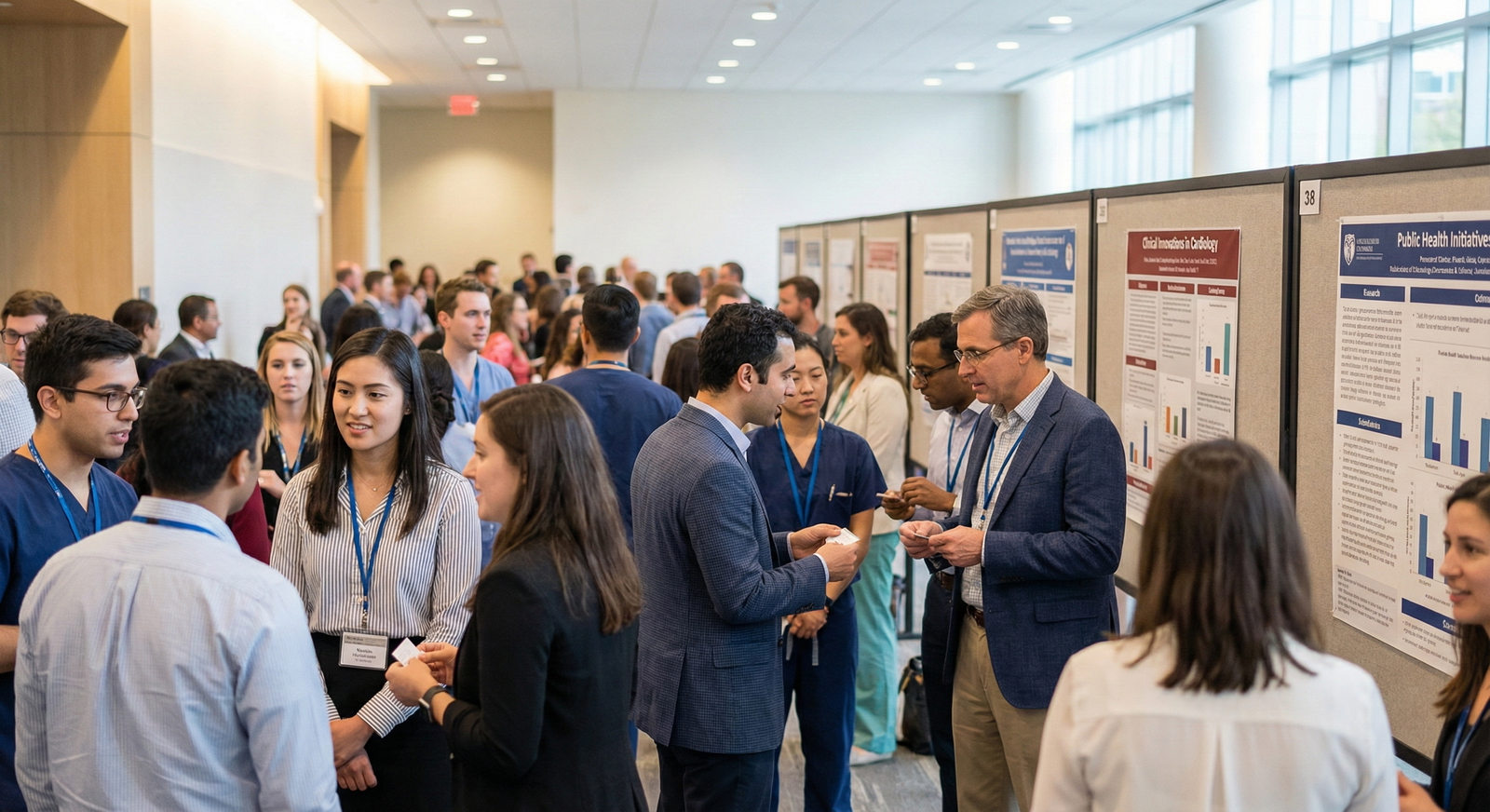
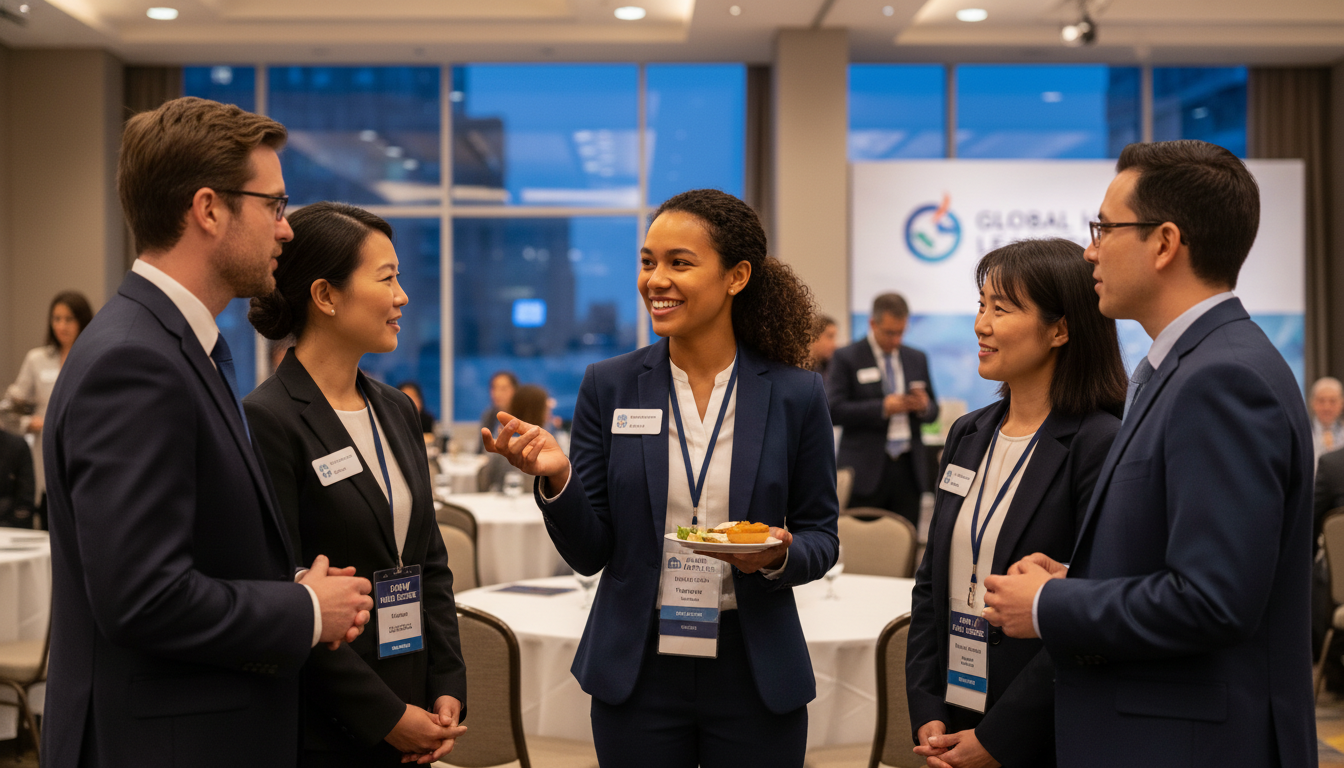
Neurology conferences are high-yield environments for concentrated medical networking. As a Caribbean IMG, this is where you can be seen as a future colleague, not just a “foreign applicant.”
Key neurology-related conferences to consider:
- American Academy of Neurology (AAN) Annual Meeting
- Regional AAN meetings
- Subspecialty meetings (e.g., American Epilepsy Society, stroke conferences)
- Institution-level “Neurology Research Days” (if accessible)
Maximizing a conference as a Caribbean IMG:
Register early
- Look for student/trainee discounts or travel scholarships
- Ask mentors if there is departmental support for students
Present if possible
- Even a case report or small retrospective study can be powerful
- Having a poster turns random conversations into natural networking:
- “Hi, I’m presenting later today on [topic]. Are you also interested in [subspecialty]?”
Plan your time ruthlessly
- Review the program weeks in advance
- Highlight:
- Residency program showcases
- “Meet the Program Director” sessions
- Trainee networking events
- Sessions run by programs you plan to apply to
Approach people with context
- If you attend a talk by a program director from a neurology residency you’re considering:
- Ask 1–2 thoughtful questions after the session
- Introduce yourself briefly: “I’m a Caribbean IMG interested in neurology, hoping to apply to your program in the upcoming cycle.”
- Ask if they have any advice for IMGs.
- If you attend a talk by a program director from a neurology residency you’re considering:
Use a business card or QR code
- Simple card with:
- Name, “Caribbean IMG – Neurology Residency Applicant”
- LinkedIn link
- Or a QR code on your phone linking to your CV or LinkedIn
- Simple card with:
Follow up within 48 hours
- Short email:
- Who you are
- Where you met
- One sentence about what you appreciated in the interaction
- Optional question or thank you
- Short email:
Mentorship in Medicine: Building Your Neurology Support Team
Networking gives you exposure; mentorship gives you guidance. For a Caribbean IMG in neurology, mentorship medicine is not optional—you will benefit from advisors who know the US system, neurology training, and IMG pathways.

Types of Mentors You Need
Clinical Neurology Mentor
- A neurologist who can:
- Help deepen your clinical understanding
- Write strong letters of recommendation
- Advise on case selection for abstracts or papers
- A neurologist who can:
Research Mentor
- May be a neurologist, stroke fellow, neurointensivist, or research scientist
- Helps with:
- Study design
- Data analysis
- Abstract and manuscript preparation
IMG/Caribbean-Specific Mentor
- Someone who understands:
- Visas
- Perception challenges
- How to build a neurology application from an offshore school
- Someone who understands:
How to Approach Potential Mentors
- Start with people you already know or have met in some capacity (rotations, conferences, alumni).
- When asking for mentorship, be specific:
- What you are asking (e.g., longitudinal guidance vs. advice on one project)
- How often you’d like to touch base (e.g., once every 1–2 months)
Sample ask:
“I’ve really appreciated your guidance about neurology and your willingness to involve me in [project/clinic]. I’m beginning to plan my neurology residency applications as a Caribbean IMG, and I wondered if you might be open to a more formal mentorship role—perhaps a brief check-in every 1–2 months over the next year as I make decisions about rotations, research, and programs.”
Being a Good Mentee
You have more control over mentorship success than you might think.
- Be prepared: Send an agenda before meetings (questions, updates, decisions you need help with).
- Do the work: If a mentor gives you a task (e.g., draft an abstract), complete it on time.
- Respect boundaries: Mentors are not obligated to edit every document or fix every problem.
- Express gratitude: Updates on your progress and sincere thanks matter.
When mentors see that you implement feedback and follow through, they will be more willing to:
- Introduce you to their colleagues
- Advocate for you with program directors
- Bring you into higher-impact projects
Turning Networking into Concrete Outcomes for the Neuro Match
Networking is not just about “knowing people”; it’s about aligning your activities with a clear goal: a neurology residency match that fits your profile and aspirations.
Identifying Neurology Programs That Welcome Caribbean IMGs
Use your network to map out realistic and stretch programs:
- Ask alumni mentors: “Which programs historically consider Caribbean IMGs?”
- At conferences, listen for:
- Programs that mention diversity of training backgrounds
- Faculty or residents who say “We’ve had success with international graduates”
Compile your list:
- Tier 1 (Realistic Core): Programs that have matched Caribbean IMGs in the last 3–5 years
- Tier 2 (Reach): Programs less familiar with IMGs but where you have:
- Research collaboration
- A strong mentor’s connection
- Tier 3 (Safety/Backups): Programs in less competitive regions or smaller cities with documented IMG presence
Using Networking to Strengthen Your Application Components
Letters of Recommendation (LoRs)
- Aim for at least 2 strong neurology LoRs
- Network strategically to work closely with neurologists who:
- Have seen your clinical skills first-hand
- Are willing to advocate for you as a Caribbean IMG
Research and Scholarly Output
- Collaborate on:
- Case reports from interesting neurology patients
- Retrospective chart reviews (e.g., stroke, seizures, demyelinating disease)
- Quality improvement in neurology units
Networking with research groups—even virtually—can lead to:
- Co-authorships
- Poster presentations at AAN or subspecialty meetings
- Strong academic signals in your ERAS application
- Collaborate on:
Away Rotations and Observerships
- Mentors and networking contacts can:
- Suggest which programs are worth an away rotation
- Help you secure observerships if hands-on electives are hard as an IMG
- Provide feedback on your performance and your “fit” for neurology
- Mentors and networking contacts can:
Interview Preparation via Network
- Ask residents and recent grads:
- “What questions did you get in neurology interviews?”
- “What did programs want to know about you as an IMG?”
- Practice mock interviews with mentors or colleagues who understand the neuro match process
- Ask residents and recent grads:
Networking During Interview Season
Even once you have interviews, networking continues:
- Connect with co-applicants and residents on LinkedIn
- Send brief thank-you notes to interviewers referencing specific discussion points
- Attend any virtual “socials” or open houses and engage with questions
Your goal: when the rank list is discussed, someone at the table says, “I remember them—they were impressive, well-prepared, and clearly serious about neurology.”
Common Networking Pitfalls for Caribbean IMGs (and How to Avoid Them)
1. Only Reaching Out When You Need Something
If every email you send is a request (LoR, research spot, introduction), people will feel used. Balance requests with:
- Genuine curiosity and learning
- Offers to help (data collection, literature review, etc.)
- Updates and gratitude
2. Sending Generic, Copy-Paste Messages
Faculty receive many emails like:
“Dear Sir/Madam, I am an international medical graduate seeking observership.”
These get ignored. Make your outreach:
- Personalized (reference their work, institution, or talk)
- Concise (3–5 short paragraphs max)
- Purposeful (clear ask or clear reason for contact)
3. Underestimating Non-Neurology Contacts
Internal medicine attendings, hospitalists, and even surgeons can:
- Introduce you to neurologists they respect
- Vouch for your overall clinical excellence
- Help you secure strong letters that highlight professionalism and work ethic
Maintain relationships across specialties; they can funnel you toward neurology mentors later.
4. Neglecting Follow-Up
Networking without follow-up is like planting seeds and never watering them. Simple strategies:
- After initial contact: follow up in 1–2 weeks if no response
- After meeting or project: send a thank-you note
- Every few months: send a brief update if they expressed interest in your progress
FAQs: Networking in Medicine for Caribbean IMGs in Neurology
1. I’m at a Caribbean medical school without a home neurology department. How do I even start networking?
Begin with what you do have:
- Clinical rotation hospitals: find neurologists or IM-friendly physicians with neuro interests
- Alumni office: ask specifically for neurology or internal medicine alumni in US training
- Online platforms: LinkedIn and professional Twitter to connect with neurologists and neurology departments
Combine these with conference networking—AAN and regional meetings are particularly useful for building an initial neurology circle.
2. Do I need research to match into neurology as a Caribbean IMG, and how can networking help?
Research is not strictly mandatory, but it is increasingly important for neurology, especially for IMGs. Networking helps you:
- Find approachable mentors with ongoing projects
- Join existing research teams rather than starting from scratch
- Access multi-center or higher-impact work you wouldn’t find on your own
Even case reports and small retrospective studies, if presented at conferences, signal commitment and academic interest.
3. How early should I start networking for a future neuro match?
Ideally:
- M2–M3: Start exploring neurology, speaking with mentors, and attending local events
- M3–M4: Secure neurology rotations, mentors, and possibly research; attend at least one major or regional neurology meeting
- Application year: Maintain relationships, seek interview advice, and stay present in your networks
If you’re already late in the process, start now; consistent networking over even 6–12 months can still meaningfully impact your application.
4. I’m worried about being “pushy” as an IMG. How do I balance persistence and professionalism?
Focus on:
- Clarity and respect: Be honest about your goals and appreciative of any time or help
- Reasonable follow-up: One gentle reminder after 1–2 weeks is appropriate; if no response, move on
- Value-adding: Offer to help with tasks (data, literature reviews, drafting) rather than only asking for favors
Most neurologists enjoy supporting motivated students—especially when those students show reliability, humility, and genuine interest.
Networking in medicine, especially in neurology, is a long game—built on curiosity, consistency, and character. As a Caribbean IMG, you may start from a different place than US MD peers, but with deliberate medical networking, targeted conference networking, and strong mentorship in medicine, you can absolutely craft a path to a successful neurology residency and beyond.