Why Networking Matters So Much for Caribbean IMGs in OB‑GYN
Networking in medicine is not just about “who you know”; it is about who knows you, what they know you for, and whether they trust you. For a Caribbean IMG pursuing Obstetrics & Gynecology in the U.S., networking can be the factor that shifts your application from the “maybe” pile to the interview list.
As a Caribbean graduate, you may face:
- Fewer built‑in connections to U.S. academic centers
- Limited home‑institution residency programs to support you
- Misconceptions about Caribbean medical school residency applicants
- Competition from U.S. MD and DO graduates in a moderately competitive field
OB GYN residency (and especially the obstetrics match) rewards applicants who demonstrate:
- Strong clinical performance and teamwork
- Clear interest in women’s health and surgical training
- Positive reputation from trusted faculty and residents
- Concrete engagement with the field: research, conferences, advocacy, and mentorship
Networking is the vehicle that allows others to see these qualities in you. Well‑structured medical networking helps you:
- Obtain U.S. clinical experiences and rotations in OB‑GYN
- Earn strong, specialty‑specific letters of recommendation
- Learn about residency programs “beyond the website”
- Find mentors who advocate for you behind closed doors
- Be remembered when interview decisions are made
Many SGU residency match success stories, and those from other Caribbean schools, share one common thread: consistent, strategic networking in medicine over several years rather than last‑minute outreach during application season.
Core Principles of Medical Networking for Caribbean IMGs
Before diving into tactics, it helps to ground yourself in a few key principles that apply to networking in medicine everywhere.
1. Networking Is Relationship‑Building, Not Transaction‑Collecting
Sending a flurry of emails asking, “Can you write me a letter?” or “Can you help me get into your program?” without a relationship is usually ineffective. Instead, focus on:
- Offering value (help with a project, research, teaching, or clinic support)
- Demonstrating reliability and follow‑through
- Showing genuine curiosity about the person’s career and work
- Staying in touch at reasonable intervals
Think: “How can I be a great colleague?” rather than “What can this person do for me?”
2. Consistency Beats Intensity
You don’t need to attend every conference or know every program director. What works is:
- A small set of mentors you maintain meaningful contact with
- A few conferences you attend regularly (even virtually)
- Steady involvement in societies and committees on women’s health
Networking is a long game—start in basic sciences and build through clinical years, not only in your final year before ERAS.
3. Your Reputation = Clinical + Professional + Online
People will “meet” you in three ways:
- At the bedside or operating room – professionalism, teamwork, curiosity
- In academic activities – research, QI projects, presentations, journal clubs
- Online – LinkedIn, professional email address, sometimes X/Twitter or a public profile
All three should send the same message: This person is committed to OB‑GYN, treats patients and colleagues respectfully, and can be trusted as a resident.
Building Your OB‑GYN Network from Day One
Start with Your Caribbean School’s Existing Resources
Even if your school is not in the U.S., it often has valuable connections:
Office of Career Services / Dean of Students
- Ask specifically: “Which faculty or alumni have matched into OB‑GYN recently?”
- Request introductions to graduates who matched in U.S. obstetrics & gynecology programs.
SGU residency match and other Caribbean match lists
- Study where past graduates matched into OB‑GYN.
- These programs are more familiar with Caribbean medical school residency backgrounds.
- Reach out to alumni from these programs politely (more on how below).
Student organizations
- OB‑GYN interest groups or Women’s Health groups
- Global health clubs with maternal and child health projects
- Leadership roles in these organizations showcase your commitment and initiative.
Action step:
Create a spreadsheet of OB‑GYN‑related contacts you already have (faculty, alumni, senior students, advisors) plus a list of target programs who have taken Caribbean IMGs before. This will be your networking map.
Make Every Clinical Rotation a Networking Opportunity
Even if a rotation is not in OB‑GYN, your behavior there can help or hurt your OB‑GYN chances.
Be the student everyone wants on service
- Arrive early, help with notes, volunteer for tasks.
- Ask for feedback and respond to it.
Signal your interest in OB‑GYN
- Share your career interest with attendings and residents:
- “I’m planning to apply in OB‑GYN and would appreciate any advice you have.”
- Ask: “Is there anyone in OB‑GYN here you think I should talk with?”
- Share your career interest with attendings and residents:
Seek mini‑mentorships
- If a resident or attending takes a special interest, follow up after the rotation:
- Send a brief thank‑you email.
- Ask if you may stay in touch for career advice.
- If a resident or attending takes a special interest, follow up after the rotation:
These connections often become key advocates later, even if they’re from Internal Medicine or Surgery. Programs value broad support from multiple specialties.
Prioritize OB‑GYN Electives and Sub‑Internships in the U.S.
For the obstetrics match as a Caribbean IMG, U.S. hands‑on experience in OB‑GYN is particularly important.
Aim for at least 1–2 U.S. OB‑GYN rotations at teaching hospitals, ideally:
- At your target programs, or
- At institutions with strong academic reputations in women’s health.
During these rotations:
- Work like an intern: manage patients under supervision, prepare presentations, scrub into cases.
- Ask early: “What distinguishes the top students on this rotation?” then strive to meet that standard.
- Learn residents’ and attendings’ names and roles; introduce yourself clearly.
End of rotation networking:
- Request a brief exit meeting with the clerkship director or a key attending:
- Ask for feedback.
- Express your interest in OB‑GYN and possibly in their program.
- If performance was strong, politely ask if they would feel comfortable writing a letter of recommendation.
- Request a brief exit meeting with the clerkship director or a key attending:
A powerful combination: excellent clinical performance + visible enthusiasm + professional follow‑through builds your reputation and network simultaneously.

Conference Networking and Professional Societies in OB‑GYN
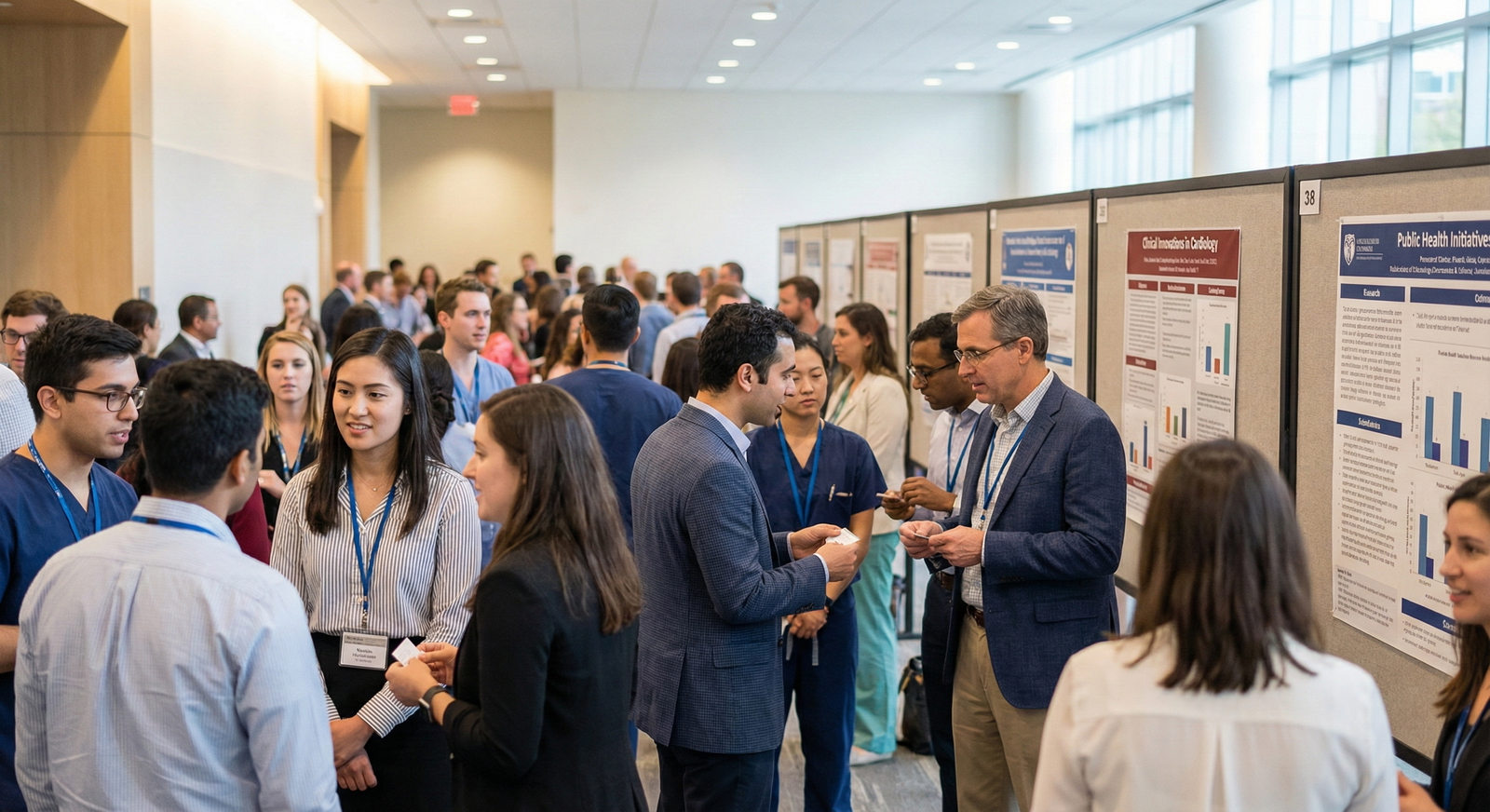
Conference networking is one of the most efficient ways to meet many OB‑GYN professionals in a short time. As a Caribbean IMG, this can help overcome geographic and institutional barriers.
Choose the Right Conferences
For aspiring OB‑GYN residents, consider:
- ACOG Annual Clinical & Scientific Meeting (American College of Obstetricians and Gynecologists)
- Regional ACOG district meetings
- CREOG & APGO meetings (education‑focused but often attended by program leadership)
- Specialty meetings on maternal‑fetal medicine, family planning, minimally invasive gynecology, etc.
If cost is a barrier:
- Apply for student travel grants or reduced registration rates.
- Attend virtually when possible; many meetings allow remote participation and poster presentations.
Prepare Before You Go
Conference networking is far more effective when you prepare:
Update your professional profile
- Create or polish a LinkedIn page with a professional photo, medical school, interests (OB‑GYN, maternal health, global health, etc.).
- Prepare a 20–30 second introduction:
“I’m [Name], a final-year medical student at [Caribbean school], originally from [country]. I’m very interested in OB‑GYN, particularly [specific area like high-risk obstetrics or reproductive justice], and I’m hoping to apply to residency in [year]. I’d love to hear about your work at [institution/program].”
Research who will be there
- Identify program directors, clerkship directors, and OB‑GYN educators.
- Note any SGU residency match alumni or Caribbean IMG graduates scheduled to present.
Set realistic goals
- Example: “I will have meaningful conversations with 5–10 faculty or residents and follow up with them afterward.”
How to Approach People at Conferences
Professional conversations do not need to be awkward if you keep them simple:
At poster sessions
- Visit posters in topics that interest you (e.g., maternal morbidity, contraception, OB surgical skills).
- Ask presenters:
- “How did you become interested in this topic?”
- “What was most challenging about this project?”
- “How do students get involved with similar research at your institution?”
After talks or panels
- Wait at the side or front after the session.
- Introduce yourself with your brief pitch and ask one or two focused questions.
- If the conversation goes well, ask: “Would it be okay if I follow up with a brief email?”
At networking sessions or receptions
- Approach small groups (2–3 people) rather than large circles.
- Look for residents or faculty from programs that have taken Caribbean IMGs previously.
Follow‑Up: Where Conference Networking Becomes Real
Networking at conferences only matters if you maintain the relationships:
Within 48–72 hours after the conference, send brief personalized emails:
- Thank them for their time.
- Mention something specific you discussed.
- If appropriate, ask one small, actionable question (e.g., “Are there student‑level opportunities at your institution for research in [topic]?”).
Add them on LinkedIn with a short note referencing your meeting.
Update them once or twice a year on your progress (USMLE scores, new research, upcoming application cycle), without overdoing it.
This kind of conference networking, repeated over several years, often leads to opportunities for research, visiting sub‑internships, and stronger program familiarity when you apply.
Mentorship in Medicine: Finding and Nurturing OB‑GYN Mentors
Mentorship medicine is especially critical for Caribbean IMGs in Obstetrics & Gynecology. A mentor can:
- Help you develop a realistic application strategy
- Offer feedback on your CV, personal statement, and program list
- Suggest research or leadership opportunities
- Advocate for you to colleagues and program directors
- Provide emotional support through the stress of applications and interviews
Types of Mentors You Need
Aim for a small, diverse mentorship team rather than one “perfect” mentor:
Clinical OB‑GYN mentor
- An attending or senior resident in OB‑GYN who has seen you work clinically.
- Can write strong letters and speak to your bedside skills.
Career/strategy mentor
- Someone familiar with the obstetrics match process (could be an academic advisor, dean, or OB‑GYN faculty member).
- Helps plan exam timing, research, and program targeting.
Near‑peer mentor
- A recent graduate (possibly a Caribbean IMG) currently in OB‑GYN residency.
- Offers practical advice: interview tips, how to talk about being a Caribbean graduate, what helped them succeed.
Non‑OB‑GYN supporter (optional but helpful)
- A faculty member from another specialty who strongly believes in you.
- Can broaden your network and write an additional strong letter of support.
How to Ask Someone to Be a Mentor
You don’t need to formalize it heavily. Often, mentorship begins informally:
After working with an attending or resident who seems invested in your growth:
- “I really appreciate the feedback you’ve given me on this rotation. I’m planning a career in OB‑GYN and would be grateful for continued advice. Would you be open to my checking in with you occasionally as I prepare for residency applications?”
For alumni or conference contacts:
- “I found your perspective as a Caribbean IMG in OB‑GYN residency very helpful. If you’re open to it, I’d appreciate occasional guidance as I move through this process.”
How to Be a Good Mentee
Mentorship is a two‑way relationship. You can build trust by:
- Preparing before meetings – send a brief agenda or list of questions.
- Respecting time – be punctual, concise, and stick to scheduled durations.
- Acting on advice – when mentors suggest steps, try to follow through and report back.
- Showing appreciation – a simple thank‑you email or sharing good news (e.g., “I matched!”) means a lot.
Consistent communication turns occasional advice into genuine advocacy.

Digital Networking and Professional Branding as a Caribbean IMG
Your online presence can amplify your networking in medicine, especially if you are not physically in the U.S. year‑round.
Professional Email and Communication Style
- Use a professional email address (e.g., firstname.lastname@...) rather than nicknames.
- Subject lines should be clear:
- “Obstetrics & Gynecology – MS4 from [School] Seeking Advice”
- “Follow‑up from [Conference Name]: [Your Name]”
In your emails:
- Keep messages short and specific.
- Use proper greetings and sign‑offs.
- Avoid sending attachments unless requested; instead, offer:
- “I’d be happy to share my CV if helpful.”
LinkedIn as a Networking Tool
LinkedIn can support your OB‑GYN aspirations if used well:
Profile essentials
- Professional headshot.
- Clear headline: “Medical Student (Caribbean IMG) | Aspiring Obstetrics & Gynecology Resident.”
- Summary emphasizing your interest: maternal health, global women’s health, surgical training, or reproductive justice.
- List clinical experiences, research projects, presentations, and leadership roles.
Engagement
- Connect with residents, attendings, and alumni you meet in person.
- Share major updates or accomplishments (poster presentations, publications).
- Join relevant groups (OB‑GYN, women’s health, IMG support communities).
Social Media for OB‑GYN Engagement
If you use X/Twitter or Instagram professionally:
- Follow OB‑GYN societies, educators, and residency programs.
- Engage with posts about maternal health, advocacy, and research.
- Do not violate patient privacy or professionalism standards.
Your public activity should reinforce your image as a serious, ethical trainee committed to women’s health.
Using Your Network Strategically During the Obstetrics Match
When ERAS season arrives, your established network becomes especially powerful.
Program Intelligence: Understanding “Fit”
Your mentors and contacts can help you answer:
- Which programs have a track record of accepting Caribbean IMGs?
- Where will your profile (scores, attempts, USCE, research) be competitive?
- Which programs emphasize surgical volume, high‑risk OB, academic work, or community care?
Having inside perspectives makes your application list more realistic and targeted, improving your chance of OB GYN residency interviews.
Letters of Recommendation: Quality Over Quantity
Aim for 3–4 strong letters, including at least 2 from OB‑GYN. Your network supports this by:
- Giving you opportunities to shine clinically and academically.
- Introducing you to faculty who like teaching and supporting students.
- Helping you identify who knows you well enough to write a detailed letter.
When asking for a letter, be direct but respectful:
“I’ve really appreciated the opportunity to learn from you on this rotation. I’m applying to OB‑GYN this cycle and wondered if you would feel comfortable writing a strong letter of recommendation on my behalf.”
The word “strong” gives them permission to decline if they cannot support you enthusiastically.
Signaling Programs and Advocating for Yourself
Your mentors can:
- Email colleagues at other institutions to say:
- “We had [Name], a Caribbean IMG, on rotation here. They were excellent, and I highly recommend them for your program.”
- Provide advice on which programs might be receptive to a “letter of interest” or post‑interview follow‑up.
Use such advocacy sparingly and respectfully. Not every contact should be asked to “put in a word” for you; reserve this for close mentors and for programs where there is a genuine fit.
Interview Season: Networking During and After
Interview days are also networking events:
- Treat everyone—from coordinators to residents—as part of your professional network.
- Ask residents about the culture, workload, and support for IMGs.
- After interviews, send brief, specific thank‑you emails to interviewers you connected with.
If a program feels especially aligned with your goals, your mentors might send a short note reaffirming their support for you as a candidate. This is where years of relationship‑building really pay off.
Putting It All Together: A Stepwise Networking Plan for Caribbean IMGs in OB‑GYN
Pre‑Clinical Years (Basic Sciences)
- Join or create an OB‑GYN or women’s health interest group.
- Attend virtual OB‑GYN seminars and conferences when possible.
- Begin LinkedIn profile and add early experiences.
- Connect with alumni who matched into OB‑GYN (especially Caribbean IMG and SGU residency match examples).
Core Clinical Years
- Tell attendings and residents about your interest in OB‑GYN.
- Seek OB‑GYN electives or early exposure if offered.
- Start small research or quality improvement projects in women’s health.
- Build relationships with at least one OB‑GYN faculty member and one resident.
Final Year / Application Year
- Secure 1–2 U.S. OB‑GYN rotations where you can earn strong evaluations.
- Attend at least one OB‑GYN conference (in person or virtual) and actively network.
- Solidify mentorship medicine relationships with a small team of advisors.
- Use your network for strategic program selection and letters of recommendation.
- Stay professional and consistent on email, LinkedIn, and any public social media.
Executed steadily, this plan turns “networking” from a vague concept into a concrete, daily habit that significantly improves your odds in the obstetrics match.
FAQs: Networking in Medicine for Caribbean IMGs in OB‑GYN
1. I’m shy and introverted. Can I still be effective at medical networking?
Yes. Networking in medicine does not require extroversion; it requires consistency and authenticity. You can:
- Prepare a short introduction and a few questions in advance.
- Focus on one‑on‑one or small‑group conversations.
- Use email and LinkedIn follow‑ups to deepen connections.
Many attendings and residents appreciate thoughtful, quiet students who listen well and follow through reliably.
2. How important is it to attend major OB‑GYN conferences as a Caribbean IMG?
Helpful, but not mandatory. Conferences are high‑yield for:
- Meeting multiple program directors and educators quickly
- Presenting research or posters that strengthen your CV
- Learning about different program cultures
If finances are tight, prioritize one conference where you can present work or where your key mentors will be present, and apply for travel support. Virtual attendance can still offer some networking benefits.
3. I’m at a Caribbean school without strong OB‑GYN research. How can I still build a strong OB‑GYN network?
You can:
- Reach out to alumni in OB‑GYN for remote research or case report collaboration.
- Contact OB‑GYN faculty at U.S. institutions where you will do rotations and ask about student‑friendly projects.
- Join national or international OB‑GYN societies as a student member.
- Get involved in advocacy or community work related to women’s health and maternal care.
Commitment to women’s health can be demonstrated in many ways beyond traditional bench research.
4. How do I explain being a Caribbean IMG during interviews without sounding defensive?
Focus on what your path has given you, not what it has taken away:
- Highlight resilience, adaptability, and cultural competence.
- Emphasize diverse clinical exposure and global women’s health perspectives.
- Share how you used your time to build a network, secure U.S. clinical experience, and contribute to patient care.
Program directors know that many strong physicians come from Caribbean medical schools; your job is to show that you have taken full advantage of your training and built a robust professional network to succeed in OB‑GYN residency.
By approaching networking in medicine as a deliberate, long-term process—and by leveraging conference networking, mentorship medicine, and digital tools—you can transform the obstacles of being a Caribbean IMG into a compelling story of initiative, resilience, and genuine commitment to women’s health.