Why Networking in Dermatology Matters More Than You Think
In dermatology, clinical excellence and test scores get you noticed—but relationships open doors. Dermatology is one of the most competitive specialties, and who knows you (and what they know about you) often plays a major role in your trajectory: from securing a derm match, to landing a dream fellowship, to building a referral network in practice.
Networking in medicine is not about superficial small talk or collecting business cards. It’s about building genuine, mutually beneficial professional relationships that support your learning, career growth, and patient care. In dermatology—where the community is comparatively small, subspecialized, and tightly connected—those relationships are especially powerful.
This guide focuses on networking in medicine specifically within dermatology: how to start as a student or resident, how to leverage conferences and professional organizations, how to find mentorship in medicine that’s actually helpful, and how to stay authentic while being strategic.
Understanding the Dermatology Networking Landscape
Before you can network effectively, you need to understand how the dermatology ecosystem is structured and where key connections are made.
The “Small World” Nature of Dermatology
Dermatology is often described as a “small world” specialty. The same names appear repeatedly:
- On residency admissions committees
- As authors on major clinical trials and guidelines
- On conference podiums and panel discussions
- In leadership roles at academic centers and professional societies
This small network has two major implications:
Your reputation travels fast—positively and negatively.
An attending who sees you present well at one conference may later sit on a fellowship committee. A mentor you meet on a project might be close colleagues with your future program director.Strategic networking compounds.
A single connection—e.g., a research mentor or conference contact—can lead to:- Additional research collaborations
- Strong letters of recommendation
- Introductions to leaders in subspecialties (peds derm, dermpath, Mohs)
- Fellowship or job opportunities
Key Nodes in Dermatology Networking
Think of the specialty as a network with several high-yield “nodes” where people, information, and opportunities converge:
- Residency programs: Faculty, chief residents, coordinators, alumni
- Dermatology-specific conferences: AAD, SID, specialty or regional society meetings, resident/fellow forums
- Professional organizations: AAD, Women’s Dermatologic Society, Skin of Color Society, ASDS, ACMS, etc.
- Research groups and labs: Clinical trials units, translational research labs, health services research groups
- Social and digital spaces: Twitter/X, LinkedIn, Doximity, specialty-specific Slack or listservs, program interest groups
Understanding where people cluster helps you decide where to show up and how to invest your time.
Building a Strong Foundation: Networking Starts at Home
You don’t need a national conference badge to start networking. The most effective dermatology networking often begins at your home institution (or your closest derm community if your school lacks a department).
Step 1: Map Your Local Dermatology Ecosystem
Start by identifying who’s in your immediate dermatology orbit:
- Faculty: General dermatology, subspecialists, clinician-educators, researchers
- Residents and fellows: Especially chief residents and research fellows
- Administrative leaders: Program director, associate PD, clerkship director, research coordinators
- Affiliated clinicians: Community dermatologists with teaching appointments, faculty at nearby institutions
For each person, note:
- Their subspecialty or career niche
- Whether they teach or precept students/residents
- Whether they publish or lead research groups
- Any roles in regional/national organizations
This “map” helps you target who to approach depending on your goals: derm match support, research, career exploration, or mentorship.
Step 2: Make a Professional First Impression
Whether you’re a medical student trying to break into dermatology or a resident aiming to subspecialize, first impressions matter:
Be prepared before you reach out.
- Read one or two of their recent papers or talks.
- Know their interests—are they focused on melanoma, complex medical derm, skin of color, or cosmetic procedures?
- Have a clear reason for contacting them (advice, research, shadowing, teaching).
Craft a concise, respectful introduction email.
[Example]Subject: MS3 interested in dermatology – request for brief meeting
Dear Dr. Smith,
My name is [Name], a third-year medical student at [Institution] with a strong interest in dermatology and, in particular, [your specific interest—e.g., inflammatory skin disease]. I’ve read your recent paper on [topic] and was especially interested in your discussion of [brief detail].
If you’re willing, I would be very grateful for 15–20 minutes of your time to ask a few questions about your career path and how best to get involved in dermatology as a student at our institution. I’m happy to meet virtually or in person at your convenience.
Thank you for considering this,
[Name, training level, contact info]Be punctual, prepared, and engaged at meetings or clinic days.
A positive early interaction often leads to:- Invitations to shadow
- Introductions to residents or research coordinators
- Future letters of support
Step 3: Use Everyday Clinical Time as Networking Time
On rotations or electives, your work ethic and professionalism are the most powerful networking tools:
- Show up early, stay engaged, and volunteer for tasks (patient education, follow-up calls, scheduling follow-ups for complex patients).
- Ask thoughtful questions that show you’ve read or prepared.
- Follow through: if you say you’ll look up a topic or read a paper, do it and circle back.
Concrete example:
A student consistently arrives early, pre-reads the clinic list, drafts notes, and asks if they can help prepare photos for a complex psoriasis patient entering a clinical trial. The attending notices the initiative and later offers a small retrospective project—this leads to a poster at AAD, and that poster becomes an anchor for broader conference networking.

Mastering Mentorship in Medicine: Finding, Working With, and Keeping Mentors
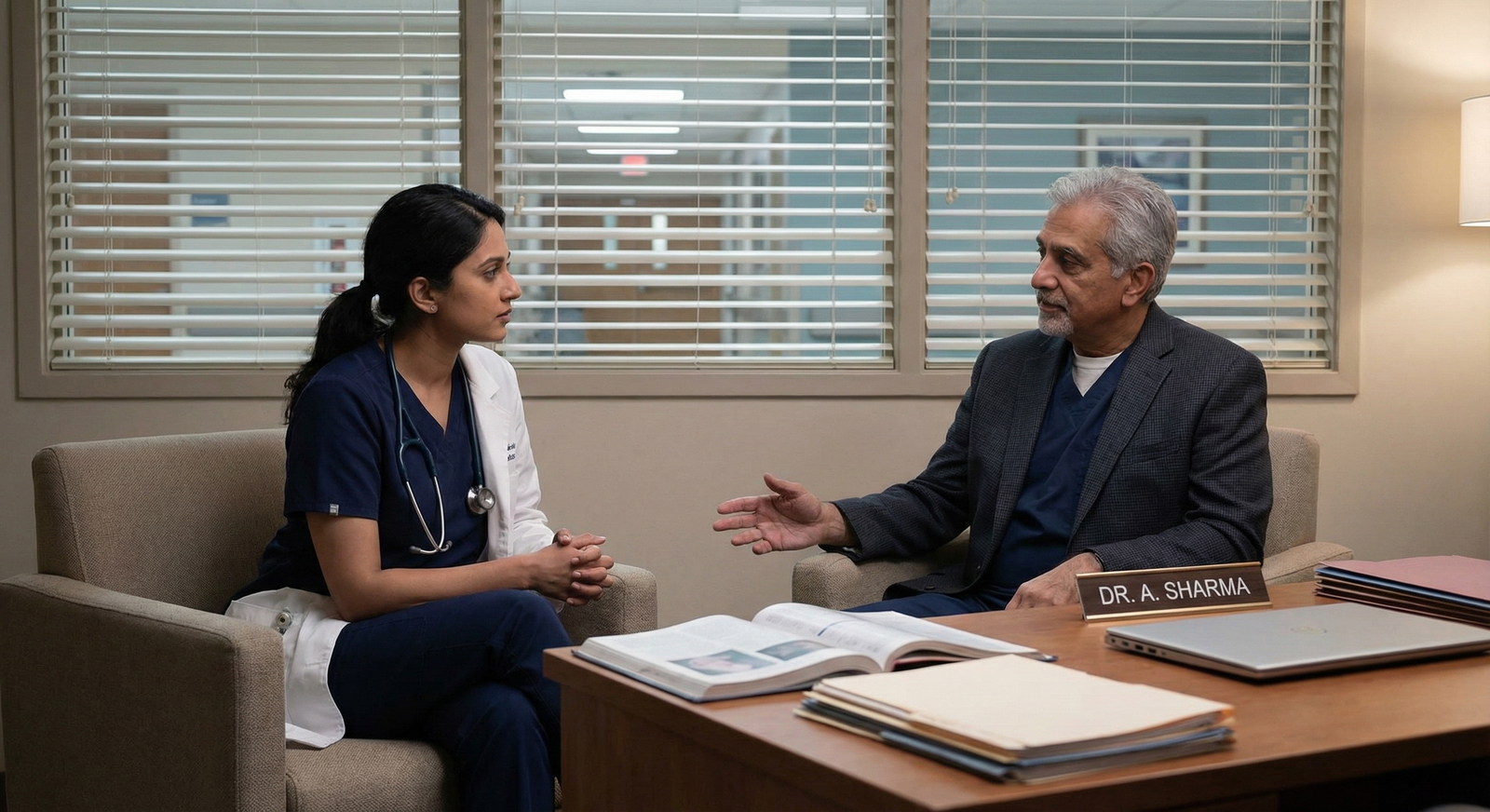
Strong mentorship in medicine is a cornerstone of successful networking—and in dermatology, good mentors can significantly influence your derm match prospects and long-term career satisfaction.
Different Types of Mentors You Need in Dermatology
Think of mentorship as a team sport, not a one-on-one lifetime contract. In dermatology, you may benefit from several types of mentors:
Career Mentor
- Helps you think about big-picture decisions: academia vs private practice, subspecialty choices, fellowship decisions.
- Ideally a dermatologist whose career you admire (not necessarily in your exact area of interest).
Research Mentor
- Supervises projects, guides you through abstracts, posters, and manuscripts.
- Critical for building a strong academic profile, particularly for a competitive derm match.
Sponsoring Mentor (Sponsor)
- Uses their reputation and influence to advocate for you: nomination for awards, inclusion on panels, introductions to leaders at other programs.
- Often develops later, once you’ve demonstrated reliability and potential.
Near-Peer Mentor
- Senior resident, fellow, or junior attending who recently completed what you’re going through.
- Highly useful for practical advice: how to navigate away rotations, which conferences are most worthwhile, how to approach program directors.
Identity- or Interest-Aligned Mentor
- For some, a mentor who shares aspects of identity (gender, race, ethnicity, LGBTQ+, parenting status) can be important for navigating specific challenges and opportunities.
- Organizations like the Skin of Color Society, Women’s Dermatologic Society, or specialty interest groups frequently facilitate these connections.
How to Approach Potential Mentors
To increase the odds of a positive response:
Be specific about what you’re asking for.
“I’d like to learn more about pediatric dermatology and see if there are any ways I could get involved in related research or educational projects” is better than “Can you be my mentor?”Show that you’ve done your homework.
Mention a talk you attended, a paper they published, or a clinical area you’ve seen them focus on.Propose a brief, time-limited first step.
A 20-minute virtual meeting, a shadow day, or a short-term project is easier for a busy dermatologist to agree to than an open-ended mentorship request.
Making Mentorship Work: Your Responsibilities
Mentorship in medicine works best when the mentee is organized and proactive:
Come to meetings with an agenda.
For example:- Update on what you’ve done since last meeting
- Specific questions (e.g., away rotation strategy, fellowship options)
- Decisions you’re weighing and what guidance you need
Follow up after meetings.
A short thank-you email with bullet points summarizing next steps demonstrates professionalism and helps your mentor remember your plans.Respect their time.
- Bundle questions instead of sending multiple scattered emails.
- Aim to solve problems independently first; use your mentor to help with strategy, not every detail.
Deliver on commitments.
In research or projects, deadlines slip sometimes—but update your mentor early and propose a revised timeline. Reliability is what converts a mentor into a sponsor.
When a Mentorship Isn’t the Right Fit
Not every mentorship relationship will be perfect. Red flags include:
- Consistently canceled or rushed meetings
- Lack of follow-through on their side (e.g., promised introductions or feedback that never happens)
- Mismatch between your goals and their interests (e.g., you want a research-heavy career; they’re purely clinical and uninterested in projects)
In those cases:
- Maintain courtesy and professionalism.
- Continue a cordial relationship but diversify your mentorship network.
- Look for additional mentors who align more closely with your goals.

Conference Networking: Turning Meetings into Opportunities
Conferences are where dermatology’s network becomes most visible—and where your approach to medical networking can dramatically accelerate your trajectory.
Choosing the Right Conferences
Not every meeting is equally valuable for every stage of training. Commonly high-yield options include:
American Academy of Dermatology (AAD) Annual Meeting
- Large, comprehensive; ideal for exposure to the breadth of dermatology, networking with residents, faculty, and program directors.
- Excellent venue to present posters or oral abstracts.
Society for Investigative Dermatology (SID)
- More research-focused; ideal if you’re building a physician-scientist trajectory.
Regional or State Dermatologic Societies (e.g., Pacific Dermatologic Association)
- Smaller, more intimate; good for approachable networking and repeated contacts with the same people over years.
Subspecialty Meetings
- Mohs, dermpath, pediatric derm, skin of color, cosmetic/laser-focused meetings.
- Helpful once you have a sense of subspecialty interests or are exploring fellowships.
For a strong derm match strategy, aim to present at least once or twice (poster or oral) at a recognized dermatology meeting during medical school or early residency.
Pre-Conference Preparation
To get the most from conference networking:
Identify who you want to meet.
- Faculty at programs where you might apply
- Authors whose work you’ve cited or admire
- Leaders in subspecialty areas you’re interested in
- Alumni from your medical school or residency program now in derm
Reach out in advance when appropriate.
Short emails work well:- “I’ll be attending AAD and would really value 10 minutes to say hello and ask your advice about [topic]. Are you available after your session on [date]?”
- “I’m presenting a poster on [topic] at [poster number/time]. I’d be honored if you’re able to stop by.”
Prepare your pitch.
Have a 30–60 second self-introduction ready:- Who you are (training level, institution)
- Your main dermatology interests or current projects
- What you’re hoping to explore (derm match, research, fellowship, career niche)
Bring tools for follow-up.
- Simple, clean business cards with your name, degree, email, and LinkedIn or professional website.
- A digital version (vCard or QR code) can also be helpful.
Networking During the Conference
Focus on three high-yield arenas:
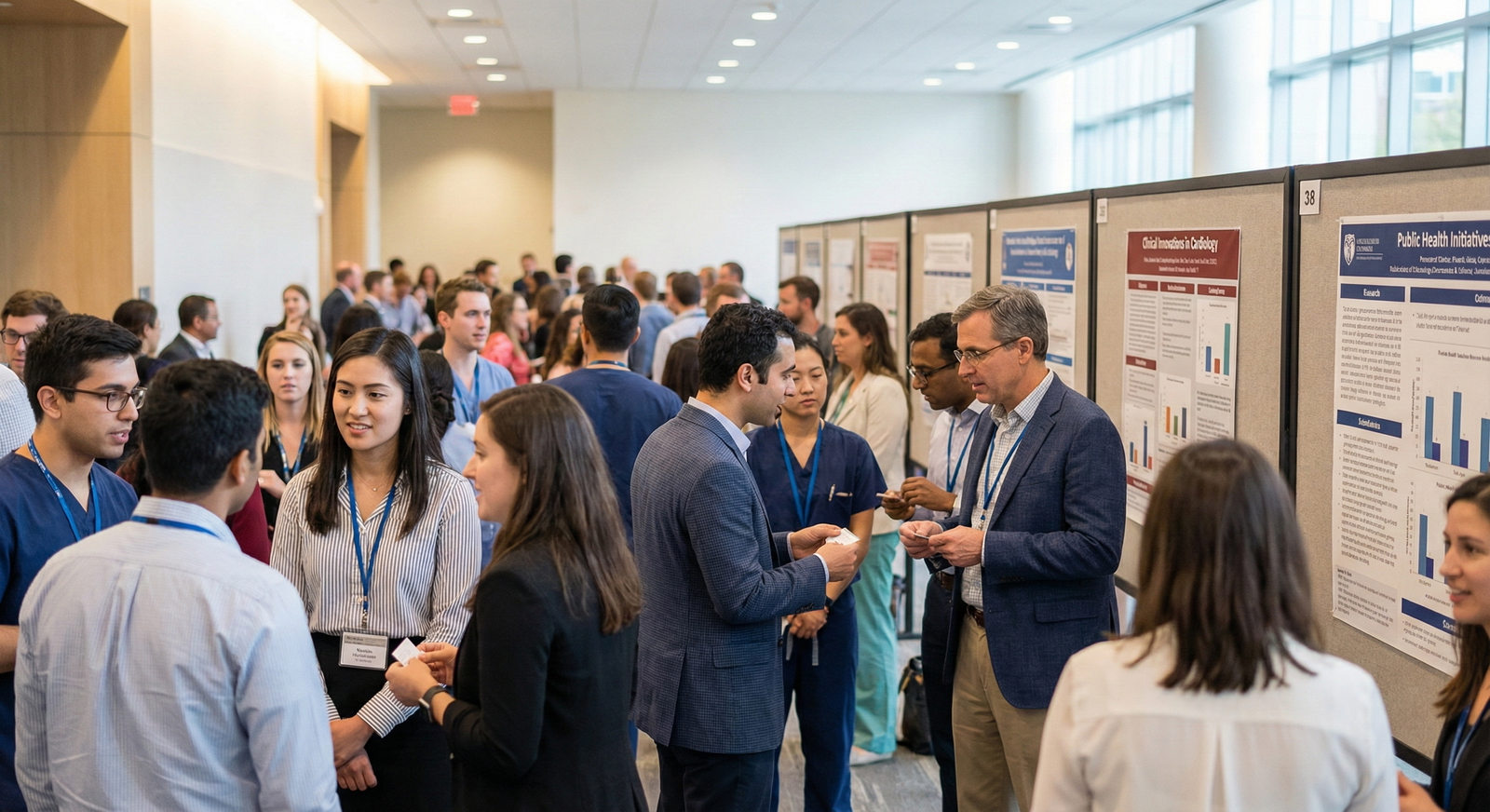
Poster Sessions
- Stand at your poster during your scheduled time; engage actively with visitors.
- Ask others about their posters: “What was the most surprising part of your data?” or “How are you using this in clinic?”
- Exchange contact info with people who show interest in your work or whose work interests you.
Smaller Sessions and Workshops
- Q&A periods are chances to ask concise, thoughtful questions that get you noticed (avoid self-promotion in the microphone).
- After sessions, introduce yourself to speakers briefly:
- “Thank you for your talk on [topic]. I’m [Name], a [MS4/PGY-2] at [Institution]. Your discussion of [specific point] really resonated with me. I’m interested in [related topic]. Would it be okay if I emailed you about potential ways to learn more or get involved?”
Social and Networking Events
- Resident receptions, young dermatologist events, society receptions, alumni gatherings.
- These are ideal for building near-peer and lateral connections that will populate your professional life for years.
Effective Follow-Up After Conferences
Most people fail at conference networking because they don’t follow up. Within 3–7 days after returning:
Send short, specific emails:
- Remind them where you met (“We spoke at the AAD resident reception about…”).
- Thank them for a specific piece of advice or insight.
- Suggest a clear next step, if appropriate (e.g., “Would you be open to a brief Zoom call to discuss potential research collaboration?”).
Connect on LinkedIn or appropriate professional platforms, including a brief note:
- “Wonderful meeting you at [conference]; I especially appreciated your thoughts on [topic].”
Consistent, professional follow-up is often what transforms a brief conversation into a long-term connection.
Strategic Networking for a Successful Derm Match
For medical students and transitional/prelim residents, a major goal of networking is often securing a dermatology residency. While scores and CV matter, dermatology remains a people-centric specialty where trusted recommendations and known quantities are highly valued.
How Networking Influences the Derm Match
Well-developed professional relationships can impact your match prospects by:
- Yielding strong, personalized letters of recommendation from dermatologists who know you well and can comment on your character, growth, and work ethic.
- Providing advocates who can:
- Email or call colleagues at other programs to highlight your application.
- Offer context if there are perceived weaknesses (e.g., a Step score discrepancy, a leave of absence).
- Guiding your application strategy: which programs to target, whether to pursue a research year, whether to consider preliminary alternate pathways.
Using Rotations and Away Rotations as Networking Platforms
Dermatology electives and away rotations are major opportunities to show programs who you are beyond your application:
Before the rotation:
- Learn the clinic structure, EMR, and common conditions seen there.
- Reach out briefly to the chief resident or coordinator to express enthusiasm and ask if there’s anything you should review beforehand.
During the rotation:
- Be consistently professional, kind, and engaged—not only with faculty, but with residents, staff, and patients.
- Ask residents for advice about the program, fellowship opportunities, and day-to-day life. Residents’ impressions shape how faculty perceive you.
- If appropriate, ask whether there are small projects or case reports you could help with.
After the rotation:
- Send thank-you notes to key faculty and residents who invested significant time in you.
- Stay in touch occasionally—update them when you submit an abstract or when match season approaches.
Networking When Your Institution Lacks a Home Derm Program
If your school doesn’t have dermatology, you can still build a robust network:
- Identify regional programs willing to host visiting students or observers.
- Use conference networking more intensively—consider AAD or relevant regional meetings a priority.
- Seek mentorship through:
- National organizations’ mentorship programs (AAD, WDS, Skin of Color Society).
- Alumni from your school who went into dermatology at outside institutions.
- Build your academic profile via:
- Remote research collaborations
- Multi-institutional projects
- Systematic reviews or database studies with willing mentors outside your home institution
Here, visible motivation and persistence—paired with professionalism—often attract mentors who are impressed by your initiative.
Long-Term Networking: From Residency to Early Career
Networking is not something you do only until you match. It’s a continuous process that shapes your fellowships, your first job, your referral patterns, and even your leadership roles.
Networking as a Resident
During residency:
Cultivate relationships with your co-residents and fellows.
They will become your referral network and your support system for complex cases, job changes, and practice-building.Stay involved in resident sections of societies.
Many dermatology societies have resident committees or Board positions—these are prime opportunities for:- Direct interaction with national leaders
- Visibility beyond your own program
- Leadership experience
Seek out teaching and presentation opportunities.
Teaching medical students, presenting at grand rounds, or giving talks at community events raises your local visibility and refines communication skills valued in leadership roles.
Networking into Fellowships and Jobs
For those considering fellowships (Mohs, dermpath, peds derm, complex medical), networking can:
- Help you identify programs whose strengths align with your goals
- Provide early insights into program culture that are not obvious from websites
- Generate strong, field-specific letters of recommendation
For job searches:
- Many positions are filled through informal inquiries and personal recommendations before they’re widely advertised.
- Attending conferences shortly before and during your job search allows you to:
- Meet practice leaders, department chairs, and group practice partners.
- Ask nuanced questions about practice structure, support for research, and work–life balance.
Staying Authentic, Ethical, and Balanced
Networking in medicine can sometimes feel transactional or forced. In dermatology—a relatively collegial field—authenticity and integrity are especially valued.
Principles for Ethical Networking
Prioritize genuine curiosity over self-promotion.
Ask people about their work, their path, and what they enjoy most (and least) about what they do.Respect boundaries.
Not every interaction will lead to mentorship or a research slot. Accept no gracefully and appreciate the time people can give.Protect patient privacy.
Be extremely cautious with clinical photos or case descriptions in any networking or digital context. Follow institutional and legal rules strictly.Avoid negative talk.
Dermatology is small. Speaking poorly about programs, colleagues, or peers can quickly damage your reputation.
Avoiding Burnout and Over-Networking
It’s possible to overschedule and overextend yourself:
- Choose high-yield opportunities rather than saying yes to everything.
- Build in time to rest at conferences. It’s better to have a few meaningful conversations than dozens of superficial ones.
- Be selective with commitments (projects, committees, leadership roles) that don’t align with your long-term goals.
Remember: clinical competence, kindness, and reliability are still the foundation. Networking amplifies these traits—it doesn’t replace them.
FAQs: Networking in Dermatology
1. I’m introverted. Can I still be effective at conference networking?
Yes. Many successful dermatologists are introverted. Strategies that help:
- Prepare a few go-to questions or phrases in advance (“What brought you to this area of derm?” “How did you get involved in [organization]?”).
- Focus on small group or one-on-one interactions rather than large receptions.
- Use poster sessions and scheduled meetings (set up over email beforehand) where the structure is clearer and the purpose is defined.
Over time, repeated exposure makes conference networking feel more natural.
2. How early in medical school should I start networking for a future derm match?
You don’t need to decide on dermatology in the first semester, but once you’re seriously considering it (often MS2 or early MS3), it’s wise to:
- Meet at least one dermatology faculty member at your institution.
- Explore a small project or shadowing experience.
- Attend local or regional dermatology events if available.
The point isn’t to “lock in” a mentor early; it’s to get exposure, gain insight into whether the field is right for you, and start building relationships gradually.
3. How can I distinguish between genuine mentorship and someone simply using me for research work?
Healthy mentorship relationships in medicine typically include:
- Bidirectional benefit: You contribute effort and productivity; they provide guidance, education, and career development.
- Investment in your growth: They ask about your interests and long-term goals, help you make decisions, and connect you to others.
- Recognition and fairness: Your contributions are acknowledged through authorship, presentations, or letters when appropriate.
If you feel chronically unrecognized, replaceable, or ignored outside of project tasks, consider seeking additional mentors while maintaining professionalism.
4. Is social media important for dermatology networking?
It can be, but it’s not mandatory. Academic dermatologists increasingly use Twitter/X, LinkedIn, and sometimes Instagram for:
- Sharing new research and clinical pearls
- Highlighting educational content
- Advertising talks, sessions, and calls for collaboration
If you choose to use social media:
- Keep content professional and patient-privacy–compliant.
- Focus on education and academic engagement rather than personal branding alone.
- Use it to complement, not replace, in-person and institutional relationships.
Networking in dermatology is not about being the loudest person in the room; it’s about showing up consistently, being genuinely interested in others, and aligning your actions with your values and long-term goals. When you combine clinical excellence, integrity, and strategic medical networking, you build a durable professional community that will sustain you throughout residency, fellowship, and beyond.