
Why Networking Matters So Much for a DO Graduate in Anesthesiology
As a DO graduate interested in anesthesiology, your clinical skills and board scores are only part of your story. The other part—often underemphasized in training—is your ability to build relationships: with faculty, program directors, residents, and peers. In a competitive anesthesia match environment, networking in medicine is not optional; it is a strategic necessity.
For DO graduates, this is particularly important. While the ACGME merger has opened more doors, some anesthesiology programs still have limited experience with DO applicants. Thoughtful, genuine networking can:
- Put a real face and story behind your ERAS application
- Counteract lingering misconceptions about DO training
- Help you identify anesthesiology residency programs that are truly DO-friendly
- Generate strong, specific letters of recommendation
- Create advocates who can speak for you in the anesthesia match rank meetings
This article will walk you step‑by‑step through how to use medical networking—in person and online—to strengthen your candidacy for the osteopathic residency match in anesthesiology, and to lay the groundwork for a sustainable career in the specialty.
Understanding Networking in Medicine as a DO Anesthesiology Applicant
Networking in medicine is often misunderstood as “schmoozing” or self-promotion. In reality, effective medical networking is about:
- Building mutually beneficial professional relationships
- Demonstrating reliability, curiosity, and professionalism over time
- Contributing meaningfully to teams, projects, and communities
For a DO graduate pursuing anesthesiology residency, your networking efforts should be intentional and specialty-specific.
Unique Challenges and Opportunities for DO Graduates
Challenges you may face:
- Fewer DO anesthesiology role models at some institutions
- Variable familiarity with COMLEX vs. USMLE among program directors
- Historical bias at certain programs that have rarely interviewed DOs
- Limited “home program” advantage if your school doesn’t have an anesthesiology department or residency
Opportunities that work in your favor:
- OMM training gives you a strong foundation in musculoskeletal and pain pathways—highly relevant to regional anesthesia and pain
- DO culture emphasizes holistic, patient-centered care—an asset in perioperative medicine
- Many anesthesia departments actively seek diversity in training backgrounds and perspectives
Your task is to make sure program leadership actually sees these strengths, and that happens through deliberate networking.
The Three Core Networking Arenas for Anesthesiology
Home and local institutions
- Your medical school (even if it lacks anesthesiology)
- Nearby hospitals with anesthesiology departments or residencies
- Affiliated community hospitals and surgical centers
Regional and national organizations
- ASA (American Society of Anesthesiologists) and state society chapters
- AOA/ACOI and DO-focused anesthesia sections or SIGs
- Specialty subgroups (cardiac, regional, pain, critical care)
Digital and social platforms
- Twitter/X (academic medicine community)
- Program websites, virtual open houses, and Zoom events
Successful networking is about showing up repeatedly across these arenas with professionalism and authenticity.
Building Your Core Network Early: Medical School Through Graduation
Your networking strategy should start long before you submit ERAS. If you are already a DO graduate, it is not too late—the principles still apply, but you will compress them into a shorter time frame.
Step 1: Clarify Your Anesthesiology Story
Before you start talking to anesthesiologists, know your own narrative:
- Why anesthesiology?
- Why as a DO? What unique perspective do you bring?
- What aspects of anesthesia interest you most (regional, critical care, cardiac, OB, pain)?
- What’s your long-term vision (academic, community, leadership, global health)?
This “origin story” becomes the foundation for how you introduce yourself in every networking interaction.
Example elevator pitch (adaptable for you):
“I’m a DO graduate from [School], with a strong interest in anesthesiology. My osteopathic training really shaped how I think about perioperative care and pain pathways, and during my ICU rotation I saw how critical anesthesiologists are in managing complex physiology in real time. I’m working toward an anesthesiology residency with a strong ICU and regional anesthesia experience, and I’d love to hear about your path and any advice you have for a DO entering the field.”
Step 2: Maximize Home Institution and Local Opportunities
Even if your school doesn’t have a robust anesthesia presence, there are more potential connections than you think.
Practical actions:
Find anesthesiology faculty or alumni:
- Ask your dean’s office or career services: “Which alumni matched anesthesiology in the last 5 years?”
- Look up local hospitals’ anesthesia departments and identify DO attendings.
Request brief, focused meetings:
Email template:
Subject: DO graduate seeking guidance about anesthesiology
Dear Dr. [Name],
My name is [Your Name], a DO graduate from [School]. I’m pursuing a career in anesthesiology and am hoping to get advice from DO anesthesiologists who’ve navigated this path.
Would you be open to a brief 15–20 minute conversation (Zoom or in person), at your convenience, to hear about your experience and any suggestions you might have for a DO applicant in today’s anesthesia match?
Thank you for considering it.
Sincerely,
[Full Name]
[Contact Info]
Offer value where you can:
- Volunteer to help with research data collection, QI projects, or departmental education activities.
- Show consistent reliability—follow through on every task.
These early contacts often become your first mentors and can turn into writers of strong, personalized letters for the osteopathic residency match.
Step 3: Craft a Targeted Mentorship Strategy in Medicine
Formal mentorship in medicine is powerful, but you rarely get it by just asking, “Will you be my mentor?” Instead, think of mentorship as a spectrum:
- Micro-mentors: People you meet once or twice for narrow questions (e.g., COMLEX vs USMLE strategy, rotation choices).
- Project mentors: Supervisors on a research or QI project.
- Career mentors: Longitudinal relationships with anesthesiologists who advise you over months or years.
To build mentorship in medicine:
- Ask specific, answerable questions in each interaction (“How should I present my DO background on my CV for anesthesia?” is better than “What should I do?”).
- Send concise updates every 2–3 months: “Here’s what you advised; here’s what I did; here’s what happened.”
- Show progress—mentors invest more in mentees who clearly act on feedback.

Clinical Rotations, Away Rotations, and the Hidden Curriculum of Networking
Your anesthesiology rotations—especially away or audition rotations—are the most powerful networking tools you have. Program directors remember students who worked hard, integrated socially, and showed potential as co-residents.
How to Network Strategically on Anesthesia Rotations
Before the rotation:
- Learn faculty names and roles from the department website.
- Email the rotation coordinator asking if there are current residents (especially DOs) who’d be willing to talk briefly about how to get the most out of the rotation.
- Clarify expectations: arrival time, sign-out routines, pre-op responsibilities.
During the rotation:
Treat every day like a month-long interview.
- Be on time or early.
- Read about your cases the night before.
- Ask focused, thoughtful questions.
Network laterally and vertically.
- Residents: Get to know them as future colleagues. Ask them what the program values and how DOs are perceived.
- Attendings: Ask for specific feedback mid-rotation (“What’s one thing I can improve this week?”).
- CRNAs and staff: Professionalism with the entire team matters; they often share impressions with faculty.
Make your DO background an asset, not an apology.
- When appropriate, reference how your OMM and holistic training influence your approach to pain assessment, airway anatomy, or perioperative counseling.
After the rotation:
Send a brief, personalized thank-you email to key faculty and residents you worked closely with.
Ask 1–2 attendings if they’d be comfortable serving as references and potentially writing letters.
If you performed well and see yourself at that program, gently express your interest:
“I really enjoyed my month with your team and felt I fit well with the residents. I plan to apply here and would be thrilled to train at [Program]. If you have any feedback as I prepare my application, I’d be very grateful.”
This is professional, clear, and non-pushy, and it signals to faculty that you’re someone they could advocate for in the anesthesia match.
Away Rotations as a DO Anesthesiology Applicant
Away rotations are especially important for DO graduates because they:
- Give you face time at MD-heavy institutions that might not otherwise consider your application as strongly
- Allow you to demonstrate clinical equivalence (or superiority) in real time
- Help you identify truly DO-friendly anesthesiology residency cultures
When choosing away rotations:
- Prioritize programs that already have DO residents or DO faculty. Their success there is a positive signal.
- Look at program websites, resident bios, and social media to find DO representation.
- Consider at least one away at a program where DOs are underrepresented but not completely absent—aiming to expand your options.
Conference Networking and Professional Societies: Turning Events into Opportunities
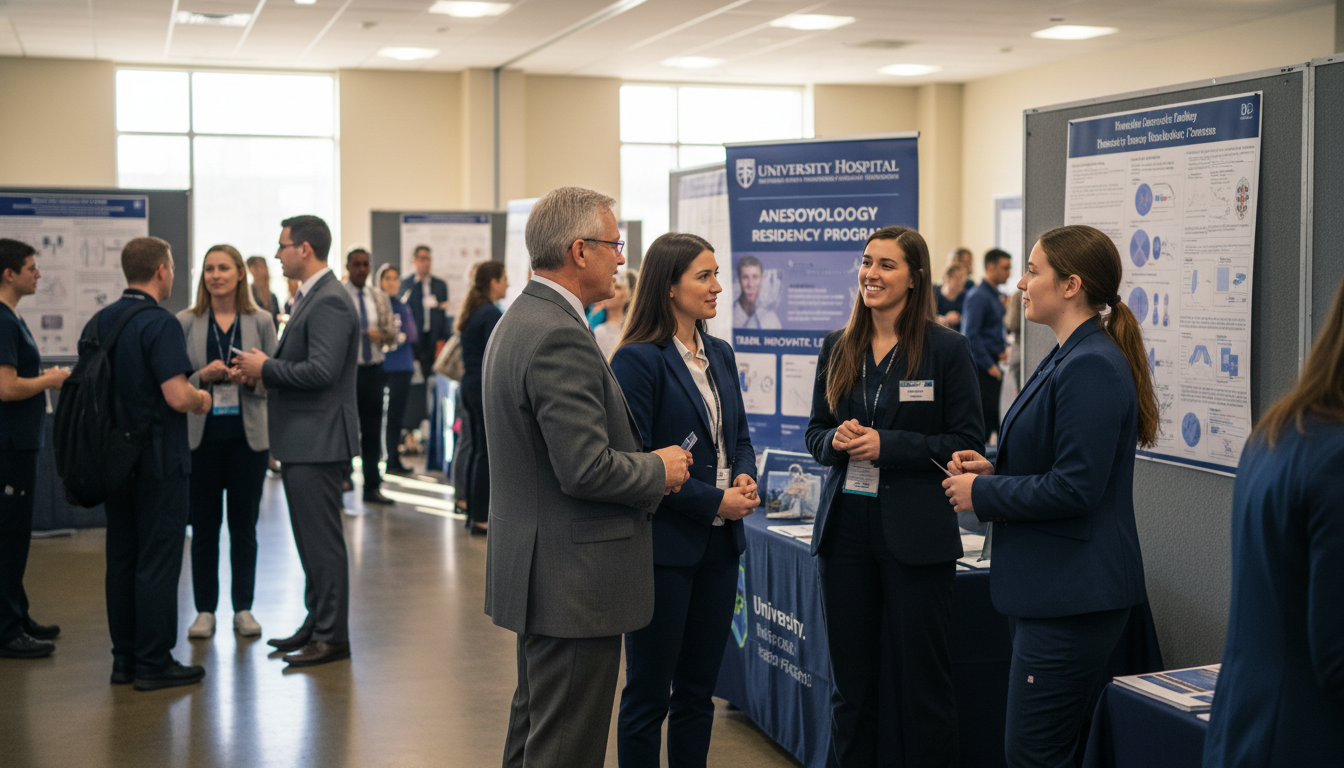
Conferences are some of the richest environments for medical networking—especially in a relatively small field like anesthesiology.
How a DO Graduate Can Leverage ASA and Regional Meetings
Target events like:
- American Society of Anesthesiologists (ASA) annual meeting
- State anesthesia society meetings (e.g., New York State Society of Anesthesiologists)
- Subspecialty meetings: Society of Critical Care Anesthesiologists, Society for Obstetric Anesthesia and Perinatology, etc.
To maximize conference networking:
Attend with a purpose.
- Plan 2–3 specific goals (e.g., “Talk to at least 3 DO anesthesiologists about their path,” “Introduce myself to faculty from 3 target programs”).
Present something if you can.
- Case reports, QI posters, or small research projects dramatically elevate your visibility.
- As a presenter, you can naturally start conversations: “We looked at X; what’s your experience at your institution?”
Use the exhibit hall and program director sessions.
- Many conferences have residency or career-focused sessions where PDs and residents are present and open to talking with students and DO graduates.
- Approach with a concise intro and 1–2 thoughtful questions about the program.
Sample introduction at a conference:
“Hi Dr. [Name], I’m [Your Name], a DO graduate very interested in anesthesiology. I’m particularly drawn to [Program] because of its [strong ICU training/commitment to resident wellness/regional anesthesia volume]. As a DO entering the anesthesia match, are there things you recommend I highlight on my application, or aspects of your program you think DO applicants should know about?”
Most faculty will respond positively to a professional, well-prepared question like this.
Follow-Up After Conference Networking
The value of medical networking is not just in the initial contact but the follow-through.
Within 3–5 days after the conference:
- Send individualized emails:
- Thank them for their time
- Reference something specific from your conversation
- If appropriate, attach a poster or abstract you presented
Example:
Dear Dr. [Name],
It was a pleasure meeting you at the ASA meeting after the [session title]. I really appreciated your perspective on how your program incorporates DO residents and values diverse training backgrounds.
As I prepare for the upcoming anesthesia match, I’ll keep in mind your advice about highlighting my ICU experiences and osteopathic training. I’ve attached the poster I presented at ASA in case you’re interested.
Thank you again for your time and guidance.
Sincerely,
[Your Name]
Over time, these contacts accumulate into a broad professional web that supports your career beyond residency.
Digital Networking and Social Media: Extending Your Reach as a DO Applicant
In the current era of virtual interviews and online open houses, digital networking is intertwined with the anesthesiology residency application process.
Professional Use of LinkedIn and Twitter/X
On LinkedIn:
- Create a complete, professional profile:
- Clear headline: “DO Graduate | Aspiring Anesthesiologist”
- High-quality headshot, professional attire
- Summary that briefly highlights your DO background, anesthesia interests, and research/leadership
- Connect with:
- Anesthesiology attendings you’ve worked with
- Residents at programs you’re interested in
- DO anesthesiologists and alumni
When you send a connection request, always add a brief note:
“Hello Dr. [Name], I’m a DO graduate pursuing anesthesiology, and I enjoyed your recent [article/poster/talk]. I’d be grateful to stay connected and learn from your work in [topic].”
On Twitter/X:
Academic anesthesiology has a strong presence on X. Many PDs, residents, and faculty are active here.
- Follow:
- Anesthesiology departments and residencies
- @ASALifeline and relevant subspecialty societies
- DO anesthesiologists and educators
- Engage respectfully:
- Like, retweet, or reply with brief, thoughtful comments
- Avoid controversial or unprofessional content
Remember: Program directors may see your public posts. Maintain a tone you’d be comfortable defending in an interview.
Virtual Open Houses and Online Events
Most anesthesiology residency programs now host virtual “Meet & Greet” or open house sessions. As a DO applicant, these are critical opportunities to:
- Gauge how welcoming a program is to DO graduates
- Ask questions about COMLEX acceptance, DO representation, and mentorship structures
- Put your name and face in front of program leadership before interview offers go out
Tips:
- Turn camera on if bandwidth allows; dress professionally.
- Prepare 2–3 thoughtful questions that go beyond what’s on the website.
- Introduce yourself briefly in the chat: “DO graduate from [School], interested in [specific area] within anesthesiology.”
Afterward, you can email residents or faculty you met, referencing the event and reinforcing your interest.
Putting It All Together: A Networking Roadmap for DO Anesthesiology Applicants
To translate all of this into action, here’s a practical roadmap for a DO graduate aiming for an anesthesiology residency:
12–18 Months Before Applying to Anesthesia Match
- Clarify your anesthesiology story and long-term goals.
- Identify at least 2–3 DO anesthesiology mentors (alumni, local faculty, online connections).
- Start or continue research or QI projects in perioperative medicine, ICU, pain, or airway management.
- Join ASA and your state anesthesia society; attend at least one conference or meeting.
6–12 Months Before Applying
- Secure and schedule anesthesiology rotations and away rotations, prioritizing DO-friendly programs.
- Intensify medical networking:
- Informal Zooms with residents at target programs
- Conference networking with faculty and PDs
- Build a professional online presence (LinkedIn, X) that clearly presents you as a DO anesthesiology applicant.
During the Application Cycle
- Use interviews and second looks as networking opportunities:
- Be engaged, ask targeted questions, and connect with residents.
- Maintain light but consistent contact with key mentors and advocates, especially those writing letters.
- If you are particularly interested in a program, signal that interest appropriately while staying within NRMP rules.
If You Don’t Match on the First Attempt
For a DO graduate who doesn’t match anesthesiology on the first try, networking becomes even more critical:
- Stay in touch with previous mentors and PDs; ask for frank feedback on your application.
- Consider a preliminary year or a transitional position that keeps you close to anesthesiology (medicine, surgery, ICU-heavy programs).
- Pursue anesthesiology-related research or clinical work that can strengthen your CV.
- Use the year to widen your network, especially through conferences and state societies.
Many successful anesthesiologists matched on a subsequent attempt; your relationships and reputation can make the difference.
FAQs: Networking in Medicine for DO Graduates in Anesthesiology
1. As a DO graduate, do I really need to take USMLE for anesthesiology, and can networking offset not having it?
Some anesthesiology programs still strongly prefer or require USMLE scores, while others accept COMLEX alone. Networking cannot fully compensate for missing a program’s explicit exam requirement. However, for programs that accept COMLEX, strong networking can:
- Help PDs feel more confident interpreting your COMLEX performance
- Highlight other strengths (clinical performance, research, work ethic)
- Generate advocates who can vouch for your readiness
If you have not taken USMLE and are already a graduate, focus on DO-friendly programs, excellent clinical evaluations, and strong relationships that translate into detailed letters.
2. How can I tell if an anesthesiology residency is truly DO-friendly?
Look for objective indicators:
- Current and recent DO residents in the program (websites, social media, resident bios)
- DOs in leadership roles (PDs, APDs, chiefs)
- Clear statements on their website that they accept COMLEX, especially with specific score guidance
- Positive feedback from DO alumni or residents you contact
Your medical networking—reaching out to current residents and program alumni—is the most reliable way to verify how DO applicants are treated in real life.
3. How do I balance being persistent with not being annoying when networking?
Think of it as professional follow-through, not chasing:
- Limit follow-up emails to meaningful updates every 2–3 months or when you have specific questions.
- Be concise, respectful of time, and explicit about what you’re asking (if anything).
- If someone doesn’t reply after 1–2 attempts, move on; don’t take it personally.
If your communications are thoughtful, brief, and tied to concrete progress, most mentors and faculty will see you as engaged rather than bothersome.
4. What’s the single most impactful networking action I can take as a DO anesthesia applicant?
If you can do only one thing, aim to perform exceptionally on at least one anesthesiology rotation at a DO-friendly program and build strong relationships there. A stellar rotation with:
- Excellent evaluations
- One or two powerful, personalized letters
- Faculty who can email or call colleagues on your behalf
often has more impact on your anesthesiology residency prospects than any other single networking activity.
Thoughtful, sustained networking in medicine is one of the most powerful tools you have as a DO graduate pursuing anesthesiology. By approaching it as relationship-building—not self-promotion—you can open doors in the anesthesia match, find mentors who invest in your success, and lay the groundwork for a fulfilling career caring for patients in the perioperative and critical care setting.