Why Networking Matters So Much for a DO Graduate in Diagnostic Radiology
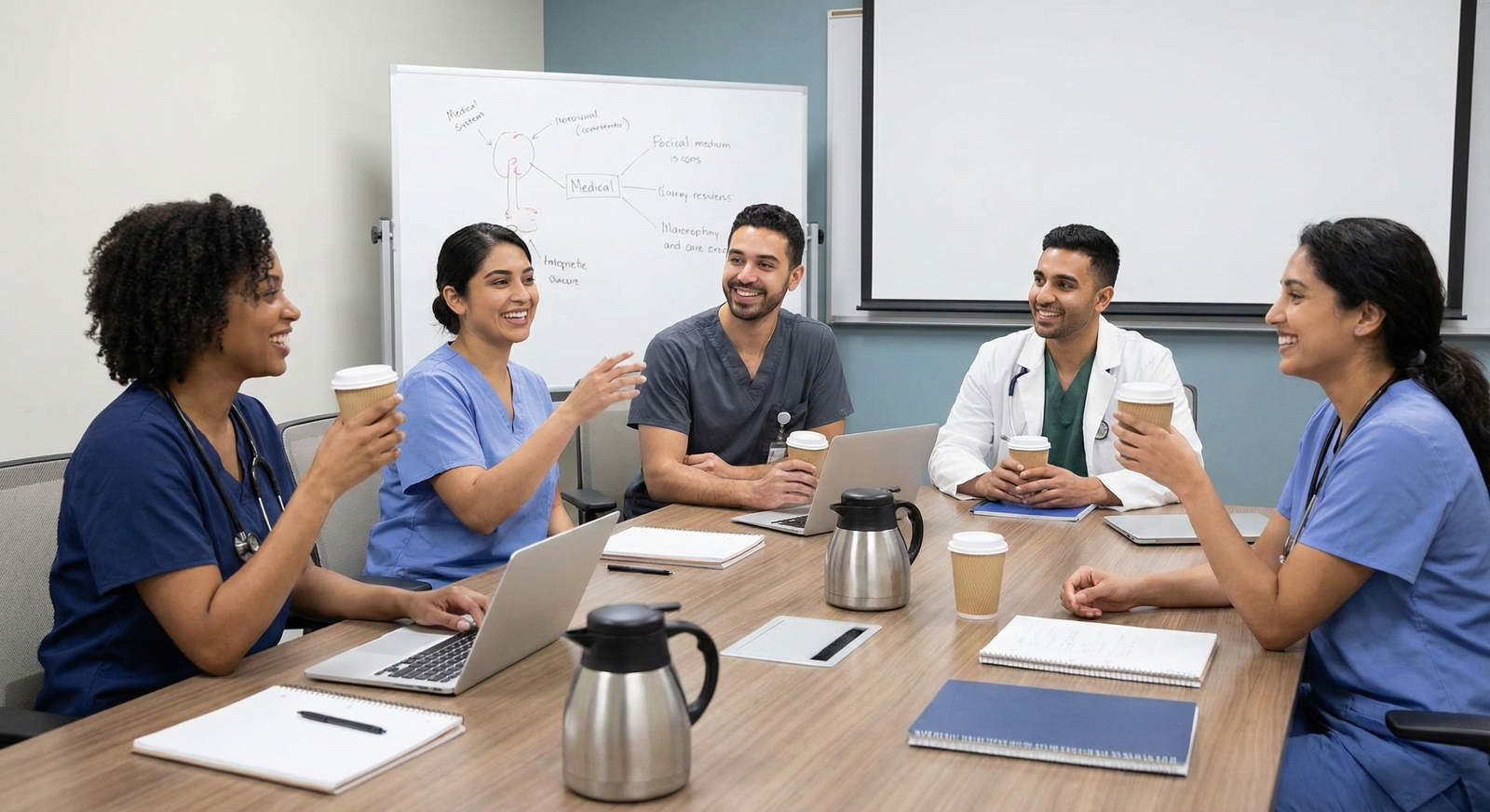
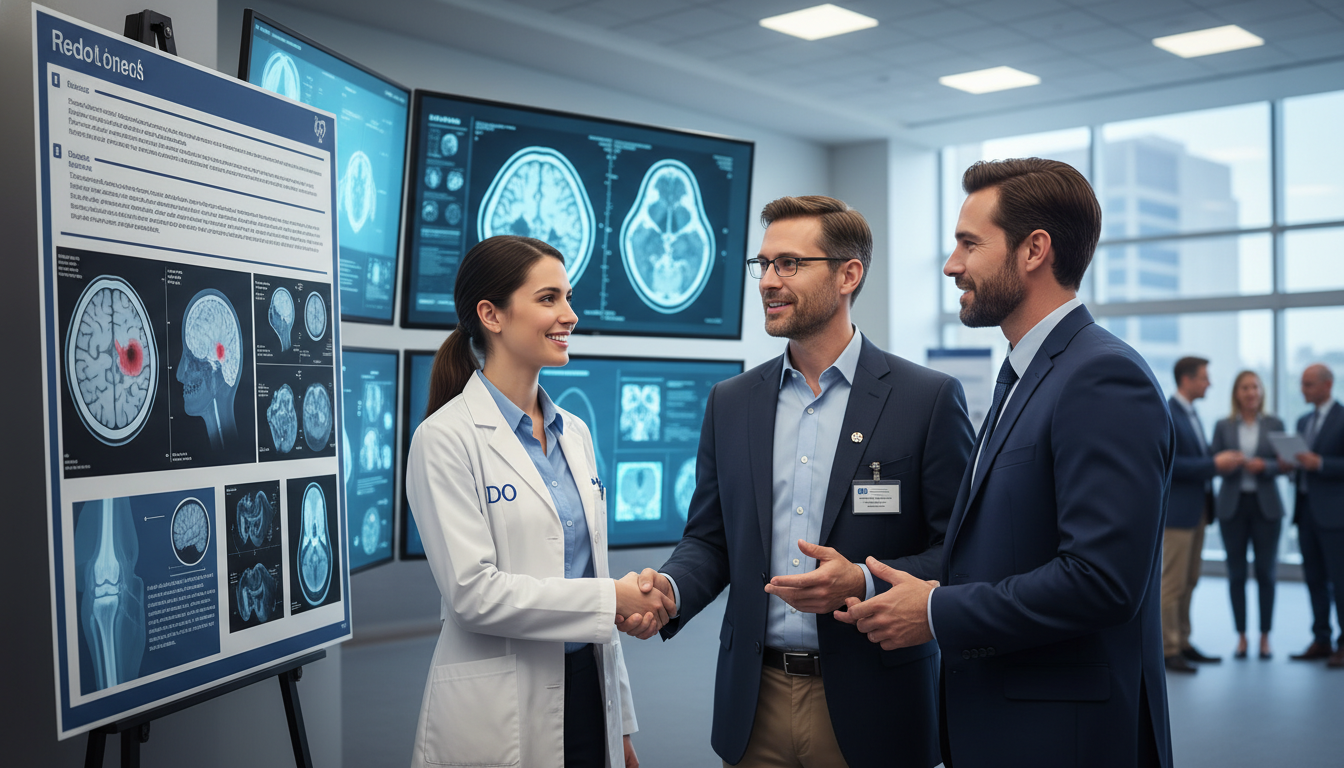
As a DO graduate aiming for a successful career in diagnostic radiology, networking in medicine is not optional—it is a core competency. The diagnostic radiology match is one of the more competitive residency pathways, and DO graduates often face additional barriers: unfamiliarity with osteopathic training among some programs, limited alumni presence at certain institutions, and misconceptions about DO curricula. Thoughtful, strategic medical networking helps you:
- Get on the radar of radiology program directors and faculty
- Learn about program culture beyond what websites and brochures reveal
- Gain advocates who will vouch for you in selection meetings
- Access research, electives, and away rotation opportunities
- Build mentorship medicine relationships that guide your long‑term development
For DO students and new DO graduates, a strong professional network can effectively “shrink the distance” between osteopathic and allopathic training pathways. Especially in a specialty like radiology—where your name, reputation, and recommendations often carry as much weight as your scores—networking can be the difference between an average application and one that stands out in the osteopathic residency match and beyond.
This article walks through a practical framework for networking in medicine specifically tailored to a DO graduate pursuing diagnostic radiology: where to show up, how to approach people, what to say, and how to follow through in a way that feels authentic rather than transactional.
Understanding the Networking Landscape in Diagnostic Radiology
Diagnostic radiology is uniquely suited to structured, strategic networking. It is a relatively small, tightly knit specialty, with strong national organizations, active subspecialty societies, and frequent conferences. Knowing where relationship-building naturally occurs helps you allocate your time and energy wisely.
Key Environments for Radiology Networking
Your Home Institution and Rotations
- Radiology reading rooms
- Interdisciplinary tumor boards and case conferences
- Departmental grand rounds and noon conferences
- QI and research project meetings
Away Rotations and Visiting Student Opportunities
- Acting internships (AIs) and sub-internships in diagnostic radiology
- Electives at academic centers with robust imaging departments
- Specialty tracks (e.g., MSK, neuro, body imaging) where you can meet subspecialists
National and Regional Conferences
- RSNA (Radiological Society of North America)
- ACR (American College of Radiology) and state ACR chapters
- ARRS (American Roentgen Ray Society)
- Subspecialty meetings (e.g., SCBT-MR, ASNR, SIIM)
Professional Organizations and Online Communities
- ACR Resident and Fellow Section (RFS) activities
- Association of University Radiologists (AUR) for education-focused radiologists
- Osteopathic-specific or DO-friendly networks (e.g., state osteopathic societies, specialty interest groups)
- Radiology-specific forums and moderated social media groups
Virtual Networking Spaces
- Zoom and webinar-based residency open houses
- Virtual poster sessions and case conferences
- Radiology Twitter/X, LinkedIn, and professional Slack or Discord communities
Understanding these environments is critical: different venues lend themselves to different networking strategies. For example, a busy reading room requires short, targeted interactions, while a poster session offers more relaxed time for extended conversations.
Laying the Groundwork: Your Professional Brand as a DO Graduate
Before you attend a single conference or send a single networking email, invest in your professional “brand.” This isn’t marketing jargon; it’s the cumulative impression people form about who you are as a clinician, colleague, and future radiologist.
Clarify Your Identity and Goals
As a DO graduate in diagnostic radiology, reflect on three things:
Your Story as a DO
Be prepared to comfortably explain your osteopathic background in a concise, confident way. For example:- Emphasize the holistic, patient-centered principles of osteopathic training.
- Highlight your clinical exposure and hands-on skills.
- Frame your DO perspective as an asset in multidisciplinary care.
Your Radiology Interests
Even if you’re undecided on subspecialty, have a provisional focus:- “I’m especially interested in emergency and trauma imaging.”
- “I’ve really enjoyed neuroimaging and stroke workups.”
- “I’m drawn to population health, quality improvement, and appropriateness criteria in imaging.”
Clear interests help mentors understand where you might fit into ongoing projects.
Your Near-Term Goals
For example:- “Obtain strong radiology-specific letters from academic faculty.”
- “Secure a diagnostic radiology match at a program with strong neuroimaging training.”
- “Build a mentorship relationship to help guide my early research.”
Build a Professional Online Presence
In medicine, people often look you up before deciding to invest time in you. Make sure what they find supports your efforts:
LinkedIn
- Professional headshot, accurate credentials (DO, graduation year, current position).
- Concise summary: your DO background, interest in diagnostic radiology, research/leadership highlights.
- Up-to-date experiences: clinical rotations, research projects, leadership roles.
Professional Email Signature
Include:- Full name, degree (e.g., “Alex Smith, DO”)
- Status (e.g., “PGY-1 Transitional Year Resident,” “Recent DO Graduate”)
- Institution
- Contact info and LinkedIn URL (optional but helpful)
Radiology-Focused Profiles
If you present at RSNA, ARRS, or similar, keep your conference profiles complete and consistent with your CV.
This foundation makes all subsequent medical networking more effective—you appear prepared, serious, and easy to understand.
In-Person Networking: From Reading Room to Conference Floor
In-person encounters remain central to networking in medicine. Here is how to tactically approach these opportunities as a DO graduate.
Networking on Rotations and at Your Home Institution
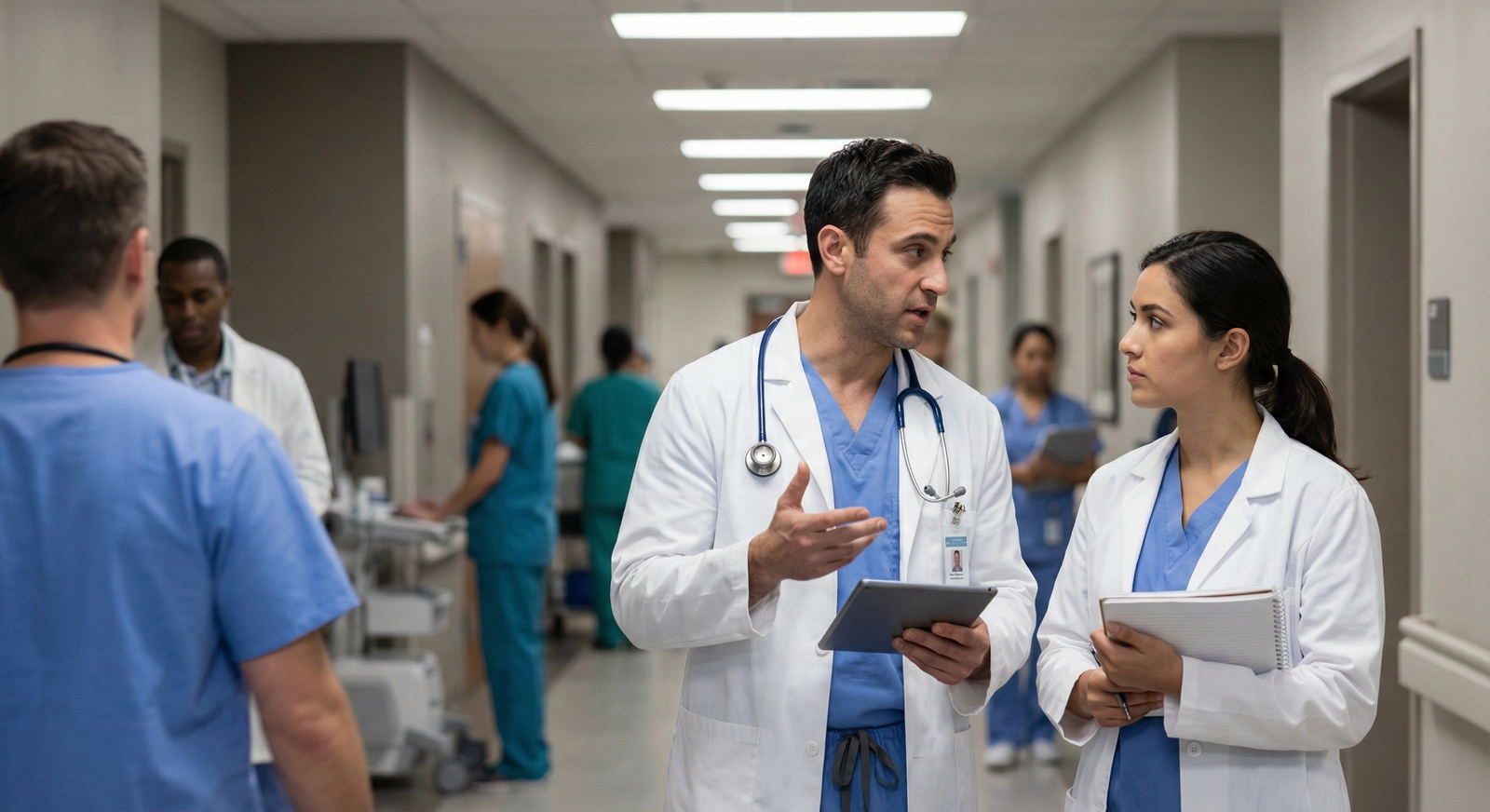
For many DO graduates, the most influential networking occurs during daily clinical work.
In the Radiology Reading Room
Show Up Consistently
- Arrive early, stay engaged, and return regularly. Familiarity breeds comfort and trust.
- Ask where it’s appropriate to sit so you don’t obstruct workflow.
Engage with Purpose
- Ask focused, case-based questions:
- “In this CT trauma series, what were the key findings that changed management?”
- Avoid interrupting active dictations; wait for natural breaks.
- Ask focused, case-based questions:
Offer Help (Within Your Role)
- Volunteer for literature searches when questions arise.
- Ask: “Is there a reading or article you recommend if I want to better understand this topic?”
Signal Interest in Radiology Residency
- After some rapport is built, say:
- “I’m a DO graduate planning to apply for diagnostic radiology residency. I’d really value any advice about strengthening my application as a DO.”
This simple statement often opens the door to mentoring conversations.
- After some rapport is built, say:
Leveraging Tumor Boards and Multidisciplinary Conferences
These meetings showcase radiology’s central role in patient care:
- Sit near the radiologists if possible, so you can see how they communicate findings to surgeons, oncologists, and internists.
- Introduce yourself after the session:
- “Thank you for your presentation. I’m Dr. [Name], a DO graduate interested in diagnostic radiology. I appreciated how you walked through those liver imaging cases.”
- Ask a brief, thoughtful question or request a recommendation for further reading.
Making the Most of Away Rotations
Away rotations can significantly influence the diagnostic radiology match, particularly for DO graduates seeking programs unfamiliar with their home institution.
Before the Rotation
- Email the chief resident or rotation coordinator to introduce yourself and express interest in radiology.
- Read about the department, recent publications, and key faculty.
During the Rotation
- Ask each attending, near the start of your time with them:
- “How do you like students and rotators to participate? What helps you most?”
- Take ownership of your learning: review cases independently before discussing them, track your own mini log of instructive cases, and follow up on interesting pathology.
- Ask each attending, near the start of your time with them:
End-of-Rotation Networking
- Ask 1–2 attendings and 1 resident for feedback and guidance:
- “As a DO graduate planning a diagnostic radiology career, what would you recommend I focus on to be more competitive?”
- For attendings who responded positively, ask if you may keep in touch by email and perhaps seek their advice when you’re preparing your radiology residency application.
- Ask 1–2 attendings and 1 resident for feedback and guidance:
Conference Networking and the Diagnostic Radiology Match
Conference networking is particularly valuable if you are targeting academic programs or research-heavy radiology residency tracks.
Choosing Conferences Strategically
As a DO graduate, consider:
- Large meetings (e.g., RSNA, ARRS) where you can meet faculty and residents from many programs.
- Regional or state ACR meetings, which may feel less intimidating and more personal.
- Osteopathic conferences that include imaging content or sessions related to radiology.
If travel is limited, prioritize virtual components of major meetings—many still offer networking lounges, breakout rooms, and Q&A sessions.
Before the Conference
- Identify panels or sessions led by faculty from programs you’re interested in.
- Prepare a short introduction:
- Who you are (DO graduate, current training status)
- Your radiology interests
- One or two things you’re hoping to learn or people you’d like to meet
Have a polished, printable and digital version of your CV ready, especially if you’re presenting.
During the Conference
Attend Resident and Medical Student Sessions
- These are often explicitly designed for osteopathic and allopathic trainees alike.
- Make a point to introduce yourself to panelists afterward, with a simple:
- “I’m a DO graduate interested in diagnostic radiology. Your talk on [topic] was very helpful. Could I email you a question or two about your career path?”
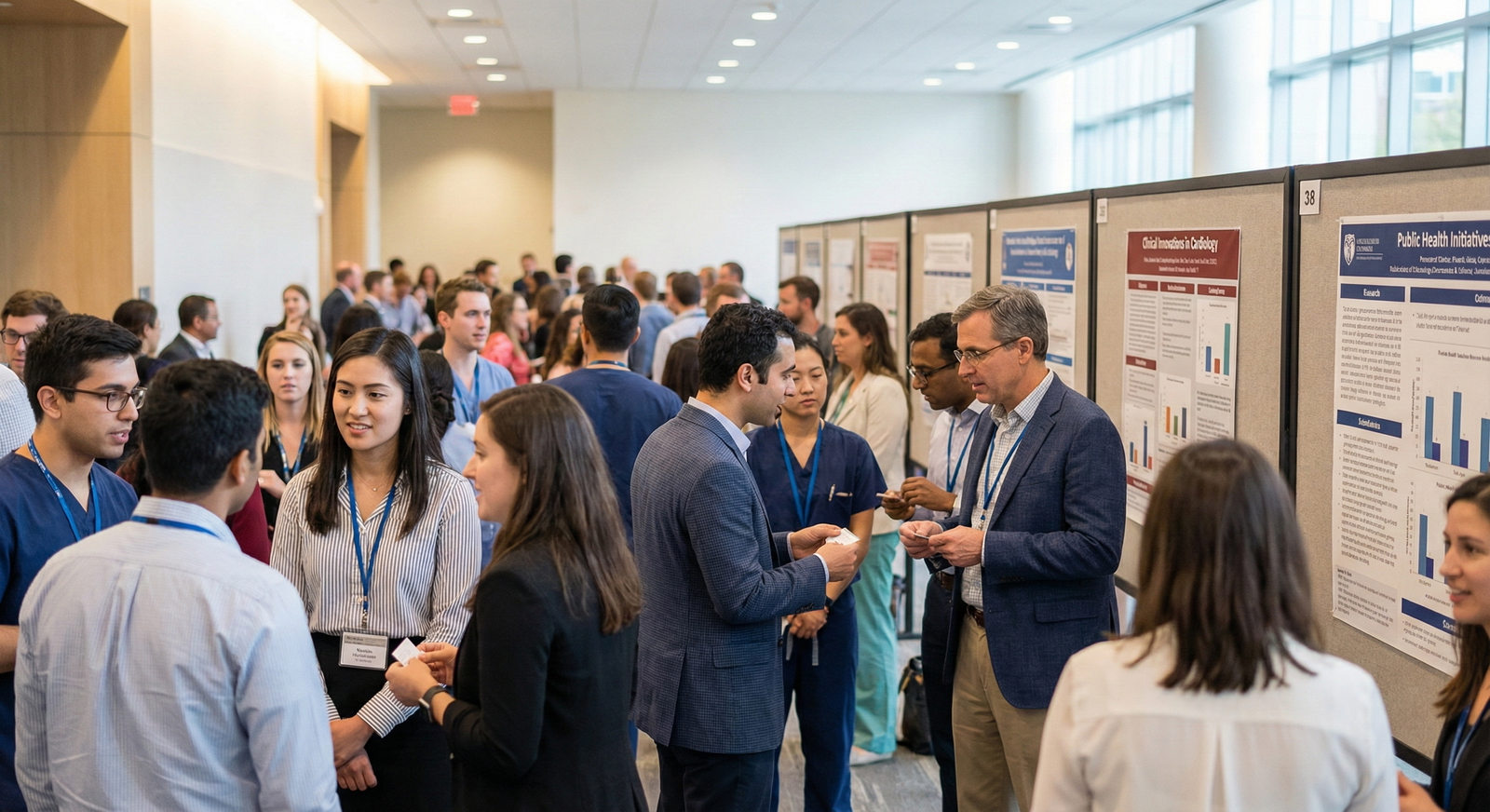
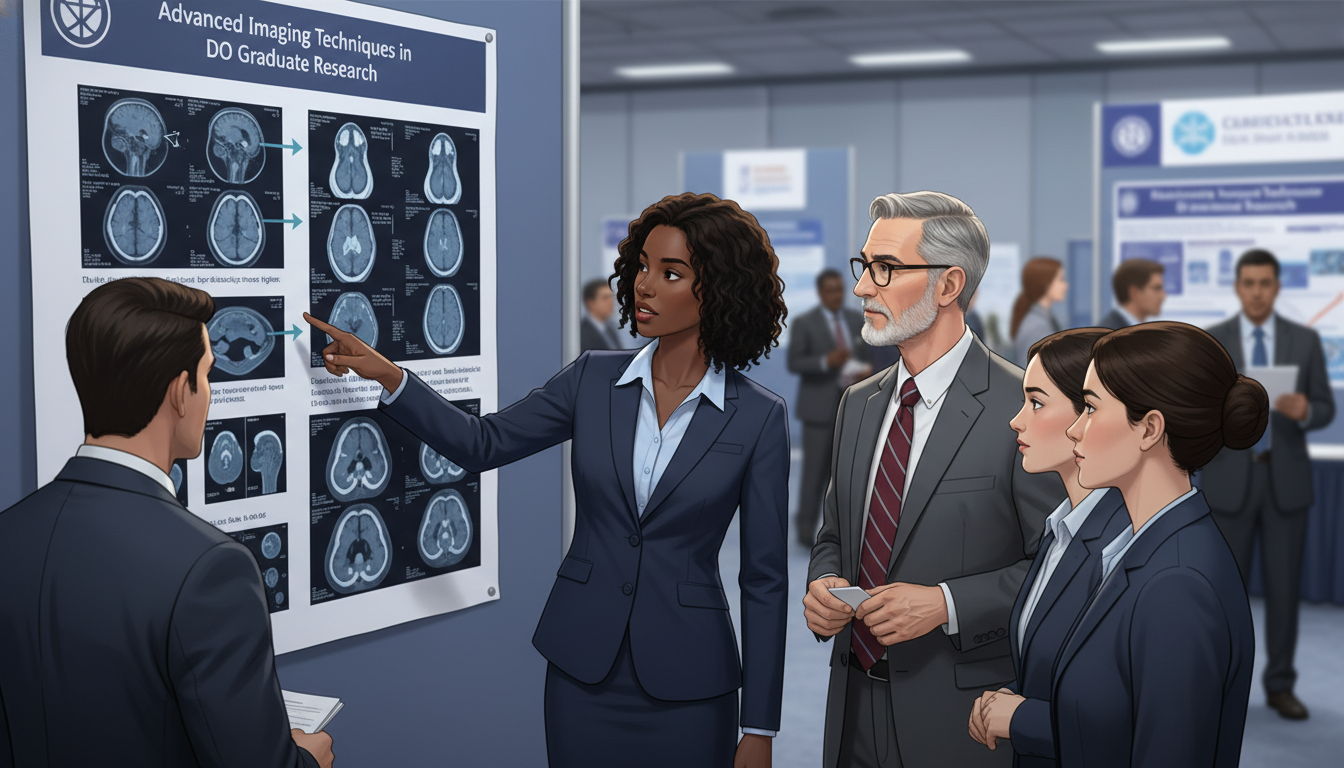
Poster and Exhibit Halls
- Practice a 30-second overview of your research poster if you’re presenting.
- Visit posters or exhibits by departments you’re interested in. Ask the presenter what it’s like to work or train there.
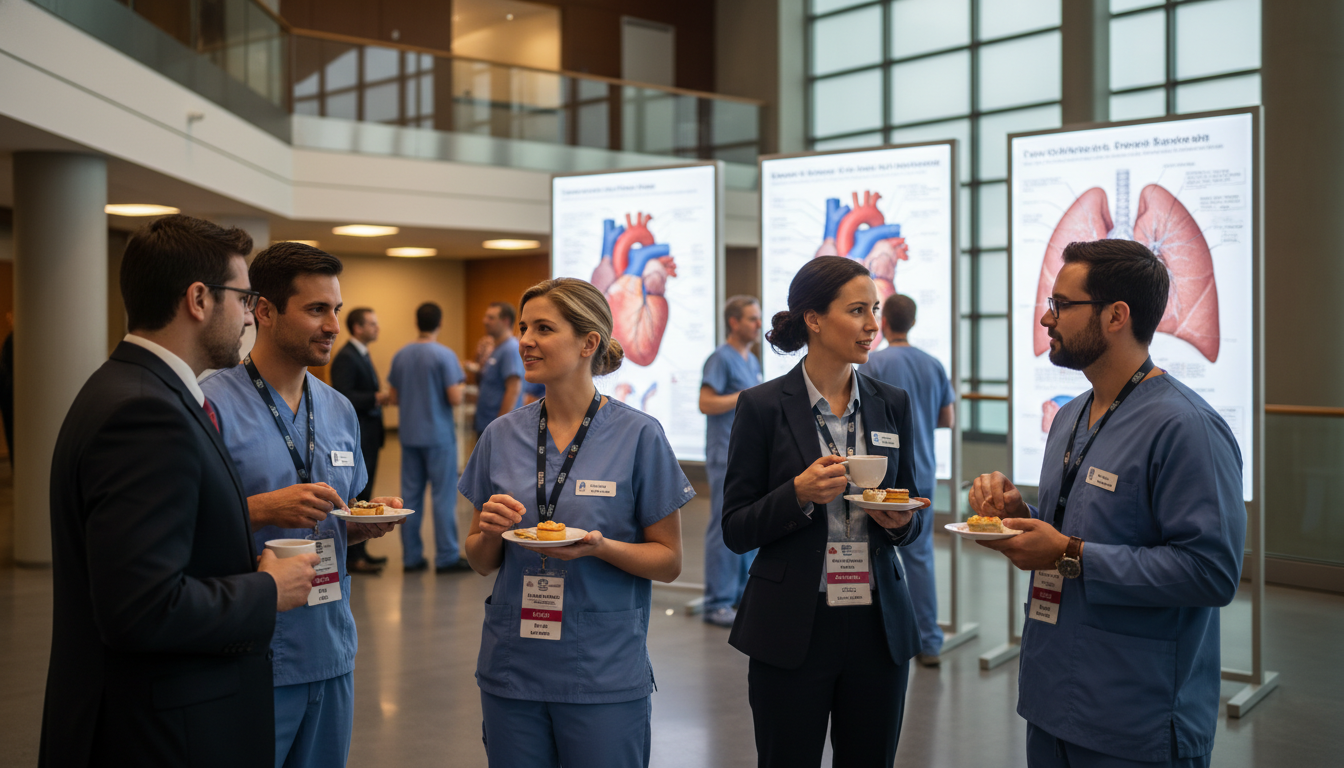
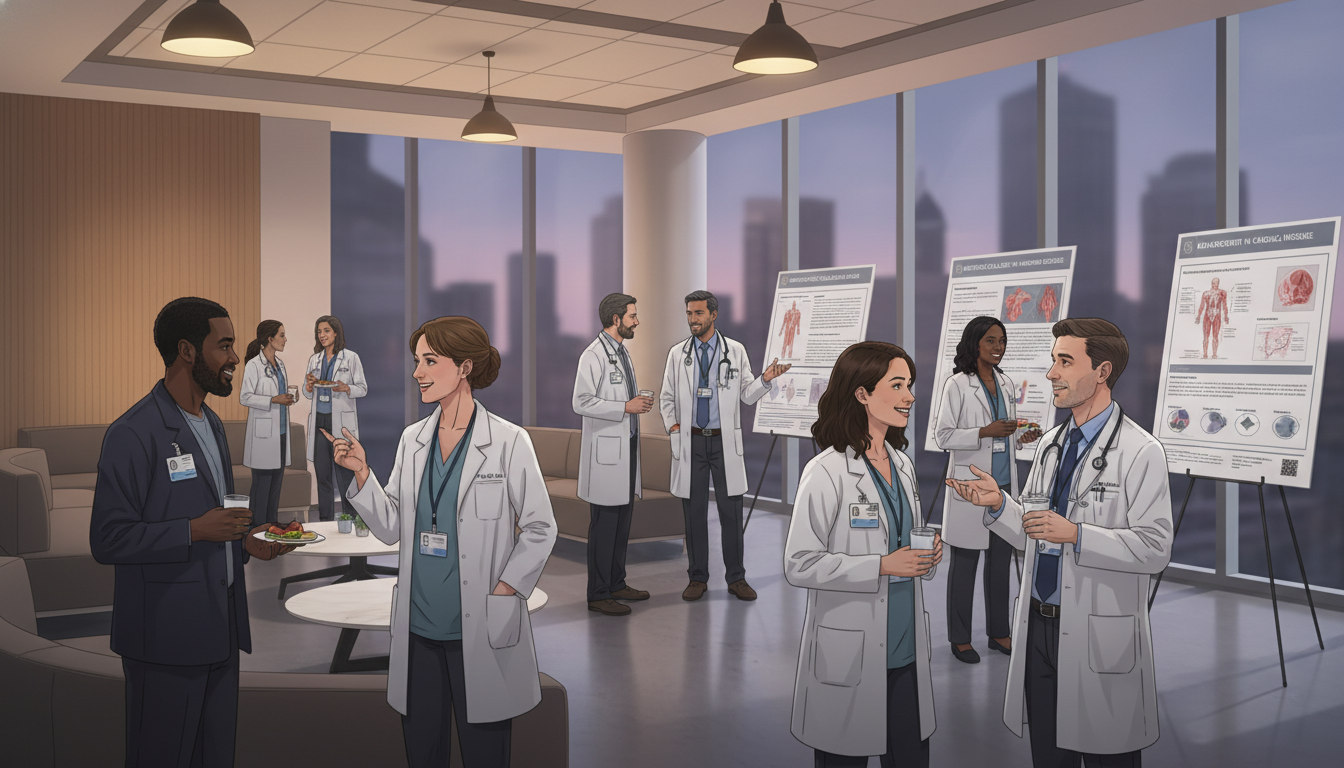
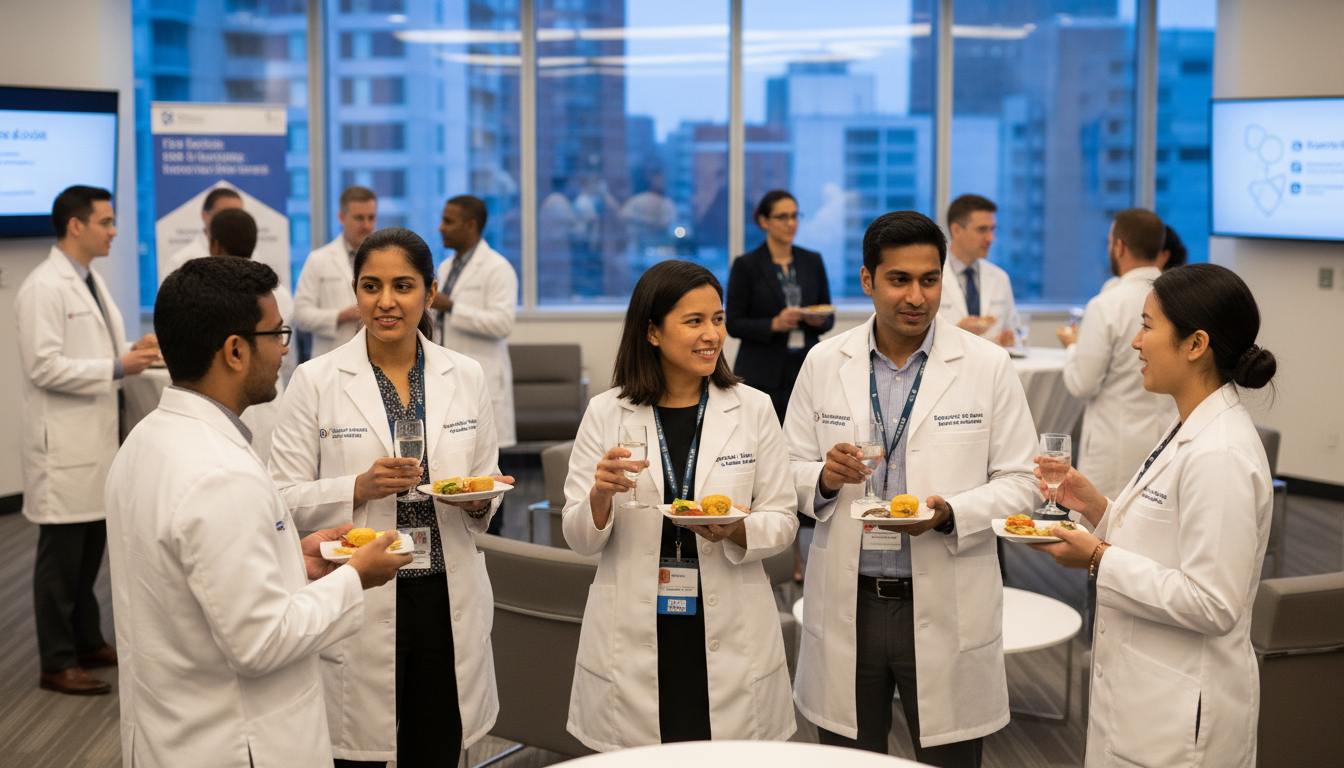
Networking Events and Receptions
- Attend ACR RFS mixers, residency program receptions, or any event labeled as trainee networking, especially those that signal openness to DOs.
- Keep conversations balanced: ask others about their work, and be ready to talk briefly about your own projects and goals.
After the Conference
- Within 3–5 days, send a short thank-you email to key contacts:
- Reference something you discussed.
- Mention a next step: reading their article, applying for an elective, or asking permission to reach out closer to application season.
Mentorship in Medicine: Building a Support Team as a DO in Radiology
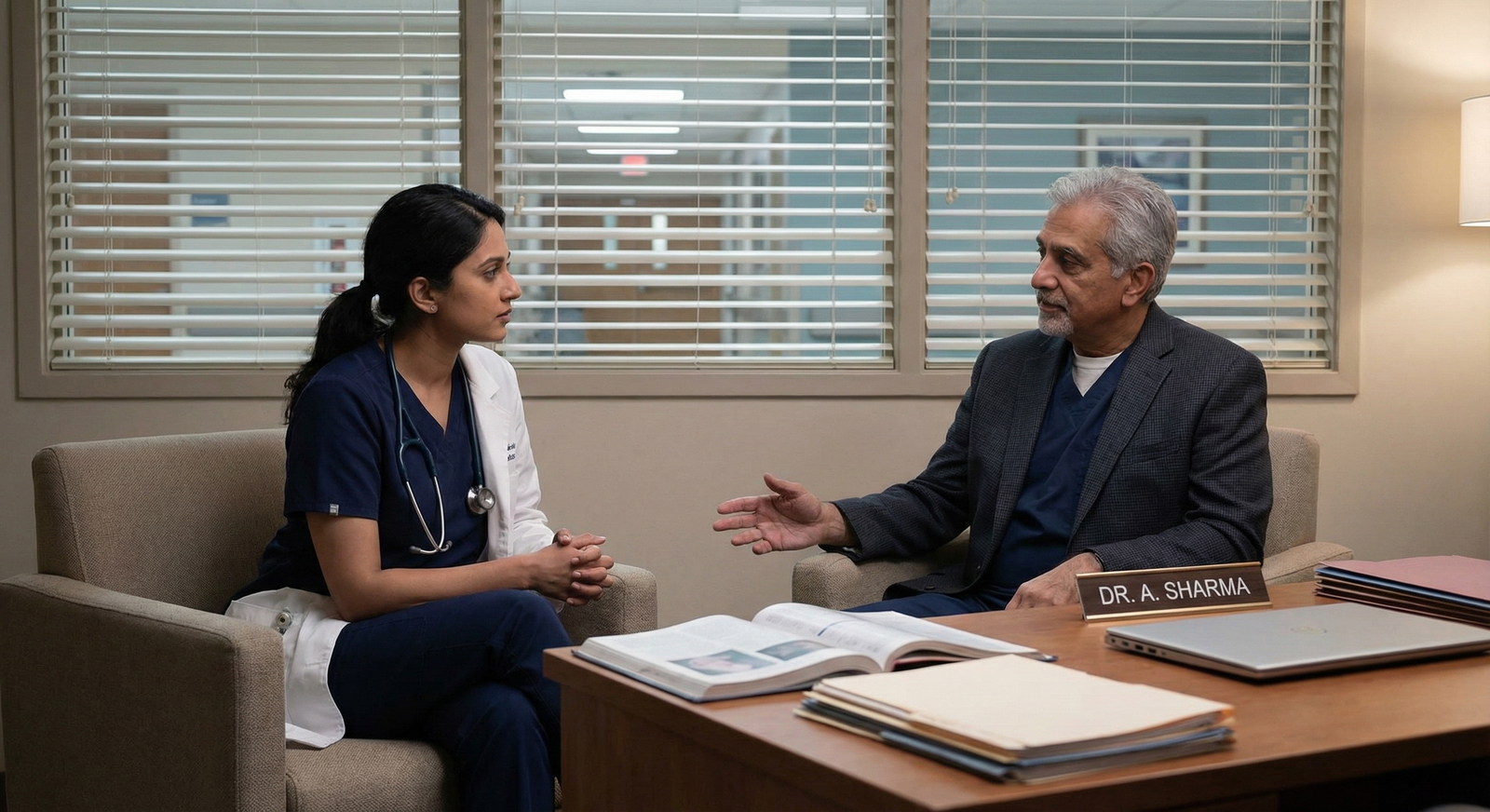
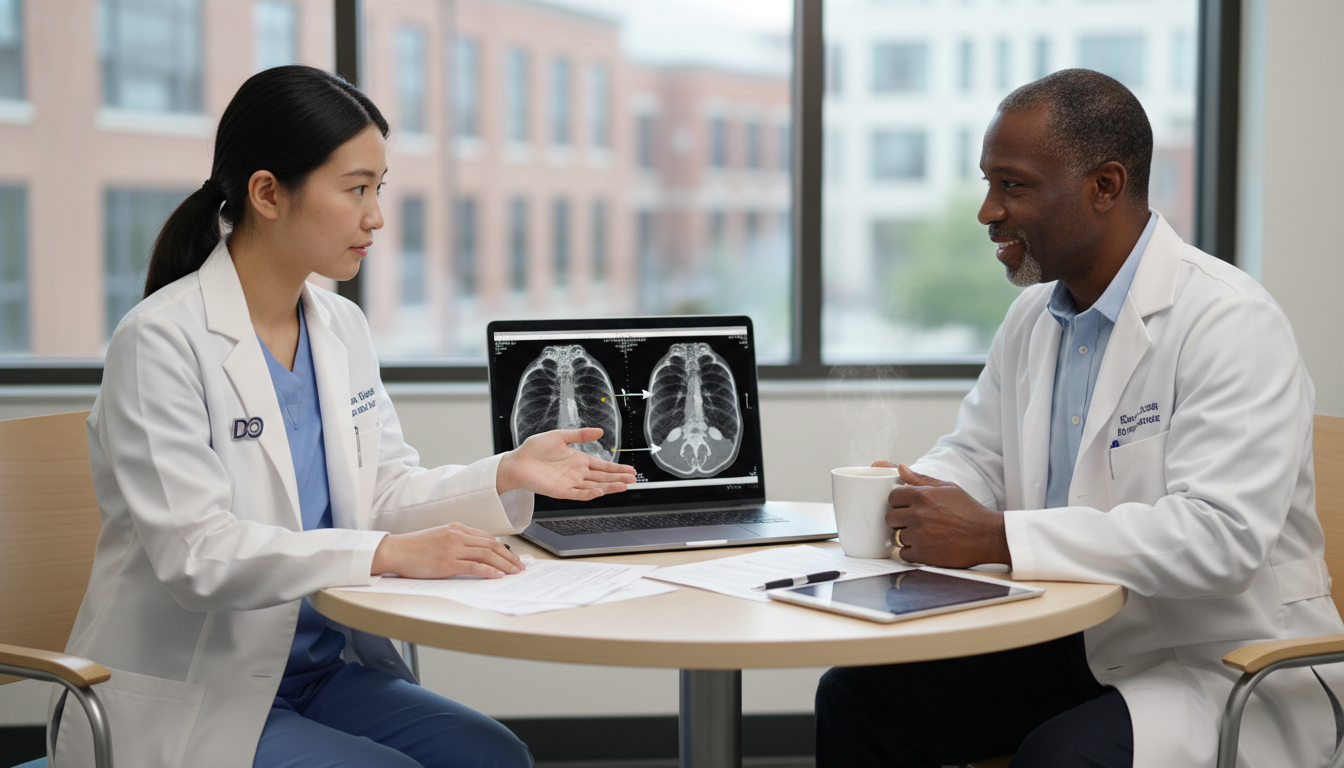
Mentorship medicine is central to effective networking in diagnostic radiology. For DO graduates, it also strategically counters misperceptions and helps bridge institutional gaps.
Types of Mentors You Should Seek
Clinical Radiology Mentor
- An attending or senior resident who can:
- Help you understand day-to-day radiology practice
- Advise on subspecialty choices
- Write strong, personalized letters of recommendation
- An attending or senior resident who can:
Academic or Research Mentor
- Someone actively involved in radiology research or QI who can:
- Help you join projects
- Guide you through abstracts, posters, and publications
- Introduce you to collaborators at other institutions
- Someone actively involved in radiology research or QI who can:
DO-Specific or Non-Traditional Path Mentor
- Ideally, a DO radiologist or someone who trained at an osteopathic residency program, or a faculty member familiar with osteopathic training.
- They can advise on how to navigate the osteopathic residency match history, MSPE nuances, and how to present your DO background to allopathic programs.
Peer Mentors (Residents or Fellows)
- Residents at your institution or online who recently went through the diagnostic radiology match.
- They often provide the most practical, current advice on interview prep, ERAS strategy, and program culture.
How to Ask Someone to Be a Mentor
Mentorship doesn’t always start with a formal ask. Often, you “earn” a mentor by repeatedly showing engagement and reliability.
A straightforward approach:
After you’ve had several productive interactions, send a concise email:
Dear Dr. [Name],
Thank you again for allowing me to spend time in the reading room this month. I’ve learned a great deal from our case discussions, particularly about [specific topic].
As a DO graduate planning to apply for diagnostic radiology, I greatly value your perspective. If you would be open to it, I’d be grateful to stay in touch as a mentor while I prepare for the upcoming application cycle.
I anticipate reaching out a few times over the next year for advice on rotations, research, and programs.
Sincerely,
[Your Name], DO
This frames the commitment clearly and respectfully.
Being a Good Mentee
To keep mentorship relationships strong:
- Be prepared: come to meetings with an agenda and specific questions.
- Respect time: start and end on time; send materials in advance.
- Act on advice: show that you implement at least some suggestions.
- Close the loop: update mentors on outcomes (presentations, interviews, match results).
Mentors are more likely to advocate for you in the radiology residency match when they see you as reliable, teachable, and proactive.
Digital Medical Networking: Social Media, Email, and Virtual Events
For DO graduates, online platforms are a powerful way to overcome geographic barriers and increase visibility in the radiology community.
Professional Use of Social Media in Radiology
Many radiologists use X/Twitter, LinkedIn, and sometimes Instagram to:
- Share interesting imaging cases (de-identified)
- Discuss new research and guidelines
- Promote educational threads and webinars
- Highlight diversity and inclusion issues in radiology
As a DO graduate:
Create a Professional Handle/Account
- Use your real name where possible.
- In your bio, include: “DO” and your interest in diagnostic radiology.
Engage Thoughtfully
- Like and retweet educational posts by radiology leaders.
- Ask clarifying questions or express appreciation.
- Share your own learning journey: resources, study techniques, reflections from conferences.
Avoid Pitfalls
- No patient-identifying information.
- Assume program directors and future colleagues will see everything you post.
- Stay out of unprofessional debates or trolling.
Leveraging Email for Cold Outreach
Email remains foundational in medical networking. DO graduates sometimes hesitate to reach out to faculty at new institutions; don’t let that hold you back.
A Template for Cold Outreach to a Radiologist
Subject: DO Graduate Interested in Diagnostic Radiology – Seeking Brief Advice
Dear Dr. [Name],
My name is [Your Name], DO, and I am a [recent graduate / PGY-1 at X program] with a strong interest in diagnostic radiology, particularly [subspecialty or area]. I recently came across your work on [specific paper, talk, or role] and found your perspective on [topic] especially helpful.
As I prepare for an application to radiology residency, I am hoping to learn from physicians who have built careers that integrate [clinical work/research/education/etc.]. If you have 15–20 minutes available in the coming weeks, I would be grateful for the chance to ask a few questions about your career path and any advice you might have for a DO graduate pursuing diagnostic radiology.
I recognize your schedule is very busy, so I completely understand if that is not possible.
Thank you for considering my request.
Sincerely,
[Your Name], DO
[Current position and institution]
[LinkedIn or professional website (optional)]
Aim to send a few of these carefully chosen emails rather than blasting many generic messages.
Virtual Open Houses and Webinars
In recent cycles, many diagnostic radiology programs host virtual open houses:
- Prepare ahead: research the program and faculty; have 1–2 specific questions ready.
- Participate actively: introduce yourself in the chat when appropriate: “I’m [Name], a DO graduate interested in diagnostic radiology, currently at [institution].”
- Follow up: if a faculty member or resident resonates with you, email afterward thanking them and, if relevant, expressing interest in their program.
These virtual interactions can create name recognition that may subtly benefit you during application review.
Putting It All Together: A Strategic Networking Plan for DO Radiology Applicants
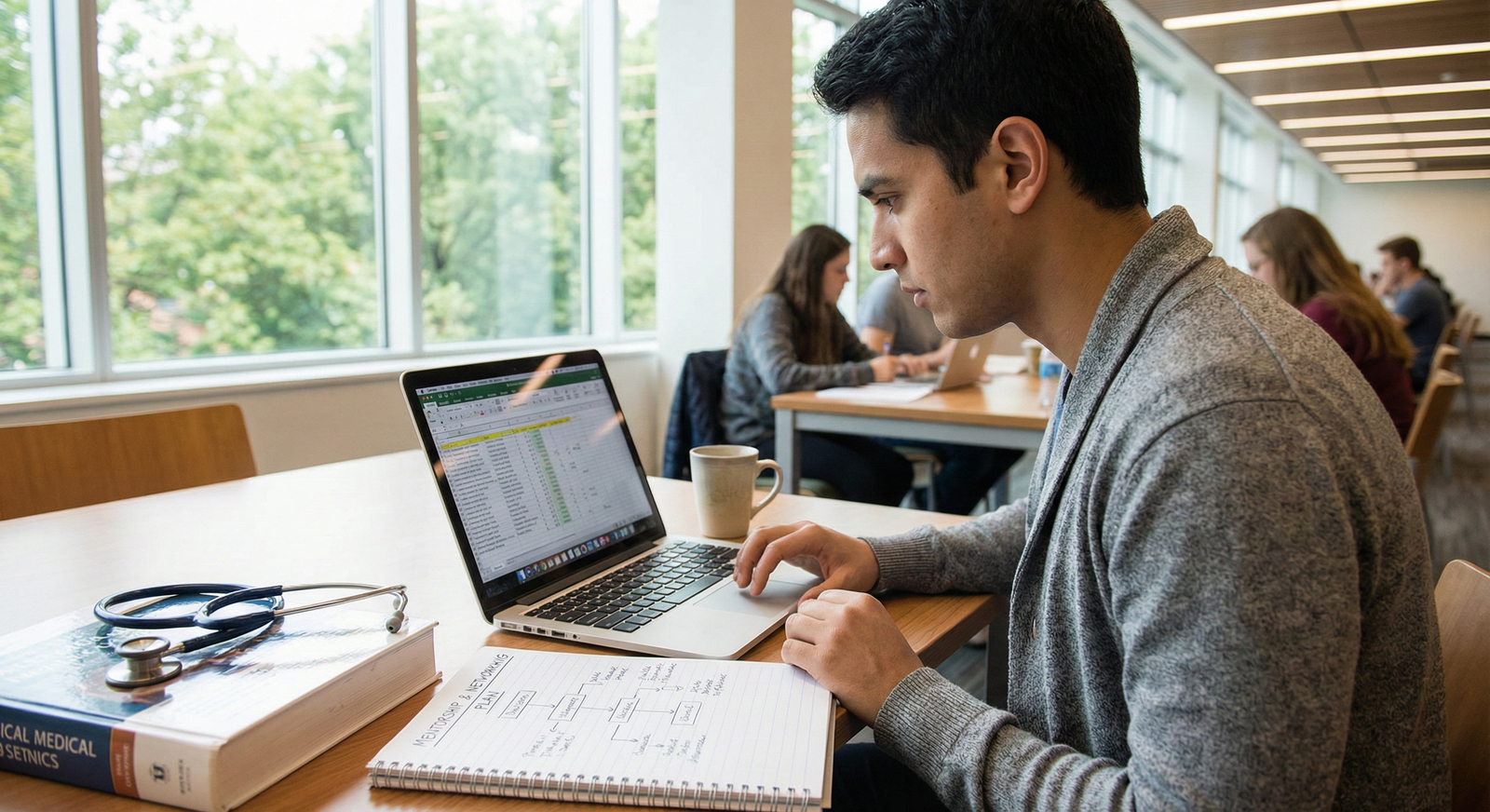
To make networking in medicine manageable rather than overwhelming, build a simple, structured plan for the year leading up to your diagnostic radiology match application.
6–12 Months Before Applying
- Clarify your radiology goals and narrative as a DO graduate.
- Update your CV, LinkedIn, and professional email signature.
- Identify 1–2 potential clinical mentors and 1 research mentor; initiate those relationships.
- Begin participating in online radiology communities in a low-key, professional way.
- If possible, secure at least one away rotation in diagnostic radiology, ideally at a program where DO graduates have historically matched.
3–6 Months Before Applying
- Deepen relationships with mentors: seek feedback on your personal statement, program list, and radiology CV.
- Attend at least one regional or national radiology meeting (in-person or virtual).
- Present a poster or case report if possible—even small projects demonstrate initiative.
- Engage more actively in conference networking: meet faculty and residents from target programs.
Application Season
- Attend virtual open houses and follow up with concise thank-you emails.
- Keep in touch with mentors about interview invitations and decisions.
- Use peer networks (residents, other DO applicants) to share insights about programs.
Post-Match and Early Residency
Networking doesn’t stop once you match into radiology:
- Continue attending conferences, joining societies (ACR, subspecialty groups).
- Maintain mentorship relationships and gradually become a mentor to students, especially DO students interested in radiology.
- Consider leadership roles in resident sections or committees—these expand your network and visibility.
A deliberate, steady approach ensures that by the time you reach fellowship decisions or early attending life, you already have a strong, trusted professional network across multiple institutions.
FAQs: Networking in Medicine for DO Graduates in Diagnostic Radiology
1. As a DO graduate, do I need to network differently than MD applicants for radiology residency?
The core principles are the same—show up, be prepared, be respectful—but you should be more intentional about addressing knowledge gaps or misconceptions regarding osteopathic training. Seek mentors who understand or are part of the osteopathic pathway, and be ready to confidently explain how your DO training strengthens your clinical reasoning and patient-centered approach. Strong medical networking can offset limited name recognition of your school or osteopathic residency match background.
2. I’m introverted and find conference networking intimidating. How can I still build an effective network?
Introverts often excel at one-on-one conversations, which are very powerful in medicine. Set modest goals: for example, “Introduce myself to three people per day” or “Ask one thoughtful question after a session.” Use structured settings—poster sessions, small-group workshops, mentorship programs—where conversations are more guided. Also rely on email and virtual networking, which can feel less overwhelming and still build meaningful connections.
3. How important is research networking for the diagnostic radiology match?
Research is not mandatory for every program, but it is increasingly valued, especially at academic centers. Networking with research-oriented radiologists can help you join projects that lead to abstracts and publications. These activities don’t just add lines to your CV; they create opportunities for mentorship, strong letters, and visibility among faculty who influence selection decisions.
4. What are the most common networking mistakes DO radiology applicants make—and how can I avoid them?
Frequent missteps include:
- Being overly transactional (“Can you write me a letter?” as the first ask)
- Sending generic, copy-paste emails to many faculty at once
- Failing to follow up after someone offers help or advice
- Over-sharing personal stress or complaints about being a DO, instead of focusing on strengths and solutions
Avoid these by building relationships gradually, customizing your outreach, following through on commitments, and framing your DO background as a positive part of your professional identity.
By approaching networking in medicine as a long-term, relationship-centered process—not a last-minute tactic—you position yourself as a thoughtful, engaged DO graduate and a strong future colleague in diagnostic radiology. Over time, the connections you build will support not only your diagnostic radiology match, but your growth, fulfillment, and impact throughout your radiology career.