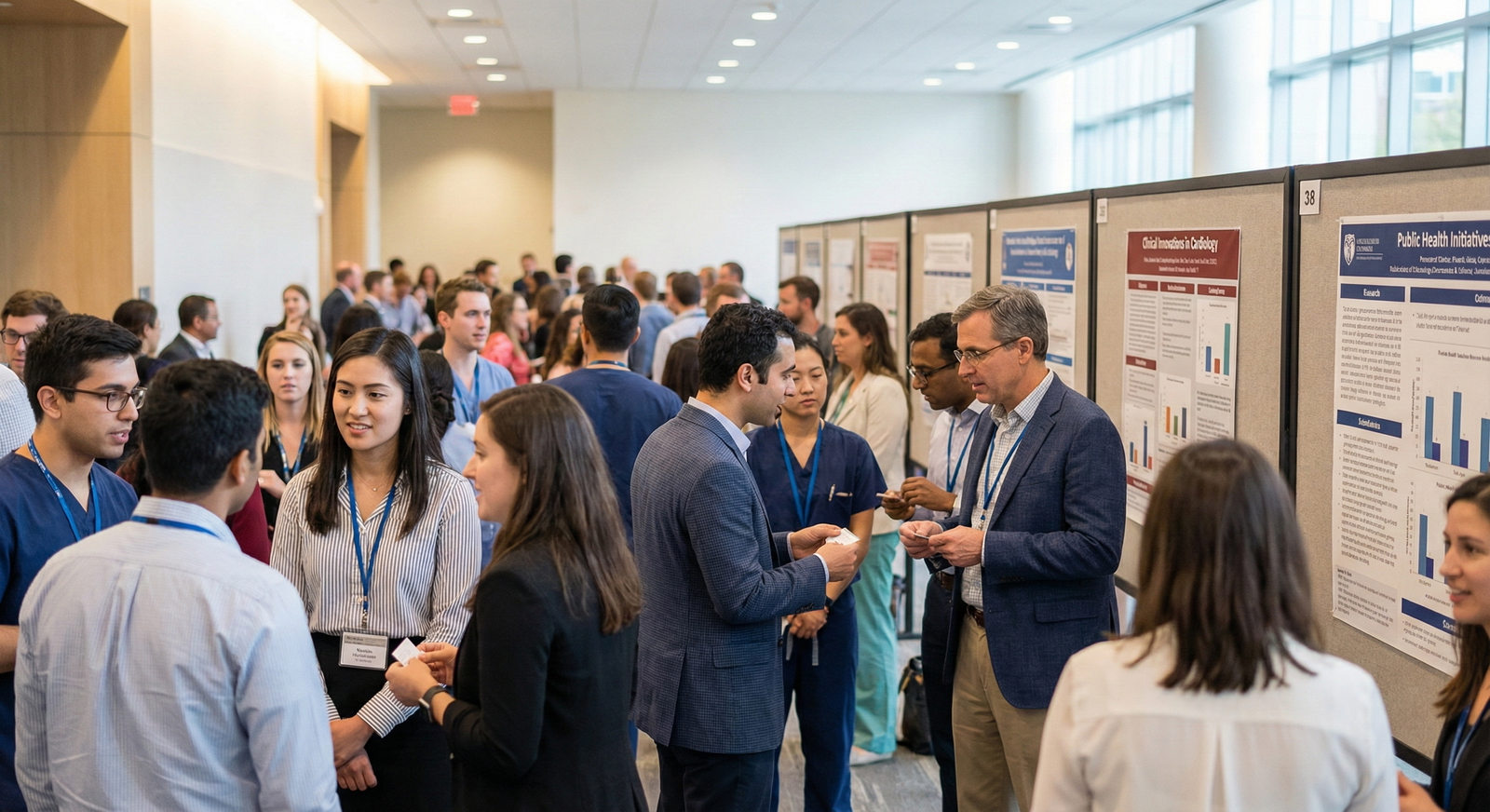
Why Networking Matters So Much for a DO Graduate in OB GYN
As a DO graduate pursuing Obstetrics & Gynecology, your clinical competence is essential—but it is often your relationships that open doors. In a competitive obstetrics match landscape, especially for a DO graduate residency applicant, networking in medicine can:
- Turn a cold application into a recognized name
- Lead to stronger, more personalized letters of recommendation
- Help you discover unadvertised opportunities in the osteopathic residency match
- Connect you with mentors who guide your early OB GYN residency choices and career trajectory
For DO graduates, there can still be misconceptions or lack of familiarity about osteopathic training at some programs. Strategic medical networking helps you:
- Demonstrate your capabilities beyond test scores
- Put a face and personality to your CV
- Show your commitment to OB GYN in tangible ways
- Build a community that supports you through residency and beyond
This article breaks down practical, actionable strategies for networking in medicine as a DO graduate targeting OB GYN residency—across conferences, clinical rotations, online platforms, and mentorship in medicine—so you can make the most of each interaction.
Foundations of Networking as a DO Graduate in OB GYN
Before diving into events and strategies, it helps to align on what “networking” really means in medicine.
What Networking in Medicine Actually Is (and Is Not)
Networking is:
- Building genuine professional relationships
- Exchanging information, support, and opportunities
- Showing up consistently over time in a specific field (here, OB GYN)
- Being helpful to others, not just asking for favors
Networking is not:
- Collecting business cards or LinkedIn connections you never speak to
- Name-dropping or trying to “game” the system
- Only talking to program directors or “important” people
- One-time transactional interactions
Think of networking as long-term collaboration, not short-term extraction.
The Unique Position of a DO Graduate
As a DO graduate, you bring valuable strengths:
- Training with a holistic, patient-centered philosophy
- Exposure to osteopathic manipulative treatment (OMT), often useful in pregnancy-related musculoskeletal pain
- Frequently strong communication and rapport-building skills
However, in some academic OB GYN departments, faculty may be:
- Less familiar with DO schools or your specific curriculum
- Focused on MD-prevalent applicant pools
Your goal with networking is to bridge that familiarity gap by:
- Being visible at OB GYN events and conferences
- Demonstrating your knowledge and commitment
- Showcasing your specific skills as a DO graduate
Core Principles for Effective Networking
Be prepared and intentional
- Know your goals: OB GYN residency, subspecialty interests (e.g., MFM, REI, MIGS), geographic preferences.
- Have a concise personal introduction ready.
Be specific but flexible
- “I’m a DO graduate strongly interested in OB GYN residency, particularly in high-risk obstetrics and serving underserved communities” is more memorable than “I’m interested in everything.”
Follow up and nurture
- The initial interaction is just the start. Relationships are built through consistent follow-up and periodic check-ins.
Give before you ask
- Offer help with research, presentations, QI projects, or community outreach.
- Share relevant articles, data, or resources with mentors and peers.
Strategic Conference Networking in OB GYN
Medical conferences are high-yield environments for conference networking and making connections that directly influence the obstetrics match. As a DO graduate, you should view them as essential career investments rather than optional extras.

Choosing the Right Conferences
For OB GYN-focused networking in medicine, consider:
- ACOG Annual Clinical & Scientific Meeting
- Flagship event; broad exposure to general and subspecialty OB GYN.
- AOA- and osteopathic-focused meetings
- State osteopathic association meetings or specialty tracks can be particularly DO-friendly.
- CREOG & APGO meetings
- More education- and residency-focused; program directors and residency leaders commonly attend.
- Regional ACOG district meetings
- Smaller scale; easier to interact with faculty and residency leadership.
If costs are a concern:
- Look for student or resident discounts, travel scholarships, or institutional funding.
- Ask OB GYN departments or mentors if they can support your attendance in exchange for presenting research or a poster.
Preparing Before the Conference
Research the attendee list and programs
- Identify:
- Programs you are interested in
- Faculty you’ve read or whose work you admire
- DO-friendly OB GYN residency programs (check past match lists, program websites, or ask upperclassmen).
- Identify:
Clarify your objectives
Examples:- “Meet at least 2 faculty from programs I plan to apply to.”
- “Introduce myself to possible research collaborators in maternal-fetal medicine.”
- “Learn about community-focused OB GYN residency programs in the Midwest.”
Prepare your introduction and talking points
A simple structure:- Who you are: “I’m [Name], a DO graduate from [School].”
- What you’re doing now: “I’m completing a transitional year / prelim / research year / application cycle focused on OB GYN.”
- What you’re aiming for: “I’m very interested in OB GYN residency with a focus on [interest area].”
Have your materials ready
- Updated CV
- Short summary of your experiences: OB GYN rotations, research, leadership, and service
- A “business card” with your name, email, and LinkedIn (optional but helpful at meetings)
How to Approach People at Conferences
Use the environment to your advantage:
Poster sessions
- Approach posters related to OB GYN areas you care about.
- Ask the presenter: “What led you to this research question?” or “How could this impact clinical practice?”
- If the presenter is from a program you’re interested in, you might add: “I’m very interested in your program and will be applying this cycle.”
Breaks and social events
- Stand near buffet or coffee areas and start conversations about sessions you just attended.
- Example opener: “What did you think about the session on postpartum hemorrhage protocols? I liked the emphasis on simulation training.”
Program-sponsored events
- Some OB GYN residencies host receptions or meet-and-greet sessions at major conferences.
- Attend these when possible—introduce yourself to residents and faculty.
Making a Strong Impression as a DO Graduate
Subtly and confidently incorporate your DO background:
Highlight your holistic perspective:
- “At my DO school, we emphasized whole-person care and communication, which I think is especially important in OB GYN.”
Emphasize clinical experiences that show readiness:
- Robust exposure to labor & delivery, continuity clinics, surgical skills, and OB triage.
If OMT is relevant to your practice interests, mention it thoughtfully:
- “I’ve worked with pregnant patients using osteopathic techniques for back and pelvic pain, and I’d love to explore how that integrates into standard OB GYN care in residency.”
Following Up After Conferences
After the meeting:
Send emails within 3–5 days
- Thank them for their time
- Mention something specific you discussed
- Express your interest in staying in touch or learning more about their work or program
Example:
Dear Dr. Smith,
It was a pleasure meeting you at the ACOG Annual Meeting during the poster session on postpartum hemorrhage. I enjoyed hearing about your residency program’s use of simulation-based team training on L&D. As a DO graduate strongly interested in OB GYN residency and patient safety initiatives, I’d love to stay in touch and learn more about your work.
Thank you again for your time and insights,
[Name], DOConnect on LinkedIn or professional platforms
- Send a brief, personalized note: “It was great speaking with you at CREOG about OB GYN residency training.”
Maintain periodic contact
- Send an update when you present a poster, publish a paper, or apply to their program:
- “I wanted to share that I’ll be applying to your OB GYN residency program this cycle and remain very interested in your approach to…”
- Send an update when you present a poster, publish a paper, or apply to their program:
Clinical Rotations, Away Rotations, and Everyday Networking
Your clinical environment is one of the most powerful places for networking in medicine, especially when you’re pursuing OB GYN residency.

Treat Every Rotation as a Long Interview
Whether you’re on:
- A core OB GYN rotation
- A sub-internship or away rotation at a target program
- A related service (e.g., family medicine with OB, emergency medicine, ICU)
…assume that residents and attendings are evaluating not only your clinical performance, but also your “fit” as a colleague.
Key behaviors that double as networking:
- Show up early and stay engaged
- Volunteer for tasks (admissions, notes, patient counseling, OR cases)
- Be teachable: accept feedback well and implement it
- Demonstrate reliability: follow up on labs, studies, and patient concerns
These are the traits faculty remember when they later read your application or consider a letter of recommendation.
Building Relationships with Residents
Residents often have more day-to-day contact with you than attendings. They:
- Influence which students get strong letters
- Offer internal feedback to program directors
- Share your strengths with faculty informally
Ways to network effectively with residents:
- Ask for feedback: “What’s one thing I can do better this week?”
- Show genuine interest in their experiences: “What made you choose this OB GYN residency?”
- Ask for advice about the obstetrics match and osteopathic residency match from their perspective.
If you’re on an away rotation:
- Clarify your interest: “I’m a DO graduate applying in OB GYN and am very interested in your program, particularly for its strong L&D experience.”
- Ask if there are opportunities to attend teaching conferences, journal clubs, or QI meetings.
Working with Attendings and Program Leadership
When working with faculty:
- Be prepared: read about your patients and know the basics of common OB GYN conditions (pre-eclampsia, labor induction, postpartum hemorrhage, contraceptive counseling, abnormal uterine bleeding, etc.).
- Ask insightful questions that show reflection, not just memorization.
You can gently and professionally signal your career interests:
“Dr. Lee, I’m a DO graduate planning to apply to OB GYN. Do you have any advice about applying as a DO candidate or how I can strengthen my application?”
If you’re rotating at a program where you’d like to match:
- Meet the program director if possible.
- Tell them directly but respectfully about your interest.
- Ask about what they value in applicants and how DO graduates have succeeded in their program.
Turning Rotations into Letters and Long-Term Mentorship
To convert a rotation into networking capital:
Identify faculty who know you well
- Those who have observed you on multiple days or in multiple clinical settings.
Ask for letters strategically
- Ask: “Would you feel comfortable writing me a strong letter of recommendation for OB GYN residency?”
- Give them your CV and a short summary of your goals and key experiences.
Stay in touch after the rotation
- Send a brief thank-you note after the rotation ends.
- Update them when you apply, interview, and eventually match.
Over time, this is how you transition from one-time evaluators to long-term mentors.
Mentorship in Medicine: Finding, Building, and Using It Wisely
Mentorship is the backbone of successful medical networking, especially for a DO graduate in OB GYN who may need additional support navigating certain academic spaces.
Types of Mentors You Need in OB GYN
Clinical mentors
- OB GYN attendings or senior residents who guide your clinical development and help with letters.
Career mentors
- People who can advise on long-term goals: fellowships, academic vs. community practice, work-life balance, and leadership.
Peer mentors
- DOs who have recently matched into OB GYN or are current residents.
Identity- or interest-based mentors (if applicable)
- Mentors who share aspects of your background: gender, race/ethnicity, rural or urban upbringing, or commitment to public health, advocacy, or global women’s health.
How to Find Mentors as a DO Graduate
Within your home institution
- OB GYN faculty who enjoy teaching and have a track record of supporting DO students.
- Clerkship directors or site directors.
At away rotations
- Faculty or residents you connect with personally and professionally.
Through professional organizations
- ACOG, local and state OB GYN societies, osteopathic societies often have mentorship programs.
Online and social networks
- LinkedIn, Twitter/X, or specialty forums where OB GYN physicians engage in professional discussion.
- Some DO-focused or OB GYN interest groups provide mentor matching.
How to Approach and Work with Mentors
Initial outreach
- Be specific: “I’m a DO graduate interested in OB GYN residency with a focus on [interest]. I admire your work in [area]. Would you be open to meeting briefly to discuss my goals and get your advice?”
Be respectful of time
- Propose a short timeframe (e.g., 20–30 minutes).
- Come prepared with targeted questions.
Ask for concrete guidance
Examples:- “How can I best position myself as a DO graduate in this year’s OB GYN match?”
- “What do you think are realistic programs and reach programs for me?”
- “Are there research or QI projects I could get involved with?”
Keep them updated
- Share major milestones: board scores, updated CV, research outputs, application submission, interview invitations, and your final match outcome.
Be reliable and appreciative
- If they connect you to others, follow through.
- Always send a thank you after meetings or key support.
Digital and Long-Term Networking: Beyond Match Day
Networking doesn’t end when you secure an OB GYN residency. In fact, residency life and challenges will amplify the importance of your network.
Online Professional Presence for OB GYN
LinkedIn
- Keep an updated, professional profile listing: your DO degree, OB GYN interests, research, and presentations.
- Connect with residents, attendings, and mentors you meet at rotations and conferences.
Professional email etiquette
- Use a professional email (e.g., firstname.lastname@domain.com).
- Keep messages concise, respectful, and clear about what you’re asking.
Academic platforms
- ResearchGate, Google Scholar, or institutional profiles if you’re involved in research.
Participating in Professional and Osteopathic Communities
Stay engaged with:
- ACOG: Join as a junior fellow when eligible.
- Osteopathic organizations: AOA, state osteopathic societies, or osteopathic OB GYN groups.
- Resident associations: Many OB GYN residencies have resident councils or advocacy committees.
These connections help with:
- Job searches after residency
- Fellowship opportunities
- Staying aware of policy and scope-of-practice changes relevant to DOs and OB GYNs
Building a Reputation Over Time
As you progress through OB GYN residency and beyond:
Show up consistently
- Attend departmental meetings, journal clubs, and educational events.
- Volunteer for committees or projects that align with your interests (e.g., maternal morbidity review, resident wellness, community outreach).
Develop a niche
- Whether it’s family planning, global women’s health, pelvic pain, or surgical simulation, becoming “the person who cares about X” makes you memorable and valuable.
Pay it forward
- Mentor medical students and DO graduates following behind you.
- Offer honest advice and encouragement about the obstetrics match and osteopathic residency match process.
That reciprocal cycle is at the heart of sustainable networking in medicine.
Putting It All Together: A Practical Action Plan
To make this concrete, here is a stepwise plan for a DO graduate targeting OB GYN residency:
Within the Next 1–3 Months
- Identify 2–3 potential mentors in OB GYN (home institution, away sites, or organizations).
- Attend at least one local or regional OB GYN or osteopathic medical meeting.
- Update your CV and create or refine your LinkedIn profile.
- Reach out via email for brief mentorship meetings and advice sessions.
Over the Next 6–12 Months
- Present a poster or abstract at an OB GYN or osteopathic conference, if possible.
- Complete at least one OB GYN-focused rotation where you aim to secure a strong letter.
- Ask residents and faculty about how DOs have historically matched from your school or program.
- Practice your 1–2 minute introduction for conferences and interviews.
During Application and Interview Season
- Inform key mentors and letter writers when you submit your ERAS application.
- Let faculty you met at conferences or away rotations know that you’ve applied to their program.
- Stay responsive to advice, especially about how to optimize your rank list or program selection.
After Match Day and into Residency
- Inform your mentors and thank them.
- Join ACOG as a resident and participate in committees or advocacy work.
- Continue to expand your network of OB GYN colleagues, especially other DO graduates, through conferences and online communities.
By treating networking as an ongoing professional habit, rather than a one-time task, you position yourself not just to match—but to thrive in OB GYN as a DO-trained physician.
FAQs: Networking in Medicine for DO Graduates in OB GYN
1. As a DO graduate, do I really need to go to conferences to match into OB GYN?
Conferences are not mandatory, but they are high-yield. For DO graduates, especially when aiming at more competitive or less DO-familiar programs, conferences offer:
- Face-to-face time with program leaders and residents
- Opportunities to present research and show academic engagement
- A chance to demonstrate your professionalism and passion beyond your application
If resources are limited, prioritize at least one regional ACOG or osteopathic conference and explore scholarships or institutional funding.
2. How can I overcome bias or unfamiliarity with DO degrees during networking?
You can’t control everyone’s preconceptions, but you can:
- Confidently state your training and strengths as a DO graduate
- Demonstrate competence during rotations and in conversations
- Highlight concrete achievements: strong clinical evaluations, research, leadership, community work
- Seek out programs and mentors known to be supportive of osteopathic residency match applicants
Over time, your performance and professionalism often matter more than your degree label.
3. What should I say in an email to someone I met briefly at a conference or rotation?
Be specific, brief, and courteous. For example:
Dear Dr. [Last Name],
It was great speaking with you during the [session/rotation] about [topic]. As a DO graduate applying to OB GYN residency with a strong interest in [area], I really appreciated your insights on [specific point]. I hope to stay in touch and learn more about your work/program.
Best regards,
[Your Name], DO
If you are applying to their program, mention that clearly and respectfully.
4. How do I balance networking with the demands of rotations and studying?
Think of networking as part of being a professional physician, not a separate task. Practical strategies:
- Use natural downtime (between cases, after sign-out, conference breaks) for short, meaningful conversations.
- Schedule mentorship calls or meetings during predictable lighter periods.
- Combine efforts: a research project doubles as academic productivity and networking with your research mentor and team.
Small, consistent efforts over time are more sustainable—and more effective—than intense, short bursts of “networking activity.”
By approaching networking in medicine as an integrated part of your development—across conferences, clinical work, mentorship in medicine, and digital presence—you, as a DO graduate pursuing OB GYN, can build the relationships and reputation that support a strong obstetrics match and a fulfilling career.