Understanding the Power of Networking in Cardiothoracic Surgery as a DO Graduate
Networking in medicine is not just about collecting business cards—it’s about building relationships that directly impact your training, career trajectory, and ultimately your patients’ outcomes. For a DO graduate aspiring to or already in a cardiothoracic surgery residency, effective networking can be a critical differentiator, especially in a competitive landscape where many peers come from MD programs.
As a DO graduate pursuing cardiothoracic surgery, you live at the intersection of three highly selective domains:
- The DO graduate residency landscape, which has undergone major changes with the single accreditation system
- The osteopathic residency match environment, where DOs increasingly pursue and obtain competitive surgical positions
- The cardiothoracic surgery residency pathway, one of the most demanding and tightly networked specialties in medicine
Strategic networking helps you:
- Access heart surgery training opportunities (rotations, sub-internships, fellowships, research)
- Build mentorship medicine relationships that advocate for you behind closed doors
- Navigate institutional politics and program culture more effectively
- Create visibility as a serious, committed future cardiothoracic surgeon
This article breaks down how to approach networking in a focused, intentional way—online and in person—so you can position yourself strongly as a DO graduate in cardiothoracic surgery.
The Networking Mindset: What Makes Cardiothoracic Surgery Different
Cardiothoracic surgery is a small, close-knit field. Most people know each other, and many program directors and faculty trained together, publish together, and serve on the same committees. This has direct implications for a DO graduate residency applicant or early resident:
- Your reputation travels quickly—both positive and negative.
- A small number of key champions can significantly boost your career.
- Face recognition at conferences and meetings matters more than in many other specialties.
Unique Networking Challenges for DO Graduates
As a DO graduate in this space, you may face:
- Limited home program exposure: Many DO schools don’t have a strong in-house cardiothoracic surgery presence.
- Fewer built-in research opportunities in CT surgery compared to large academic MD institutions.
- Implicit bias from some surgeons unfamiliar with osteopathic training (often unspoken but real).
Networking, done well, helps to:
- Demonstrate your clinical strength and professionalism beyond your degree letters.
- Show that you are embedded in the CT surgery community, not just aspiring to it from the outside.
- Connect you to advocates who can speak to your ability, character, and potential.
Principles of Effective Medical Networking
Anchor your approach to three core principles:
Be relationship-focused, not transactional
You’re not just asking for a letter, a rotation, or a job. You’re building a real professional relationship, which means time, follow-up, and mutual benefit.Show consistent interest in cardiothoracic surgery
Repeated presence (at conferences, journal clubs, research meetings), consistent questions, and visible growth over time signal real commitment.Deliver value when possible
As a student, resident, or new graduate, your “value” may be:- Helping with data collection or chart review for research
- Taking call or helping with a project
- Sharing DO student or resident perspectives in educational initiatives

Core Networking Arenas: Where DO Graduates Should Focus
1. Your Home Institution and Local Network
Even if your DO school or residency program doesn’t have a robust cardiothoracic department, start at home.
Key steps:
Identify any CT surgeons affiliated with your hospital system
Even if they’re community-based or part-time faculty, ask to:- Shadow in the OR
- Attend their clinic
- Join morbidity and mortality (M&M) or case conferences if permitted
Engage with related specialties
Cardiothoracic surgery interfaces heavily with:- Cardiology (especially interventional and heart failure)
- Pulmonology and critical care
- Anesthesiology (cardiac anesthesia)
- Radiology (especially cardiac CTA, CT surgery planning)
These colleagues can:
- Introduce you to CT surgeons
- Involve you in heart team discussions
- Connect you with heart surgery training research projects
Join hospital committees and initiatives
Cardiothoracic outcomes, enhanced recovery after surgery (ERAS), ICU protocols, and surgical quality initiatives are all places to connect with CT surgeons and their allies.
Example approach email to a local CT surgeon:
“Dear Dr. Smith,
I’m a DO graduate currently [MS4 / PGY-1 / PGY-2 in general surgery] with a strong interest in cardiothoracic surgery. I’m eager to learn more about the specialty and understand the day-to-day work and training pathway.Would you be open to allowing me to observe in the OR or clinic, or to meeting briefly for advice about how a DO graduate can best prepare for a future cardiothoracic surgery residency? I’m happy to assist with any ongoing research or quality projects if there’s a need.
Thank you for your time and consideration.
Sincerely,
[Name], DO”
Brief, respectful, and clearly interested.
2. Away Rotations and Sub-Internships
For a competitive cardiothoracic surgery residency spot, away rotations can be both audition and networking gold.
If you’re pre-residency or in a general surgery residency with interest in CT:
Choose a limited number of key away sites where:
- The program has a track record of taking DOs or being DO-friendly
- The culture values hard work and collegiality
- There is a structured role for rotators (not just an observer)
Before the rotation:
- Email the rotation coordinator or chief resident introducing yourself and emphasizing your CT interest.
- Ask for recommended reading or skills to review in advance.
During the rotation:
- Show up early, stay late, and take ownership of tasks.
- Learn names (faculty, residents, nurses, perfusionists).
- Ask for feedback mid-rotation: “What can I do better? How can I help the team more?”
- Ask to present at least one short case or topic during conference to demonstrate knowledge and initiative.
After the rotation:
- Send personal thank-you emails to key faculty and residents.
- Attach or link to any case presentations you gave.
- Briefly reaffirm your continued interest in cardiothoracic surgery and that specific institution.
These away rotations also create letter-writers who matter in the osteopathic residency match and later the cardiothoracic surgery residency application process.
3. National and Regional Conferences: The Networking Engine
For DO graduates in cardiothoracic surgery, conferences are where you step fully into the broader professional community.
High-yield societies for networking include:
- Society of Thoracic Surgeons (STS)
- American Association for Thoracic Surgery (AATS)
- Western Thoracic Surgical Association (WTSA)
- Southern Thoracic Surgical Association (STSA)
- Regional surgical and cardiology meetings where CT surgeons are present
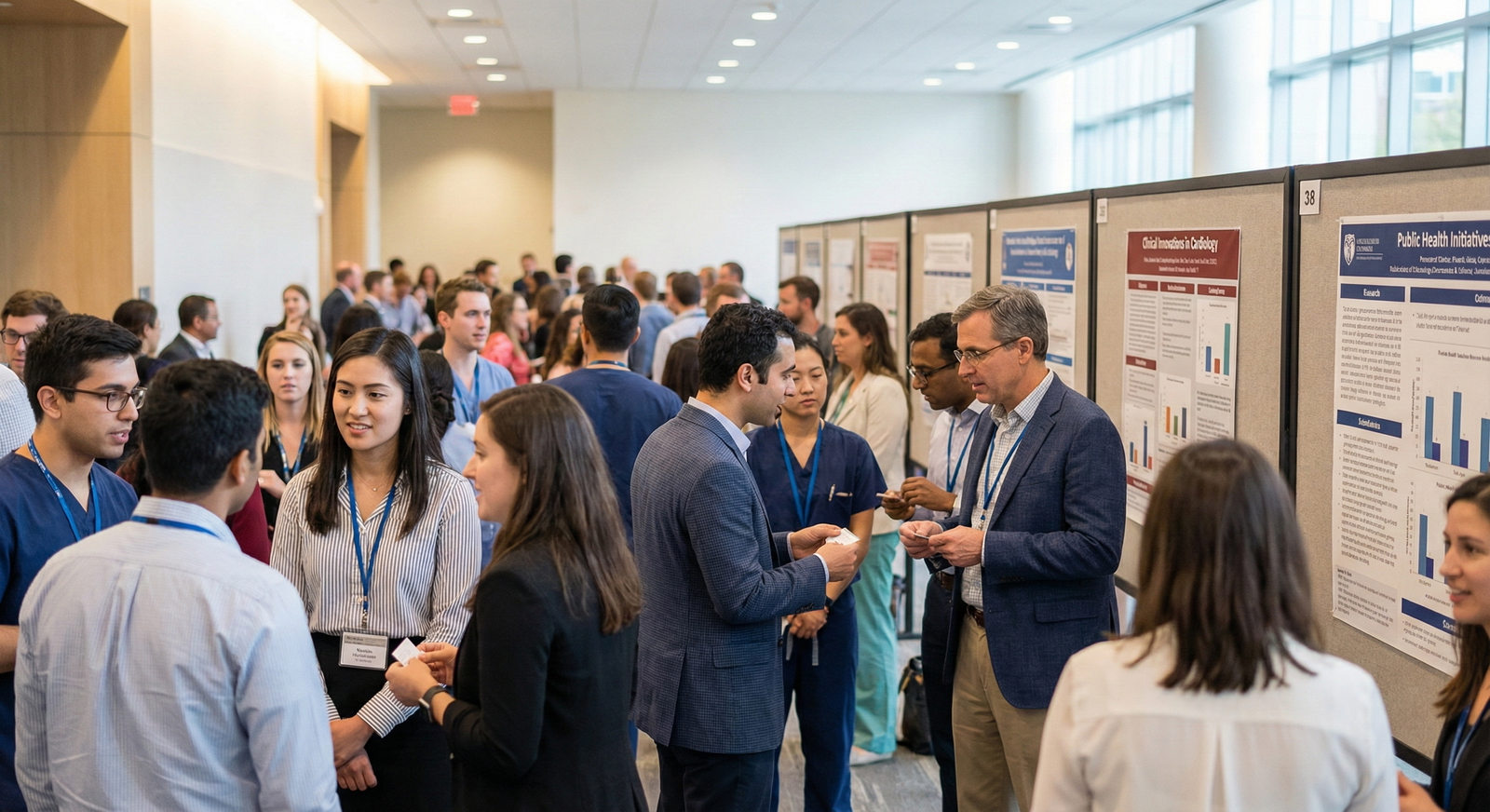
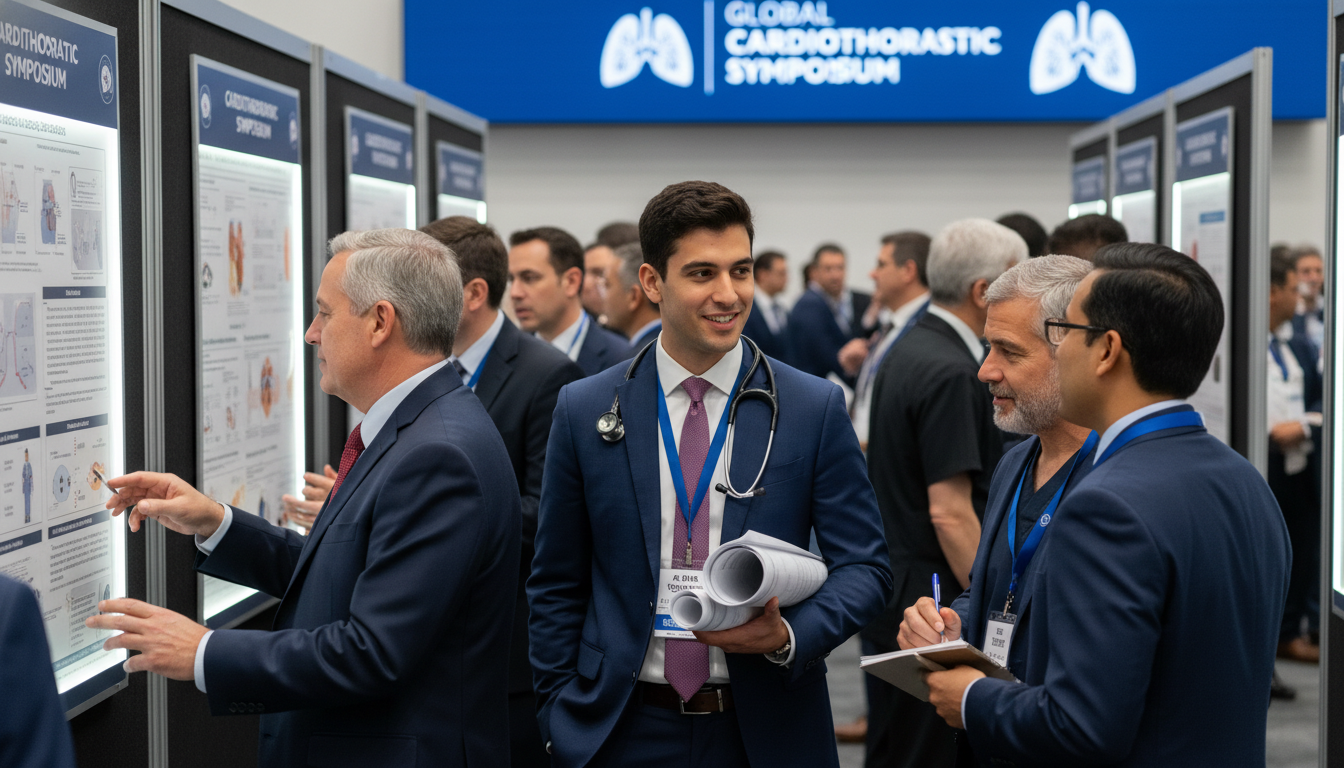
These are ideal settings for medical networking and conference networking.
How to maximize a conference:
Plan ahead
- Register for trainee events, mentoring programs, and resident/student tracks.
- Look up the faculty from programs you’re interested in. Note:
- Program director
- Division chief
- Key faculty publishing in your area of interest
Create a short, clear “identity statement” For example:
- “I’m a DO graduate currently a PGY-2 in general surgery with a focus on cardiothoracic surgery and a growing interest in outcomes research on mitral valve repair.”
Use structured events
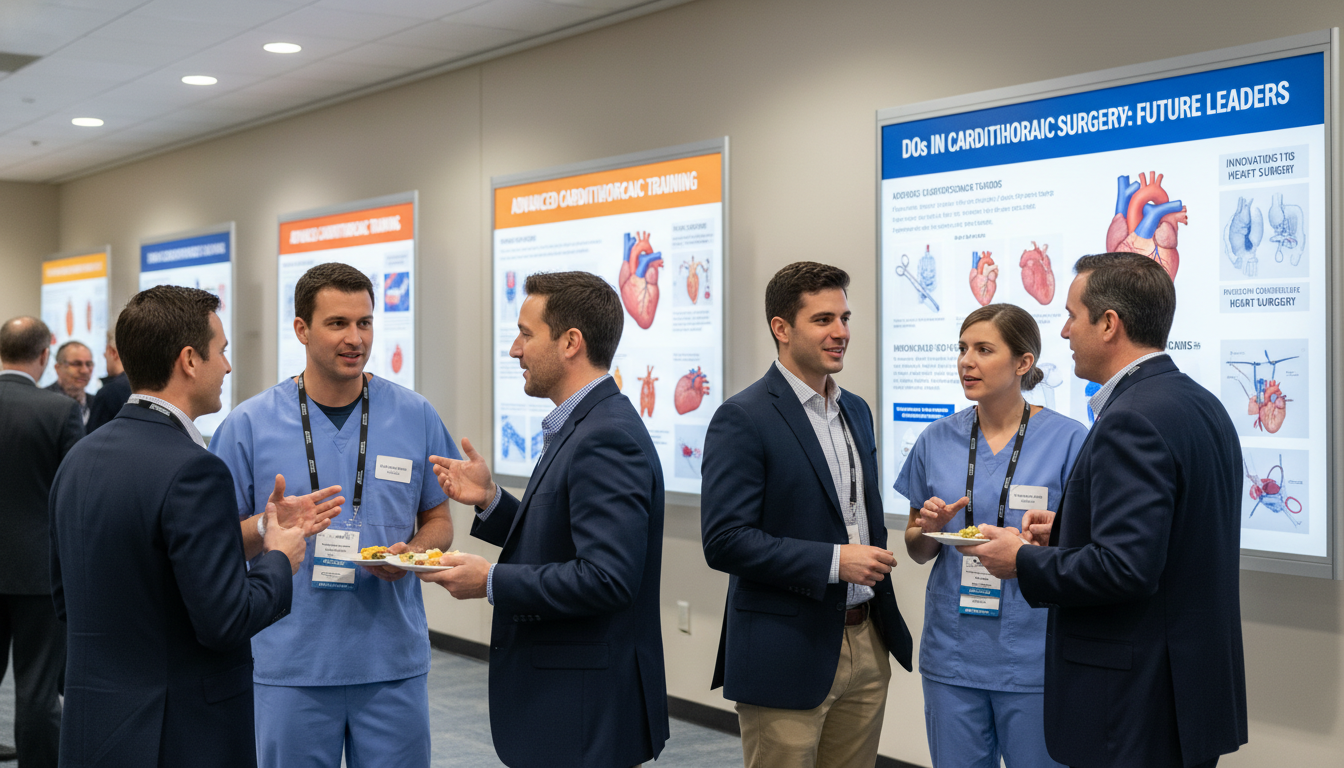
- Attend trainee luncheons, mentorship sessions, and program showcases.
- Prepare 1–2 thoughtful questions for talks given by surgeons you want to meet.
Approach faculty respectfully Good timing: after their talk, during poster sessions, or between sessions when they’re not in a rush.
Example script:
“Dr. Patel, my name is [Name], I’m a DO graduate and [current training level] very interested in cardiothoracic surgery. I appreciated your talk on [topic]. I’m particularly interested in [brief area]. Would you have any advice for a DO graduate planning a path toward cardiothoracic surgery residency? And may I follow up by email?”
Follow up after the conference
- Within 5–7 days, send a short email referencing your conversation.
- If they offered any specific suggestion (papers to read, people to contact), follow through and let them know when you’ve done it.
Conferences are where your name and face start to become recognized—critical in a small field like CT surgery.
Building Mentorship and Sponsorship in Cardiothoracic Surgery
In competitive, hierarchical specialties like cardiothoracic surgery, mentorship medicine and sponsorship are central to successful networking.
Mentors vs Sponsors
- Mentor: Guides you, advises you, helps you think through career decisions.
- Sponsor: Uses their reputation and influence to actively advocate for you (e.g., calling a program director, nominating you for a committee, recommending you for a position).
You want both—but they often start as mentors.
How to Find High-Impact Mentors as a DO Graduate
Look for mentors in these categories:
Clinical mentors
- CT surgeons who have seen you work in the OR/ICU/clinic.
- Can speak to your technical potential, work ethic, and team behavior.
Academic mentors
- Investigators involved in outcomes, basic science, or translational research in CT surgery or cardiology.
- Can help you produce abstracts, posters, and publications.
Career path mentors (general and DO-specific)
- Surgeons familiar with nontraditional or osteopathic pathways into CT surgery.
- Can advise on combining general surgery training, integrated programs, and fellowship steps.
If you cannot find a DO cardiothoracic surgeon locally (which is common), it’s still valuable to network with MD mentors. Many are supportive and can help bridge gaps in your network.
Starting and Sustaining a Mentoring Relationship
Initial contact:
- Be specific: “I’m a DO graduate and early trainee interested in cardiothoracic surgery. I’m hoping to learn from your career path and get feedback on my next steps.”
- Ask for a short, time-limited meeting (e.g., 15–20 minutes by Zoom or in person).
During the meeting:
- Come prepared with 3–5 concrete questions:
- “How would you structure training toward cardiothoracic surgery as a DO graduate?”
- “What rotations or experiences would you prioritize?”
- “How can I stand out as an applicant to a cardiothoracic surgery residency?”
- Share a brief overview of:
- Your education and DO background
- Clinical interests
- Research experience
- Geographic or life constraints, if relevant
After the meeting:
- Email a sincere thank-you and briefly state how you plan to act on their advice.
- Keep them updated every 3–6 months with major milestones:
- New rotation experiences
- Research output
- Exam scores or match results
Over time, many mentors naturally evolve into sponsors when they see consistency, humility, and follow-through.
Strategic Use of Online Platforms for Medical Networking
Online presence matters—especially if you’re a DO graduate trying to expand beyond your immediate institutional network.
LinkedIn and Professional Profiles
Use LinkedIn or a simple professional portfolio site to:
- Display your identity clearly:
- “DO graduate, general surgery resident with interest in cardiothoracic surgery and [sub-interest].”
- Highlight:
- Rotations in CT surgery
- Quality improvement and research
- Presentations and conference abstracts
- Leadership and teaching roles
Connect with:
- CT surgeons you’ve met in person (conferences, rotations)
- Residents and fellows in cardiothoracic surgery
- Program directors and coordinators (with a short, personalized note)
X (Twitter) and Academic Medicine
Many cardiothoracic surgeons and societies are active on X (Twitter).
Use it to:
- Follow key societies and journals, such as:
- @STS_Updates, @AATS_, @AnnalsCTSurgery, @JTCVS
- Engage professionally:
- Comment thoughtfully on new papers
- Share your own poster or publication (include conferences’ official hashtags)
- Retweet or like major updates in heart surgery training
Networking tip: If you attend a meeting, tweet a brief reflection on a talk (respecting conference social media policies) and tag the speaker. Then, follow up with a brief DM or email: “I appreciated your talk at STS and shared a few key points on X.”
Email Etiquette for Networking
Strong professional emails are one of the most underrated medical networking tools:
Professional subject lines:
- “DO graduate with interest in cardiothoracic surgery – request for brief advice”
- “[Conference name] follow-up – [Your Name], DO”
Keep it concise:
- Who you are (DO graduate + current role)
- Your CT interest and what you’re asking for (advice, rotation, research opportunity)
- Why you’re reaching out to this specific person
Attach a one-page CV if relevant (clearly labeled:
Lastname_Firstname_CV.pdf).
Putting It All Together: A Stepwise Networking Plan for DO Graduates
To make this actionable, here is a staged plan for DO graduates pursuing a cardiothoracic surgery path.
Early Stage (Medical School / Early Residency)
- Clarify interest in CT surgery; learn the basic training pathways (integrated vs traditional).
- Connect with any local CT surgeons, even if limited.
- Join national societies as a student or resident member.
- Attend at least one regional or national meeting if finances allow (seek travel grants).
- Start small research or QI projects related to cardiac, thoracic, or vascular surgery.
Mid Stage (Applying for General Surgery or Cardiothoracic Pathway)
- Leverage every rotation that touches cardiothoracic surgery.
- Obtain 1–2 strong letters from surgeons who know your clinical work.
- Use conference networking to introduce yourself to potential program directors and faculty.
- Ask mentors to review your personal statement and CV, highlighting your DO background as asset plus rather than a limitation.
Later Stage (General Surgery Resident Targeting CT Fellowship or Integrated Program Applicant)
- Seek out CT rotations and electives early and often.
- Produce tangible academic work (posters, papers) in CT-related topics.
- Maintain regular contact with 2–3 key mentors who can become sponsors.
- Actively build relationships with CT fellows and residents; they are often trusted voices in selection discussions.
- When applying:
- Ask mentors where you are realistically competitive.
- Request that they reach out directly to a few program directors on your behalf when appropriate.
FAQs: Networking in Medicine for DO Graduates in Cardiothoracic Surgery
1. As a DO graduate, do I need to disclose or emphasize my DO background when networking?
You don’t need to apologize for or over-explain your DO degree. Simply state it confidently as part of your identity: “I’m a DO graduate and current general surgery resident with strong interest in cardiothoracic surgery.” If someone asks about osteopathic training, answer briefly and positively. Let your clinical performance, professionalism, and consistency speak louder than the degree distinction.
2. How can I network effectively if I can’t afford to attend many national conferences?
Focus on what you can access:
- Attend local and regional cardiology, surgery, and ICU conferences where CT surgeons are likely present.
- Use virtual conference options—many now offer discounted trainee access or recorded sessions.
- Lean into online medical networking:
- Engage on X with CT surgery societies and leaders.
- Email faculty whose work you appreciate, referencing specific papers or talks.
- Ask mentors if you can join virtual research meetings or clinical conferences.
3. What if I’m introverted or uncomfortable approaching senior surgeons?
Start with smaller, structured settings:
- Trainee luncheons, mentoring sessions, or small-group workshops at conferences.
- One-on-one Zoom or in-person meetings arranged by email (often easier than cold in-person approaches).
- Prepare a short script introducing yourself and practice it a few times.
Remember that most surgeons remember being trainees themselves; many are surprisingly approachable when you show authentic interest, preparation, and respect for their time.
4. Can strong networking really compensate for weaker exam scores or a less traditional path?
Networking cannot fully erase significant objective deficits, but it can contextualize them and highlight your strengths. A respected mentor or sponsor can:
- Explain to program directors why a particular score doesn’t reflect your current ability.
- Advocate for an interview you might not otherwise receive.
- Offer you research or clinical opportunities that strengthen your application.
For DO graduates navigating the osteopathic residency match and later the cardiothoracic surgery residency pathway, networking is not optional—it’s leverage. Combined with strong clinical work and genuine dedication to heart surgery training, it can open doors that credentials alone might not.