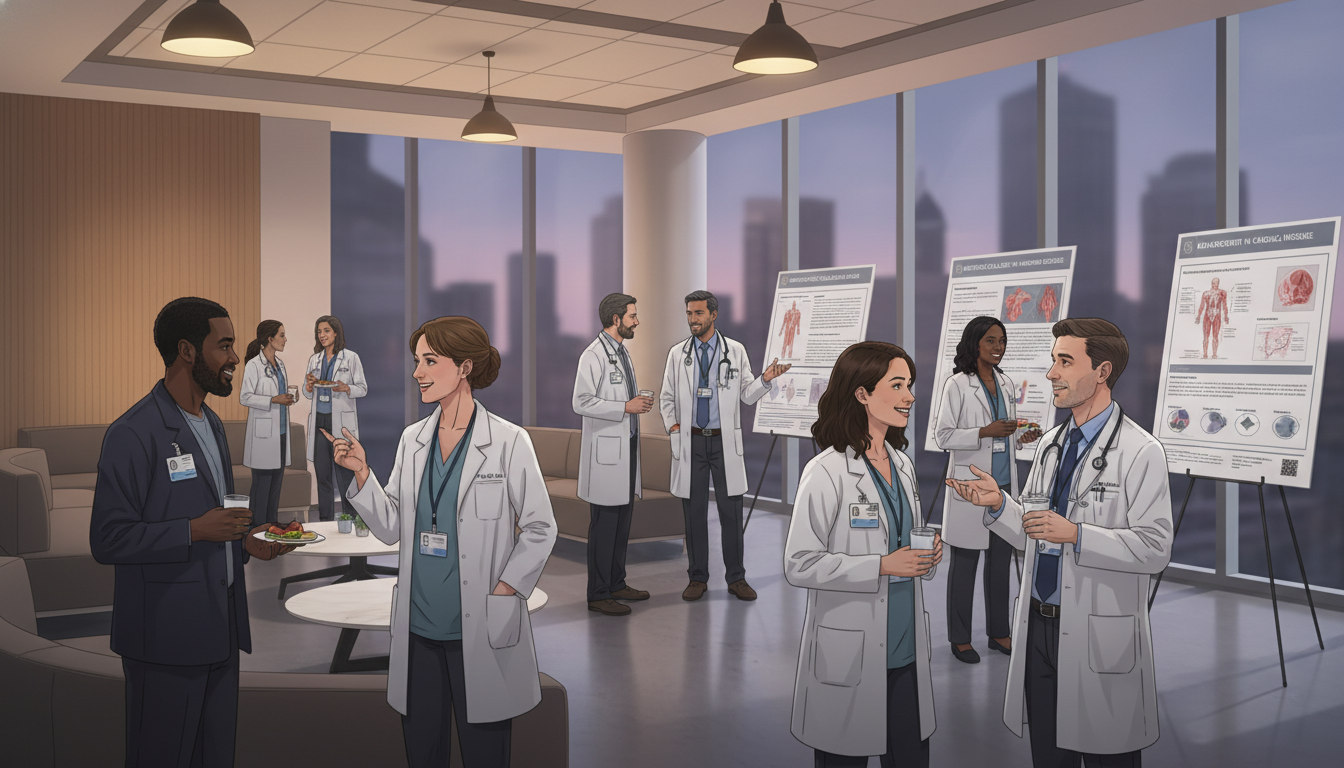
Why Networking Matters So Much for DO Graduates in Clinical Informatics
For a DO graduate moving into clinical informatics, networking in medicine isn’t a “nice to have”—it is a core career strategy.
You are entering a niche field where:
- The number of positions is growing but still relatively small
- Many jobs and fellowships are never formally advertised
- Hiring decisions are heavily influenced by trust, reputation, and prior collaboration
- Your DO background may not be fully understood by health IT leaders, CMIOs, and tech-focused teams
Strategic medical networking can:
- Strengthen your osteopathic residency match prospects (if you’re applying or transitioning)
- Help you identify and secure a clinical informatics fellowship
- Open doors to health IT training, quality improvement (QI), and data projects
- Build a support system of mentors in mentorship medicine
- Create collaborations that make you more competitive for future leadership roles in informatics, such as CMIO, CNIO, or Director of Clinical Analytics
For DO graduates, networking is also an opportunity to educate others on osteopathic training, highlight the value of holistic, systems-based thinking, and dispel outdated biases that sometimes persist in academic or tech-heavy environments.
This article will walk you through how to build meaningful, practical networks tailored specifically to a DO graduate interested in clinical informatics—from residency and fellowship through early career.
Positioning Yourself: How a DO Graduate Can Stand Out in Clinical Informatics
Before you network, you need a clear narrative. People remember you not by your full CV but by a short, coherent story.
Craft a Clear Professional Narrative
As a DO graduate in informatics, you want a 20–30 second introduction (your “professional headline”) that hits three points:
- Who you are clinically
- What you do or want to do in clinical informatics
- What problems you’re passionate about solving
Example:
“I’m a DO-trained internist with a strong interest in clinical informatics. During residency, I led several EHR optimization and population health dashboard projects, and I’m now focused on how we can use data and decision support tools to reduce diagnostic delays and clinician burnout.”
For a student or early resident:
“I’m a DO graduate currently in my preliminary year, working toward a clinical informatics fellowship. I’m especially interested in integrating osteopathic whole-person care principles into decision support tools and improving how EHRs support communication and continuity of care.”
This narrative becomes the foundation of your networking—used in emails, at conferences, during elevator pitches, and in interviews.
Translate DO Strengths into Informatics Language
Osteopathic training gives you strengths that are highly relevant to informatics:
- Systems-based, holistic thinking → Systems design, workflow analysis, population health
- Emphasis on function and structure → Process mapping and optimization of clinical workflows
- Strong focus on communication and empathy → Effective stakeholder engagement and change management
- Experience in community and underserved settings → Insightful design of equitable digital health solutions
When networking:
- Don’t simply say, “I’m a DO graduate.”
- Add: “My DO training really reinforces the systems and whole-person thinking I use when designing and evaluating EHR tools and health IT solutions.”
You’re not just defending the DO degree—you’re leveraging it as an asset for informatics.

Building Your Core Network: From Residency Through Fellowship
Your most powerful networking begins long before you apply to a clinical informatics fellowship or leadership role. It starts where you are now: in residency or early post-graduate training.
Step 1: Map Your Current Network
List your existing connections in three circles:
Inner circle (high-trust):
- Residency program director and associate PDs
- Core faculty who know your clinical work
- Any informatics, QI, or EHR committee members you’ve worked with
- Osteopathic faculty advocates or DO leadership at your institution
Middle circle (moderate familiarity):
- Residents above and below your year
- Fellows in other specialties (e.g., cardiology, EM, ICU, peds)
- IT analysts you’ve emailed or met about EHR issues
- Quality, patient safety, or population health staff
Outer circle (weak ties / high opportunity):
- Alumni from your DO school now working in health IT or informatics
- Faculty in departments you’ve rotated through but did not work closely with
- Speakers you met briefly at local events or grand rounds
- LinkedIn or professional contacts who accepted your connection but you rarely interact with
Your networking plan is simply about intentionally moving people from the outer/middle circles toward your inner circle through consistent, value-adding contact.
Step 2: Become Visible in Institutional Informatics Work
Rather than only talk about clinical informatics, invest in doing it where you are:
- Join or volunteer for:
- EHR optimization committees
- Clinical decision support (CDS) workgroups
- Order set or documentation template redesign projects
- Patient safety or QI committees involving data or workflow redesign
- Ask your program leadership:
- “Are there any informatics projects I can help with—EHR build, QI dashboards, or documentation improvement efforts?”
Each project gives you:
- Concrete experiences to discuss in networking conversations
- Names of IT analysts, CMIOs, CNIOs, and QI leaders you can connect with
- Opportunities to present your work locally (then regionally or nationally)
Step 3: Identify At Least 2–3 Mentors in Mentorship Medicine
For a DO graduate in clinical informatics, you ideally build a mentorship team, not just a single mentor:
Clinical mentor (ideally a DO or DO-friendly MD)
- Helps you navigate residency dynamics, rotation selection, and osteopathic residency match issues if you’re still in transition
- Advocates for you when you need schedule flexibility for informatics projects
Informatics mentor
- May be the CMIO, a physician builder, a QI director, or a data scientist embedded in clinical departments
- Guides you on projects, publications, and the clinical informatics fellowship application process
Peer mentor
- Another resident/fellow interested in informatics or already in a health IT pathway
- Provides tactical advice: which electives to choose, which conferences are worth it, what courses or certificates actually help
You can initiate a mentorship conversation like this:
“I’m a DO-trained resident with a strong interest in clinical informatics and long-term plans for a fellowship. I really admire your work on [X project/role]. Would you be open to a brief meeting to discuss how I might get involved in informatics and get feedback on my trajectory?”
Be clear that you will:
- Respect their time
- Come with specific questions
- Follow through on agreed next steps
Conference & Online Networking: Where Informatics Relationships Are Built
Conferences and online communities are critical for medical networking in informatics, especially if your home institution has limited resources or few informatics leaders.
High-Yield Conferences and Organizations
Some key venues and organizations where clinical informatics professionals gather:
- AMIA (American Medical Informatics Association)
- Annual Symposium (very high-yield for clinical informatics networking)
- Clinical Informatics Conference (CIC)
- HIMSS (Healthcare Information and Management Systems Society)
- Large but powerful for exposure to vendors, hospital IT leaders, and innovation groups
- Specialty-specific informatics tracks (e.g., ACEP, ACP, AAP informatics/QI sessions)
- Regional or system-level health IT training workshops and bootcamps
- Osteopathic associations (AOA and specialty colleges) that now increasingly include informatics and digital health content
When planning conference networking:
- Review the attendee and speaker lists in advance
- Identify 5–10 people you’d like to meet (prioritize clinical informaticists, fellowship leaders, DO-friendly programs)
- Send short emails or LinkedIn messages a week or two before:
“I’m a DO graduate in internal medicine with a strong interest in clinical informatics and plans for fellowship. I’ll be attending AMIA this year and noticed you’re speaking on [topic]. Would you have 10 minutes for a quick conversation about your path into informatics and any advice you have for DO residents entering the field?”
Not everyone responds—but the handful who do can transform your trajectory.
How to Work a Conference Strategically as a DO Graduate
At the meeting itself:
Use your DO identity confidently:
- “I’m a DO-trained resident in [specialty] focused on clinical informatics.”
- If someone seems unsure what DO means, have a 1-sentence clarification ready: “DO training is fully licensed physician training with added focus on systems, musculoskeletal medicine, and holistic, patient-centered care.”
Go to smaller events:
- Breakfast sessions, roundtables, workshops, and poster sessions are often far better for meaningful conversations than large keynotes.
Ask good, concise questions:
- “What do you wish you had started earlier in your path toward clinical informatics?”
- “How do you balance clinical work and informatics responsibilities at your institution?”
- “Have you worked with DO graduates in your fellowship or team? Any specific advice for DOs entering this field?”
Capture notes immediately:
- After each interaction, jot 1–2 bullet points: name, role, key advice, any offer they made (e.g., “Happy to review your CV,” “We’re recruiting for a new project,” etc.).
Follow up within 3–5 days:
- Remind them where you met, reference something specific from your conversation, and propose a next step if appropriate (e.g., a 20-minute Zoom to discuss a fellowship, a chance to share your CV, or interest in joining a project).
This is conference networking with intent—not just collecting badges or business cards.
Leveraging Online Communities and Social Platforms
For an aspiring clinical informaticist, the online world is an extension of your professional identity:
LinkedIn
- Optimize your headline:
- “DO Internal Medicine Resident | Aspiring Clinical Informaticist | Health IT & EHR Optimization”
- Post or share articles about digital health, IT safety, EHR usability, or data-driven QI. Add a short commentary showing your thought process.
- Join groups related to AMIA, HIMSS, and clinical informatics.
- Optimize your headline:
X (formerly Twitter)
- Follow hashtags like #medtwitter, #ClinInf, #AMIA, #HIT, #DigitalHealth.
- Engage politely with content posted by informatics leaders. A thoughtful comment or question can lead to DMs and real-world connections.
Slack, Discord, and listservs
- Many clinical informatics fellows and programs maintain informal channels. Ask mentors if there are trainee communities you can join.
Online presence is especially vital if:
- You are at a smaller osteopathic institution with limited informatics resources
- You want to signal interest early to potential clinical informatics fellowship directors
- You are exploring nontraditional roles (startups, vendor positions, data science roles, or hybrid clinical/IT positions)

Targeted Networking for the Clinical Informatics Fellowship and Beyond
Once you are more certain you want a career in clinical informatics, your networking needs to align with specific outcomes: a strong application, a good match with a fellowship, and a realistic early-career plan.
Understanding How the Clinical Informatics Fellowship Market Works
Clinical informatics is unusual compared to the traditional osteopathic residency match:
- It is an ACGME-accredited subspecialty open to both MD and DO physicians
- Fellowship positions are limited and competitive, but many programs are actively seeking diverse applicants
- There is more variability in:
- Program structure (IT-heavy vs. QI-heavy vs. analytics-focused)
- Clinical expectations (some programs require ongoing clinical work; others integrate more non-clinical time)
- Whether they have historically trained DOs
Networking helps you:
- Identify DO-friendly programs and mentors
- Learn which programs align with your interests (e.g., data science, EHR usability, AI/ML, population health, health policy)
- Get informal feedback on your readiness (CV, research, project portfolio)
How to Approach Programs and Fellowship Leaders
Fellowship directors and informatics leaders are busy, but they are usually enthusiastic about trainees who show genuine interest and initiative.
A structured approach:
Research programs thoroughly
- Program websites, AMIA and ACGME listings
- Publications or talks by faculty
- Any evidence of DO graduates in their alumni (often on program sites or LinkedIn)
Send a focused introductory email (1–3 years before you want to start fellowship):
Subject: DO IM Resident Interested in Clinical Informatics Fellowship at [Institution]
Dear Dr. [Name],
I’m a DO-trained [PGY-?] resident in [specialty] at [your institution] with a strong interest in clinical informatics and plans to pursue fellowship. My current work includes [brief description of 1–2 key informatics/QI/data projects].
I’m particularly drawn to [Institution] because of your work in [specific area, e.g., EHR usability, CDS, population analytics]. I’m hoping to learn more about your fellowship and any suggestions you might have for how a DO resident like me can best prepare.
Would you be open to a brief 15–20 minute conversation in the coming weeks?
Best regards,
[Full name, DO]
[Residency program, contact info, LinkedIn]
Prepare smart questions for that conversation:
- “What backgrounds do your most successful fellows typically have?”
- “How do fellows balance clinical time and informatics work?”
- “How have DO graduates or residents similar to me integrated into your program?”
- “What experiences would you recommend I pursue in the next 12–18 months to be a strong candidate?”
Maintain light ongoing contact
- Send a brief update 1–2 times per year:
- “I wanted to share that I completed [X project], presented at [Y conference], and I’m still very interested in your program.”
- Send a brief update 1–2 times per year:
This way, when your formal application arrives, you’re no longer a stranger—you’re a known, motivated DO candidate with a track record.
Using Projects as Networking Currency
In clinical informatics, your projects are your business card.
Types of projects that carry networking weight:
- EHR documentation burden reduction initiatives
- Order set redesign to improve evidence adherence or reduce errors
- Clinical decision support tool implementation and evaluation
- Predictive model integration (e.g., sepsis alert, readmission risk) with outcomes analysis
- Telehealth workflows and digital care pathways
- Data dashboards for quality metrics and population health
Use these projects to:
- Present posters or talks at AMIA, specialty conferences, and DO association meetings
- Co-author papers with mentors and IT partners
- Share short, de-identified case studies or lessons learned on LinkedIn or in educational forums
Every presentation or publication is both scholarship and networking: people will come talk to you, and you’ll have a natural way to introduce yourself and your interests.
Long-Term Networking Habits for a Sustainable Informatics Career
Networking is not a one-time push for a DO graduate residency position or a single fellowship cycle. It is an ongoing professional habit.
Build a Reputation for Reliability and Value
In informatics, your reputation spreads quickly through small circles of CMIOs, IT directors, and QI leaders.
You want to be known as:
- The DO physician who shows up, follows through, and delivers
- Someone who can translate between clinical teams and technical teams
- A collaborator who shares credit and communicates clearly
Practical habits:
- Send promised documents or follow-up emails within 24–48 hours
- If you can’t meet a deadline, proactively communicate and renegotiate it
- Acknowledge the contributions of IT analysts, nurses, and other team members in your talks and emails
Maintain a Simple Relationship Management System
Avoid losing track of your network:
Maintain a simple spreadsheet or note:
- Name, role, institution
- How you met
- Last contact date
- Main topic/interest
- Potential future collaboration or ask
Calendar gentle reminders:
- Every 6–12 months, send a brief update or a note of appreciation
- Forward articles or events that might be relevant to their interests
You don’t need to be pushy; you just need to be present.
Give Back Early and Often
Even as a trainee or early-career physician, you can contribute to medical networking by:
- Helping junior DO students or interns interested in informatics
- Sharing curated resources (courses, books, podcasts, AMIA sessions)
- Offering to review abstracts or practice talks for peers
- Serving on trainee or early-career committees in AMIA, HIMSS, or osteopathic organizations
This is how you transition from “person seeking help” to “colleague” in the eyes of senior leaders.
FAQs: Networking in Medicine for DO Graduates in Clinical Informatics
1. As a DO graduate, will I face disadvantages when pursuing a clinical informatics fellowship or health IT leadership role?
Biases still exist in some corners of academic medicine, but clinical informatics is generally more skills- and project-driven than degree-driven. Many DO graduates are successful in informatics careers. The key is to:
- Demonstrate strong clinical performance
- Build a solid portfolio of informatics or health IT projects
- Network directly with programs and informatics leaders to show your capabilities
- Articulate how your DO training strengthens your systems-level and patient-centered thinking
Strategic networking can significantly reduce the impact of any residual bias by letting people see your work and your professionalism directly.
2. How early should I start networking if I’m interested in clinical informatics?
Ideally:
- During medical school: join informatics or QI projects; attend a local or virtual conference if possible
- During internship/PGY-1: identify 1–2 informatics or QI mentors; start small projects
- By PGY-2: attend at least one major conference (e.g., AMIA or a specialty meeting with an informatics track); reach out to potential fellowship programs
- By PGY-3+: refine your goals, expand your project portfolio, and maintain regular contact with mentors and program leaders
If you’re starting later, it’s still very possible—just focus on concentrated projects and intentional medical networking.
3. What if my residency or hospital has no visible clinical informatics program?
You can still build a strong informatics network:
- Look for QI, patient safety, or data analytics teams and volunteer there
- Connect virtually with AMIA groups, online fellow communities, and LinkedIn networks
- Ask your program director if you can do an away elective or a virtual rotation focused on informatics or health IT training
- Reach out to external mentors—CMIOs, fellowship directors, or DO alumni in informatics—who might guide you remotely
Your institution doesn’t have to define your informatics opportunities; your network can.
4. How can I balance clinical demands with the time required for networking and projects?
Time is tight in residency and early practice, but you can:
- Integrate informatics into your existing work (e.g., turn recurring clinical pain points into projects)
- Protect small, consistent time blocks (e.g., 1–2 hours per week for outreach, reading, or project work)
- Choose high-yield conferences and meetings rather than attending too many events
- Use asynchronous tools (email, LinkedIn, short Zoom calls) instead of frequent in-person meetings
Discuss your informatics goals with your program leadership—many programs are supportive when they see a clear, well-structured plan that won’t compromise your clinical performance.
Networking in medicine for a DO graduate in clinical informatics is not about aggressive self-promotion; it is about building authentic, mutually beneficial relationships grounded in your genuine interest in better, safer, more humane care through technology. With a clear narrative, strategic use of conferences and online spaces, thoughtful mentorship, and a steady habit of giving back, you can create a powerful network that supports your residency, fellowship, and lifelong career in clinical informatics.