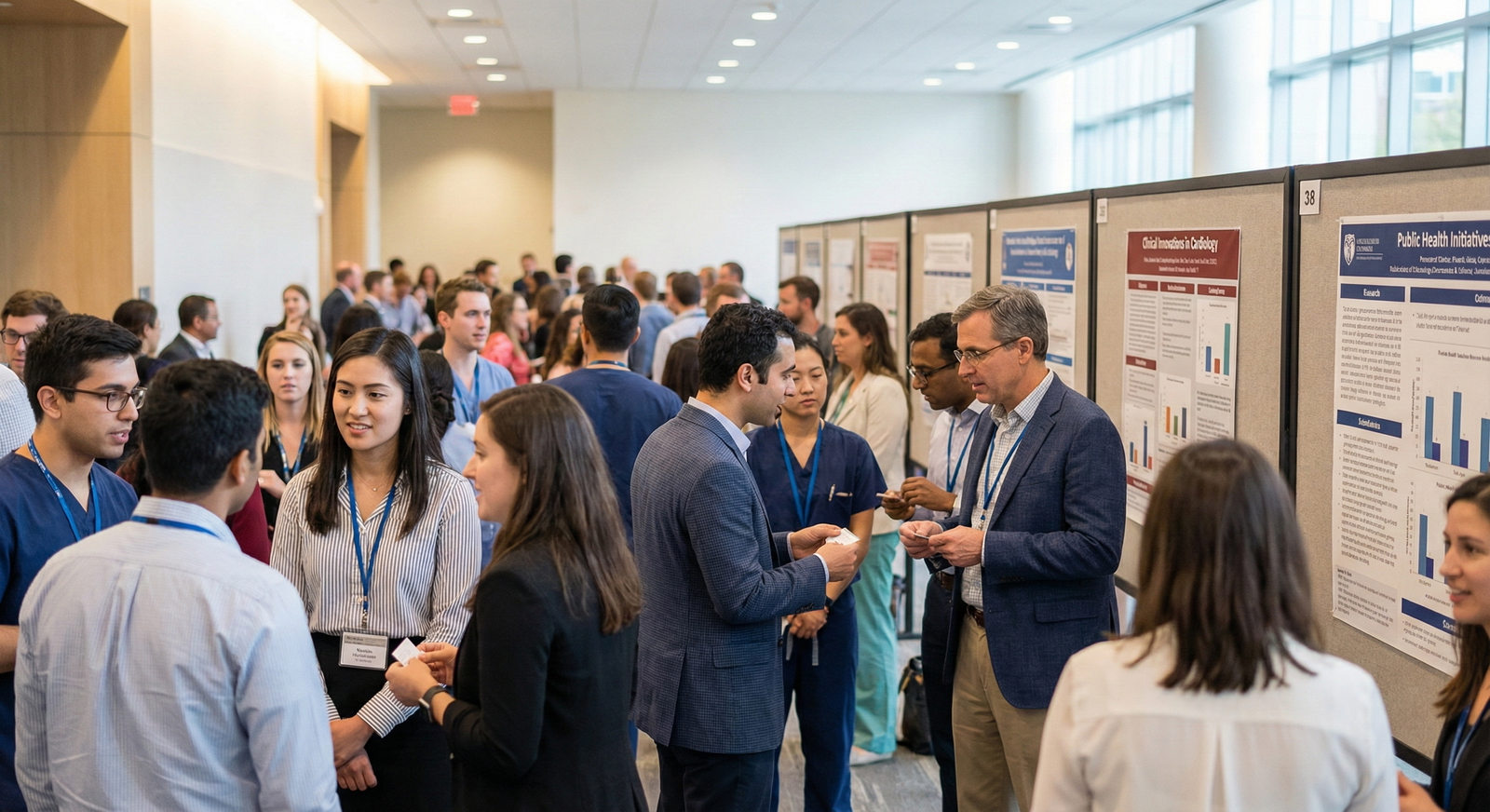
Why Networking Matters Even More for a DO Graduate in Orthopedic Surgery
As a DO graduate interested in orthopedic surgery, networking in medicine is not optional—it is a strategic necessity. Orthopedic surgery is one of the most competitive specialties, and DO graduates still encounter subtle (and sometimes overt) bias in certain programs and regions. While the gap has narrowed, the playing field is not fully level.
Networking can help you:
- Get on the radar of orthopedic surgery residency programs early
- Overcome DO-related skepticism by building real relationships
- Learn about unadvertised positions, research opportunities, and away rotations
- Secure strong, personalized letters of recommendation from influential mentors
- Gain insight into what specific programs truly value in their ortho applicants
In other words, networking can be the difference between an average osteopathic residency match outcome and a successful ortho match that truly fits your goals.
This article breaks down how to build a practical, strategic networking plan tailored to a DO graduate pursuing orthopedic surgery residency—starting in medical school and extending into residency life and challenges.
Understanding the Unique Networking Landscape for DO Orthopedic Applicants
Before you build your networking strategy, it helps to understand the reality of the orthopedic surgery residency ecosystem for DO graduates.
The DO Factor in Ortho: Challenges and Opportunities
Orthopedic surgery remains highly competitive for all applicants, but DOs may face:
- Fewer DO-friendly ortho programs in certain geographic areas
- Variable understanding of osteopathic training among program leadership
- Less representation in some academic orthopedic departments
At the same time, there are significant opportunities:
- Numerous osteopathic-focused and DO-friendly orthopedic surgery residency programs
- Growing recognition of DO graduates’ skills in musculoskeletal medicine
- Strong osteopathic alumni networks in community and academic ortho settings
Networking in medicine is where these challenges can be mitigated and opportunities amplified. Thoughtful, proactive relationship-building can open doors that your application alone might not.
What Networking Actually Means (and Doesn’t Mean)
Networking is often misunderstood as self-promotion or superficial small talk. In medicine—especially in orthopedic surgery—effective networking means:
- Cultivating genuine professional relationships
- Being known as reliable, coachable, hard-working, and collegial
- Providing value (e.g., research help, teaching, clinical contributions)
- Staying on people’s radars over time without being transactional
It does not mean:
- Harassing faculty for favors
- Name-dropping without substance
- Sending generic emails to dozens of surgeons hoping for a rotation
For a DO graduate, successful medical networking is about consistently showing people that you belong in their specialty—clinically, academically, and culturally.
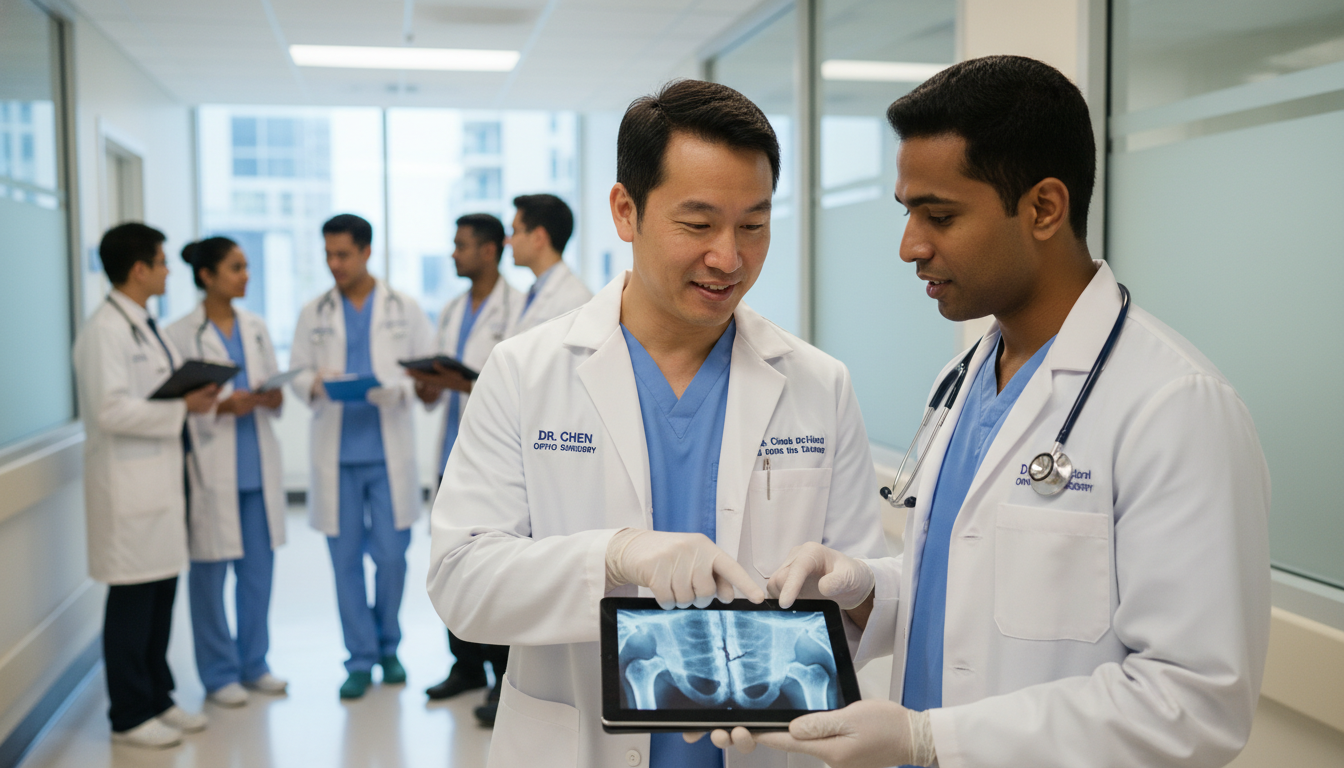
Building Your Core Network Early: Medical School and Rotations
Your first and most critical networking environment is right in front of you: your own medical school and early clinical experiences. Many DO graduates underestimate how much leverage they can gain from their home institution and early rotations.
Step 1: Map Your Existing Orthopedic Network
Before you reach out blindly, get organized. Create a simple spreadsheet and list:
- Orthopedic surgeons at your home institution (DO and MD)
- Alumni from your DO school who matched into orthopedic surgery
- Orthopedists you’ve met during shadowing, conferences, or local hospitals
- Research mentors in musculoskeletal medicine or related fields
For each person, track:
- Role (attending, fellow, resident)
- Institution and subspecialty (sports, trauma, spine, joints, etc.)
- How you know them
- Last contact date and next potential touchpoint
This turns networking in medicine from something vague into a manageable, trackable process.
Step 2: Become Visible on Your Home Orthopedic Service
If your medical school has an affiliated orthopedic service, treat it as your primary networking arena.
Actionable strategies:
Shadow early and often
- Ask the departmental coordinator if any faculty allow pre-clinical or early clinical students to shadow in clinic or OR.
- Show up early, stay late, and ask thoughtful questions without disrupting workflow.
Identify and attach to 1–2 potential mentors
- Notice which attendings or residents enjoy teaching.
- After a positive interaction, follow up with a concise email:
- Thank them for the experience
- Mention one specific case or teaching point
- Express interest in more exposure or research
Make residents your allies
- Residents often have enormous influence on how faculty perceive you.
- Be “low-maintenance”: anticipate needs, help with notes, stay engaged in cases.
- Ask for advice on building an orthopedic portfolio as a DO.
Example:
You spend a week shadowing a PGY-3 resident on call. You show up 10–15 minutes early, help set up traction, volunteer to follow up a patient’s post-op imaging, and ask for reading recommendations. That resident later tells faculty, “She’s really solid, motivated, and teaches herself.” That single impression can carry through to your ortho match year.
Step 3: Use Required Rotations as Networking Opportunities
Even if your core rotations are not in orthopedics, they can still support your orthopedic surgery residency ambitions:
- Surgery rotation: Show strong basic surgical skills (sterile technique, suturing, professionalism). Surgeons consistently talk to each other—building a reputation as a hard-working student on general surgery can indirectly reach the ortho department.
- Internal medicine / family medicine: Emphasize your interest in MSK medicine, joint exams, and back pain management. These attendings may later write letters or advocate for you as a well-rounded candidate.
Your behavior across all rotations contributes to your “brand”: someone prepared for the rigor, teamwork, and communication demands of orthopedic surgery.
Step 4: Targeted Research as a Networking Tool
Research is not only about publications—it’s a powerful networking strategy.
For DO graduates pursuing orthopedic surgery:
- Look for projects in:
- Sports medicine, trauma, arthroplasty, spine, pediatric ortho
- MSK radiology, rehabilitation, outcomes research
- If your school has limited ortho research:
- Seek collaborative projects with nearby academic centers
- Contact alumni in ortho residency and ask if their programs have ongoing projects needing help
- Consider remote data or chart-review projects
When you work with an attending on research, you gain:
- Repeated interactions over months
- Opportunities to show reliability and follow-through
- A potential strong letter writer for your orthopedic residency application
- A natural reason to stay in touch over time
Conference Networking: Turning Events into Real Relationships
Medical conferences are some of the richest opportunities for orthopedic-focused networking in medicine—if you prepare properly. As a DO graduate, strategic conference networking can increase visibility with programs that might not otherwise see your application as more than a file.
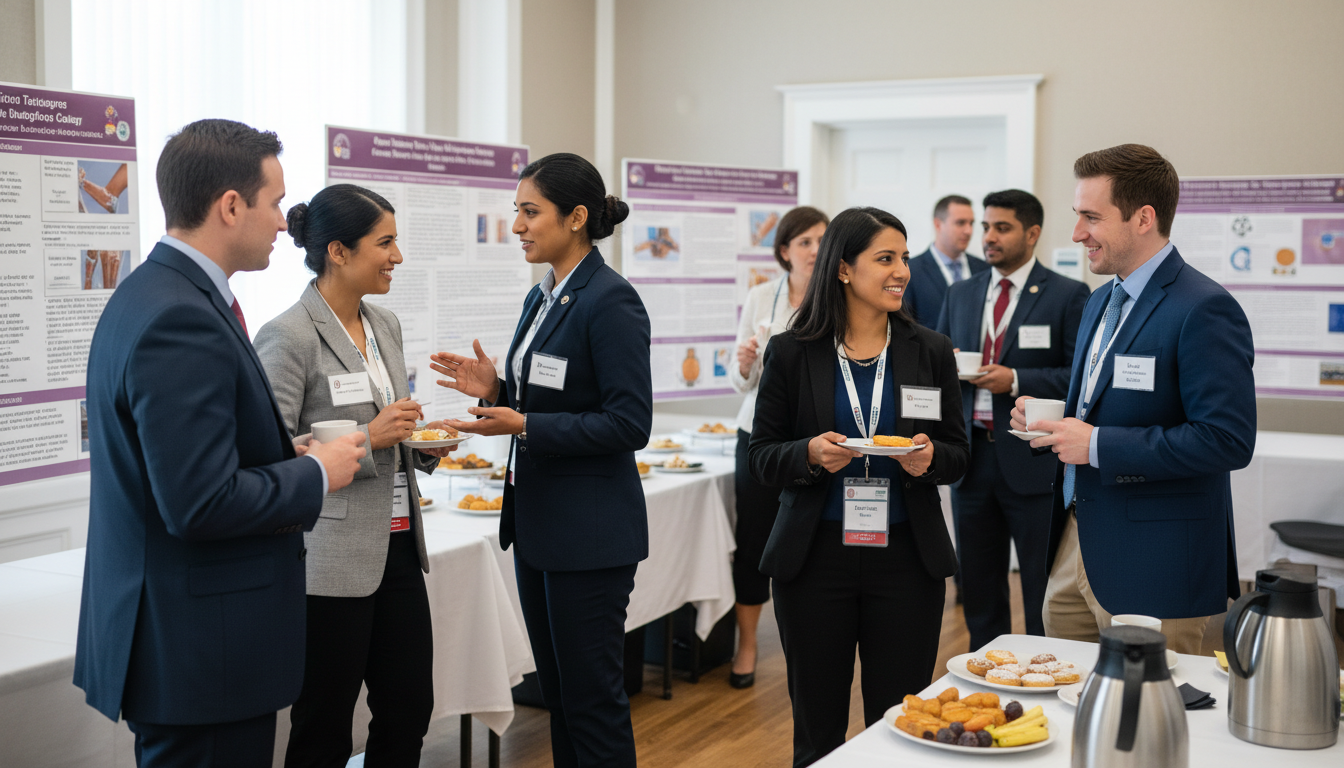
Choosing the Right Conferences
Prioritize events that align with orthopedic surgery and medical education:
- National or regional orthopedic meetings (e.g., AAOS; check DO-friendly subgroups and regional societies)
- Specialty-focused meetings: sports, trauma, spine, or arthroplasty societies
- Osteopathic-specific orthopedic or surgical conferences
- Medical student or resident-focused orthopedic symposia
Because travel is expensive, treat conferences as investments: choose the ones most likely to connect you with programs where you’re serious about matching.
Prepare Before You Go
Conference networking is won before you arrive:
Review the attendee list and program (if available):
- Identify programs and faculty where you might want to rotate or apply.
- Highlight DO-friendly or historically DO-supportive programs.
Reach out in advance (strategically):
- Email 3–5 targeted faculty or program directors:
- Introduce yourself as a DO student/resident interested in orthopedic surgery.
- Mention a specific talk they’re giving or paper they published.
- Ask if you might briefly introduce yourself at their poster/talk or during a break.
- Keep it respectful and brief; not all will respond, and that’s okay.
- Email 3–5 targeted faculty or program directors:
Prepare your 20–30 second introduction (your “professional pitch”):
- Name, school, graduation year
- Interest in orthopedic surgery (and any early subspecialty leanings)
- One or two relevant highlights: research area, leadership, or osteopathic background
- A simple ask: “I’d love any advice you have for DO graduates applying ortho.”
Example:
“Hi Dr. Smith, I’m Alex Rivera, a fourth-year DO student from [School]. I’m applying to orthopedic surgery this cycle with a strong interest in sports medicine. I’ve been working on a project on ACL outcomes in adolescent athletes. I’d really appreciate any insight you have on how DO graduates can best position themselves for the orthopedic match.”
How to Network in the Moment
While at the conference:
Attend sessions where key people are speaking
- Ask one thoughtful, concise question at the end (avoid showing off).
- After the talk, introduce yourself briefly: “I asked the question about X…”
Use poster sessions as low-pressure networking spaces
- Start with: “Hi, I’m [Name], a DO student interested in ortho. Could you walk me through your project?”
- If they’re from a program on your target list, mention your interest and ask about their residency culture.
Aim for quality over quantity
- It’s far better to have 4–5 meaningful conversations than to distribute 30 business cards with no follow-up.
Write notes immediately after each interaction
- On your phone or in a notebook: what you discussed, shared interests, any promised follow-up.
Following Up: Where the Real Networking Happens
Within 3–5 days after the conference:
- Send personalized emails to the people you actually connected with:
- Thank them for their time.
- Reference something specific you discussed.
- If appropriate, attach a CV or ask one focused question (e.g., about audition rotations or research).
For potential mentors or program contacts:
- Offer something of value:
- “If you ever need help with data collection or chart review, I’d be happy to assist remotely.”
This turns a one-time conversation into the beginning of a professional relationship.
Mentorship in Medicine: Building a Supportive Ortho-Focused Network
Mentorship medicine is the backbone of successful networking in a high-stakes field like orthopedic surgery. As a DO graduate, the right mentors can help you:
- Navigate program selection and the osteopathic residency match landscape
- Understand what makes a strong ortho match application as a DO
- Obtain competitive away rotations and letters of recommendation
- Avoid common pitfalls specific to DOs in orthopedic surgery
Types of Mentors You Need
Aim for a diversified mentorship team rather than relying on a single person.
Clinical Orthopedic Mentor (Attending or Fellow)
- Guides your clinical development and helps with letters.
- Advises on subspecialty interests and long-term career planning.
Resident Mentor (Current Orthopedic Resident)
- Offers “on the ground” insights into matching and residency life and challenges.
- Provides honest feedback on your competitiveness and strategy.
DO-Specific Mentor
- A DO who successfully matched into orthopedic surgery.
- Understands precisely what you’re up against as a DO graduate.
Research Mentor
- Helps you build and complete publishable projects.
- May open doors to conference abstracts and national visibility.
Some people will fit multiple roles; that’s ideal.
How to Approach Potential Mentors
When reaching out:
- Be specific and respectful of their time.
- Use a concise, three-part email structure:
- Who you are (DO year, school, interest in ortho)
- Why you’re contacting them (shared interest, paper you read, advice you seek)
- A modest request: brief meeting, advice on rotations, feedback on your plan.
Example email excerpt:
“I’m a third-year DO student at [School] with a strong interest in orthopedic surgery, particularly trauma. I’ve read your recent work on fracture care in geriatric patients and found it very aligned with my interests. I’m hoping to learn how DO graduates can best position themselves for orthopedic surgery residency, and I’d be grateful for 15–20 minutes of your time by phone or Zoom if your schedule allows.”
Being a Good Mentee
To maintain strong mentorship relationships:
- Show up prepared for every meeting (with questions and updates).
- Act on advice when reasonable—and circle back to share outcomes.
- Respect boundaries; mentors are often extremely busy.
- Avoid asking them to “get you a spot” in orthopedic surgery; instead, ask how you can become a stronger applicant.
When mentors see you consistently follow through, they’re far more likely to advocate for you during the ortho match process.
Strategic Networking for the Ortho Match as a DO Graduate
As you move closer to applying, your networking goals shift from general relationship building toward targeted ortho match strategy.
Identifying DO-Friendly Orthopedic Programs
Use your network plus data sources to:
- Identify programs with:
- Recent DO graduate residents or chief residents
- DO faculty or leadership
- Historical acceptance of COMLEX alone or combined with USMLE
- Talk to:
- DO alumni from your school who matched ortho
- Residents at programs you’re considering (use email, LinkedIn, or introductions from mentors)
Questions to ask residents (when appropriate):
- “How DO-friendly is your program and department culture?”
- “Do you know how many DO graduates they’ve interviewed or matched in recent years?”
- “What qualities does your PD value most in applicants?”
Audition Rotations: Networking in Action
Audition (away) rotations are arguably the highest-impact networking experiences in orthopedic residency.
As a DO graduate:
- Choose away rotations where:
- Your mentors have connections, or
- DOs have historically matched, or
- You are particularly interested in the geographic region.
During the rotation:
- Approach it as a month-long interview.
- Be consistently early, prepared, and professional.
- Seek feedback mid-rotation and adjust accordingly.
- Show humility and eagerness to learn—not just ambition to match.
The impression you make on residents and attendings during a rotation often outweighs Step/COMLEX scores or research output when it comes to ranking decisions.
Using Digital Tools for Medical Networking
Supplement in-person networking with online presence:
- Email: Your primary professional channel—clear, concise, and polite.
- LinkedIn:
- Create a complete profile with your education, positions, and orthopedic interests.
- Connect with residents, attendings, and alumni after you’ve met or corresponded.
- Professional societies / member portals:
- Join student or resident sections of orthopedic societies.
- Participate in webinars or virtual meet-and-greets.
Avoid unprofessional social media behavior; in a small specialty like orthopedic surgery, reputations spread quickly.
Managing and Sustaining Your Network
As your network grows:
- Maintain your spreadsheet with contacts, last contact dates, and follow-ups.
- Send periodic, brief updates to key mentors or sponsors:
- “I wanted to share that I just presented our fracture outcomes poster at [Conference]—thank you again for your guidance.”
- After you match, thank everyone who helped you. This isn’t just courtesy; it maintains relationships for fellowship, jobs, and future collaboration.
FAQs: Networking in Medicine for DO Graduates in Orthopedic Surgery
1. As a DO graduate, do I have to take the USMLE for orthopedic surgery residency?
Many competitive ortho programs still strongly prefer or require USMLE scores, even if they accept COMLEX. Networking won’t fully compensate for missing data they expect. Talk to mentors and residents in programs of interest; if most of those programs favor USMLE, consider taking it. Strong relationships can help contextualize scores, but they rarely replace them.
2. I don’t have a home orthopedic surgery program. How can I still network effectively?
You’ll need to be more proactive, but it’s very possible:
- Seek out community orthopedists who take students for shadowing.
- Leverage your school’s alumni office to find DOs in ortho.
- Get involved in remote research with academic ortho departments.
- Prioritize conference networking and audition rotations at DO-friendly programs.
- Use mentorship medicine: find at least one DO ortho mentor who has navigated this path.
3. How many conferences should I attend as a DO student interested in orthopedic surgery?
Quality beats quantity. For most students:
- 1–2 well-chosen conferences (where you present a poster or are introduced by a mentor) can be enough.
- If finances are tight, prioritize meetings where your research is accepted, or where many of your target programs’ faculty will be present.
Focus on preparing thoroughly and following up well rather than attending as many events as possible.
4. I feel awkward networking—how can I make it feel more natural?
Shift your mindset from “selling yourself” to “building professional relationships and learning from others.” Prepare a simple introduction, practice a few open-ended questions (e.g., “What advice do you have for DO students interested in ortho?”), and focus on listening. Over time, you’ll find that most orthopedic surgeons are happy to share advice with motivated, respectful learners—especially those who put in the work like you are.
By approaching networking in medicine with intention, humility, and consistency, you can significantly strengthen your position as a DO graduate targeting orthopedic surgery. Relationships won’t guarantee an ortho match—but in a small, competitive specialty, they often determine which strong applications get a closer look, which emails get answered, and which names people remember in the rank meeting.