
Networking in medicine is often described as “who you know,” but for a DO graduate entering psychiatry, it’s better understood as “who knows your work, your values, and your potential.” Thoughtful, strategic networking can dramatically shape your psychiatry residency experience, subspecialty opportunities, and long‑term career—even if you’re naturally introverted or feel behind peers from larger MD programs.
This article is designed specifically for the DO graduate in psychiatry residency (or about to start), with a practical focus on networking in medicine, conference networking, and mentorship in medicine, all framed around the unique realities of the osteopathic residency match and early psychiatry residency years.
Understanding Networking in Medicine as a DO Psychiatry Graduate
Why networking matters more than you think
In psychiatry, clinical skill and empathy are essential—but they are not the full story of career development. Networking in medicine opens doors to:
- Competitive fellowships (e.g., child and adolescent, addiction, forensic, consult-liaison psychiatry)
- Multi-site research projects and publications
- Leadership roles in hospital committees or professional organizations
- Locum tenens or permanent job opportunities after residency
- Advocacy work in osteopathic psychiatry and mental health policy
For a DO graduate in psychiatry, networking also helps:
- Overcome lingering bias or misconceptions about osteopathic training
- Highlight your strengths in holistic, patient-centered care
- Connect with other DO psychiatrists who’ve navigated similar challenges
- Build visibility beyond your home program, especially if it’s smaller or lesser known
From “networking” to “relationship-building”
Reframing networking can make it feel less transactional and more authentic:
- Networking: Often seen as handing out business cards or trying to “sell” yourself
- Relationship-building: Ongoing, mutual professional connections built on shared interests and respect
In psychiatry, this distinction fits perfectly: your clinical identity is grounded in relationships, listening, and empathy. Those same skills translate directly to professional networking.
Think of every interaction as:
- An opportunity to learn (about careers, skills, systems)
- A chance to contribute (share an article, volunteer for a project, help another trainee)
- A seed you may not “need” now, but might grow into something valuable later
The DO-Specific Landscape: From Osteopathic Match to Early Psychiatry Training
Unique considerations for DO graduates
As a DO psychiatrist, you may have encountered:
- Fewer mentors who share your training background
- Programs or faculty less familiar with osteopathic curricula
- Implicit comparisons with MD peers
- Internal doubt about whether you “belong” in competitive spaces
Networking can counteract these obstacles:
- Visibility: When attendings and leaders know your name, work, and attitude, your degree matters less than your performance.
- Advocacy: DO psychiatrists and DO-friendly faculty can advocate for you for rotations, electives, and fellowships.
- Context: Mentors who understand your trajectory can help you frame your journey in a strong, confident way for CVs, interviews, and letters.
The transition from DO graduate to psychiatry resident
Your first year in psychiatry residency is one of the most powerful times to build a professional identity. Early networking lets you:
- Identify potential mentors in medicine within your program
- Explore subspecialty interests before committing to one
- Secure a spot on a research or quality improvement team
- Gain a reputation as engaged, reliable, and coachable
If you had a challenging osteopathic residency match journey—late interview invites, couples match, SOAP experience—networking now can help ensure your long-term trajectory isn’t defined by those bumps.
Core Networking Strategies for Psychiatry Residents (Especially DOs)
1. Start where you are: Your home institution
Your most powerful network usually begins at your own program.
Key people to identify:
- Program Director (PD) and Associate/Assistant PDs
- Core faculty in your areas of interest (e.g., addiction, forensic, CL, psychopharmacology)
- Chief residents (often your earliest and most accessible mentors)
- Research-oriented faculty, especially those known nationally
- Non-psychiatry collaborators: neurology, primary care, emergency medicine, social work, psychology
Action steps:
- Schedule brief 15–20 minute meetings with 3–5 faculty in your first 6 months.
- Come with 2–3 specific questions:
- “How did you choose your subspecialty?”
- “What do you wish you had done earlier in residency?”
- “Are there projects or committees a junior resident could join?”
- Come with 2–3 specific questions:
- Follow up with a short email:
- Thank them, mention one takeaway, and, if appropriate, ask about a next step (e.g., “Could I help with that quality improvement initiative you mentioned?”).
This simple structure signals professionalism and interest, without feeling forced.
2. Be intentional with your clinical reputation
Your day-to-day clinical work is one of the strongest forms of medical networking:
- Attendings and senior residents who see you as prepared, kind, and reliable will remember your name—and mention it when opportunities arise.
- Consultants in medicine, neurology, or emergency psychiatry may later become references or collaborators.
Practical habits that quietly build your network:
- Show up 5–10 minutes early to rounds and family meetings.
- Summarize cases clearly and concisely; ask 1–2 thoughtful questions per day.
- Offer to present short, evidence-based updates (e.g., on a medication, legal issue, or psychosocial intervention).
- After rotating on a service you like, email the attending:
- Thank them, note what you enjoyed, and ask if you could stay involved (case conference, research, or clinic day).
Even one or two such messages per rotation can grow your network significantly over a year.
3. Leverage your DO identity
In the psych match and beyond, DO graduates bring specific strengths:
- Comfort with biopsychosocial and holistic frameworks
- Training in patient-centered communication
- Experience explaining osteopathic medicine to patients and colleagues
Turn your DO background into a networking asset:
- Seek out DO psychiatrists via your hospital, alumni networks, or national societies.
- Frame your background as a value-add, e.g., interest in integrated care, somatic symptom disorders, chronic pain, or mind-body treatments.
- If you use OMT or have an interest in integrative approaches, look for psychiatry faculty curious about these intersections—you may become their go-to person for such topics.
Conference Networking and Professional Organizations

Why conferences matter for psychiatry residents
When done thoughtfully, conference networking can accelerate your visibility and growth:
- Presenting posters or workshops boosts your CV and credibility.
- You meet people from multiple programs and regions at once.
- Fellowship directors and leaders often attend the same sessions you do.
- You see how other trainees are building careers and can model their strategies.
For a DO graduate in psychiatry, national meetings can also:
- Help normalize your presence among peers from big-name MD programs
- Connect you with DO-friendly programs for future fellowship or jobs
- Provide mentorship options beyond your home institution
Choosing the right conferences
Consider:
- American Psychiatric Association (APA) Annual Meeting
- American Association of Directors of Psychiatric Residency Training (AADPRT) (more PD-focused but residents increasingly attend)
- Subspecialty meetings (e.g., AACAP for child & adolescent, AAAP for addiction, AAPL for forensic, ACLP for consultation-liaison)
- Osteopathic-focused groups:
- American Osteopathic Association (AOA) psychiatry-related events
- State osteopathic medical societies with mental health tracks
Aim for at least one national or regional conference per year, especially PGY-2 through PGY-4.
How to network at conferences without feeling awkward
Before the conference:
- Scan the program and identify 5–10 sessions or speakers in your areas of interest.
- Email 2–3 people in advance:
- Introduce yourself briefly as a DO psychiatry resident.
- Mention why you’re interested in their work.
- Ask if they’d have 10–15 minutes to chat at or after their session.
Example email:
Dear Dr. Smith,
I’m a PGY-2 psychiatry resident (DO graduate) at [Institution], with a growing interest in consult-liaison psychiatry and catatonia. I saw that you’re speaking at the APA session on complex medical-psychiatric cases.
If you’re available, I’d be grateful for 10–15 minutes at the conference or by Zoom afterward to ask about your path in CL psychiatry and how a DO resident can best position themselves for fellowship.
Thank you for considering this,
[Name]
During the conference:
- Arrive early to sessions you care about; sit where speakers can see you.
- Ask one concise, thoughtful question if there’s Q&A—this puts your name and face in the speaker’s mind.
- After the session, introduce yourself:
- “I’m [Name], a DO psychiatry resident at [Institution]. I really appreciated your point about [specific detail]. Could I reach out by email to ask a couple of follow-up questions?”
- Attend resident or trainee-specific events, lounges, and mixers; these are often lower pressure and high-yield for peer networking.
After the conference:
- Send a brief thank-you email within a week:
- Mention a specific insight from your conversation.
- If appropriate, ask a small next-step question (e.g., “Is there a paper or resource you recommend for learning more about…?”).
- Connect on LinkedIn or professional platforms if they seem open to it (but avoid spamming).
Building Mentorship and Sponsorship in Psychiatry
Understanding mentorship vs. sponsorship
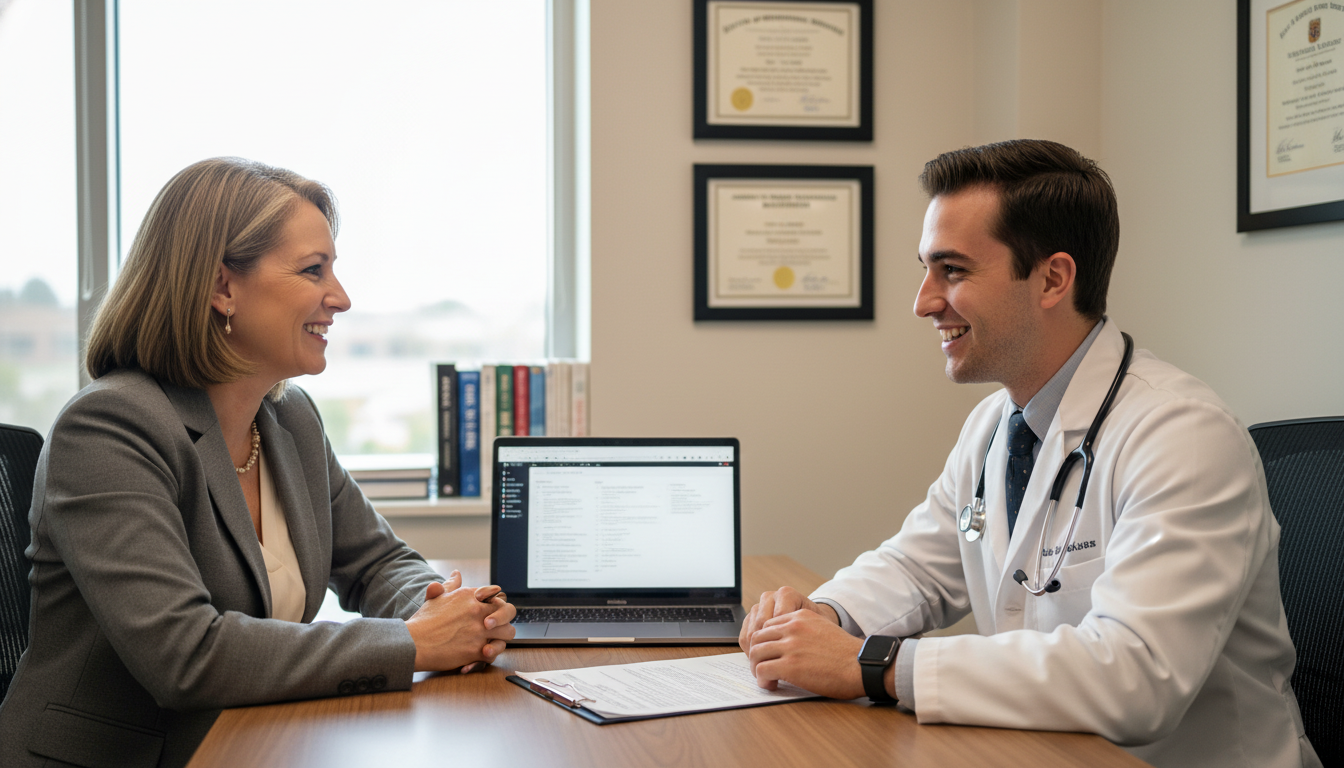
In mentorship in medicine, people often use terms loosely, but it helps to distinguish:
- Mentor: Advises you, helps you think through decisions, provides emotional and career guidance.
- Sponsor: Uses their influence to actively put your name forward for opportunities (committees, talks, projects, fellowships).
As a DO psychiatry graduate, you ideally want both:
- A mentor who understands your background and goals.
- A sponsor who has a strong voice in your department, institution, or national organizations.
Types of mentors you should intentionally cultivate
No single mentor can do everything. Consider building a mentorship team:
Clinical Mentor
- Guides you in forming your clinical identity, case formulation, and therapeutic approach.
- Often from your own institution and subspecialty area of interest.
Scholarly/Research Mentor
- Supports projects, posters, and publications.
- May be in psychiatry or an adjacent field (e.g., neurology, public health).
Career Mentor (Ideally DO or DO-friendly)
- Helps navigate DO-specific challenges.
- May be at another institution; can be virtual.
Peer or Near-Peer Mentor
- Senior resident or recent graduate who remembers the specific hurdles you’re facing now.
- Great for “how do I deal with this right now?” questions.
Actionable steps:
- Identify at least one mentor in each category by the end of PGY-2.
- Check in with each mentor 2–4 times per year (can be brief).
- Keep a simple log of conversations, advice, and action items.
How to approach potential mentors
- Start with informational conversations: “I admire your path in [X]. Would you be open to a brief meeting to discuss how you developed this career?”
- Be specific about what you’re hoping for:
- “I’m looking for guidance about getting involved in quality improvement projects.”
- “I’d love feedback on how to position myself for child psychiatry fellowship as a DO graduate.”
- Show follow-through:
- If they suggest an article, read it and send a brief reflection.
- If they recommend someone else, introduce yourself to that person and let the original mentor know it was helpful.
Mentors are far more likely to invest in someone who shows effort and respects their time.
When and how sponsorship emerges
Sponsors usually begin as mentors who:
- Have seen your work ethic and reliability.
- Have some degree of institutional or national influence.
- Believe that helping you rise aligns with their values and goals.
You can’t directly ask someone to “be your sponsor,” but you can:
- Do excellent, visible work on projects they care about.
- Express your goals clearly so they know when an opportunity fits you.
- Show up professionally—on time, prepared, responsive.
Over time, a sponsor might:
- Introduce you to a fellowship director with a personal email.
- Suggest you for a speaking slot at a regional meeting.
- Place you on an influential committee in your department.
Digital Networking: Email, Social Media, and Professional Presence
Email etiquette for effective medical networking
Email is still the backbone of networking in medicine. Key principles:
- Clear subject lines: “PGY-2 DO psychiatry resident interested in addiction research”
- Concise intros:
- Who you are (include DO and training level)
- Why you’re reaching out
- What you’re asking for (specific, small)
- Respectful tone and timing:
- Avoid long blocks of text; use short paragraphs.
- If you don’t hear back, one polite follow-up 10–14 days later is reasonable.
Using LinkedIn and X (Twitter) strategically
For a psychiatry resident, social media can be a high-yield form of medical networking when used thoughtfully:
- LinkedIn:
- Keep your headline clear: “PGY-2 Psychiatry Resident (DO), Interested in [Subspecialty]”
- Add key experiences: research, leadership, teaching.
- Connect with psychiatrists you’ve actually met or interacted with professionally.
- X (Twitter):
- Follow major psychiatry organizations, journals, and thought leaders.
- Participate in professional threads (journal clubs, ethics debates, policy discussions).
- Share balanced, professional perspectives and interesting articles—not patient-related anecdotes.
Always assume colleagues, PDs, and future employers may see your online presence.
Showcasing your DO psychiatry story
Your digital footprint should help answer:
- Who are you as a clinician and future psychiatrist?
- What are your main areas of interest?
- How has your DO background shaped your approach to psychiatry?
A brief, consistent narrative—shared in bios, introductions, and conversations—can sound like:
“I’m a DO-trained psychiatry resident with a strong interest in integrated care and the interface between physical and mental health, especially in underserved populations.”
Applying These Strategies to Career Milestones
Networking for fellowships (child, addiction, CL, forensic, etc.)
If you’re considering fellowship, networking should begin at least 18–24 months before application:
- Identify programs of interest early (PGY-2 or early PGY-3).
- Look for DO-friendly programs (past DO trainees, faculty).
- Reach out to fellowship directors:
- Briefly introduce yourself.
- Ask what makes a strong applicant, particularly from a DO background.
- If possible, schedule an elective or away rotation.
Faculty who have spoken with you ahead of time are more likely to remember you favorably when your file appears in their application stack.
Networking for your first attending job
As a PGY-3 or PGY-4, your networking targets expand:
- Clinical supervisors who may hire you or recommend you.
- Faculty who can connect you with community mental health centers, integrated care practices, or academic positions.
- Alumni—especially DO psychiatrists—from your program.
Key moves:
- Attend department faculty meetings or grand rounds regularly, even when not mandatory.
- Ask recent graduates how they secured their positions; request introductions to their employers if relevant.
- Communicate your interests (e.g., partial hospitalization programs, telepsychiatry, C/L, policy work) so people think of you when hearing about openings.
Networking as an introvert (which many psychiatrists are)
You don’t need to be an extrovert to be effective at networking in medicine. Try:
- 1:1 or small group conversations instead of large receptions.
- Setting a realistic goal at events: “I will have three 5–10 minute meaningful conversations.”
- Preparing 3–4 open-ended questions ahead of time:
- “What drew you to this subspecialty?”
- “What do you enjoy most about your current role?”
- “If you could give one piece of advice to a DO psychiatry resident, what would it be?”
Over time, these small investments add up to a robust, supportive network.
Frequently Asked Questions (FAQ)
1. As a DO graduate in psychiatry, do I really need to network if I’m not planning on an academic career?
Yes. Even if you plan a community or private practice career, networking in medicine helps you:
- Learn about job markets and compensation norms.
- Connect with therapists, primary care clinicians, and other specialists for referrals.
- Find mentors in areas like practice management, telepsychiatry, or forensic work.
- Build a reputation that can lead to leadership roles or advocacy opportunities.
Networking is less about chasing prestige and more about ensuring you have options and support.
2. How can I stand out as a DO applicant in the psych match or for fellowship interviews?
Focus on:
- A clear, compelling narrative that integrates your DO background with psychiatry.
- Evidence of engagement: posters, QI projects, committees, teaching, or leadership.
- Strong letters of recommendation from people who know you well.
- Strategic networking: prior contact with programs or fellowship directors through conferences, emails, or rotations.
Networking doesn’t replace credentials; it amplifies them and helps decision-makers put a confident face and story to your file.
3. What if my program has limited research or mentorship options in my area of interest?
Look beyond your institution:
- Use conference networking to identify faculty at other programs open to remote collaboration.
- Email potential mentors with a concise proposal (e.g., a case report, literature review, or small project) rather than a vague request to “do research.”
- Explore national organizations’ mentoring programs (APA, subspecialty societies, osteopathic associations).
- Consider multi-site or virtual projects, especially those involving surveys, chart reviews, or education research.
Cross-institution collaboration is increasingly common—and often easier than you think.
4. How can I maintain my network over time without feeling like I’m bothering people?
- Touch base 2–4 times per year with key mentors and sponsors:
- Brief updates: new rotation, project accepted, career decisions you’re considering.
- Occasional questions that show you value their perspective.
- Send short thank-you notes after important milestones (e.g., successful interview season, fellowship match, first job).
- Share useful resources or articles you encounter that are relevant to their interests.
Most mentors appreciate hearing how you’re doing—especially when you demonstrate growth and follow-through.
Thoughtful, consistent networking in medicine—built on authenticity, curiosity, and professionalism—can transform your experience as a DO psychiatry graduate. You don’t need to know everyone; you need a right-sized network of people who know you, believe in you, and are willing to help you grow. Start where you are, take small but deliberate steps, and let your work and integrity speak through the relationships you build.