Why Networking in Emergency Medicine Matters for the MD Graduate
Networking in medicine is not just about “who you know.” For an MD graduate pursuing emergency medicine, it’s about building the relationships, reputation, and support system that will carry you from the allopathic medical school match through residency and into your attending career.
Emergency medicine (EM) is a small world. Faculty talk, program directors know each other, and word of mouth—positive or negative—travels quickly. Effective medical networking can:
- Strengthen your EM match application
- Open doors to research, leadership, and teaching roles
- Provide mentors who guide career-defining decisions
- Help you navigate difficult rotations, night shifts, and burnout risk
- Create future collaborators and advocates when jobs and fellowships arise
Unlike some specialties where you may have years of longitudinal clinic to bond with mentors, EM can feel fragmented: multiple shifts, variable teams, and limited continuity. That makes intentional, strategic networking even more critical for MD graduate residency trainees in EM.
In this article, you’ll learn specific, practical ways to network in medicine as an EM resident or late MD graduate—from conferences and social media to in-hospital relationships and mentorship medicine—so that you’re not just “meeting people,” you’re building a career-supportive network.
Understanding Networking in Medicine: Beyond Small Talk
When MD graduates hear “networking,” they often think of awkward receptions and forced conversations. In reality, networking in medicine is:
The deliberate process of building professional relationships that create mutual value over time.
For an MD graduate residency trainee in EM, that “mutual value” might look like:
- A faculty member advocating for you to be chief resident
- A connection texting you about an unadvertised community EM job
- A co-resident looping you into a multi-center research project
- A senior physician quietly steering you away from a toxic work environment
Key Principles for Effective Medical Networking
Give before you ask
People are more willing to invest in you if you’ve shown interest, reliability, and initiative. That can mean:- Volunteering to help with a project
- Offering to cover a shift in a pinch (within reason)
- Sharing resources or feedback that helps others
Think long-term, not transactional
Don’t approach someone purely to get a letter, a job, or a favor. Build relationships over months and years.Be reliably excellent at your core job first
In EM, nothing matters more than how you perform on shift. Networking can amplify your reputation, but it cannot compensate for poor clinical performance or professionalism issues.Show up consistently
Repeated, positive interactions over time—on shift, at conferences, on committees—are how people learn who you are and what you stand for.
Building Your Network Inside Your Emergency Medicine Residency
Your first and most important networking environment is your own program. Many MD graduate residency physicians look outward too quickly, underestimating how powerful their internal network is.
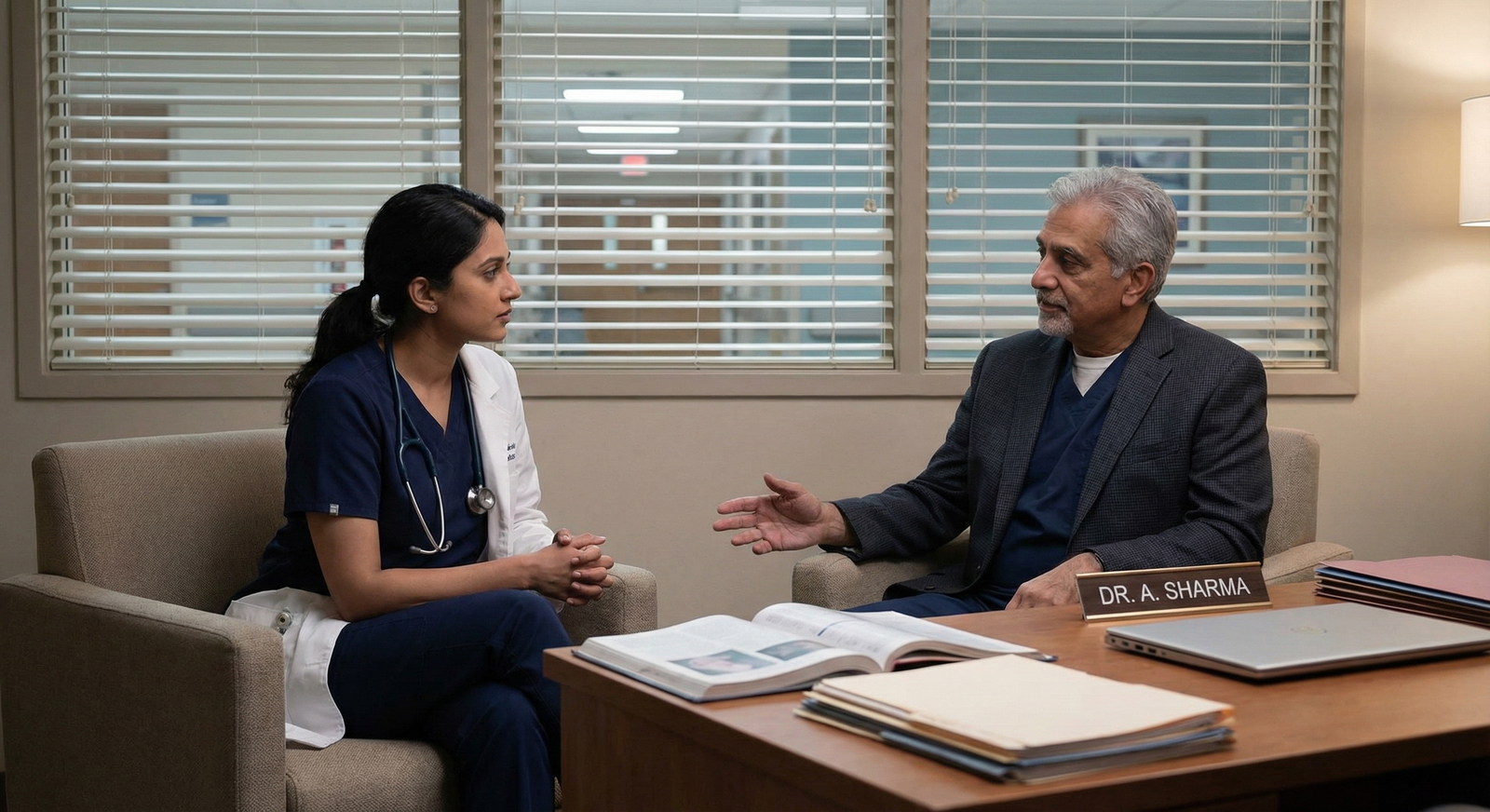
1. Faculty Relationships: Turning Evaluators into Advocates
Faculty you work with now may:
- Be asked for informal feedback when you apply for fellowships or jobs
- Serve as letter writers for advanced positions
- Have deep connections across the EM community
Strategies to build faculty relationships:
Pre- and post-shift touchpoints
- Arrive a few minutes early; ask, “Anything you’d like me to focus on this shift?”
- After the shift, say, “I’m trying to grow in X (e.g., resuscitation leadership). Any quick feedback for me from tonight?”
Follow-up on patient outcomes
Look up a memorable case, then email:“Dr. Lee, we saw the 45-year-old with suspected aortic dissection on Tuesday night. I followed up and saw he went to surgery and did well. Thank you again for walking me through your thought process. I learned a lot about managing diagnostic uncertainty in high-stakes cases.”
This is short, specific, and shows motivation—faculty remember that.
Ask for targeted career advice
Instead of “Can we talk about my career sometime?”, try:“I’m deciding between academic and community emergency medicine. Could I have 20 minutes to ask how you navigated that decision?”
Faculty are more willing to say yes to a focused, time-limited request.
2. Networking with Co-Residents and Allied Staff
Your co-residents will become your future colleagues, department directors, and fellowship leaders. The nurses, techs, pharmacists, and consultants you work with will remember how you treated them.
Practical ways to build these relationships:
Be the colleague people want on shift
- Take ownership of your patients and help with shared tasks (transporting, turning, updating families).
- Step up during surges; ask, “How can I help?” instead of hiding at the workstation.
- Stay calm and respectful even when the department is chaotic.
Participate in residency life
Show up for:- Journal clubs
- Wellness events
- Volunteer activities
- M&M and QI meetings
Reliability in small things grows long-term trust.
Recognize and appreciate others
A quick message like,“Thanks for your help with that tough airway last night—learned a lot watching your technique,”
strengthens professional bonds.
3. Program Leadership: PDs, APDs, and Chiefs
Your program director (PD), associate program directors (APDs), and chief residents are central to your EM network. They often know leaders across multiple institutions and are frequently contacted for back-channel references.
How to engage them meaningfully:
Communicate career goals early
Even if they’re tentative, share your interests:- Ultrasound, EMS, toxicology, critical care
- Academic vs community practice
- Geography or lifestyle priorities
This helps leadership connect you to relevant opportunities.
Volunteer for projects with visibility
Examples:- Help with interview days for allopathic medical school match candidates
- Serve on the residency recruitment or wellness committee
- Assist with simulation or bootcamp sessions for interns
These give you direct, repeated interaction with leadership.
Check in once or twice a year
Short, structured meetings with your PD/APD:- Share your progress and updated goals
- Ask for honest feedback
- Ask, “Who else should I meet or work with to move toward X goal?”
Conference and Professional Society Networking: Turning Events into Opportunities
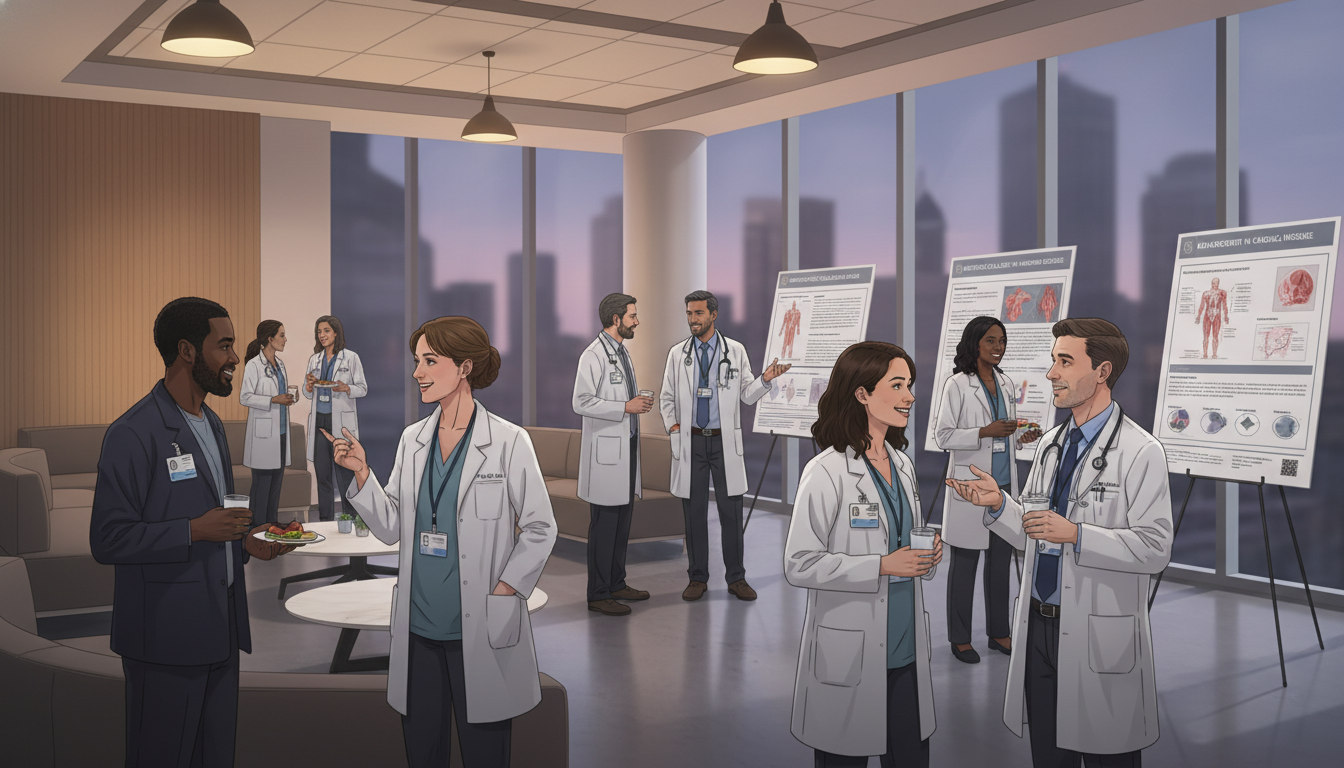
For many MD graduate residency trainees, their first exposure to large-scale medical networking is at national EM conferences (ACEP, SAEM, AAEM, CORD) or regional meetings. These events are powerful for expanding beyond your home institution—if you use them strategically.
1. Preparing for Conference Networking
Before the conference:
Clarify your goals
Examples:- Explore emergency medicine residency research or ultrasound fellowships
- Meet people from specific programs or cities
- Find collaborators for a QI or education project
- Learn about non-clinical interests: administration, global EM, medical education
Identify people you want to meet
- Scan the program for:
- Speakers in your areas of interest
- Workshop leaders
- Panelists on topics like burnout, mentorship medicine, or EM careers
- Email them 1–2 weeks before:
“Dr. Patel, I’m an EM resident at [Institution]. I’m very interested in EMS and saw you’re speaking on prehospital innovation at ACEP. If you have 10–15 minutes for a quick conversation during the conference, I’d love to hear how you built a career in this space.”
Not everyone will reply—but some will, and those planned meetings are often the most valuable part of the conference.
- Scan the program for:
Prepare your “micro-introduction”
A 20–30 second intro:- Who you are
- Where you are
- What you’re interested in
- What you’re looking for
Example:
“I’m an MD graduate in my PGY-2 year of emergency medicine at [Institution]. I’m particularly interested in critical care and medical education, and exploring how to combine EM practice with an academic career. I’d love to hear how you approached those decisions.”
2. On-Site: How to Network Without Feeling Salesy
At the conference:
Go to the smaller rooms
Large keynote talks are inspiring, but networking often happens:- During workshops
- At poster sessions
- In smaller panels and SIG (special interest group) meetings
Ask good questions
After a talk, introduce yourself to the speaker:- Mention one specific point that resonated
- Ask one thoughtful question
Then follow up briefly:“Thank you, that’s really helpful. Would it be okay if I emailed you with a couple of follow-up questions once I’ve read more on this?”
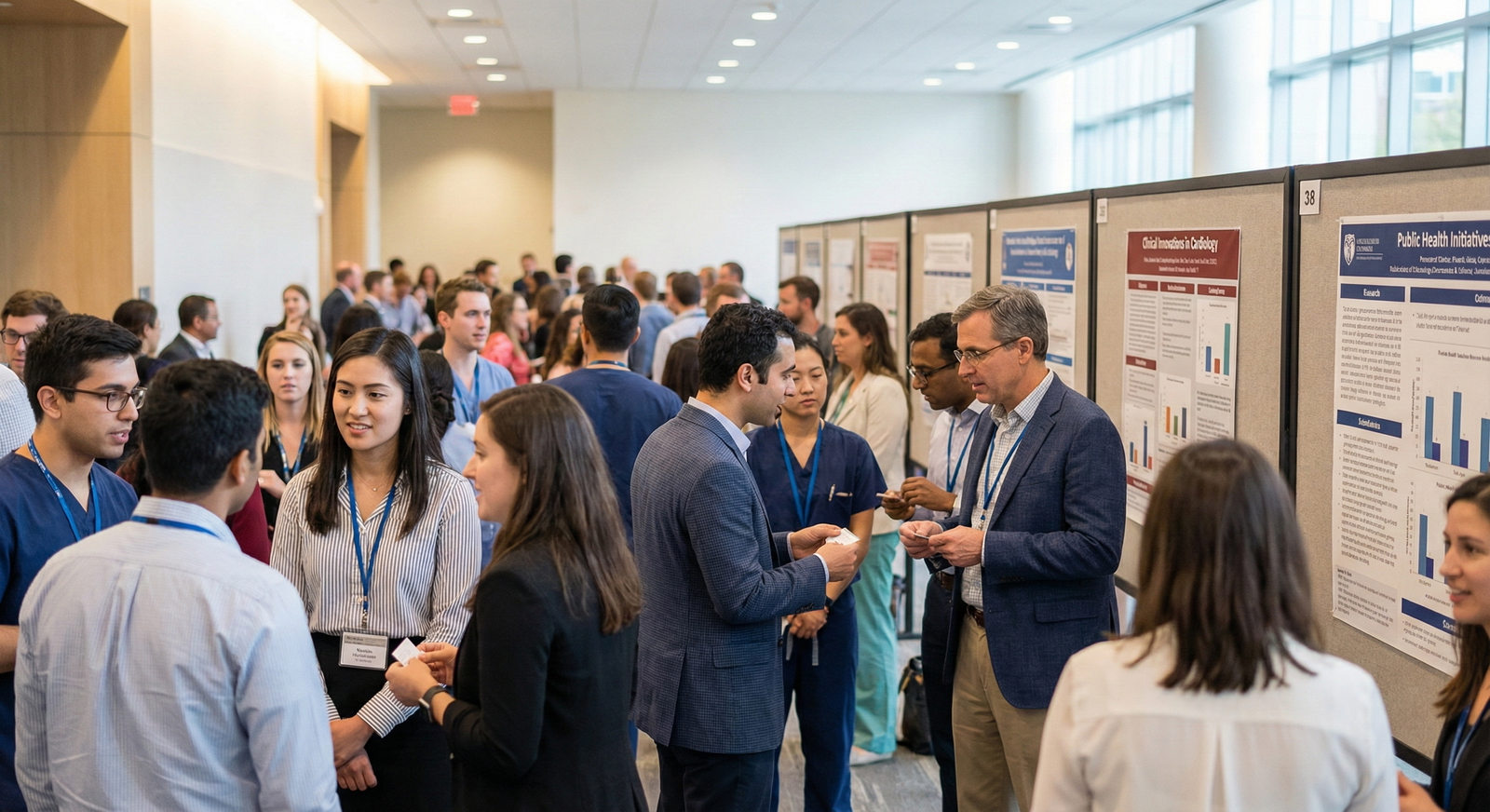
Poster presentations: low-pressure networking
If you’re presenting:- Prepare a 1–2 minute summary of your work
- Practice 1–2 lines about “next steps” to signal ongoing engagement
If you’re visiting:
- Approach posters in your areas of interest
- Ask:
- “What surprised you most about your findings?”
- “If you had twice the resources, how would you expand this project?”
Then exchange contact info if there’s alignment.
Exhibit hall and residency/program booths
As an EM resident, these can be useful if:- You’re exploring fellowships
- You might move geographically after residency
- You want to meet representatives from specific systems (academic or community)
Keep interactions brief but intentional; get names and business cards if appropriate.
3. Following Up After Conferences
The true value of conference networking is in the follow-up.
Within 3–5 days after the event:
Send concise follow-up emails
Format:- Thank them for their time
- Reference something specific you discussed
- State your next step or question
Example:
Subject: Great to meet you at SAEM (EMS session)
Dear Dr. Nguyen,
Thank you for taking the time to speak with me after your SAEM session on novel EMS protocols. Our discussion about integrating telemedicine into prehospital care was eye-opening. I’m exploring starting a small QI project on prehospital sepsis alerts at my institution. If you’re open to it, I’d really value your thoughts on how to structure data collection so that it’s meaningful but feasible for a resident-led project.
Best regards,
[Name], MD
EM Resident, [Institution]Connect on professional platforms
- Professional Twitter/X (if active)
- Society listservs or Slack spaces
Include a brief note reminding them how you met.
Track your contacts
Maintain a simple spreadsheet or note with:- Name / title / institution
- Where you met
- Topics of interest
- Notes on follow-up or potential collaboration
Digital and Social Media Networking in Emergency Medicine
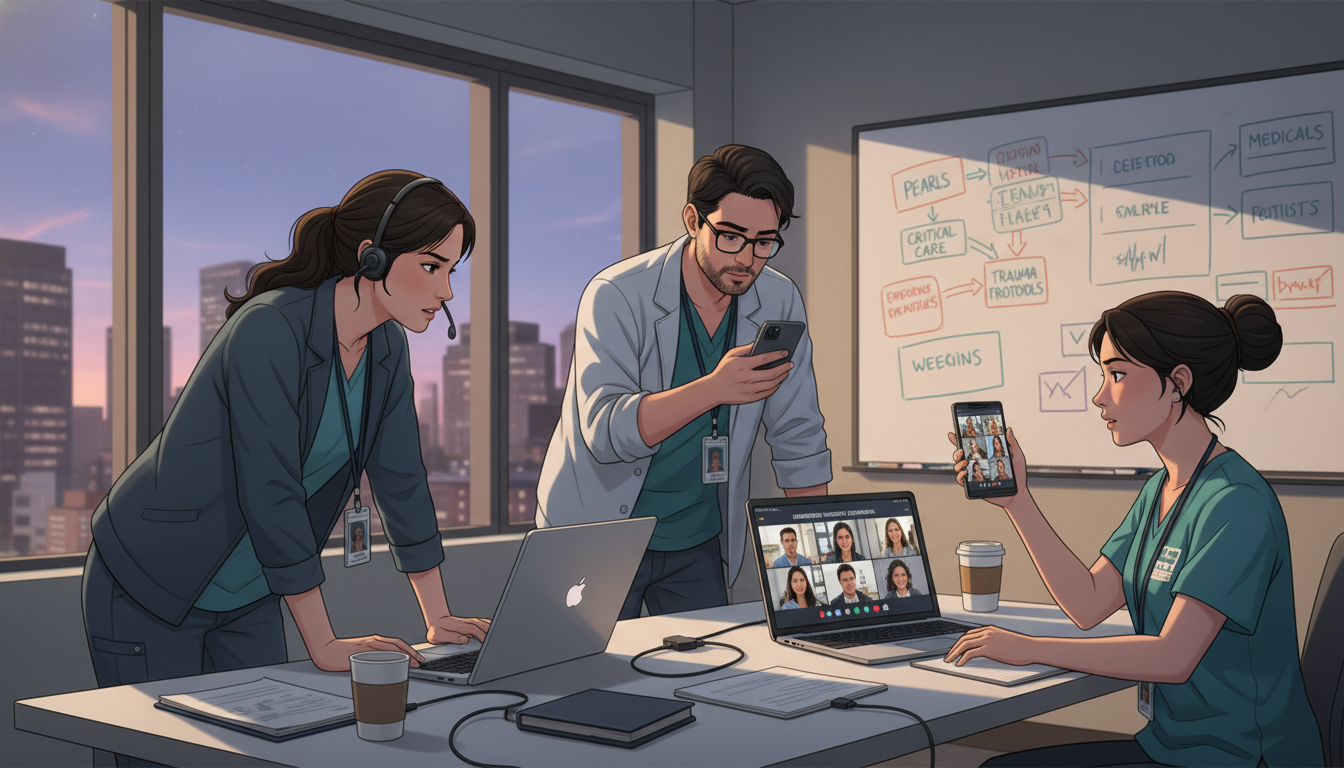
Digital platforms can massively expand your EM match and career network beyond geography—if used wisely and professionally.
1. Professional Online Presence: Basics
As an MD graduate residency physician, assume that fellowship directors, hiring committees, and mentors may search your name.
Minimum professional footprint:
Updated LinkedIn profile
- Current position and institution
- Medical school (allopathic medical school match background)
- Areas of interest: EM subfields, research, teaching
- Professional photo
- Concise summary (2–3 sentences)
Neutral-to-professional public social media
If you use platforms like Twitter/X or Instagram for professional content:- Avoid patient-identifiable data and any HIPAA risks
- Avoid unprofessional posts, even if “joking”
- Focus on sharing:
- Educational content
- Reflections on training
- EM conference networking takeaways
- Research updates
2. Using Social Media for Medical Networking
Many EM leaders are active on Twitter/X, particularly around:
- Conferences (#ACEP, #SAEM, #FOAMed)
- Journal clubs and new research
- Educational threads and FOAMed resources
How to engage productively:
Start by listening
Follow:- EM societies (ACEP, SAEM, AAEM)
- FOAMed educators
- Leaders in your areas of interest
Observe tone, topics, and boundaries.
Engage selectively
- Retweet or share posts you genuinely find valuable
- Comment thoughtfully (ask questions, add perspective)
- Avoid arguments, politics, and unprofessional debates
Use DMs sparingly and professionally
For example, after public engagement:“Dr. Smith, I appreciated your thread on residents leading QI projects in EM. I’m a PGY-2 at [Institution] and starting a similar initiative. Would you be open to sharing any pitfalls you encountered when you got started?”
Mentorship, Sponsorship, and Peer Support in EM
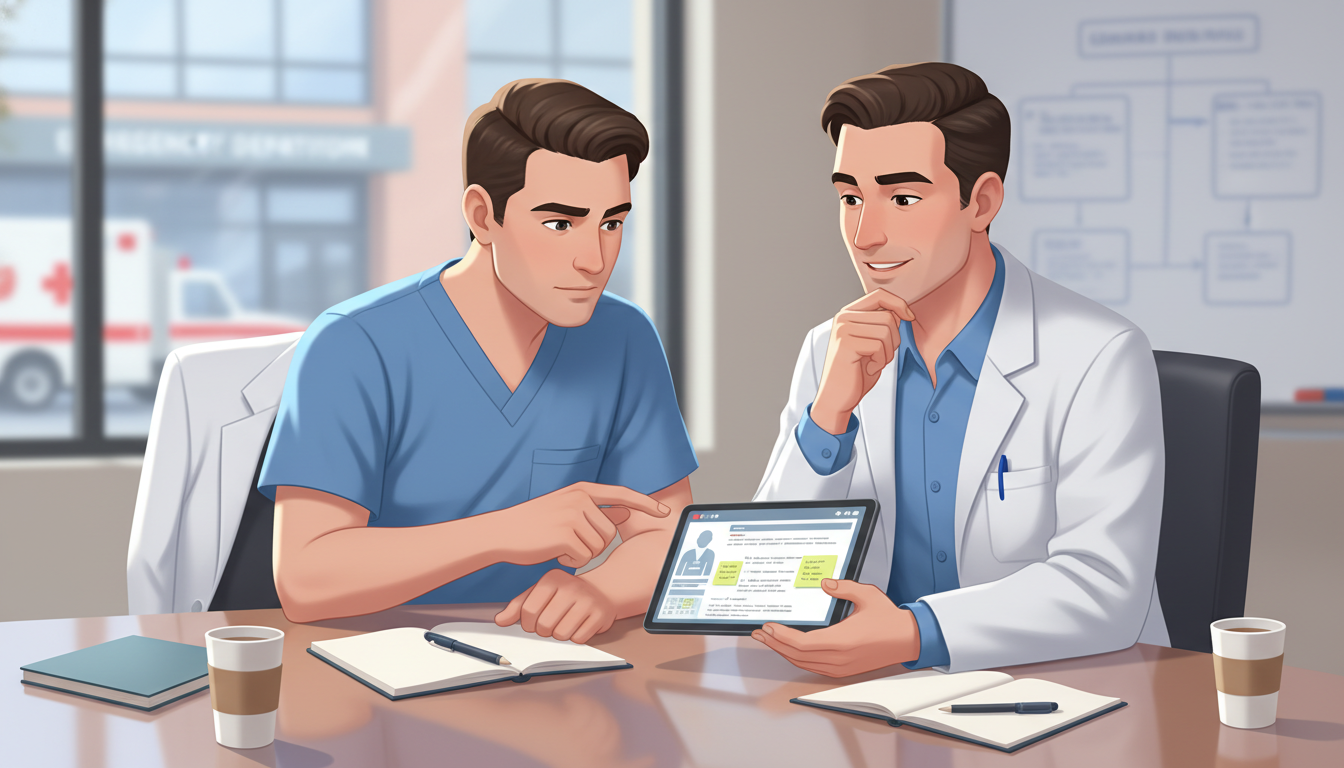
One of the most valuable outcomes of medical networking is mentorship—and its less-discussed cousin, sponsorship.
1. Mentorship vs Sponsorship in Medicine
- Mentor: Offers advice, feedback, and guidance. Helps you think.
- Sponsor: Uses their influence and reputation to actively create opportunities for you. Puts your name forward.
Both are crucial for an MD graduate residency physician in EM.
2. Finding and Working with Mentors
You can have different mentors for:
- Clinical development (resuscitation, procedures, EM decision-making)
- Academic growth (research, education, administration)
- Work-life integration and wellness
- Career pathways (academic vs community vs hybrid)
How to identify potential mentors:
- Faculty whose careers look like something you might want
- People who consistently give you helpful feedback
- Individuals who seem genuinely invested in resident growth
How to approach a potential mentor:
Start small:
“I’m working on choosing a focus area in EM and admired your talk on ultrasound integration. Could I schedule 20 minutes to ask you a few questions about that career path?”
After a few positive interactions:
“I’ve really appreciated your guidance over the last few months. Would you be open to serving as a more formal mentor as I plan my next steps in EM?”
How to be a good mentee:
- Come prepared with specific questions
- Follow through on advice and report back
- Respect their time
- Express genuine appreciation
3. Recognizing and Nurturing Sponsors
Sponsors often:
- Suggest you for committee roles
- Nominate you for awards or leadership positions
- Recommend you for jobs or fellowships
You can’t “ask” someone to be your sponsor directly, but you can:
- Be excellent and reliable in roles they see
- Communicate your goals clearly
- Keep them updated on key milestones
- Say yes to reasonable opportunities they suggest
Long-Term Networking Strategy: From Residency to Attending EM Practice
Networking is not a one-time project—it’s a professional habit. Think of it as building a robust, mutually supportive EM community around your career.
1. Transitioning from EM Match Mindset to Career Mindset
As a medical student, networking often centered on the allopathic medical school match, away rotations, and letters. As an EM resident and soon-to-be attending, the focus shifts:
- From “getting in” to “building a sustainable, satisfying career”
- From one-time evaluations to ongoing collaborations
- From proving your worth to defining your niche
2. Identifying and Building Your Niche
Within emergency medicine, consider emerging or traditional niches:
- Ultrasound
- Medical education and simulation
- Quality improvement and patient safety
- EMS and prehospital care
- Global EM
- Clinical operations and administration
- Toxicology, critical care, event medicine, telehealth
Networking helps you:
- Find role models in your area
- Join working groups or committees
- Collaborate on projects that establish your expertise
Example pathway:
- You join your department’s sepsis QI initiative.
- You attend a national EM QI workshop and meet leaders in the field.
- You co-author a poster or paper with them.
- You’re invited to serve on a committee for sepsis guidelines or an education project.
- When a job opens that needs an EM doc with strong QI experience, your name comes up.
3. Geographic and System-Level Networking
If you’re aiming for a specific city or hospital system:
- Ask your PD or mentors, “Who do you know in X region or Y system I should talk to?”
- Go to regional EM meetings or state ACEP events
- Join state or regional committees (EMS, disaster prep, policy)
Informational conversations (15–30 minutes) can reveal:
- Culture and workflow of different EDs
- Hidden opportunities (fellowships, admin tracks)
- Red flags (high turnover, poor support, toxic dynamics)
4. Avoiding Common Networking Pitfalls
Being overly transactional
Constantly asking for favors (letters, introductions, jobs) without investing in relationships erodes trust.Ignoring professionalism on social media
One careless public post can undo years of hard work and damage your medical networking.Neglecting current relationships while chasing new ones
Don’t forget your residency faculty, co-residents, and staff while chasing “big names” at conferences.Overextending yourself
Saying yes to every committee or project can lead to burnout. Network strategically in areas aligned with your goals.
Frequently Asked Questions (FAQ)
1. I’m an MD graduate early in my emergency medicine residency. What’s the single most important networking step I should take this year?
Focus first on being consistently reliable and teachable on shift, and then intentionally cultivate 1–2 strong mentoring relationships within your program. Those mentors will not only help you grow clinically but also introduce you to their broader networks when you’re ready.
2. I’m not naturally outgoing. Can I still be effective at conference networking?
Yes. You don’t need to “work the room.” Instead, prepare a short introduction, identify 3–5 people or sessions you want to target, and focus on a few meaningful one-on-one conversations. Follow-up emails afterward often matter more than how many people you met briefly.
3. How can medical networking help my EM match or post-residency job search?
During the EM match, networking with faculty, visiting EM programs, and connecting at conferences can provide:
- Insight into different programs and cultures
- Advocates who can speak informally on your behalf
Post-residency, many jobs—especially attractive ones—are filled through word of mouth. Having people who know your work and can recommend you is often more powerful than any online application.
4. What are some red flags in mentorship or networking relationships?
Be cautious if:
- Someone repeatedly asks for lots of work without offering guidance or credit
- A mentor discourages you from talking to others or exploring alternatives
- You feel your values (ethics, patient care, wellness) are compromised to “get ahead”
Healthy mentorship medicine is collaborative, transparent, and respects professional boundaries.
By approaching networking in medicine thoughtfully—as an MD graduate in emergency medicine—you’re not just collecting contacts; you’re building a resilient professional community that will support you through night shifts, leadership roles, career pivots, and everything in between.