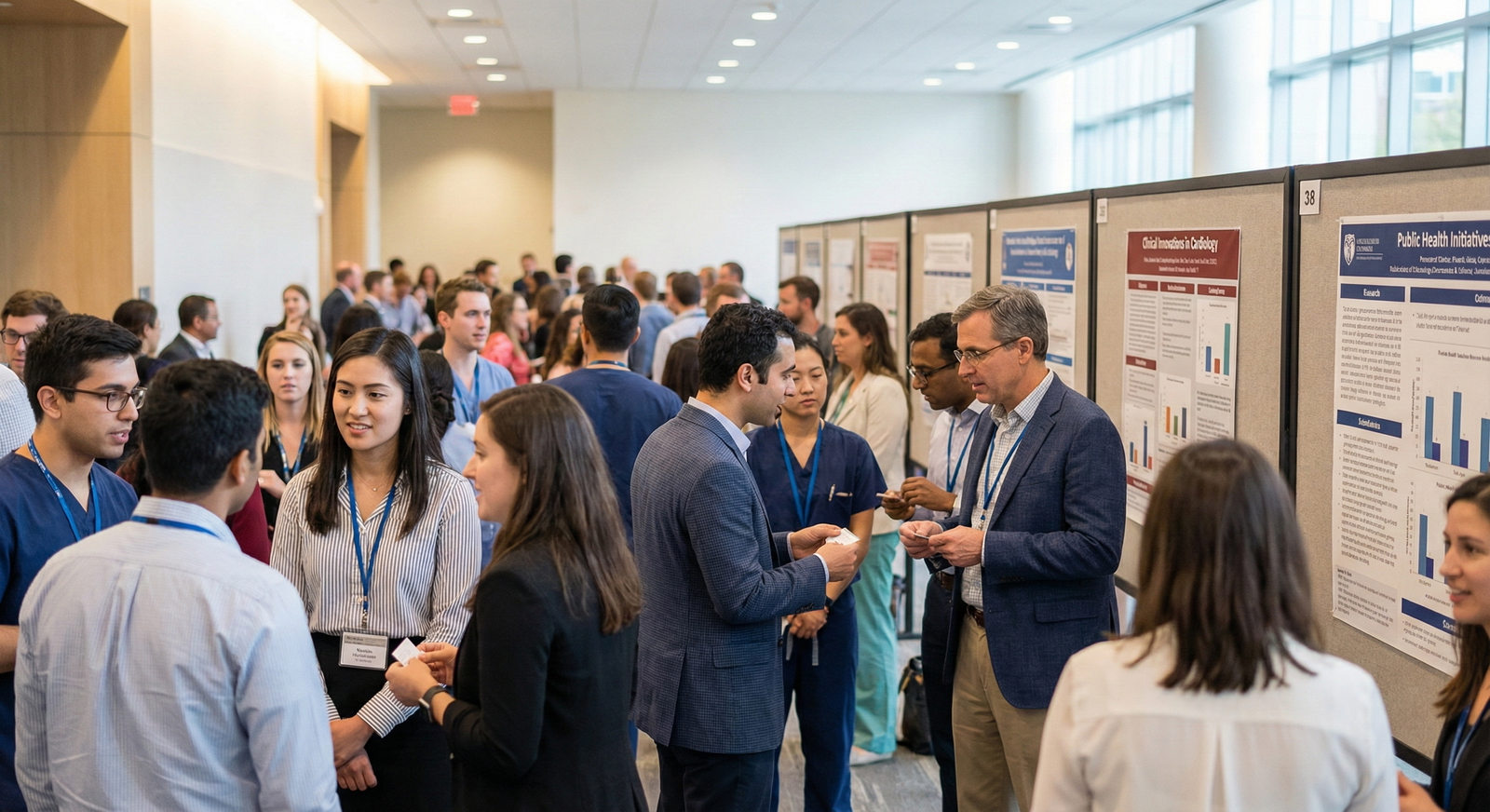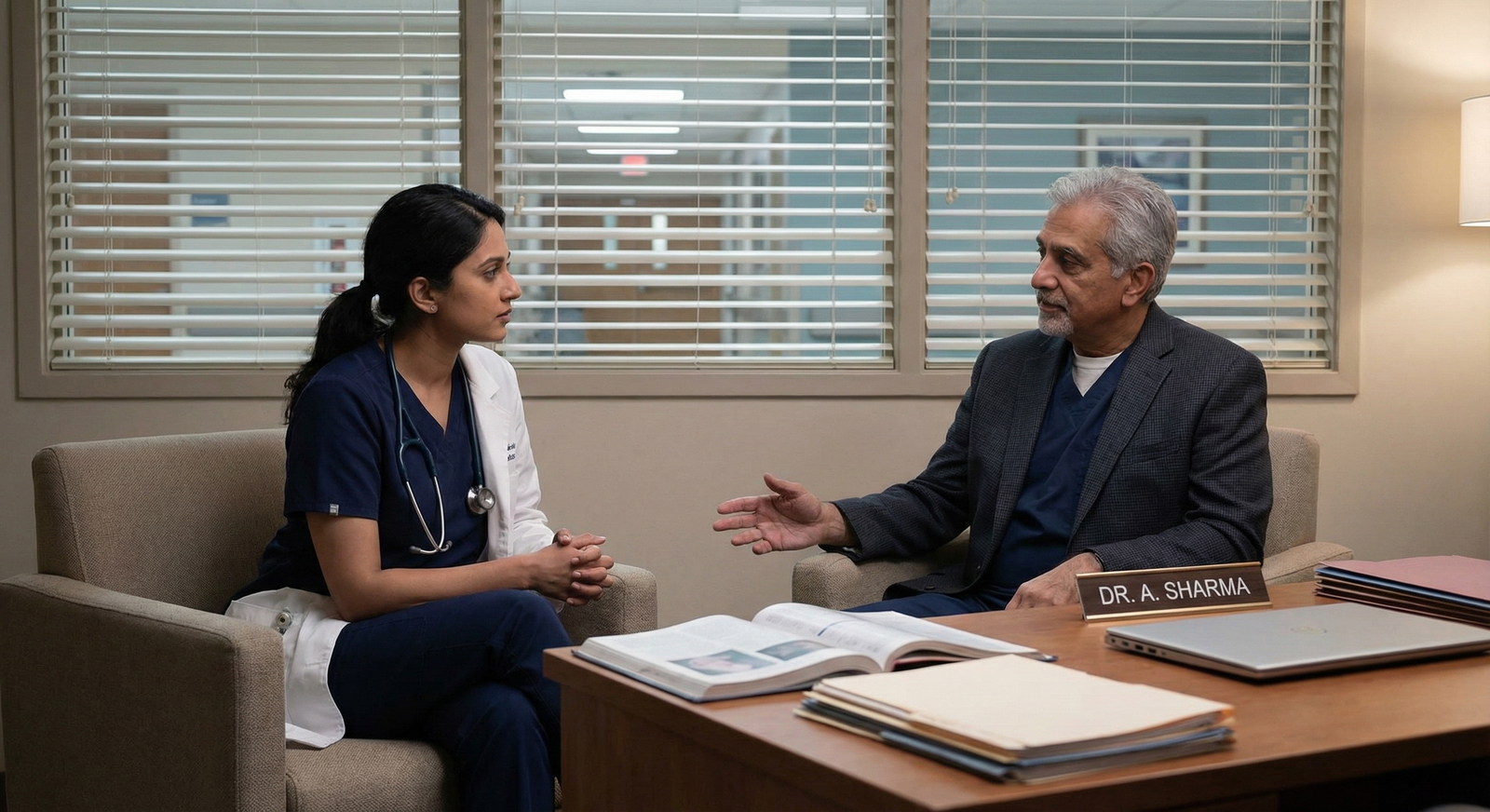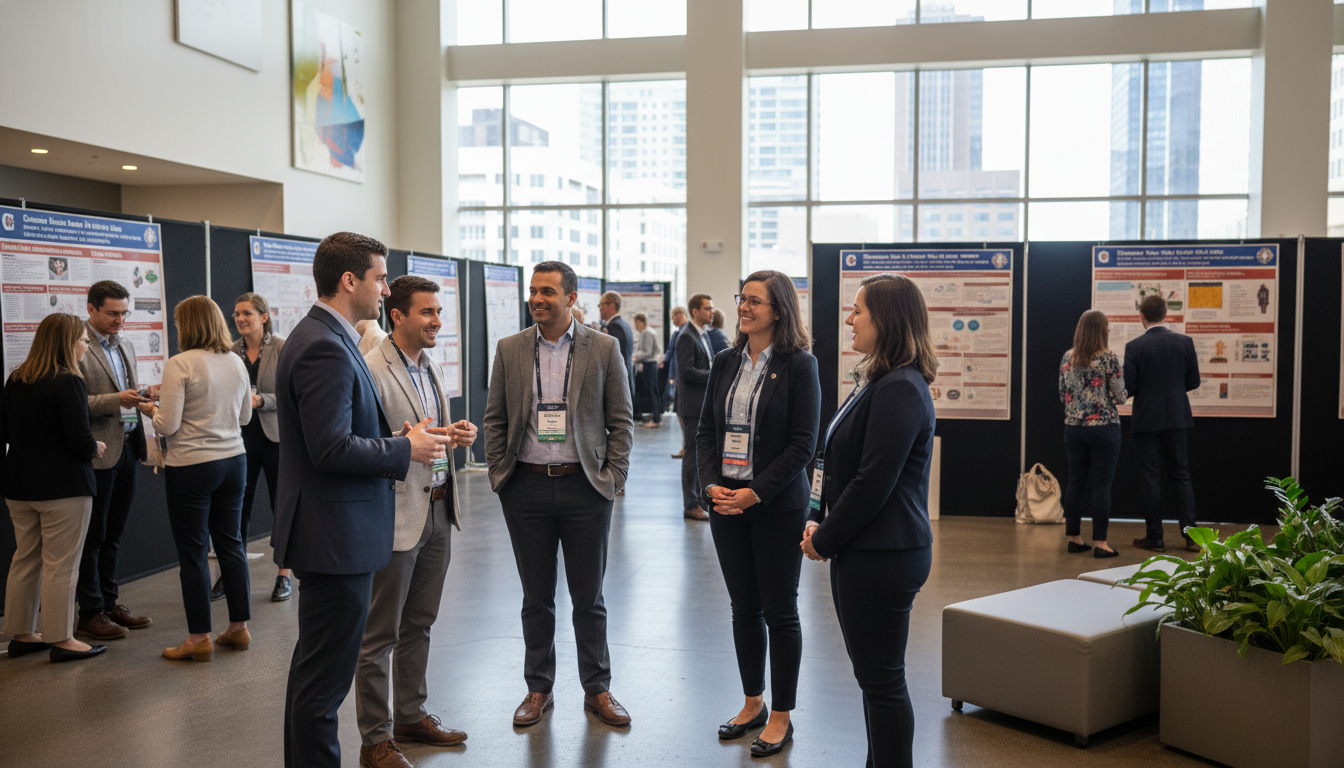
Why Networking Matters So Much in Family Medicine
Networking in medicine is often misunderstood as superficial “schmoozing.” In reality, especially in family medicine, it is the backbone of how you learn, collaborate, advocate for patients, and advance your career.
For anyone pursuing or already in a family medicine residency, thoughtful networking can directly influence:
- Your FM match outcome (through strong letters, advocacy, and insight into programs)
- Access to mentorship medicine relationships that shape your career
- Clinical and research opportunities, including community projects
- Your ability to navigate systems, avoid burnout, and build a sustainable career
- Leadership roles in primary care, public health, and academic medicine
Family medicine is inherently relationship-centered—not just with patients, but also with colleagues, community partners, and interdisciplinary teams. Your network becomes part of your clinical toolkit.
What “Networking in Medicine” Actually Is
Think of networking as deliberate relationship-building with people who:
- Share your professional interests
- Can support your growth
- Benefit from your skills and collaboration
- Help you understand the broader healthcare ecosystem
It is:
- Bidirectional (you give value and receive value)
- Longitudinal (built over years, not one-off interactions)
- Mission-driven (aligned to your values: e.g., rural care, health equity, behavioral health)
It is not:
- Transactional collecting of contacts
- Only talking to “important people”
- Insincere flattery or forced interactions
In family medicine, your network often spans:
- Academic faculty and program directors
- Community preceptors and clinic staff
- Public health professionals, social workers, behavioral health clinicians
- Specialists you co-manage patients with
- Advocacy and policy organizations
- Local community leaders (schools, shelters, faith groups)
Building Your Network Before and During the FM Match
Your networking strategy should evolve with your training phase, but the principles stay the same: be prepared, be genuine, and follow through.
1. Networking as a Medical Student: Laying the Foundation
As a student pursuing family medicine residency, you’re building the foundation that will strongly influence your FM match. Focus on:
A. Within Your Home Institution
Identify family medicine champions
- Clerkship directors
- FM interest group (FMIG) faculty advisors
- Community preceptors who enjoy teaching
How to connect:
- Ask for a brief meeting: “I’m exploring family medicine and would love 20 minutes to ask about your career path.”
- Prepare 3–4 questions (e.g., “How did you choose FM?” “What do you wish you’d known as a student?”).
Volunteer for departmental work
- Help with OSCEs, pre-clinical teaching, or journal club
- Support a department QI project (e.g., improving vaccination rates)
- Attend FM grand rounds and stay for discussion
This shows reliability and gives faculty a real basis for letters and advocacy.
Mentorship medicine: create a “mentor team” In family medicine, you often need:
- A career mentor (big-picture planning: FM match, fellowships, jobs)
- A skills mentor (e.g., procedures, obstetrics, point-of-care ultrasound)
- A wellness mentor (someone you can be candid with about stress and burnout)
Don’t expect one person to do everything. Start by:
- Asking, “Would you be open to my checking in a few times per year for advice?”
- Being specific when you reach out (e.g., “I’m considering community vs academic FM programs—could I get your perspective?”).
B. Away Rotations and Subinternships
These are high-yield for both clinical learning and networking:
- Treat away rotations as extended interviews—for you and for them.
- Ask residents and faculty about their paths:
“What made you choose this program and how has it matched your expectations?” - After the rotation:
- Send a thank-you email to key faculty, referencing a specific teaching moment.
- Request feedback: “I’d appreciate any feedback you have on how I can grow before residency.”
- Maintain contact every few months with short updates (e.g., “I just submitted my ERAS application and listed your program—thank you again for your guidance.”).
These connections can become:
- Strong letters of recommendation
- Advocates within program rank meetings
- Long-term mentors, even if you match elsewhere
2. Networking During Residency: Deepening and Expanding
Once you’re in a family medicine residency, your focus shifts from getting in to thriving and setting up your post-residency career.
A. Internal Networking: Within Your Program
Program leadership and core faculty
- Schedule at least yearly career-planning meetings.
- Come prepared with:
- A draft CV
- A list of areas you enjoy (e.g., obstetrics, sports medicine, addiction medicine, geriatrics)
- Clear questions: “What opportunities here align with my interest in…”
Over time, you become the person they think of when opportunities arise.
Interdisciplinary team connections Family medicine is team-based. Build relationships with:
- PharmDs: medication management, deprescribing projects
- Social workers: community resources, social determinants projects
- Behavioral health clinicians: integrated care models, group visits
- Clinic managers: operations, quality metrics, leadership pathways
Ask:
“I’d love to understand more about how you approach X. Would you mind if I joined one of your sessions or met briefly to learn more?”
These collaborators:
- Help you manage complex cases better
- Give you project ideas (QI, research, community outreach)
- Become references for future jobs (many employers value team feedback)
B. External Networking: Beyond Your Program
Alumni of your FM program
- Ask your PD or chief residents for a list of graduates in your areas of interest:
- Rural practice
- Federally Qualified Health Centers (FQHCs)
- Academic positions
- Sports medicine, geriatrics, palliative, addiction, OB fellowships
- Reach out by email:
- Introduction: who you are and shared connection
- Why you’re reaching out (2–3 sentences)
- A specific ask (15–20 minutes call about their career path)
- Ask your PD or chief residents for a list of graduates in your areas of interest:
Local community physicians
- Community preceptors
- FM docs serving as medical directors, school physicians, or team docs
Offer value:
- Ask about gaps they see in local care (e.g., substance use services, adolescent health)
- Consider small projects: patient education materials, screening initiatives, or shared CME events
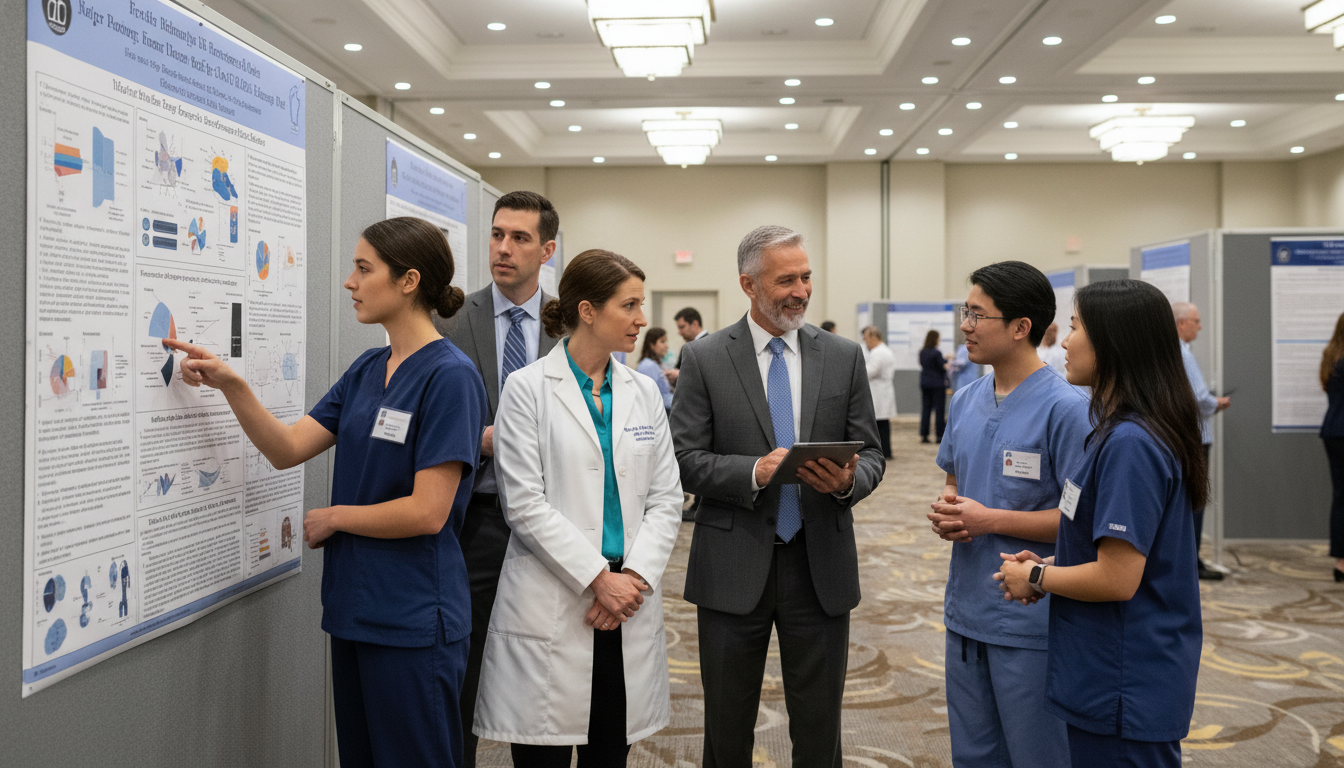
Mastering Conference Networking in Family Medicine
Conference networking is one of the most efficient ways to grow your professional circle quickly. For family medicine, high-yield meetings include:
- National: AAFP National Conference, AAFP FMX, STFM, NAPCRG
- Regional and state AAFP meetings
- Specialty interest conferences (sports medicine, addiction, geriatrics, palliative care)
Before the Conference: Strategic Preparation
Set 2–3 specific goals Examples:
- Meet at least 3 faculty working in rural FM
- Speak with at least 2 people involved in addiction medicine
- Identify 2–3 potential mentors for academic FM
Research attendees and sessions
- Review the program ahead of time.
- Highlight:
- Speakers whose work interests you
- Sessions related to your niche (e.g., obstetric care in rural settings)
- Residency fair or career fair sessions if you’re pre-residency
Prepare your “living business card” You don’t always need physical cards; what you need is a concise, adaptable personal introduction:
“I’m [Name], a [MS4 / PGY-2] interested in family medicine with a focus on [interest area], especially [specific angle—rural, underserved, behavioral health integration, etc.]. I’m currently working on [1–2 projects] and exploring [fellowship/jobs/academic roles].”
Update your online presence
- Refresh your LinkedIn profile and, if relevant, a simple professional website or portfolio.
- Ensure your email signature includes:
- Full name, degree
- Program and year
- Contact info
- (Optional) One line about your professional interests
At the Conference: Practical Tactics
Use the built-in networking structures
- Residency fairs, mentoring breakfast sessions, student or resident tracks
- Meet-the-expert or small-group sessions: these are ideal for low-pressure engagement
How to approach someone after a talk Script you can adapt:
- Step 1: Wait your turn; stand where the speaker can see you’re in line.
- Step 2: “Thank you for your talk on [topic]; I especially appreciated [specific detail].”
- Step 3: “I’m a [student/resident] interested in [related area]. Would you be open to my emailing you later with a couple of questions about how you got started in this work?”
This is low-pressure, specific, and respectful of their time.
Poster and exhibit hall strategy
- Prioritize posters that align with your interests.
- Ask presenters:
- “What surprised you most about your results?”
- “If you had more time or funding, what would be the next step?”
- If you connect well, ask:
- “Could we exchange emails? I’d love to follow your work.”
Be intentional at social events
- Sit with people you don’t already know.
- Introduce yourself using your prepared intro.
- Ask open-ended questions:
- “What brings you to this conference?”
- “What kind of work do you do in family medicine?”
- “How did you end up in your current role?”
After the Conference: Follow-Up That Actually Works
Follow-up is where conference networking turns into medical networking that lasts.
Within 72 hours
- Send short, tailored emails to key contacts:
- Remind them who you are and where you met.
- Reference 1–2 specific things you discussed.
- Make a small, clear ask (if appropriate):
“Would you recommend any introductory readings on X?”
“Could we schedule a 20-minute call sometime next month?”
- Send short, tailored emails to key contacts:
Organize your new contacts
- Create a simple spreadsheet or use a contact app with:
- Name, role, institution
- Where/when you met
- Interests and potential overlap
- Last contact date
- Schedule calendar reminders to check in every 6–12 months where it makes sense.
- Create a simple spreadsheet or use a contact app with:
Offer value when possible Even as a student or resident, you can:
- Share articles or guidelines relevant to their interests.
- Offer help gathering data, writing a case report, or presenting a poster.
- Connect them with others (e.g., a co-resident sharing similar interests).
Mentorship in Medicine: Finding, Keeping, and Being a Good Mentee
The phrase “mentorship medicine” reflects how central mentoring is to developing as a physician. In family medicine, where career paths are incredibly diverse, mentorship is often the difference between feeling lost and feeling guided.
Types of Mentors You Need in Family Medicine
Career Path Mentor
- Helps you navigate choices: hospitalist vs outpatient, rural vs urban, academic vs community
- Provides long-term perspective on job satisfaction and lifestyle
Content Expert Mentor
- Deep knowledge in an area (e.g., addiction medicine, obstetrics, sports medicine, geriatrics, palliative, HIV care)
- Guides you toward specific training, CME, and project opportunities
Process Mentor
- Skilled in research methods, QI, teaching, or leadership
- Helps you transform ideas into tangible outputs (papers, curricula, protocols)
Identity-Affirming Mentor
- Shares aspects of your background or lived experience (race, gender, LGBTQ+, first-gen, immigration, etc.)
- Understands the subtle challenges you may face in training and practice
How to Ask Someone to Be Your Mentor
You rarely need to use the word “mentor” right away. Instead:
- Start small
- “Could I schedule a 20-minute meeting to get your perspective on X?”
- Be specific in your request
- Why you’re reaching out to them in particular
- What you hope to discuss (FM match strategy, career options, research idea)
- At the end of the meeting
- If it went well, say:
“I’ve found your advice incredibly helpful. Would you mind if I followed up with you periodically as I navigate [FM match / residency / career planning]?”
- If it went well, say:
Over time, the relationship naturally becomes mentorship.
How to Be a Good Mentee
Mentorship is still networking in medicine—it must be respectful and reciprocal.
- Prepare before meetings:
- Send a brief agenda or 2–3 questions in advance
- Bring an updated CV or personal statement if you’re discussing careers
- Follow through:
- If your mentor suggests an article, read it
- If they introduce you to someone, follow up promptly
- Respect boundaries:
- Don’t expect immediate replies
- Be clear about deadlines (e.g., “My ERAS submission is in 3 weeks; would you be able to review my personal statement?”)
- Express appreciation:
- Thank-you emails after major help
- Acknowledgments in posters, papers, or presentations
Eventually, as you progress, you’ll also mentor others—students, junior residents, or pre-meds—which further solidifies your network and leadership.

Digital and Informal Networking: Beyond Conferences and Clinics
Networking in medicine does not only happen at formal events. Much of modern medical networking occurs in digital spaces and everyday clinical life.
Professional Online Presence
LinkedIn
- Keep your headline concise: “Family Medicine Resident | Interested in [X, Y].”
- Add 4–6 bullet points under each role (student leader, resident, researcher).
- Follow:
- Family medicine organizations (AAFP, STFM, NAPCRG)
- Clinics or institutions you're interested in
- Leaders in your area of interest
Professional X (Twitter) / Threads / Other Platforms Use cautiously and professionally:
- Follow FM thought leaders and organizations.
- Engage by thoughtfully commenting on research, guidelines, and policy developments.
- Avoid sharing protected health information or unprofessional content.
Email etiquette
- Clear subject lines: “MS4 interested in family medicine – request for brief meeting”
- Professional greeting and sign-off
- Keep emails concise and focused on one main ask
Everyday Clinical Networking
Some of your most impactful networking occurs in daily work:
With specialists
- Call consults respectfully and clearly.
- Ask:
- “Any recommendations for good resources on this condition?”
- “How do you generally like to see these referrals framed?”
Over time, you’ll be known as a thoughtful, prepared family physician—specialists remember this when collaborating and when jobs arise.
With nursing and ancillary staff
- Introduce yourself early and learn names.
- Ask for feedback on your communication and workflow.
- Be visibly collaborative. Nursing leaders and office managers often have significant influence on job hiring and recommendations.
Within your community Family medicine is uniquely embedded in the community. Network with:
- School nurses
- Public health departments
- Local nonprofit clinics and shelters
- Faith and community organizations
Offer education sessions, help with health fairs, or support vaccination drives. These relationships:
- Improve patient care
- Open doors for community-based research or leadership
- Build your reputation as a trusted community physician
Common Pitfalls and How to Avoid Them
Even well-intentioned trainees can sabotage their networking efforts. Be aware of:
1. Being Overly Transactional
Red flag behaviors:
- Only contacting people when you need a letter or job
- Immediately asking, “Can you introduce me to X?” on first meeting
Instead:
- Invest in genuinely understanding their work.
- Offer small ways to be helpful (sharing resources, helping with a project).
2. Overcommitting and Vanishing
- Saying “yes” to every opportunity is tempting, but unsustainable.
- If you drop the ball on projects, your reputation suffers.
Solutions:
- Practice saying: “I’m very interested, but my current bandwidth might not let me do this well. Is there a smaller role I could take?”
- Communicate early if deadlines need to shift.
3. Neglecting Follow-Up
You can have dozens of brief positive interactions that go nowhere if you don’t:
- Send a brief follow-up email
- Connect on LinkedIn (when appropriate)
- Check in once or twice a year with meaningful updates
4. Underestimating Your Own Value
Students and residents often feel they have nothing to offer. In reality, you bring:
- Time and energy to help with data, literature reviews, and presentations
- A fresh perspective on training and system issues
- Connection to peers (for recruitment, collaboration, feedback)
View networking as joining a shared mission, not asking for favors.
FAQs: Networking in Medicine for Family Medicine
1. How early should I start networking if I’m aiming for a family medicine residency and a strong FM match?
Start as soon as you have even a tentative interest in family medicine—often in pre-clinical years or early clinical rotations. Join your FM interest group, attend departmental events, and introduce yourself to FM faculty. The relationships you build over 1–3 years lead to more authentic letters, mentorship, and insider advice that will support your FM match.
2. I’m introverted and dislike “working the room.” Can I still be effective at medical networking?
Yes. Focus on small-group and one-on-one interactions. Schedule short meetings, attend smaller workshops, and use email to initiate contact. Prepare a simple introduction and a few open-ended questions. Depth matters more than breadth; a handful of strong, genuine relationships will serve you better than dozens of superficial ones.
3. How do I ask for a letter of recommendation from someone in my network?
Ask directly but respectfully, and give them an easy way to decline:
- “I’ve really valued working with you on X. I’m applying to family medicine residency this cycle and would be honored if you’d consider writing a strong letter of recommendation for me. If you’re comfortable, I can share my CV, personal statement draft, and a summary of our work together.”
If they hesitate or say they can’t write a strong letter, thank them and ask if they can suggest someone else who knows your work well.
4. How do I maintain networking relationships once I’ve finished residency or moved institutions?
Think of networking as ongoing professional friendship:
- Send occasional brief updates (once or twice a year): new roles, projects, or publications.
- Congratulate them when you see achievements on LinkedIn or professional emails.
- Continue to share resources, opportunities, or potential collaborators.
- When appropriate, invite them to collaborate on talks, workshops, or manuscripts.
Even if your paths diverge geographically, shared interests in family medicine, patient care, and education keep these relationships relevant and mutually beneficial.
Effective networking in medicine, especially within family medicine, is not about aggressive self-promotion. It is about building authentic, sustained relationships that serve patients, communities, and your own professional growth. If you approach each interaction with curiosity, respect, and a willingness to contribute, your network will become one of the most powerful assets of your entire career.