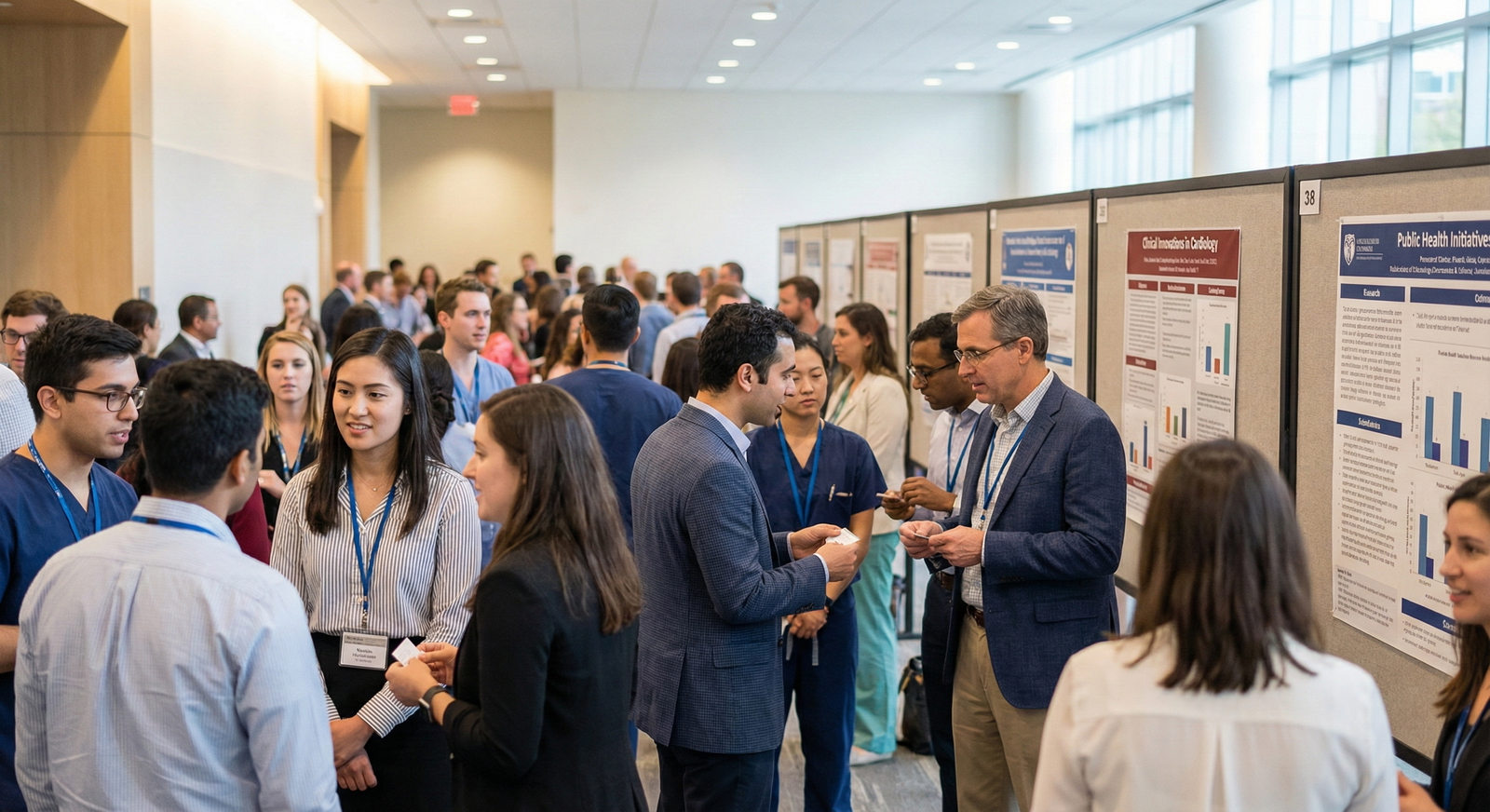
Why Networking in Medicine Matters in Internal Medicine
Networking in medicine is not just a “nice-to-have” skill; in internal medicine residency and beyond, it is a core professional competency. For internal medicine residents, thoughtful medical networking can:
- Improve your chances in the IM match and fellowship applications
- Open doors to research, QI projects, and leadership roles
- Provide guidance and support through mentors and sponsors
- Help you discover (and pivot between) subspecialty interests
- Support your long-term career in academic, hospital, or community medicine
In a specialty as broad as internal medicine—spanning hospitalist work, primary care, and subspecialties like cardiology, GI, oncology, and more—who you know often determines which opportunities you even hear about. The goal isn’t schmoozing; it’s building authentic, mutually beneficial professional relationships that improve patient care and your trajectory as a physician.
This guide will walk you through a structured approach to networking in internal medicine, tailored specifically to the realities and time constraints of residency life.
Understanding Networking in Internal Medicine
What Networking in Medicine Really Is (and Isn’t)
Networking in medicine is:
- Relationship-building based on shared interests, goals, and values
- Exchange of information about clinical practice, education, research, and careers
- Longitudinal—it develops over months and years, not one conversation
- Bidirectional—you also contribute: enthusiasm, hard work, ideas, connections
It is not:
- Collecting as many business cards or LinkedIn contacts as possible
- Name-dropping or transactional interactions
- Insincere flattery to “get something” from someone
- A one-time activity you do just before the IM match or fellowship applications
In internal medicine, where collaboration and continuity are baked into daily work, effective networking feels a lot like the best aspects of patient care: listening carefully, understanding context, and staying in touch.
The Unique Networking Landscape in Internal Medicine
Internal medicine presents especially rich networking opportunities because:
- Every rotation (wards, ICU, subspecialty services) brings you to new attendings and fellows.
- Interdisciplinary care (pharmacy, nursing, social work, case management) expands your professional circle.
- Subspecialization is common, and many residents are exploring long-term directions; conversations are naturally goal-oriented.
- Internal medicine is heavily represented in national organizations with robust early-career programming.
Key environments for networking in internal medicine:
- Inpatient services: Day-to-day work with hospitalists, intensivists, and subspecialists.
- Outpatient clinics: Longitudinal mentorship with preceptors.
- Academic conferences: ACP, SHM, CHEST, subspecialty society meetings, and regional chapter meetings.
- Institutional committees: QI, patient safety, ethics, residency education committees.
- Online platforms: LinkedIn, Twitter/X, institutional alumni networks, and specialty listservs.
Building Your Core Network During Residency
Your most important network in internal medicine often starts right where you train. Before you think about national conference networking, you should strategically cultivate relationships at your home institution.

Start with Your Immediate Circle
Even if you’re early in residency, your core network already includes:
- Co-residents (all years)
- Chief residents
- Program leadership (PD, APDs, core faculty)
- Hospitalists and intensivists you work with frequently
- Subspecialty attendings you see on electives
- Pharmacists, case managers, and nurses who know your work ethic
These individuals are often the ones who:
- Nominate you for awards and committees
- Recommend you for resident leadership roles
- Connect you to research or QI projects
- Serve as early letter writers for the IM match (pre-residency) or subspecialty fellowship applications
Actionable Steps
Show up prepared and engaged every day.
The most powerful networking tool you have is consistent, reliable clinical performance. People remember:- The intern who always follows up on pending tests
- The resident who teaches students at the bedside
- The resident who is calm, kind, and organized on call
Ask for debrief and feedback.
After a rotation:- “I really enjoyed working with you this month. Could I have 10–15 minutes to get feedback and some career advice?”
This simple ask converts a routine rotation into an intentional mentorship opportunity.
- “I really enjoyed working with you this month. Could I have 10–15 minutes to get feedback and some career advice?”
Stay in touch after rotations.
- Email a brief thank-you note, mentioning a specific teaching point you valued.
- Update them later: “I applied that approach to chest pain from our rotation and it worked really well.” These micro-updates keep the relationship alive.
Identifying Potential Mentors and Sponsors
Networking in internal medicine is not just about mentors (“advice-givers”); it’s also about sponsors (“opportunity-openers”).
- Mentor: Offers guidance, feedback, and perspective.
- Sponsor: Uses their reputation and position to advocate for you, e.g., nominating you for a talk, committee, or fellowship opportunity.
Look for people who:
- Take genuine interest in your growth
- Involve you in projects or invite your opinion
- Advocate for learners in meetings
- Have roles aligned with your interests (e.g., hospitalist QI lead, APD with focus on medical education, researcher in your subspecialty interest)
How to Approach a Potential Mentor
Keep it simple, concrete, and respectful of time:
“Dr. Lee, I really appreciated your teaching in the ICU and your approach to complex decision-making. I’m interested in a career in critical care and QI. Would you be open to a brief 20-minute meeting to discuss how I can start building a portfolio in this area as a resident?”
Come prepared with:
- A one-page CV or updated ERAS application (if pre-residency)
- A short summary of your interests and questions
- A sense of what you’re hoping for (e.g., feedback, project ideas, fellowship advice)
Conference Networking: Making the Most of ACP, SHM, and Subspecialty Meetings
Conference networking is one of the most visible parts of medical networking, but it’s often approached randomly. For internal medicine residents, especially those targeting competitive fellowships, strategic conference networking can be transformative.

Choosing the Right Conferences
Common conferences for internal medicine residents:
- ACP (American College of Physicians) – Broad internal medicine focus; excellent for general IM and early-career networking.
- SHM (Society of Hospital Medicine) – Ideal for hospitalist and inpatient-focused residents.
- CHEST, ATS, AHA, ASN, ASCO, ACG, IDSA, and other subspecialty meetings – Crucial if you’re exploring or committed to a subspecialty.
- Regional/state chapter meetings – Smaller, more intimate; easier to meet leaders and get speaking opportunities.
For each conference you attend, define a primary purpose:
- Identify mentors in a specific subspecialty
- Present your work and get feedback
- Learn about fellowship programs
- Build your mentorship medicine network (people who can advise your long-term career)
Pre-Conference Preparation
Study the program in advance.
Identify:- Sessions directly relevant to your interests
- Speakers from institutions or programs you’re targeting
- Networking events (early-career lounges, trainee receptions, mentorship meetups)
Reach out before you go.
Example email:Subject: Internal Medicine Resident Interested in Your Work – [Conference Name]
Dear Dr. Patel,
I am a PGY-2 internal medicine resident at [Institution] with a strong interest in [e.g., cardio-oncology and outcomes research]. I’ve followed your work on [specific paper or project]. I will be attending [Conference Name] and noticed you’re speaking on [Session Title].
If you have availability, I would be grateful for 15 minutes during the meeting to briefly introduce myself and ask your advice on building a career in this space. I’ve attached a short CV for context but understand if your schedule is full.
Thank you for considering this,
[Your Name], MD
PGY-[Year], Internal Medicine
[Institution]Prepare your 20–30 second “professional intro.”
- Who you are
- Where you’re training
- Your core interests
- One sentence about what you’re looking for
Example:
“Hi, I’m Sarah Ahmed, a PGY-2 in internal medicine at University Hospital. I’m interested in becoming an academic hospitalist with a focus on sepsis quality improvement. I’ve been working on a project to improve time-to-antibiotics on our wards and would love to learn how others are doing similar work.”
Bring and update your materials.
- Business cards (if available)
- Digital CV (PDF) ready to email
- Slides or poster files accessible online if relevant
On-Site Conference Networking Strategies
Attend trainee-focused events.
Look for:- Resident/fellow lounges
- Speed mentoring sessions
- Early-career panels and receptions
These are designed to facilitate conference networking without awkwardness.
Approach speakers strategically.
After a talk or panel:- Introduce yourself succinctly.
- Ask one thoughtful question or comment that shows you listened.
- If it goes well, ask: “May I email you later to follow up with a few more questions?”
Use meals and breaks intentionally.
Instead of sitting alone:- Join a table where you don’t know anyone.
- Use simple openers: “Mind if I join you?” then “What brings you to the conference?”
- Ask others about their work and experience; curiosity is your ally.
Leverage your poster or oral presentation.
Your poster is a built-in conversation starter. Practice a 1-minute and 3-minute version of your explanation. At the end, ask:- “I’m thinking about how to evolve this into a larger project. Any suggestions?”
- “Are there institutions or collaborators you’d recommend if I want to expand this work during fellowship?”
Post-Conference Follow-Up
Networking efforts at conferences are wasted if you don’t follow up:
Within 3–5 days, send brief personalized emails:
- Reference where you met and what you discussed
- Thank them for a specific piece of advice
- If appropriate, attach your CV or a relevant abstract/manuscript
- Propose a short virtual meeting if you want to explore mentorship or collaboration
Add them to:
- LinkedIn or Twitter/X (if they are active there)
- A simple contact tracking document (spreadsheet or note) with:
- Name, role, institution
- How you met
- Interests
- Date and content of last contact
Digital and Everyday Networking: Beyond Conferences and Clinics
Networking in medicine is no longer limited to in-person interactions. Internal medicine residents can build robust professional networks digitally, which is especially useful if you’re at a smaller or community program.
Professional Use of Social Media and Online Platforms
LinkedIn
- Maintain a professional, updated profile with:
- Headshot (professional, neutral background)
- Clear headline (“PGY-2 Internal Medicine Resident | Interested in Cardiology and Outcomes Research”)
- Short summary of interests and goals
- Connect with:
- Residency alumni
- Attendings and fellows you’ve worked with
- Faculty you meet at conferences
- Engage by:
- Sharing conference experiences, publications, or teaching projects
- Commenting thoughtfully on others’ professional posts
- Maintain a professional, updated profile with:
Twitter/X (“MedTwitter”)
Many internal medicine physicians use Twitter/X for academic discussion and medical networking:- Follow:
- Major societies (ACP, SHM, subspecialty societies)
- Thought leaders in your interest area
- Residency and fellowship program accounts
- Engage:
- Share responsible, de-identified reflections on medicine and education
- Participate in journal clubs, tweetorials, and conference hashtags
- Avoid:
- Patient-identifiable information
- Unprofessional or inflammatory content
- Follow:
Institutional Alumni Networks
Ask your program leadership about:- Alumni databases or newsletters
- Opportunities to connect with graduates now in academic or leadership roles
Alumni often remember residency as a pivotal time and are surprisingly willing to talk with current trainees.
Everyday Networking on the Wards and in Clinic
Some of your most powerful networking occurs organically:
Working with consultants
- Call consults professionally and respectfully.
- Learn their preferences and incorporate feedback.
- After a particularly helpful or educational consult, send a short thanks.
Interdisciplinary collaboration
- Get to know pharmacists, case managers, and nurses by name.
- Show appreciation for their expertise.
- These colleagues often advocate informally for residents and can introduce you to faculty on committees and projects.
Committees and institutional roles
Internal medicine residents can build visibility by joining:- Patient Safety or QI committees
- Graduate Medical Education councils
- Diversity, equity, and inclusion initiatives
- Ethics or morbidity & mortality committees
These roles expand your network beyond your immediate clinical environment and showcase your leadership potential.
Matching, Mentorship, and Long-Term Networking Strategy
Networking is deeply tied to the IM match, fellowship applications, and career development. You don’t need to be at a famous program to build a powerful network—you need to be intentional.
Networking and the Internal Medicine Match
For medical students targeting internal medicine residency:
During rotations and sub-internships
- Treat each rotation as an extended interview.
- Build rapport with residents and attendings; they often provide informal feedback to program leadership.
- Ask for honest advice on your competitiveness and application strategy.
Away rotations and visiting electives
- Be professional and proactive, but not overbearing.
- At the end, ask your supervising resident and attending if they’d be comfortable providing feedback or a letter.
- Stay in touch through periodic updates (match results, publications, etc.).
Interview season
Networking during the IM match process happens via:- Pre-interview socials with residents
- Email exchanges with PDs or APDs after interviews (brief, specific, respectful)
- Professional social media engagement with programs (commenting on achievements, DEI initiatives, etc.)
Networking for Fellowship and Early Career
For internal medicine residents planning fellowship:
Cultivate subspecialty mentors early (PGY-1 or PGY-2).
- Rotate on services in your interest area more than once.
- Join research or QI projects with those faculty.
- Seek opportunities to co-author posters or papers.
Ask mentors for targeted introductions.
Example:“Dr. Gomez, I’m interested in applying to GI fellowships at programs doing strong outcomes research. Are there colleagues you’d recommend I talk with to learn more about specific programs or potential research fits?”
Use conferences strategically.
- Arrange brief meetings with potential fellowship program faculty.
- Attend program-sponsored receptions.
- Follow up with thank-you notes and updated CVs.
Sustaining Your Network Over Time
As you progress:
Update your core contacts at key milestones
- Matching into residency or fellowship
- Publications, awards, or grant funding
- Job changes or promotions
Offer value, even as a trainee
- Share relevant articles or resources.
- Offer to help with small tasks on projects.
- Connect people with shared interests (e.g., “I know another resident working on a similar curriculum—would you like an introduction?”).
Be consistent but not intrusive
- Touch base every 6–12 months with key mentors and sponsors.
- Be mindful of their time; short, focused emails are best.
Common Pitfalls and How to Avoid Them
Even well-intentioned residents can undermine their networking efforts. Be aware of these traps:
1. Being Overtly Transactional
Red flag behaviors:
- Only contacting people to ask for favors (letters, introductions, projects).
- Ignoring past mentors once they’ve written a letter or helped you match.
Instead:
- Maintain regular, low-pressure contact.
- Express genuine gratitude and share outcomes: “Your letter and advice truly shaped my application; I matched at [Program] and am very grateful.”
2. Overloading Yourself with Projects
Saying “yes” to every opportunity can hurt your reputation if you can’t follow through.
Before committing, ask:
- What is the expected time commitment?
- What is the realistic timeline?
- What will my role and authorship position be?
It’s better to:
- Do fewer projects well with strong collaborators
- Build a reputation for reliability and quality
3. Neglecting Professionalism Online
Remember:
- Program directors, fellowship directors, and faculty often see your public posts.
- Maintain patient confidentiality rigorously.
- Avoid unprofessional content and heated arguments.
4. Assuming You Have Nothing to Offer
Even as a student or resident, you can:
- Provide fresh perspectives on education and systems issues
- Share your energy and effort on projects that mentors care about
- Help with data collection, literature reviews, poster creation, and presentations
- Act as a connector among peers and across institutions
Networking in medicine is about long-term relationships, not hierarchical transactions.
FAQs: Networking in Internal Medicine
1. How early should I start networking in internal medicine?
You can start as early as medical school, especially during your core medicine clerkship and sub-internships. Focus first on building strong relationships with residents and attendings at your home institution. By early in residency (PGY-1), begin exploring subspecialty interests and seeking mentors, especially if you’re considering competitive fellowships.
2. I’m an introvert. Can I still be effective at medical networking?
Yes. Many outstanding internists and subspecialists are introverts. Focus on:
- One-on-one or small group interactions rather than large receptions
- Prepared, thoughtful questions for mentors instead of spontaneous small talk
- Follow-up emails and scheduled video calls, which can feel less draining than long in-person events
Authenticity, reliability, and curiosity matter far more than being outgoing.
3. How many mentors should I have in internal medicine?
Most residents benefit from a mentorship “team” rather than a single mentor:
- 1–2 clinical mentors in your area of interest
- 1 research/QI mentor (if applicable)
- 1 career or general professional development mentor (e.g., APD, chief resident)
These roles may overlap, and that’s fine. The key is to have different perspectives and skill sets supporting you.
4. How do I ask for a letter of recommendation through networking?
Ask someone who:
- Knows your work well
- Has seen you clinically and/or academically over time
- Can comment on your growth and professionalism
Phrase the ask clearly:
“Dr. Nguyen, I am applying for cardiology fellowship this cycle and would be honored if you would consider writing a strong letter of recommendation on my behalf, based on our work together in the CCU and on the heart failure QI project. I’d be happy to provide my CV, personal statement draft, and a summary of our work together.”
Give ample time (ideally 6–8 weeks) and follow up respectfully if needed.
Networking in internal medicine is about building a professional community that supports excellent patient care and meaningful careers. With intentionality, humility, and consistency, your network will grow naturally from the everyday work you already do—on rounds, in clinic, at conferences, and online—and will continue to shape your opportunities long after residency ends.