Why Networking Matters So Much in Diagnostic Radiology
If you’re an MD graduate aiming for a diagnostic radiology residency, networking in medicine is not optional—it’s strategic. Radiology is a relatively small, well-connected specialty where program directors and faculty often know each other personally, remember standout students, and share impressions behind the scenes.
For an MD graduate residency applicant from an allopathic medical school, strong connections can:
- Help you understand how competitive you truly are for specific programs
- Lead to tailored advice about your application strategy
- Unlock research, QI, and leadership opportunities that are often never publicly advertised
- Generate highly personalized letters of recommendation
- Give you “inside information” about program culture, resident lifestyle, and hidden strengths or weaknesses
In a competitive diagnostic radiology match, candidates often look very similar on paper: good USMLE scores, solid clerkship grades, standard radiology electives. Your network can differentiate you in nuanced but powerful ways—how well faculty advocate for you, who calls a program director on your behalf, who forwards your CV when a late interview spot opens up.
Networking isn’t about forced small talk or transactional relationships. Done well, it’s about building genuine, professional connections over time, based on curiosity, reliability, and mutual respect.
The rest of this article focuses on how to network effectively as an MD graduate specifically targeting radiology residency and a successful diagnostic radiology match.
Foundations of Effective Networking in Medicine
Networking in medicine is fundamentally professional relationship-building. Before diving into conferences and LinkedIn, it helps to understand basic principles that apply everywhere—from your home department to national meetings.
Think Long-Term, Not Just “Match-Year”
Radiology is a career-long community. Many of the people you meet as a student or new MD will reappear:
- As fellowship directors
- As co-authors on multi-center research
- As hiring partners or chiefs later in your career
Approach networking as sowing seeds for the next 5–20 years, not just a tactical move for this year’s allopathic medical school match.
Focus on Being Useful, Not Just Visible
People remember those who:
- Follow through on tasks reliably
- Ask thoughtful questions and show genuine interest
- Make others’ work easier (e.g., running analyses, making clean figures, organizing data)
Instead of trying to “impress,” aim to contribute. The most powerful medical networking is built on a track record of being helpful, professional, and consistent.
Anchor Your Network in Radiology “Hubs”
For a diagnostic radiology career, key networking hubs include:
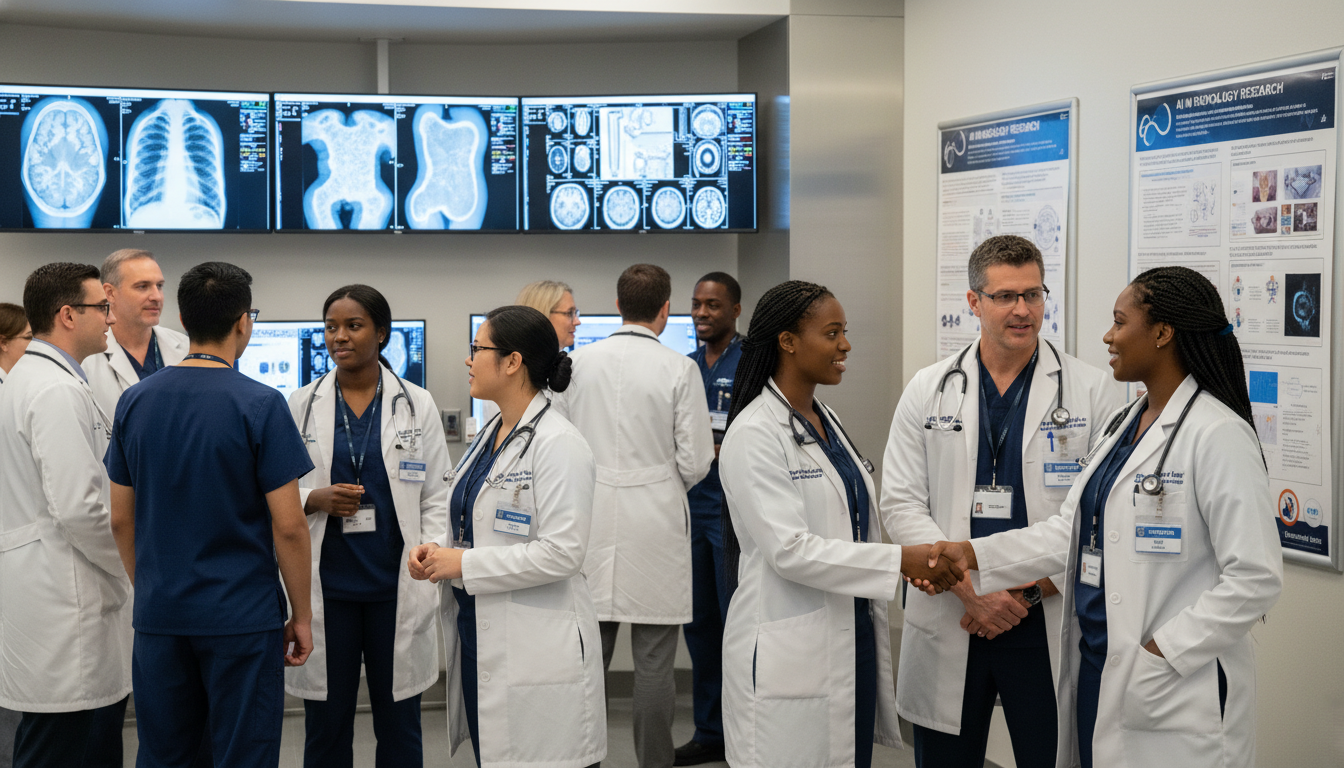
- Your home radiology department (or affiliated institutions)
- National radiology societies (ACR, RSNA, ARRS, subspecialty groups)
- Regional radiology societies (state or regional chapters)
- Hospital committees that intersect with imaging (oncology, ED, neurology, surgery)
Start local, then expand outward.
Building Your Core Network: Home Institution and Early Mentors
For most MD graduate residency applicants, your strongest leverage comes from relationships at your home institution. Even if your medical school doesn’t have a major radiology department, you can still build a powerful local network.
Step 1: Identify Potential Mentors in Radiology
Look for:
- Faculty who regularly work with students (clerkship or elective directors)
- Radiologists with active research or QI projects
- Recent graduates from your school now in radiology residency
- Faculty with leadership roles (program director, associate PD, vice chair for education or research)
Use your medical school’s website and residency program pages to map the department. Pay particular attention to those whose interests overlap with yours (e.g., MSK, neuro, IR, AI in radiology, imaging informatics).
How to Introduce Yourself Professionally
A concise, specific email works best. For example:
Dear Dr. [Name],
My name is [Your Name], and I am an MD graduate from [School] preparing to apply for diagnostic radiology residency. I’m particularly interested in [e.g., emergency radiology and AI applications in CT imaging] and would appreciate any guidance on getting involved with research or educational projects in this area.
I’ve attached my CV and would be grateful for the opportunity to meet briefly (15–20 minutes) at your convenience to discuss potential ways I might contribute to ongoing work in your group.
Thank you for your time and consideration.
Sincerely,
[Your Name]
This shows respect, clarity of purpose, and willingness to contribute.
Step 2: Convert Contacts into Mentorship and Sponsorship
There’s a difference between a casual contact, a mentor, and a sponsor:
- Contact: Knows who you are
- Mentor: Advises you and helps you grow
- Sponsor: Actively advocates for you (e.g., calls PDs, pushes your application, invites you into key projects)
Your goal is to gradually earn mentorship and then sponsorship through consistent engagement.
How to Cultivate Mentorship in Medicine
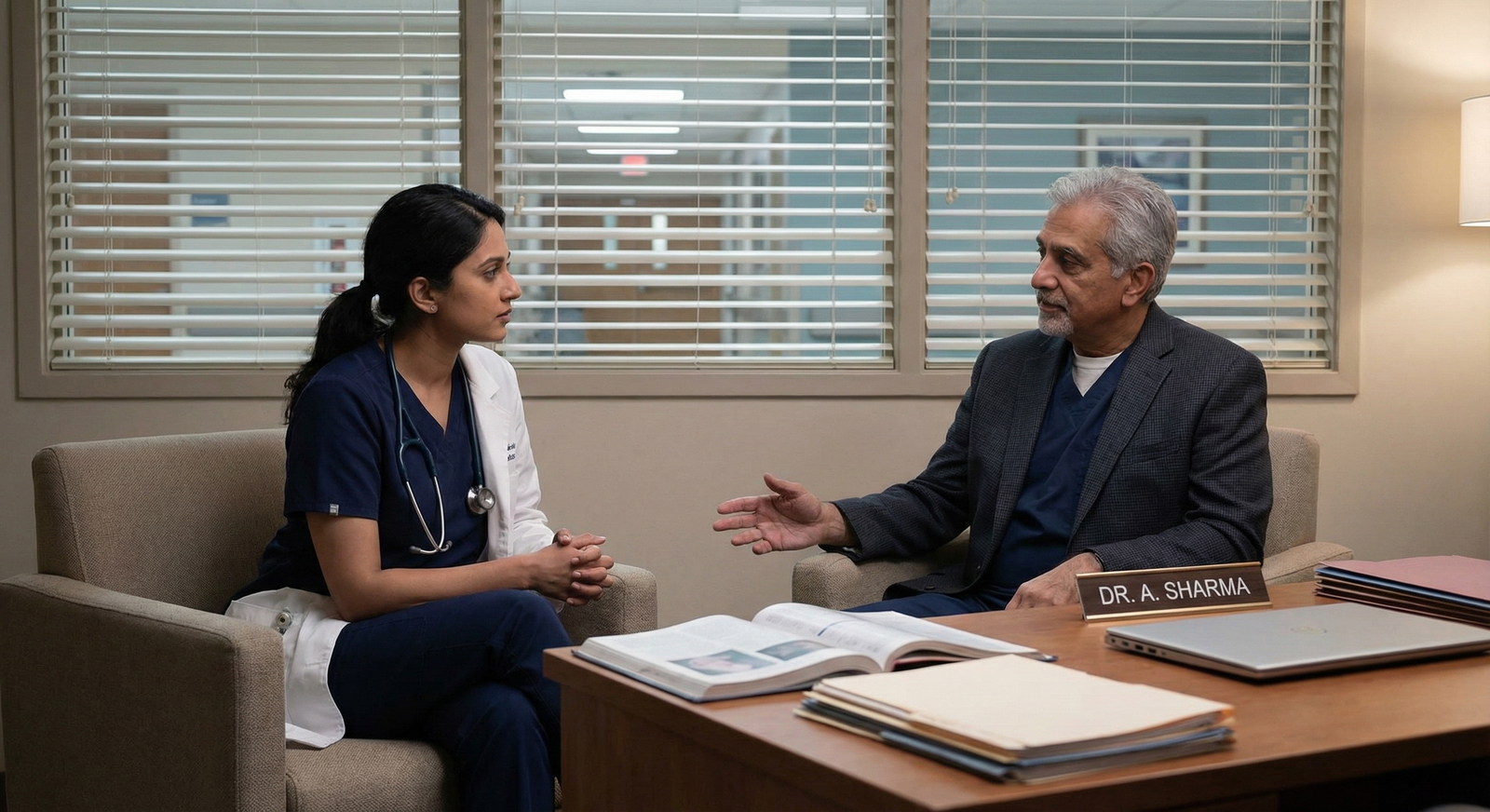
- Come prepared to meetings: Have a brief “story” about your path to radiology, your academic interests, and your general goals.
- Ask specific questions: “Given my CV and scores, what range of programs should I realistically target?” “What kind of project would be most impactful for my application timeline?”
- Follow up reliably: If you agree to run a chart review or draft a figure, deliver early or on time.
- Request feedback: “Is there anything you think I could improve in how I present my work or my interest in radiology?”
Over time, mentors who trust your work ethic are much more likely to become sponsors in the diagnostic radiology match.
Step 3: Engage the Department Beyond Your Own Projects
Become part of the department’s “ecosystem”:
- Attend radiology grand rounds and case conferences regularly
- Introduce yourself briefly to speakers when appropriate (“I’m an MD grad applying to radiology; I really appreciated your talk on…”).
- Volunteer for department events (e.g., med student info nights, QI committees, resident applicant days)
- Ask if you can help with education projects (case files, teaching materials, OSCE stations)
You want faculty and residents to recognize you as “someone who’s always around, engaged, and helpful.” Those informal impressions often translate into stronger enthusiastic letters and word-of-mouth support.
If You Lack a Home Radiology Department
If your school is small or lacks a robust radiology presence:
- Seek away rotations at institutions with strong diagnostic radiology programs.
- Ask your dean’s office to connect you with alumni in radiology.
- Use tele-radiology or online collaborative research with external faculty (through email or professional platforms).
- Tap into regional radiology societies that may offer student/graduate membership and virtual events.
These external networks can become your functional “home base” for support and sponsorship.
Strategic Conference and Online Networking for Radiology
Beyond your institution, conference networking and online connections are powerful, especially in a niche field like diagnostic radiology.
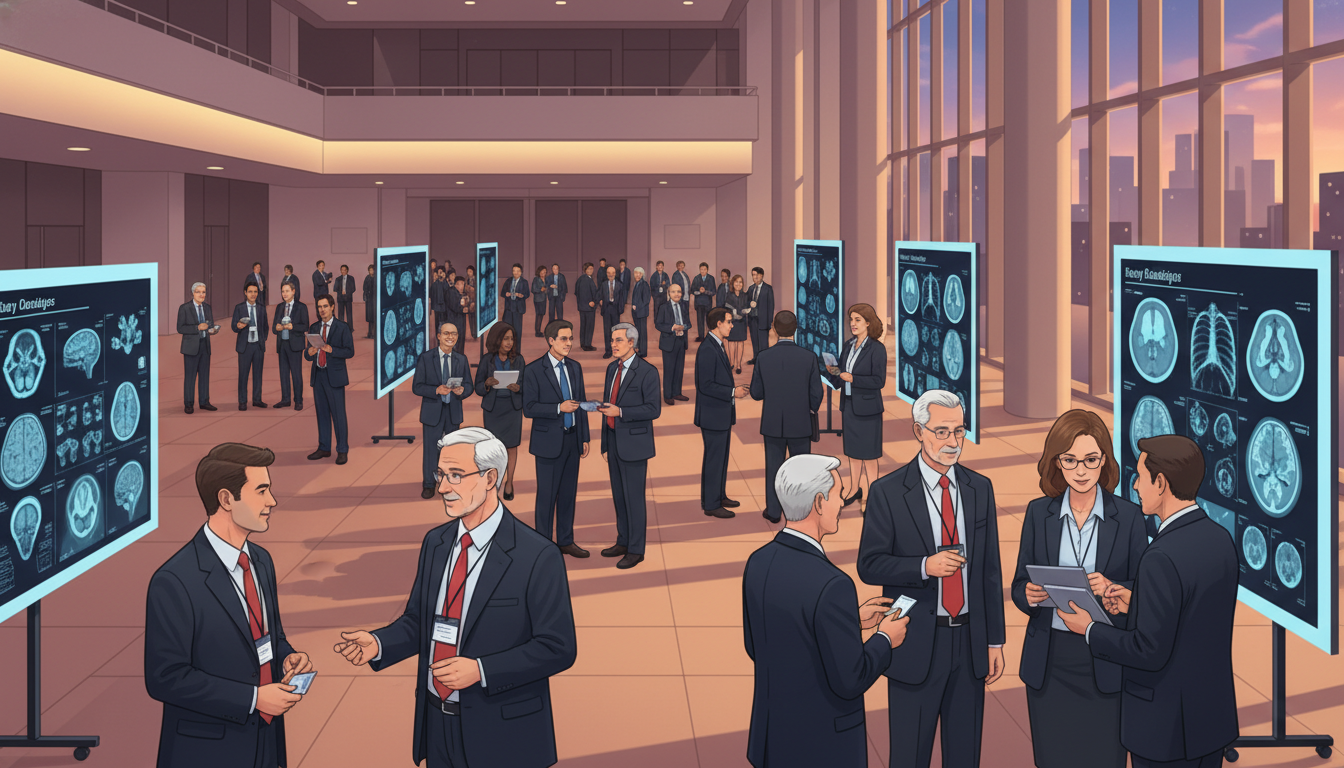
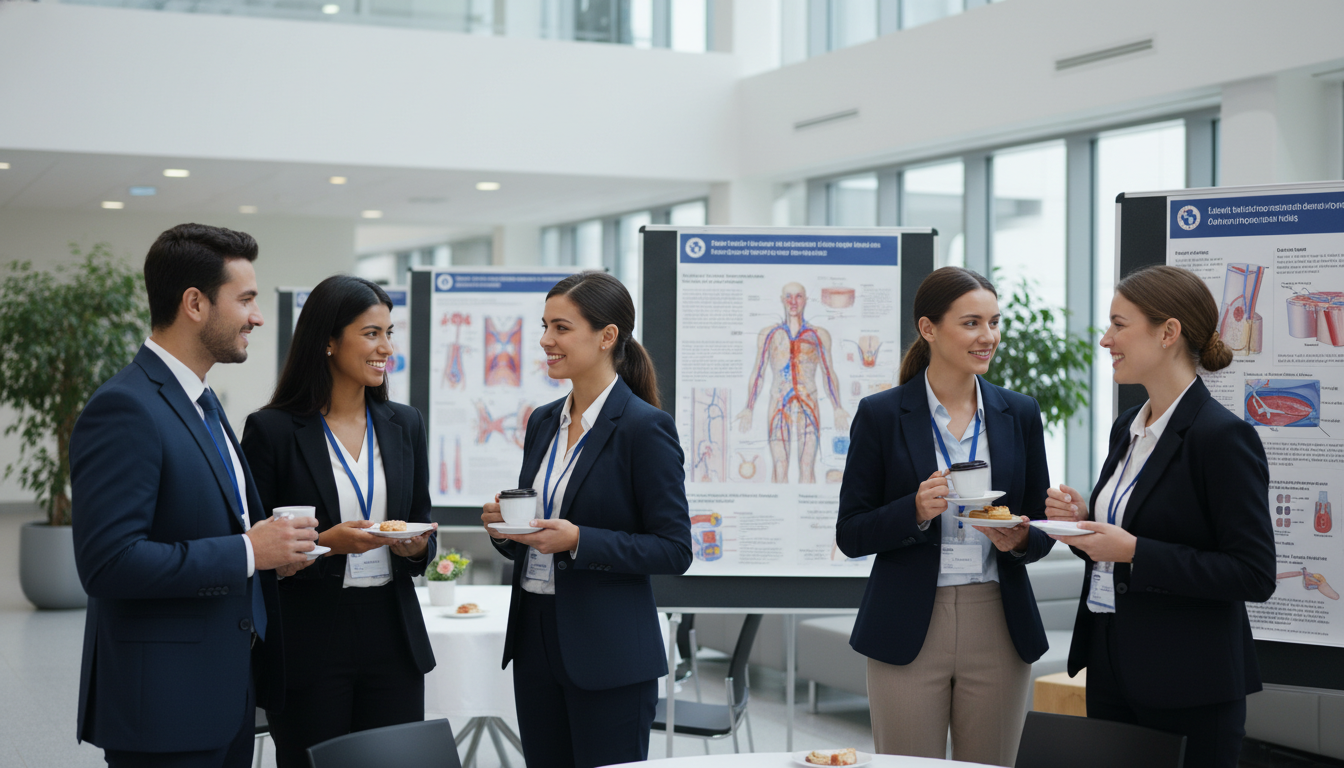
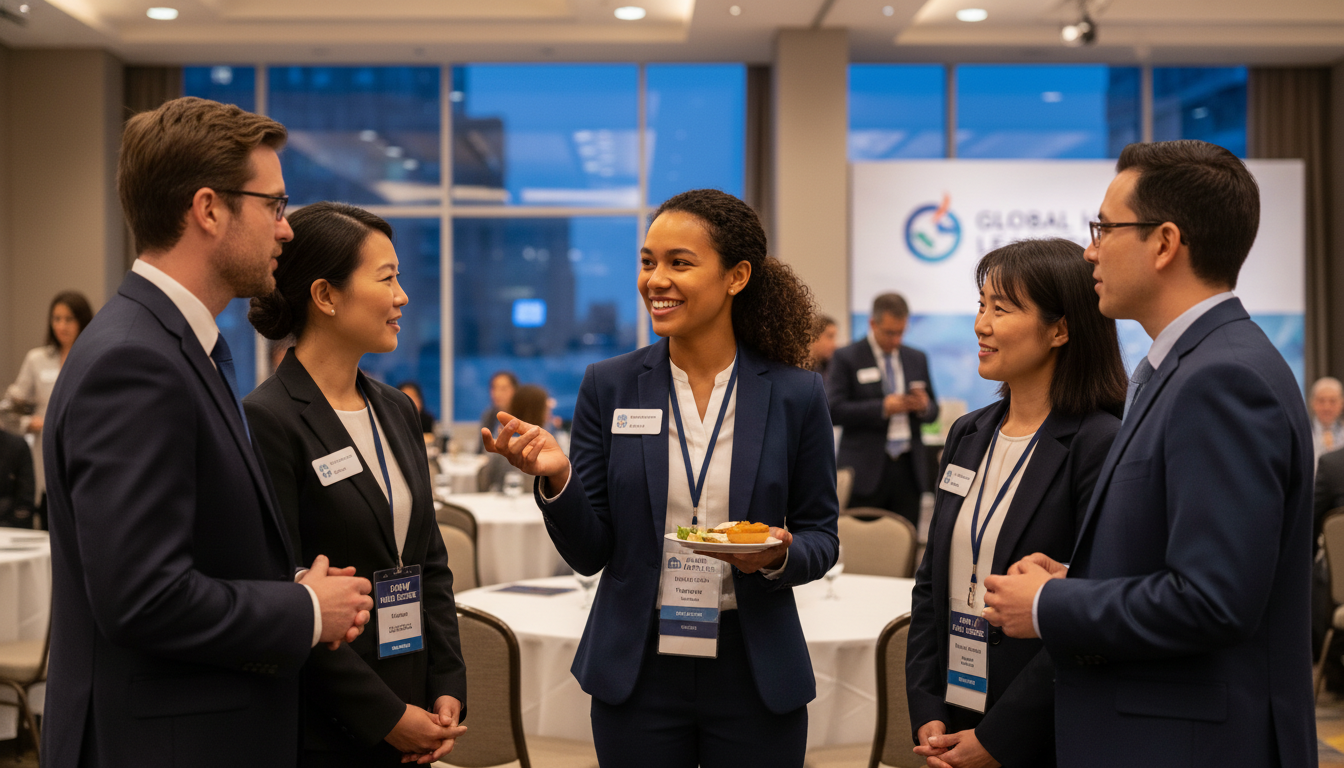
Maximizing Radiology Conferences as an MD Graduate
Key meetings for medical networking in radiology include:
- RSNA (Radiological Society of North America)
- ACR (American College of Radiology) and ACR state chapters
- ARRS (American Roentgen Ray Society)
- Subspecialty societies (e.g., ASNR, SIR, SSR, STR, ESTRO, etc., depending on interest)
You do not need to attend all of these. Even one well-planned conference can significantly expand your professional network.
Before the Conference
- Register as a trainee/student: Many societies offer discounted or free registration for early-career attendees.
- Submit something if you can: Abstract, poster, exhibit, or educational project. Having your name on the program gives you a natural reason to connect with others.
- Review the program: Mark sessions led by people whose work you’ve read or whose institutions you’re targeting for radiology residency.
- Send 2–5 pre-conference emails:
- Introduce yourself.
- Mention your interest in their work.
- Ask if they’d have 10–15 minutes to chat during the conference.
Even if only one or two reply, those conversations can be extremely high-yield.
During the Conference: Tactical Networking
- Attend early-morning or trainee-focused sessions: These are often designed for mentorship medicine and career advice.
- Ask thoughtful questions at talks (if comfortable):
- Avoid self-promotional questions.
- Focus on clarifying points or clinical application.
- Approach speakers briefly afterward:
- “Thank you for your talk on [topic]. I’m an MD graduate applying in radiology and very interested in [related area]. Would it be okay to follow up by email about potential ways to learn more or get involved in similar work?”
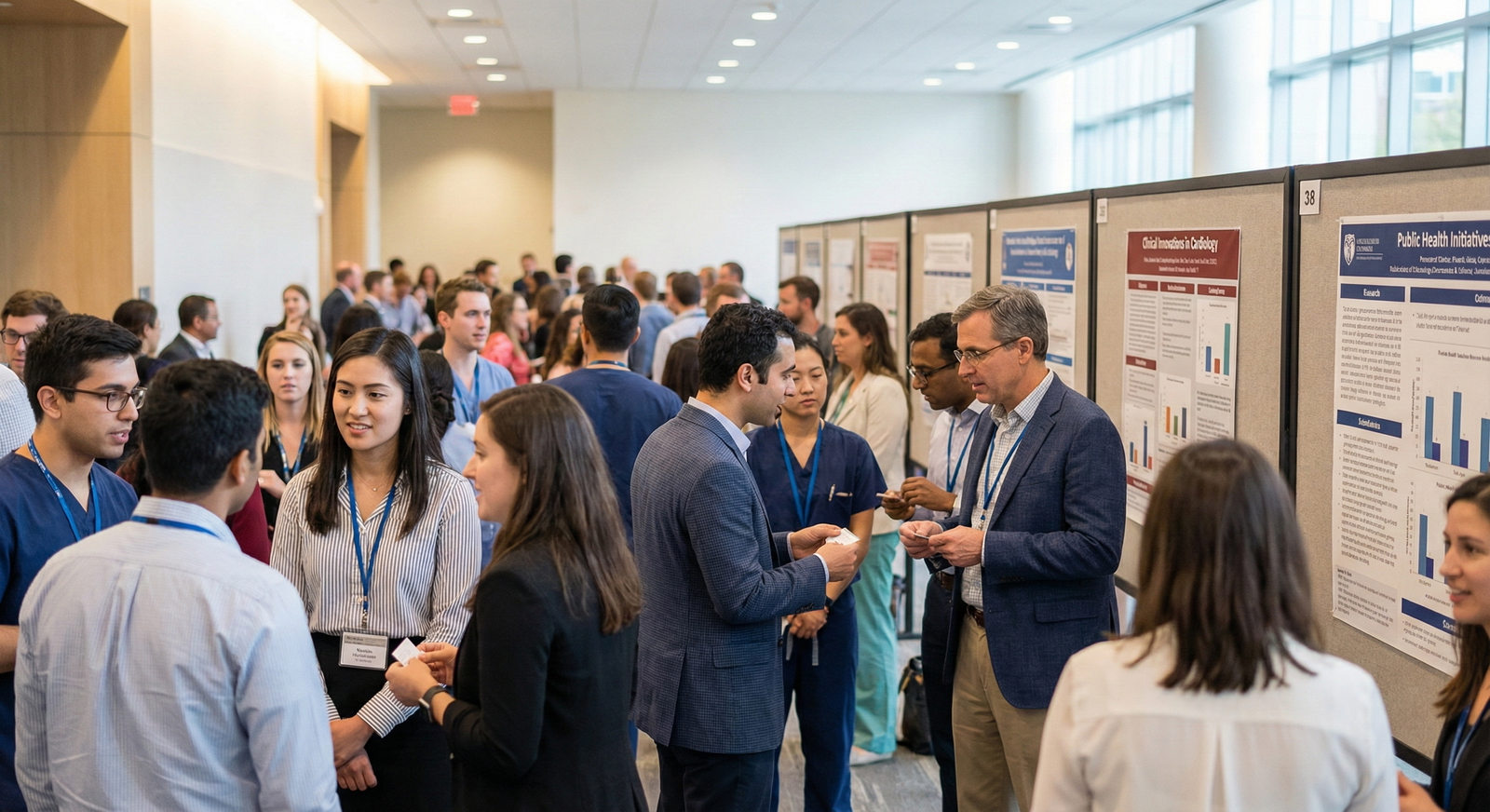
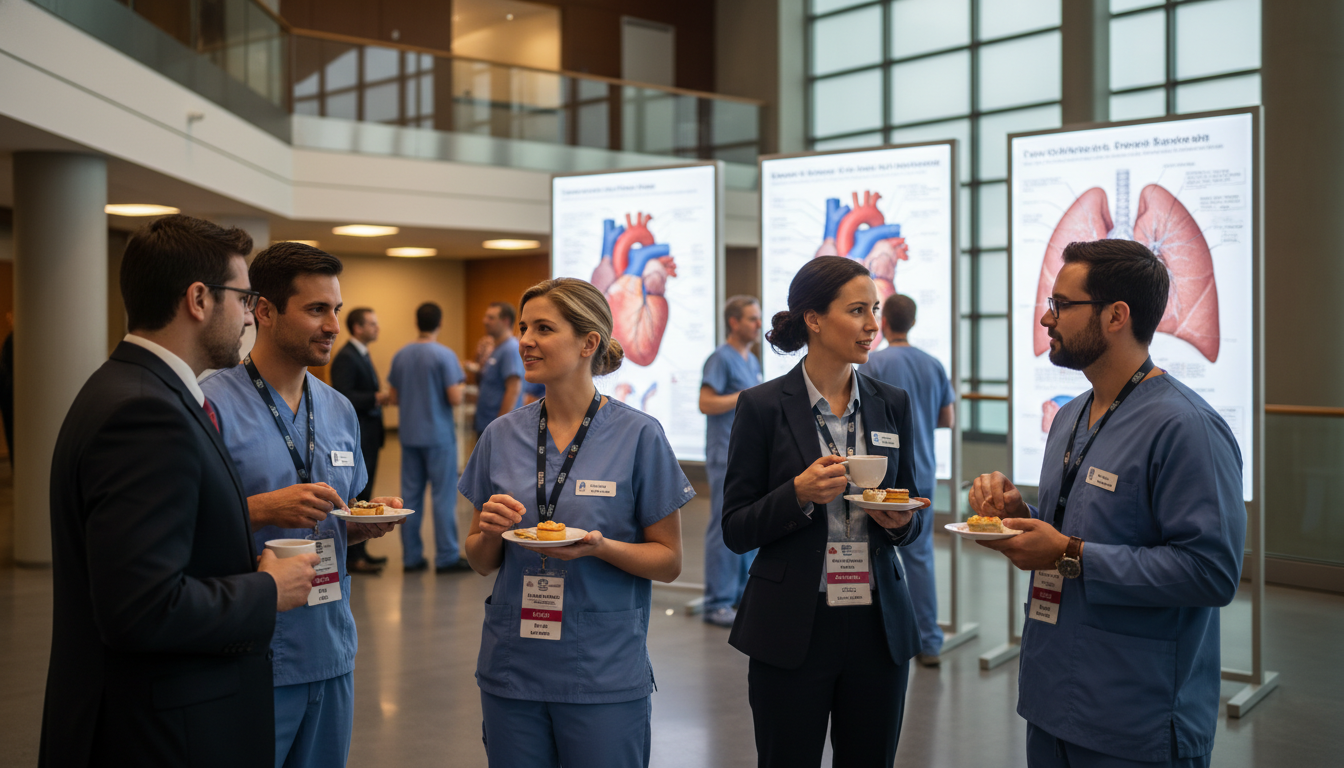
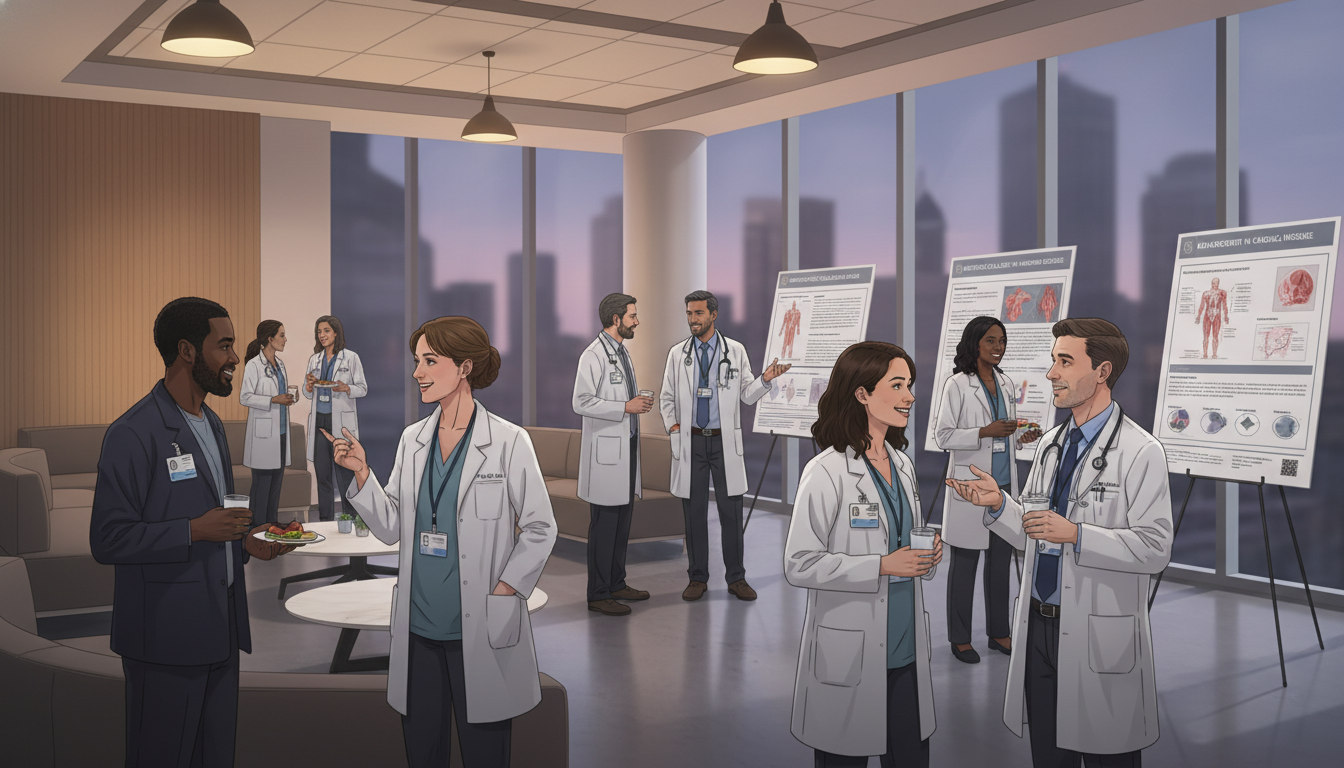
- Use poster sessions as low-pressure networking spaces:
- Start with posters related to your interests.
- Ask presenters about their methods, results, and how the project started.
- Share your interest in similar topics and exchange contact information.
Always have a simple, professional way to share your information: a paper card, a QR code to your online CV, or a professional LinkedIn profile.
After the Conference: Consolidate Relationships
Within 3–5 days:
- Email everyone you met whose contact you want to maintain.
- Reference something specific from your conversation.
- If appropriate, attach your CV and ask about future collaboration, shadowing, or advice.
Consistency after the meeting is where many applicants fail. This follow-through is what turns conference networking from a nice conversation into a professional relationship.
Online Networking: LinkedIn, X (Twitter), and Specialty Platforms
Modern networking in medicine includes a strong online component, especially in tech-forward fields like radiology.
LinkedIn for Diagnostic Radiology Networking
Use LinkedIn to:
- Connect with radiology residents and faculty from programs you’re interested in
- Follow radiology societies and journals
- Share updates about your projects, posters, or accepted publications
Optimize your profile:
- Headline: “MD Graduate | Diagnostic Radiology Residency Applicant | [Interests: e.g., AI in Imaging, Emergency Radiology]”
- About: 3–4 sentences summarizing your background, interest in diagnostic radiology, and key experiences.
- Experience: Include research, leadership, and teaching roles, not just jobs.
When connecting, always add a personal note:
“I’m an MD graduate applying into diagnostic radiology, very interested in [program/topic]. I appreciated your [paper/post] on [topic] and would be grateful to stay connected.”
X (Twitter) and Radiology Communities
Academic radiology has a significant presence on X:
- Many journals, programs, and radiologists share new research and educational cases.
- Hashtags like #FOAMrad, #RadTwitter, #MedEd can be valuable.
Use it to:
- Learn about new literature
- Engage in respectful, thoughtful discussions
- Signal your interest in diagnostic radiology
Maintain professionalism at all times—assume program directors may see anything you post.
Leveraging Mentorship and Networking for the Diagnostic Radiology Match
Strong networking should directly support your diagnostic radiology match strategy. Here’s how to make that link explicit without becoming transactional.
Using Your Network to Clarify Competitiveness and Program Fit
Meet with your radiology mentors to review:
- USMLE/COMLEX scores
- Clerkship and sub-internship evaluations
- Research output (including work in progress)
- Any red flags (leave of absence, exam failure, professionalism issues)
Ask for candid feedback:
- “Given my profile, what tier of radiology programs should I prioritize?”
- “Are there specific regions or program types where my application might resonate more?”
- “Are there radiology residency programs where you feel comfortable reaching out on my behalf, if appropriate?”
Mentors can often match your application to programs where you are more likely to be seriously considered, especially in the allopathic medical school match landscape.
Strategic Use of Away Rotations and Electives
Away rotations can be high-yield networking tools if chosen and executed strategically.
Choosing an Away Rotation:
- Target programs where you could genuinely see yourself training.
- Consider at least one program in a region you’re very interested in living long-term.
- Discuss with mentors whether your profile is strong enough that an away rotation is likely to help rather than hurt.
On Rotation: How to Stand Out Professionally
- Be reliably present in the reading room.
- Show curiosity: ask focused questions that show you’ve done some homework.
- Show initiative without overstepping:
- Volunteer to give a brief case presentation.
- Ask if you can help with a small project.
- Be kind and respectful to everyone—technologists, nurses, coordinators, and residents.
The unofficial feedback from residents and staff often shapes your overall evaluation. A strong performance can add a powerful, personalized letter to your radiology residency application.
When and How to Ask for Letters of Recommendation
Letters carry additional weight when written by:
- Radiology faculty who know you well
- Program or associate program directors
- Department chairs or vice-chairs who can comment on your readiness for radiology
When asking:
- Do it early (at least 1–2 months before ERAS deadlines).
- Provide your CV, personal statement draft, and a brief bullet list of experiences you had with them.
- You might say:
“Would you feel comfortable writing a strong letter of recommendation in support of my diagnostic radiology residency application?”
The word “strong” gives them a graceful way to decline if they can’t be enthusiastic.
Appropriate Use of Advocacy in the Match
Some mentors may offer to:
- Email or call specific programs on your behalf
- Forward your CV to colleagues at other institutions
- Mention your name in conversations about applicants
Let them guide this process. It’s reasonable to tell a mentor:
“These are my top 8–10 programs. If you know anyone at any of them and feel comfortable reaching out, I’d be very grateful.”
Do not contact program directors yourself asking them to rank you higher or to “pull strings.” Faculty advocacy is much more effective and appropriate.
Professionalism, Pitfalls, and Sustainable Networking Habits
Networking in medicine carries hidden risks if done carelessly. A few missteps can harm your reputation in a small specialty like radiology.
Common Networking Mistakes in Diagnostic Radiology
Being overtly transactional
- Only showing interest when you need a letter or favor
- Disappearing after getting what you want
Over-claiming or misrepresenting your role
- Exaggerating contributions to research
- Listing “submitted” papers that are not actually submitted
Unprofessional online presence
- Complaining publicly about programs, colleagues, or patients
- Sharing identifiable images or cases without proper de-identification and permissions
Over-contacting people
- Repeated follow-up emails within days with no new information
- Cornering someone at a conference and ignoring social cues
Neglecting gratitude and reciprocity
- Failing to thank people for their time, letters, or advocacy
- Not acknowledging mentors in presentations or papers
Principles of Professionalism That Build Trust
- Confidentiality: Never share private match-related comments (“That PD told me they’d rank me high”) or confidential department discussions.
- Credit and authorship: Be fair and generous; discuss authorship expectations early in research.
- Reliability: If you commit to a deadline, treat it like clinical duty. If you can’t meet it, communicate early.
- Humility and teachability: Be willing to say “I don’t know” and seek feedback.
These behaviors make colleagues and mentors feel safe investing in you—which is the essence of effective mentorship in medicine.
Sustaining Your Network Beyond Match Day
Your professional network shouldn’t end when you secure a diagnostic radiology residency position.
Keep relationships alive by:
- Sending a brief update email once or twice a year to key mentors
- Sharing major milestones (match result, first-author paper, starting fellowship, etc.)
- Offering help to those behind you in the pipeline (students, new MD graduates exploring radiology)
As you progress, you’ll transition from mentee to mentor, contributing to the same ecosystem that supported you.
FAQs: Networking in Medicine for MD Graduates in Diagnostic Radiology
1. I’m an MD graduate without strong radiology experience. Is it too late to build a network before applying?
No. While early exposure helps, you can still build meaningful connections within 6–12 months by:
- Identifying 1–2 engaged radiology mentors
- Joining at least one radiology project (research, QI, or educational)
- Attending departmental conferences consistently
- Participating in one major radiology conference (even virtually), if feasible
Be transparent about your timeline and focused in your efforts. Quality of relationships matters more than quantity.
2. Do I need to attend RSNA or other big national conferences to match into radiology?
No, it’s not mandatory. Many successful diagnostic radiology match applicants never attend a major conference as students. However, if you have the opportunity and financial support, attending at least one meeting:
- Expands your network beyond your institution
- Exposes you to the specialty’s breadth
- Creates natural opportunities to meet potential mentors and future colleagues
If cost is a barrier, look for trainee scholarships, virtual options, or more accessible regional meetings.
3. How important is social media for medical networking in radiology?
Social media is optional but potentially useful. It can:
- Help you stay current with new research and guidelines
- Allow you to engage with radiology residents and faculty globally
- Provide visibility if you consistently share educational content or thoughtful commentary
If you use it, prioritize professionalism, humility, and respect—assume programs may review your online presence. If social media feels unnatural or distracting, you can focus successfully on in-person and email-based networking instead.
4. What if I’m introverted or uncomfortable approaching faculty and strangers?
You can still network effectively by:
- Starting with one-on-one meetings instead of large group events
- Preparing a brief “personal pitch” about your background and interests to reduce anxiety
- Emailing questions or thanks instead of always approaching people in person
- Focusing on long-term research collaborations where relationship-building happens gradually
Networking is not about being the loudest person in the room. Reliability, thoughtfulness, and quiet consistency are often more memorable than extroversion—especially in a detail-oriented field like diagnostic radiology.
By approaching networking as authentic relationship-building, anchoring yourself in mentorship medicine, and aligning your efforts with your diagnostic radiology match strategy, you can transform “who you know” from a vague advantage into a deliberate, ethical, and sustainable part of your professional growth as an MD graduate entering radiology.